Assessing Ed Tech
EDUC 131
Shayan Doroudi
University of California, Irvine
Two Main Questions
What criteria would you use to determine how likely a piece of educational technology is to enhance student learning?
Suppose you are a K-12 teacher and you want to determine if a technology should be used in your classroom.
Suppose you are an education technology developer and you want to know what would make your technology most likely to have the greatest impact.
Two Main Questions
What criteria would you use to determine how likely a piece of educational technology is to enhance student learning?
Suppose you are a K-12 teacher and you want to determine if a technology should be used in your classroom.
Suppose you are an education technology developer and you want to know what would make your technology most likely to have the greatest impact.
When should a piece of ed tech be used in classrooms?
When will a piece of ed tech be used (in classrooms)?
When Should Ed Tech Be Used?
- “Is the technology linked to a specific learning goal?
- Does the technology follow research-supported understandings of how we learn?
- When might the technology fail to facilitate learning”
Keep (2019)
What else?
-
Is it engaging?
-
Is it easy to use?
-
Is it age appropriate?
-
Is it distracting?
When Will Ed Tech Be Used?
The “perceived attributes of an innovation” impact its rate of adoption.
Diffusion of Innovations (Rogers, 1995)
(originally described in 1962)
Rogers found that 49-87% of the variance in rate of adoption could be explained by five perceived attributes of innovations.
Rogers, E. M. (1995). Diffusion of innovations. 4th ed. Free Press.
When Will Ed Tech Be Used?
Diffusion of Innovations (Rogers, 1995)
“Relative advantage is the degree to which an innovation is perceived as being better than the idea it supersedes. The degree of relative advantage is often expressed as economic profitability, social prestige, or other benefits”
Relative Advantage
When Will Ed Tech Be Used?
Diffusion of Innovations (Rogers, 1995)
“Compatibility is the degree to which an innovation is perceived as consistent with the existing values, past experiences, and needs of potential adopters....
An innovation can be compatible or incompatible
(1) with sociocultural values and beliefs,
(2) with previously introduced ideas,
or (3) with client needs for the innovation.”
Relative Advantage
Compatibility
When Will Ed Tech Be Used?
Diffusion of Innovations (Rogers, 1995)
Relative Advantage
Compatibility
Complexity
“Complexity is the degree to which an innovation is perceived as relatively difficult to understand and use.”
When Will Ed Tech Be Used?
Diffusion of Innovations (Rogers, 1995)
Relative Advantage
Compatibility
Complexity
“Trialability is the degree to which an innovation may be experimented with on a limited basis.”
Trialability
When Will Ed Tech Be Used?
Diffusion of Innovations (Rogers, 1995)
Relative Advantage
Compatibility
Complexity
Trialability
Observability
“Observability is the degree to which the results of an innovation are visible to others. The results of some ideas are easily observed and communicated to others, whereas some innovations are difficult to observe or to describe to others.”
When Will Ed Tech Be Used?
Diffusion of Innovations (Rogers, 1995)
Relative Advantage
Compatibility
Complexity
Trialability
Observability
When Will Ed Tech Be Used?
Diffusion of Innovations (Rogers, 1995)
Relative Advantage
Complexity
Trialability
Observability
Compatibility
with school organization
Cohen (1988)
When Will Ed Tech Be Used?
Cohen (1988)
BUT
The more flexible a technology is, the more likely it is to be used in less innovative ways.
“the very attribute that innovators thought would revolutionize education made it easy for schools to adapt this innovation to existing organization and purposes”
Takeaway 1
The more flexible a technology is, the more likely it is to be adopted.
Cohen, D. K. (1988). Educational Technology and School Organization. In Nickerson, R. & Zodhiates, P. (Eds.) Technology in education: Looking toward 2020. Routledge.
When Will Ed Tech Be Used?
Cohen (1988)
Technology and reforms don’t change education, because traditional teaching practice has strong roots:
- Teachers have certain beliefs about the nature of knowledge, learning, and teaching.
- Parents and children have certain beliefs about. the nature of knowledge, learning, and teaching.
- Researchers advocating for changes to teaching are in elite institutions far removed from teaching practice.
Takeaway 1 Continued
Cohen, D. K. (1988). Educational Technology and School Organization. In Nickerson, R. & Zodhiates, P. (Eds.) Technology in education: Looking toward 2020. Routledge.
When Will Ed Tech Be Used?
Cohen (1988)
Technologies (and reforms) are more likely to influence the margins of schools rather than the core.
Takeaway 2
Core
Margins
AP
IB
Special Ed
Electives
Charter Schools
Private Schools
Home Schooling
Cohen, D. K. (1988). Educational Technology and School Organization. In Nickerson, R. & Zodhiates, P. (Eds.) Technology in education: Looking toward 2020. Routledge.
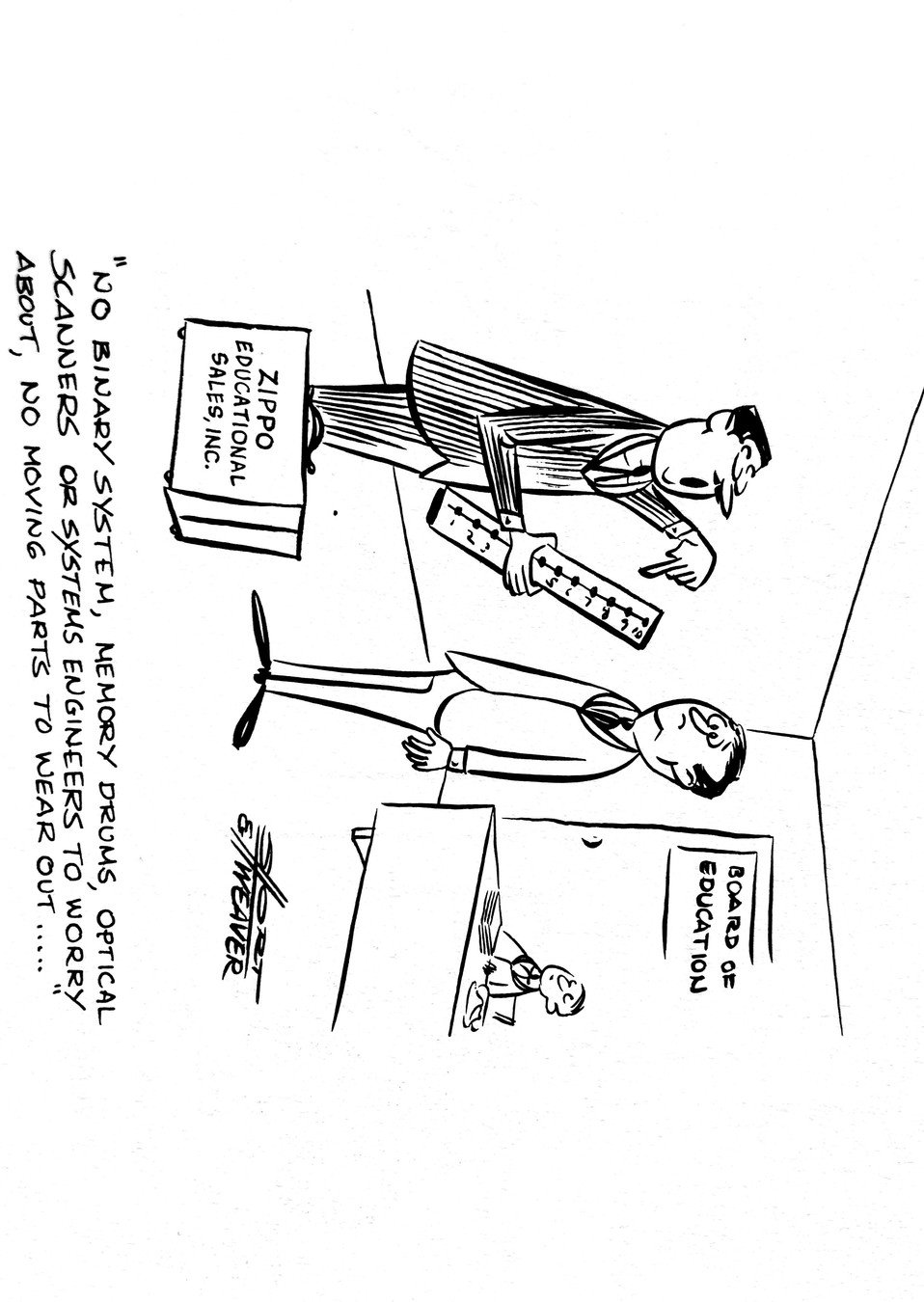
Diffusion of Innovations Activity
-
Do you think this technology is real or not?
-
Analyze the piece of educational technology below from the perspective of diffusion of innovations. That is, how well do you think the technology does in each of the following categories:
-
Relative Advantage
-
Compatibility
-
Complexity
-
Trialability
-
Observability
-
-
Based on your assessment above, do you think this technology will be widespread in schools or not?
When Will Ed Tech Be Used?
Cohen (1987)
BUT
The more flexible a technology is, the more likely it is to be used in less innovative ways.
“The very flexibility of books, which innovators thought would revolutionize education, made it easy to adapt them to existing instruction, classroom organization, and teachers' purposes.”
Takeaway 1
The more flexible a technology is, the more likely it is to be adopted.
When Will Ed Tech Be Used?
Cohen (1987)
The more flexible a technology is, the more likely it is to be adopted.
BUT
The more flexible a technology is, the more likely it is to be used in less innovative ways.
“the very flexibility of microcomputers, which many fans see as a key to the reform of traditional teaching, may instead make it easy for traditional teachers to adapt this new technology to their purposes.”
Takeaway 1