Trefoil Probabilities and Polyhedra
/asu26
this talk!
AMS Special Session on Foundations and Applications of Computational Knot Theory
November 8, 2026
Joint Work With:
Colorado State University
The Problem
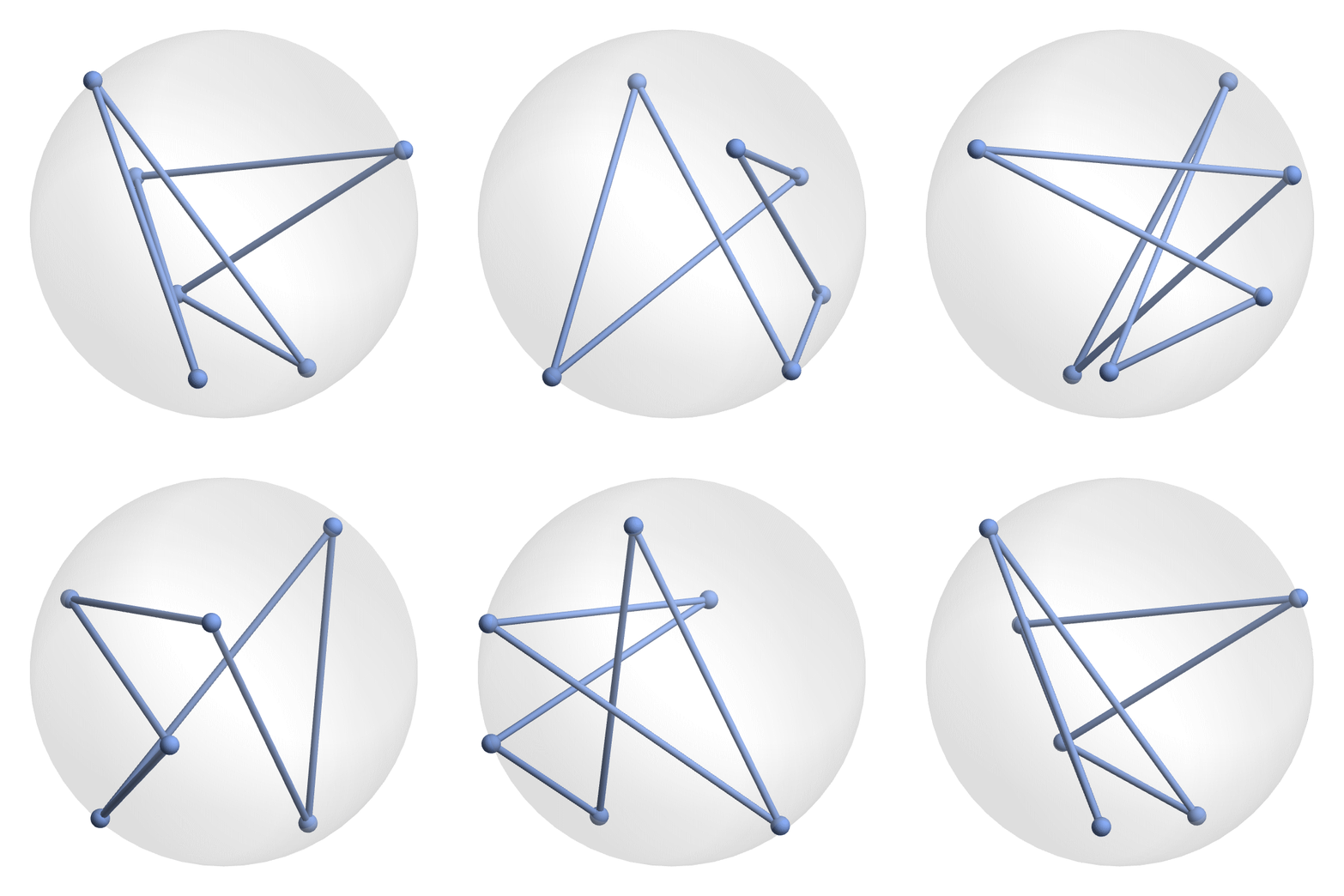
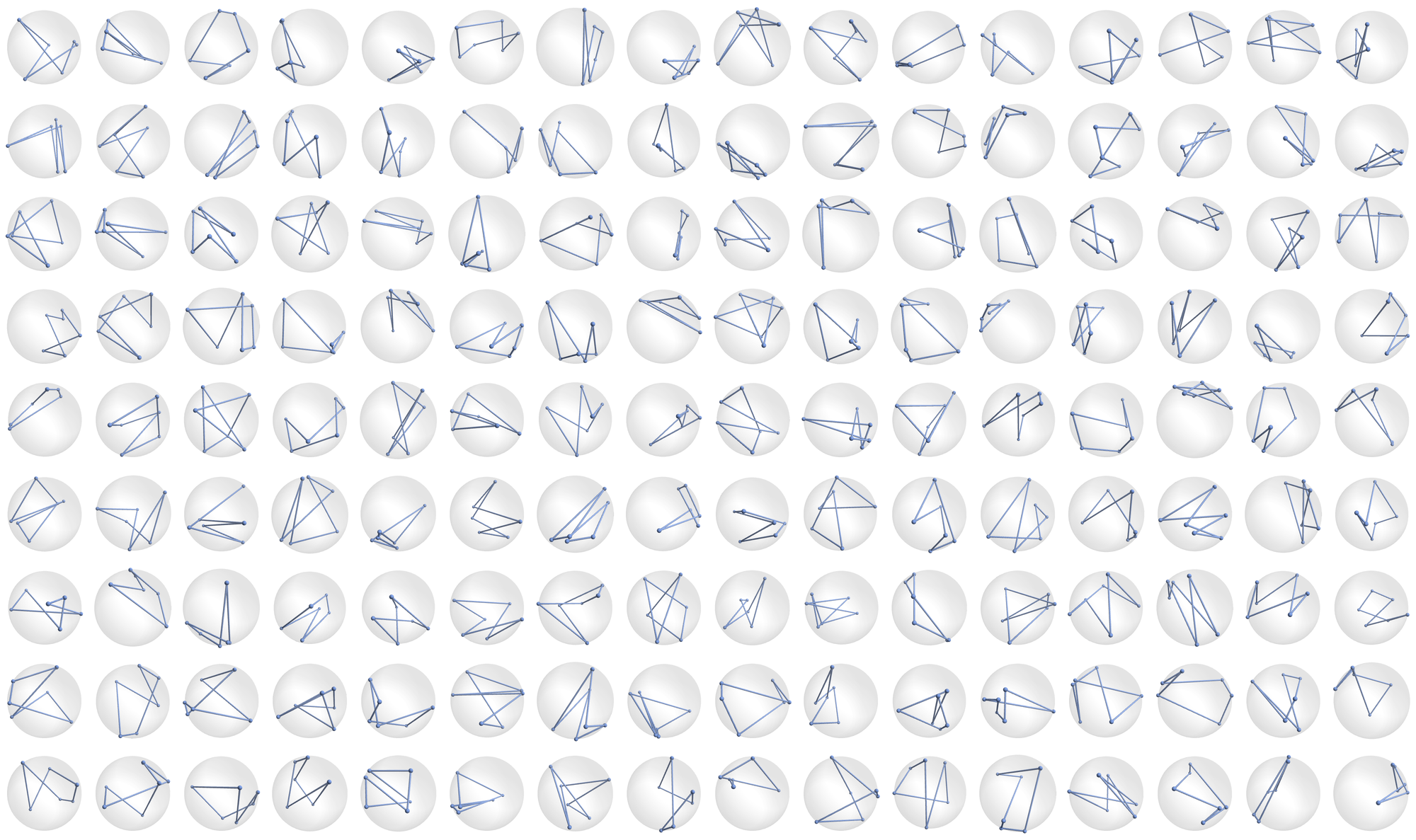
Generate \(p_1, \dots , p_6\) uniformly at random on \(S^2 \subset \mathbb{R}^3\).
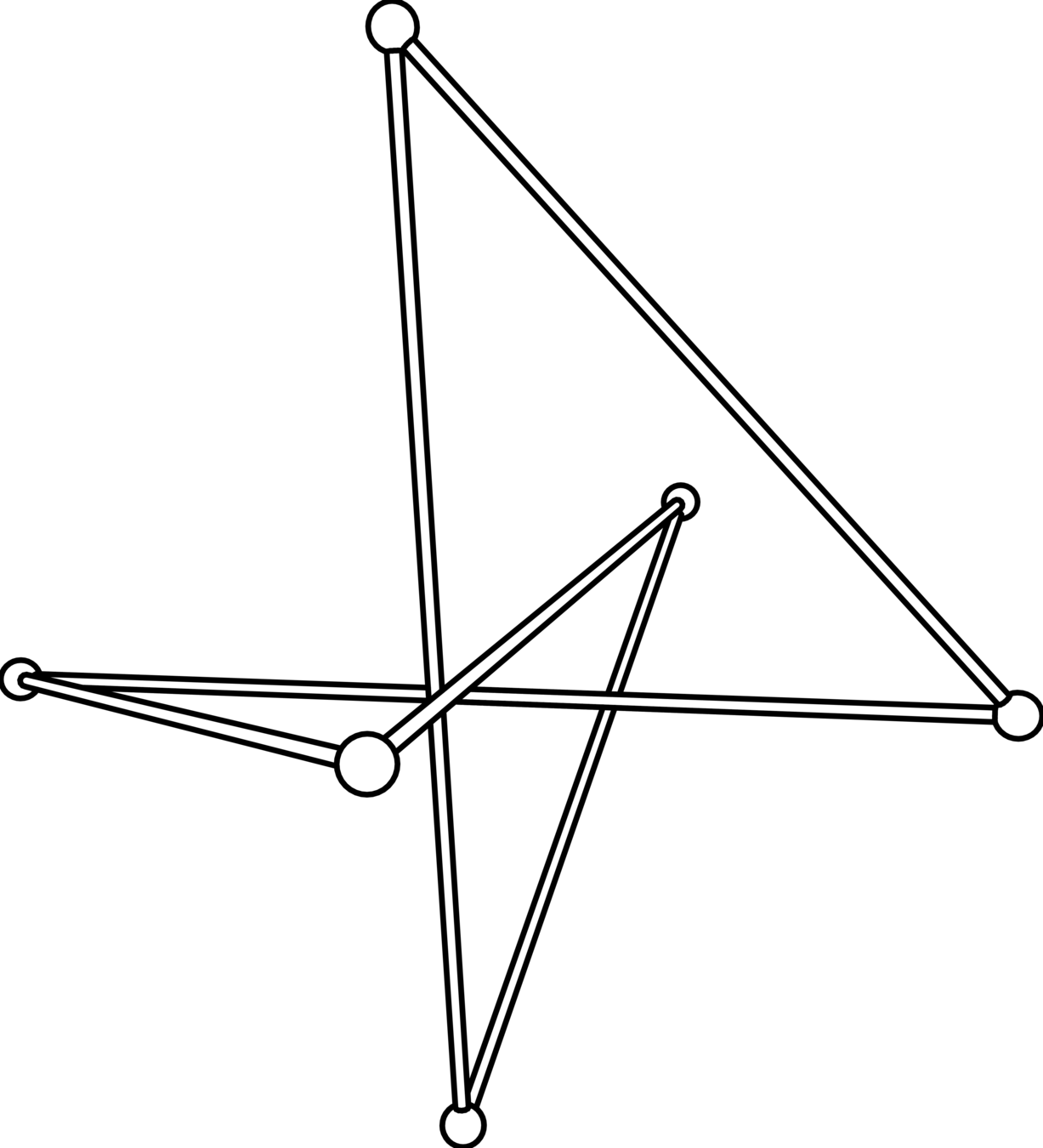
Connect to form a closed polygonal loop \(\mathcal{K}\).
What is the probability that \(\mathcal{K}\) is knotted?
Main Result
Theorem [with Geisz and Peterson]
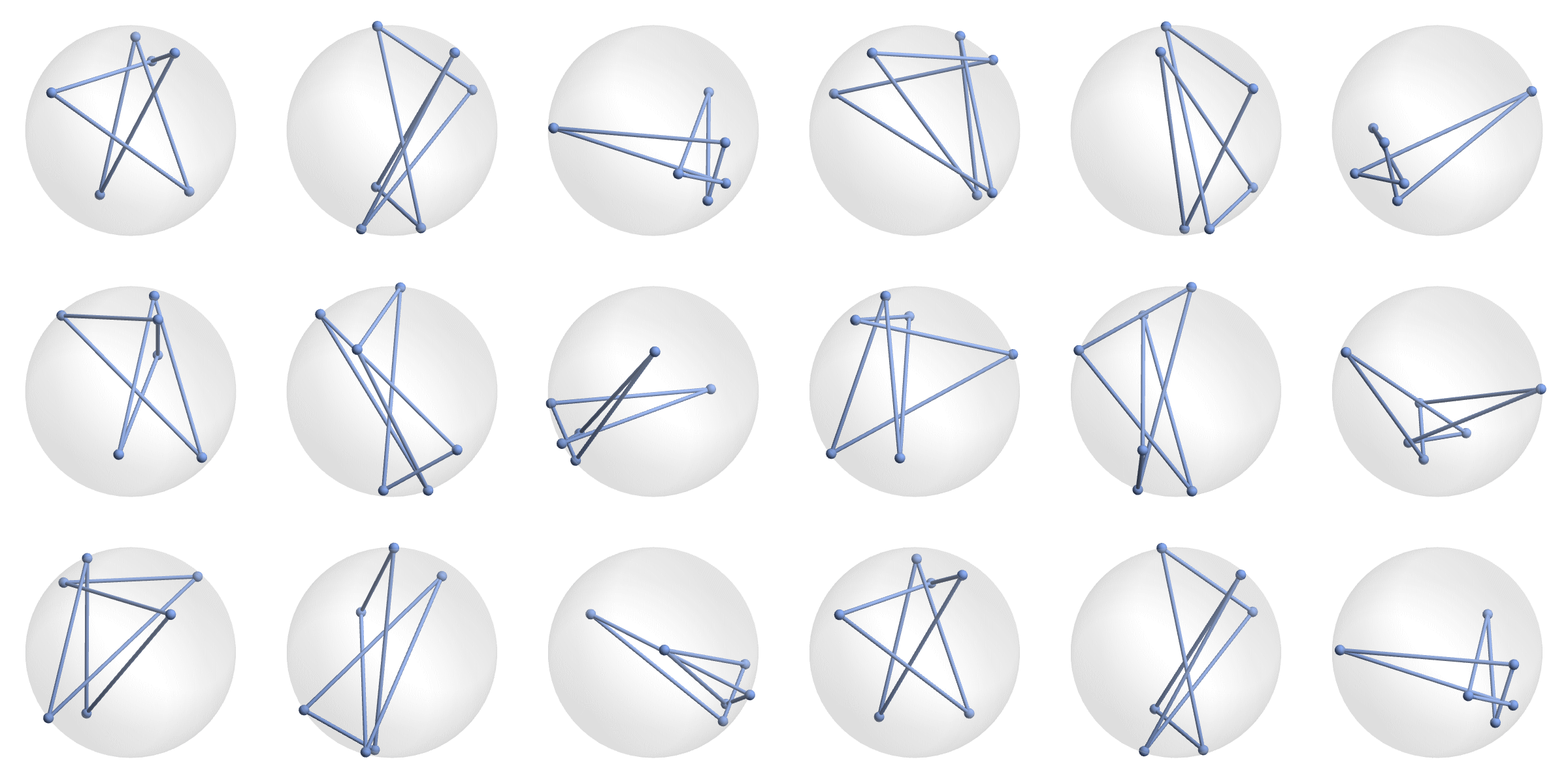
If \(\mathcal{K}\) is a random hexagon with vertices uniform on \(S^2\), then
\(\mathbb{P}[\mathcal{K} \text{ is knotted}] = \frac{1}{16\pi^2}.\)
Observations
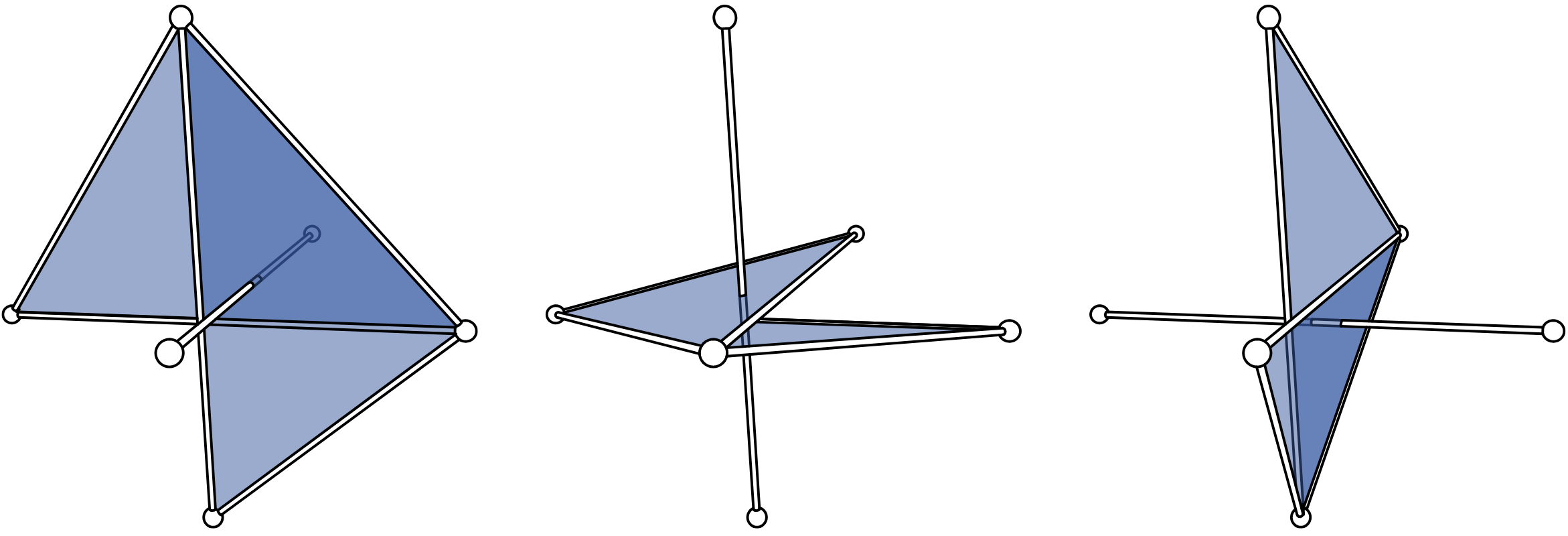
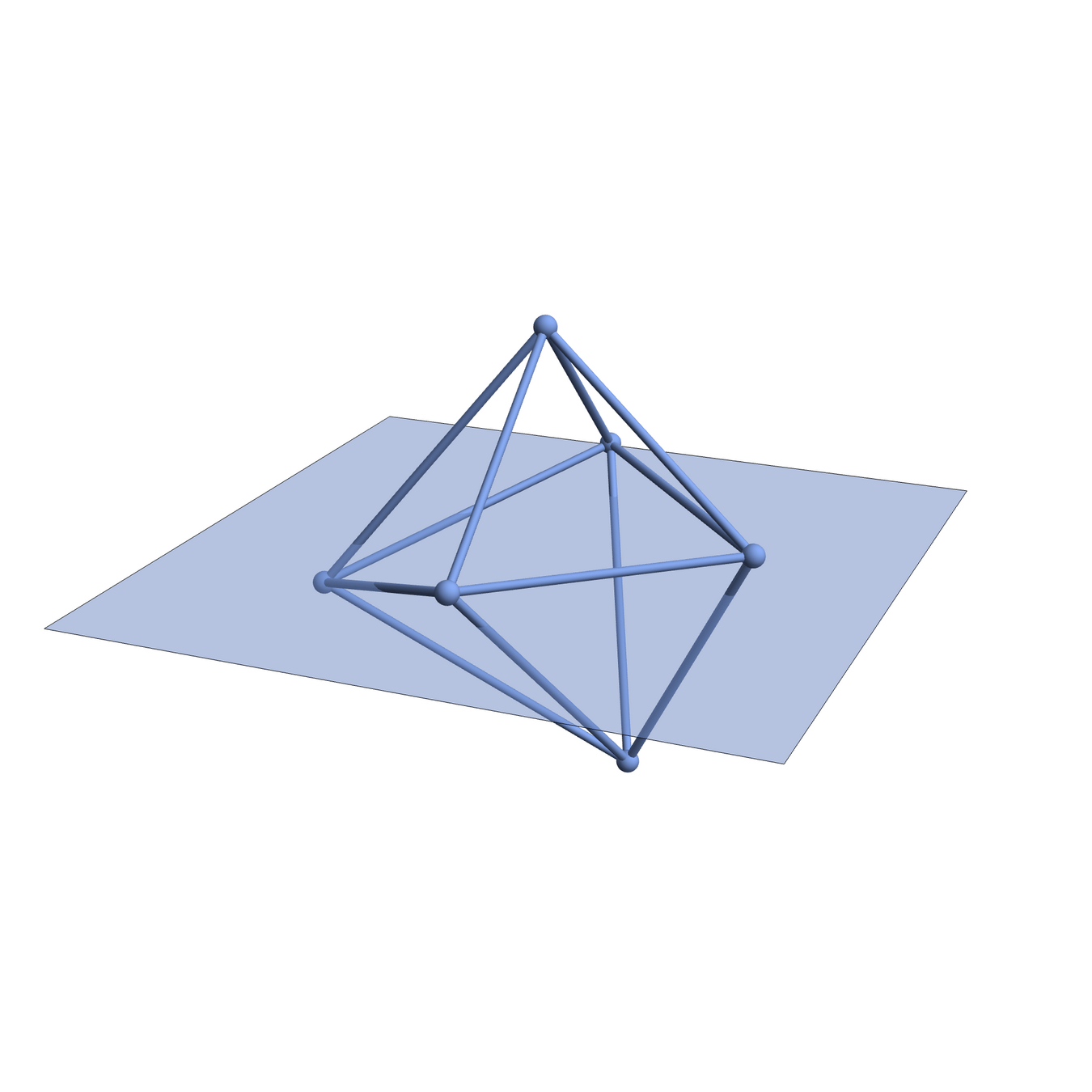
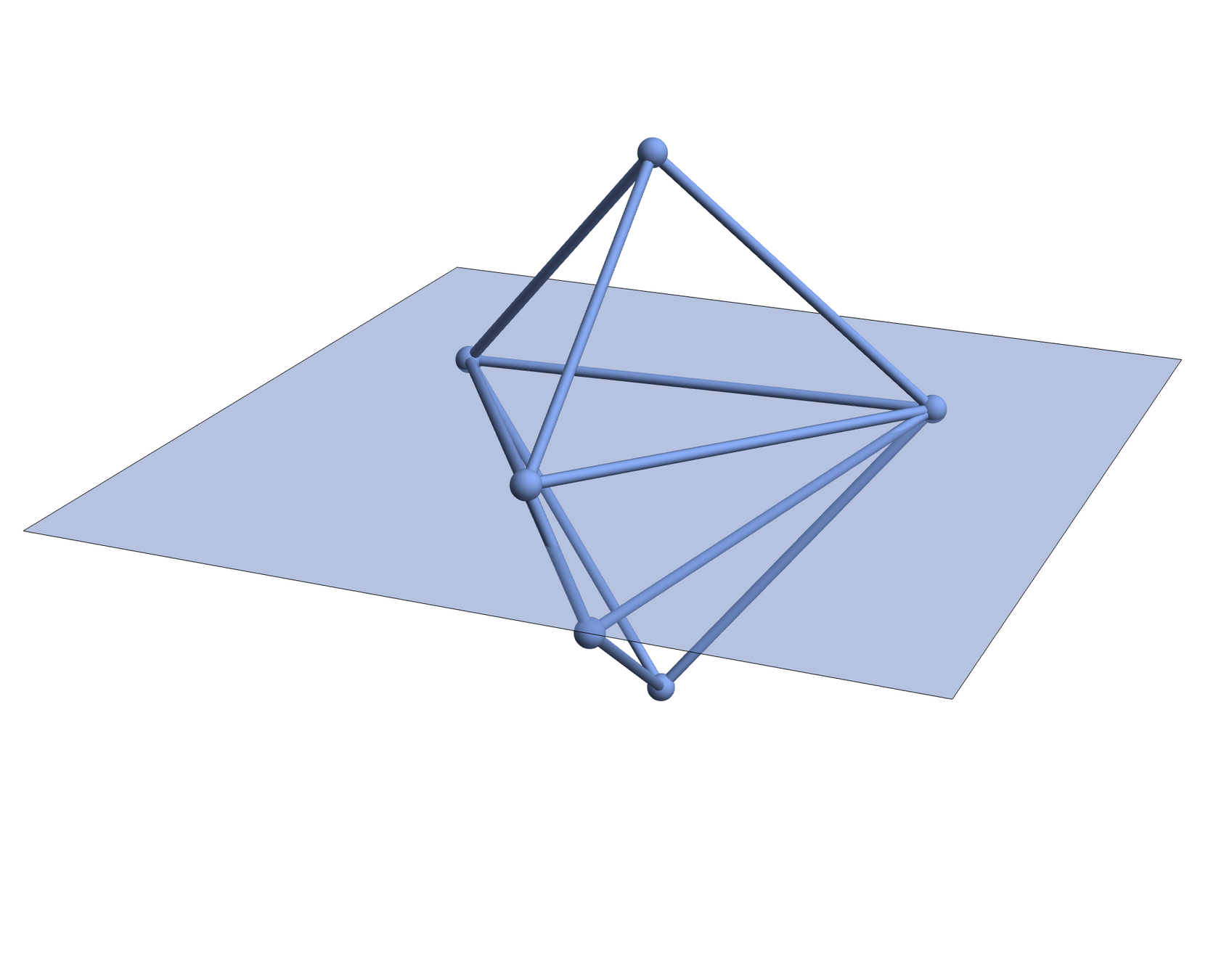
The convex hull of the knotted hexagons are always (combinatorially) regular octahedra.
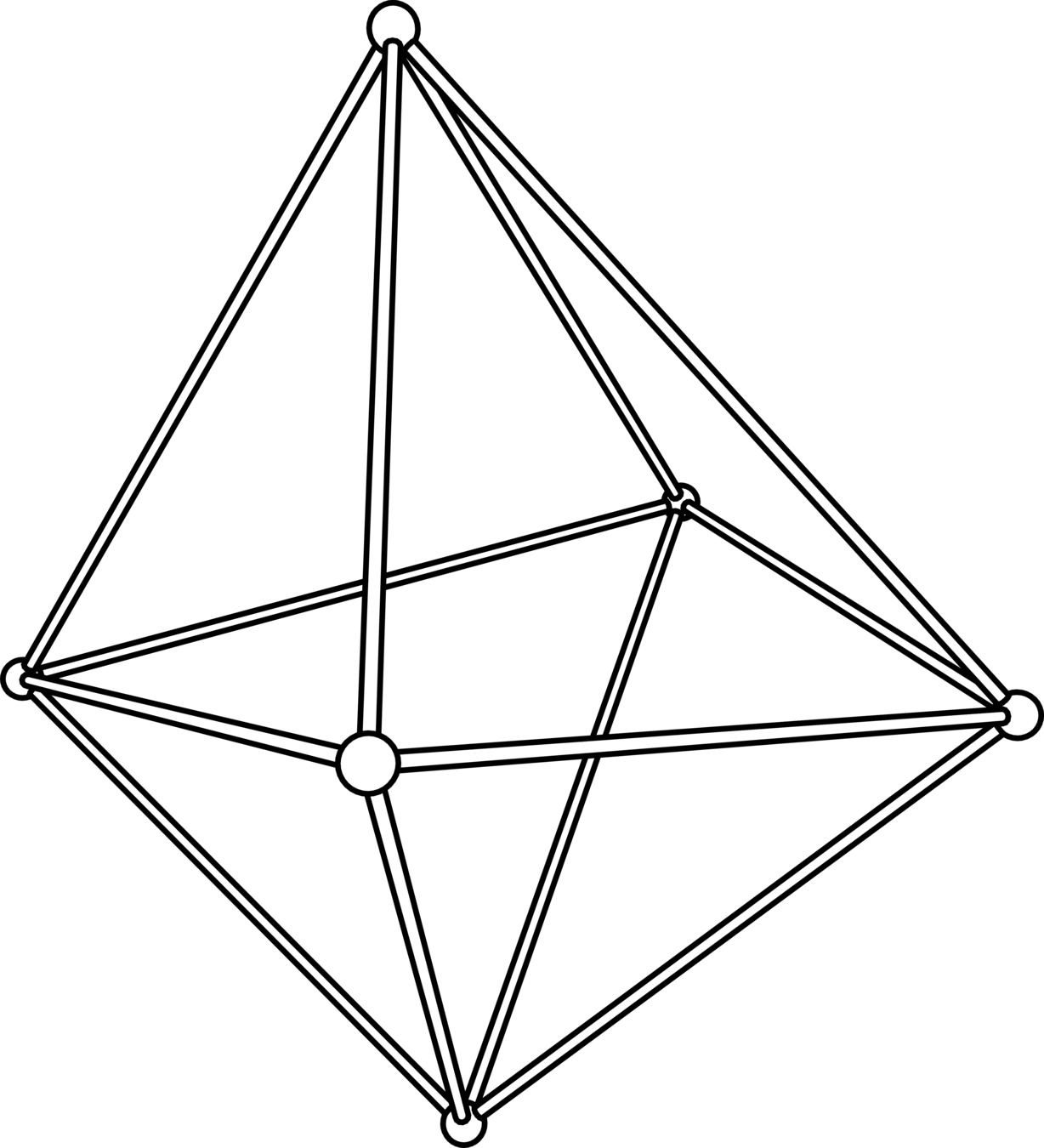
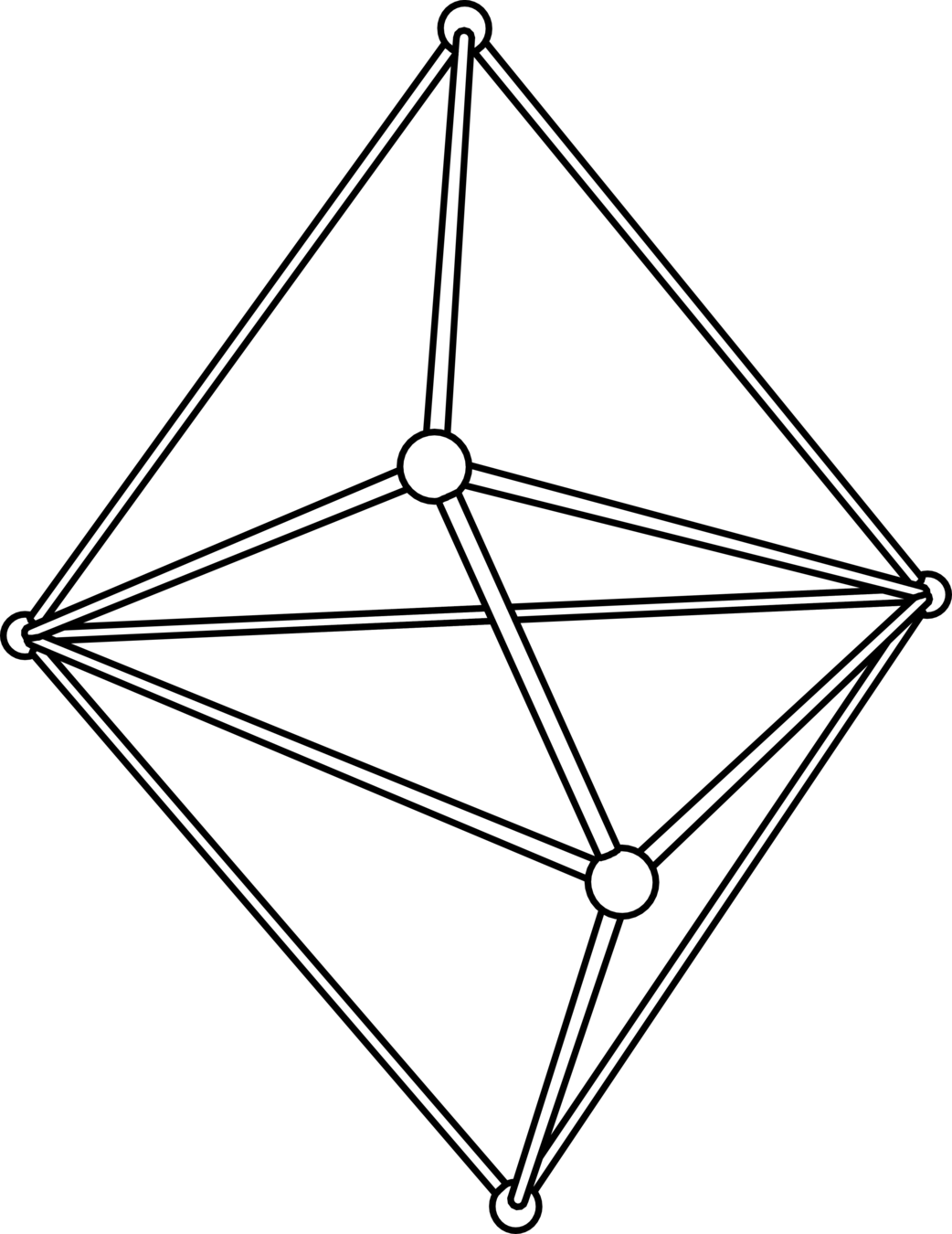
The probability of a trefoil is \(1/60\) times the probability of a regular octahedron.
Facts
Key Characterization
The (New) Problem
Generate \(p_1, \dots , p_6\) uniformly at random on \(S^2 \subset \mathbb{R}^3\).
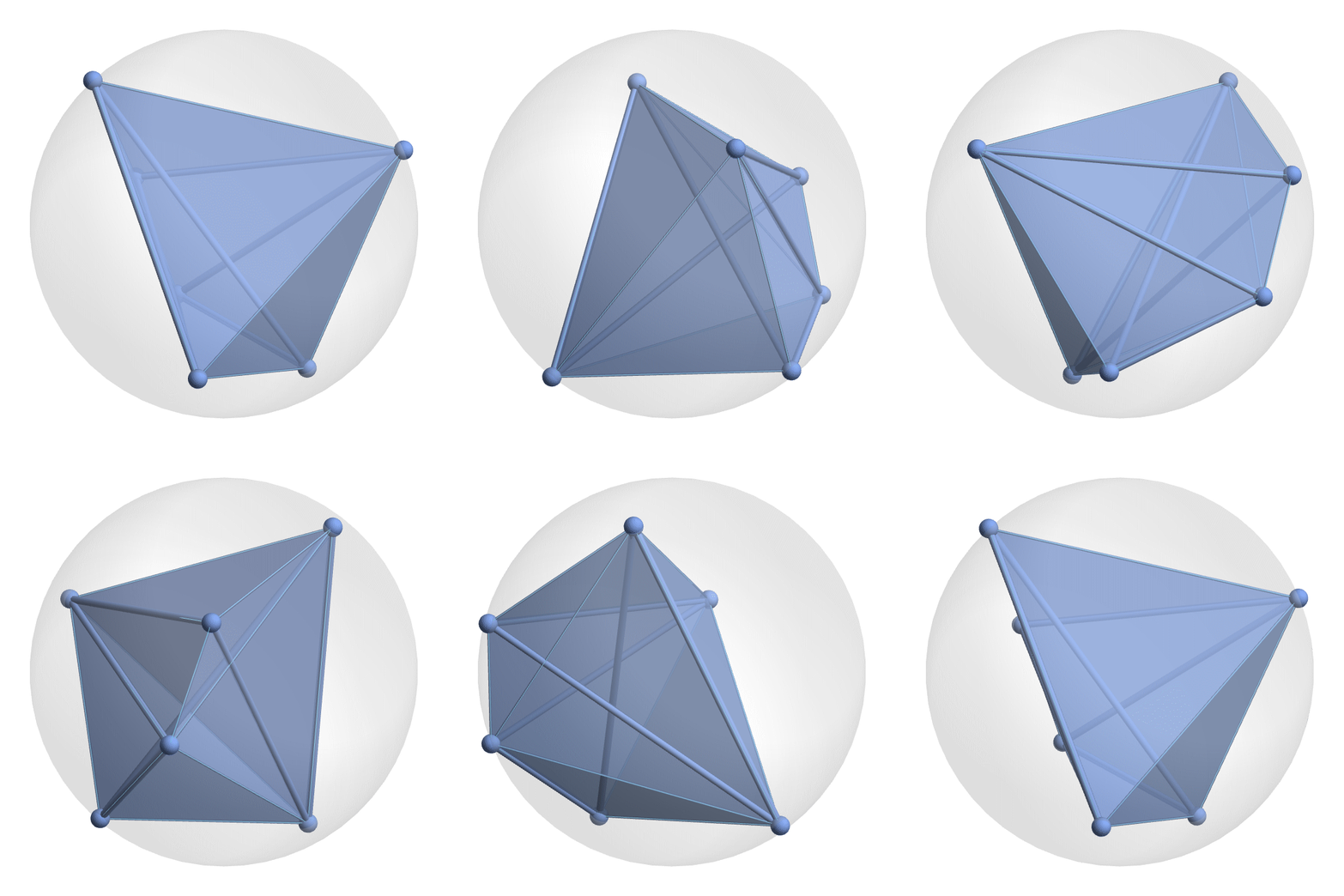
Take their convex hull \(\mathcal{H}\).
What is the probability that \(\mathcal{H}\) is regular?
New Answer
Theorem [with Geisz and Peterson]
If \(\mathcal{H}\) is the convex hull of six vertices uniform on \(S^2\), then
\(\mathbb{P}[\mathcal{H} \text{ is regular}] = \frac{15}{4\pi^2}.\)
Idea
Inspired by Felix Pahl, stereographically project from a vertex and consider the convex hull \(\mathcal{C}\) of the resulting points in the plane.
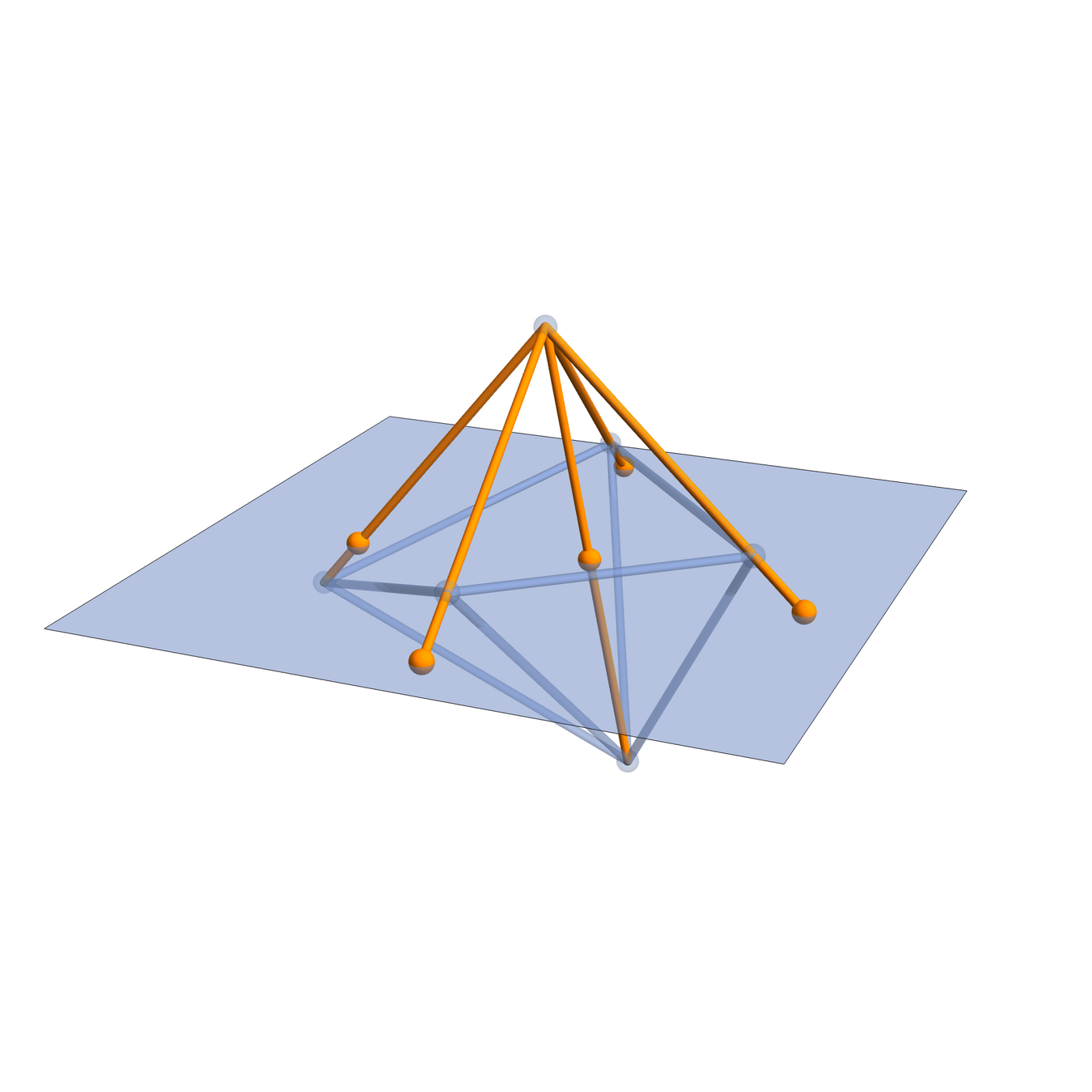
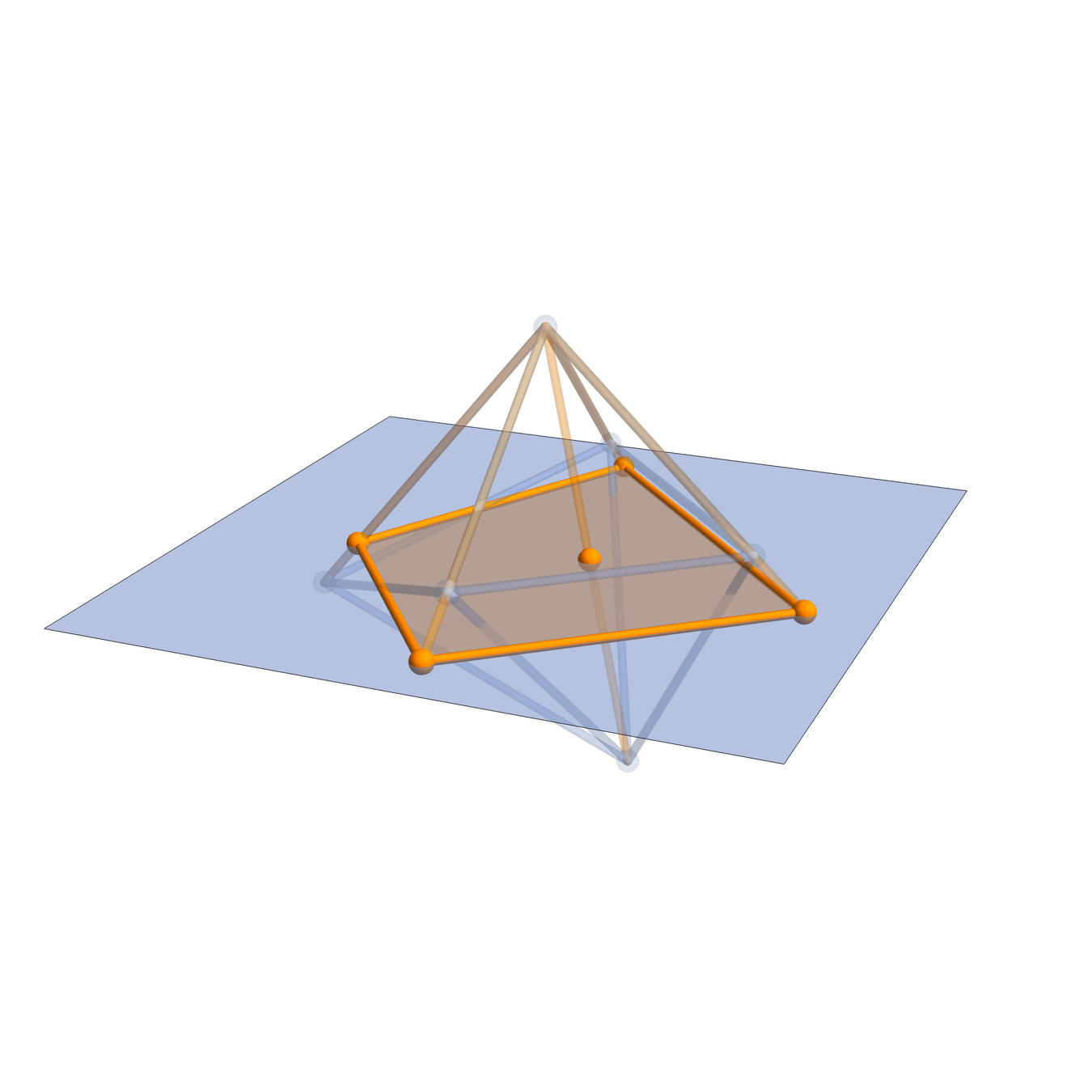
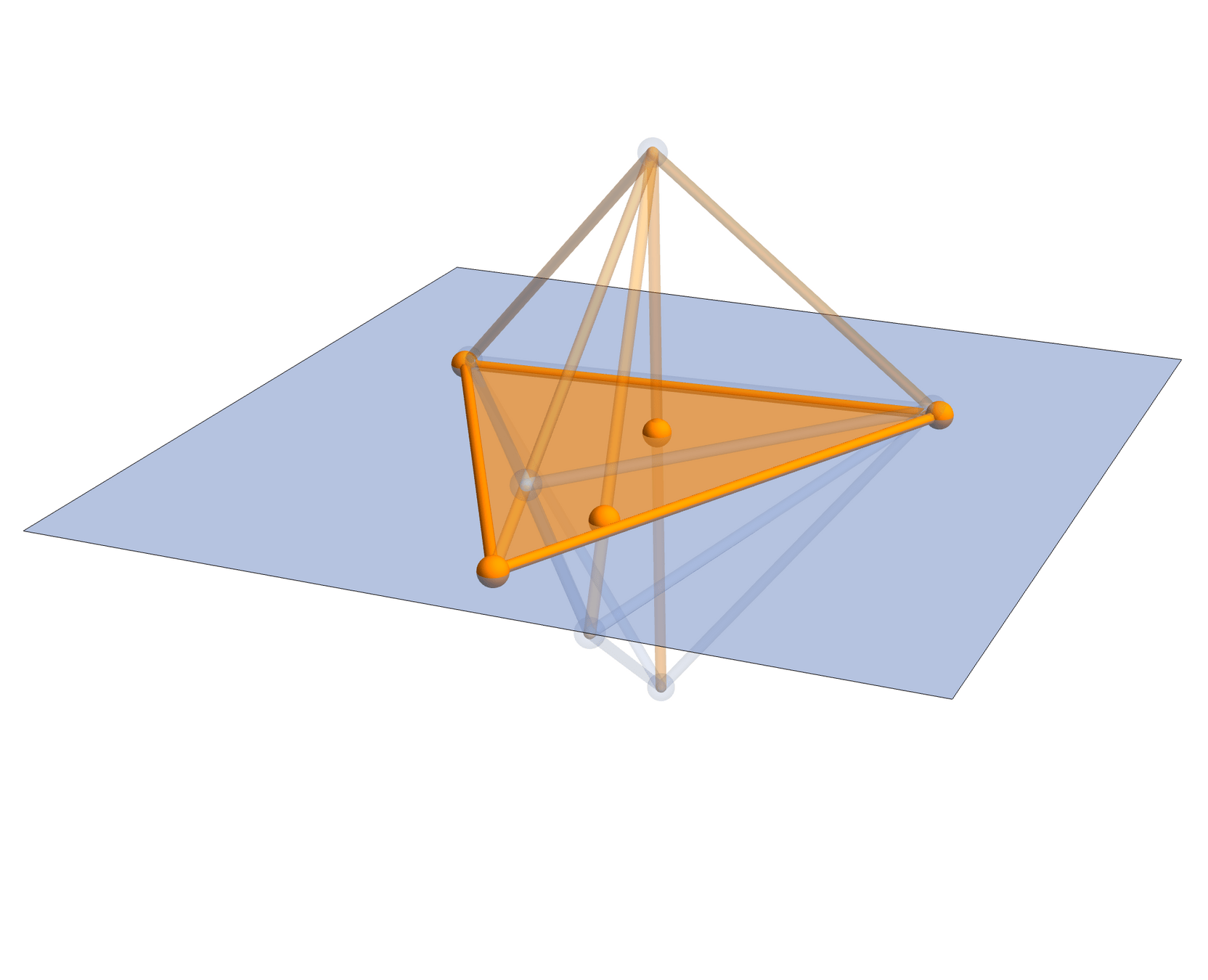
\(\mathbb{P}[\mathcal{C} \text{ has 3 vertices}] = \frac{2}{6}\mathbb{P}[\mathcal{H} \text{ is irregular}]\)
\(\mathbb{P}[\mathcal{C} \text{ has 4 vertices}] = \frac{2}{6}\mathbb{P}[\mathcal{H} \text{ is irregular}]+\mathbb{P}[\mathcal{H} \text{ is regular}]\)
\(\mathbb{P}[\mathcal{C} \text{ has 5 vertices}] = \frac{2}{6}\mathbb{P}[\mathcal{H} \text{ is irregular}]\)
The (New, New) Problem
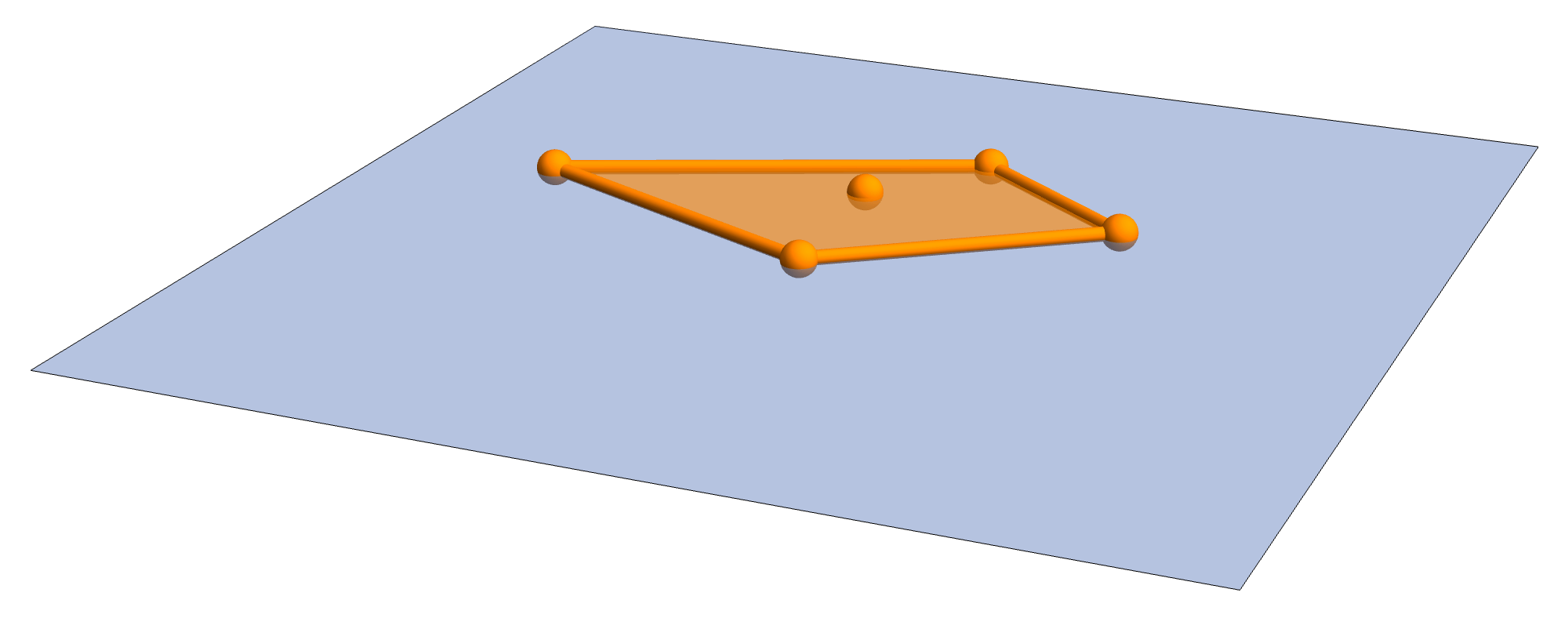
Generate \(v_1, \dots , v_5 \in \mathbb{R}^2\) from the beta-prime measure \(d\mu = \frac{dx dy}{\pi(1+x^2+y^2)^2}\) .
Take their convex hull \(\mathcal{C}\).
What is the probability that \(\mathcal{C}\) has 3 vertices?
New New Answer
Theorem [with Geisz and Peterson]
If \(\mathcal{C}\) is the convex hull of five points in \(\mathbb{R}^2\) sampled from \(\mu\), then
\(\mathbb{P}[\mathcal{C} \text{ is a triangle}] = \frac{1}{3} - \frac{5}{4\pi^2}.\)
And Now, Calculus
There are \(\binom{5}{3} = 10\) ways of choosing 3 vertices, so
\(\mathbb{P}[\mathcal{C} \text{ has 3 vertices}] = 10 \mathbb{E}[\mu(\mathcal{T})^2]\),
where \(\mathcal{T}\) is the triangle formed by 3 random points.
where \(\mathcal{L}\) is the segment connecting two random points.
Key trick: use the Blaschke–Petkantschin substitution.
Question
What is the probability of knotting in your favorite random knot model?
Thank you!
shonkwiler.org/asu26
Reference
Trefoil probabilities and polyhedra
Joseph Geisz, Chris Peterson, and Clayton Shonkwiler
Preprint, 2026, arXiv:2609.24860 [math.GT]