The AI Pivot
How AI is driving the return to HTML & CSS




The Rise of the Declarative
AI models excel at mapping design intent to declarative structures.
- HTML provides the semantic skeleton.
- CSS handles the visual state and layout.
- Declarative code is "self-documenting" for AI.
"Tell the AI what you want it to look like, not how to build the logic."

Accessibility by Default
Semantic HTML is the universal language of a11y.
AI agents are trained on W3C standards. When they output HTML, they tend to use:
- Proper heading hierarchies (H1-H6)
- Aria labels where necessary
- Form labels for inputs
This "standard-first" approach replaces complex JS accessibility hacks.
Reducing Hallucination Risk
JavaScript errors often lead to runtime crashes. HTML/CSS errors usually just lead to visual glitches.
CSS is the New Logic
Past: JS Heavy
Media queries, basic layout, logic-driven animations via JavaScript libraries.
Present: CSS First
Container queries, Grid, Flexbox, :has() selector, and native scroll-driven animations.
Traditional CSS Over Tailwind
Standard CSS is becoming the preferred choice for AI efficiency.
- Token Efficiency: Clean CSS rules require fewer tokens than verbose utility classes.
- Semantic Clarity: AI maps design intent to structured stylesheets.
- Sustainability: Tailwind's future is uncertain following 75% staff layoffs.

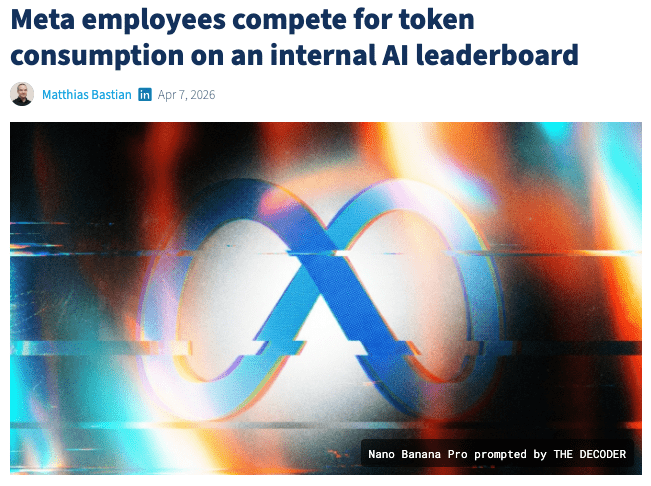
"When a measure becomes a target, it ceases to be a good measure."— Goodhart's Law

The Loss Leader Phenomenon
AI-generated code is currently a loss leader for major tech providers.
■ Tokens are subsidized to drive adoption.
■ Companies accept high compute costs today to own the developer workflow tomorrow.
■ Shift to HTML/CSS lowers the "cost per generation."
"The product isn't the code; the product is your dependency on the model."

Native Web APIs Over JS Polyfills
AI models are increasingly suggesting native browser features that used to require heavy JS weight:
| Feature | Old JS Way | Modern Native Way |
|---|---|---|
| Modals | Custom React State | <dialog> element |
| Tooltips | Popper.js / libraries | Popover API |
| Accordions | Event Listeners | <details> & <summary> |
Performance as a Feature
When AI generates HTML/CSS instead of React/Vue components:
- Zero Runtime: No library to parse or execute.
- Lower TBT: Total Blocking Time drops significantly.
- SEO Friendly: Content is visible without client-side rendering.
- Fewer Dependencies: Reduce your exposed surface area to supply chain attacks.
AI is optimizing for the medium, not the framework.

The 95/5 Rule
AI is shifting development back to a content-first architecture where JavaScript is the "progressive enhancement," not the prerequisite.
Conclusion