Hear Us Out! Asian Americans, Native Hawaiians, Pacific Islanders, and Their Music
Lesson 6:
The World of Asian American Experiences Since 1965
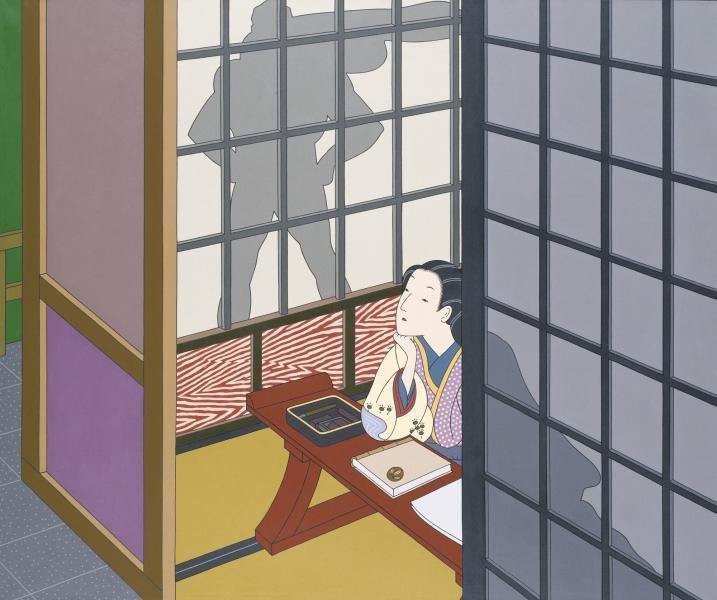


What factors have shaped patterns of Asian migration to the U.S. since 1965.
Unapologetically Asian, by Julia Kwon. Smithsonian American Art Museum.
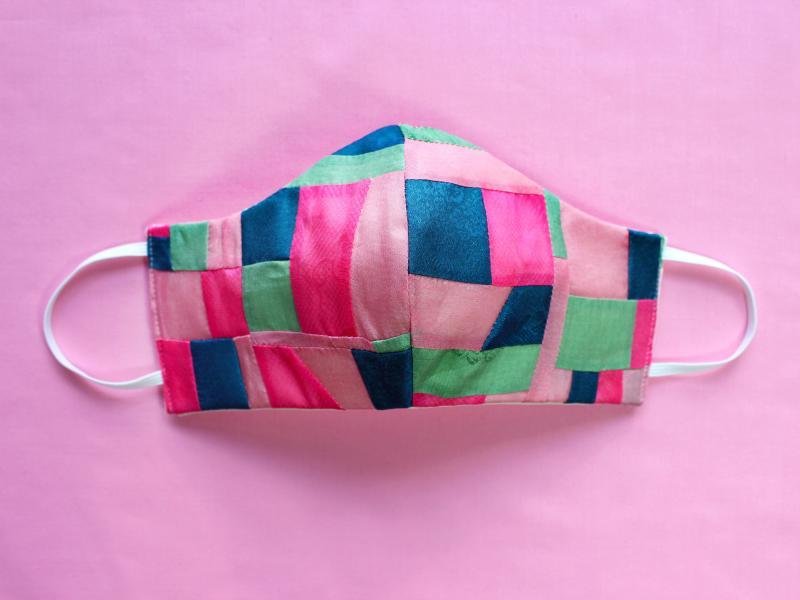
What types of communities and music cultures have these (im)migrants created?

The World of Asian American Experiences Since 1965
30+ MIN

HISTORY & CULTURE

MUSIC LISTENING
Asian Immigration to the U.S. Since 1965
Component 1
30+ minutes

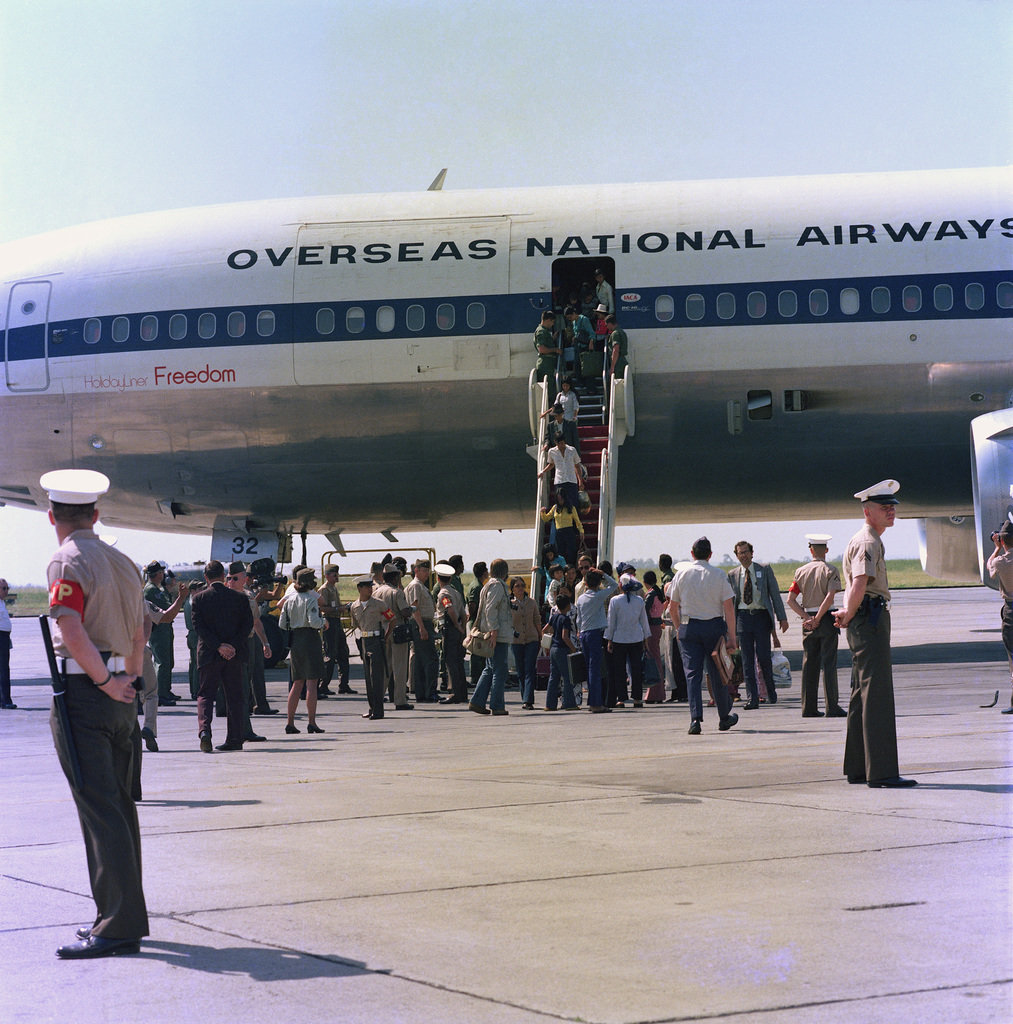
Right: Vietnamese Refugees Arrive at the Air Station After Being Evacuated from Saigon, unknown photographer. {{PD-USGov}}, via National Archives.
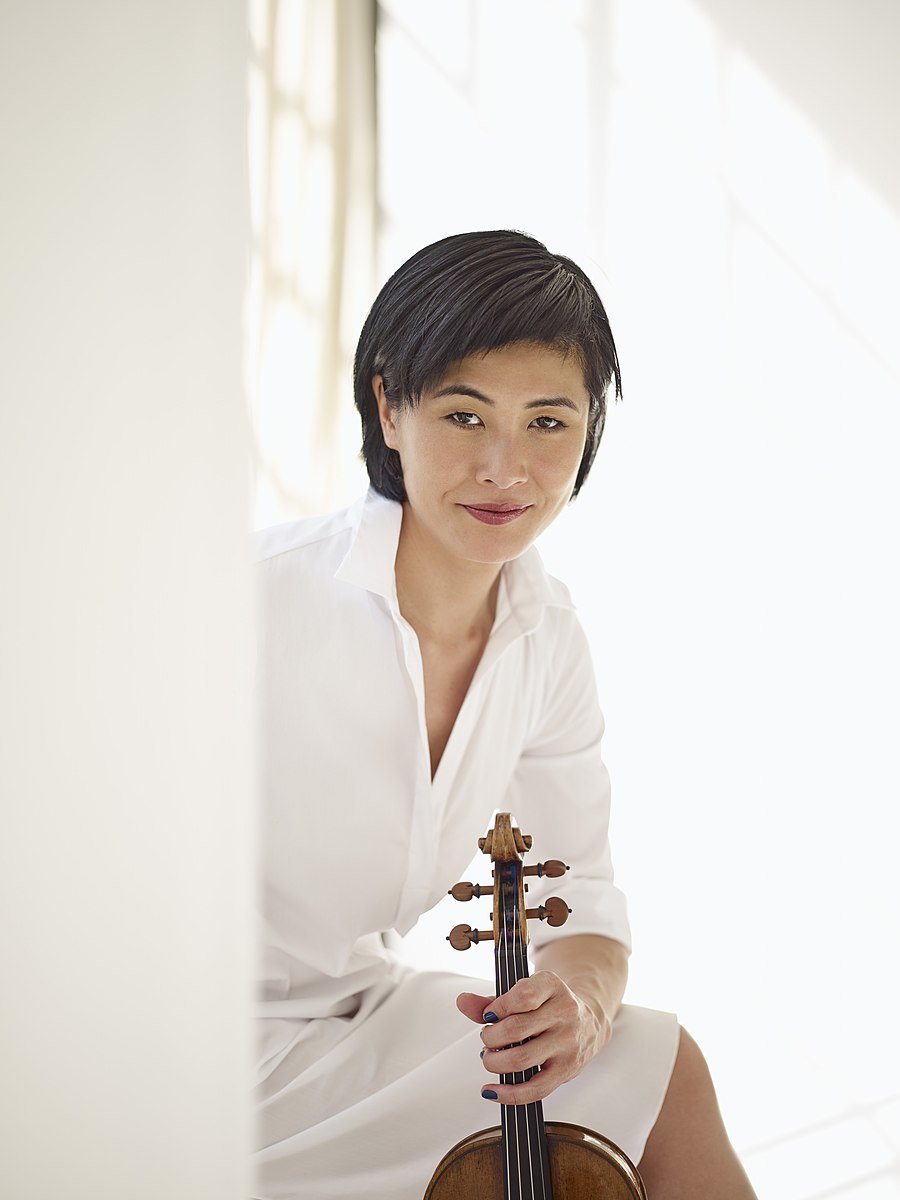
Left: Jennifer Koh, by Jürgen Frank. CC-BY-SA-4.0, via Wikimedia Commons.
Review: Six Overlapping Periods of Migration
These periods are overlapping because many immigration laws applied to some Asian ethnicities/nationalities, but not others.
- Before 1850: Early Settlers (Lesson 2)
- 1850-1934: From the Gold Rush to the Height of Exclusion (Lesson 2)
- 1875-1943: The Exclusion Era (Lesson 2)
- 1943-1965: Phasing Out Exclusion (Lesson 2)
Migration Period #5
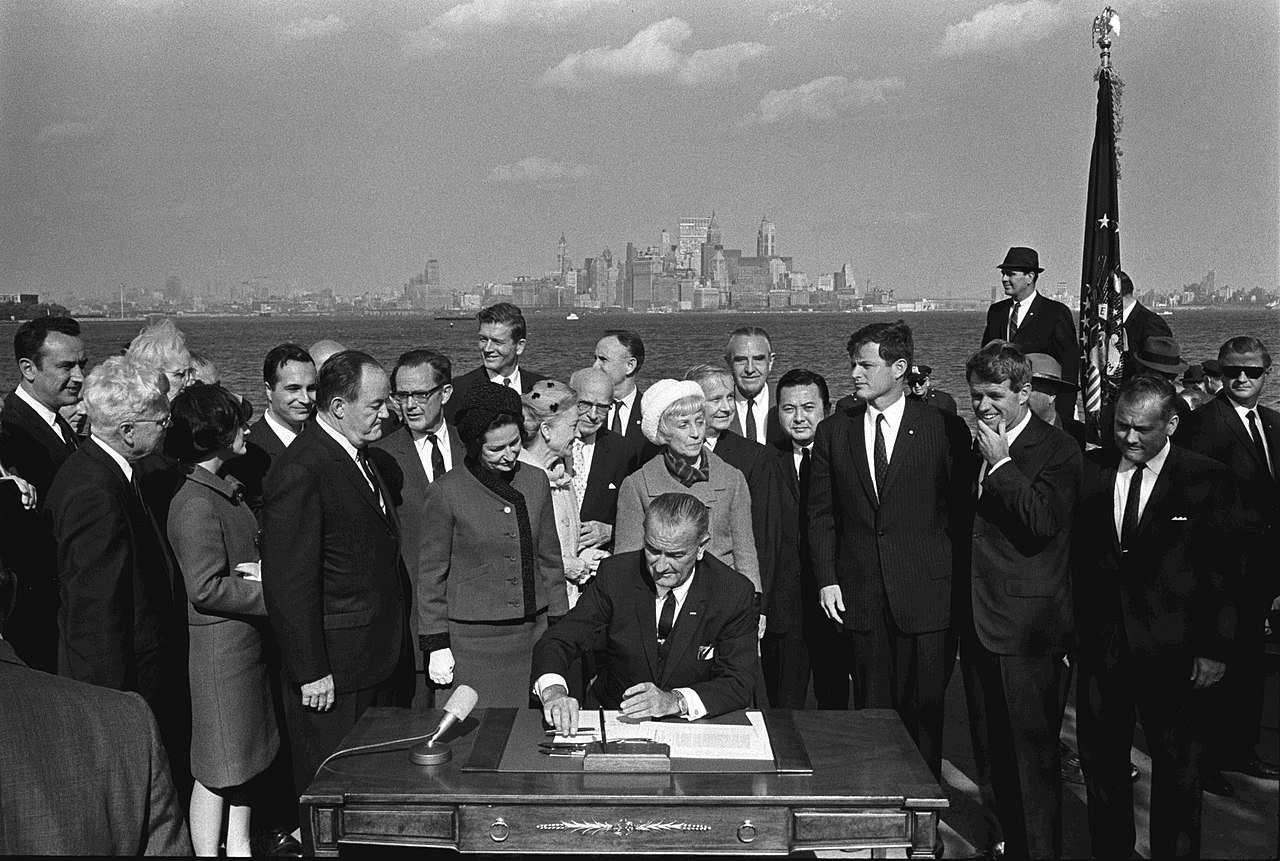
1965-Present: The Legacy of the Hart-Celler Act
President Lyndon Johnson signs the Immigration and Nationality Act on Oct. 3, 1965, by Yoichi Okamoto. {{PD-USGov}}, via LBJ Presidential Library.
The Hart-Celler Act of 1965 established a set of preferences for immigration to the U.S.:
- Relatives and children of U.S. citizens and legal permanent residents (75%)
- Individuals with specialized skills (20%)
- Refugees (5%)
A quota of 20,000 immigrants per country per year was established. Immediate relatives of U.S. citizens were exempted from this quota.
Legacies of the Hart-Celler Act: Demographics
The bill led to a dramatic and continuing rise in the Asian American population.
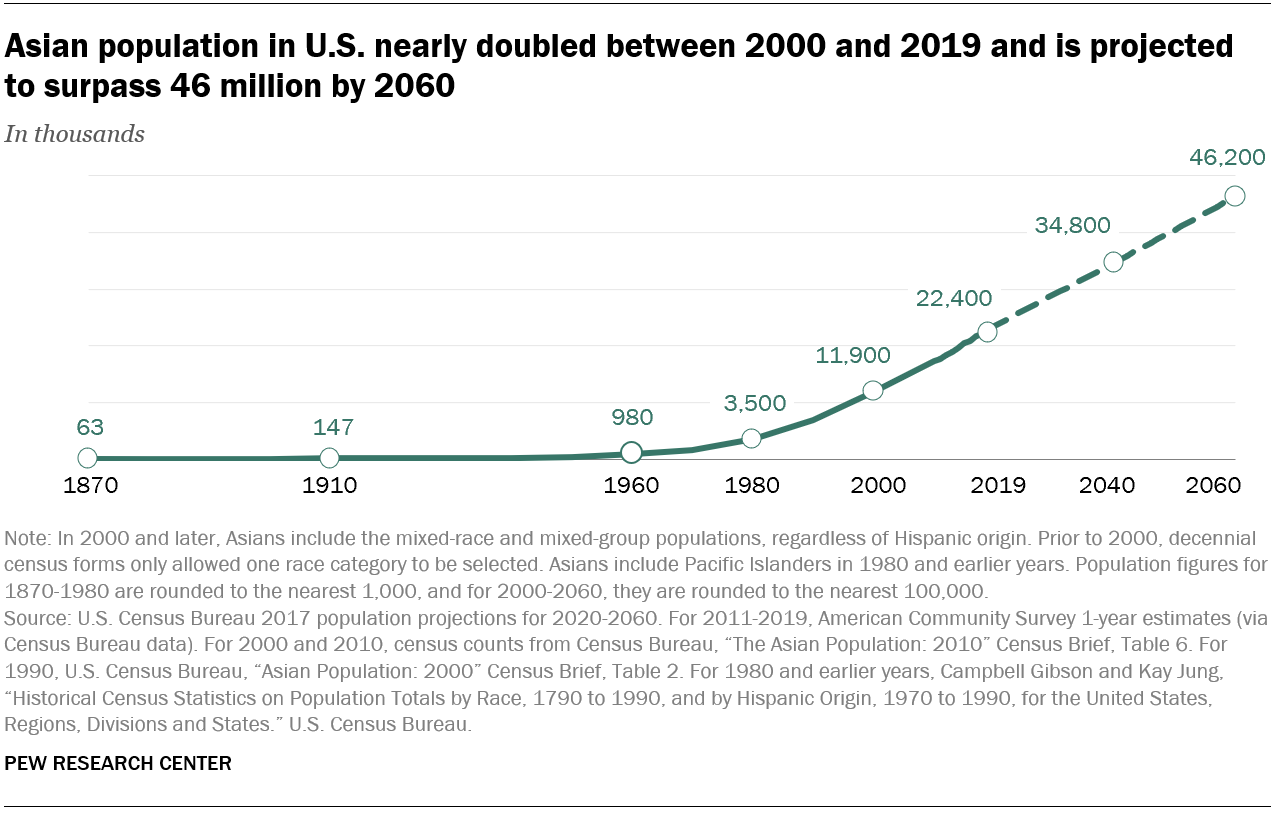
Asian American Population Trends. Pew Research Center
Legacies of the Hart-Celler Act: Diversity
The Hart-Celler Act of 1965 diversified Asian American communities.
Before 1965, Asian American communities were dominated by Chinese, Japanese and Filipino people.
The 1965 legislation led many more South Asians and Koreans to immigrate.
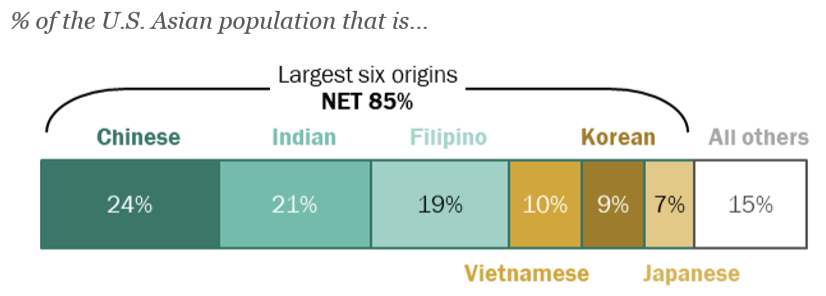
Six Origin Groups Make Up 85% Of All Asian Americans. Pew Research Center.
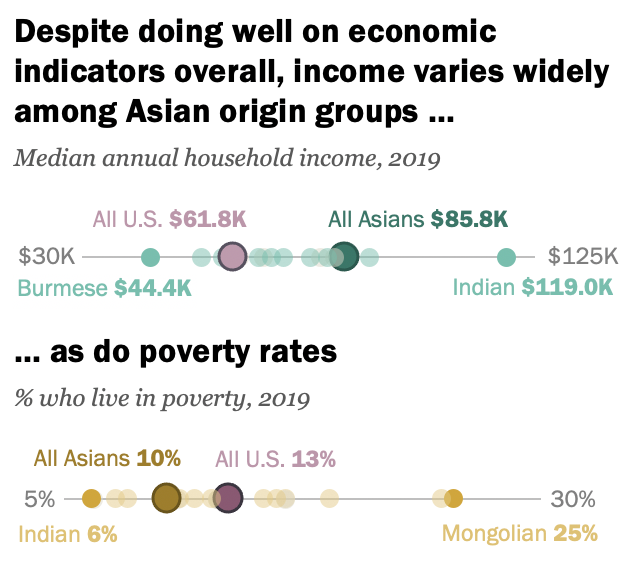
Legacies of the Hart-Celler Act: Socioeconomic Status
The Hart-Celler Act of 1965 changed the class and economic structure of Asian American communities.
Income Among Asian Origin Groups. Pew Research Center.
Legacies of the Hart-Celler Act: Native vs. Foreign Born
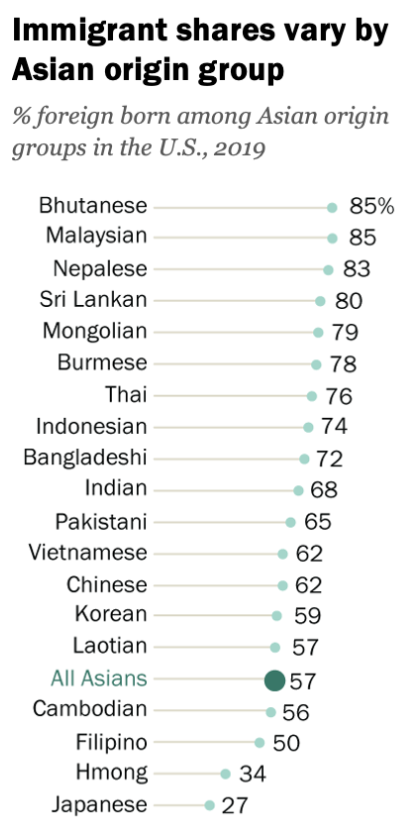
The Hart-Celler Act of 1965 also shifted Asian America from a majority native-born population to, since the late 1970s, a majority foreign-born population.
Because of exclusion laws, a majority of Asian Americans in 1965 were from families who have lived in the U.S. for multiple generations.
Immigrant Shares Vary By Asian Origin Group. Pew Research Center.
In 2019, 57% of U.S. Asian population was foreign-born.
Legacies of the Hart-Celler Act: Model Minority Stereotypes
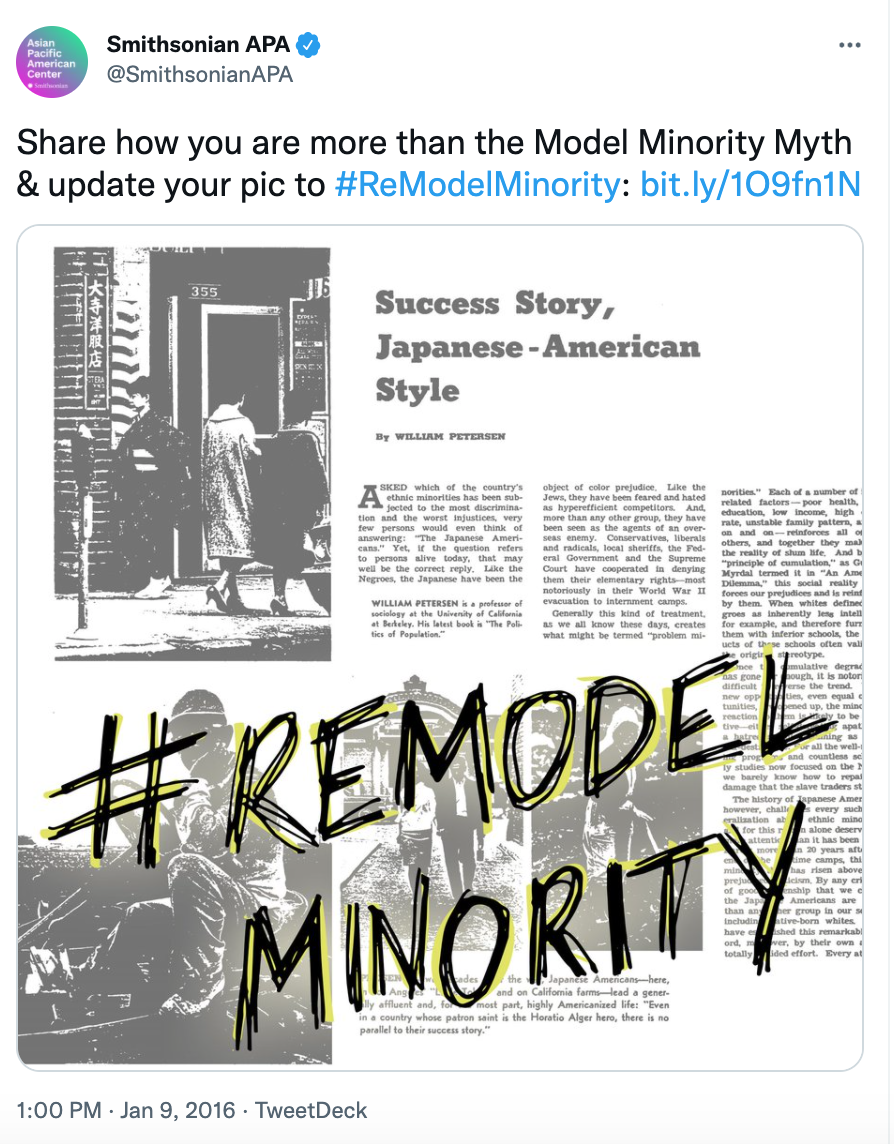
Another effect of the new class/economic structure was the popularization of the "model minority" stereotype. The term was coined by sociologist William Petersen in an article in The New York Times Magazine.
Remodel Minority. Smithsonian Asian Pacific American Center.
This is the idea that Asians are able to achieve educational and economic success because they are innately talented, hard-working, law-abiding, docile, and somewhat robotic.
Understanding the "Model Minority Stereotype"
The "model minority" stereotype ostensibly commends Asian and Asian American cultures. However, it works to harm Asian Americans and other people of color in several ways.
Why is the "model minority" stereotype harmful?
Watch this video:
The Model Minority Myth, Jennifer Ho and Frank H. Hu. National Committee on U.S.-China Relations.
Examining Science Fiction Archetypes
In the Smithsonian APA Center-sponsored documentary Inhuman Figures (click on photo below to access), Michelle Huang and CA Davis explore how three popular science-fictional
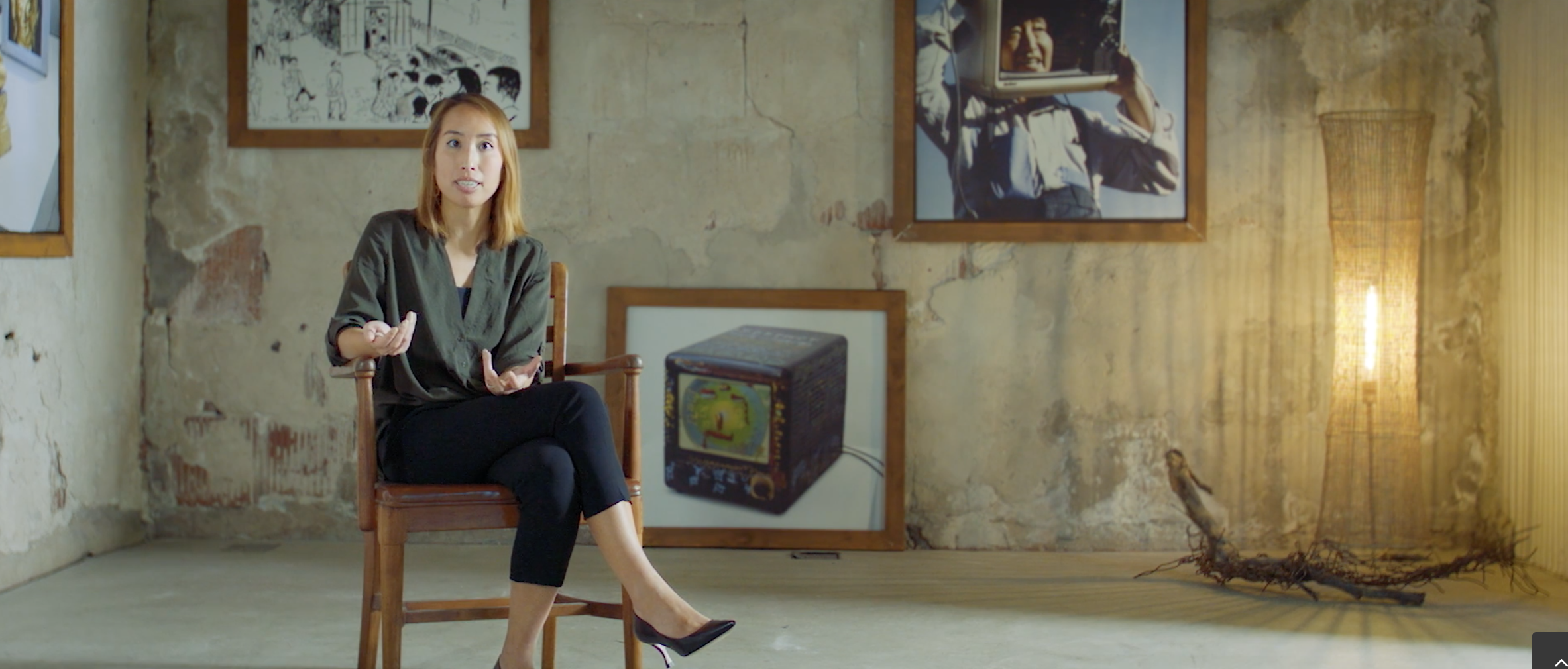
Inhuman Figures, by Michelle N. Huang and CA Davis. Smithsonian Asian Pacific American Center.
archetypes—the robot, clone, and alien—are based largely on the "model minority" stereotype:
The Hart-Celler Act and Western Classical Music
In terms of music, one major effect of this new class/economic structure was the rise of East Asian Americans in Western classical music.
Why do you think there is there a close correlation between class/economic structure and success in Western classical music?
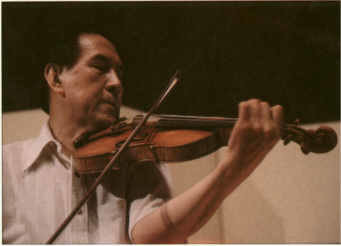
Violinist Ma Si-hon, unknown photographer. Taiwan Today.
Artistic Connection: Ma Si-hon
Beethoven / Ma Si-Hon, 1963: Violin Sonata No. 9 Op. 47. Uploaded to YouTube by davidhertzberg.
In recent decades, people of Asian descent have regularly won major competitions.
The Hart-Celler Act and Western Classical Music
Jennifer Koh, by Jürgen Frank, CC-BY-SA-4.0, via Wikimedia Commons.
In Asia, and among Asian Americans, Western classical music has become very popular. A 2014 League of American Orchestras survey revealed that 9% of players in large U.S. professional orchestras identify as Asian.
Artistic Connection: Jennifer Koh
Jennifer Koh, violin; Thomas Sauer, Piano; Concert. Library of Congress.
1960s: Transnational Adoptions from Asia Peak
In the mid-1960s, there were about 1,500 international adoptions per year. Most of these children came from South Korea.
This number grew unevenly over the next four decades, peaking at nearly 23,000 per year in 2004.
From 1970 to 2001, nearly 60% of adoptees were from Asia (esp. South Korea and the People's Republic of China).
First Person Plural - Trailer. Mu Films.
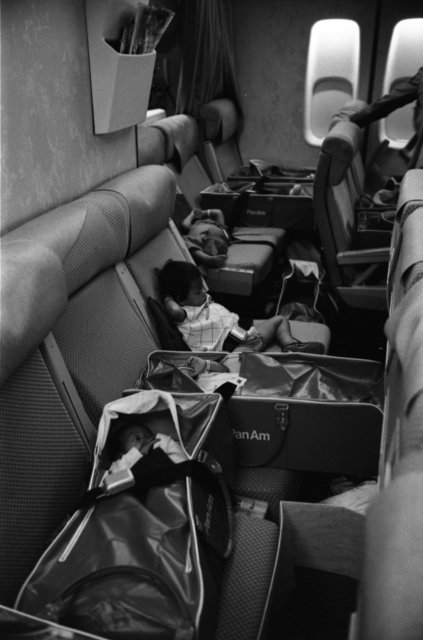
Operation Babylift
Vietnamese Refugee Flight Arriving at San Francisco International Airport, unknown photographer. {{PD-USGov}}, via National Archives.
Operation Babylift (1975) was a particularly controversial policy in the history of transnational adoption from Asia.
At the end of the Vietnam War, the U.S. flew over 3,300 children out of Vietnam for adoption by U.S., Canadian, European and Australian families.
Some Vietnamese families said they gave up their babies under duress. They filed a lawsuit to try to reunite with their children, but it was unsuccessful.
1980s:Transnational Adoptions from Asia Decline
Starting in the mid-1980s, some countries began to rethink their policies allowing transnational adoptions. This is because:
- There were growing reports about abuse and crimes associated with transnational adoption.
- Transnational adoptees began to speak about their often very difficult experiences.
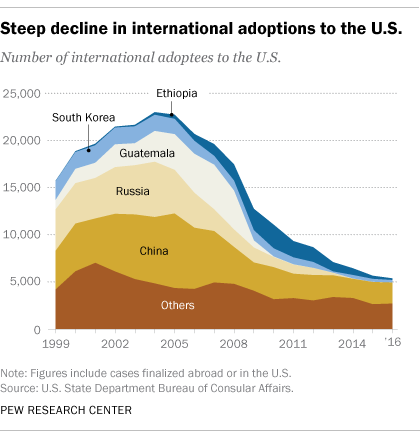
Steep Decline in International Adoptions To The U.S.. Pew Research Center.
Migration Period #6
1975-Present: Increased Quotas for Refugees
Refugees are people who have been forced to flee their countries they were living in to escape war, persecution, or natural disaster.
68% of them were from five countries: Syria, Venezuela, Afghanistan, South Sudan, and Myanmar.
According to UNHCR, there were approximately 26 million refugees in mid-2021.
Flag of United Nations Refugee Agency, UNHCR. CC-BY-3.0, via Wikimedia Commons.
Refugee Resettlement in the United States
The United States has a long history of resettling refugees, and the federal government has implemented various refugee policies since the 1890s.
The end of the Vietnam War produced a refugee crisis. In particular, people who supported the U.S. during the war had to flee.
Vietnamese Refugees Arrive At The Air Station After Being Evacuated from Saigon, unknown photographer. {{PD-USGov}}, via National Archives.
Indochinese Immigration and Refugee Act of 1975
In response, Congress passed the Indochinese Immigration and Refugee Act of 1975 to fund the transportation and resettlement of Southeast Asian refugees.
Between 1975 and 1980, about 300,000 refugees from Southeast Asia (Vietnam, Cambodia, Laos) resettled in the U.S. An even higher number arrived in the 1980s and early 1990s.
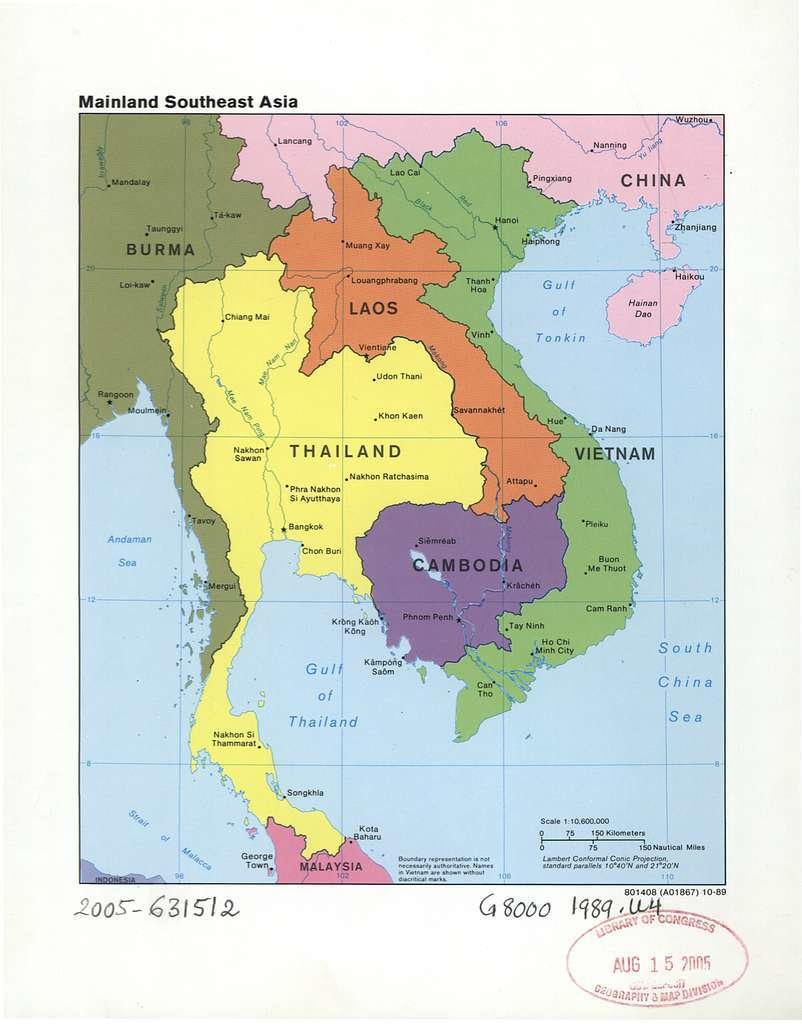
Mainland Southeast Asia. {{PD-USGov}}, via Library of Congress.
Increased Quotas for Refugees
This influx of Southeast Asians changed the ethnic makeup and diversified the cultures of Asian America. It also changed the racial demographics of states such as Minnesota and Wisconsin.
Before 1975, there were few Vietnamese, Cambodians, Laotians, Hmong, and other mainland Southeast Asians in the United States. In 2020, there were over 3.5 million.
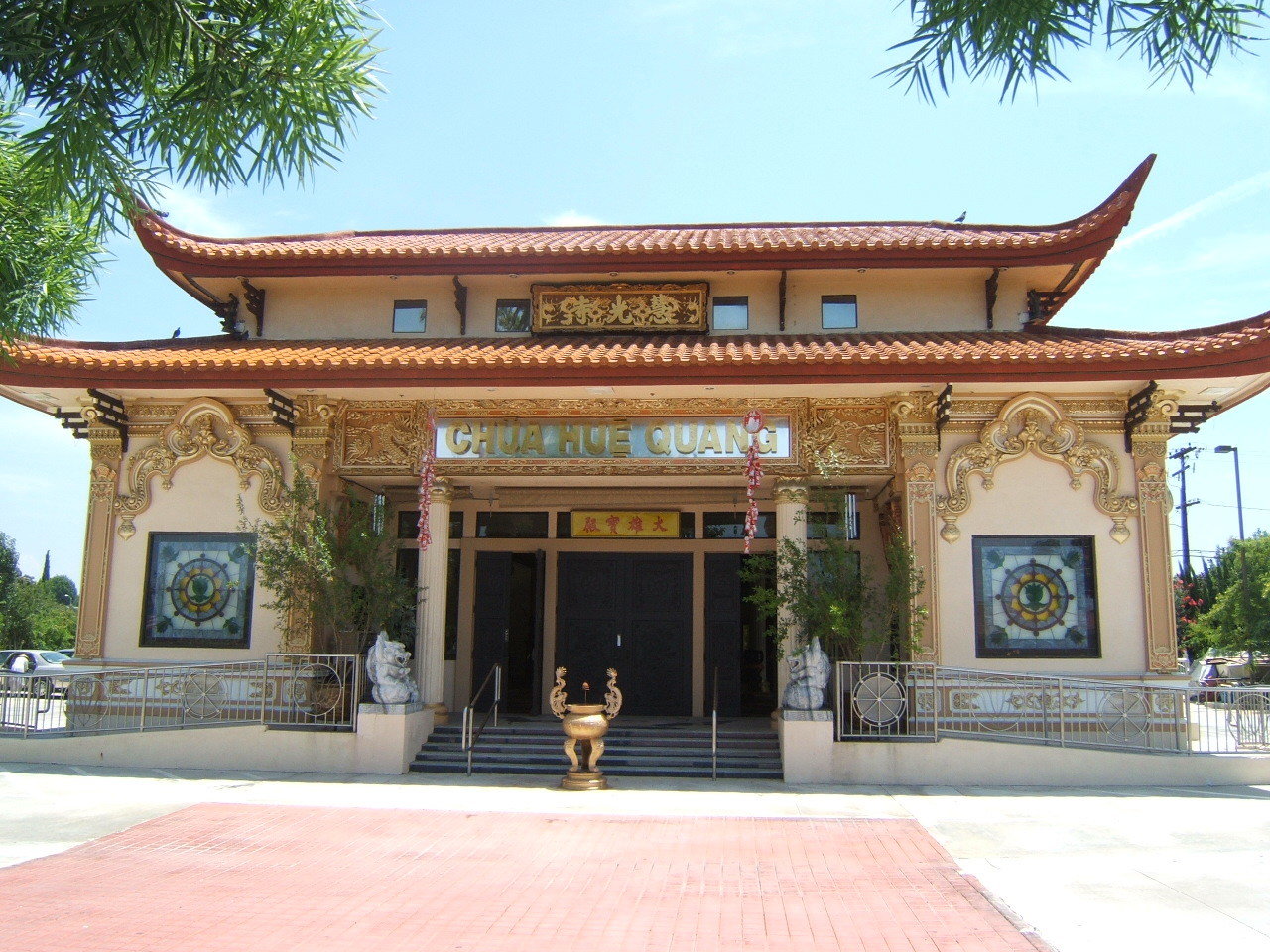
Garden Grove Vietnamese Buddhist Temple, by Toksave CC-BY-SA-2.5, via Wikimedia Commons.
Artistic Connection: No-No Boy
Julian Saporiti's mother fled Vietnam in 1968, shortly after his great-grandfather was killed during the Tet Offensive. In "Tell Hanoi I Love Her," Saporiti, of the band No-No Boy, discusses his conflicting feelings about his family's history.
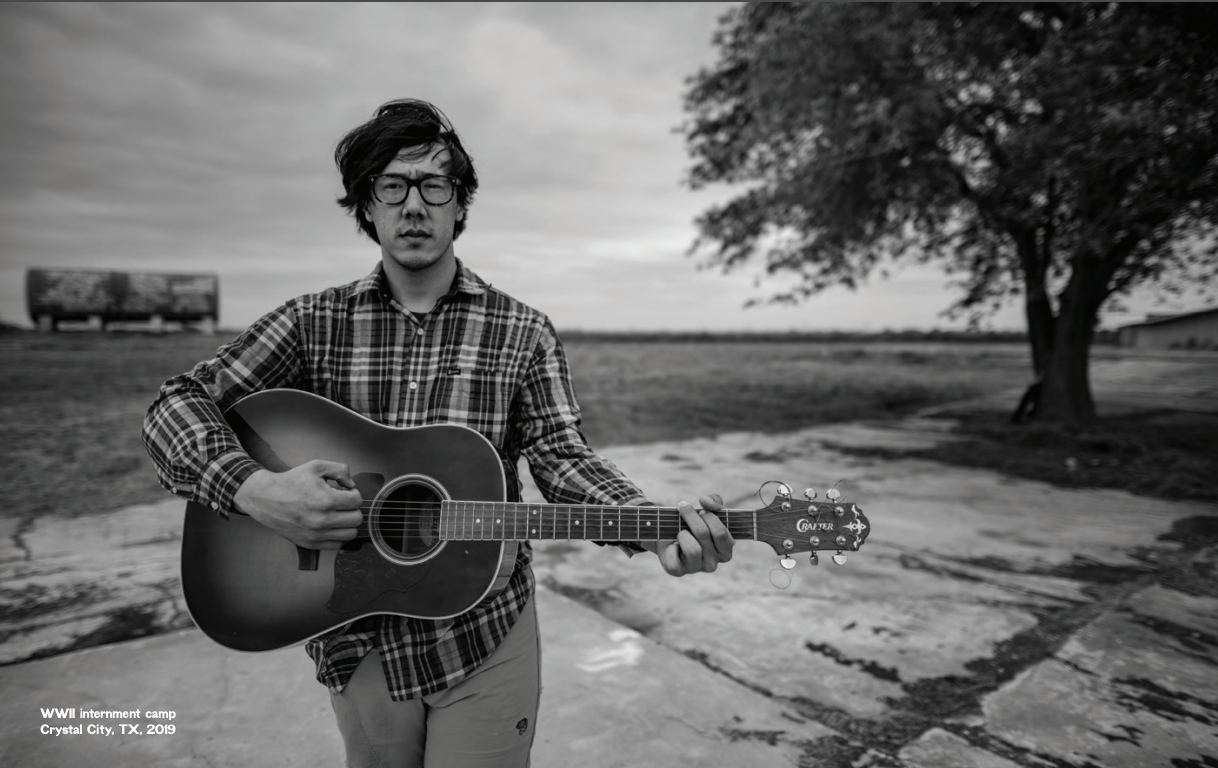
Why do you think he has such conflicting feelings?
Julian Saporiti with Guitar, by Diego Luis. Smithsonian Folkways Recordings.
Continued Resettlement of Refugees
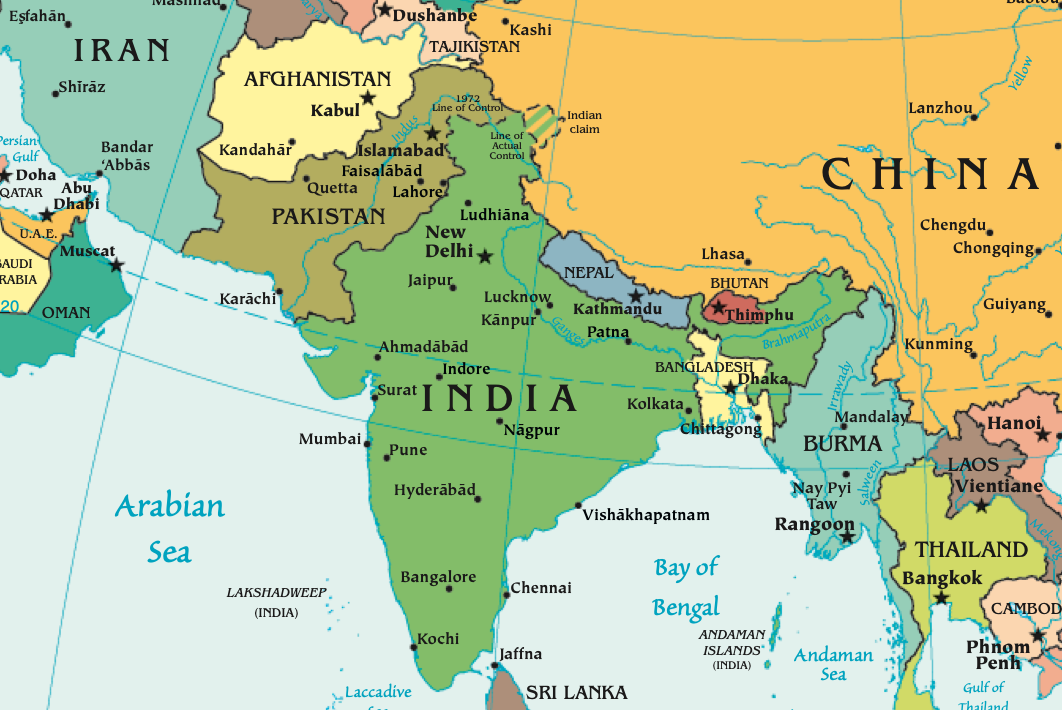
In the past two decades, the United States has continued to resettle refugees from Asian countries, most notably Myanmar, Bhutan, and Afghanistan.
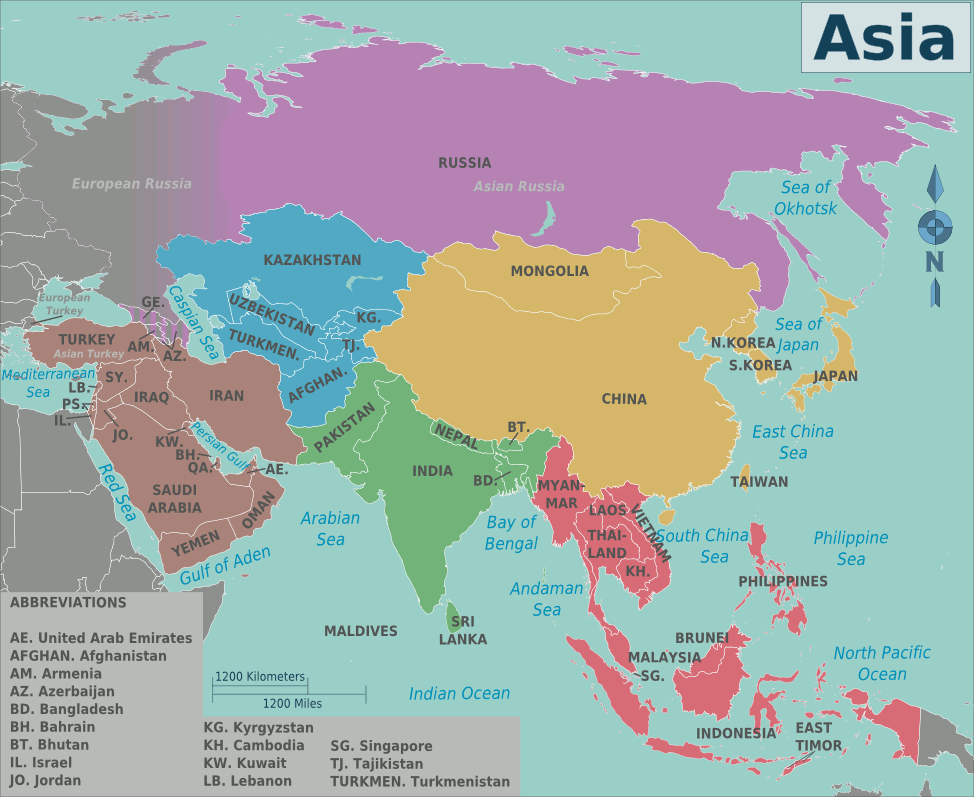
Asia Political Map, U.S. Central Intelligence Agency. University of Texas Libraries.
Artistic Connection: Puspa Gajmer
Listen to an excerpt from his song "Kaha Chau Mayalu."
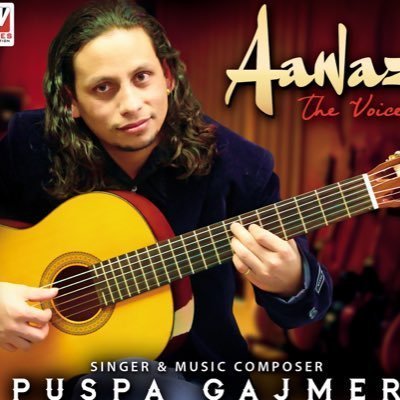
Puspa Gajmer, courtesy of the artist.
Puspa Gajmer was born in Bhutan, and was forced to flee to a refugee camp in Nepal as a child. After living there for over 22 years, he arrived in the United States in 2011. He is founder of the Himalayan Music Academy in Akron, Ohio.
Learning Checkpoint
- How did increased refugee quotas, the Vietnam War, and its aftermath affect the demographics of Asian American communities?
- How did the events discussed in this component (e.g., Hart-Cellar Act, refugee resettlement, etc.) affect the music made by Asian Americans?
- How did the Hart-Cellar Act affect the demographics of Asian American communities?
- What is the model minority stereotype, and why is it harmful?
End of Component 1: Where will you go next?


The Music of Post-1965 Immigrants
Component 2
20+ minutes
Post-1965 Immigration Narratives
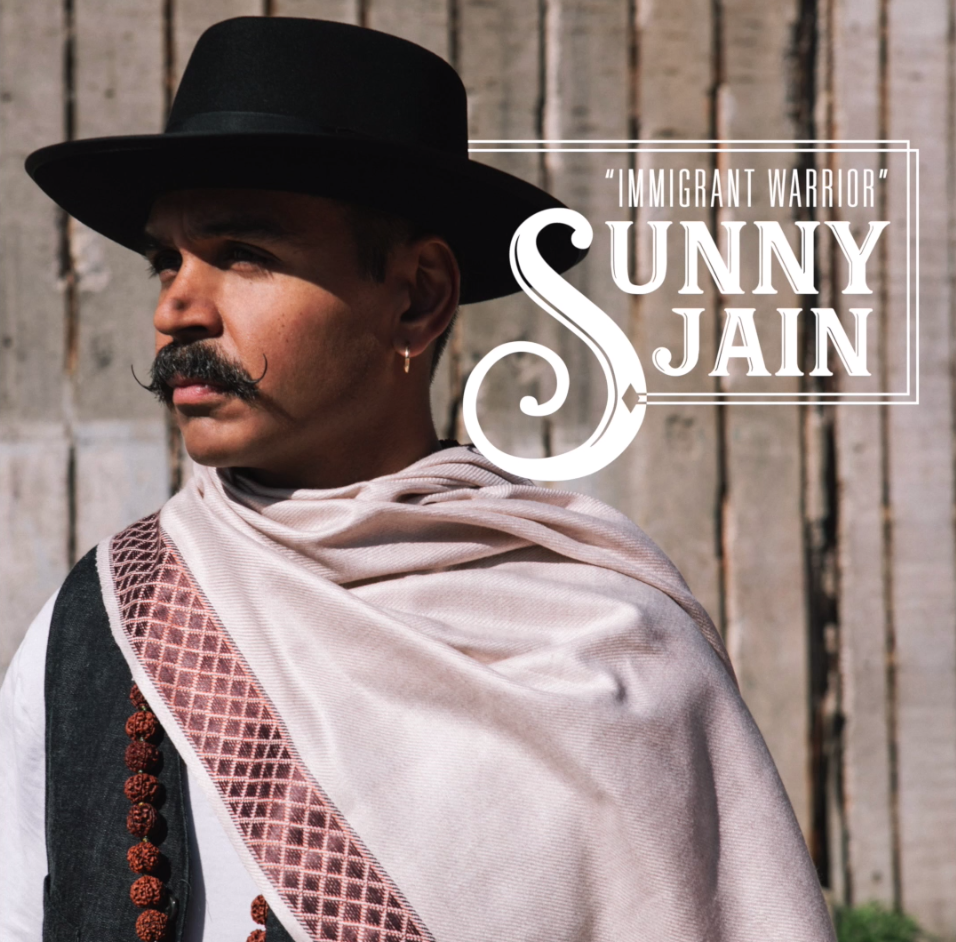
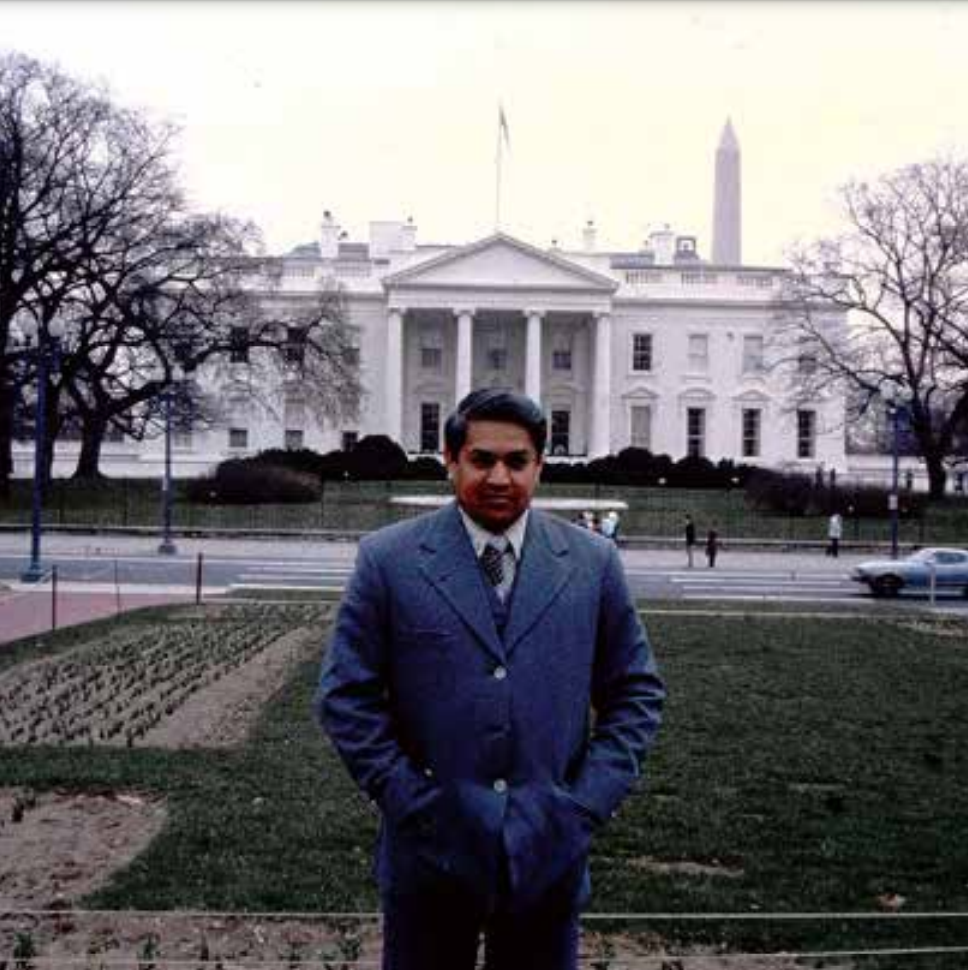
Above: Sunny Jain's parents immigrated to the U.S. in 1970.
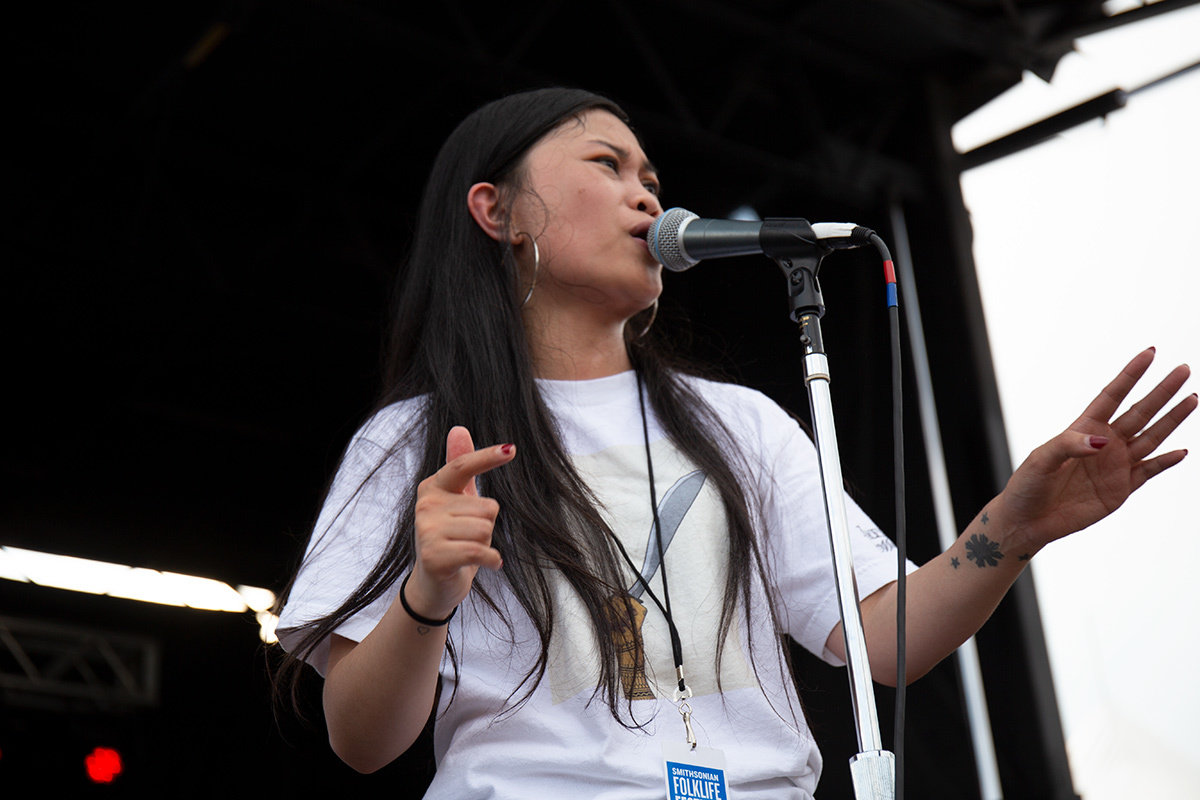
Below: Bochan Huy is a Cambodian refugee who came to the U.S. as a toddler in 1981.
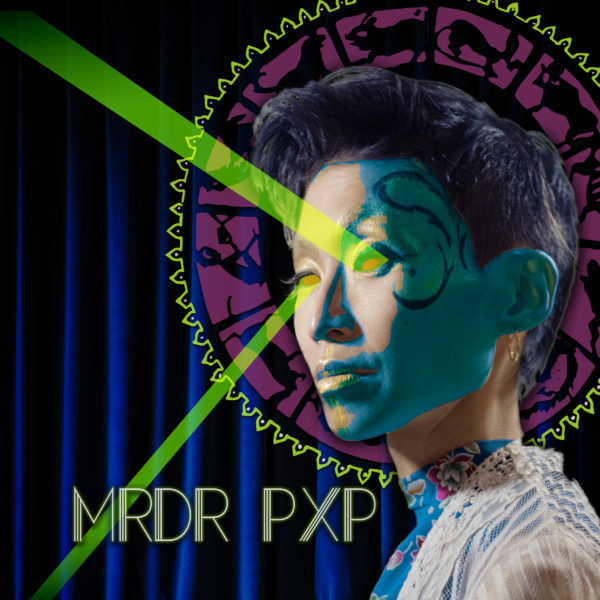
Below: Mayda Miller was adopted as a baby and came to the U.S. in 1984.
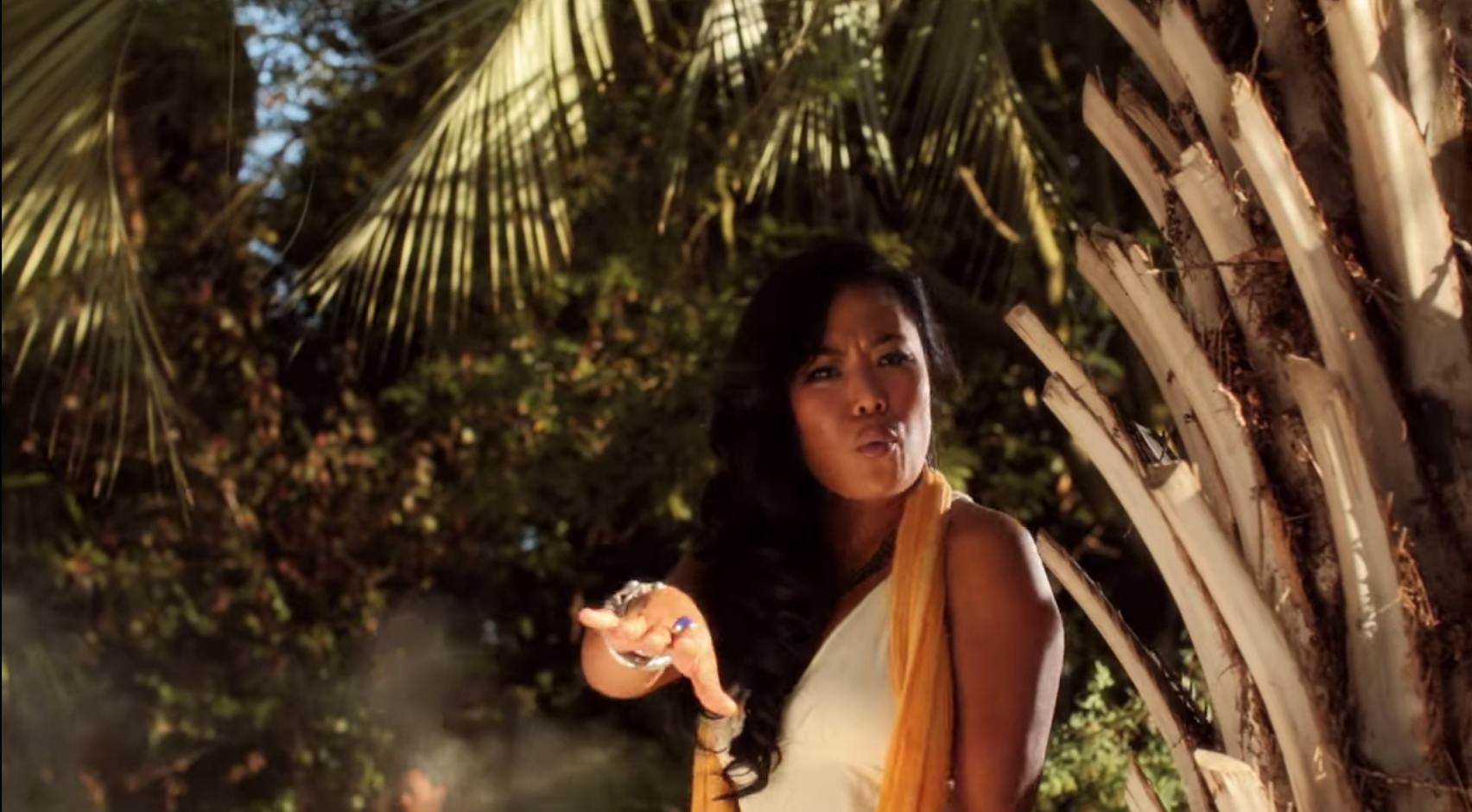
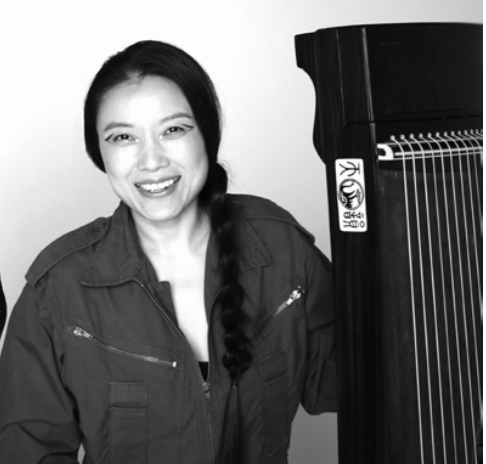
Below: Wu Fei came to the U.S., initially as a student, in 2000.
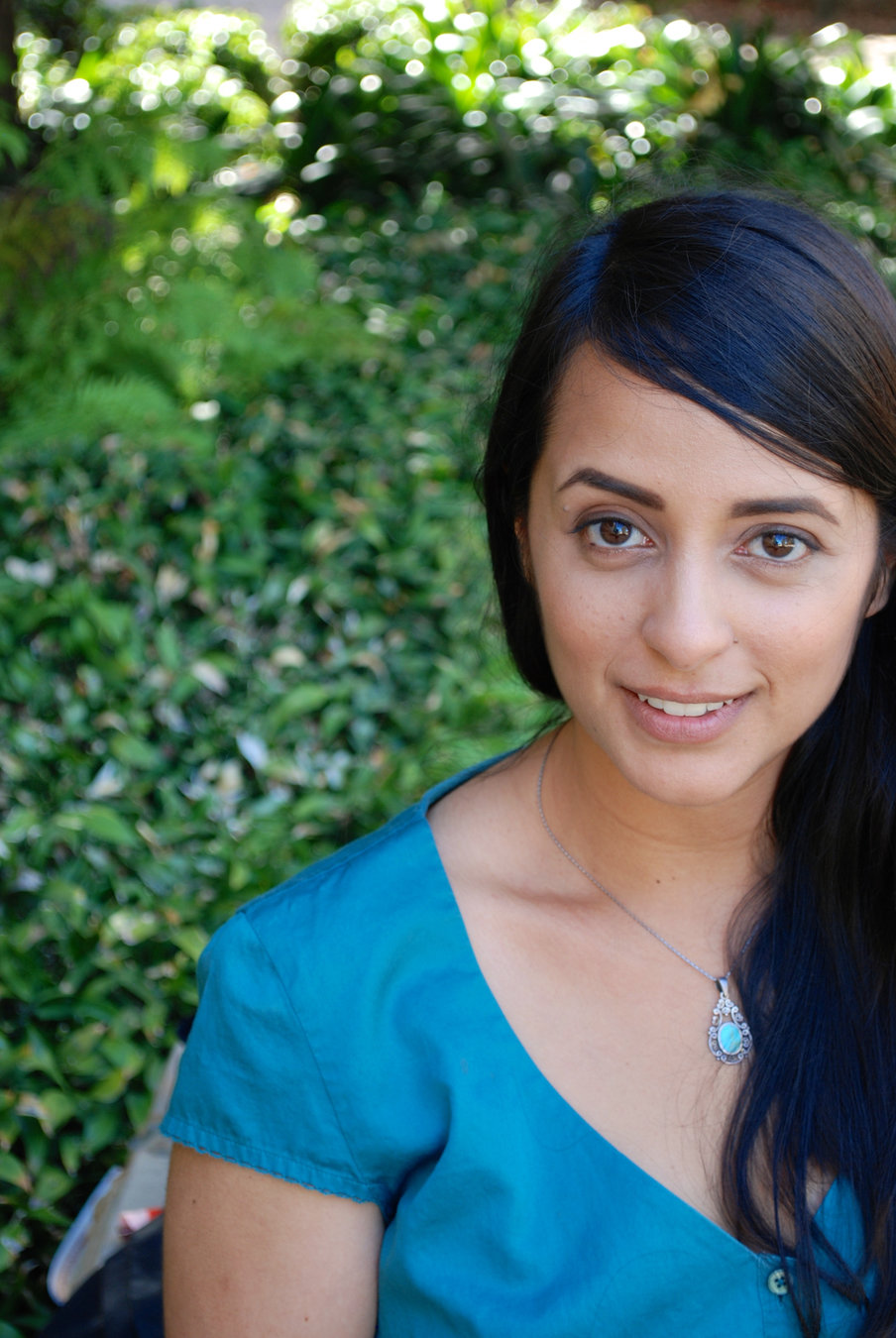
Above: Reena Esmail is the daughter of parents of Indian descent. Her father immigrated from Pakistan, and her mother from Kenya.
Above: Ruby Ibarra immigrated from the Philippines to California as a youth in the 1990s.
Immigration Narrative: Sunny Jain
Sunny Jain's father, Shri Jain, in front of the White House in 1971, courtesy of Shri and Asha Jain. Smithsonian Folkways Recordings.
Sunny Jain (b. 1975) is a second-generation South Asian American whose parents immigrated to Rochester, NY in 1970.
Jain wrote, "I believe the immigrants are our
current-day cowboy and cowgirl: a diverse cast of human beings from all corners of the world in search of freedom, a new way, a new life from what they knew before, courageous and by all accounts teaching and inspiring us all."
Sunny Jain: "Immigrant Warrior"
Immigrant Warrior by Sunny Jain, photo by Ebru Yildiz. Smithsonian Folkways Recordings.
His piece, "Immigrant Warrior," celebrates the bravery of immigrants.
What instruments do you hear?
Do you think it sounds "brave"? Why?
Sunny Jain: Bravery in "Immigrant Warrior"
At the beginning, this bravery is portrayed by the drumset, the sousaphone (playing the bass line), and the electric guitar (playing the melody).
Listen again:
Can you pick out each instrument's part?
Sunny Jain's Musical Influences
How does this middle section compare to the opening in terms of tempo, melody, texture and feel/emotion?
Jain loves the music of John Coltrane (1926-67), an African American jazz saxophonist who was inspired by Indian music and spirituality.
The saxophone solo (played by Pawan Benjamin) in the middle of "Immigrant Warrior," is a tribute to Coltrane.
Sunny Jain: In His Own Words
Listen to this interview excerpt (11:50-13:07), and discuss:
- What do you think of Jain's idea that immigrants are cowboys?
- What makes a good story?
- For you, what stories are worth telling?
- Jain says, "We have to tell our own stories, so the stories exist." Why are stories so often neglected?
New Songs For Ourselves: A Conversation with Sunny Jain, Nobuko Miyamoto, and Julian Saporiti. Smithsonian Folklife Festival, Smithsonian Folkways, and the Smithsonian Asian Pacific American Center.
Immigration Narrative: Bochan Huy
Bochan Huy (b. 1979) was born in Cambodia, fled to a refugee camp with her family in Thailand as an infant, and came to the United States in 1981.
Listen to her account of her family's harrowing escape at the end of the Khmer Rouge regime.
Bochan Huy on How Her Family Fled Cambodia. Music of Asian America Research Center.
Immigration Narrative: Bochan Huy
Many in the Cambodian American community have faced hardships over extended periods.
One thing that has given Bochan strength over the years is her father's openness about what Cambodian refugees went through during the Khmer Rouge regime and beyond, and his belief that Cambodian Americans are survivors, not victims. Watch the video to learn more:
Bochan Huy on Her Father's Openness about the Khmer Rouge Experience. Music of Asian America Research Center.
Bochan Huy: "Chnam Oun 16" (I am 16)
In 2010, Bochan created a cover of the 1970s Cambodian hit "Chnam Oun 16" ("I am 16").
In her cover and music video, Bochan added English lyrics that urged Cambodian Americans to see themselves as survivors and to come together to work towards a brighter future.
For you, what message is this video trying to send? What actions might it promote?
Chnam Oun 16, by Bochan. Soundvise.
Immigration Narrative: Reena Esmail
Born in Illinois in 1983, Reena Esmail is the daughter of two immigrants of Indian descent.
Her Muslim father's family was from Gujarat (northwestern India), but moved to Pakistan after the Partition of India. Her Catholic mother's family was originally from Goa (southwestern India), but they had moved to Kenya. They met in the United States.
Reena Esmail, photo courtesy of the artist.
Immigration Narrative: Reena Esmail
Because Esmail is of South Asian descent, many people asked if she wanted to incorporate Indian classical music into her compositions.
As Indian classical music developed from a Hindu tradition, and as neither of Esmail's parents was Hindi, Indian classical music was not really a part of her heritage.
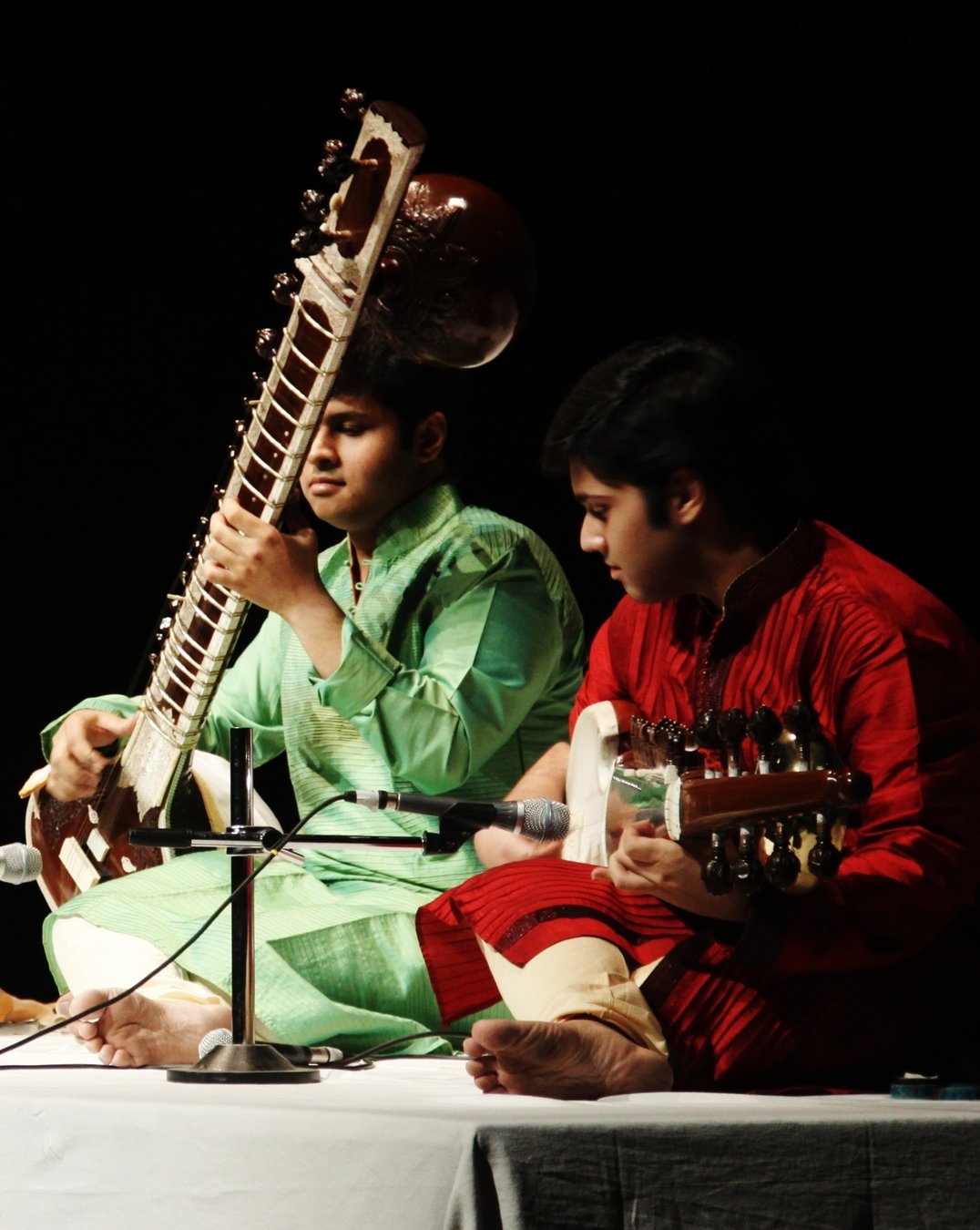
Are there cultural traditions you are unfamiliar with that other people expect you to know?
Sitar Sarod Jugalbandi, by Varunkohli.vmc. CC-BY-SA-3.0, via Wikimedia Commons.
Reena Esmail: Indian Classical Music
Esmail took a course on Indian classical music during graduate school, and fell in love with it. She subsequently studied the tradition in India for a year.
Many of Esmail's works since 2009 have been influenced by Indian classical music. To acquaint yourself with this tradition, listen to the embedded track.
An Introduction to Indian Music, by Ravi Shankar. Columbia.
Reena Esmail: "Piano Trio"
Indian ragas appear throughout Esmail's Piano Trio (2019). The first movement (see video) is based on a raga called "Megh," which means "cloud" in Sanskrit. It is associated with the monsoon season.
The work is also influenced by Maurice Ravel's Piano Trio, which is one of Esmail's favorite works.
Piano Trio: Movement I - Reena Esmail with Suzana Bartal, Vijay Gupta, and Peter Myers. Uploaded to YouTube by Vijay Gupta.
Immigration Narrative: Mayda Miller
Born in South Korea, Mayda Miller was adopted as a baby by a family in St. Paul, Minnesota.
Like many transnational and transracial adoptees, Mayda had a difficult time fitting in with neighbors and people in school. Watch the video to hear more.
For Mayda, music was the activity that allowed her to be herself.
Mayda Discusses Feeling Different as a Child. Music of Asian America Research Center.
Immigration Narrative: Mayda Miller
In 2013, Mayda booked a three-week tour of South Korea, during which she also met her birth parents.
Through this tour, she discovered how great a bond she had with other Korean adoptees. She says that this bond is the closest "familial support" that she has ever gotten. Watch the video to hear more.
What identities and interests do you share with your closest friends? How did they become your closest friends?
Mayda Miller Discusses the Bond She Feels with Other Korean Adoptees. Music of Asian America Research Center.
Mayda Miller: "The Han"
Mayda often discusses identity issues in her music. "Han" is often considered an essential element of modern Korean identity. Definitions of this concept vary, but it usually involves some combination of sorrow, resentment and regret.
Click on the photo to listen to her song that explores this concept.
Mayda believes that she carries the "han," which often manifests in an urge to prove herself.
MRDR PxP, by Mayda Miller. Cover art by. Need more licensing info.
Immigration Narrative: Ruby Ibarra
Born in the Philippines in 1988, Ruby Ibarra first encountered hip hop at age 4, when she watched Filipino rapper Francis Magalona on television.
A few years later, she immigrated with her family to San Lorenzo, California (in the San Francisco Bay area).
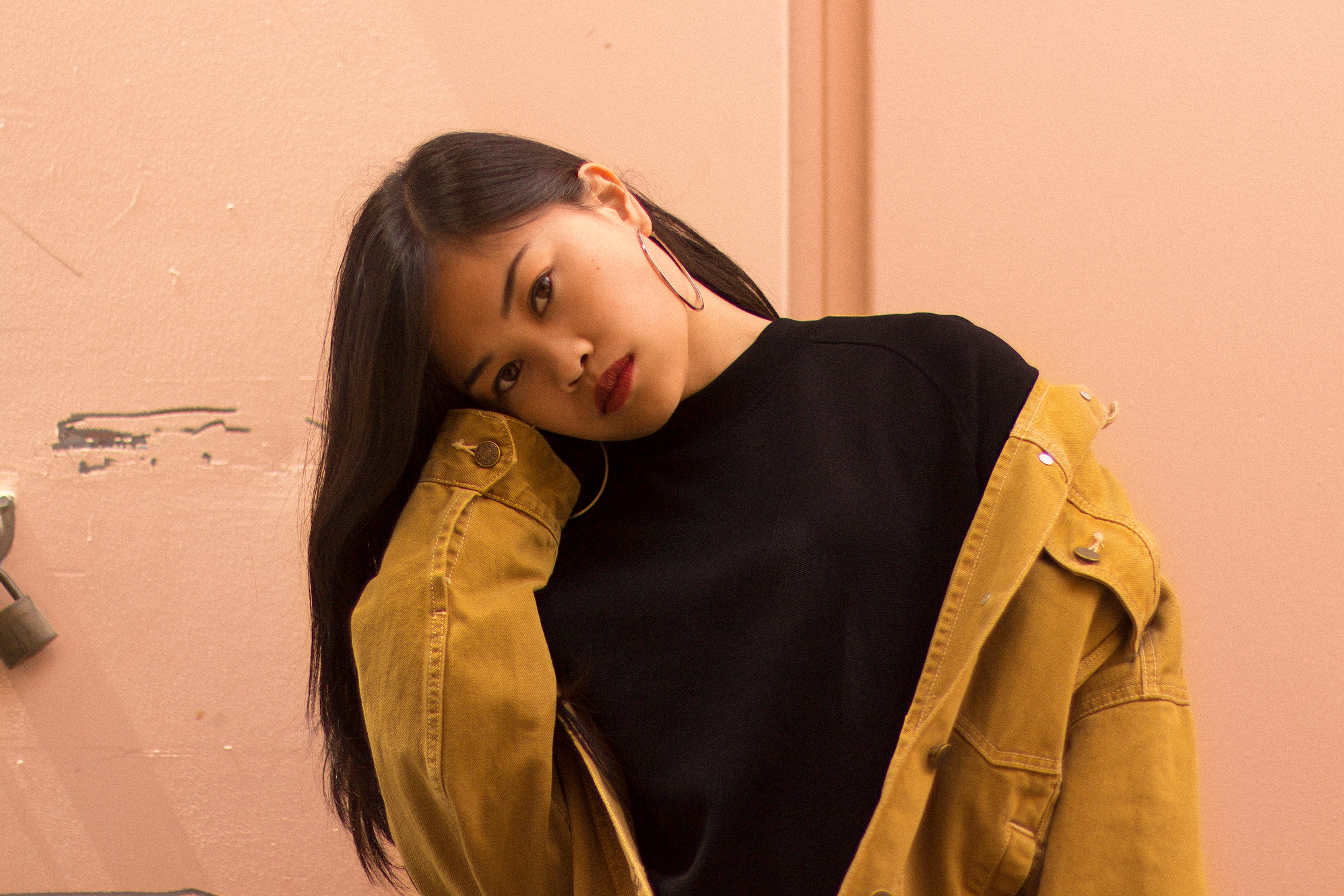
Ruby Ibarra, photo courtesy of the artist.
Ruby Ibarra: Expressing Experiences through Hip-Hop
Ibarra uses hip hop to speak about her own experience as an immigrant, and to help other immigrants feel seen.
At the 2019 Smithsonian Folklife Festival, she said, “Right now we’re at a pivotal moment where we’re talking about immigration, but a lot of specific stories coming from immigrants themselves are still not being told.”
Why is it hard to tell and hear these stories?
Ruby Ibarra at the 2019 Smithsonian Folklife Festival, by Xueying Chang. Ralph Rinzler Folklife Archives.
Ruby Ibarra: "Us"
A collaborative effort with FIlipinx American artists Rocky Rivera, Klassy, and Faith Santilla, Ibarra's "Us" (2017) challenges the stereotype of the passive and submissive Asian woman.
Have you seen examples of this stereotype in American popular culture? How does this song challenge the stereotype?
Us, written and performed by Ruby Ibarra, Rocky Rivera, Klassy, and Faith Santilla, produced by Nphared.
Who is Wu Fei?
In Lesson #1, we studied "Bu Da Da," a duet by Wu Fei and Abigail Washburn.
Wu Fei came to the United States as a college student in 2000. Watch the video to the right to hear how the American education system both surprised her, and led her to think in new ways.
Wu Fei Part 3. Music of Asian America Research Center.
Wu Fei: "She Huo"
Since 2015, Wu Fei has lived in Nashville, where she has regularly collaborated with the innovative chamber ensemble Chatterbird.
In this video, she and Chatterbird perform her 2007 work, She Huo, which is the name of a Chinese New Year festival in northern China.
What do you think Wu Fei is trying to express in this poem and song?
Wu Fei and Chatterbird - She Huo's US Premiere, music and poem by Wu Fei.
Personal Connections
Which pieces in this component did you relate to the most or the least?
Which pieces did you particularly enjoy or dislike? Why?
Have you tried to discover or develop your personal identity?
What role does music play in your identity?
Learning Checkpoint
- How do musicians' immigration history or experiences affect their music making?
End of Component 2: Where will you go next?
Exploring Asian American Spaces
Component 3
20+ minutes
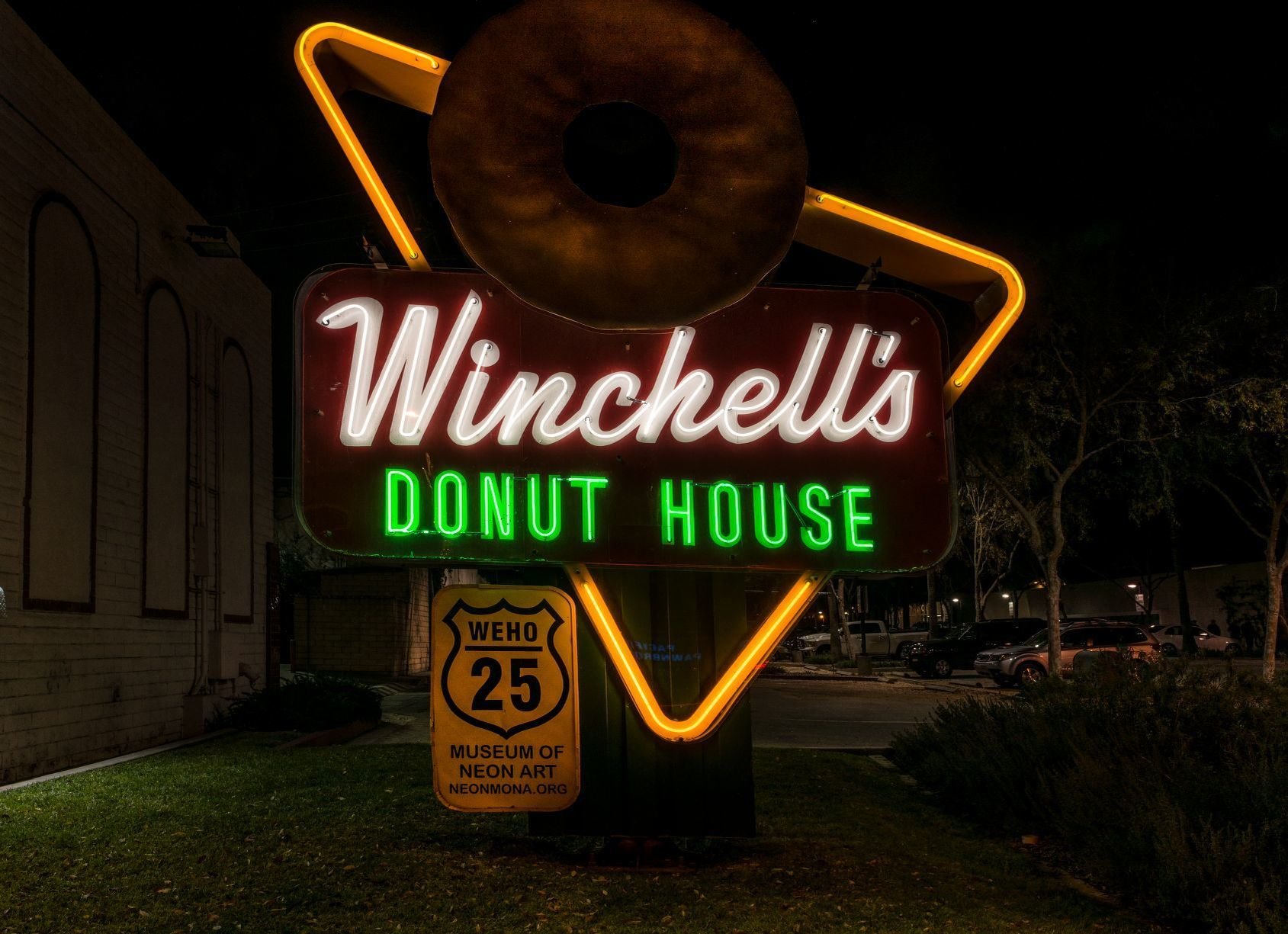
Donut Shop Neon Sign on Santa Monica Boulevard in West Hollywood, CA, by Carol M. Highsmith. Public Domain {{PD-US}}, Library of Congress.
What are Ethnic Spaces?
Ethnic spaces are places where members of an ethnic group establish a sense of belonging.
Japantown - Seattle, 1909, unknown photographer. {{PD-US}}, via Wikimedia Commons.
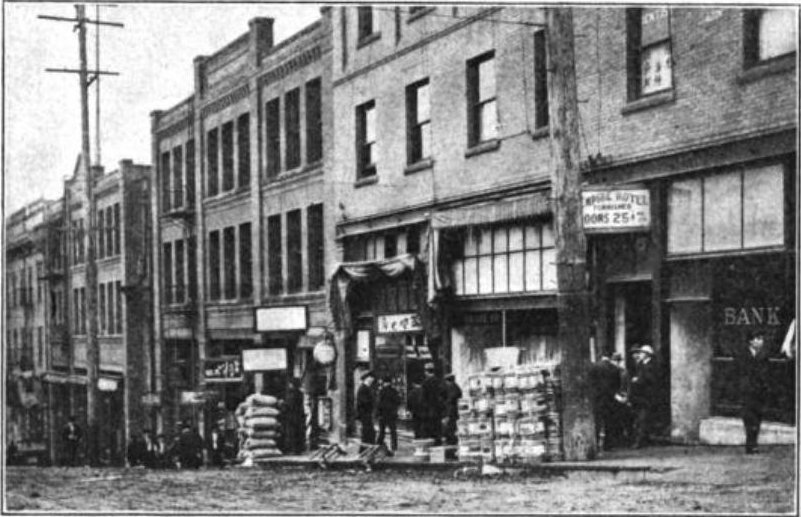
One example is ethnic enclaves, where members of an ethnic group live together for safety and mutual support, and because of segregation laws (e.g., Chinatown, Manilatown, Little Tokyo, Little India).
More Types of Ethnic Spaces
Sometimes, ethnic spaces are businesses, social service organizations, or work-related spaces that cater to specific ethnicities. Examples include:
- Ethnic Restaurants and Groceries
- Ethnic Churches/Places of Worship
- Ethnic Theaters/Nighclubs
- Ethnic Salons
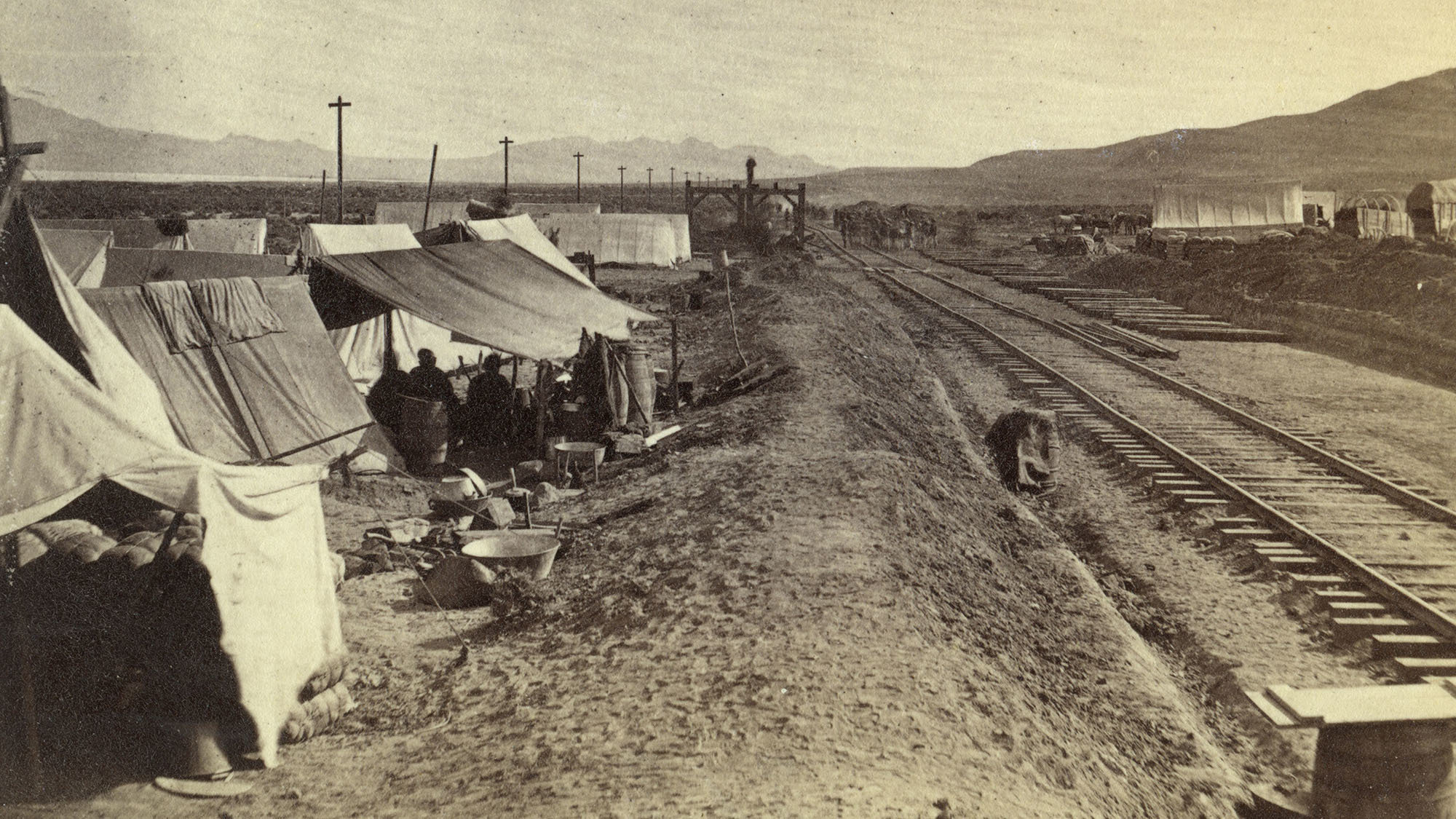
- Ethnic Labor Camps
Camp for Chinese Railroad Workers near Brown's Station of the Central Pacific Railroad, by Alfred A. Hart. Public Domain {{PD-US}} Special Collections, Stanford University Library.
Artistic Connection:
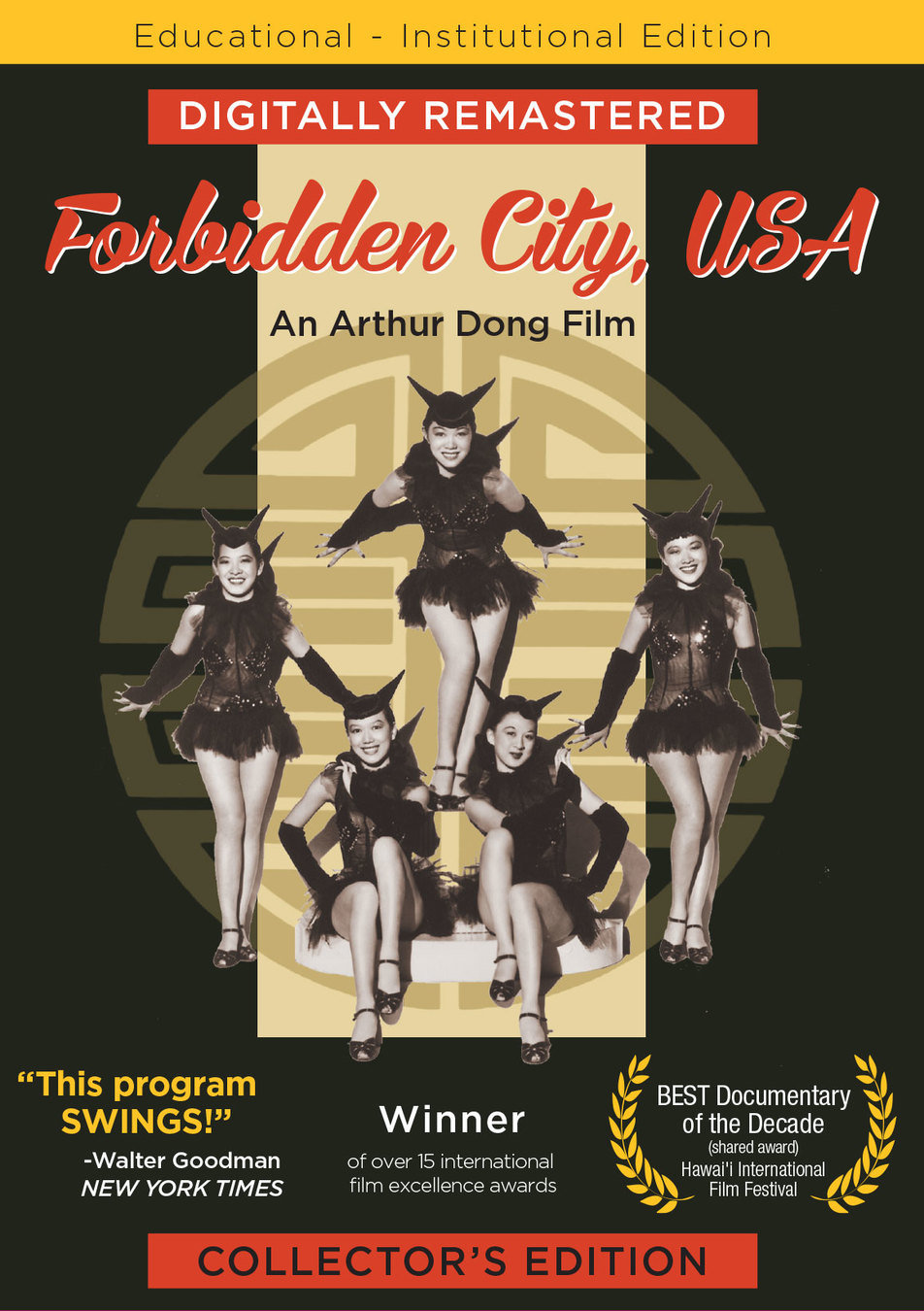
Chinese American Nightclubs
From the 1930s to the 1960s, Chinese American nightclubs flourished in such cities as San Francisco, New York, Los Angeles, and Oakland.
Forbidden City, USA, need designer info. Deep Focus Productions Inc.
These clubs presented mostly mainstream American entertainment, performed by Asian Americans. Some performers on this circuit appeared on Broadway and in Hollywood films.
Temporary Ethnic Spaces
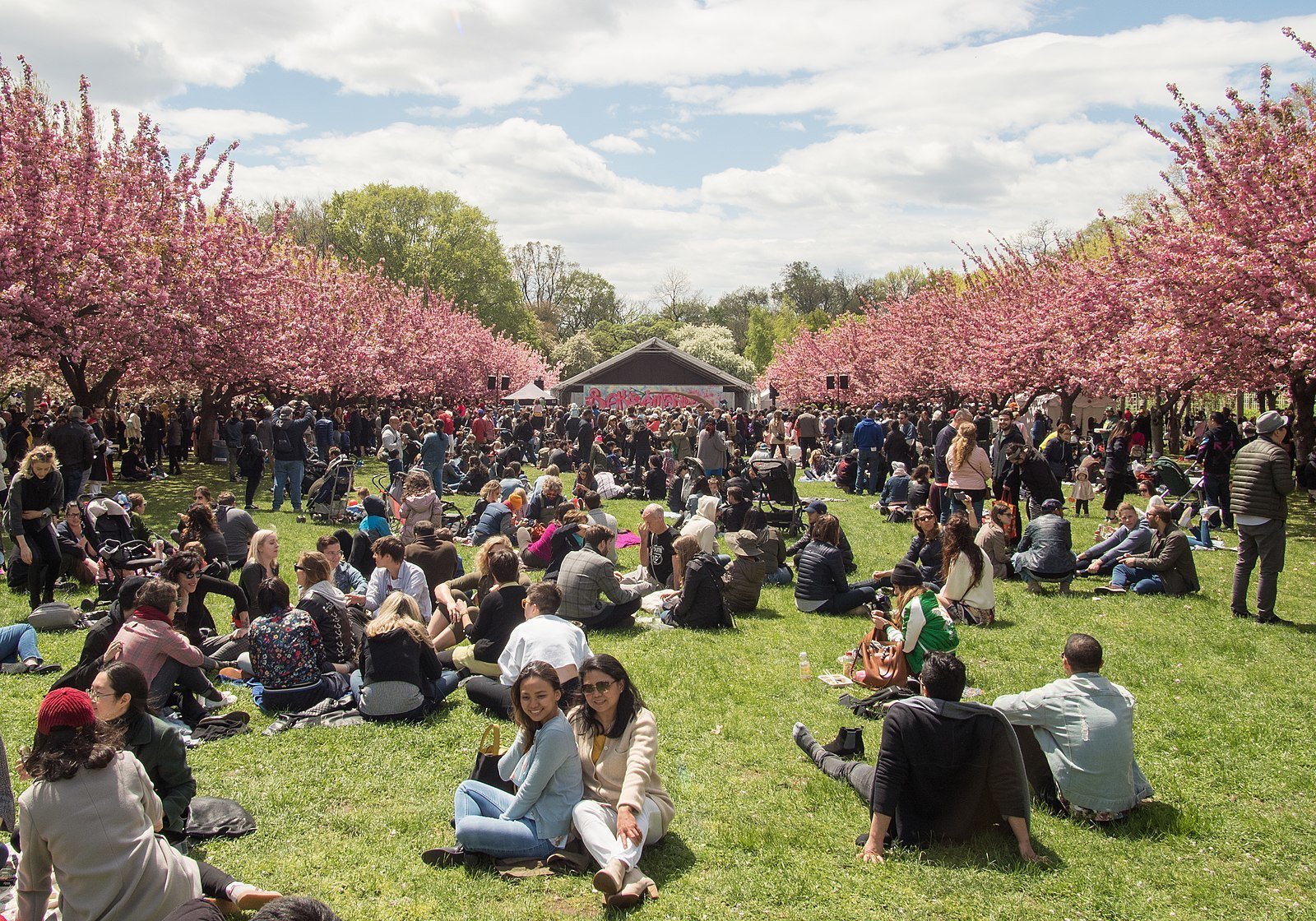
Sometimes, ethnic spaces are temporary. This usually occurs when members of one ethnicity organize events at multi-use spaces. Examples include:
- Festivals at a public park
- Church services in a language spoken primarily by one group of immigrants
- Weekend language/culture programs in school buildings
Sakura Matsuri (Cherry Blossom Festival) at Brooklyn Botanical Gardens, by Rhododendrites. CC-BY-SA-4.0, via Wikimedia Commons.
More About Ethnic Spaces
Sometimes, ethnic spaces are created because one ethnicity is highly visible in or even dominates a certain profession or type of business.
Connection: In the first two verses of "We Are the Children" (Lesson 1), Nobuko Miyamoto and Chris Iijima said that they were the children of railroad builders, Chinese waiters, laundry workers, and Japanese gardeners.
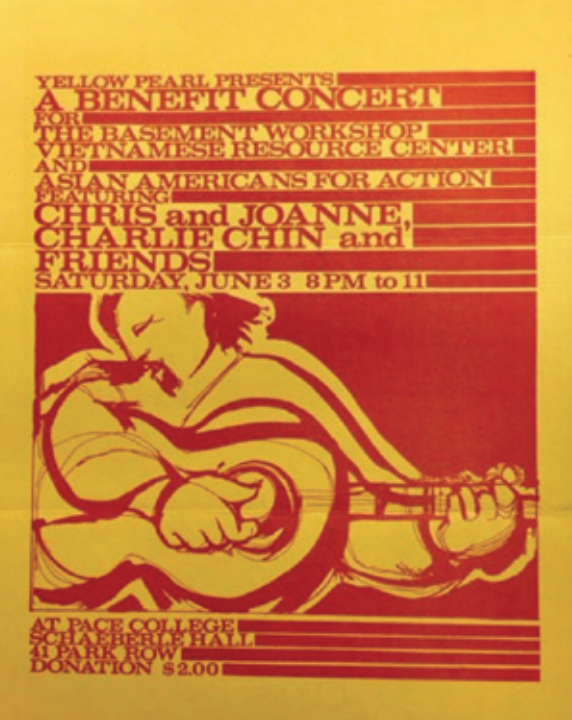
Poster for 1971 Benefit Concert Featuring Chris Iijima, Joanne (Nobuko) Miyamoto and Charlie Chin, artwork by Tomie Arai, courtesy of Great Leap Archive.
Research Project: Ethnic Professions, Intro
In recent decades, professions and business niches associated with Asian American ethnicities have changed. Nonetheless, recent immigrants often choose these paths because of personal connections, support from ethnic connections, minimal requirements in English skills, and training available in countries of origin.
At the same time, it is important to recognize that ethnically dominated professions and business niches often lead to racial stereotyping, and tension with neighborhoods where they are located.
The instructor will divide the class into small groups. Each group will conduct research on one of these topics:
- South Asian American Motel Operators
- Cambodian American Donut Shops
- Vietnamese American Nail Salons
- Filipino American Nurses
- Korean American Corner Groceries
Research Project: Ethnic Professions, Instructions
As you complete your research, try to answer the questions below. Your instructor may alter some of these questions or add new ones.
-
What is the history of the ethnic group's participation in this profession or type of business?
-
What are the pros and cons of working in this profession/business?
-
Find the stories of at least two people from the ethnic group who have participated in this line of work. What are their views of the profession?
Research Project: Ethnic Professions, Guiding Questions
South Asian American Hotel/Motel Operators
Three Gujaratis (from western India) bought the first South Asian American-owned motel in 1942, and early Gujarati hotel owners were instrumental in helping new Gujarati immigrants get into the motel business.
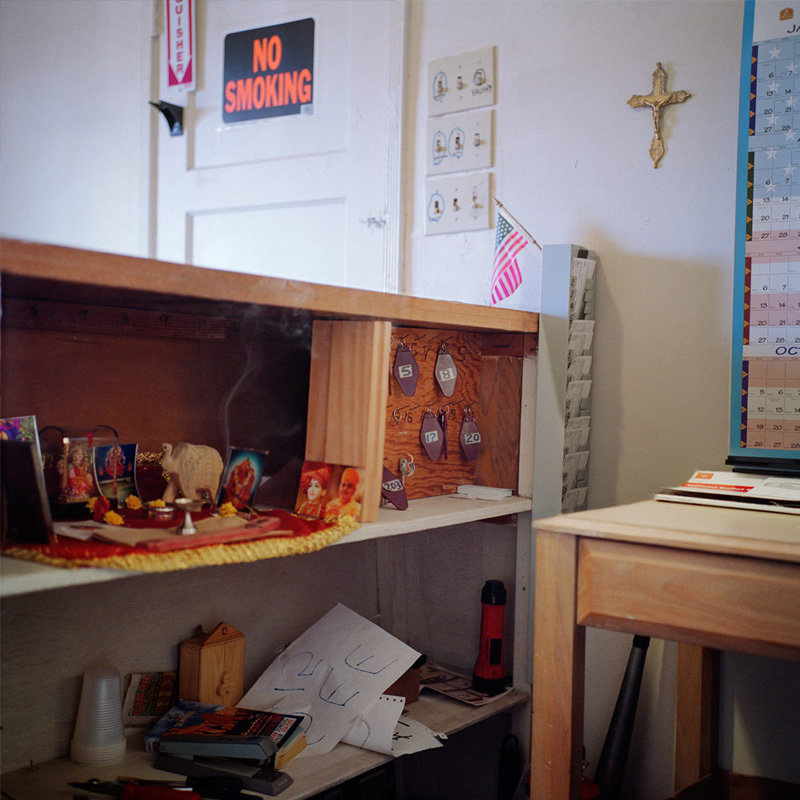
Arch Motel Project, by Chiraag Bhakta. South Asian American Digital Archive.
About half of the U.S.'s motels are owned by South Asian Americans.
Cambodian American Donut Shops
Today, Cambodian Americans own a large majority of independent donut shops in L.A., Houston and some other metro areas.
Shortly after he arrived in the U.S. in 1975, Ted Ngoy was accepted into a training program at Winchell's Donut House.
He bought his first donut shop in 1977. To expand his donut empire, Ngoy bought stores, trained and leased them to relatives, and hired other Cambodian refugees.
Vietnamese American Nail Salons
Nail salon jobs are stable, but provide limited income; workers also suffer health consequences from long-term exposure to toxins found in nail products.
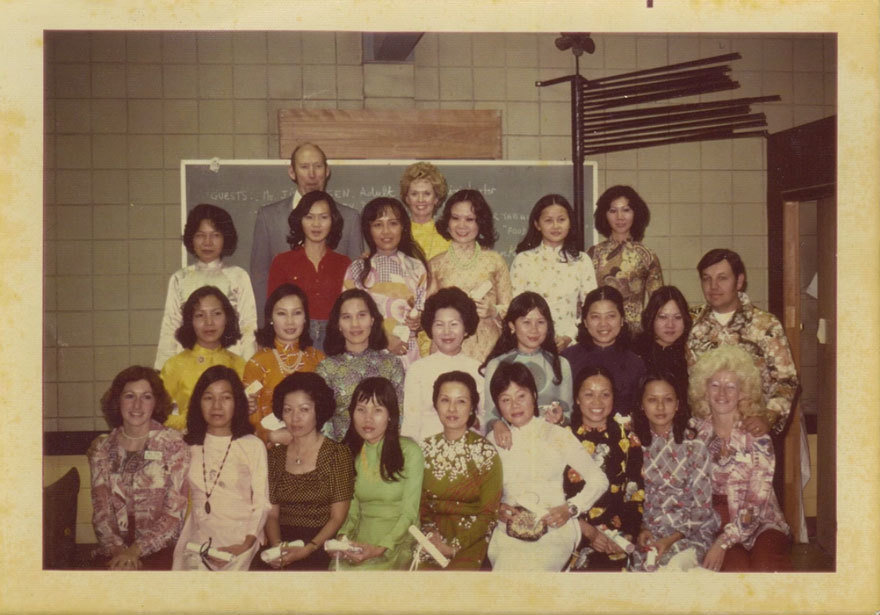
The First 20 Vietnamese Manicurists, with Tippi Hedren, Upon Receiving Their Manicuring License, courtesy of Co Thuan Le. Diasporic Vietnamese Artists Network.
This business niche began after actor Tippi Hedren arranged for her manicurist to train 20 Vietnamese refugee women, who then trained their friends.
Today, 40% of nail salon technicians in the US are Vietnamese women.
Filipino American Nurses
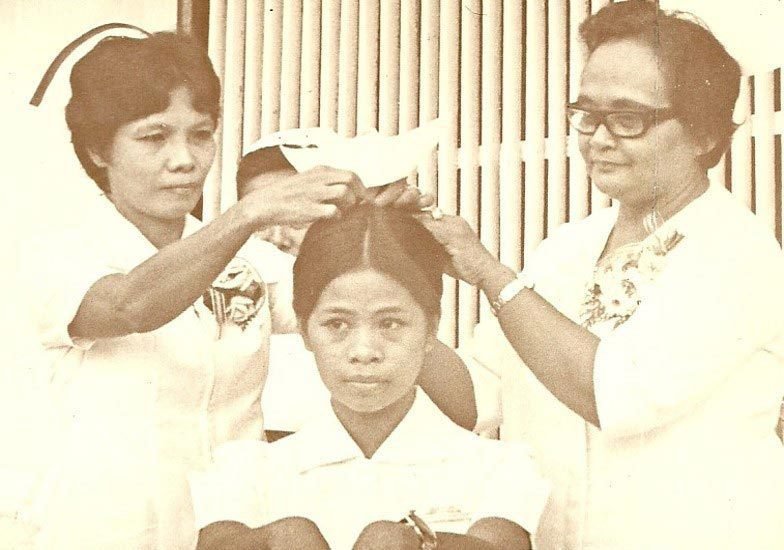
Jolly Capucao at her Capping Ceremony, unknown photographer. UVAToday, courtesy of Reynaldo "Ren" Capucao
Today, 4% of RNs in US (nearly 20% in California) are of Filipino descent.
The U.S. colonial government in the Philippines installed Americanized nursing programs.
Many U.S. hospital administrators recruited nurses from the Philippines, as they had an Americanized education and spoke English.
Korean American Grocers
Korean Corner Grocery in Toronto, by Haha169, CC-BY-SA-4.0, via Wikimedia Commons.
Changing economic conditions and differing desires of most second-generation Korean Americans led to a dramatic decrease in the number of Korean American corner groceries in the past two decades.
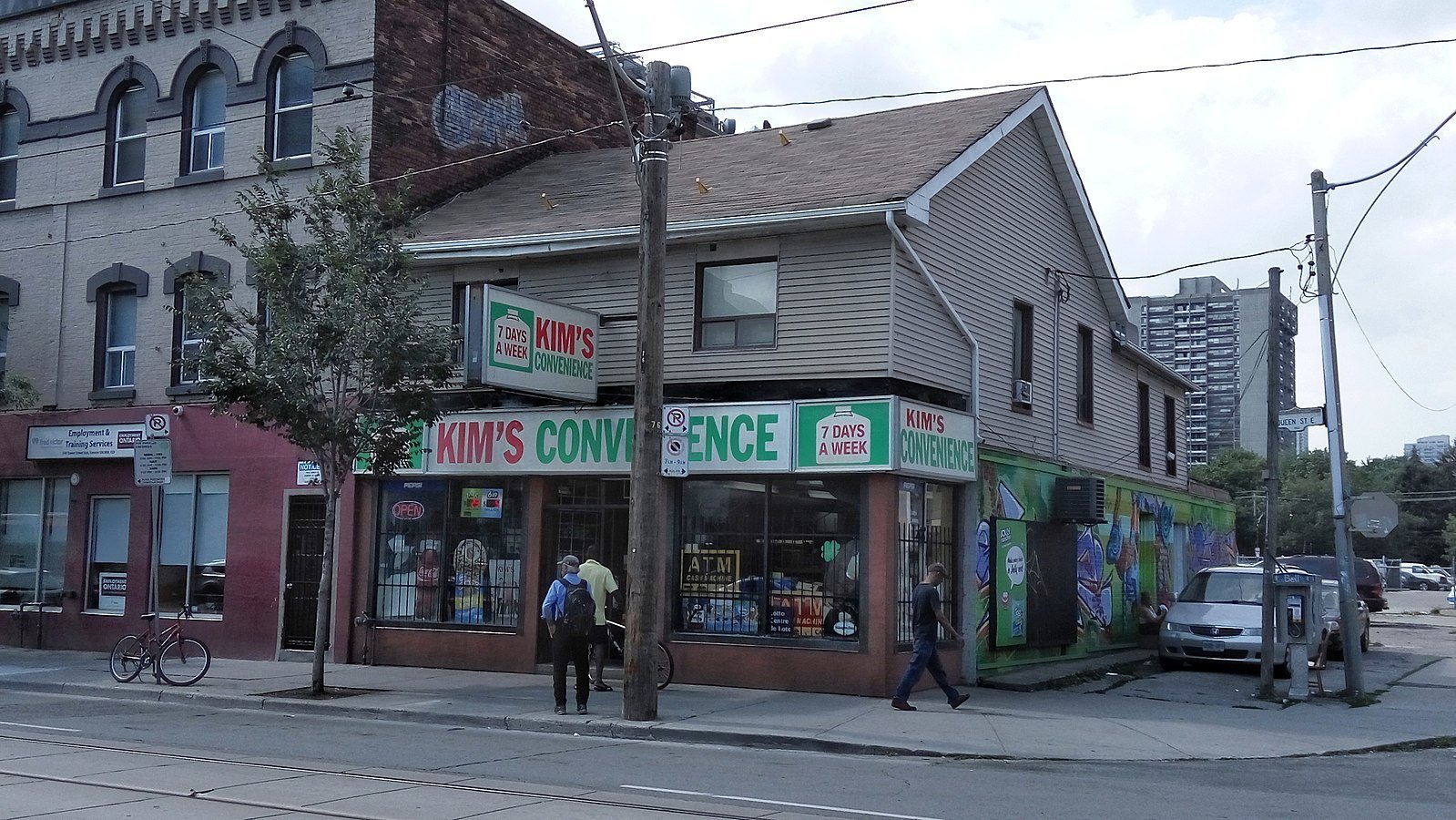
From the 1960s to the 1980s, many Korean immigrants opened corner groceries.
Many of these grocers were in economically disadvantaged areas. This often led to tense relationships with local communities.
Presenting Your Research, Method 1
Each group will present the results of its research in one of two ways. Here is method #1:
- Give a 5-7 minute research presentation to your class.
- Provide some background information about the ethnic group you researched.
- Discuss how they became so involved in this line of work.
- Your presentation should include pictures and, if possible, one or two excerpts from relevant oral histories.
Presenting Research Icon, via Free Icons Library.

Presenting Your Research, Method 2
Here is method #2:
- Write and perform a 7-10 minute play for your class.
- The play must be based on one of the oral histories you watched/listened in during your research.
- The play should express this person's actual ideas and feelings about this line of work.
- Fictional characters can be created to give the audience background information, or express opposing points of view.

Theatre Mask Icon, find source or replace.
Learning Checkpoint
- How has learning about these ethnic professions and business niches confirmed or changed your pre-lesson conceptions about Asian American experiences?
- What similarities and differences did you find between the five professions and business niches you and your classmates studied?
- What are ethnic spaces? Why are they important?
End of Component 3 and Lesson 6: Where will you go next?


Lesson 6 Media Credits
Audio courtesy of
Smithsonian Folkways Recordings
Video courtesy of
Library of Congress
Music of Asia America Research Center
National Committee on U.S. China Relations
Smithsonian Folkways Recordings and Folklife Festival
Smithsonian Asian Pacific American Center
Images courtesy of
Diasporic Vietnamese Artists Network
LBJ Presidential Library
Library of Congress
National Archives
Pew Research Center
Smithsonian American Art Museum
Smithsonian Asian Pacific American Center
Smithsonian Folklife Festival
Smithsonian Folkways Recordings
South Asian American Digital Archive
Stanford University Library
University of Texas Libraries
University of Virginia
© 2022 Smithsonian Institution. Personal, educational, and non-commercial uses allowed; commercial rights reserved. See Smithsonian terms of use for more information.
This project received Federal support from the Asian Pacific American Initiatives Pool, administered by the Smithsonian Asian Pacific American Center.
For full bibliography and media credits, see Lesson 6 landing page.