Listen What I Gotta Say: Women in the Blues
Lesson Hub 3
Melting Pot: Becoming the Blues
3rd grade–5th grade


Can we find cultural influences from Africa and Europe in the blues?
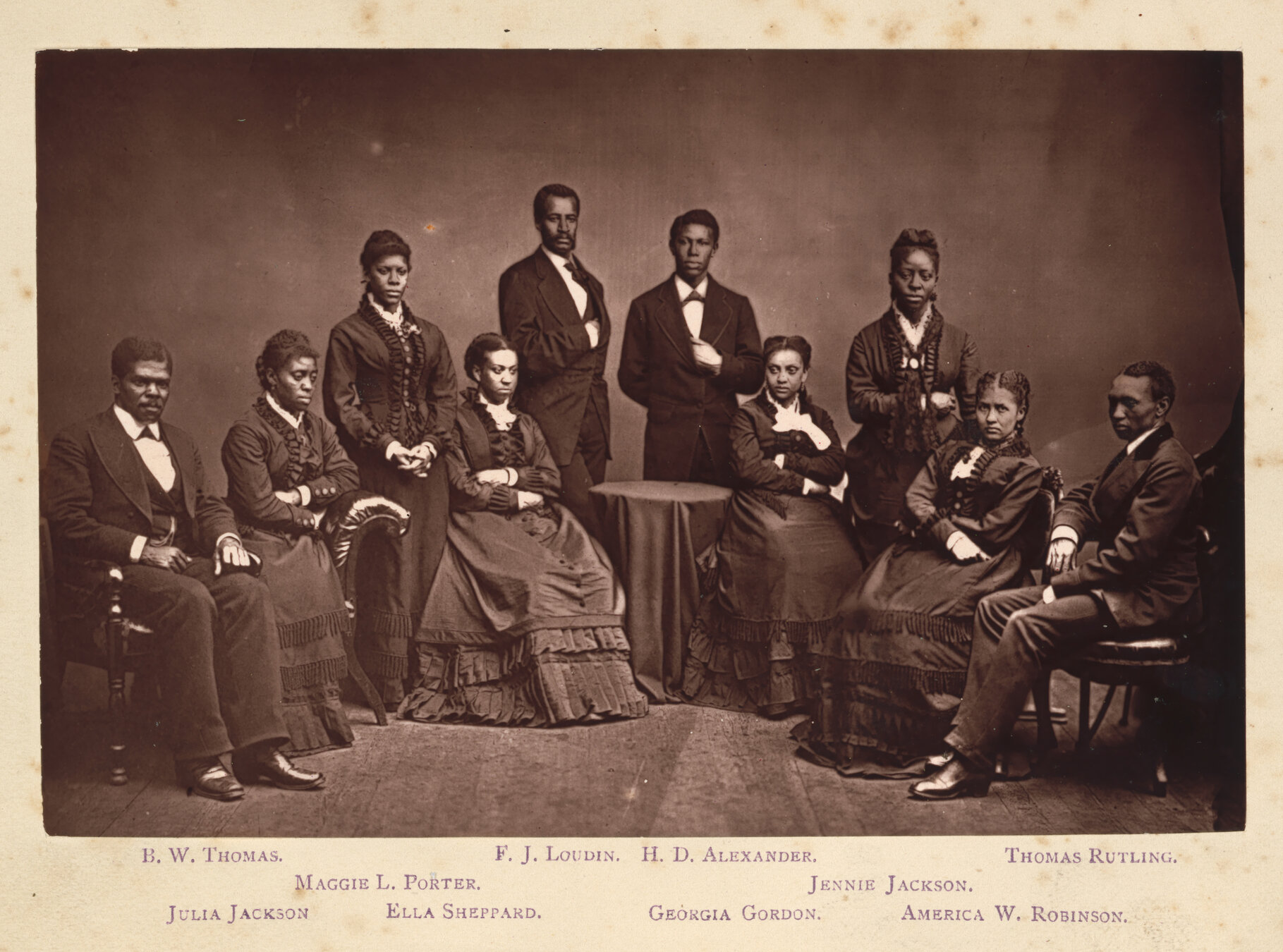
The Story of the Jubilee Singers, Unknown photographer. National Portrait Gallery.
The question to consider throughout this Lesson is:
Becoming the Blues
Hello! I’m the howlin’ hound dog, Sister Rosetta Bark!
I'm here to help you learn about what happened before the blues. Let's look and listen for mixing European and African musical influences.

Melting Pot: Becoming the Blues

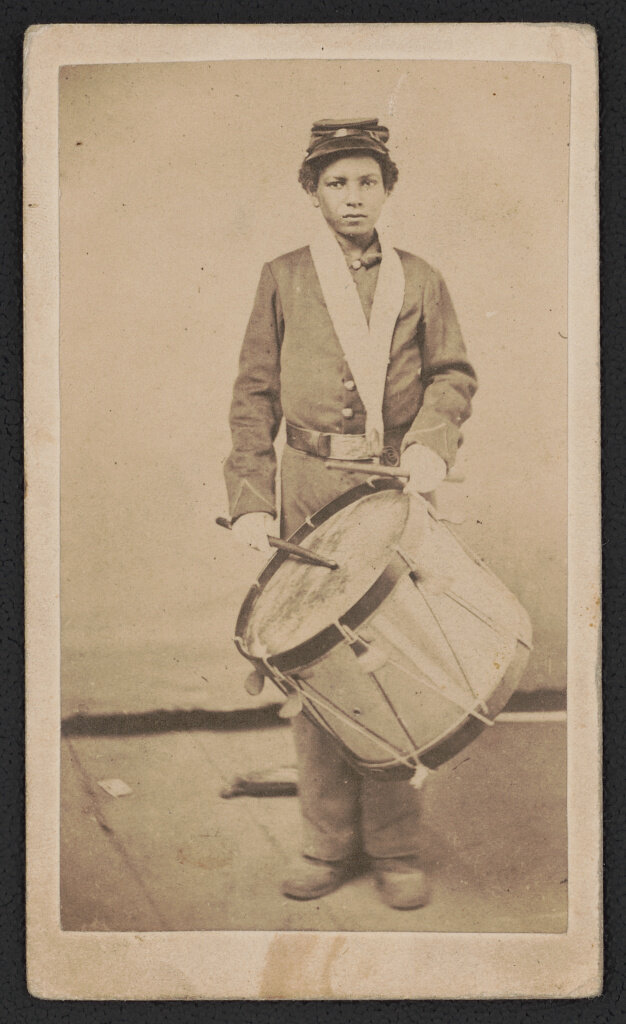
Taylor, young drummer boy for 78th Colored Troops (USCT) Infantry, in uniform with drum, Unknown Artist. Library of Congress.

Before the Blues: Spirituals
20-30 minutes
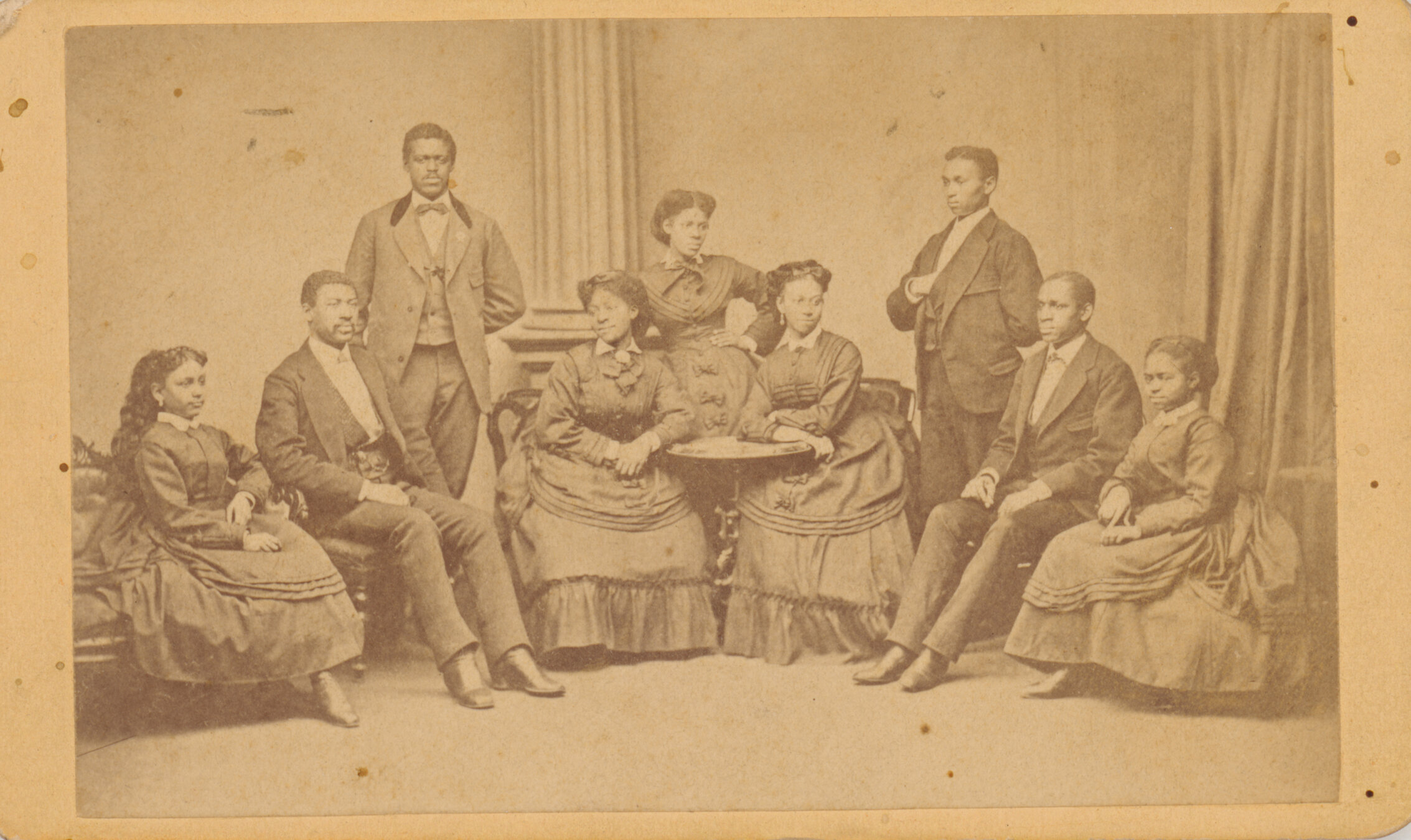
Fisk Jubilee Singers, Unknown photographer. National Portrait Gallery.

Path 1
The Musical Melting Pot
From the 1500s - 1900s, millions of people from Africa were forced from their homes and families and shipped to the Americas.
Music culture in the Americas slowly changed as it blended with the music culture of enslaved African peoples.

Melting Pot: Becoming the Blues
Over time, new musical forms emerged (e.g. ring shouts, field hollers, work songs, spirituals, gospel, ragtime, blues).
Because this process happened over centuries, it is difficult to identify which musical practices were of African, local, or European origin.

Attentive Listening

"Rock Chariot, I Told You to Rock," performed by Rich Amerson with Earthy Anne and Price Coleman.
Listen to a short excerpt (30-45 seconds) from this audio recording.
- As you listen, think about this guiding question:
What kind of music is this?
Spirituals
Road Leading To Small Cabin, Alabama, by Harold Courlander. Folkways Records.
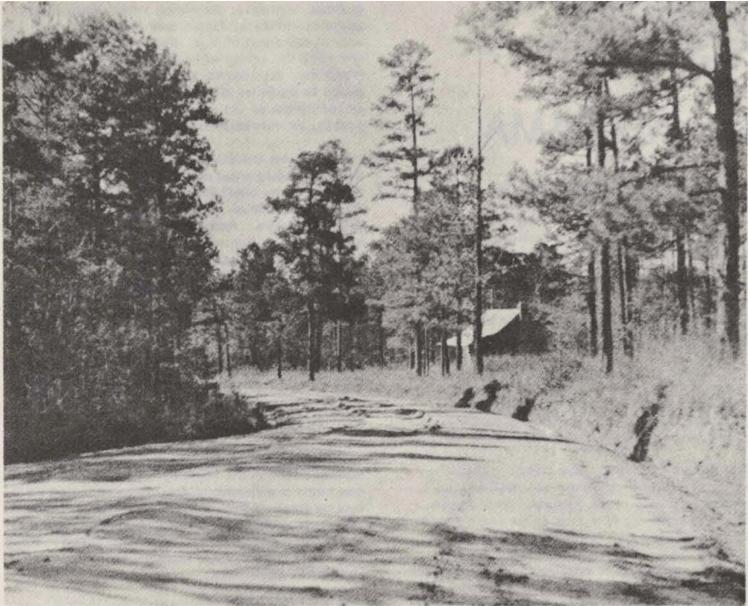
This song, entitled “Rock Chariot, I Told You to Rock,” is an example of an African American spiritual.
Attentive Listening
Listen again. Consider this question:
Why do you think people performed spirituals?
About Spirituals
These modified hymns are called spirituals.
In times of slavery, enslaved people worked from sun-up to sun-down except on Sundays and holidays.
On Sundays, they gathered to pray and sing old hymns, often in new ways.
About Spirituals
The words of spirituals began as hymns sung in church.
However, enslaved workers adapted spirituals to build community while they labored in the fields.
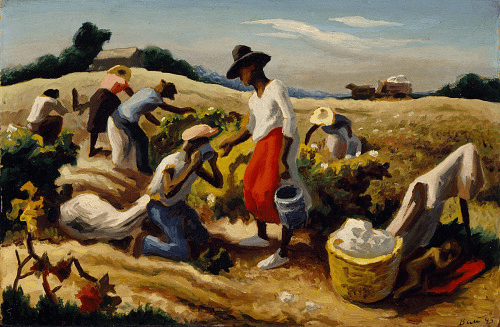
Field Workers (Cotton Pickers), by Thomas Hart Benton. Hirshhorn Museum and Sculpture Garden.
Attentive Listening: Rhythm
Listen to several additional short sections of this recording (approx. 30-45 seconds each).
- As you listen, think about a new guiding question:
What do you notice about the rhythm?
Generally Speaking .....
Rhythm: "Swing"
The lead singer begins the phrase before the downbeat.
This is known as the anacrusis: a note or sequence of notes, or a motif that precedes the first downbeat in a musical phrase.
This emphasis on the off-beat creates a “swing” feel.
“Swing” feel occurs when the beat is divided into two parts, and the former part is longer and more accented than the latter.
long
short
long
short
long
short
4
4
Generally Speaking .....
Attentive Listening: Form/Structure
What do you notice about the form of this song?
Generally Speaking .....
Form / Structure: Call and Response
Listen again and pay attention to lyrics, which follow call-and-response form.
-
The male lead begins the phrase with the call, and the choir offers the response:
-
Lead/Call: Rock, Chariot, I told you to rock!
-
Chorus/Response: Judgement goin’ to find me!
-
Listen for the next calls. Try to sing along with the response.
Won't you rock, chariot in the middle of the air?
I wonder what chariot, comin' after me?
Rock, chariot, I told you to rock.
Generally Speaking .....
Attentive Listening: Style & Melody
What do you notice about the vocal style?
What do you notice about the melody?
Generally Speaking .....
Vocal Style & Melody
-
The male singer uses a chest voice.
-
The female singer use a head voice.
-
The vocalists use bent pitches.
Vocal Style
-
There is not a lot of variation.
-
The range of pitches used is narrow.
...anything else?
Melody
Spirituals: More History
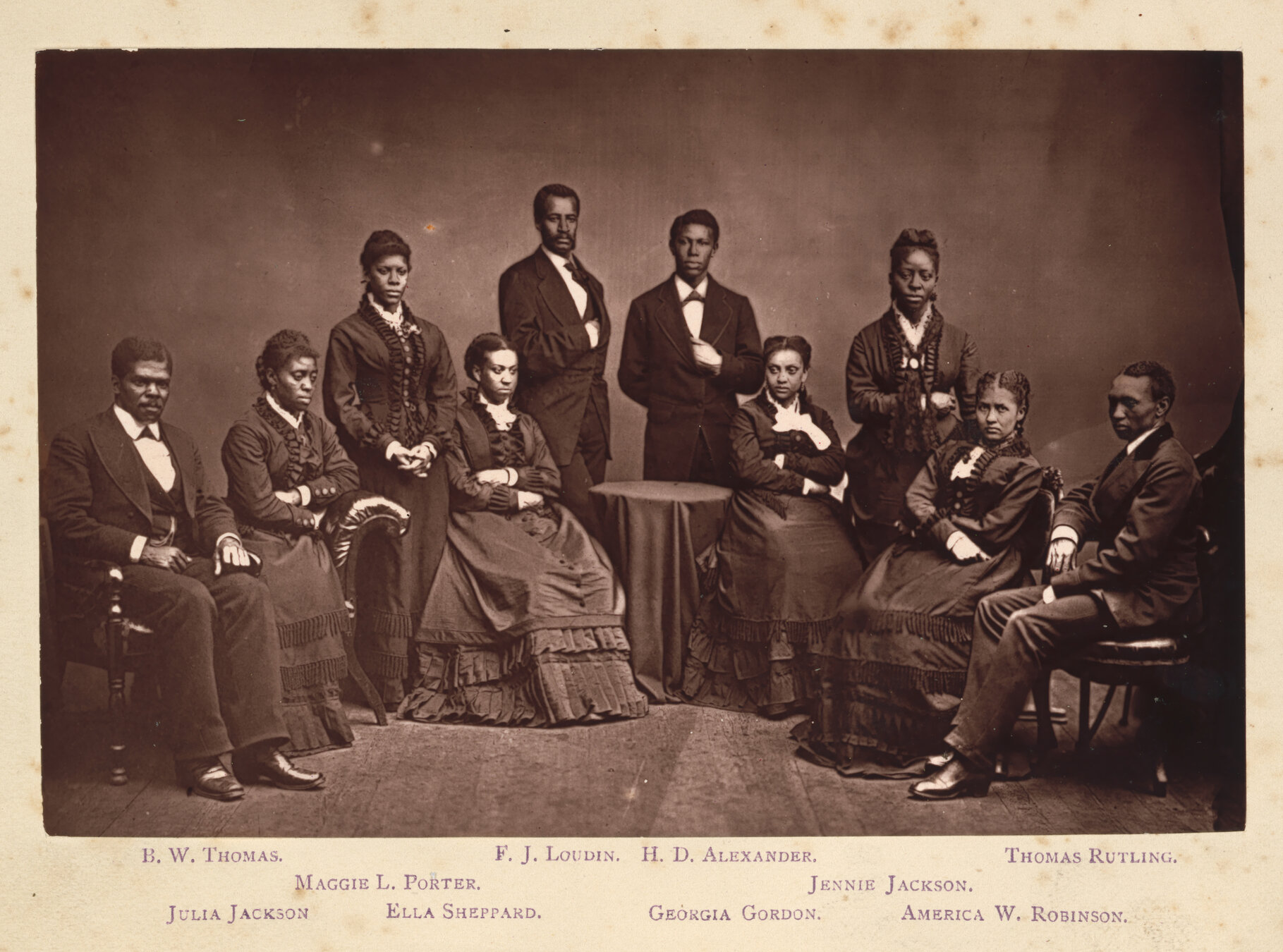
During the mid-1800s, some spirituals hid coded messages.
"Swing Low Sweet Chariot," for example hid a secret message about the Underground Railroad.
After the Civil War, choir ensembles from historically Black colleges and universities (HBCUs) performed spirituals on concert stages around the world.
The Jubilee Singers (started in 1871) is a vocal ensemble comprised of students from Fisk University (HBU in Nashville, TN).
Generally Speaking .....
Spirituals: A Healthy Blend
-
The spiritual is an example of a musical form that developed as Black Americans in the southern part of the United States blended African, European, and local musical traditions.
-
Over time, spirituals influenced the development of other musical genres created by Black Americans, such as gospel and the blues.
Generally Speaking .....
Spirituals and the Blues: A Comparison
Improvisation
Vocal Style
The style and even the words of both spirituals and blues music can change depending upon the style of the individual performer.
Form
Both spirituals and blues music employ call and response.
In the blues, the call may be human - the response instrumental.
Spirituals and blues are both highly emotional.
Learning Checkpoint
-
What are some common features of spirituals?
-
How did spirituals influence the blues?

End of Path 1: Where will you go next?

Combining Influences: Fife and Drum
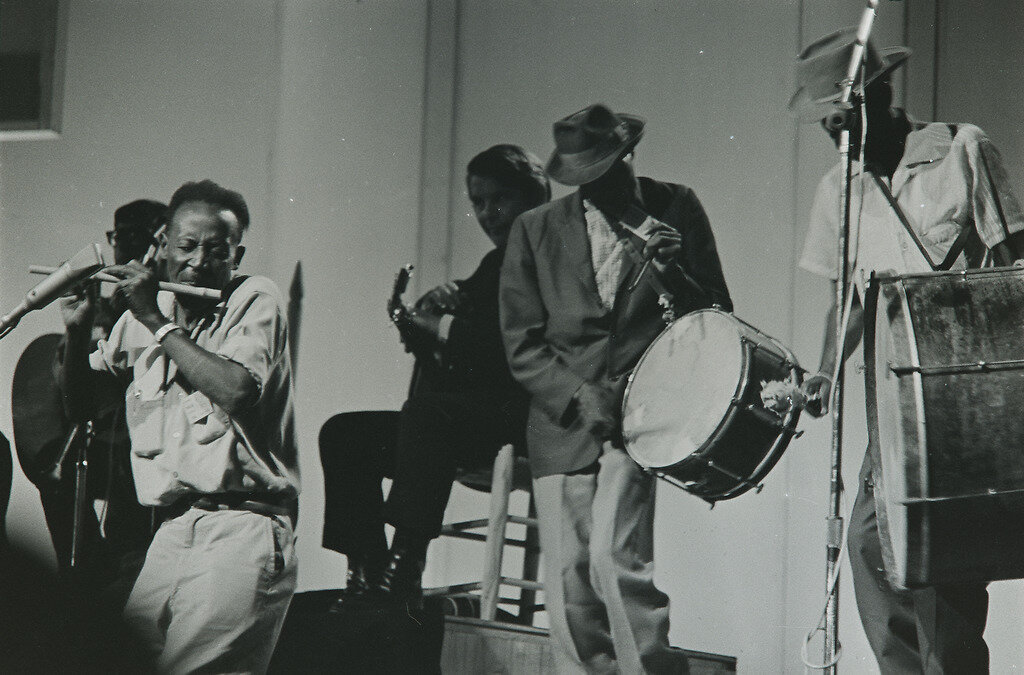
Path 2
30 minutes
Ed Young Southern Fife Drum Corps, by Diana Jo Davies. Ralph Rinzler Folklife Archives and Collections.
Combining Influences: Fife and Drum
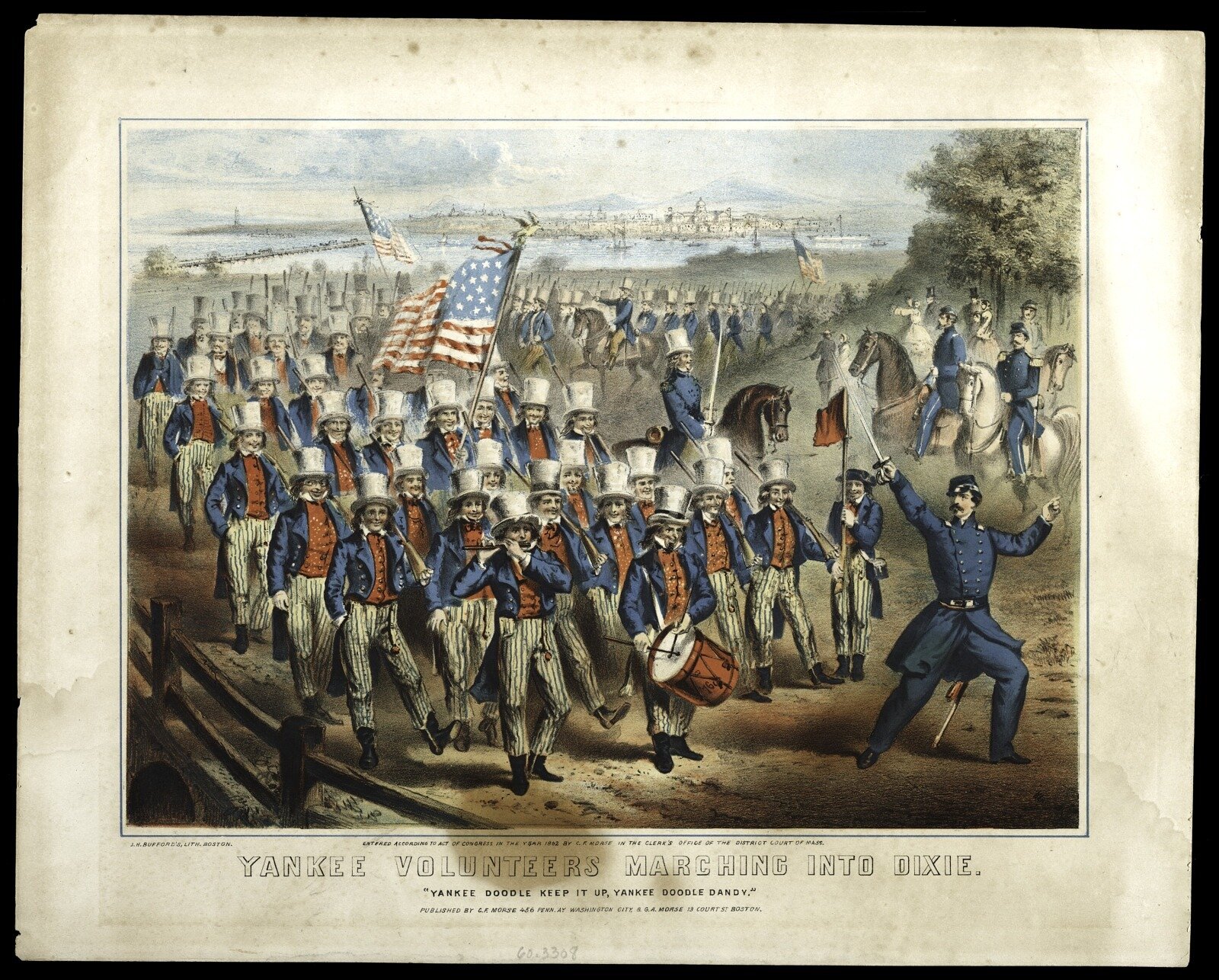
Yankee Volunteers Marching into Dixie in 1862, by John Henry Bufford. National Museum of American History.
The blues is like a sonic melting pot, mixing together music traditions from many areas.
Fife and drum music is one ingredient in that melting pot.
What's a Fife?
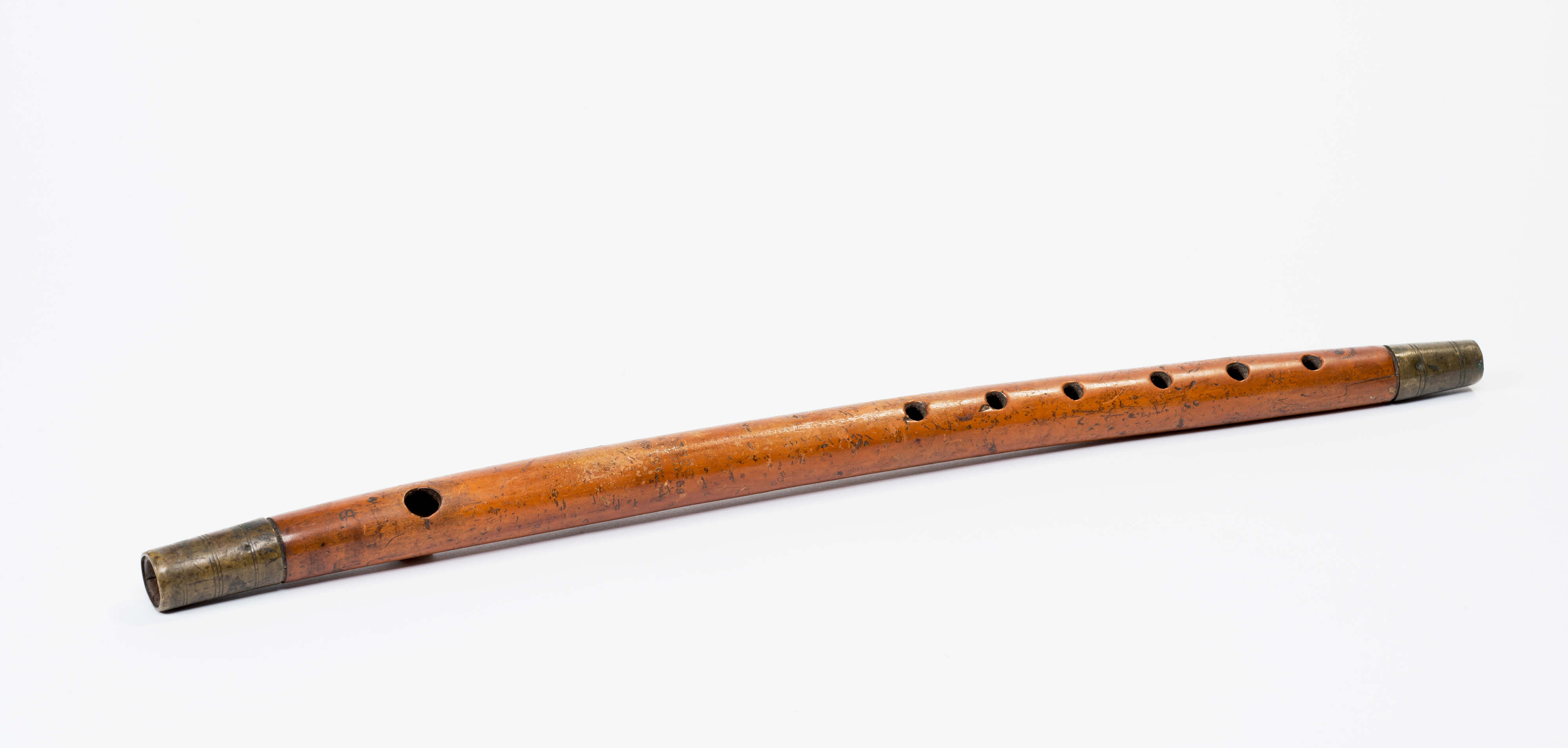
Fife, created by William Callender, circa 1810. CC BY-NC-ND 3.0 via USS Constitution Museum.
A fife is a kind of flute.
A fifer plays the fife!
History of the Fife and Drum
Many enslaved Africans became soldiers during the Revolutionary War.
Sometimes military leaders did not trust them with weapons. Instead, they gave them fifes and drums to play in marching bands.
Fife and Drum Corps, Helwan, Egypt, photo by Helen Hamilton Gardener. National Museum of Natural History

Fife as Communication
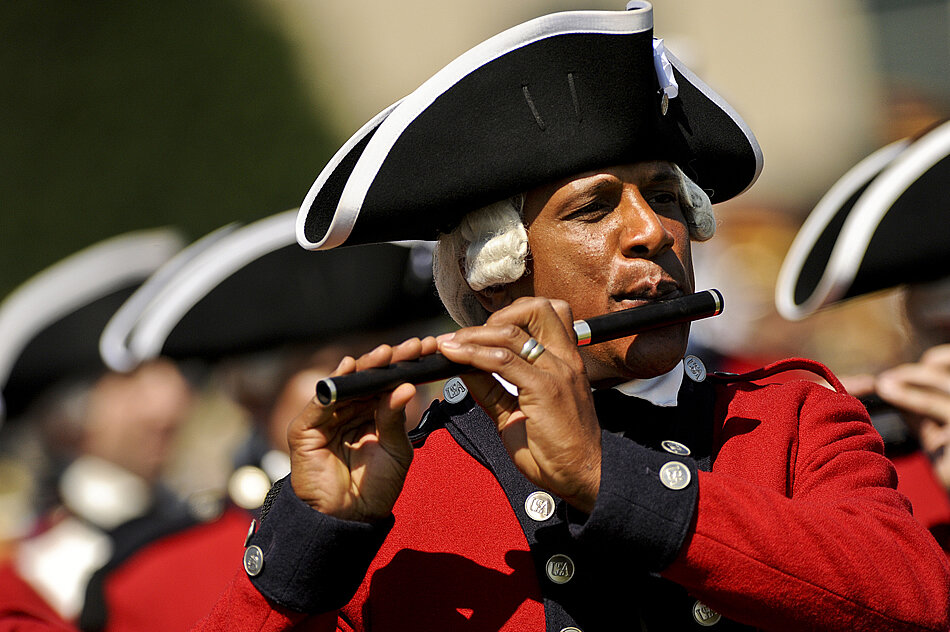
The U.S. Army Old Guard Fife and Drum Corps, by Jacob N. Bailey. {{PD-USGov}}, via Wikimedia Commons.
Why do you think the fife and drum were chosen to send signals on the battlefield?
Fifes are LOUD! Their high-pitched sound carries for long distances. Drums are loud, too.
Together, they could send clear signals to the soldiers on the battlefield.
Fife and Drum in the Military
The Fife and Drum Corps tradition continued in the American military during and after the Revolutionary War.
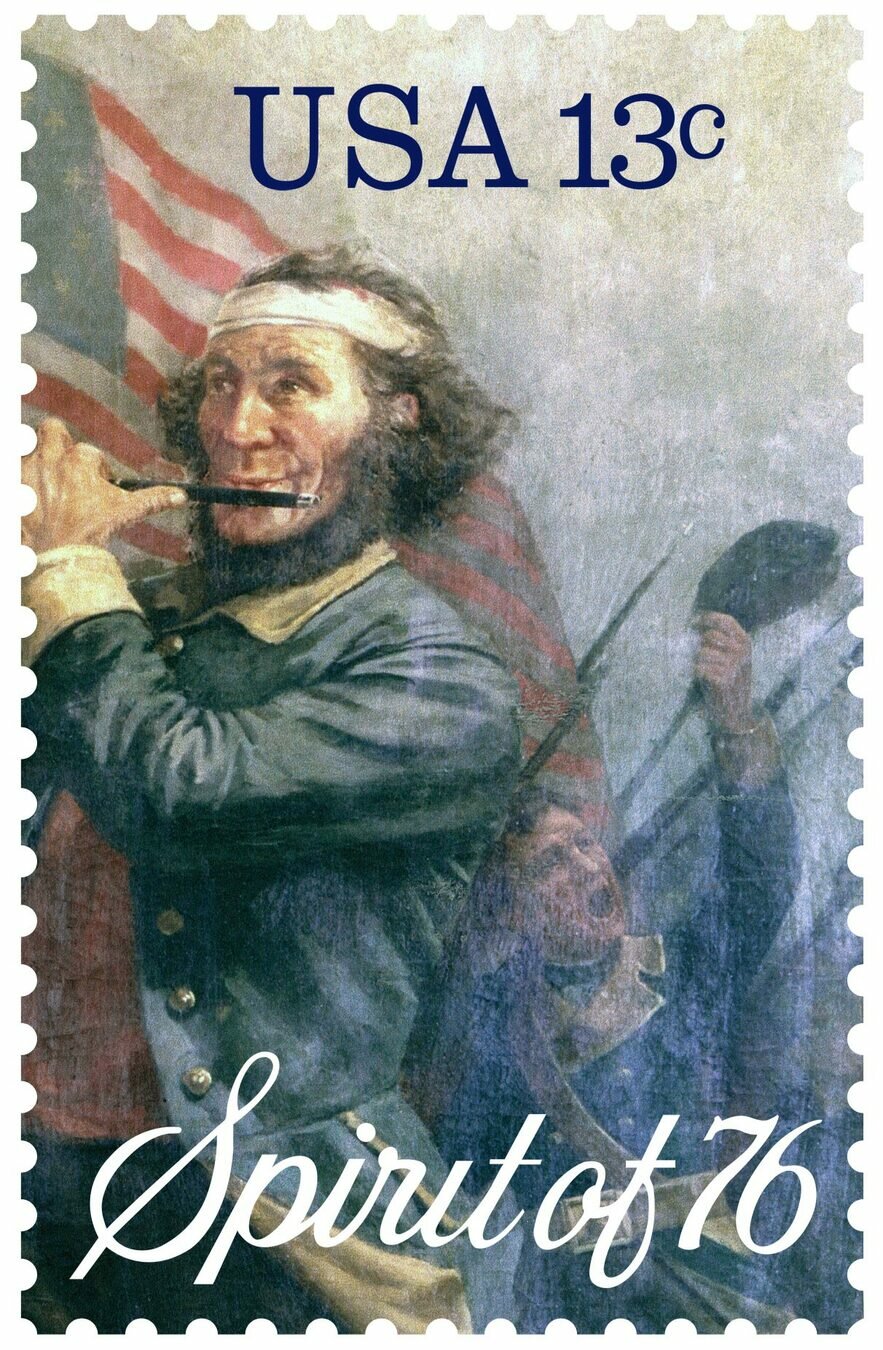
American Bicentennial: Fifer, United States Postal Service. National Postal Museum.

Enslavement continued after the War. Drumming was outlawed for fear that drumming patterns hid secret messages encouraging slaves to rebel.
Fife and Drum after the Revolutionary War...
Sooo... enslaved Africans transferred the rhythms and musical patterns of the fife and drum corps to other instruments.
Fife and Drum during the Civil War...
Once again, enslaved Africans were “recruited” by the military to play fifes and drums.
After the Civil War (1865), fife and drum corps remained popular in the American South.
Musical Fusions
- Improvisation
- Interlocking patterns or polyrhythms
- Blue notes
- Call and response
- Ululations

After the Civil War, fife and drum patterns fused with these familiar performance elements:
Union Regimental Drum Corps from the American Civil War, Unknown artist, PD-US-expired, via Wikimedia Commons.
Fife and Drum Blues
The combination of musical sounds that emerged became known as the fife and drum blues.

Napoleon Strickland-Fife, Unidentified Girl-Bass Drum, and Otha Turne-snare drum, by Chris Strachwitz. Arhoolie Records.
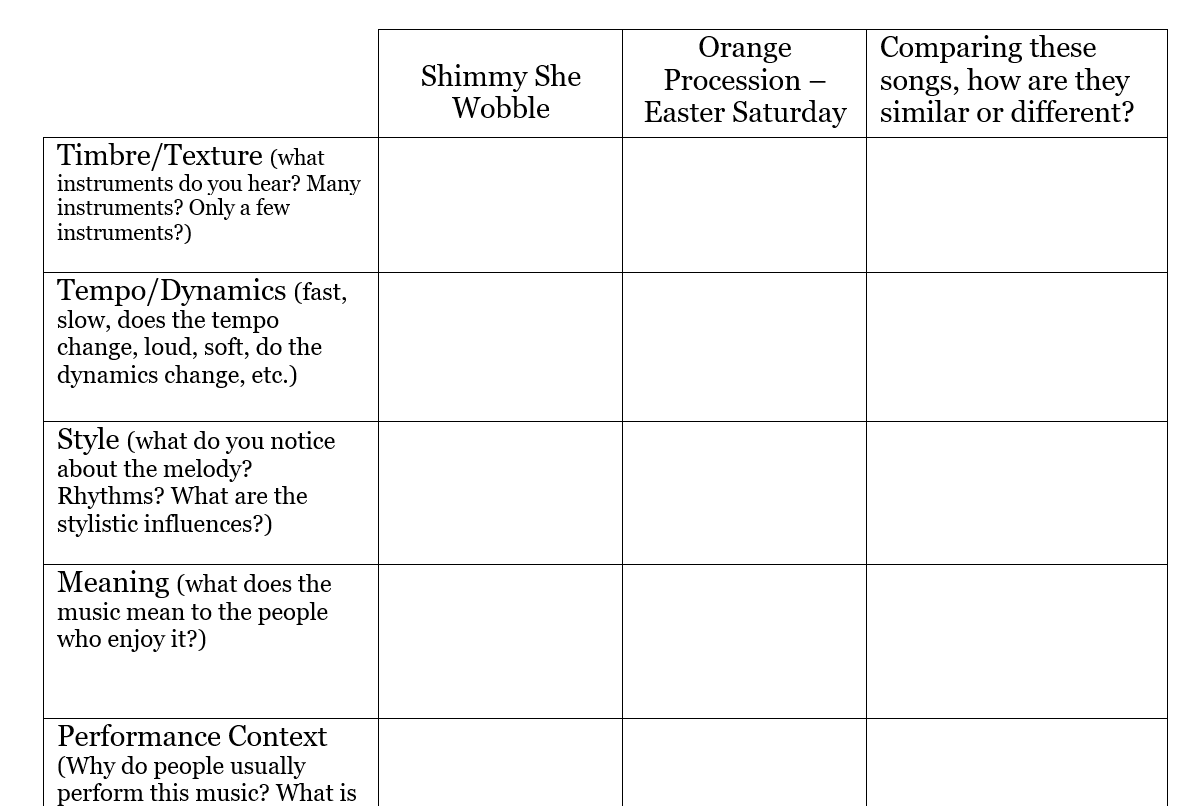
Compare and Contrast
Listen to short excerpts from:
- “Shimmy She Wobble” by Napoleon Strickland, Otha Turner, and the Como Band (fife and drum blues)
- “Orange Procession - Easter Saturday” by the Orangemen of Ulster (fife and drum corps from Northern Ireland)
How are they alike or different?
Discuss:
How are these pieces similar?
How are they different?
Do you hear a hint of the blues in “Shimmy She Wobble?”
“Shimmy She Wobble”
“Orange Procession - Easter Saturday”
Learning Checkpoint
-
What is the history of fife and drum corps?
-
How is the “fife and drum blues” an example of musical fusion?
End of Path 2: Where will you go next?
Path 3

Fife and Drum: A New Generation
30+ minutes
,
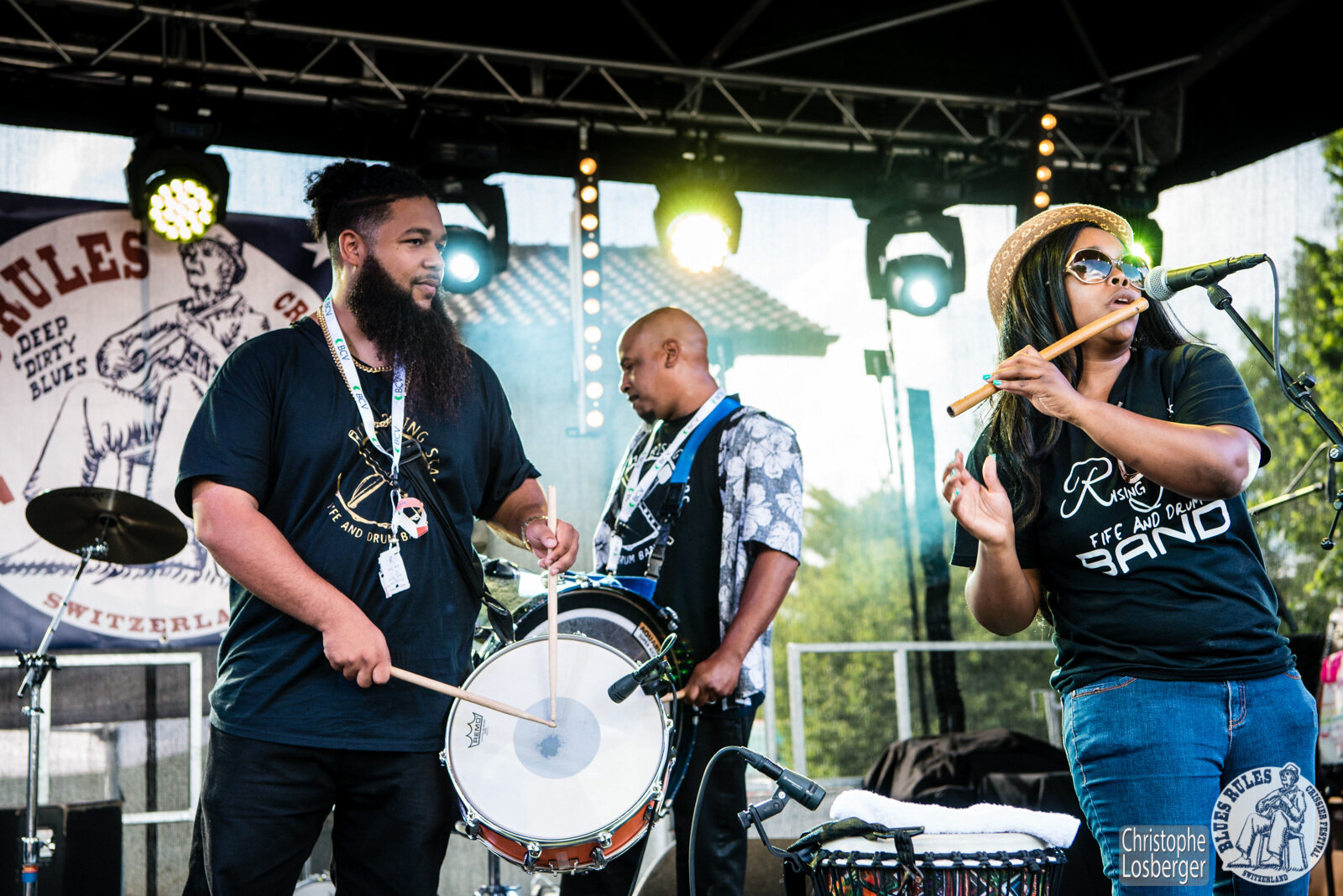
The Rising Star Fife and Drum Band @ Blues Rules, by Christopher Losberger, CC BY-NC-SA 2.0, via Flickr.
Fife and Drum: A New Generation
As you watch, think about the following guiding questions:
Who are the performers?
What type of music are they playing?
Rising Star Fife & Drum Band, by Kelsey Michael, Marinna Guzy, Michael Headley, and David Barnes. Smithsonian Center for Folklife and Cultural Heritage
Fife and Drum: A New Generation
-
Fife and drum music arrived in America’s Deep South in the 1700s with military marching bands.
-
Fife and drum music fused with other musical traditions of enslaved Africans.
-
Today, this tradition (which has influenced the blues) lives on in the work of Shardé Thomas who leads the Rising Star Fife and Drum Band.

Shardé Thomas at the 2012 Smithsonian Folklife Festival, video still provided by Ralph Rinzler Folklife Archives and Collections.
Watch the video again (broken into several short excerpts). Each time you listen, discuss a new guiding question:
Attentive Listening
Which instruments do you hear?
What do you notice about Shardé’s singing style?
What do you notice about the song structure?
What do the lyrics mean?
Shardé Thomas
Shardé Thomas is the granddaughter of Otha Turner, the Mississippi fife master who founded the Rising Star Fife and Drum Band around 1907.
Otha Turner was one of the performers on “Shimmy She Wobble” (Lesson 3, Path 2).
About the Video
What do you notice about Shardé’s singing style?
Shardé’s vocal style resembles that of a blues singer
Which instruments do you hear?
Bass drum, snare drum, fife, and voice
What do the lyrics mean?
The lyrics are centered on feelings and share a narrative (similar to many blues songs)
What do you notice about the song structure?
The snare and bass drum parts seem to “interlock” (polyrhythm)
The song structure has some similarities to the blues (call and response).
1
2
3
4
Make Music!
Young Shardé Thomas learned to play the fife from her grandfather Otha Turner.
Pretend you are Shardé Thomas:
- First, listen to the beginning of the video several more times (embedded in the next slide).
- When you are ready, hum or tap along.
Make Music!
Minor Pentatonic Scale
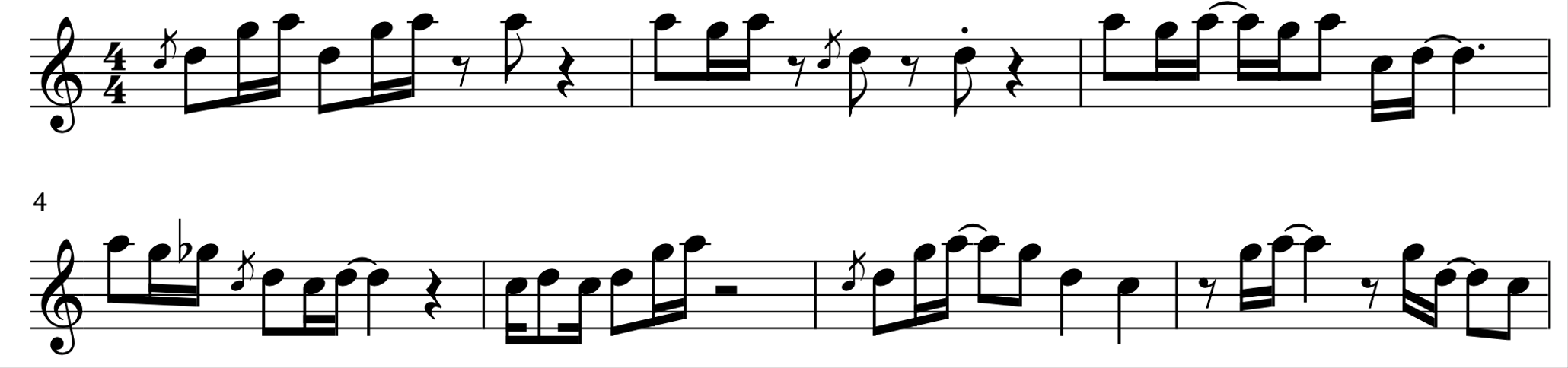
The melody you just heard primarily uses the d minor pentatonic scale (which is composed of five notes).
- Can you sing the minor pentatonic scale using a neutral syllable (like loo or la)?
- Can you sing the minor pentatonic scale using solfège (do, me, fa, sol, te)?
- Can you sing the d minor pentatonic scale using note names (d, f, g, a, c)?
D minor pentatonic scale
d
f
g
a
c
Play it on Instruments
Next, practice playing this minor pentatonic scale on an instrument:
- Keyboard, Orff instruments, ukulele, and/or a variety of wind instruments (especially flute or recorder) will work well for this activity
- Remember, the notes of this minor pentatonic scale are: d, f, g, a, c
D minor pentatonic scale
d
f
g
a
c
This slide is a placeholder. The rest of the lesson seems high level - for older students.
Enactive Listening
Next, you will learn this melody by ear on your instrument.
Learn the Rhythm
Next, you will learn an accompanying rhythmic ostinato pattern
-
When you are ready, play it on an instrument (drum, if possible)
4
4
Optional Extension Activities
You’ll notice that the melody does not resolve or seem to end. . . it seems to be missing a note.
- Improvise and play around on your instrument to find the final concluding note.
- This will be your first step in learning improvisation- use your ears.
Put it all together!
-
Some students can play the melody while others play the rhythm (you can also add a lower drum sound on the off-beats)
-
Consider adding the grace notes and the accidental in measure 4 (especially if students are playing a wind instrument)
Optional Extension Activities
Did you know that many blues musicians use the minor pentatonic scale as they create improvised solos?
-
Practice using the notes in this scale to create your own “riffs” and/or improvised solos on your instrument
D minor pentatonic scale
d
f
g
a
c
Optional Extension: Improvisation
Learning Checkpoint
- In what ways does Shardé Thomas’s performance resemble the blues?
- Why is the minor pentatonic scale useful when performing the blues?
End of Path 3 and Lesson Hub 3: Where will you go next?
Continue to Lesson 4:
Standardizing the Blues


Lesson 3 Media Credits
Audio courtesy of
Smithsonian Folkways Recordings
Video courtesy of
Smithsonian Center for Folklife and Cultural Heritage
Images courtesy of
The Arhoolie Foundation
National Museum of American History
National Museum of Natural History
National Portrait Gallery
Ralph Rinzler Folklife Archives and Collections
Smithsonian Folkways Recordings
United States Postal Service
© 2025 Smithsonian Institution. Personal, educational, and non-commercial uses allowed; commercial rights reserved. See Smithsonian terms of use for more information.
This Pathway received Federal support from the Smithsonian American Women's History Initiative Pool, administered by the Smithsonian American Women's History Museum.
For full bibliography and media credits, see Lesson 3 landing page.