wsdb 290
library research workshop
Winter 2026
Google: wsdb 290 concordia library
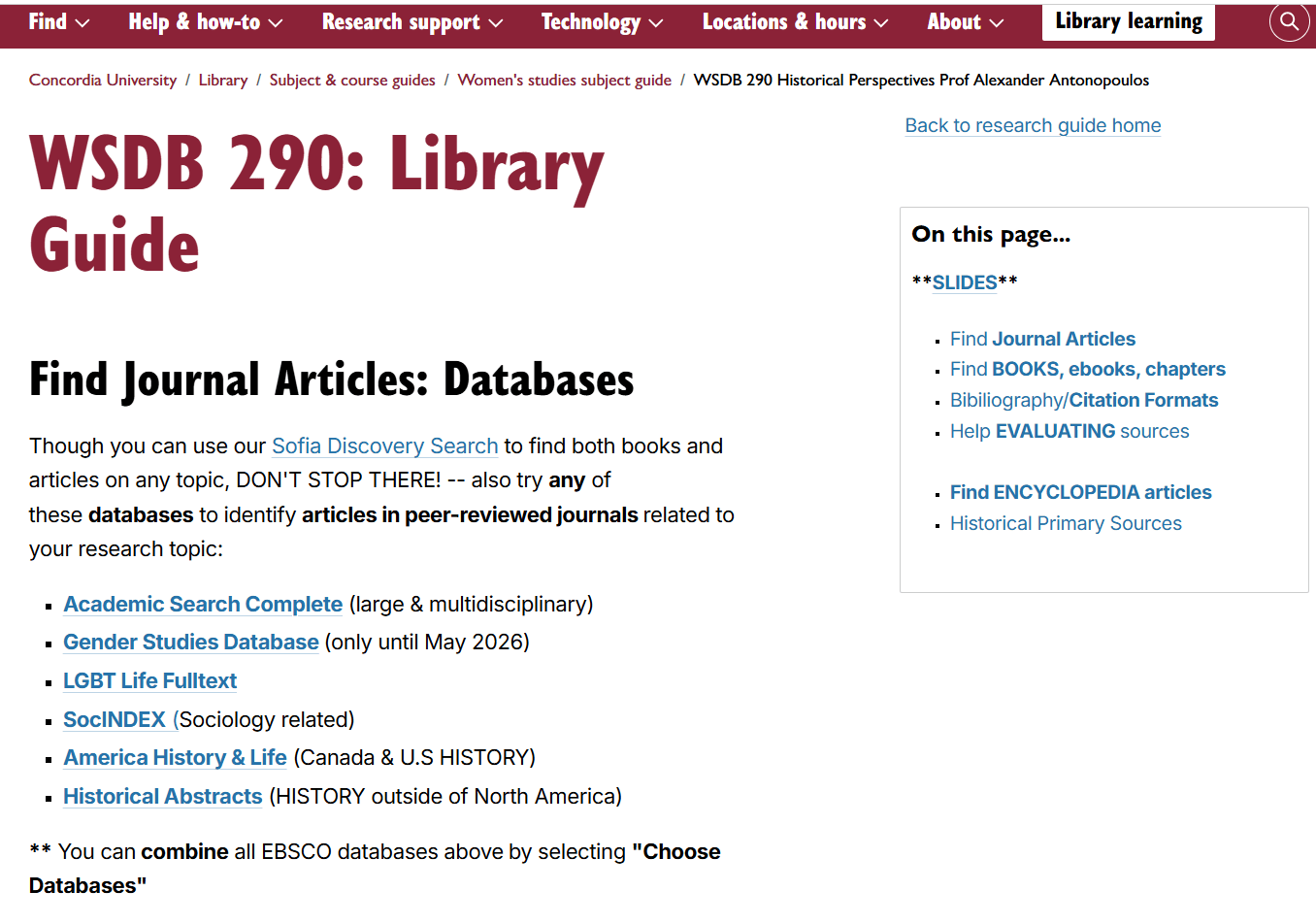
bookmark this page!
GUIDELINES FOR YOUR PROPOSAL
library-related instructions:
- submit a well-conceived paragraph, single-spaced, with a title, subtitle, and tentative/preliminary bibliography....
- ...of peer-reviewed / scholarly articles or books that seem RELEVANT to your interpretive problem
- consider: What makes your problem problematic? What disagreements among scholars, gaps in knowledge, or complexities or inconsistencies in the text/s characterize the problem?
- follow customary scholarly CITATION format (ie MLA or APA) ...and carefully acknowledge your sources.
What do YOU want to cover today?
tell me here:

OUR Agenda....
but first:
need assistance with any of these agenda items, and more?
ask questions - GET HELP:


at the AskUs desk
via chat
via email
by phone

Need assistance beyond a quick chat,
and have a bit of time to plan?
your subject librarian: susie.breier@concordia.ca
ZOOM office hours most Tuesdays 3-5, or by appointment
Text
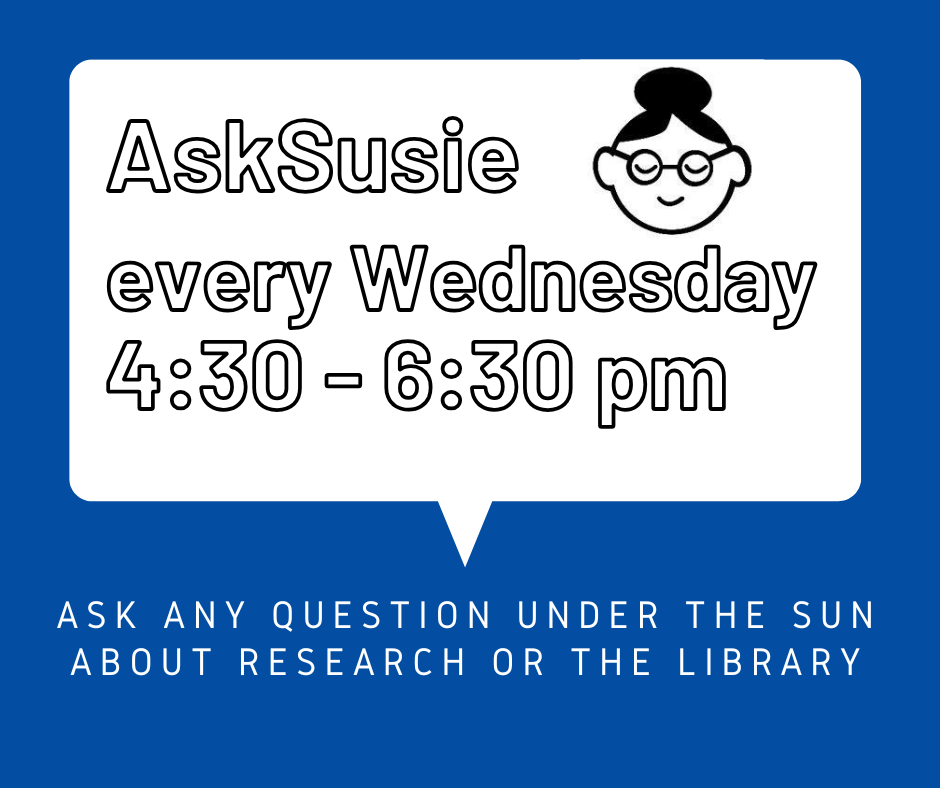
ZOOM office hours: most Wednesdays
4:30-6:30 pm
AskUs Desk
Webster LB building:
most Fridays 3-5
pronouns: she/her/elle
Text

Simode de Beauvoir Institute
Feminist Learning Centre & lending library
ER building, 2155 Guy Street, 6th floor
Hours (Fall and Winter semesters)
- Monday to Thursday, 10 a.m. - 7 p.m.
contact: isabelle.lamoureux@concordia.ca
writing assistance at the library and the university
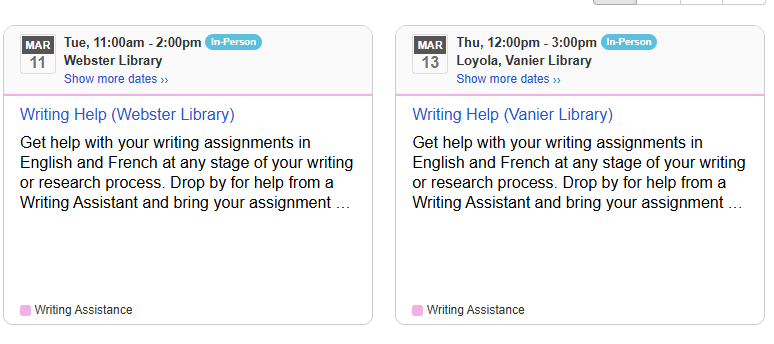
12pm - 3:00pm
12pm - 3:00pm
- FIND material that is RELEVANT to your topic / problem
- Trace scholarly DEBATES using "Cited by" in Google Scholar
- Make sure material is SCHOLARLY / peer-reviewed / academic
- Enter KEYWORDS in Library Databases (search strategies)
- CITATIONS style guides (APA / MLA)
- Use ZOTERO
- ACCESS resources at Concordia and beyond
- AI tools
Agenda options

to find scholarly articles or books
related to your topic / problem
where wouldyou search?
tELL your CLASSMATES
Search for specific library books, ebooks, articles and films
but go beyond sofia to search for topics
reminders:
- Use the readings, authors and literature you already know... and explore those to the fullest!
- Use Google (or your favourite smart tool) to get smarter about your topic
- and THEN search for academic articles, IN:
databases relevant to Women's STUDIES
as recommended in your WSDB 290 Library Guide!
your bookmarked page!
search examples in some of these databases:
-- but first --
my tentative topic / problem
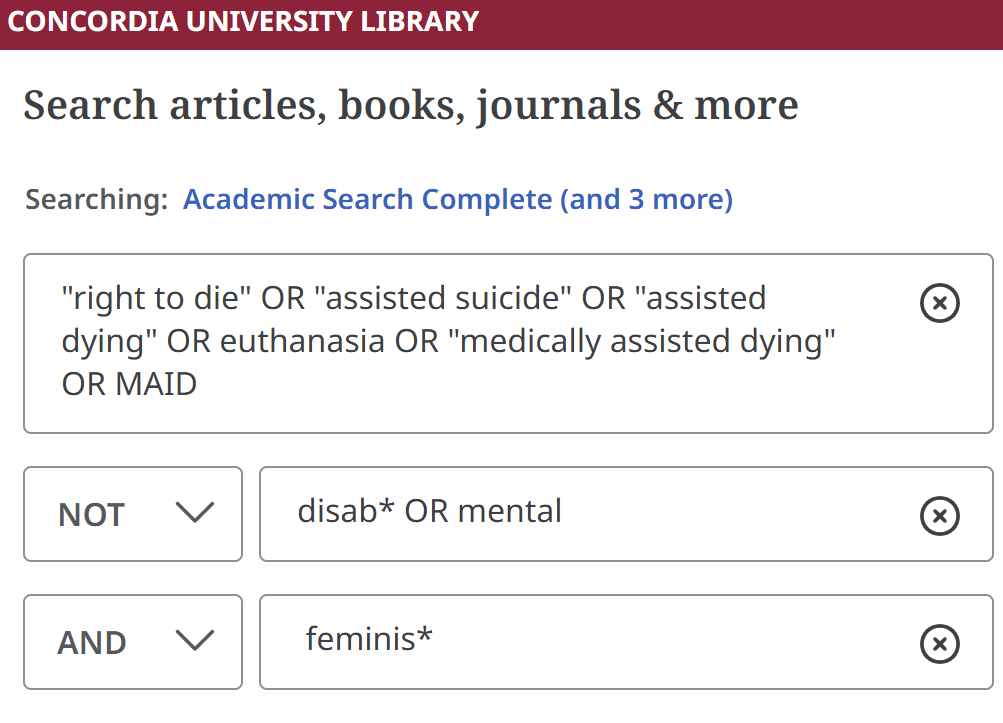
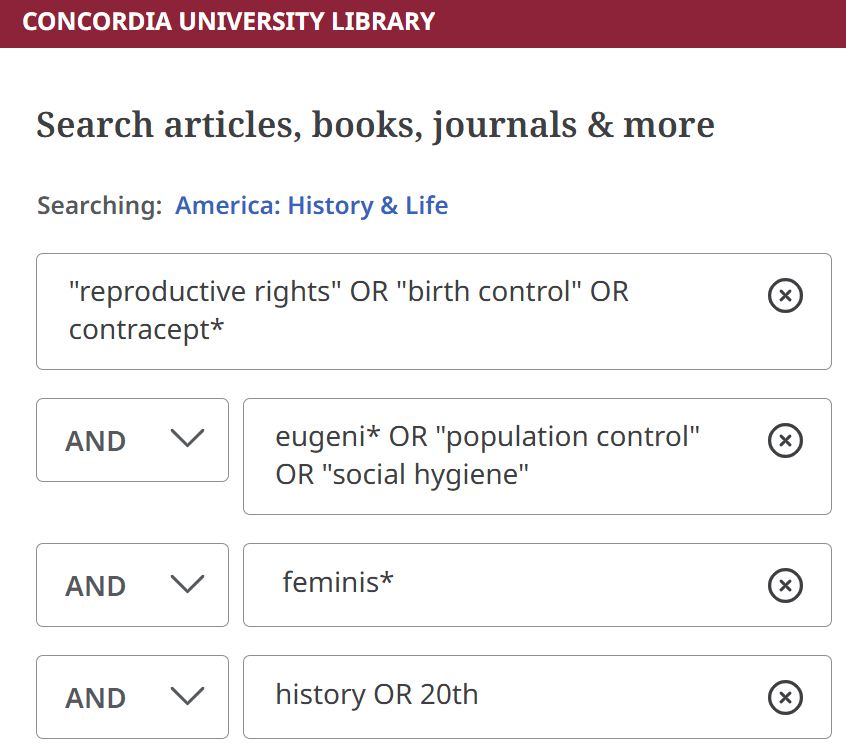
Interested in current debates about medical assistance in dying (MAID) legislation in Canada, claims that inclusion of disability (and/or mentail illness) as a reason for requesting and accessing physician assisted death are akin to a eugenics framing…. In terms of historical women's studies perspectives, might this not have echoes of earlier 20th century debates about reproductive rights, and how that too has sometimes been associated with eugenics, or eugenic feminism?
My questions / problems: Can the current debates around assisted dying legislation and disability in Canada be informed by 20th century feminist debates around social hygene and eugenics?
This will take SEVERAL SEARCHES to explore, using databases recommended on my WSDB 290 Library Guide...
SEARCH EXAMPLE IN combined ebsco databases


EXAMPLE in america history & life only
results: which of these might be more relevant for my paper? why?
- Tuffrey-Wijne I, Curfs L, Hollins S, Finlay I. (2023) Euthanasia and physician-assisted suicide in people with intellectual disabilities and/or autism spectrum disorders: investigation of 39 Dutch case reports (2012-2021). BJPsych Open.9(3), e87.
- Procknow, G. (2024). The Necropolitics of Psychiatric Euthanasia and Assisted Suicide. Canadian Journal of Disability Studies, 13(1), 50–86.
now how can you access / download articles you found in ebsco databases?
access / download articles
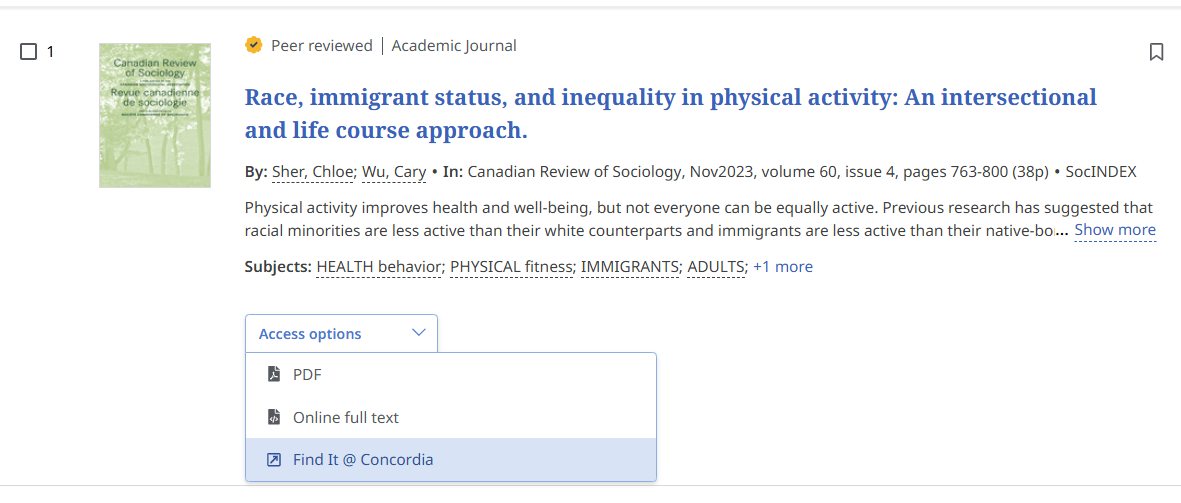
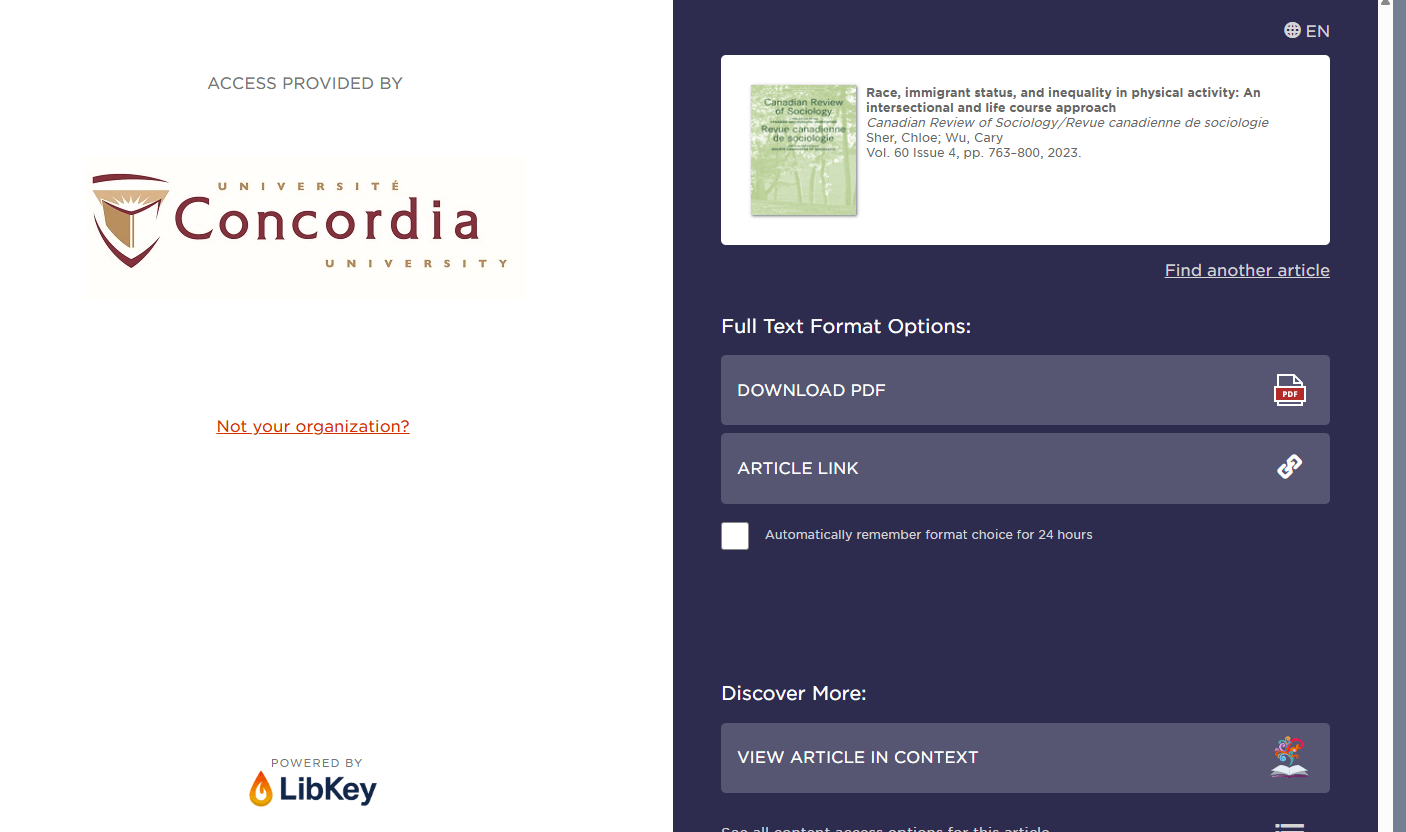
or continue on to
"google scholar....
google scholar similar search
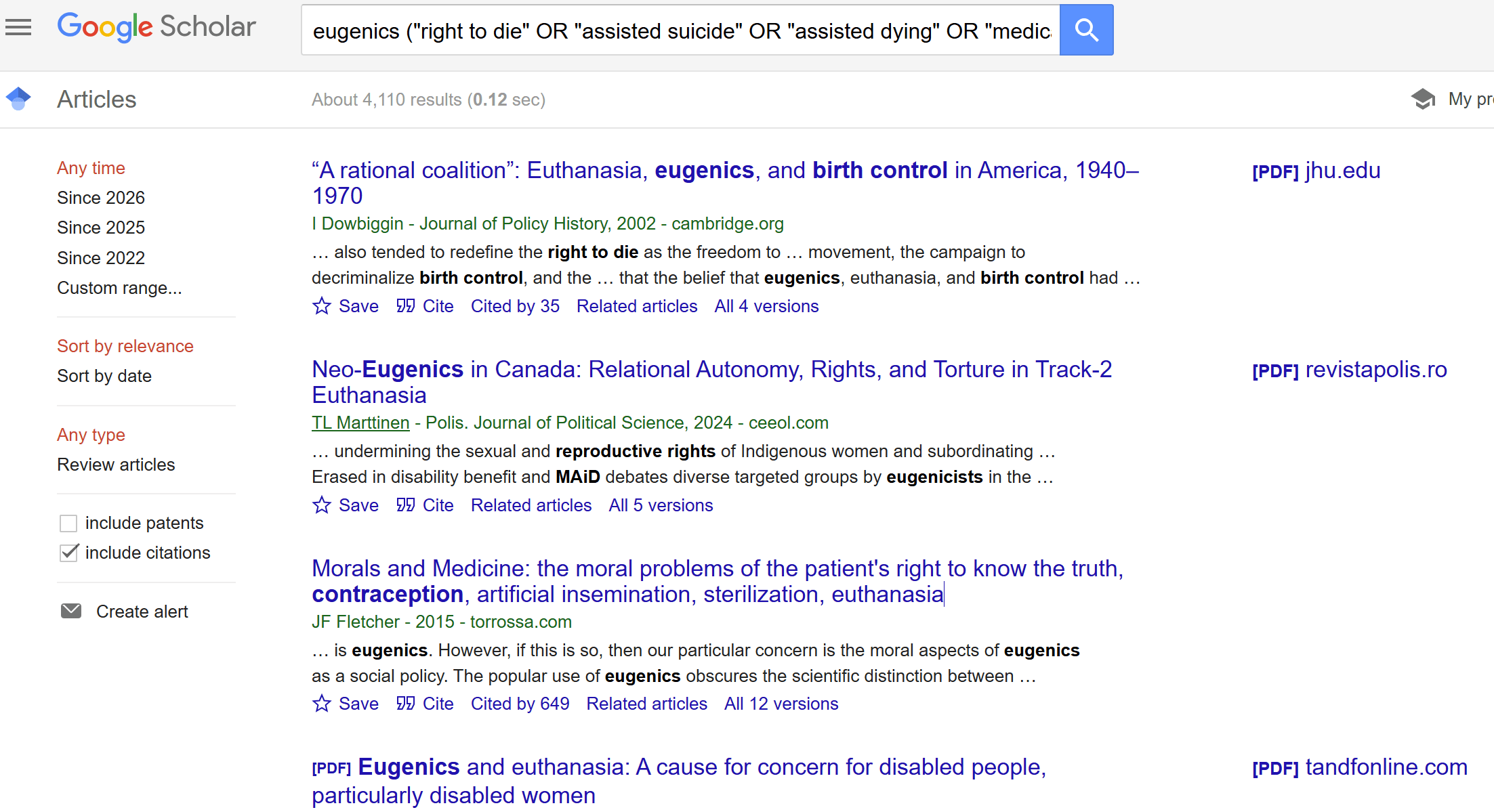
eugenics ("right to die" OR "assisted suicide" OR "assisted dying" OR "medically assisted dying" OR MAID) ("reproductive rights" OR "birth control" OR contraception)
still worried about how to combine those keywords?
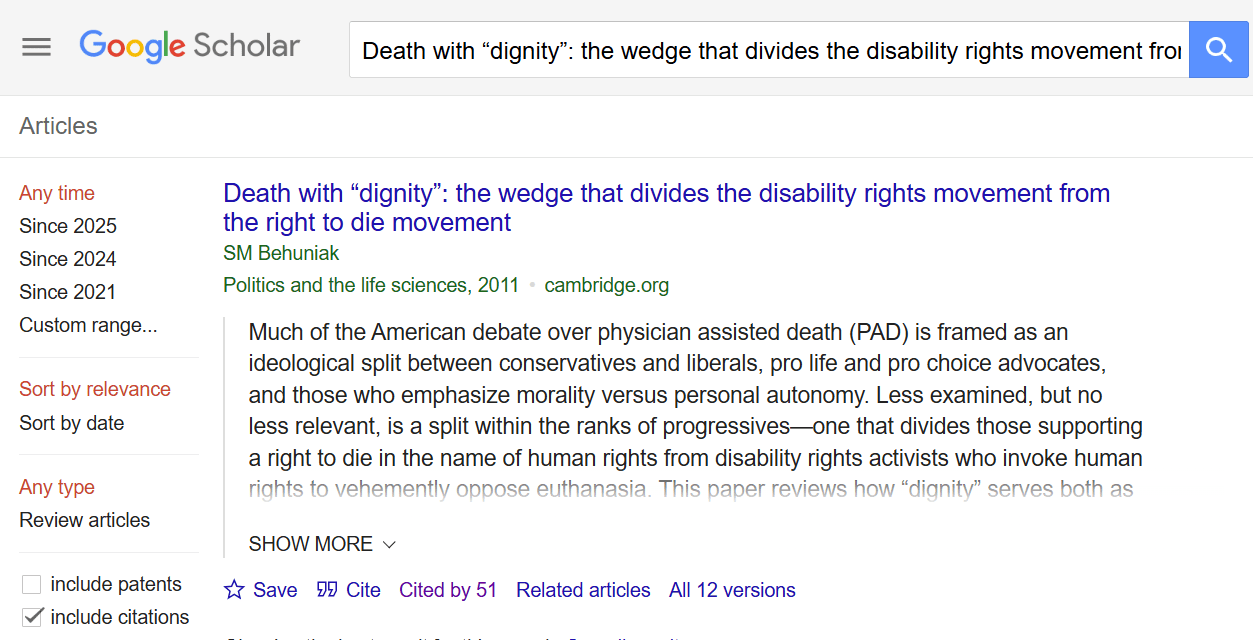
GOOGLE SCHOLAR "CITEd by" -
A different search EXAMPLE:
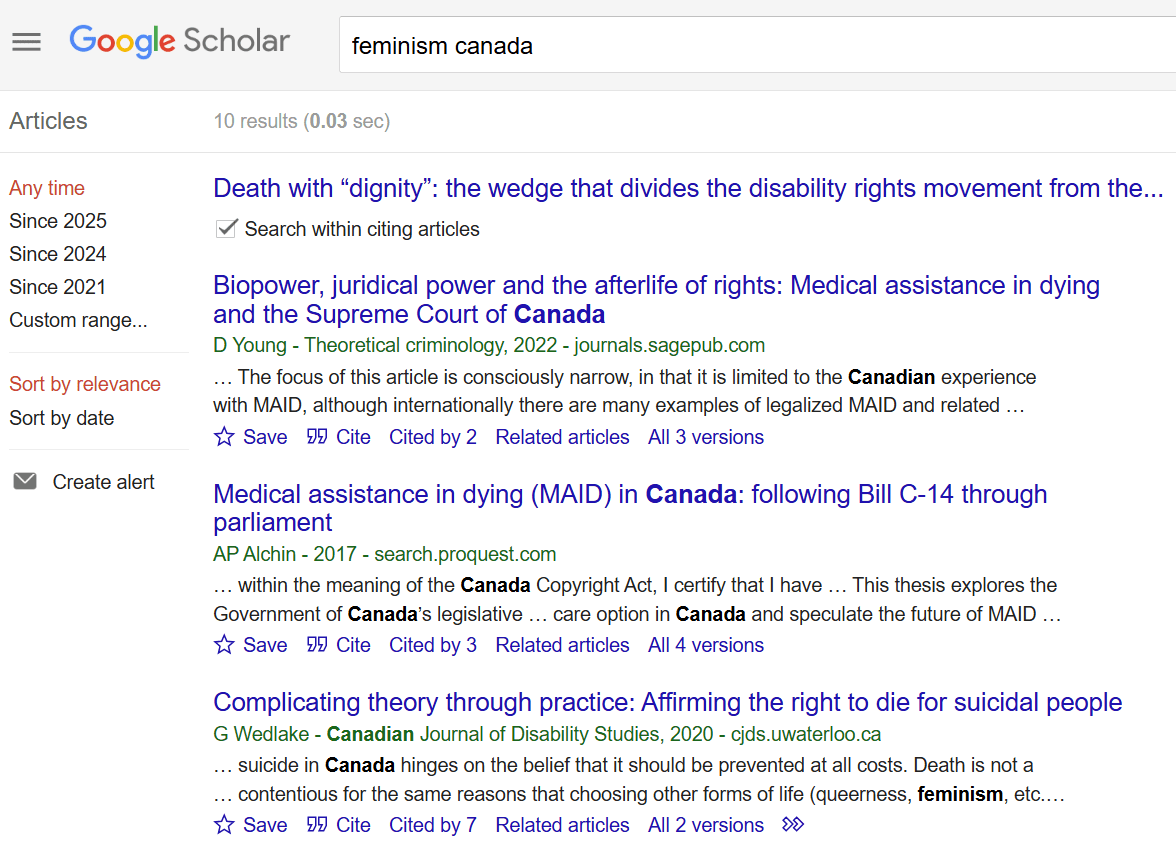
I like the 2011 article: Death with “dignity”: the wedge that divides the disability rights movement from the right to die movement as it seems very relevant to part of my topic.
I want to find more recent articles that engage with this work, but that also engage with feminism and look at Canada.
I can enter the article title in Google Scholar, click on the "Cited by" link and then add "search within" keywords such as : feminism canada to get a whole new set of interesting results
start here:

for more tips on accessing documents your found in google scholar see:
Setting up Google Scholar
to find Library resources
OR see the slides on:
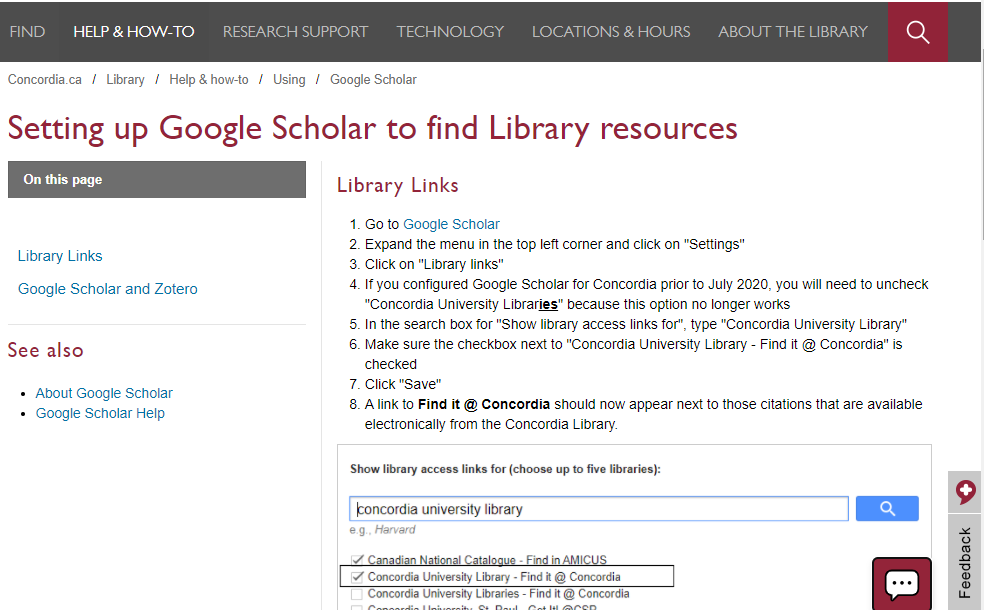
google scholar findit@concordia TIP:
or continue on to identiying
scholarly / peer-reviewed....
scholarly / Peer-reviewed / academic
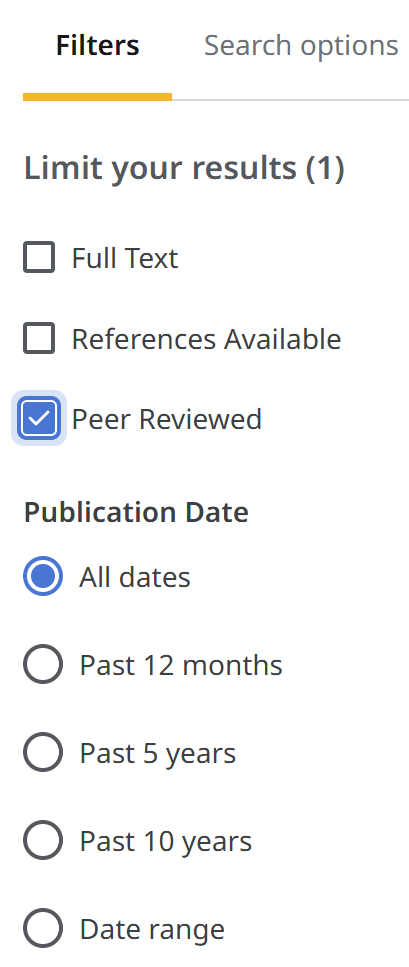
In some Library Databases you can use a filter or checkbox:
but this option is not a 100% guarantee.
it is better to understand & evaluate...
TEST YOURSELF:
is it academic / scholarly /
peer-reviewed?
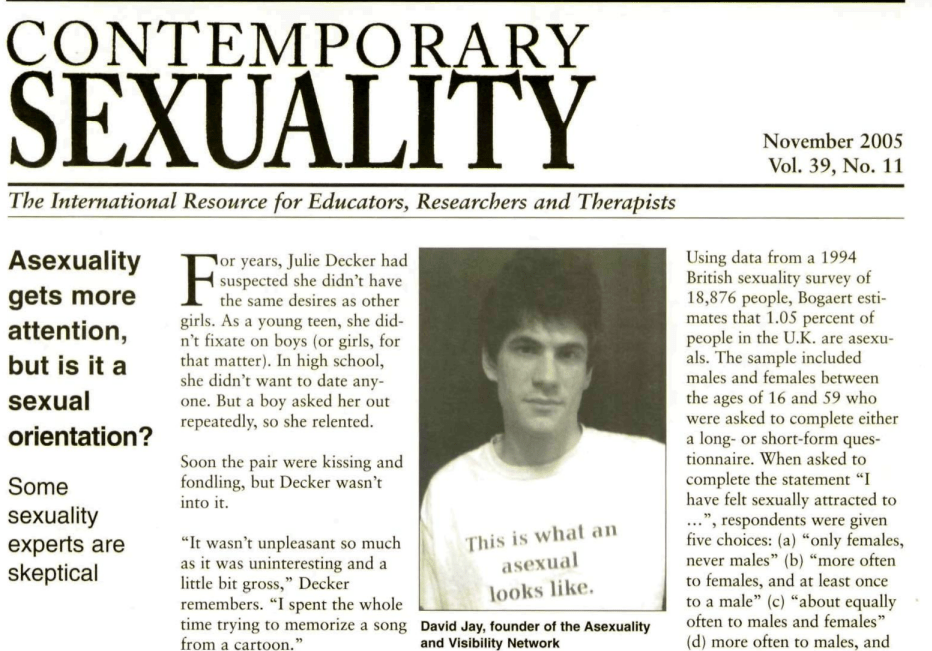
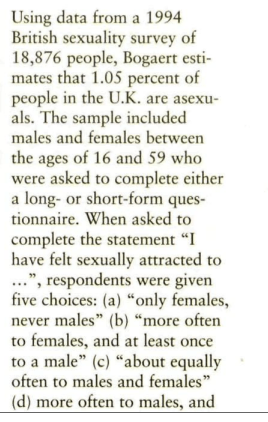
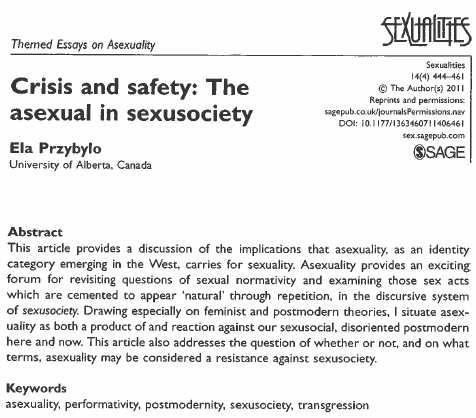
which one(s) is/are scholarly?
link:
link:


anatomy of a typical
scholarly research article

- Introduction/Literature Review
- Research Question(s)/Thesis /Claims
- Methods/methodological approach
- Key concepts/theories/Findings
- Conclusion/Limitations/Further research
some elements of a scholarly research article
prefer a quick video?
VIDEO: peer-review in 3 minutes
or continue on to search
strategies & keywords....
How to properly enter your KEYWORDS in Library Databases
search strategies
| TIP | WHAT IT DOES | EXAMPLE |
|---|---|---|
|
AND |
Combines concepts. Limits how many results your search produces |
police AND violence |
|
OR |
Allows for synonyms or alternative terms. Increases the number or results your search produces. |
violence OR brutality |
|
* |
Near the end of a word, retrieves all words that start with the letters entered. Increases the number of results a search produces | Canad* (retrieves Canada, Canadian) |
| “ ” | For two words or more, search for an exact phrase only, rather than each keyword separately. Limits how many results your search produces | “systemic racism” (retrieves systemic racism, but not systemic oppression related to racism) |
search tips & tricks
standard library article databases
google scholar strategies:
- use OR for alternative terms
- use quotation marks " " for phrases
- DON'T use AND (it is implied)
- DON'T use * ( happens automatically)
("police brutality" OR "police violence" OR "police shootings")
AND
(racis* OR discriminat* OR bias or profiling)
AND
(defund* OR aboli* OR reform)
IN LIBRARY ARTICLE DATABASES:
IN GOOGLE SChOLAR:
("police brutality" OR "police violence" OR "police shootings") (racism OR discrimination OR bias OR profiling) (defunding OR abolition OR reform)
Google Scholar
- use OR for alternative terms/ideas/synonyms
- use quotation marks " "
for phrases
- don't use AND (it is implied)
- DON'T use * ( happens automatically)
library databases
(ebsco, etc)
- use OR for alternative terms/ideas/synonyms
- use quotation marks " "
for phrases
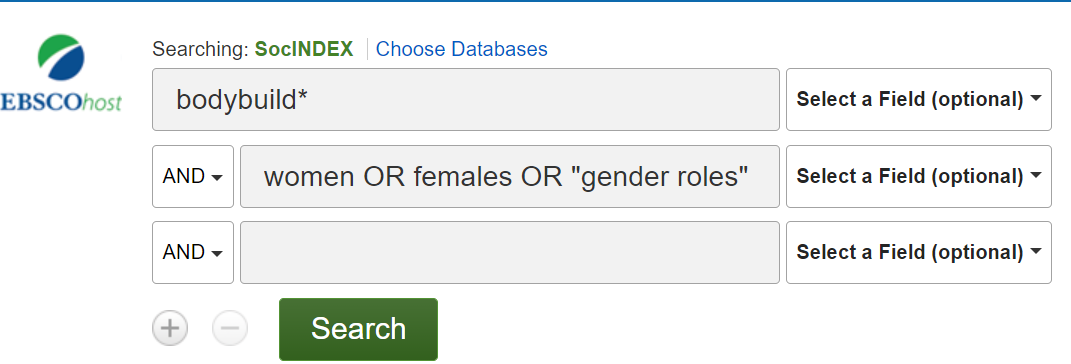
- use AND to combine concepts
- use * to substitute word endings
handout to download:
example of a search in "standard"
EBSCO Article Databases
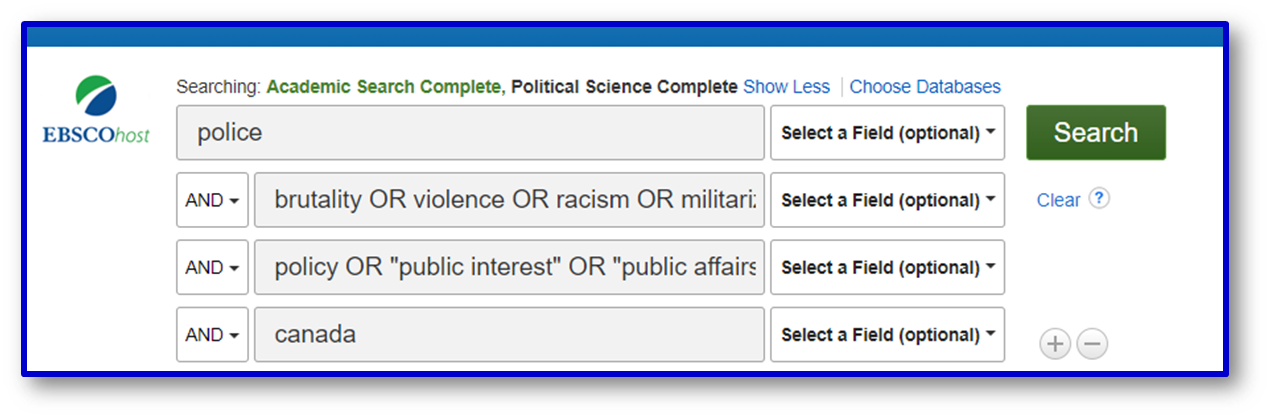
another example
in socindex
(YouTube, 7 mins)
Developing your search strategy: VIDEO
search strategy tip: keywords are not the only thing to think about!
Picking your topic takes strategy too
YouTube video, 3 mins
or continue on to bibliographies & zotero....
formatting referencES:
citation guides &
why is citing important?
This is a challenge for all of us: Reflect on the way you approach referencing the work of others in your own writing, presenting and thinking. Whose work do you build on to make arguments ... Who are you citing, and why do you cite them (and not others)?
Eve Tuck, K. Wayne Yang, Rubén Gaztambide-Fernández,"Citation Practices" Critical Ethnic Studies, April 2015
I believe that bibliographies and endnotes and references and sources are alternative stories that can, in the most generous sense, centralize the practice of sharing ideas about liberation and resistance and writing against racial and sexual violence.
Katherine McKittrick,"Footnotes (Books and Papers Scattered about the Floor)", Dear Science and Other Stories,2021
what's the simplest way to properly cite?
it depends.
Start by picking a
citation style (APA, MLA, ChiCAGO)


use a citation style guides:
APA STYLE: typical examples
in-text citations
Hakkinen and Akrami (2014) found that “individuals are receptive to climate change communications, regardless of ideological position” (p. 65).
Research shows that people from any ideological background are open to hearing about climate change (Hakkinen & Akrami, 2014).
APA STLe: typical exampleS
Bibliography

What about automatic citation tools?
take your pick:
a) citation generators*
b) citation management tools*
a) citation generators
Many library databases (for example: Sofia Discovery tool, EBSCO and ProQuest databases) as well as Google Scholar will provide you with formatted citations in the style of your choice that you can copy and paste into your bibliography, reference list or works cited list.
Make sure to double check your generated citations - they are not always correct! Use those citation style guides to make sure all the required elements of the citation are present and correctly formatted.

*
b) citation management tools
Sometimes also called bibliographic management tools, these allow you to:
-
Download citations you find in library catalogues, databases, Google Scholar, and on the web.
-
Store and organize citations, and prepare a bibliography or reference list automatically.
-
Automatically format and insert in-text citations and a bibliography into papers you are writing with Microsoft Word, for example.
There are several citation management tools available.
Concordia Library provides support for ZOTERO...........
Make sure to double check your generated citations - they are not always correct! Use those citation style guides to make sure all the required elements of the citation are present and correctly formatted.
*
or continue on to
accessing resources at concordia & beyond


Search for library books, ebooks, articles and films


what if the library doesn't have it ONLINE?
request a book and pick it up later....


or use the call number and locate button to find it


what if the library DOESN'T have it at all?
search for it in any library worldwide:

... and simply request it!
but you CAN'T borrow ebooks from other libraries!!


what if you are looking
for a journal?
for example, the latest issue of Ecofeminism & Climate Change journal?


or continue on to ai..
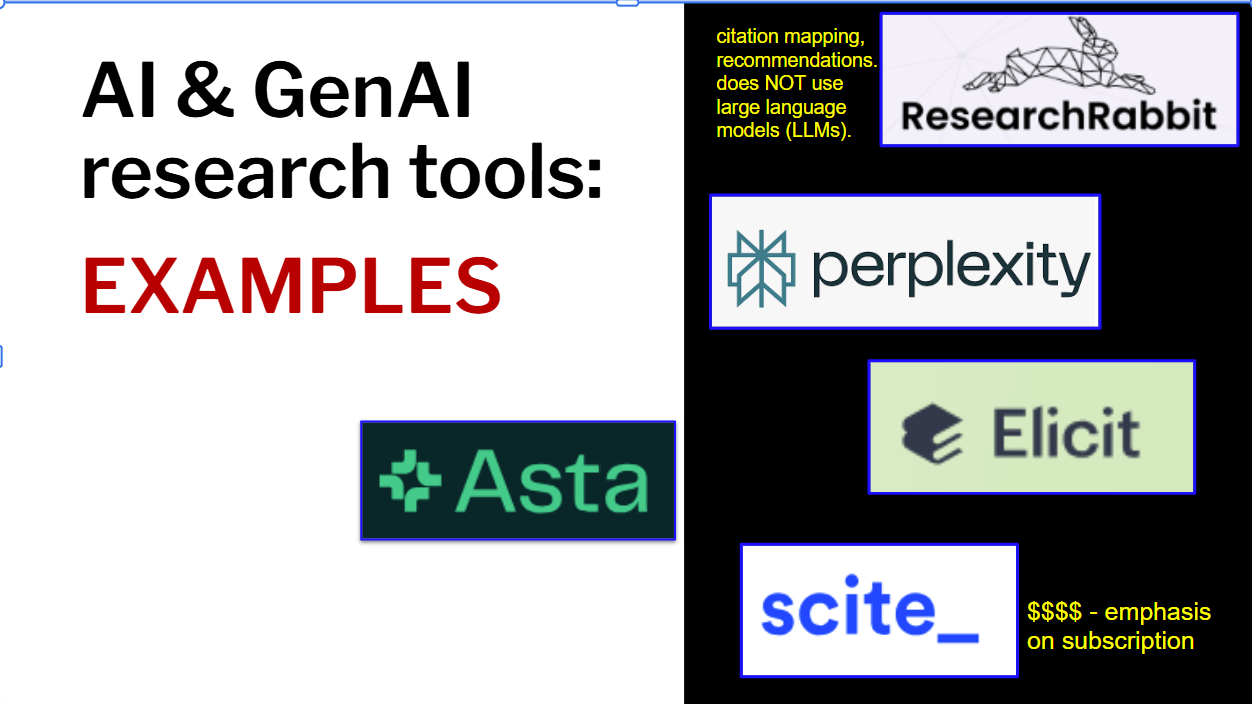
what about ai for research and WRITING??
- Concordia Library
AI Literacy guide
- Concordia QuickStart:
GenAI and professor expectations
context & basics:
or continue on to BONUS MATERIAL ON PRIMARY SOURCES...
primary source
=
a source that provides first-hand testimony or direct evidence concerning a topic
=
the object(s) of your study
=
can be almost anything, depending on the CONTEXT!

what is a primary source?

historical
can be PRIMARY sources?
typical primary sources
- newspaper articles
- diaries
- blogs, tweets & other social media posts
- films / videos
- court transcripts
- laws, bills, government publications
- NGO reports
locating primary sources will depend on what kind you are seeking, but see other library subject guides, such as: