AIM-PRO Pedagogical Constitution
proof of concept


AIM-PRO Pedagogical Constitution
Outlines the core pedagogical principles that guide the creation of our tools, resources, and learning scenarios, ensuring that the work of all partners share a common "pedagogical soul" (T5.1 Pedagogical requirements).
AIM-PRO utilizes Open Educational Resources (OERs), Generative AI, Model-Driven Engineering (MDE), and Digital Twin technologies to create personalized, sustainable, and inclusive learning environments.
Building AI competencies requires more than technical know‑how: it demands a mix of practical skills, critical thinking, ethical awareness, and the ability to adapt to fast‑changing technologies (cf. Howard et al., 2025).
Why do we need a pedagogical constitution?

Core pedagogical training strategies
To ensure that AIM-PRO's educational interventions are beneficial and deeply effective, all project outputs and methodologies must stand by the following core pedagogical principles, adapted from Synthesis of Qualitative Data (SQD); a model that brings together effective strategies to develop digital competencies (Tondeur et al., 2025).

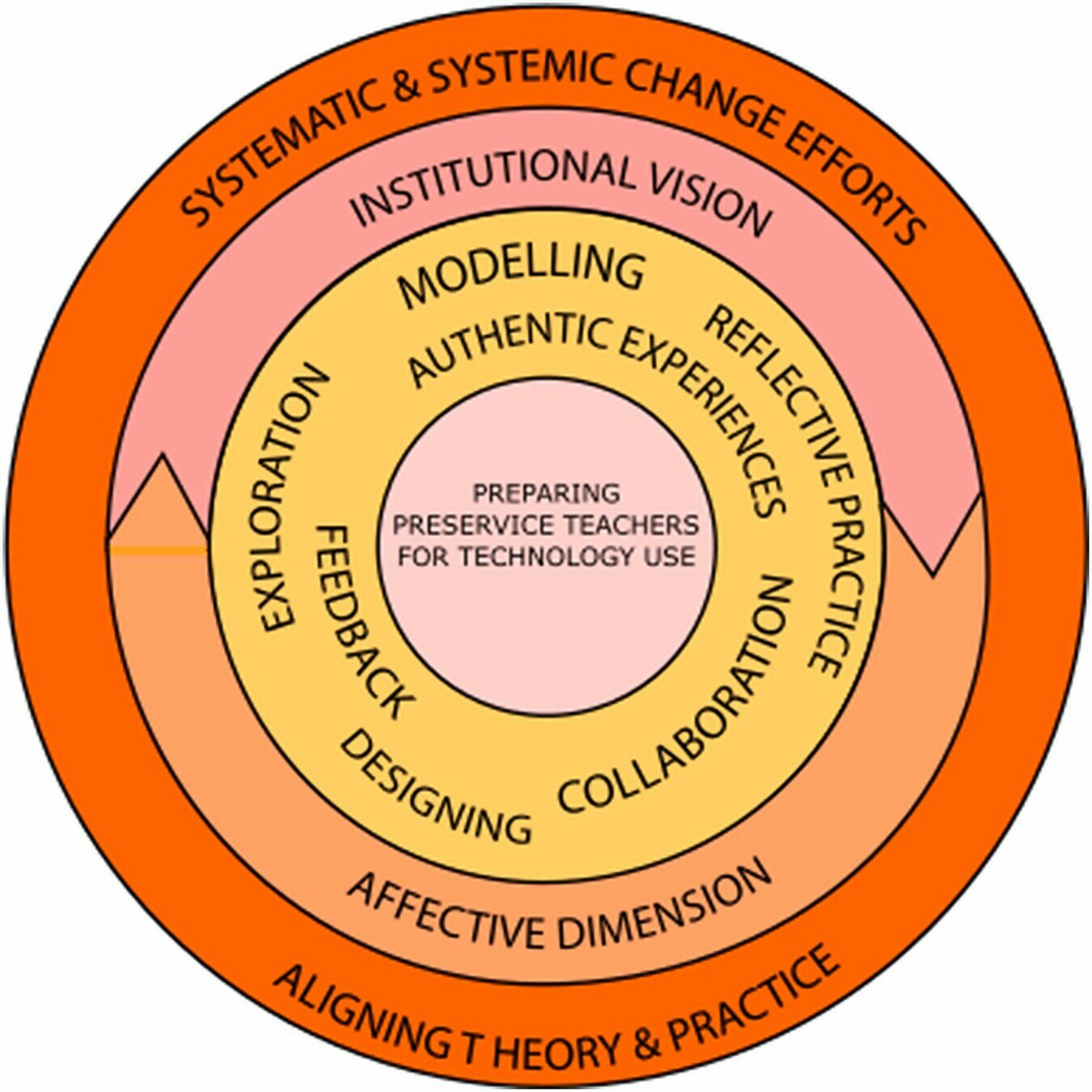
1. Modelling and exploration
2. Reflective practice
3. Collaborative design
4. A cycle of authentic experiences and feedback
5. The affective dimension
Core pedagogical principles

1. Modelling and exploration are essential to familiarise individuals with AI technologies.
2. Learners must critically reflect on and engage with both the potential and limitations of AI technologies.
3. A range of collaborative design activities are necessary to train individuals in creating environments to work with AI.
4. A cycle of authentic experiences and feedback is needed to support individuals to use AI in their practice.
5. Affective characteristics should be taken into account when preparing individuals for developing their AI competencies.
Core pedagogical principles
For this Constitution to be effective, it cannot merely be a theoretical document; it must serve as the pedagogical soul directing the activities of every Work Package (WP) in the AIM-PRO consortium.
The constitution in action
Guiding the work packages (example)
Hands-on exploration: AIM-PRO tools and scenarios must prioritize active experimentation with AI tools to build confidence and practical utility.
Building a strong "digital identity": AIM-PRO resources must encourage learners to critically reflect on the limitations, ethical risks, and potential of AI technologies.
Collaborative pedagogical reasoning: The AIM-PRO activities require pedagogical reasoning to understand the "why" and "how" of using specific AI tools to achieve a targeted outcome.
Real-world application: AIM-PRO interventions must provide iterative cycles of authentic experiences (e.g., using AI in real-world SME or HE tasks) supported by continuous, highly-valued human and peer feedback.
Inclusive and Empathetic: AIM-PRO methodologies must remain sensitive to affective characteristics (e.g. AI integration often triggers strong emotional responses) and actively help them overcome psychological barriers to AI adoption .