Digital Literacy
Digital Literacy: AI in society

exploring existing opportunities in MILO's curriculum
to coach students on the use of GenAI
Digital Literacy: AI in society
exploring existing opportunities in MILO's curriculum to coach students on the use of GenAI
What do we want to address about GenAI?
What is it and what does it do well at the moment?
What are its current pitfalls and limitations?
How does it work?
What does this mean for teaching and learning?
What are we really trying to do?
What is it and what does it do well at the moment?
(discover and explore)
What are its current pitfalls and limitations?
(critically assess together)
How does it work?
(gain insight into the technology)
What does this mean for teaching and learning?
(put it into practice)
opportunity nr. 1
Discover and explore: combining GenAI and referencing
Critically assess together
Gain insight into the technology
Put it into practice
the activity should be
- Authentic (for students of the educational master's programme)
- Safe (low stakes and scaffolded)
- A form of congruent teaching (a good practice in itself )
combining GenAI and referencing
- Authentic: Experimentation with GenAI is integrated
- Safe: Low stakes and less prone to mistakes
- A form of congruent teaching: Showing when, why and how (not) to use GenAI
GenAI 'in the wild' - referencing
A. Need to know
B. Practice and discuss in group
C. Moderated classroom discussion
GenAI 'in the wild' - referencing
-
Setting the scene with analogbot
What do you need to know to about referencing to be able to practice referencing with GenAI.
-
What would be the reason for you to reference correctly? (multiple choice question)
-
Why is referencing important at our university? (video)
-
Introduction/recap of referencing, citing and paraphrasing. (Interactive book)
-
Students can share questions and concerns and read questions other students have. (open question)
A. Need to know : asynchronous remote activity (20 minutes)
GenAI 'in the wild' - referencing
A. Need to know : short synchronous activity (15 minutes)
At the start of the workshop 'academic writing':
-
Address questions about referencing.
- Introducing the group work and elaborating on the thought-provoking questions about the use of GenAI.
GenAI 'in the wild' - referencing
B. Practice and discuss in group: Synchronous with cohort (60 minutes)
-
Practicing referencing (individually and/or together)
- Group discussion based on thought-provoking questions:
-
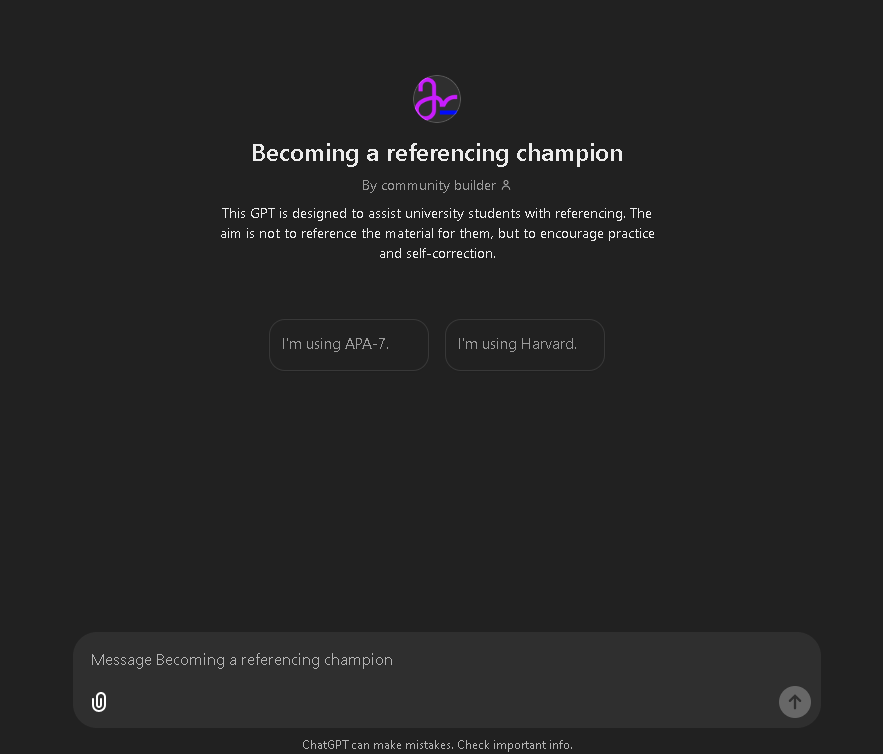
Deconstruct the customGPT
- What do you think your teacher wants to achieve with this CustomGPT?
- What do you think is the expected behaviour?
- What would be the instructions behind this CustomGPT?
- Does the CustomGPT do a good job?
- What can we expect from this technology?
-
Deconstruct the customGPT
- Extra challenges
- 'Break the bot': How can you make the bot deviate from its instructions?
- 'Improve the bot': What instructions would you give it?
GenAI 'in the wild' - referencing
C. Moderated classroom discussion: Synchronous colocated (60 minutes)
- Discussing the thought-provoking questions and challenges.
- Analise and discuss the instructions for the CustomGPT.
-
Extra questions (to build upon via other opportunities in the curriculum):
-
What does it do well at the moment?
-
What are its current pitfalls and limitations?
-
How does it work?
-
What does this current technology mean for teaching and learning?
-
GenAI 'in the wild' - other opportunities in MILO's curriculum
GenAI & academic research
The stakes are higher when using GenAI for academic research. As specially when references are faulty or non-existent. We already have a webinar about this at MILO we could continue to build upon.
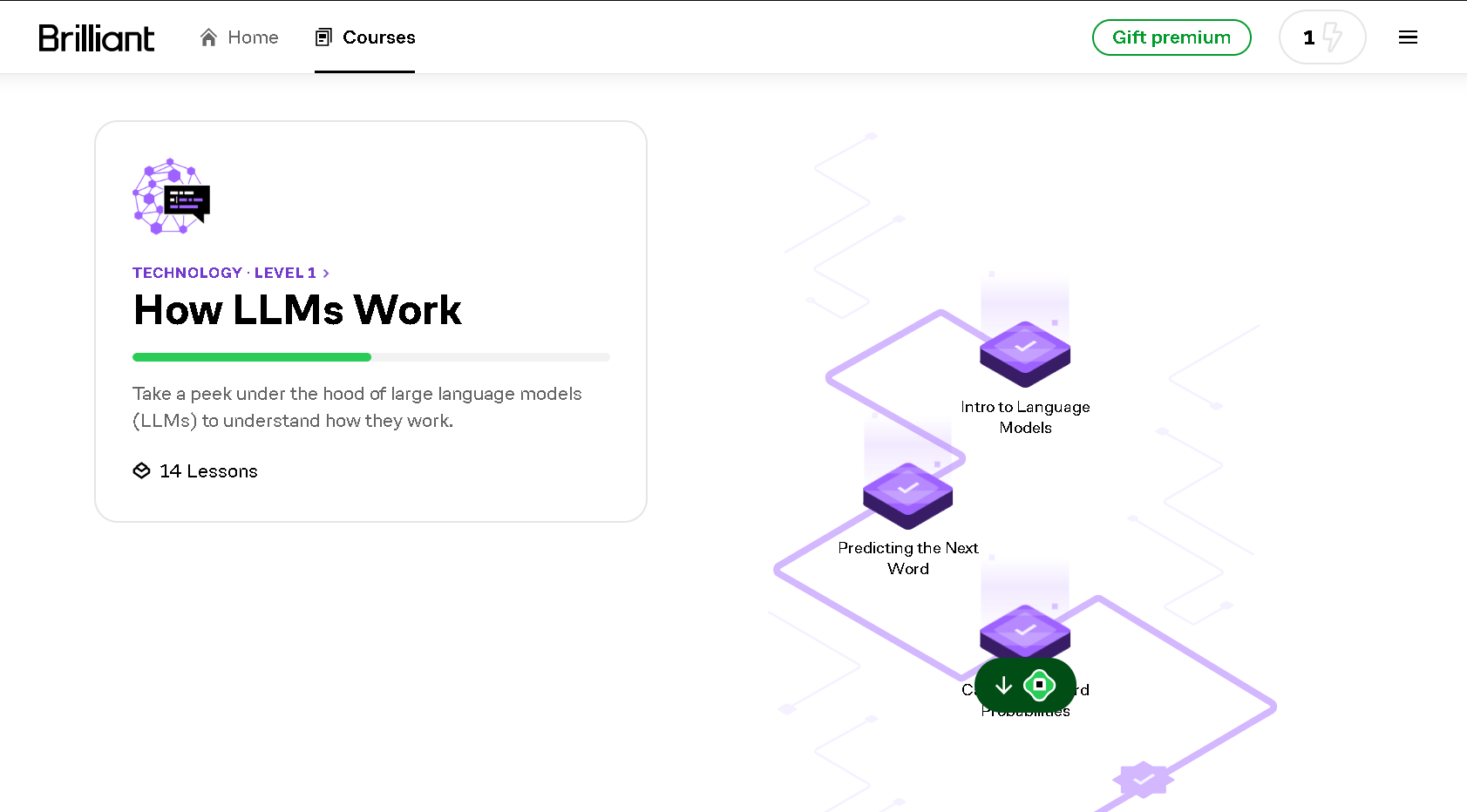
Mechanics of GenAI
There are a lot of interesting courses out there to learn the basics of the technology. An example I really like (even though it is rather expensive) is: Brilliant. We haven't introduced this at MILO yet.
Teaching with(out) GenAI
This is something I plan to look into in parallel with my thesis.


?