x-tag: Moving away from jQuery
How to adapt jQuery functionality with x-tag
David Lorenz | info@activenode.de | https://github.com/activenode | @activenode_dev
web enthusiast | full-stack developer

x-tag Presentation Part 2 (find Part 1 here)
#javascript #webcomponents #webdevbbq
Outline of this presentation
- The fuq is x-tag?
- Why not jQuery?
- Short look at IE9+ functionality
- How to jQuery with x-tag
- A view from x-tag at riot.js, React and Angular (open discussion)
Recapitulation:
-
x-tag allows component based development (WebComponents)
-
x-tag is 20kb gzipped including all required polyfills to work in IE9+
-
Allows observing object data inside a component => No need of manually updating components / no manual triggering
- x-tag does not act as a wrapper. It acts on DOM-Level. Accessing your DOM allows accessing your x-tag functionality.
code sample below
Welcome to jQuery
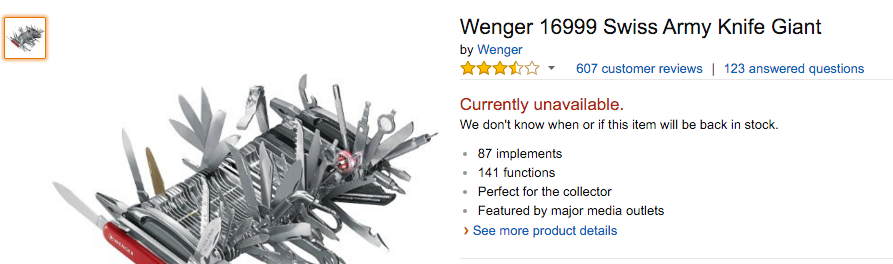
Need to open a bottle? I'll grab a tank.
Jackhammer missing? Better use a plugin.
jQuery has no specific responsibility
- It is not a framework improving architecture
- it is a collection of helpers for anything and everything
- It was invented when it was actually hard to achieve several things like offset() cross-browser.
IE9+ functionality
Arrays: filter(), map(), forEach()
getComputedStyle(elem, null)
elem.getBoundingClientRect()
JSON.parse()
querySelector() for all CSS3 selectors
Canvas
Small set of tools
with huge effects.
CROSS-BROWSER
But jQuery can do...
animate(..) / fadeIn(..)
For enhancing animations and transitions: CSS3 Anim/Transitions on IE10+
Native and complex but dispensable animations with domElem.animate(..)
(not supported in IE11/Edge and Safari 9.1/9.3 right now)
But jQuery can do...
animate(..) / fadeIn(..)
Indispensable Animations for IE9+ :
VelocityJS - much faster and smoother than jQuery 2.x right now
NO DEPENDENCIES - GZIP'd 12.34kb!
Velocity(
 document.getElementById("dummy"),
 { opacity: 0.5 },
 {
   duration: 1000,
   loop: true,
   progress: (elements, complete, remaining, start, tweenValue)=>{}
 }
);
But jQuery can do...
$('x-my-element').first().children('.some-children')
//go, go, go
xtag.queryChildren(
  document.querySelector('x-my-element'),
  '.some-children'
)
too complicated? prototype your DOM Elements
Element.prototype._children = function(sel){
    return xtag.queryChildren(this, sel);
};

//or much better, overwriting the children property
Object.defineProperty(
 Element.prototype,
 'children',
 {
   value: function(){return xtag.queryChildren(this, sel)}
 }
);
But jQuery can do...
$('.test').on('click', ()=>{alert('clicked')});
xtag.addEvent(myElement, 'tap', function(event){
  alert('myElement was just tapped ' + this);
});
xtag.addEvent(myElement, 'tap:delegate(div > img)', function(event){
alert('my image inside div was just tapped ' + this);
});xtag.addEvents(myElement, {
'keyup:delegate(input)': function(){},
tap: function(){}
});BTW: Unified pointer events
But jQuery can do...
hasClass() / addClass()
Use classList and a Polyfill for IE (Gzip'd 1kb)
//hasClass
document.body.classList.contains('myclass')

//addClass
document.body.classList.add('myclass')

//removeClass
document.body.classList.remove('myclass')
But jQuery can do...
such $.ajax ; many wow
You shall not use old tools..
Use the future and polyfill it. Only that way you can keep up using native browser functionality.
https://github.com/github/fetch
fetch('/users.json')
  .then(function(response) {
    return response.json()
  }).then(function(json) {
    console.log('parsed json', json)
  }).catch(function(ex) {
    console.log('parsing failed', ex)
  })
But jQuery can do...
$.each()
We do not need to argue about each when forEach is natively supported in every browser!
x-tag always returns real arrays, no DOMCollection - so forEach is always available.
But jQuery can do...
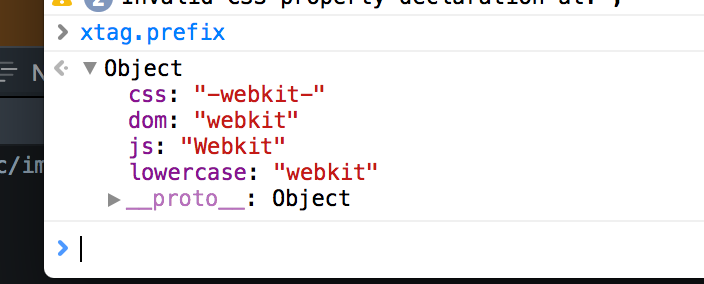
$.css('transform',..) with prefixing
x-tag has built-in prefix detector. You just need to use it.
But jQuery can do...
$('<div><input /></div>') - Fragment creation
x-tag can do that too:
xtag.createFragment('<div><input /></div>')Get into x-tag
some useful links
- http://x-tag.github.io/docs
- https://x-tag.readme.io/docs/
- https://pascalprecht.github.io/2014/07/21/polymer-vs-x-tag-here-is-the-difference/
- https://plainjs.com/javascript/
Open Conversation
x-tag!?, React, Angular, RiotJS