ORGANISATIONAL STRUCTURE STUDY ON HAL


HISTORY
The late Seth Walchand Hirachand set up Hindustan Aeronautics Limited at Bangalore in association with the erstwhile princely state of Mysore in December 1940. The Government of India become a shareholder in March 1941 and took over the Management in 1942.

PRODUCT PROFILE
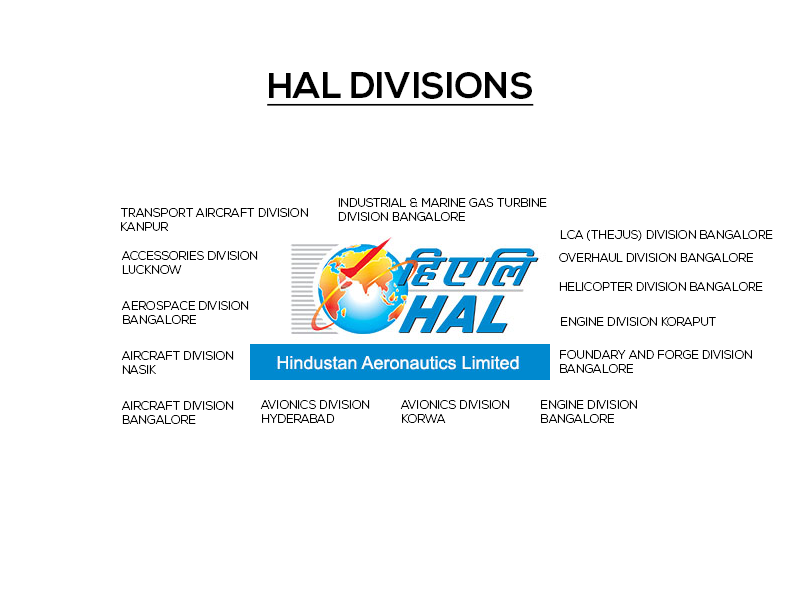
The picture on the right depicts the division in HAL.
Apart from these, there are Complexes that handle specific units:
- Bangalore complex: Hawk
- MIG complex: Mig Units
- Accessories complex: ECE units
- Design complex: RND Centres.
- Helicopter Complex: Helicopter manufacturing
VISION
To become a significant global player in the aerospace industry.
MISSION
To achieve self-reliance in design, development, manufacture, upgrade and maintenance of aerospace equipment diversifying into related areas and managing the business in a climate of growing professional competence to achieve world class performance standards for global competitiveness and growth in exports.
OBJECTIVE
-
To serve as an instrument of the national policy to achieve self-reliance in the design, development and production of aircraft and aeronautics equipment to meet the counter changing and growing needs with special emphasis on millet requirement.
-
To ensure availability of total quality people to meet the organizational goals and objectives
-
To have a continuous improvement in knowledge, skill and competence (managerial, behavioural and technical.)
-
To promote a cultural achievement and excellence with emphasis on integrity, credibility and quality
-
Towards this end, to develop and maintain an organisation which will readily respond to and adopt the changing matrix of socio techno-economic relation and where in a climate of grow professional competence, self-discipline, mutual understand deep commitment and a sense of belonging will be fostered and each employee will be encouraged to grow n accordance with potential foe the furtherance of the organisation.
ORGANISATION STRUCTURE
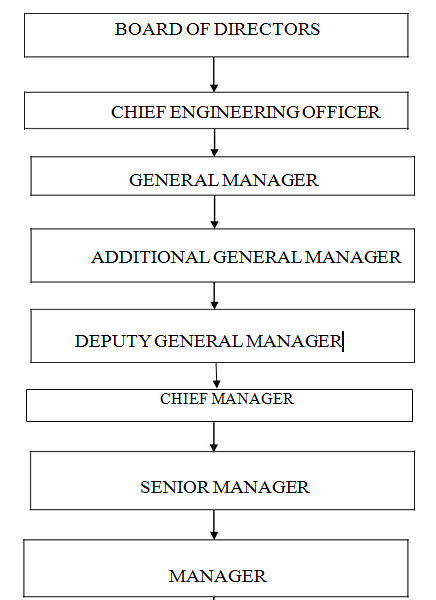
BOARD OF DIRECTORS
- To ensure that the company’s goals, values and objectives are clearly described and communicated to the employees.
- Determine the goals and objectives of the company based on the needs of the stakeholders (creditors, government, customers, employees, shareholders etc.).
- Appoints and regulates the general director to coordinate the workings of the organization.
- Board of directors, general managers are solely responsible for the formulation of rules, regulations and policies of the company.
CEO(CHIEF ENGINEERING OFFICER)
- Coordinate and communicate with the general and deputy general manager of each department to formulate the strategies and plan of actions to achieve the organisational goals.
- During the decision making process, the valuable suggestions and viewpoints of the low level employees are also taken into consideration by the higher authorities.
- CEOs on a continuous basis keeps a review on the working of different departments.
- CEOs address the joint consultant meeting, management training meeting, and MD coordination meeting
AUTHORITIES AND RESPONSIBILITIES
GENERAL MANAGER
- Responsible for the arrangement and development of training programs at HAL.
- Responsible to report the managing directors about the progress rate of the respective departments.
- Issues orders and instructions to the low level management.
DEPUTY GENERAL MANAGER
- Acts as a communication channel between the top management and low management.
- Responsible for encouraging the employees by promotional and reward scheme.
AUTHORITIES AND RESPONSIBILITIES
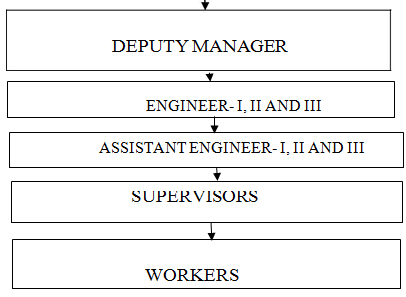
CHIEF MANAGER & SENIOR MANAGER
- Responsible to communicate the workings, policies and plan of actions to the supervisors and workers.
SUPERVISORS
- Guide the workers in the workplace.
- Solve or communicates the issues of the workers.
AUTHORITIES AND RESPONSIBILITIES
FUNCTION OF DEPARTMENTS
FINANCE
HAL is running as a cash rich government sector undertaking. Government itself holding the entire HAL share capital and major financial activities are organised by its corporate office and also controlling all division of HAL.
FUNCTION OF DEPARTMENTS
FINANCE
The finance department of HAL is divided in different sections namely:
- Material accounting section
- Book keeping section
- Cash section
- Bills payable section
- Bills receivable section
- Costing section
FUNCTION OF DEPARTMENTS
MARKETING
Marketing is an important activity for any organization irrespective of its nature, size
and type of industry in which it operates. Marketing and selling are often mistaken as synonyms but hold a complete different meaning individually.
FUNCTION OF DEPARTMENTS
FUNCTIONS OF MARKETING
These are the various function of marketing department:
- Exploring new customers
- Expansion of the business
- Receipts and screening of Enquiries from customers
- Customer Support
- Preparation of Estimates
- Submission of Quotations
- Follow up and Negotiations
- Receipts of orders and vetting orders
- After sales service
- Follow up for payments
FUNCTION OF DEPARTMENTS
HUMAN RESOURCE
The strategic goal of HR department of HAL is to create an atmosphere of technological and managerial excellence to become globally competitive aerospace industry. With the changing environment, rapid technological changes characterized by a paradigm shift from licensed production to R&D based production duly balanced with co-development technological, up-gradation etc, greater customer demand focused diversification to civilian and expert market.
FUNCTION OF DEPARTMENTS
HUMAN RESOURCE
Focus of Human Resource in HAL is on the following:
- Competence building
- Commitment
- Motivator
- Employee relations
FUNCTION OF DEPARTMENTS
PRODUCTION
The engine division’s production department is conducting with activities of production, planning and control. This states the manufacturing, repair and overhaul of aero engines and their components. It includes spares, accessories, ground handling equipments, tools and test equipments and also services includes technical assistance and training of customers personal in operations and maintains of aircraft and other engines
FUNCTION OF DEPARTMENTS
PRODUCTION
The management of task of production department through following steps, they are:
- Centre planning
- Shop scheduling
- Shop progress
- Store credit
- Dispatch
- Offloading sub contract
- Annual physical verification.
SWOT
STRENGTH
WEAKNESS
OPPORTUNITIES
THREATS
- MONOPOLY
- TECHNOLOGY
- JOB SECURITY
- DEFENCE MARKET
- SKILLED AND DEDICATED MANPOWER
- NAVRATNA COMPANY
- ABSENCE OF MARKET STRATEGIES
- LICENSE DEPARTMENT
- ENCUMBARANCE
- GROSERY MARKET
- TIE-UPS
- HIGH PENETRATION POTENTIAL IN THE FOREIGN MARKETS
- GLOBAL COMPETITORS
- LOW PRODUCTIVE
- LOW MOTIVATION
- THREAT FROM MNC’S
CONCLUSION
Hindustan Aeronautics Limited (Hindi: हिंदुस्तानएरोनॉटिक्सलिमिटेड; HAL, Hindi: हिएलि) is an Indian state-owned aerospace and defence company based in Bangalore, Karnataka. It is governed under the management of the Indian Ministry of Defence. The government-owned corporation is primarily involved in the operations of the aerospace industry. These include manufacturing and assembly of aircraft, navigation and related communication equipment and airports operation.
THANK YOU
Q&A