Asynchronous
js
Agenda:
- Promise
- Event loop
- Async/await
- Fetch API
- HW
Callback Hell
getImage('/image.png', (image, err) => {
  if(err) throw new Error(err)
  compressImage(image, (compressedImage, err) => {
    if(err) throw new Error(err)
    applyFilter(compressedImage, (filteredImage, err) => {
      if(err) throw new Error(err)
      saveImage(filteredImage, (result, err) => {
        if(err) throw new Error(err)
        console.log('Successfully saved image')
      })
    })
  })
})Promise
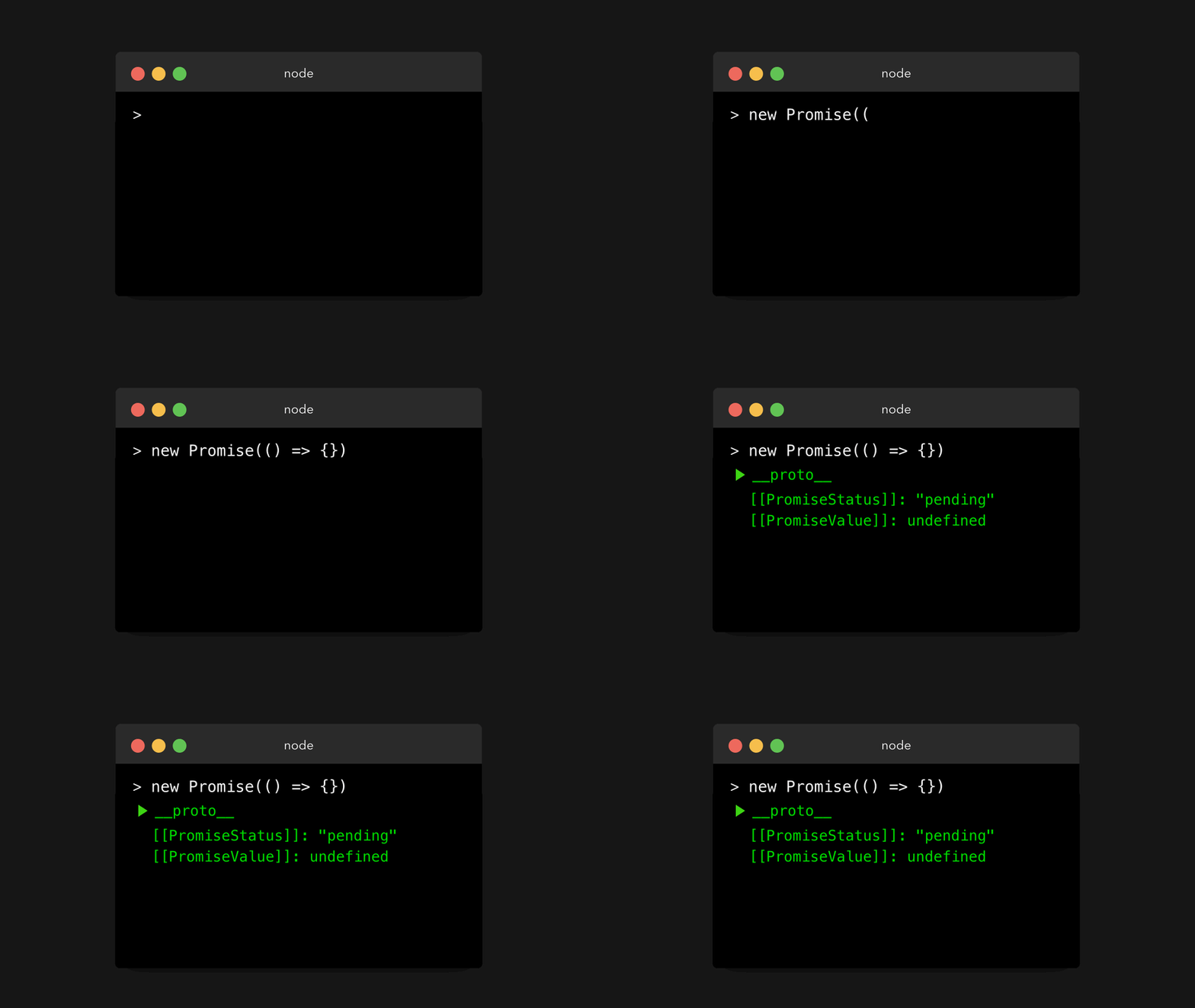
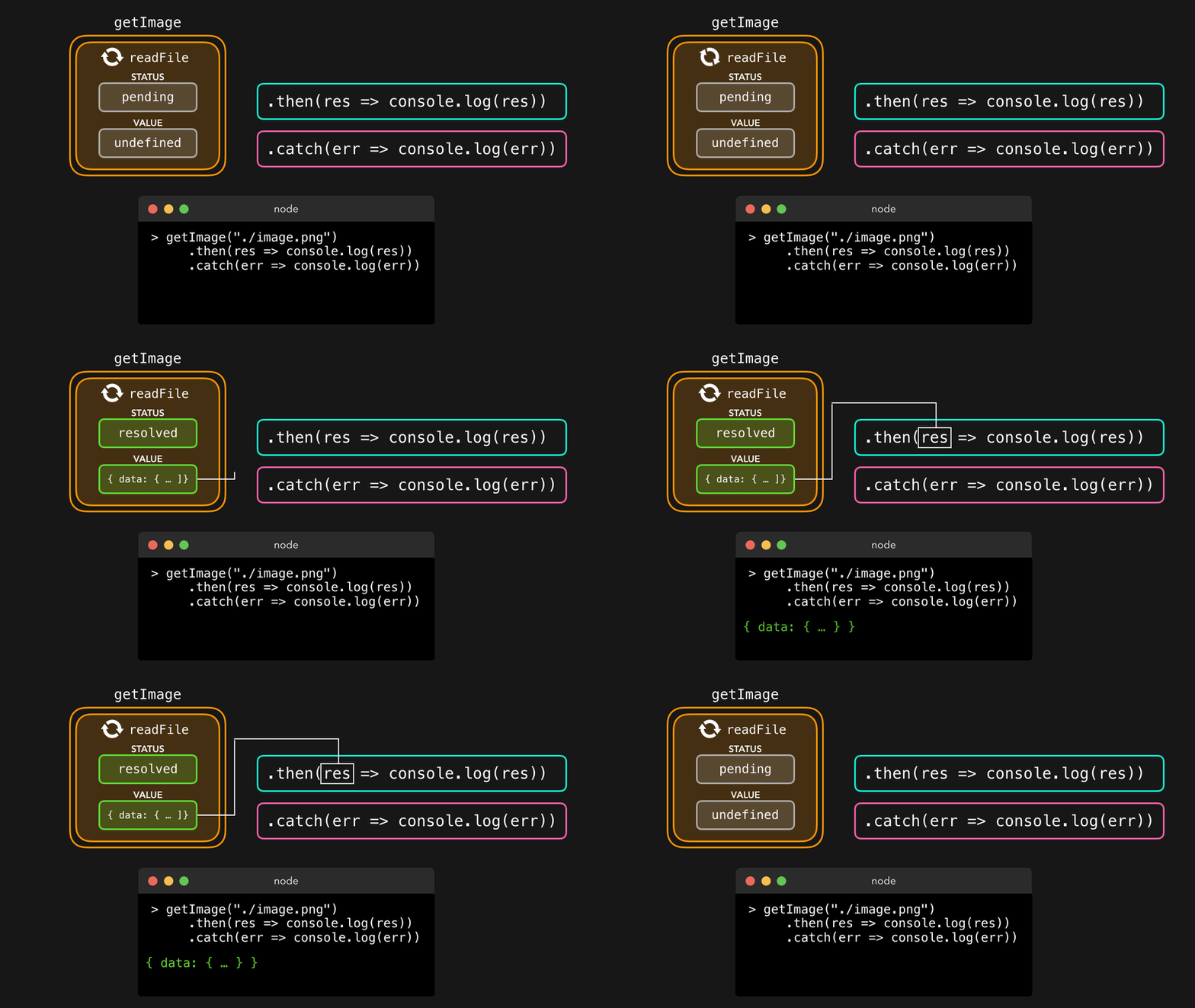
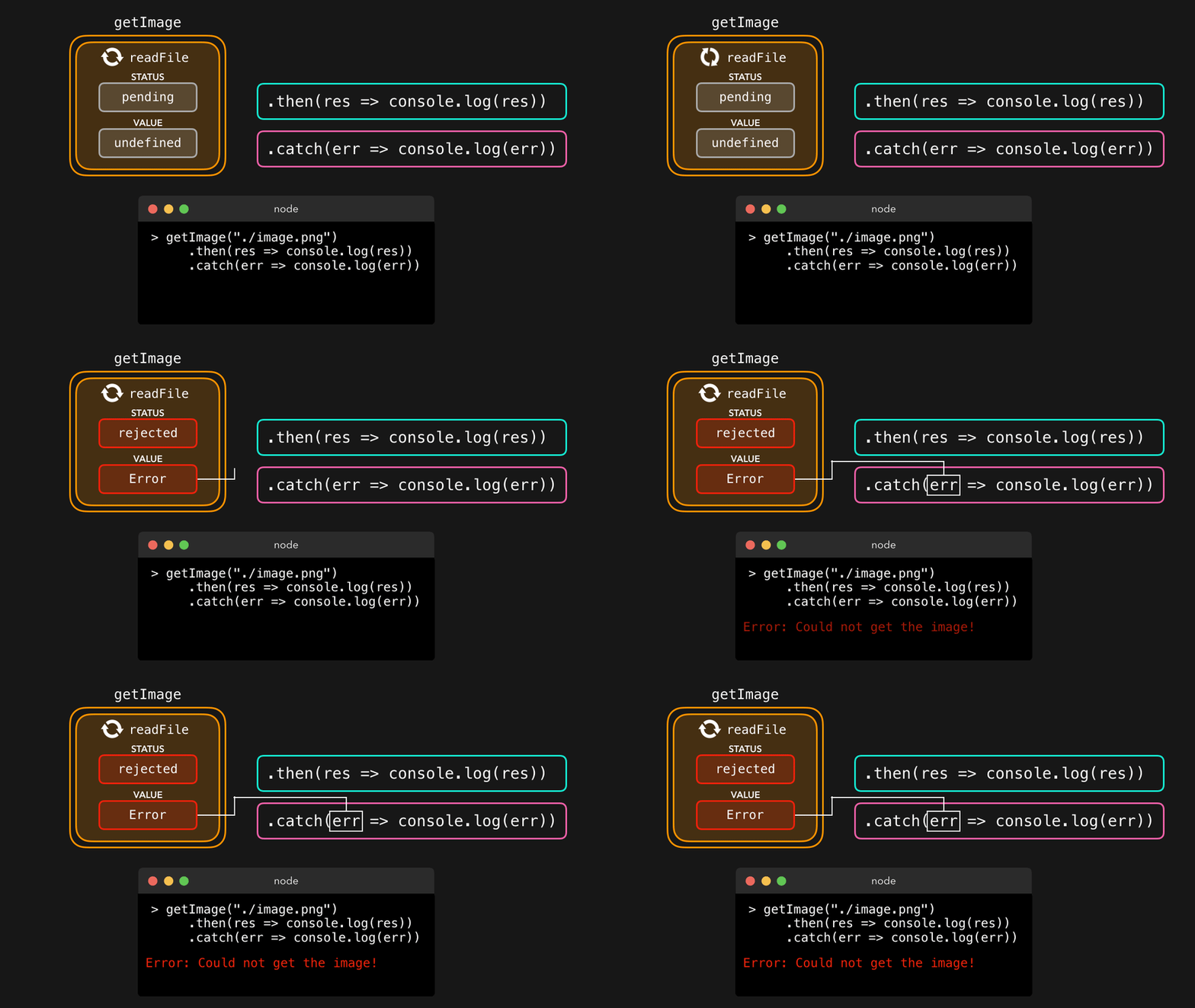
The value of promise status:
✅ fulfilled: The promise has been resolved. Everything went fine, no errors occurred within the promise.
❌ rejected: The promise has been rejected. Argh, something went wrong...
⏳ pending: The promise has neither resolved nor rejected (yet), the promise is still pending.
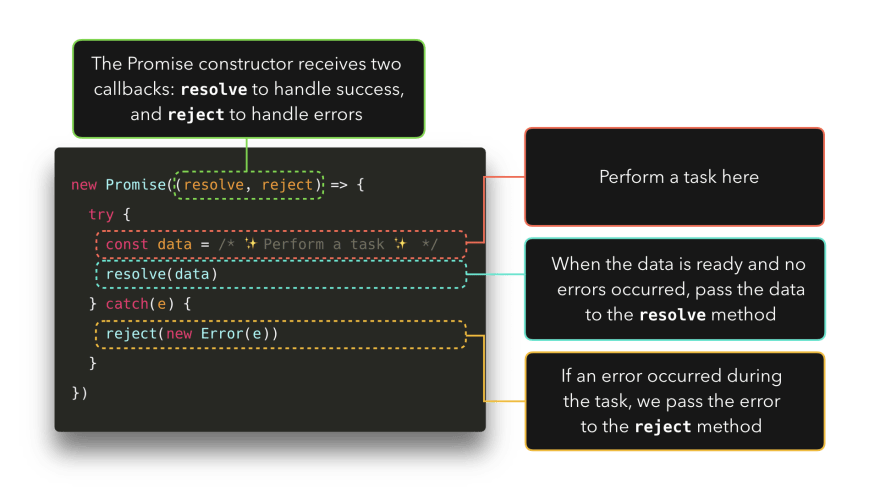
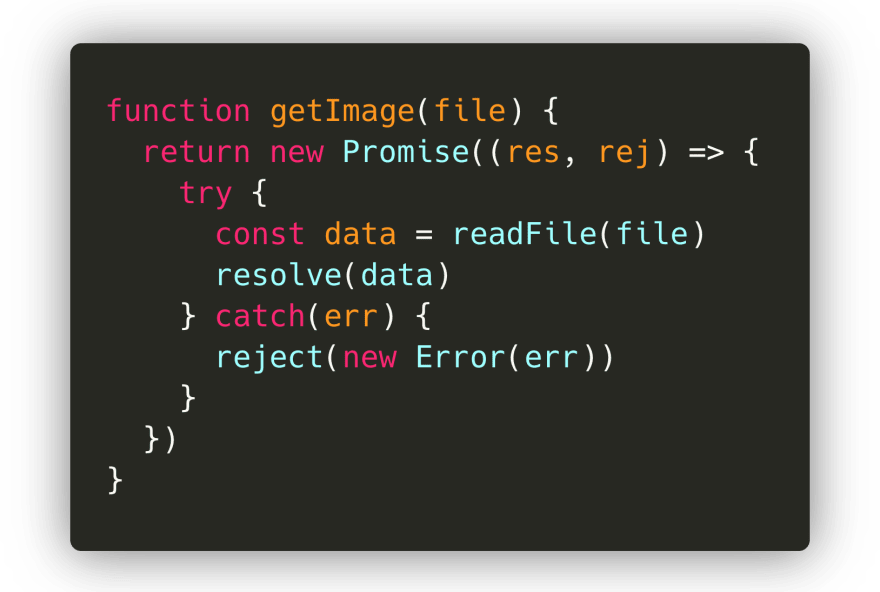
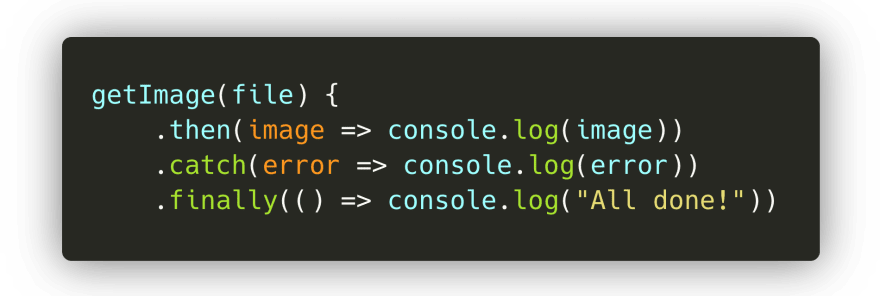
.then(): Gets called after a promise resolved.
.catch(): Gets called after a promise rejected.
.finally(): Always gets called, whether the promise resolved.
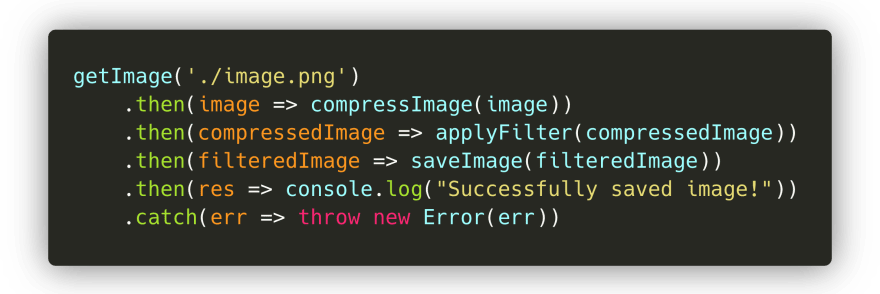
getImage('/image.png', (image, err) => {
  if(err) throw new Error(err)
  compressImage(image, (compressedImage, err) => {
    if(err) throw new Error(err)
    applyFilter(compressedImage, (filteredImage, err) => {
      if(err) throw new Error(err)
      saveImage(filteredImage, (result, err) => {
        if(err) throw new Error(err)
        console.log('Successfully saved image')
      })
    })
  })
})
VS
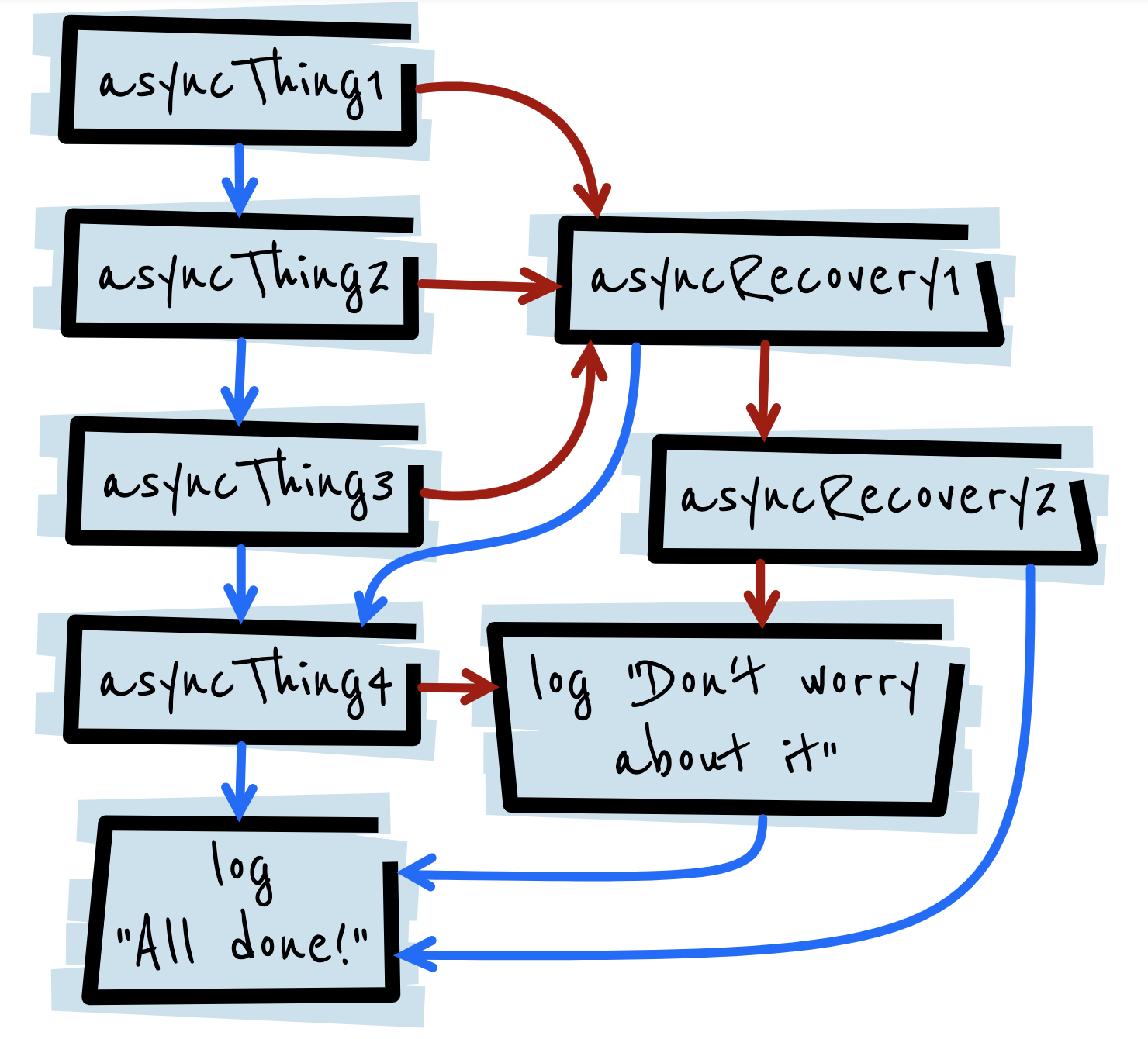
asyncThing1().then(function() {
  return asyncThing2();
}).then(function() {
  return asyncThing3();
}).catch(function(err) {
  return asyncRecovery1();
}).then(function() {
  return asyncThing4();
}, function(err) {
  return asyncRecovery2();
}).catch(function(err) {
  console
    .log("Don't worry about it");
}).then(function() {
  console
    .log("All done!");
})
Example was taken from
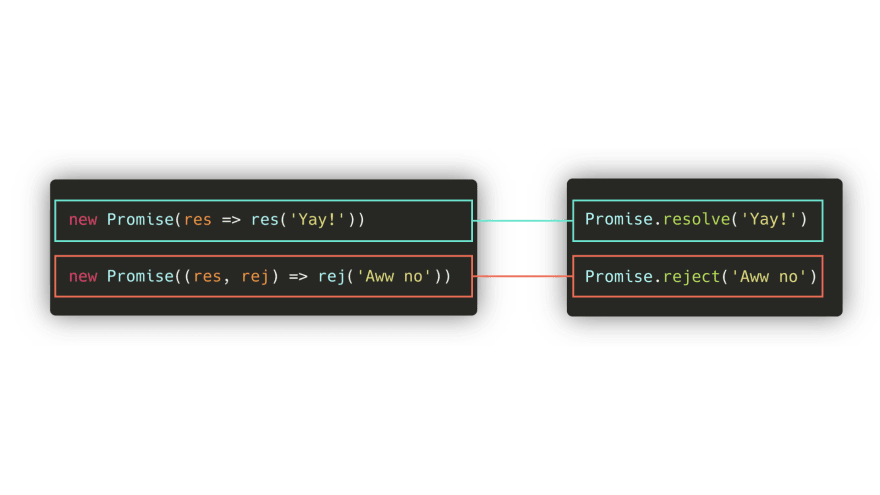
Promise.reslove and Promise.reject
Promise.all and Promise.race
const promise1 = new Promise((resolve, reject) => {
  setTimeout(resolve, 500, 'one');
});

const promise2 = new Promise((resolve, reject) => {
  setTimeout(resolve, 100, 'two');
});


Promise.all([promise1, promise2]).then((values) => {
  console.log(values);
});
// expected output: ["one", "two"]


Promise.race([promise1, promise2]).then((value) => {
  console.log(value);
  // Both resolve, but promise2 is faster
});
// expected output: "two"
Microtasks and (Macro)tasks
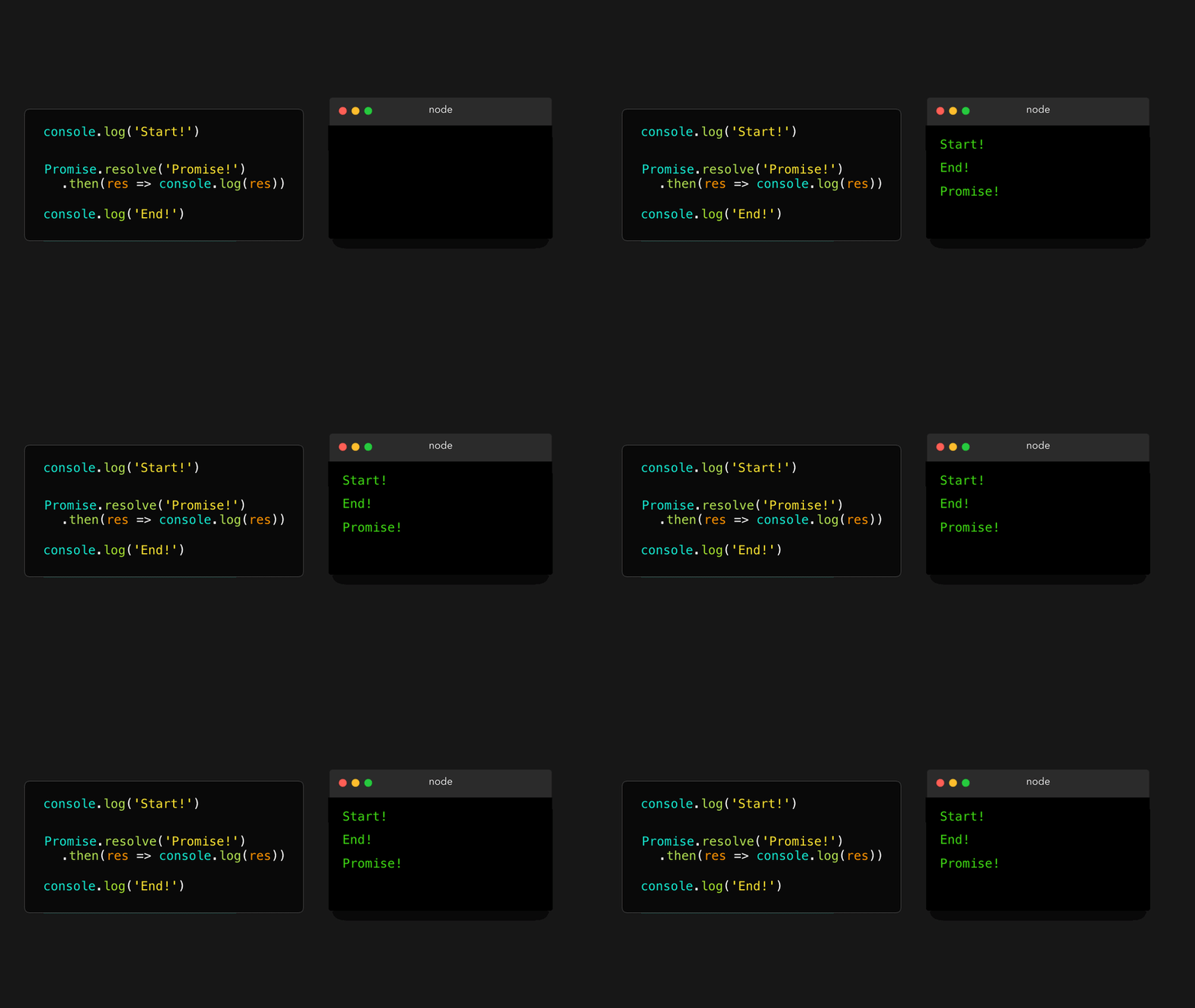
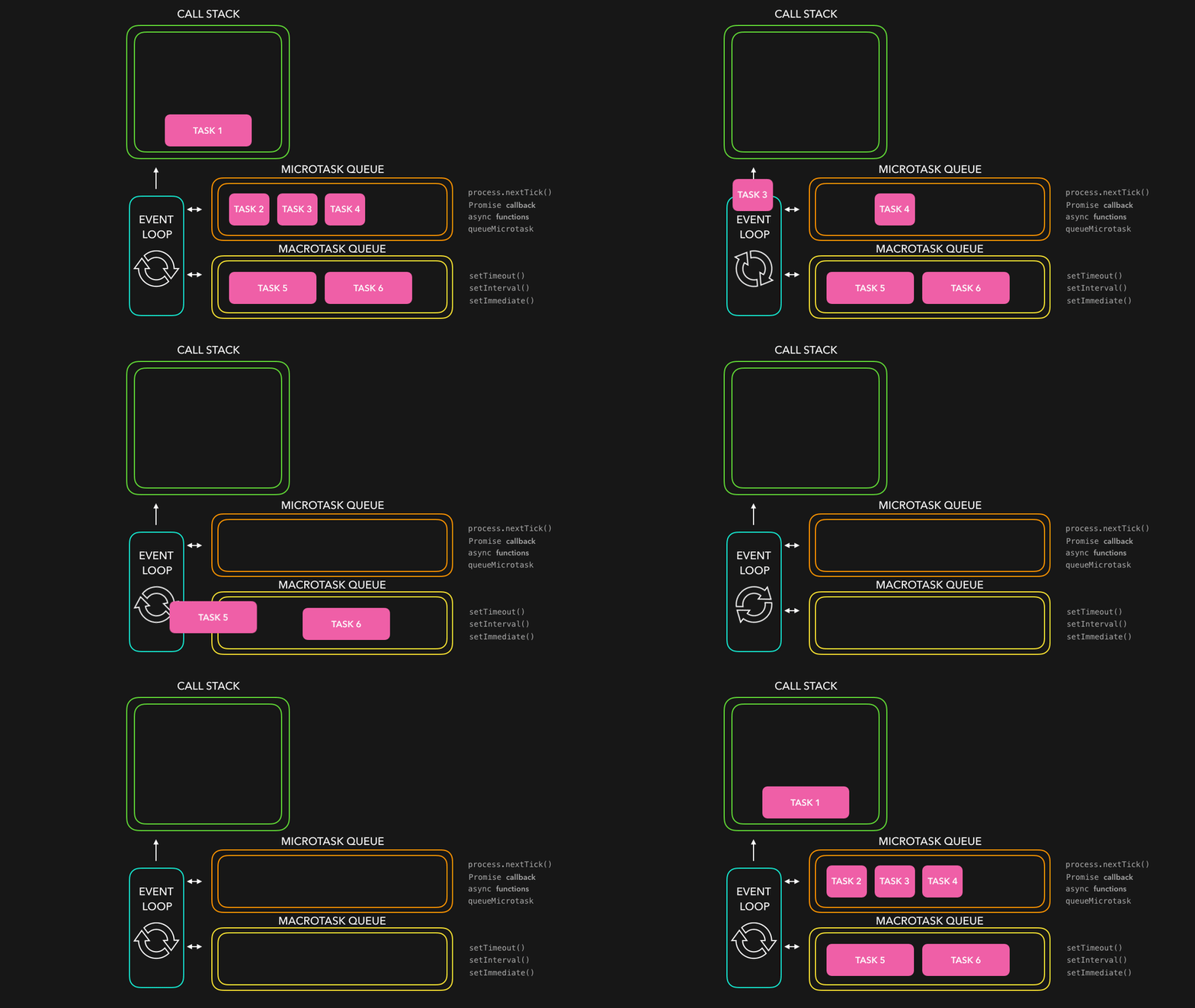
However, within the Event Loop, there are actually two types of queues: the (macro)task queue (or just called the task queue), and the microtask queue. The (macro)task queue is for (macro)tasks and the microtask queue is for microtasks.
| (Macro)task |
Microtask |
|---|---|
| setTimeout | process.nextTick |
| setInterval | Promise callback |
| setImmediate | queueMicrotask |
Text
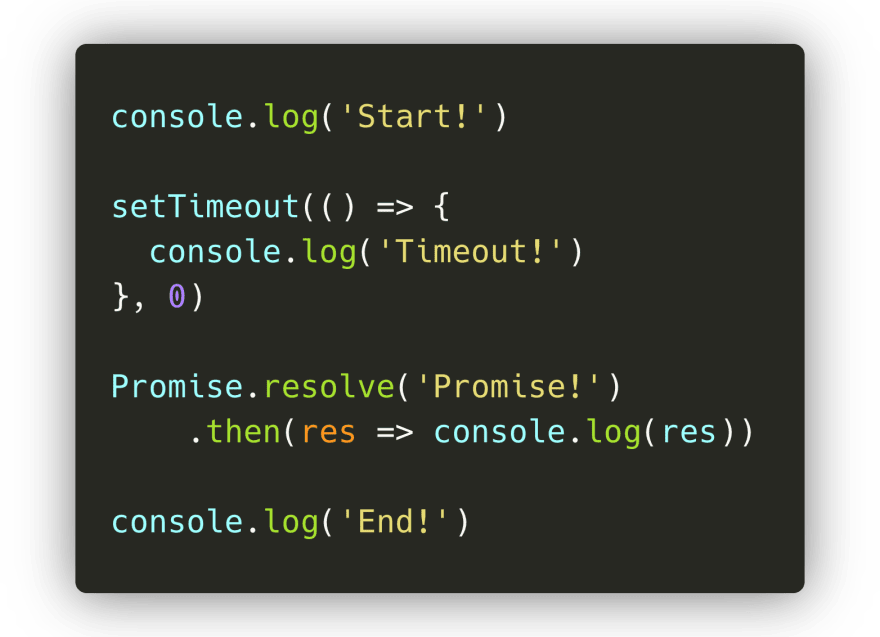
⚠️⚠️ ATTENTION ⚠️⚠️
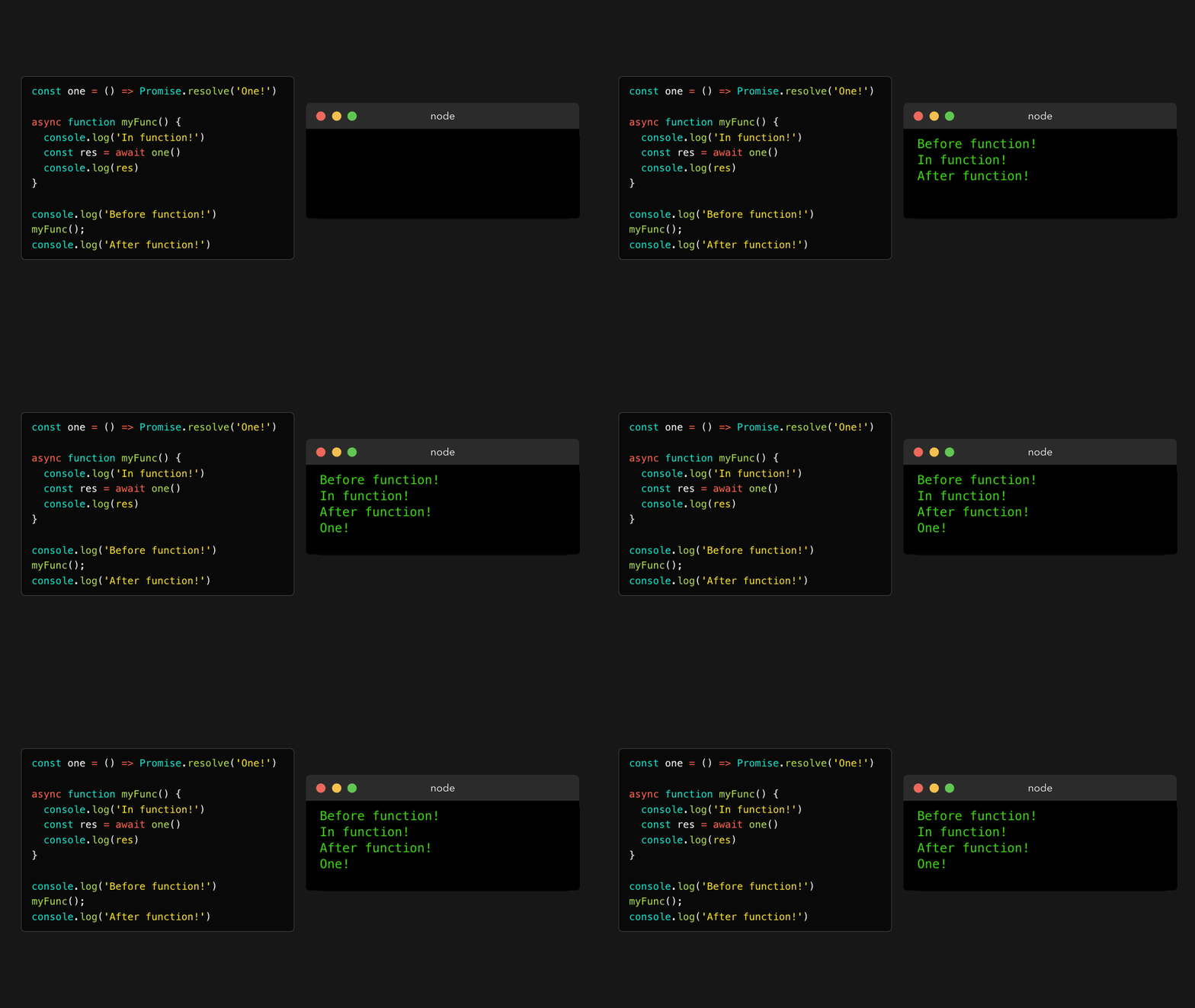
Async/await
Fetch API
Example of POST request:
fetch('/users', {
  method: 'POST',
  headers: {
    'Accept': 'application/json',
    'Content-Type': 'application/json'
  },
  body: JSON.stringify({
    name: 'Hubot',
    login: 'hubot',
  })
})
Fetch is the next generation of XHR
fetch('/users')
  .then(checkStatus)
  .then(parseJSON)
  .then(function(data) {
   console.log('request succeeded', data)
  }).catch(function(error) {
    console.log('request failed', error)
  })
Response:
function checkStatus(response) {
  if (response.status >= 200 &&
      response.status < 300) {
    return response
  } else {
    var error = new Error(response.statusText)
    error.response = response
    throw error
  }
}

function parseJSON(response) {
  return response.json()
}
async function getUsers() {
  try {
    const res = await fetch('/users');
    checkStatus(res);
    const body = await res.json();
    console.log('request succeeded', body);
  } catch (error) {
    console.log('request failed', error);
  }
}
Streams
response.body is a ReadableStream
How to deals with stream
.json()
.text()
.blob()
.formData()
.arrayBuffer()
.clone()
fetch(url).then(function(response) {
  return response.json();
});
CRUD:
C = CREATE
R = READ
U = UPDATE
D = DELETE
POST
GET
PUT
DELETE
FREE APIs for practice:
- https://www.mockable.io/
- https://locationiq.com/
- https://weatherstack.com/