Going Agile
Transitioning of a program
to an Agile Release Train (ART)
What we want to change and why!
What we need: Your buy-in!
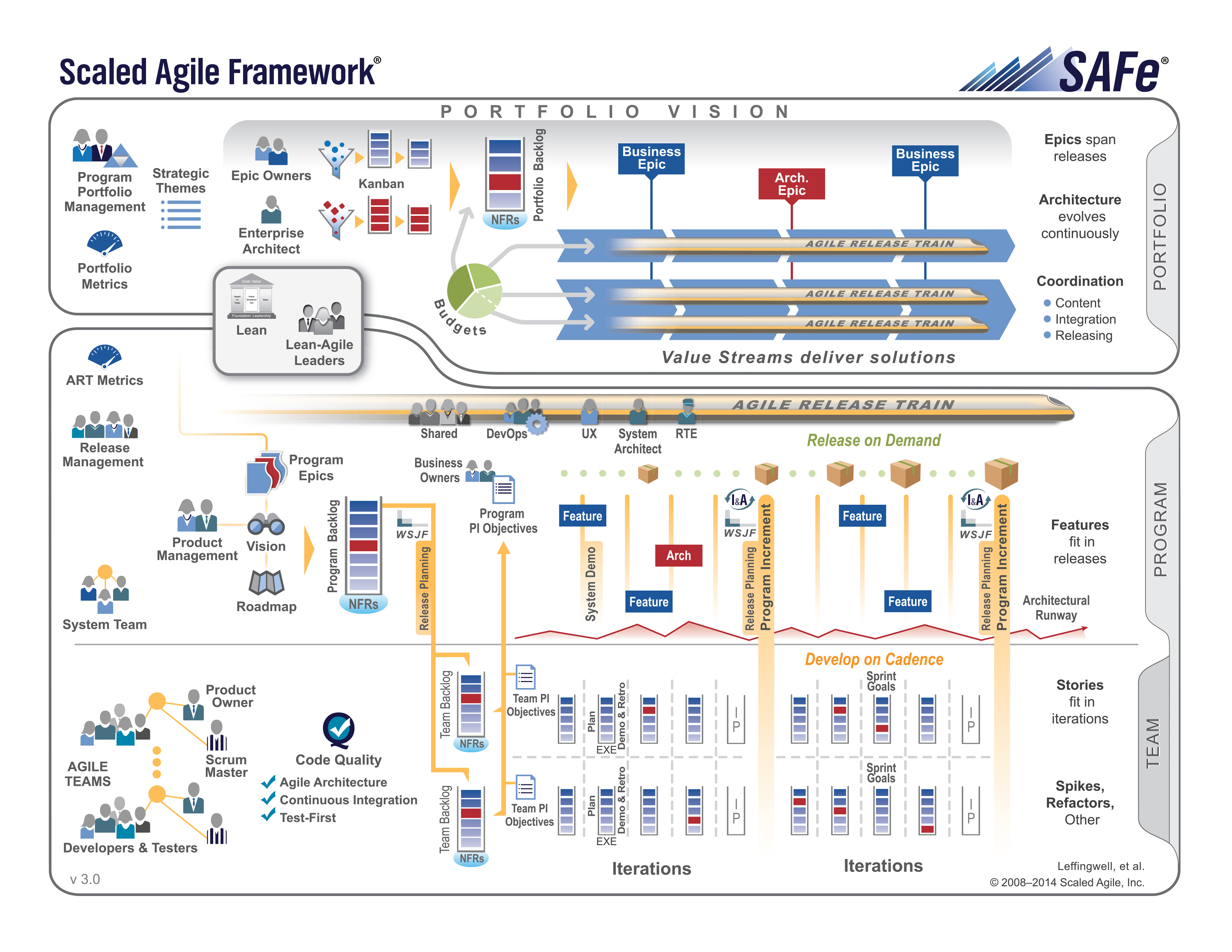
How to use
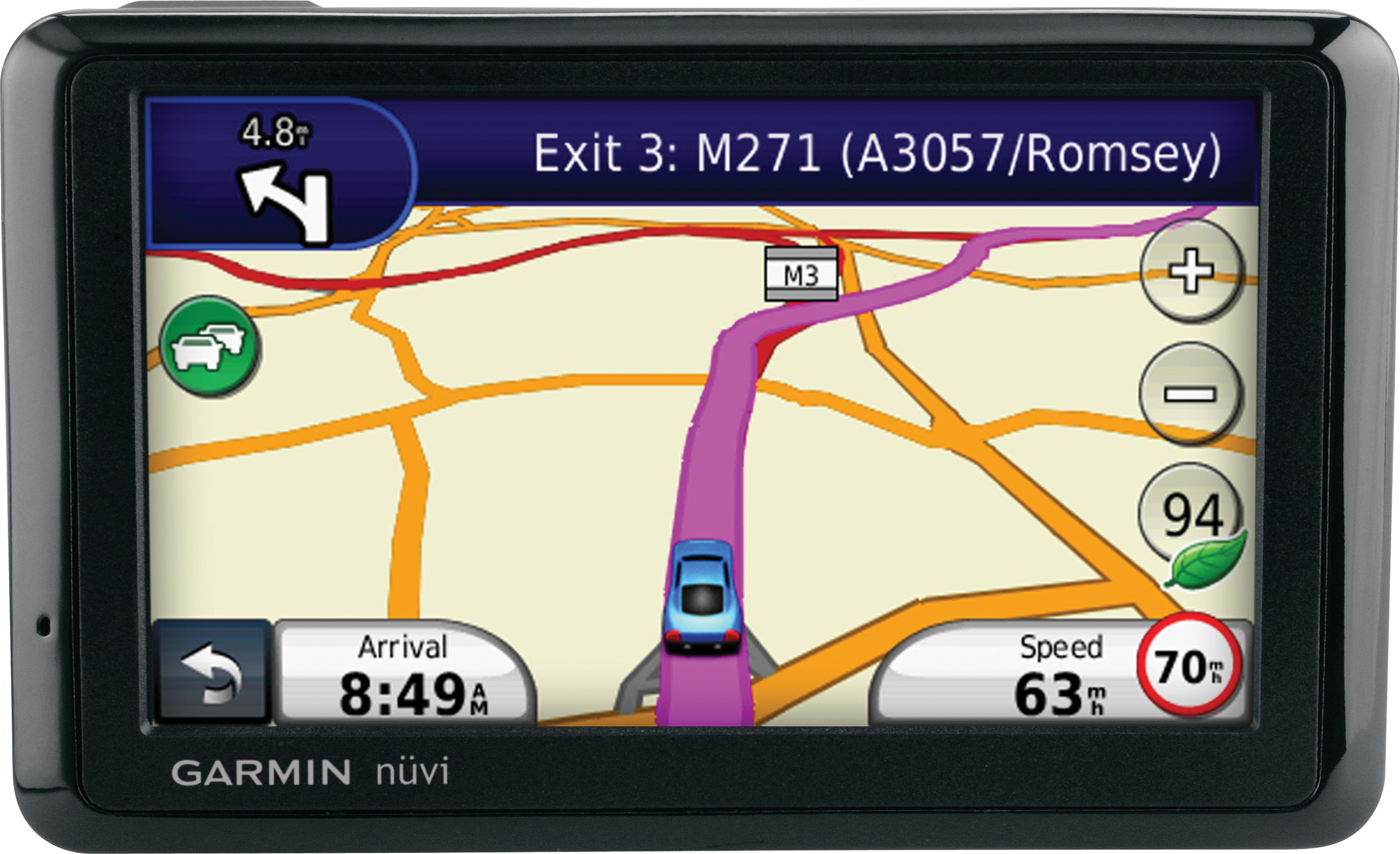
Bible
Framework
What is agile?
The ability to quickly change direction while traveling at a high speed.


Agile Software development
... is a group of software development methods based on iterative and incremental development
,
in which requirements and solutions
evolve through collaboration between
self-organizing, cross-functional teams.
It promotes adaptive planning, evolutionary development and delivery, a time-boxed iterative approach, and encourages rapid and flexible response to change.
Why does agile exist?

what's wrong with PM/WF?
not very successful: Standish Groups's CHAOS report
its scope fixed and at the predictive end
responsibility is wrong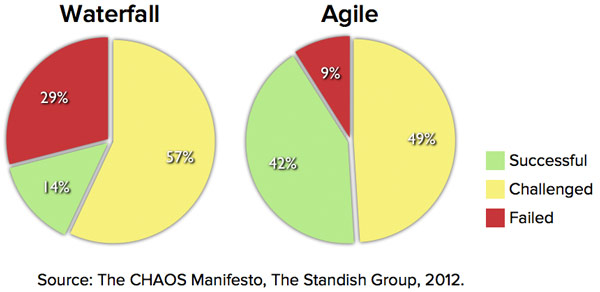
its build on illusions:
capability to plan long-term
management of uncertainty
steering by costs
(not business value)
The manifesto (2001)
We are uncovering better ways of developing software by doing it and helping others do it. Through this work we have come to value:
Individuals and interactions over Processes and tools
Working software over Comprehensive documentation
Customer collaboration over Contract negotiation
Responding to change over Following a plan
12 principles
- Customer satisfaction by rapid delivery of useful software
- Welcome changing requirements, even late in development
- Working software is delivered frequently (weeks rather than months)
- Close, daily cooperation between business people and developers
- Projects are built around motivated individuals, who should be trusted
- Face-to-face conversation is the best form of communication (co-location)
- Working software is the principal measure of progress
- Sustainable development, able to maintain a constant pace
- Continuous attention to technical excellence and good design
- Simplicity—the art of maximizing the amount of work not done—is essential
- Self-organizing teams
- Regular adaptation to changing circumstances
Agile is
A Mindset
A never ending journey
Why is this relevant for ing?
Trends in the financial industry:
- we entered a low margin era
- banks are disintermediated
- less attractive for investors; high risk / low return
- banking is becoming more digital => we get competition from high tech companies
IT is at the heart of our business, but we need to bring our cost income ratio to sustainable levels by reducing costs.
The promise of agile
Agile engineering and management methods have been proven to increase productivity, quality and innovation.
Do more for less,
with better quality and happier people.
The new mainstream
Since 25yrs this is happening in the technology industry:

Let's scrum!

Simplicity is the ultimate sophistication
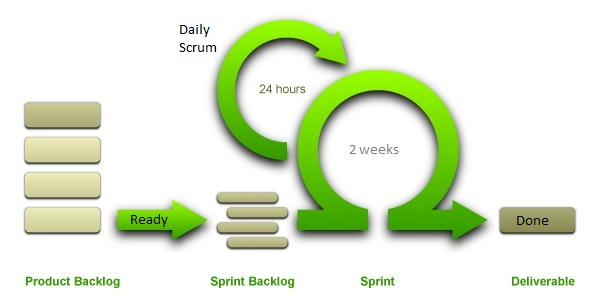
in a nutshell
Product backlog
5 ceremonies
Definition of Ready
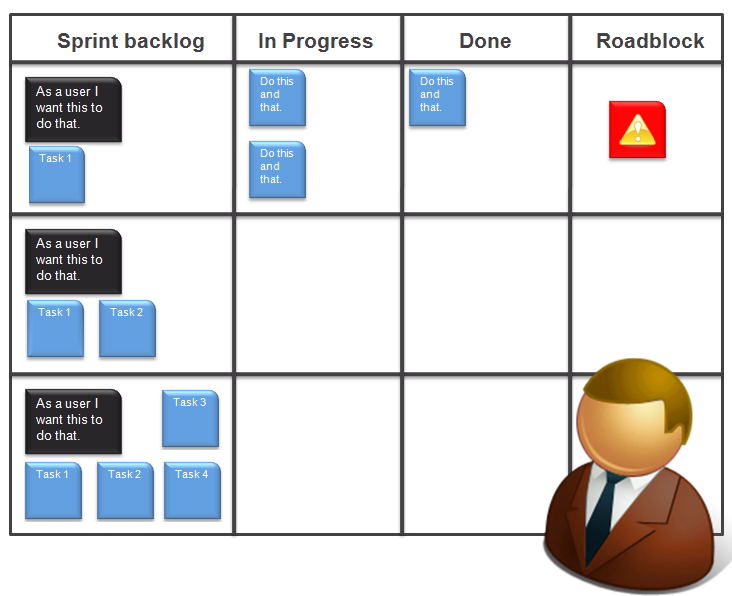
Sprint backlog
Definition of Done
Metrics
Product owner
Dev team
mature and capable to self-organize
committed
quality driven
Scrum master
facilitates the Scrum process and
drives improvements
protects the dev team and keeps it focused
removes impediments
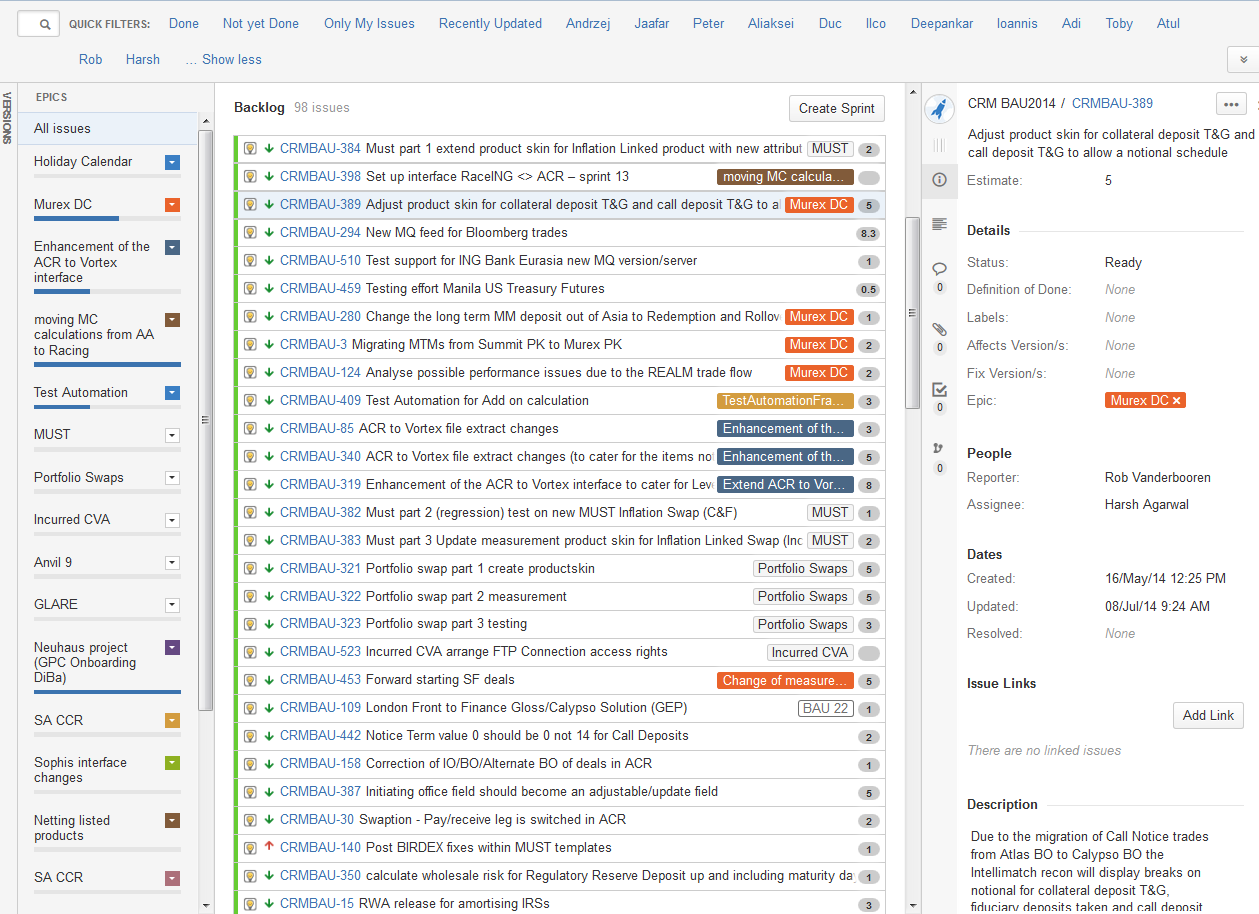
Product backlog
is a list of User Stories
(and Epics) which are
- prioritized relative to each other
- estimated relative to each other
- owned by the product owner
-
single source of work request
A User story is
independent, negotiable, valuable, estimable, small and testable (INVEST)
doable in one sprint
described in the form: As a <role>, I can <activity> so that <business value>
5 ceremonies
- Backlog refinement
- Sprint planning
- Daily Scrum
- Review
-
Retrospective
Backlog refinement
estimate story points
get stories Ready
(to be pulled into the sprint backlog)
definition of ready
to get× Stories ready to be pulled into a sprint, there has to be sufficient collective understanding on what has to be delivered
Sample definition:
- is prioritized
- is estimated
- size: doable in 1/2 sprint
- is testable
- dependencies are resolved
team has to set aside time (~15%) to get Stories ready
important to create flow
Sprint planning
=> refine collective understanding
=> refine story point estimate
decide which (Ready) Stories can be done in one Sprint, based on priority and team Velocity
=> pull these product backlog items into the Sprint backlog
Dev team commits to getting the selected stories done
|
The sprint backlog contains stories which
|
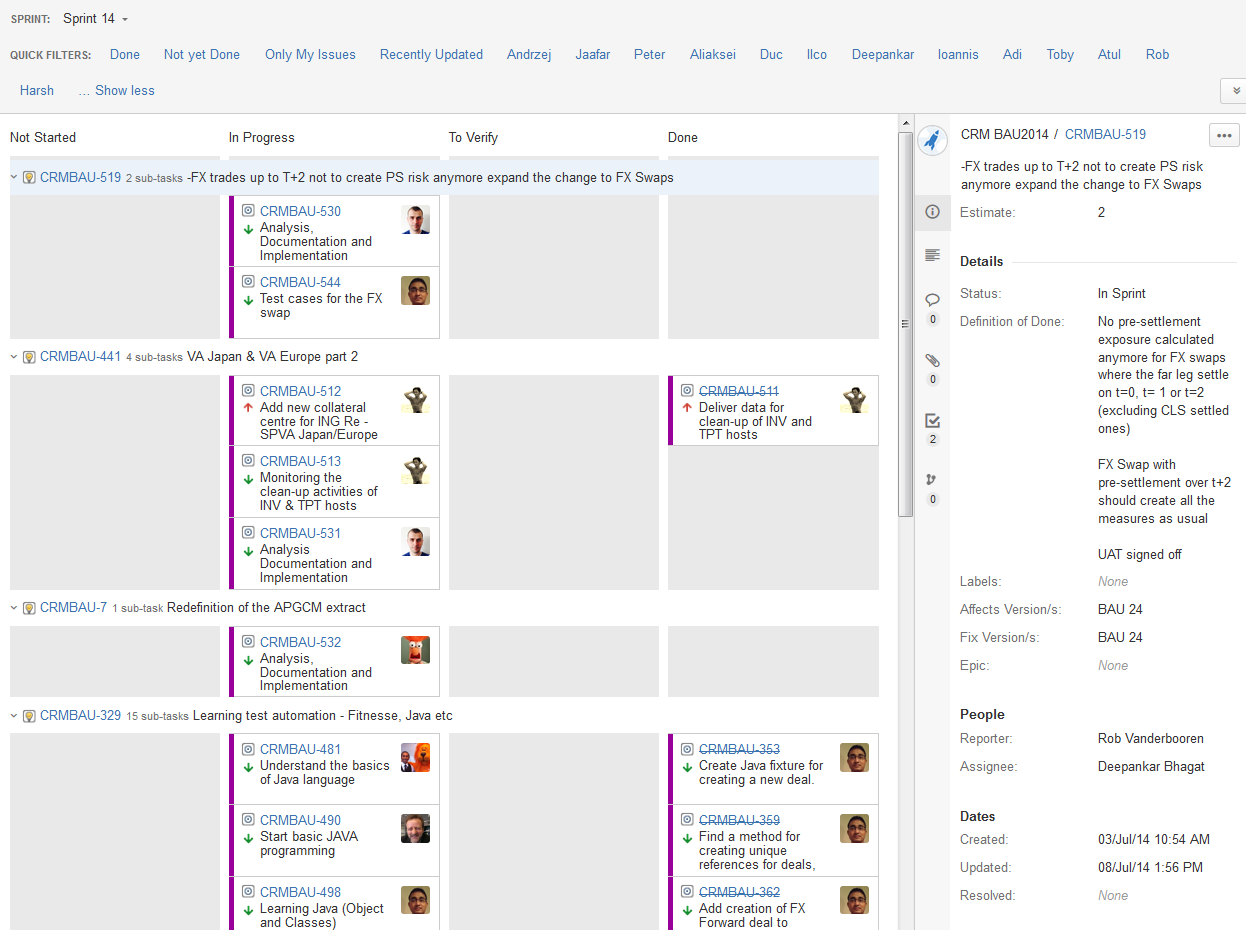
Daily Scrum

15 min stand-up in front of the Sprint board
Review
demonstrate (Done) Stories to the
product owner and stakeholders
opportunity to give feedback to the team
get final acceptance from the product owner
definition of done
defined and agreed by the Scrum team
specific per team
reflects business value generation
the story is potentially shippable
Sample definition of Done:
- successfully acceptance tested (functional, performance, deployment, etc.)
- support documentation accepted
- code re-factored
- regression test updated
Retrospective
time of reflection
what went well and what can be improved
process and social dynamics
organizational impediments
Metrics and reports
Story points
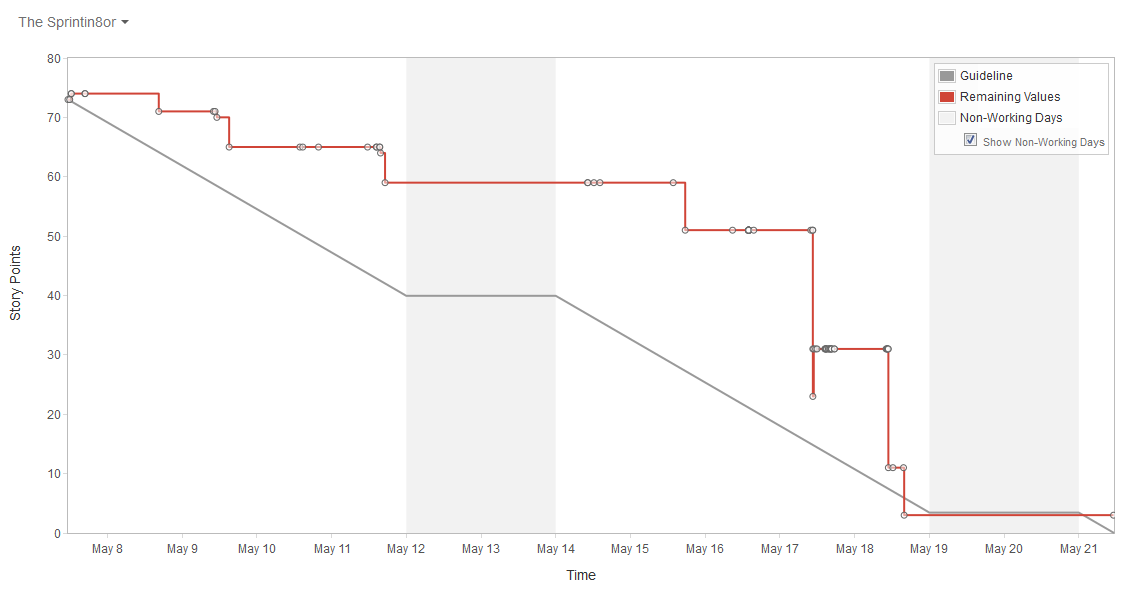
Burn down chart
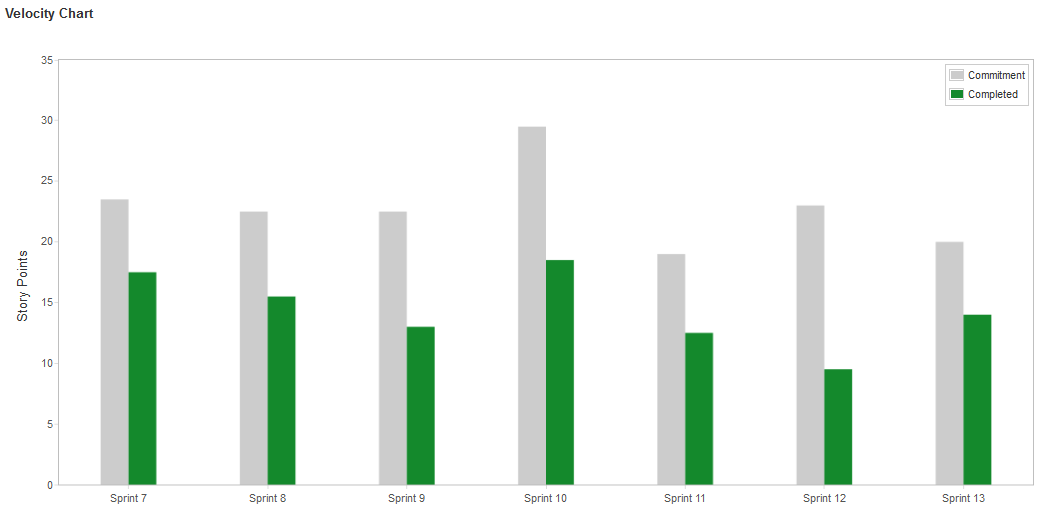
Velocity chart
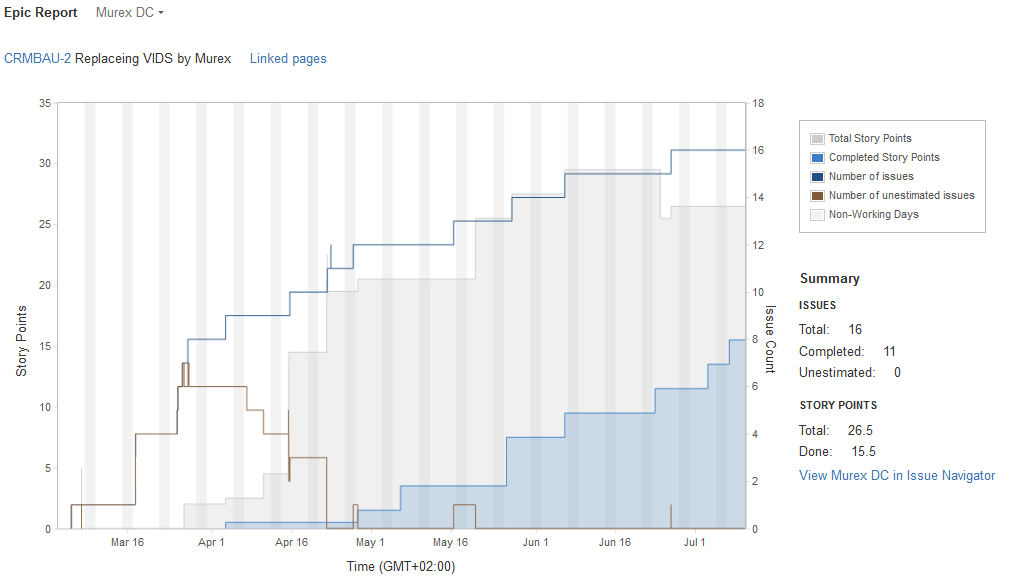
Epic (Feature) report
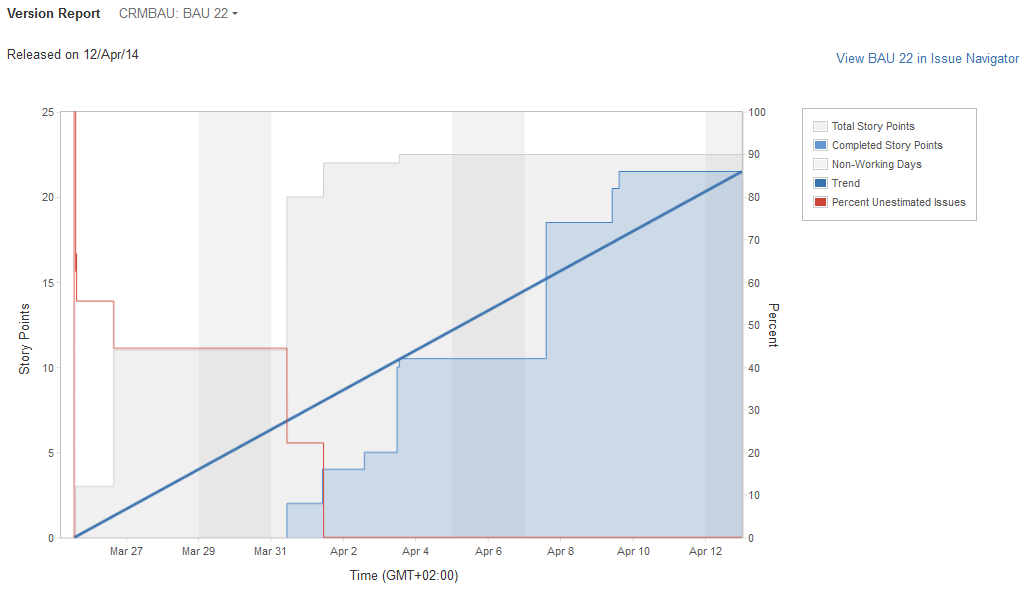
Version (PSI/Release) report
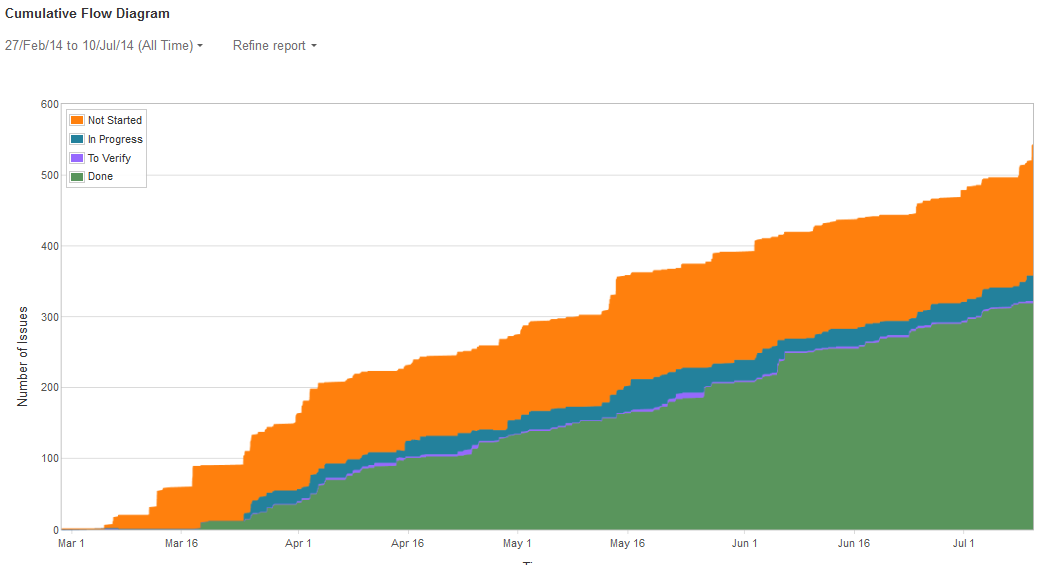
Cumulative flow diagram
Burndown chart
velocity chart
Epic report
Version report
cumulative flow diagram
Distributed Scrum
with an external not co-located vendor
focus on:
communication and collaboration
align goals (contractually)
meet f-2-f on a regular basis
What actually will change?
roles
responsibility
planning
delivery
collaboration
control
visibility
management style
focus
contracting
funding model
Roles


| project manager | Product Owner |
| program manager | Product Manager |
Responsibilities
and commitment

Planning
No 'detailed' upfront delivery plan
but
rolling wave planning
Delivery, collaboration & control
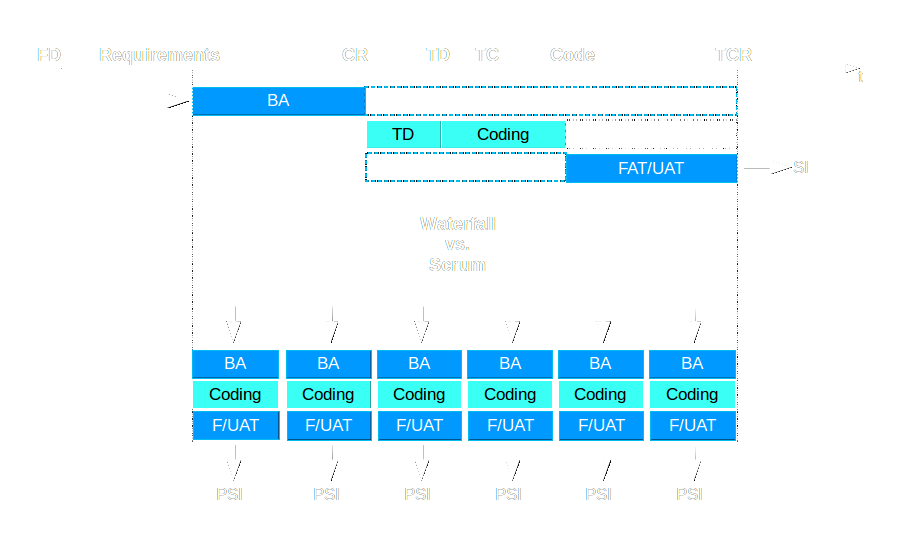
Management style
Tao Te Ching (6th century BC):
The highest type of ruler is one of whose existence the people are barely aware. Next comes one whom they love and praise. Next comes one whom they fear. Next comes one whom they despise and defy.
Robert K. Greenleaf (1970):
A servant-leader focuses primarily on the growth and well-being of people and the communities to which they belong. The servant-leader shares power, puts the needs of others first and helps people develop and perform as highly as possible.
declaration of independence (2005)
for modern management
- increase return on investment by making continuous flow of value our focus.
- deliver reliable results by engaging customers in frequent interactions and shared ownership.
- expect uncertainty and manage for it through iterations, anticipation and adaptation.
- unleash creativity and innovation by recognizing that individuals are the ultimate source of value and creating an environment where they can make a difference.
- boost performance through group accountability for results and shared responsibility for team effectiveness.
- improve effectiveness and reliability through situationally specific strategies, processes and practices."
Focus
organizational level
Technology and Engineering
Craftsmanship and Innovation
Partnership (internal & external, responsibility)
Continuous flow model (small batches,
short feedback loop)
Reduce waste
Focus
team level
ATDD
Test Automation
Deployment Automation
Continuous Delivery
DevOps
Scaling to the next level
scale the following principles to the program level
- one backlog with one owner
-
dedicated stable team (where we can)
-
fixed cadence and continuous flow
- creation of business value (measure of progress)
- self-organization
The Agile release train (ART)
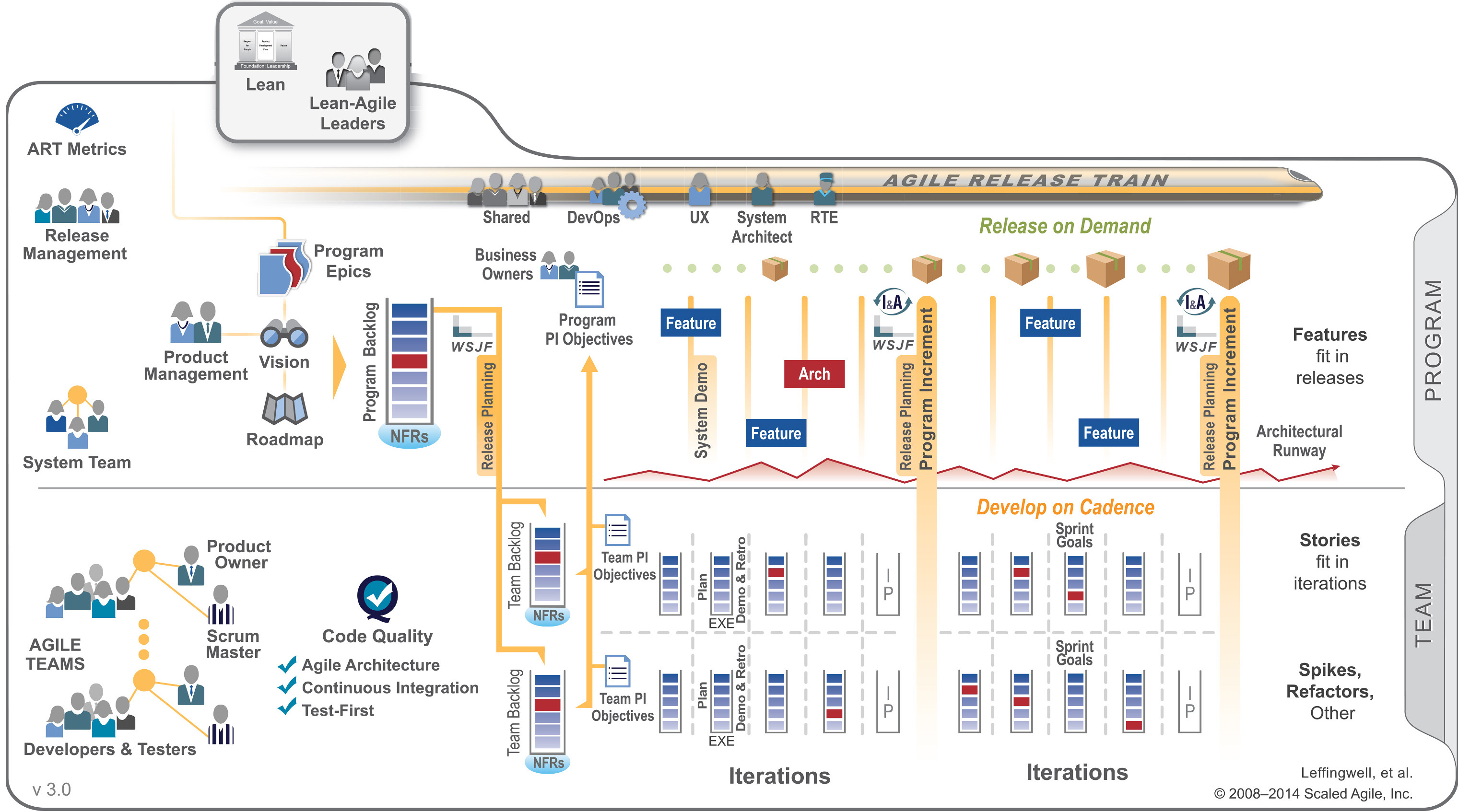
scaled Roles
| Program level | SAFe | Project level |
|---|---|---|
| Product manager | Product owner | |
| IT integrator | RTE | Scrum master |
| Blueprint expert | UX | |
| Architect | ||
| Dev team |
Scrum teams
|
Dedicated |
Shared |
|---|---|
| Anvil |
BOTS |
| ISS |
Summit |
| ION |
Global1 |
| Business works |
GBS |
|
|
ACR |
| GMDB |
|
| Calypso |
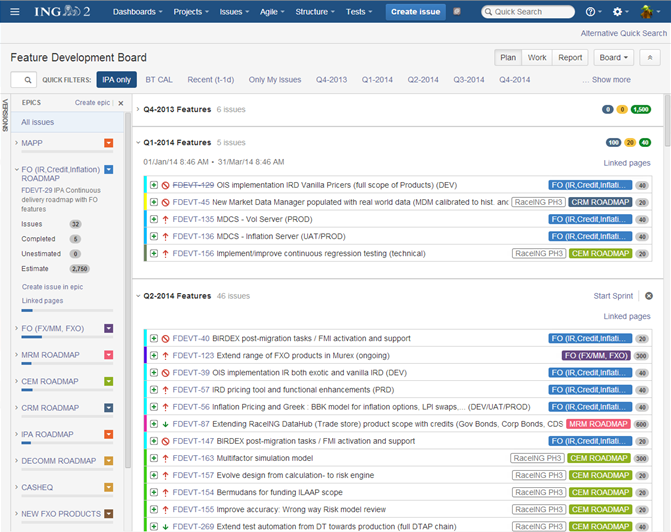
Program backlog - IPA
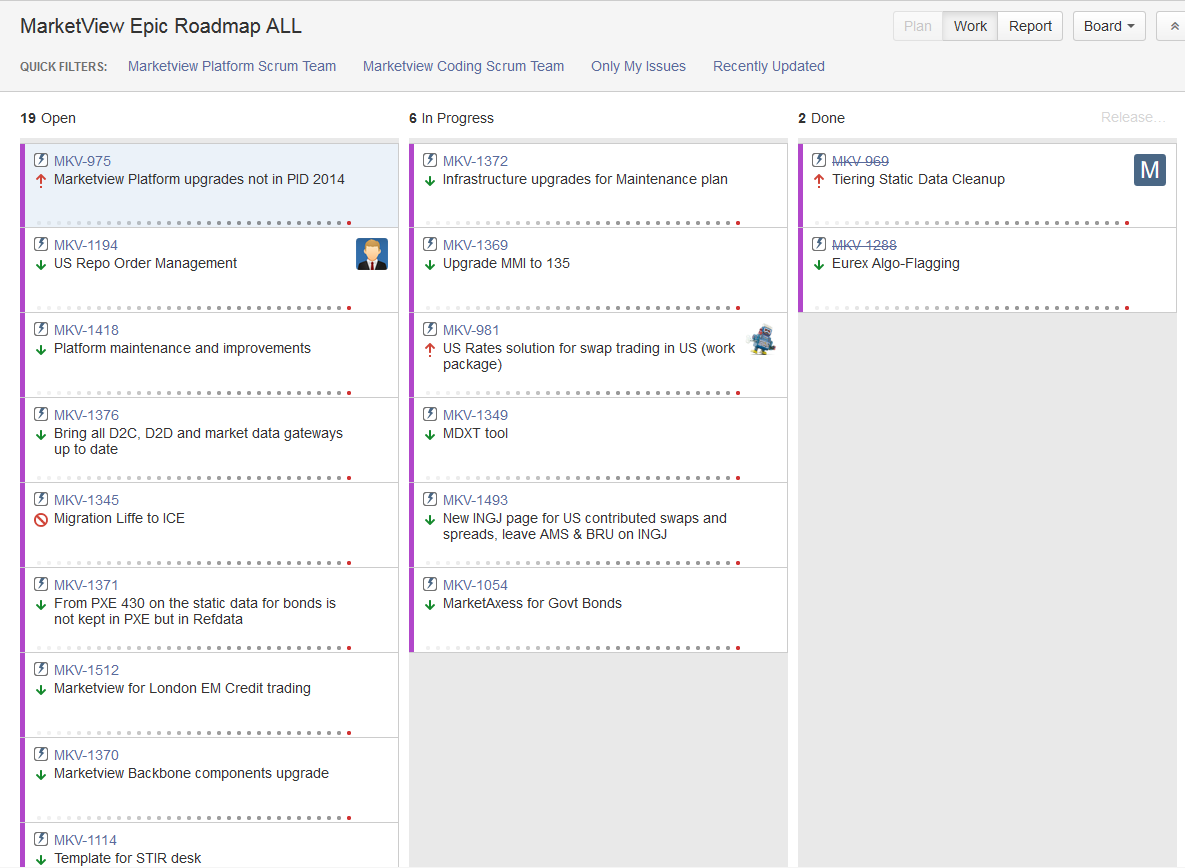
Program backlog - MV

Scaled Ceremonies
Backlog refinement
ART backlog refinement
product manager, product owners, blue print expert and architect; chaired by IT integrator
- break epics into features -
- estimate T-shirt size -
get product owners commitment to break features
into stories with her/his scrum team
Scrum of Scrums
IT integrator meets with scrum masters
agree on integration & how to handle dependencies
- resolution of impediments -
forum to discuss feedback from the Scrum teams
Release planning
the entire ART team
plans the PSI/Release
focus on integration & dependencies
high level delivery road map
goal setting
buy-in
System dem0
Scrum teams demo the
integrated solution
Feedback from product manager, blue print expert
and architect to the teams
final PSI/Release acceptance
before HIP sprint
Retrospective
(I&A)
after PSI/Release come together with all Scrum teams
and identify what worked well and what should be improved
Agree on top three improvement items
to be action by the IT integrator
Feedback loops
Refinement
Features > Stories
Scrum
Refinement
Epics > Features
Scrum of Scrums

Scaled metrics
T-shirt size and
ranking = sequencing = WSJF
business value burn up
Business value & RANKING
ranking = relative business value / relative size
relative business value = relative user value
+ relative time criticality
+ relative RR/OE
relative business value = rel. benefits + rel. penalties
WSJF = CoD / duration
product manager ultimately decides on the ranking

Top benefits of agile development
Ability to× Changing priorities
Increased Productivity
Improved Project Visibility
Improved Team Moral
Enhanced Software Quality
Reduced Risk
Faster Time-to-Market
Better alignment with IT & Business Objectives
Simplified Development Process
Improved/Increased Engineering Discipline
Enhanced Software Maintainability/Extensibility