An examination of the magnetospheric and ionospheric drivers of Sub-auroral Polarization Streams (SAPS)
Sub-Auroral Polarization Streams
- Important features of the inner magnetosphere. Have controlling influence over large scale plasma features such as SEDs.
- SAPS were typically associated with geomagnetic disturbances.
- Strong polarization electric fields due to separation of boundaries and R2 FACs in the low conductivity sub-auroral region are suggested to be potential generation sources.
- Furthermore, SAPS electric fields further reduce ionospheric conductivity and creating a ionospheric feedback effect.
- A majority of early SAPS studies were based on measurements from ISRs or satellites such as DMSP.
Mid-latitude SuperDARN
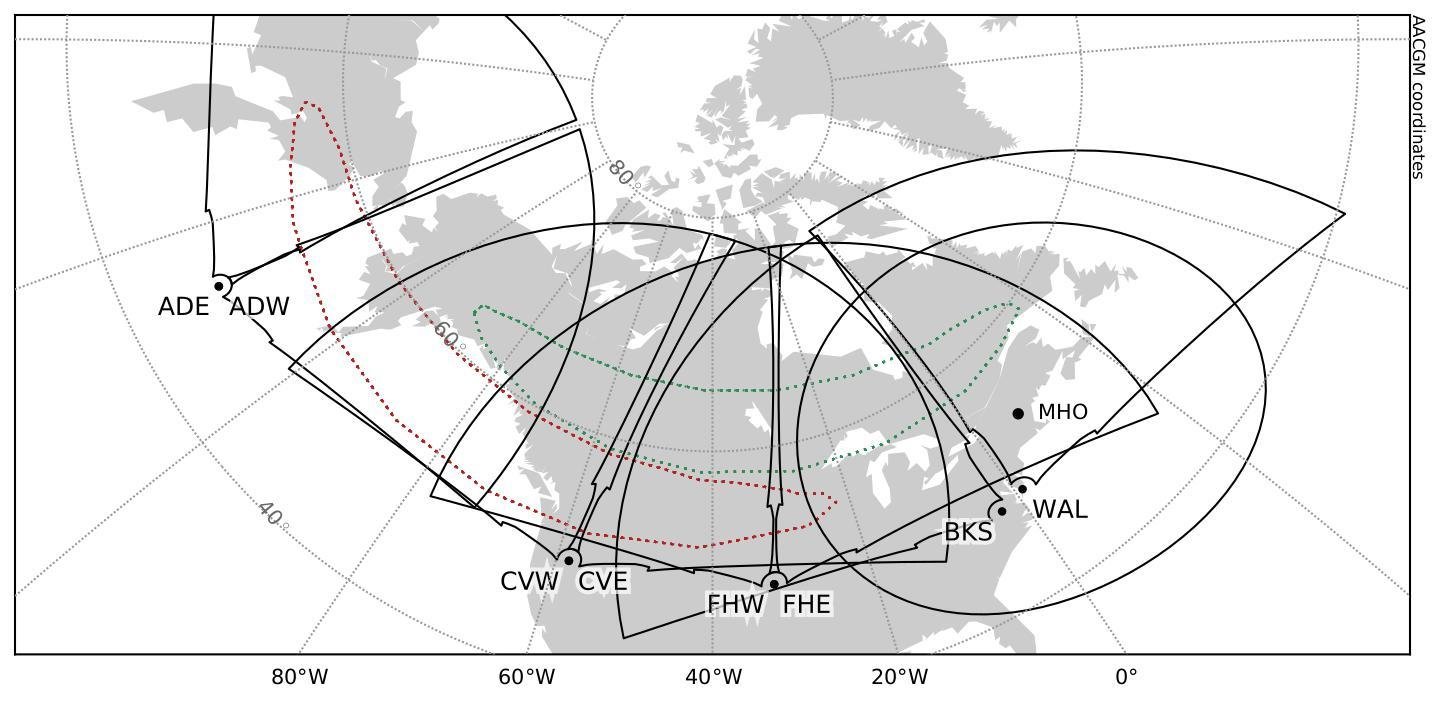
- Figure shows eight mid-latitude SuperDARN radars and MHO ISR. Also overlaid on the map are most likely SAPS locations ([Kunduri et al 2017]) when Dst is -10 nT (green) and -100 nT (red).
- Clausen et al [2012] and Kunduri et al [2012, 2017] showed the utility of mid-latitude SuperDARN in making observations of SAPS.
- Kunduri et al [2017] showed SAPS are more persistent features of ionosphere, observed even during quiet times.
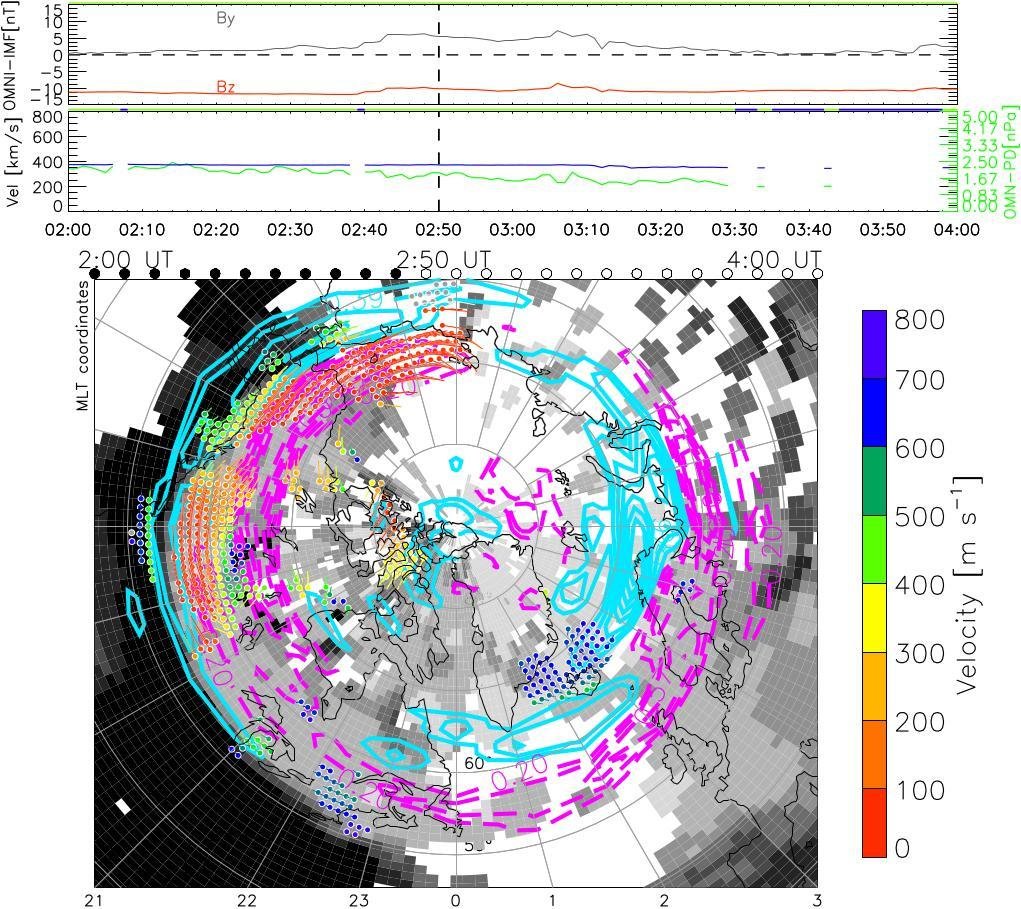
"Conventional" SAPS
- SAPS event on June-29, 2013. Dst ~-100 nT.
- SuperDARN SAPS observations located in the mid-latitude trough.
- R2 currents are observed in the trough.
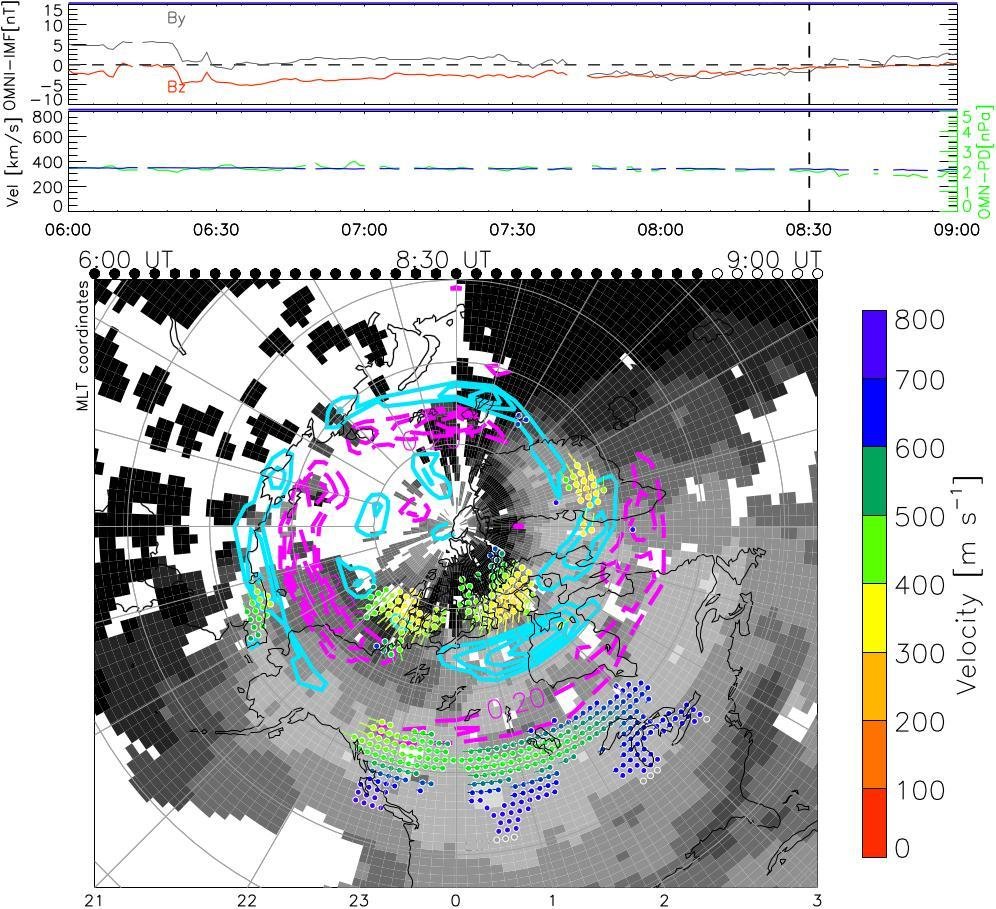
"Unconventional" SAPS
- SAPS event on April 9, 2013. Dst ~ -5 nT.
- SAPS is observed inside the trough but there is no sign of R2 currents!
- Traditional mechanisms don't always explain SAPS.
- There are other possible sources that need to be explored.
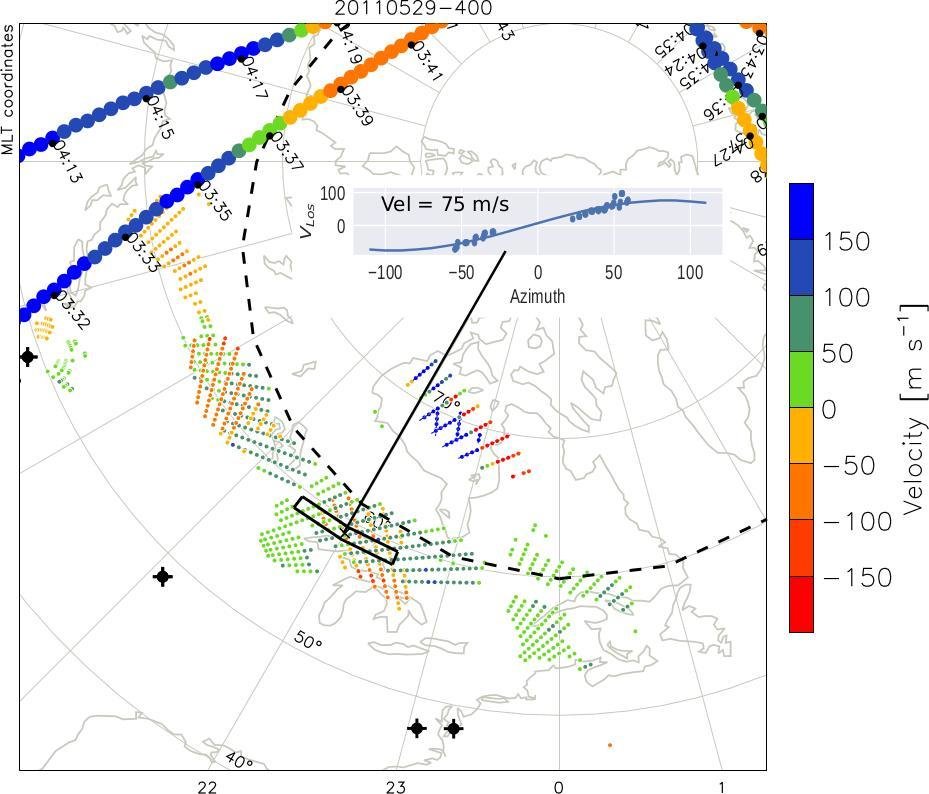
Unconventional "low velocity" SAPS
- SAPS event on May 29, 2011. Dst ~ -30 nT.
- SAPS velocities less than 100 m/s are observed.
- E-fields not sufficient for frictional heating and ionospheric feedback.
Goal 1 - Average morphology of SAPS
New data sets such as GPS TEC, AMPERE and mid-latitude SuperDARN provide global views of the ionosphere. These data sets can be used to quantify the influence of different SAPS generation mechanisms and explain the sources that generate quiet time SAPS. Measurements in magnetosphere from VAP/ARASE can be used to analyze conjugacy and MI coupling.
-
Develop an average morphology of SAPS. How good is the conventional picture? When does it work?
-
Developed SAPS occurrence and location model using SD data (Kunduri et al [2017]). Developed SAPS potential model (manuscript in preperation).- Location and strength of R2 currents w.r.t SAPS. (AMPERE).
- Boundary seperation and particle injections during SAPS (DMSP/VAP).
- Quantify Ionospheric feedback during SAPS using TEC trough location and gradients during SAPS.
-
Goal 2 - Investigate potential sources of unconventional SAPS
- Examine the influence of the fine structure in substorm current wedge [Murphy et al., 2013] in generating SAPS.
- Validate the influence of penetration electric fields in generating SAPS using R1/R2 current strengths can be used as proxies for penetration E-fields.
- Can we reproduce the effects through modeling?
Time evolution of trough, currents and SAPS
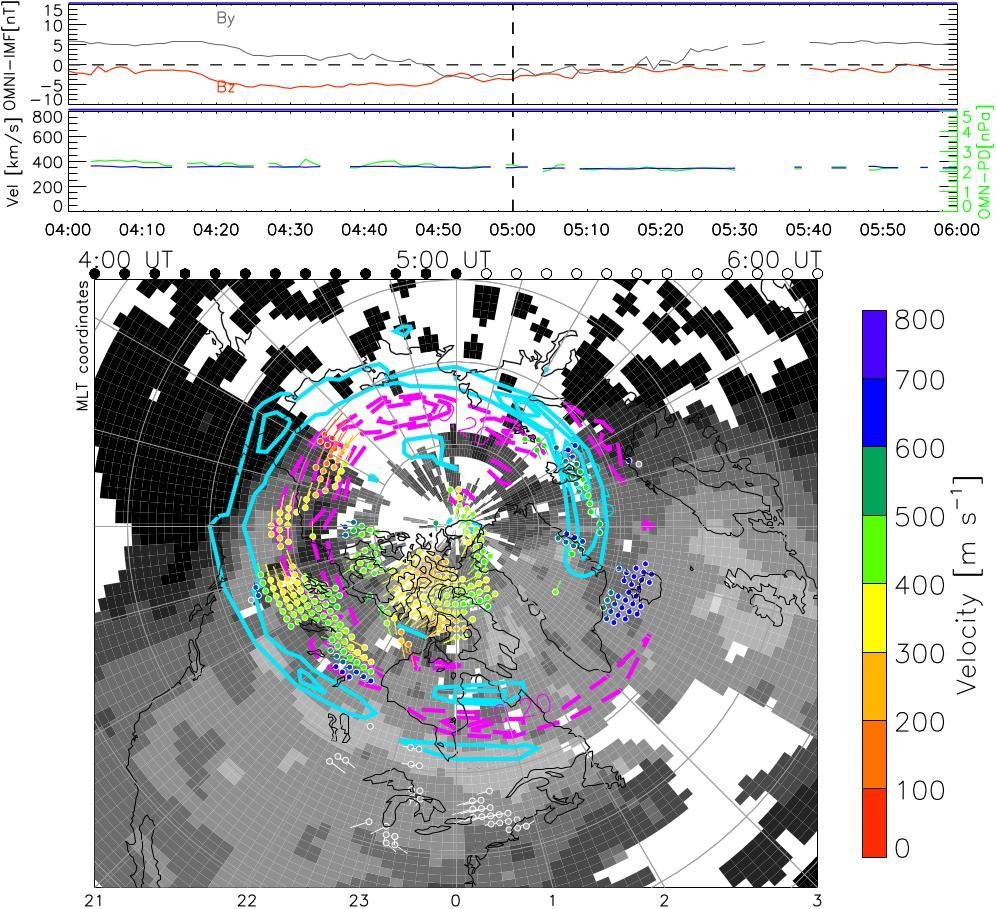
Time evolution of trough, currents and SAPS
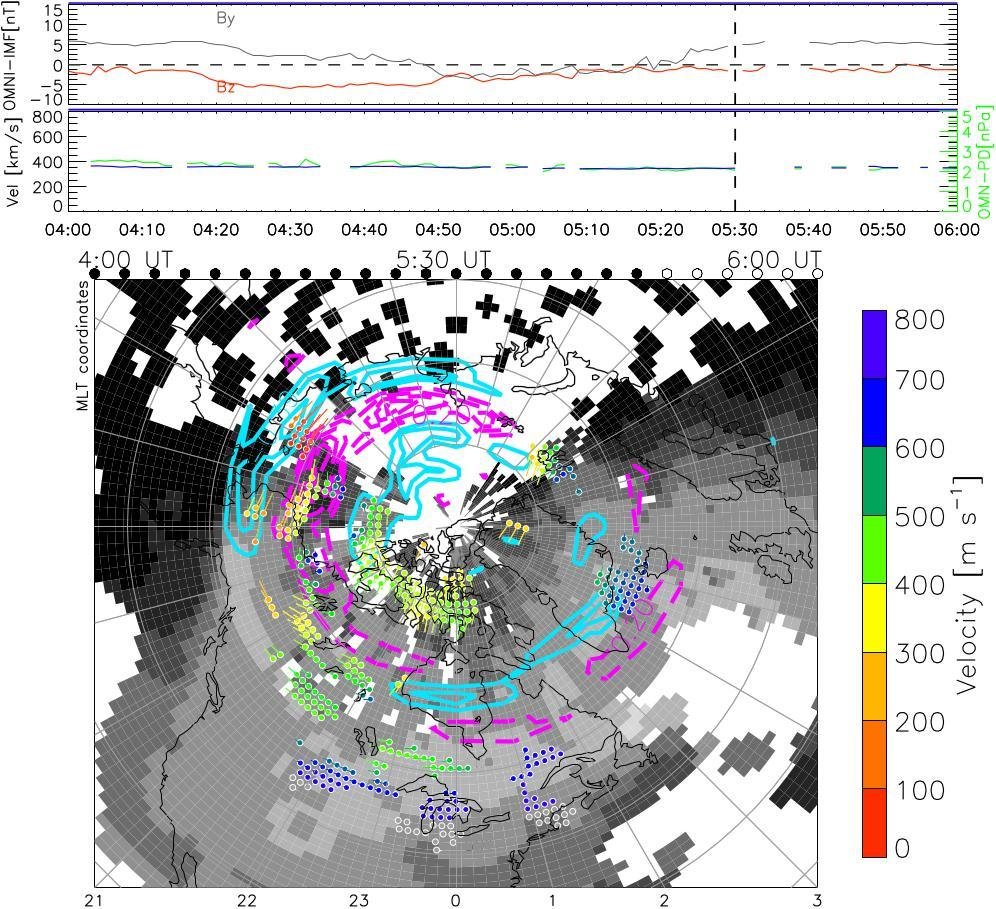
Goal 3 - Time evolution of currents, TEC trough and SAPS
- What magnitude of currents, geomagnetic conditions (Bz -ve etc) are needed to setup SAPS.
- What gradients in mid-latitude trough are needed to setup SAPS.
- Reproduce these effects through modeling.
Conclusions
- Recent studies show SAPS are more persistent features of the ionosphere and are observed even during quiet geomagnetic conditions.
- There hasn't been a quantitative analysis of SAPS generation mechanisms. Moreover, the existing mechanisms don't explain SAPS formation during quiet geomagnetic conditions.
- The availability of data sets such as AMPERE, GPS TEC, SuperDARN and Van Allen Probes provides a great opportunity to analyze different factors responsible for generating SAPS.
- Influence of sources such as penetration electric fields and substorm current wedge also need to be examined.
- GPS TEC data and SuperDARN observations can quantify the relation between SAPS and the mid-latitude trough.