Week 12
Reversing Modern Languages
Or: where reverse engineering is going
Industry Standards




Where things are going




Challenges
- New language abstractions
- Standard library
- Compiler generated code
- Symbol mangling
- Runtime
Some things to look for when reversing a new language
Standard Library
- We're used to the C standard library (memcpy, printf, fopen, malloc, etc)
- Most modern languages include a much larger standard library
- May create lots of dead code for us to sift through
- May be able to automatically signature the libs
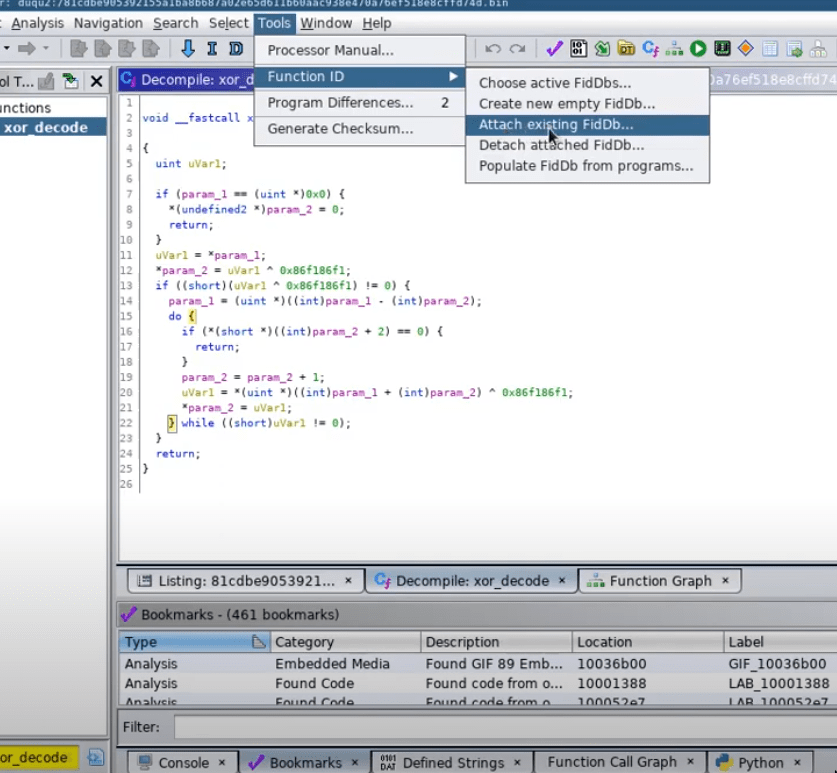
Symbol Mangling
- Even if symbols are included, the compiler might encode (mangle) included function names
- Different signatures for overloaded functions
- Reduce the character set
| Name | MS C++ | SunPro C++ |
|---|---|---|
| void h(int) | ?h@@YAXH@Z | __1cBh6Fi_v_ |
__ZN9Something6Inside6Deeper10deepMethodENSt3__16vectorINS2_12basic_stringIcNS2_11char_traitsIcEENS2_9allocatorIcEEEENS7_IS9_EEEE
GoLang Introduction
Langauge constructs
Basic Syntax
-
package main: Defines the package name. -
import "fmt": Imports thefmtpackage for I/O functions. -
func main(): The main function where execution begins.
package main

import "fmt"

func main() {
    fmt.Println("Hello, World!")
}
Here’s a simple Go program
Variables
- var: Declares a variable
-
:=will assign a variable with type inference -
const: Variables can be constant
package main

import "fmt"

func main() {
    // Declare a variable
    var name string = "Alice"
    fmt.Println(name)

    // Type inference
    age := 30
    fmt.Println(age)

    // Constants
    const PI = 3.14
    fmt.Println(PI)
}
Go is statically typed, so variables have a fixed type
Control Flow
If-else statements- Switch statements
- Looping for
package main

import "fmt"

func main() {
    age := 18
    if age >= 18 {
        fmt.Println("Adult")
    } else {
        fmt.Println("Minor")
    }
}

func main() {
    day := "Monday"
    switch day {
    case "Monday":
        fmt.Println("Start of the week")
    case "Friday":
        fmt.Println("Almost weekend")
    default:
        fmt.Println("Midweek")
    }
}

func main() {
    for i := 0; i < 5; i++ {
        fmt.Println(i)
    }
}
Go supports if-else, switch, and looping with for
Structs and Methods
- Struct declaration
- Method declaration
- Comparing methods and functions
- Struct instantiation
package main

import "fmt"

type Person struct {
    Name string
    Age  int
}

func (p Person) Greet() {
    fmt.Printf("Hello, my name is %s\n", p.Name)
}

func add(a int, b int) int {
    return a + b
}

func main() {
    p := Person{Name: "Alice", Age: 30}
    p.Greet()
}
Go supports structs and methods
Concurrency
- Dispatch function on a separate thread
- Communicate with go routines using channels
- Write a message to the channel
- Read a message from the channel
package main

import (
    "fmt"
    "time"
)

// This function sends a message to a channel after a delay.
func sendMessage(ch chan string) {
    time.Sleep(2 * time.Second) // Simulate some work with a 2-second delay
    ch <- "Hello from the goroutine!" // Send a message to the channel
}

func main() {
    // Create a channel of type string
    messageChannel := make(chan string)

    // Start the sendMessage function as a goroutine
    go sendMessage(messageChannel)

    // Wait for the message from the goroutine
    fmt.Println("Waiting for the message...")

    // Receive the message from the channel
    message := <-messageChannel // This line will block until the message is received
    fmt.Println("Received:", message)
}
For easy concurrency, go supports go routines and channels
GoLang Runtime
Case Study
What is the go runtime?
Set of libraries that support programs written in go
- Memory management and garbage collection
- Thread scheduler
- Passing messages between channels
- Standard libraries
- Error handling
GoLang Binary
Runtime
Your Code
Go runtime is statically linked (unlike Java)
Strategies for analyzing large binaries
- Find known symbols (if not stripped)
- Find cross references for known
- Strings
- Imports (might only be used by the runtime)
- Use dynamic analysis to narrow static analysis
- Use strace/ltrace to see how system calls and libraries are used
- Use GDB to quickly find important symbols
- Get a backtrace
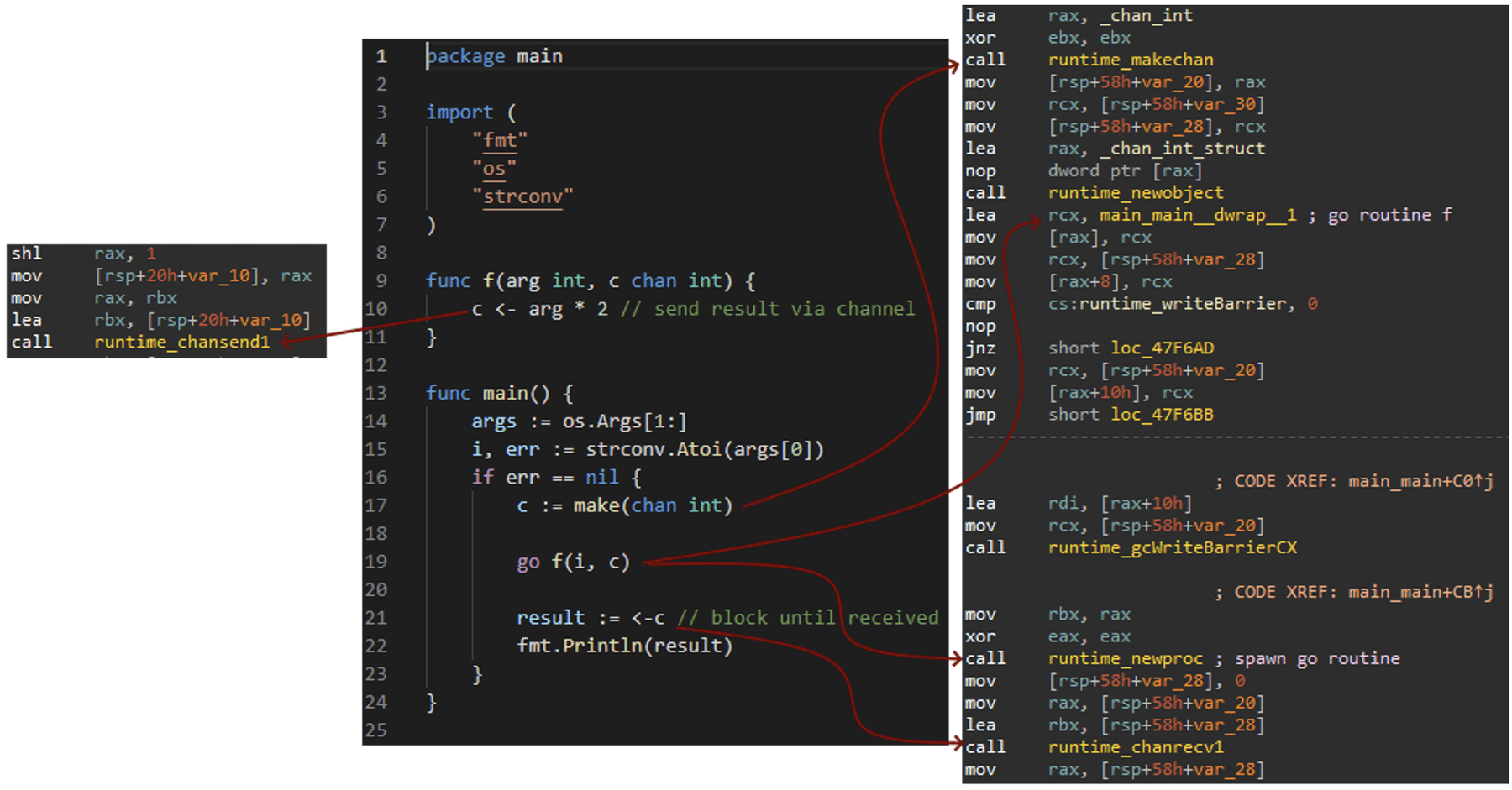
https://cloud.google.com/blog/topics/threat-intelligence/golang-internals-symbol-recovery/
Routines and Channels
https://cloud.google.com/blog/topics/threat-intelligence/golang-internals-symbol-recovery/
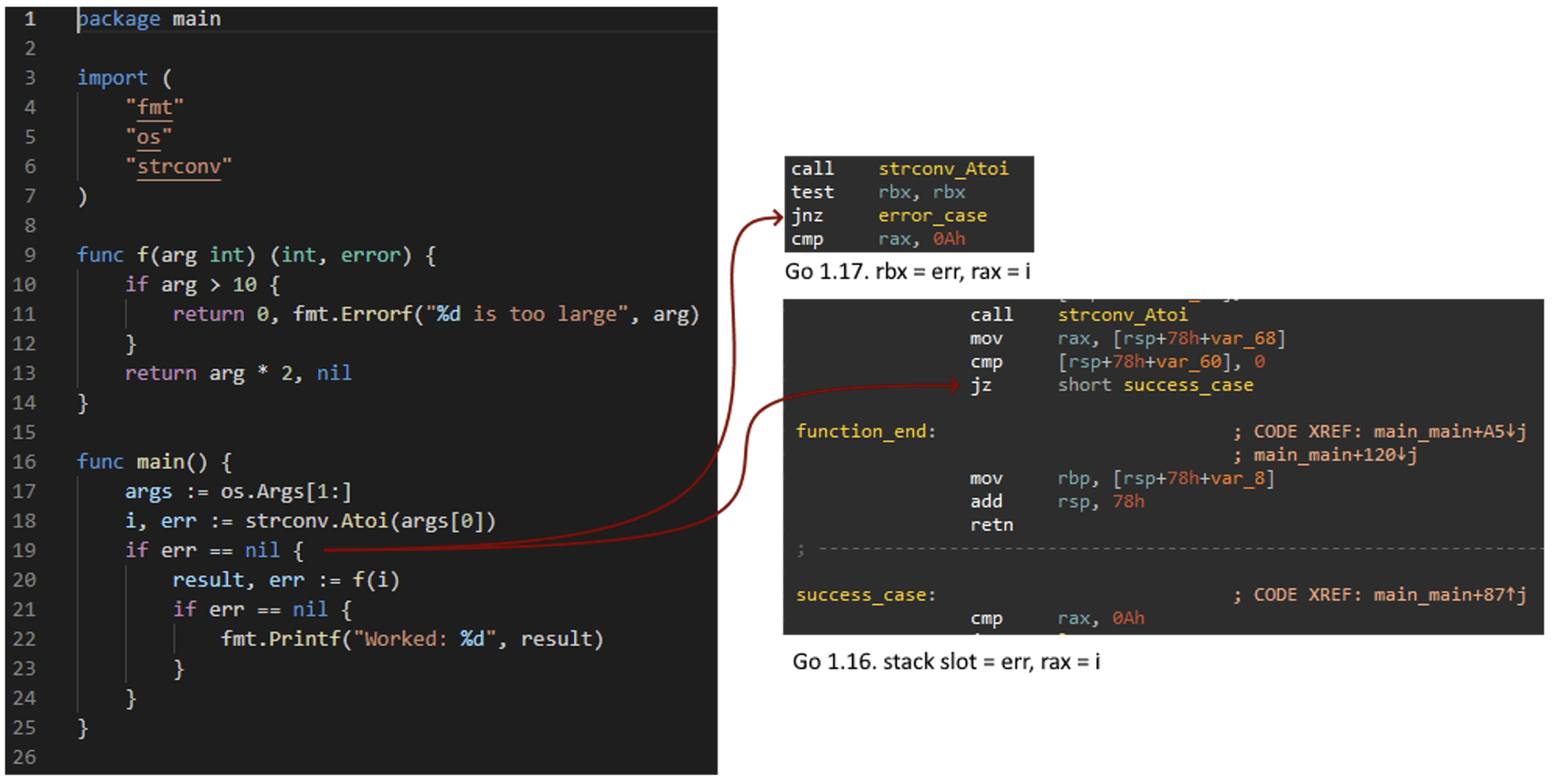
Error Handling