Working With Sources...
Giving Credit and Evidence to our Research



Kickstarter
In McClure's article, he states that information literacy and behaviors play a big role in how students, journalists, teachers, and vast disciplines find and access information. In your Week 10 Notes, post a comment that chooses a couple of these information behaviors and what the problems or side effects are: (McClure 225)
- searching in Wikipedia or Google, only using a search engine
- power browsing quickly through websites for ideas and quotes;
- cutting-and-pasting information from the Web into one's own writing without providing proper attribution for it.
- viewing information as free, accurate, and trustworthy
- treating online information as equal to print information.
- Ultimately, what matters to you in using/finding good sources? How do you know the information is useful?


Does your source show the following?
- From (McClure 233)
- Currency: The timeliness of the information.
- Relevance: The importance of the information for your needs or goals.
- Authority: The credibility of the information.
- Accuracy: The reliability, truthfulness, and correctness of the informational content.
- Purpose: The reason the information exists.
Important Research Questions:
- Are you using good search terms, or keywords, when finding sources?
- Do you need to narrow your topic? (e.g. you're trying to write/research about too much right now)
- Do you need to broaden your approach? (e.g. you can't find sources because your topic is too small-scale)

CMU's Smiley Library also recommends using the simple SIFT method when reading and accessing information online to determine whether a source is useful to you.
Smiley Library Lib Guide
Evaluating the Type of Source
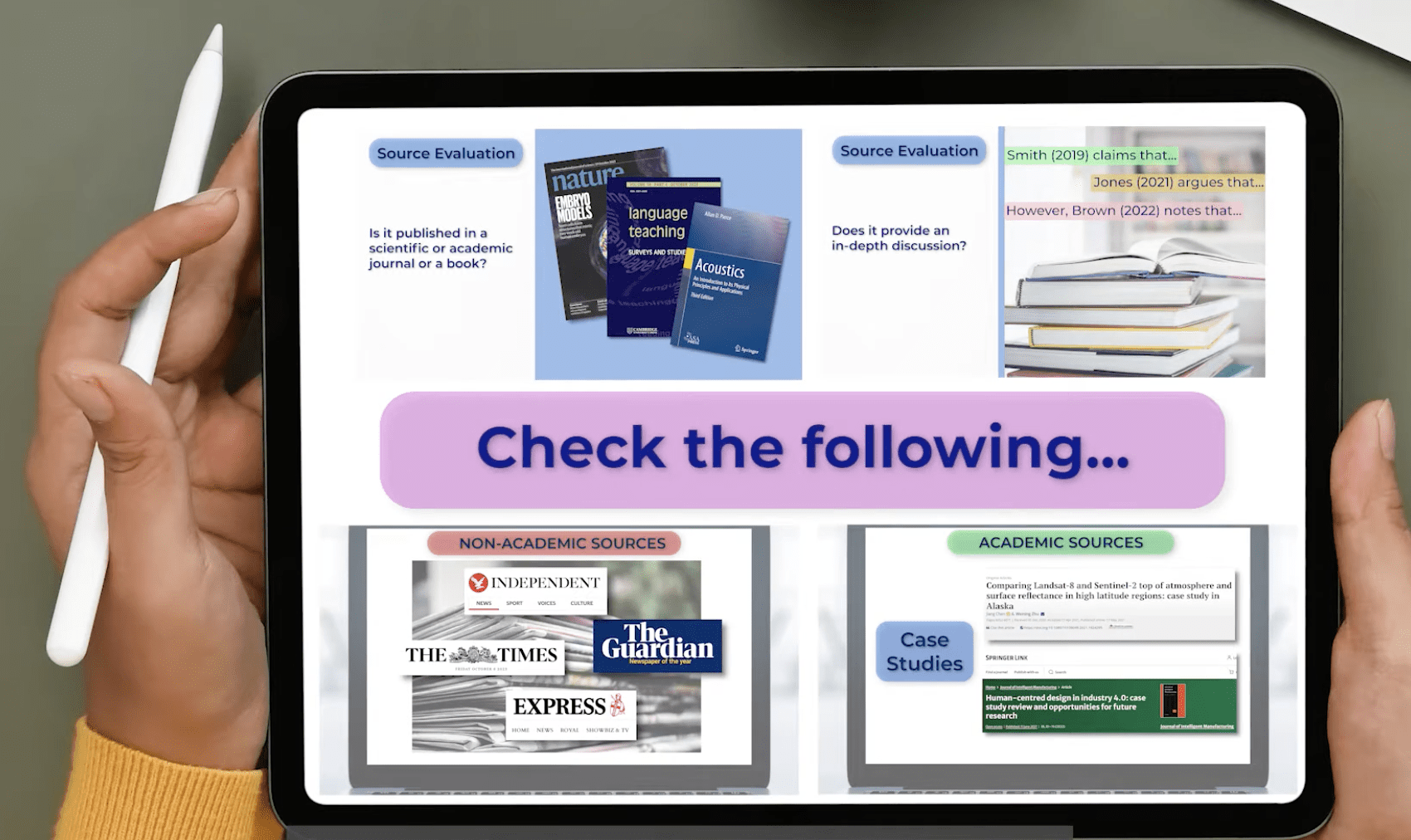
Academic Versus Non-Academic Sources: Does each have advantages?
But first, Getting Started... Source Tutorial
- What are your keywords? (keywords are your search terms, what you indicate that you are looking for either in small or large concepts)
- Are you using Advanced Search filters? Subject terms?
- Are you filtering to peer-reviewed or full text access? The library can get you access to articles and books they don't have through Interlibrary loan; sometimes you can find the same thing through Google Scholar as well.
- What about the date of publication? Does that help filter your content more?
- Are you using a recommended database for your topic? (e.g. Education Full Text; Business Source Elite)
Consider the following areas that need evidence to support your an argument...
- Topic or issue within your major or field of study
- Problem or issue impacting the general public or a specific group (e.g. students, educators, athletes, workers, etc.)
- Concerns with technology use, A.I., social media, or online security.
- Health and diet trend concerns; lifestyle trends
- A Debate or Conspiracy related crisis with misinformation.
- Environmental concerns
- Exploring a term or concept within an interest area
Practice using the different methods within a Database search, Google Scholar, or Google/Wikipedia search to get started.
In-Class Week 10: Finding Sources Activity
Go to our in-class assignment for today and focus on Step 1 thinking about what type of argument research thesis you are going to write about that needs sources to support? Also consider the following questions:
Will your research support two sides of a topic?
Is your research going to inform, persuade, or argue to your readers?
Where will you find sources to support your findings?
What action or goal do you want your sources to achieve?
Reviewing/Evaluating your Source
Go back into our Week 10: Finding Source Activity as we will be using ideas for this in what we build in our class session today with finding sources. In the Discussion Thread provided, reflect on which of the Evaluation steps in using sources from our readings works best with a source you found.
Smiley Library Lib Guide
From (McClure 233)
- Currency
- Relevance
- Authority
- Accuracy
- Purpose
Documenting Sources: Day 2
Finding Sources to Use and Generating Works
Add sources, links, and content you find to the Research Evidence Brainstorm Worksheet in Week 10 in class for today. By the end of class, you should have found a good variety of content...
What style of thesis will help support what you are doing for your research essay? Consider the following:
- Misinterpretation Thesis
- Gap Model Thesis
- Modification Model Thesis
- Hypothesis Testing Model
- Informative Thesis Model
- Persuasive (Rogerian/Toulmin argument) Model
Research Thesis
What are some questions to ask when evaluating web sources online? How can you mix both academic and non-academic research to be effective?
Scribbr

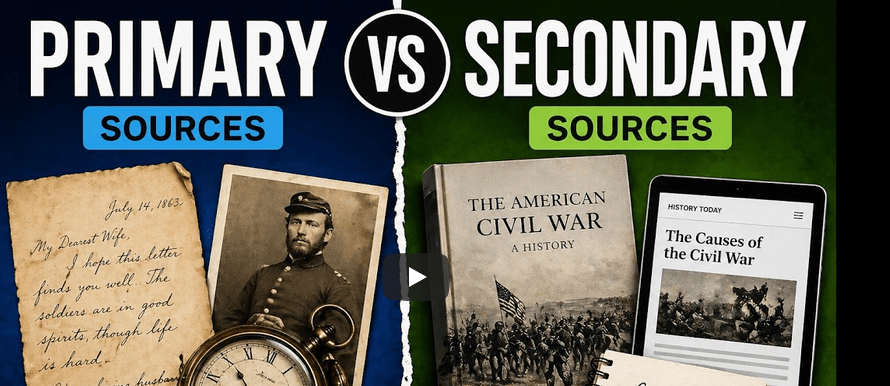
Types of Sources Example
What will be your Research Questions to answer? What sources will help you answer questions about a topic or get your readers to think on the topic too?
Smiley Library Research Lib Guide


A.I. Friday Forum Week 10
This week we've talked about finding sources and evaluating them for their quality, usefulness, and impact on our writing about a research topic. Today, we also want to test out different Boodlebox A.I. Research Assistant to also help us with finding useful sites or resources for our topics.
In the Boodlebox menu, try out the Web Research A.I. Platforms for results:
- Perplexity
- Semantic Scholar
- Tavily

Add any new sources you get from Web Research A.I. into your Worksheet from this week.
Document your sources at the end...
-
Look like in MLA:
- Smith, Roland. "The importance of online communities." Journal of Computer Science, vol.13, iss 2, Fall 2018, https://www.elsiver.com/1249284
-
Looks like in APA:
- Henderson, Cynthia. (2012). The reason social media is controlling information decisions.Journal of Applied Neurology, 12(2), pp.331-456, doi:1320489204x
Works Cited
When finding a source, it will be important to use entries like this for your final page.
Types of Sources Worksheet
I will come by to check you off for credit based on what you've worked on today in the worksheet.
You will want to focus on a two main things within the worksheet: one, what do you feel your research thesis will be about? Two, use this worksheet to compile useful sources so that you have the citations to add to your draft for next week.
- What type of source from your Worksheet in a piece of will be most important to use? Why?
- How will you introduce your research topic or argument to your readers?
- Share with a partner near you to determine if how you are using a source, or discussing your topic works.