The West and the Rest
Stuart Hall (1932-2014)
Who is "the Other"?
Who is "the Other"?
- Psychology (Lacan)
- Post-colonial theory
- Can the Subaltern Speak?
- Where and What is "the West?
- What is "west" as concept?
- The role of Enlightenment and the Age of Reason
- Who are the "internal" others?
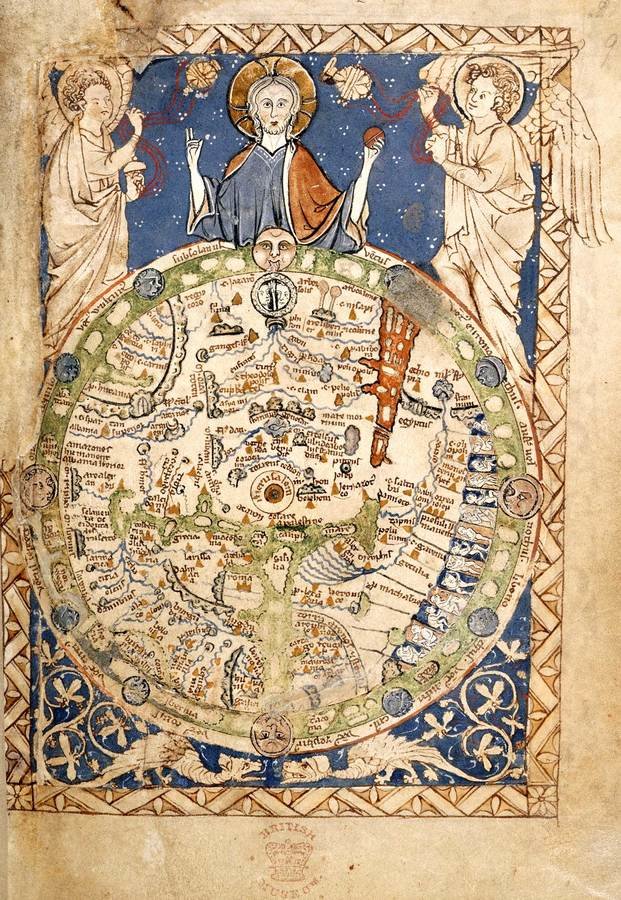
Europe breaks out!
- When and how did expansion begin?
- The Age of Exploration: 1430 Portuguese sail to Africa, 1482 Columbus sails to the New World.
- Breaking the frame - end of the flat world.
- The role of Islam.
- The consequences on the idea of "the West."
- Mercator Map, 1569
Discourse and Power
- How did Europe begin to describe and represent difference from "Others"?
- What is a "discourse"?
- Discourse and Ideology
- Can a discourse be innocent?
Representing "the Other."
- Orientalism
- The 'archive."
- A "regime of truth."
- Idealization
- Sexual fantasy
- Mis-recognizing difference
- Rituals of degradation
The "noble savage"?
Is there a universal criterion for progress?
Theory of the "Mode of Subsistence."
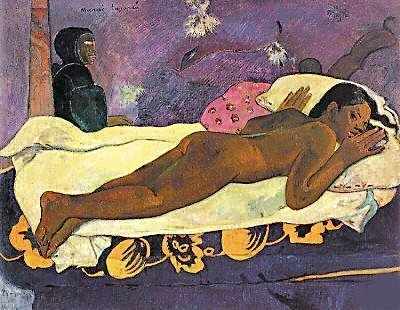
Gauguin in Tahiti
Homi K Bhabha
Hybridity
One of his central ideas is that of "hybridisation," which, taking up from Edward Said's work, describes the emergence of new cultural forms from multiculturalism. Instead of seeing colonialism as something locked in the past, Bhabha shows how its histories and cultures constantly intrude on the present, demanding that we transform our understanding of cross-cultural relations.
Fixity
. An important aspect of colonial and post-colonial discourse is their dependence on the concept of "fixity" in the construction of otherness. Fixity implies repetition, rigidity and an unchanging order as well as disorder. The stereotype depends on this notion of fixity. The stereotype creates an "identity" that stems as much from mastery and pleasure as it does from anxiety and defense of the dominant, "for it is a form of multiple and contradictory beliefs in its recognition of difference and disavowal of it."
Mimicry
Mimicry appears when members of a colonized society imitate and take on the culture of the colonizers. Colonial mimicry comes from the colonist's desire for a reformed, recognizable Other, as a subject of a difference that is, as Bhabha writes, "almost the same, but not quite".
Third Space
Mimicry appears when members of a colonized society imitate and take on the culture of the colonizers. Colonial mimicry comes from the colonist's desire for a reformed, recognizable Other, as a subject of a difference that is, as Bhabha writes, "almost the same, but not quite". The Third Space acts as an ambiguous area that develops when two or more individuals/cultures interact. It "challenges our sense of the historical identity of culture as a homogenizing, unifying force, authenticated by the originary past, kept alive in the national tradition of the People". This ambivalent area of discourse, which serves as a site for the discursive conditions of enunciation, "displaces the narrative of the Western written in homogeneous, serial time."