OOP & Smalltalk:
back to the future
Pequeña reseña sobre orientación a objetos, Smalltalk, su influencia y estado actual.
¿Por qué?
Historia
Conceptos
Relevancia
Influencia
Curiosidad
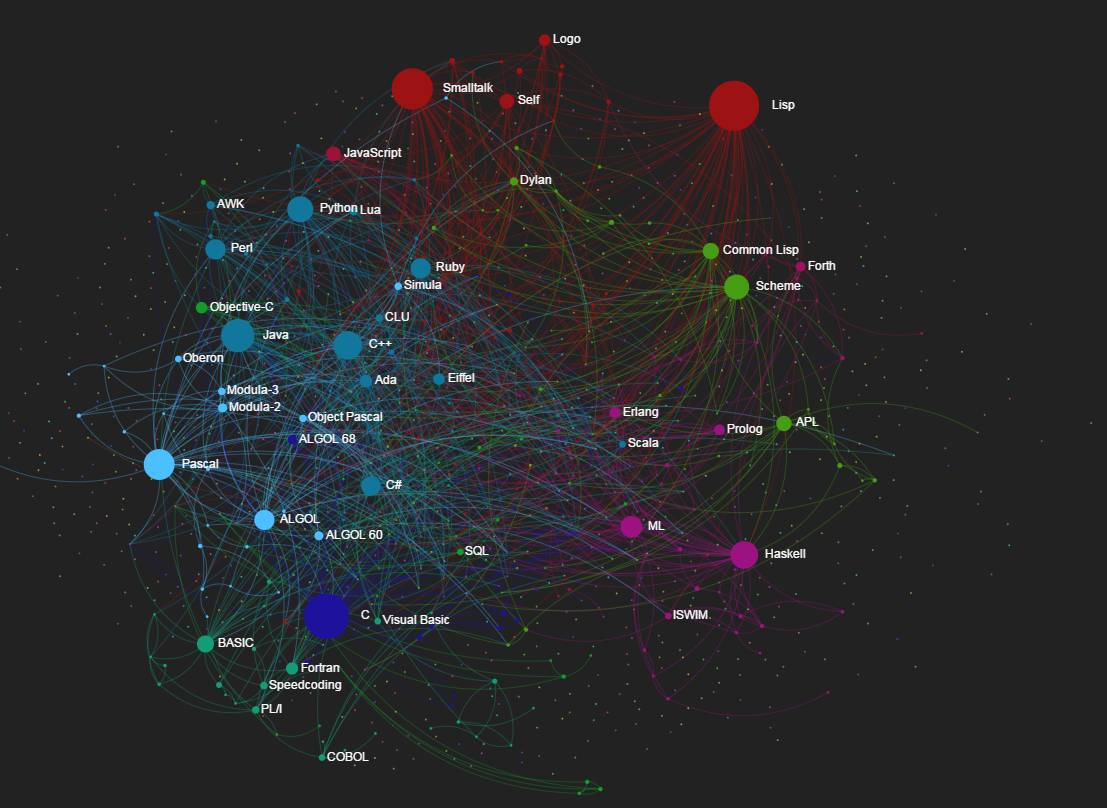
Lenguajes paradigmáticos:
- C (structured/imperative programming)
- LISP (FP, Functional Programming)
- Smalltalk (OOP, Object Oriented Programming)
Fundamentos de la OOP
(programación orientada a objetos)
- Abstracción
- Encapsulamiento
- Polimorfismo
Qué es Smalltalk
Un lenguaje orientado a objetos puro
a.k.a. "Todo es un objeto"
Historia
Alan Kay
At Utah sometime after November 1966 when, influenced by Sketchpad, Simula, the design for the ARPAnet, the Burroughs B5000, and my background in Biology and Mathematics, I thought of an architecture for programming. It was probably in 1967 when someone asked me what I was doing, and I said:
"It's object-oriented programming".
Xerox PARC
- Ethernet
- Impresión Laser (y networked)
- Interpress (pre-Postscript, pre-PDF)
- GUI
- Personal Computer/Dynabook
- Smalltalk (OOP)


Dynabook

Smalltalk
- Object-Oriented Programming
- Model-View-Controller Pattern
- WYSIWYG Editors
- Bitmap graphics (BitBlt, aka "bitblitting")
- Overlapping windows, drop-down menus
- Cut, Copy & Paste
Contribuciones de hace +30 años
- Design Patterns (muchos)
- TDD (Test Driven Development)
- SUnit (JUnit, NUnit, xUnit, etc.)
- IDEs
- Refactoring Browser
- Eclipse Project
- Java 7 HotSpot VM (Strongtalk)
- Google V8 VM (Strongtalk)
- Ruby, Dart (influencer)
Contribuciones más recientes
Presente
Uso en Argentina
-
Telecomunicaciones
-
Banca/Finanzas
-
Petróleo y Gas
-
Retail
Uso en el Mundo
-
Más bancos y financieras
-
Logística (35% containers)
-
Gobierno/Inteligencia
-
Startups mercados verticales
exampleWithNumber: x

"A method that illustrates every part of Smalltalk method syntax
except primitives. It has unary, binary, and keyword messages,
declares arguments and temporaries, accesses a global variable
(but not and instance variable), uses literals (array, character,
symbol, string, integer, float), uses the pseudo variables
true false, nil, self, and super, and has sequence, assignment,
return and cascade. It has both zero argument and one argument blocks."

    |y|
    true & false not & (nil isNil) ifFalse: [self halt].
    y := self size + super size.
    #($a #a "a" 1 1.0) do: [:each |
       Transcript
         show: (each class name);
         show: ' '].
    ^ x < y
Sintaxis
- 100 factorial
-
3 + 4
-
aCollection add: anObject
-
aDevice statusOf: #console at: DateAndTime now
-
Workstation withName: aString
Mensajes
Toda interacción se realiza mediante el envío de mensajes:
Control de flujo
- Se realiza mediante envío de mensajes
- No hay palabras reservadas (keywords)
- Bloques (closures, lambda expressions)
-
[ "booleanExpression" ] whileTrue: [ ... ]
-
a < b ifTrue: [...] ifFalse: [...]
-
aCollection do: [:each | ... ]
-
aCollection ifEmpty: [ ... ]
Booleans
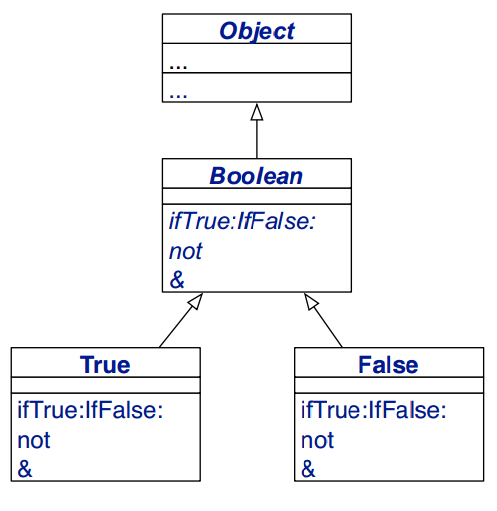
true y false son instancias únicas de las clases True y False
ifTrue: trueBlock ifFalse: falseBlock

    ^trueBlock value
ifTrue: trueBlock ifFalse: falseBlock
^falseBlock valueTrue
False
Virtual Machine
Image
Arquitectura
Simple things should be simple, complex things should be possible — Alan Kay
Back to the future
The immersive programming experience

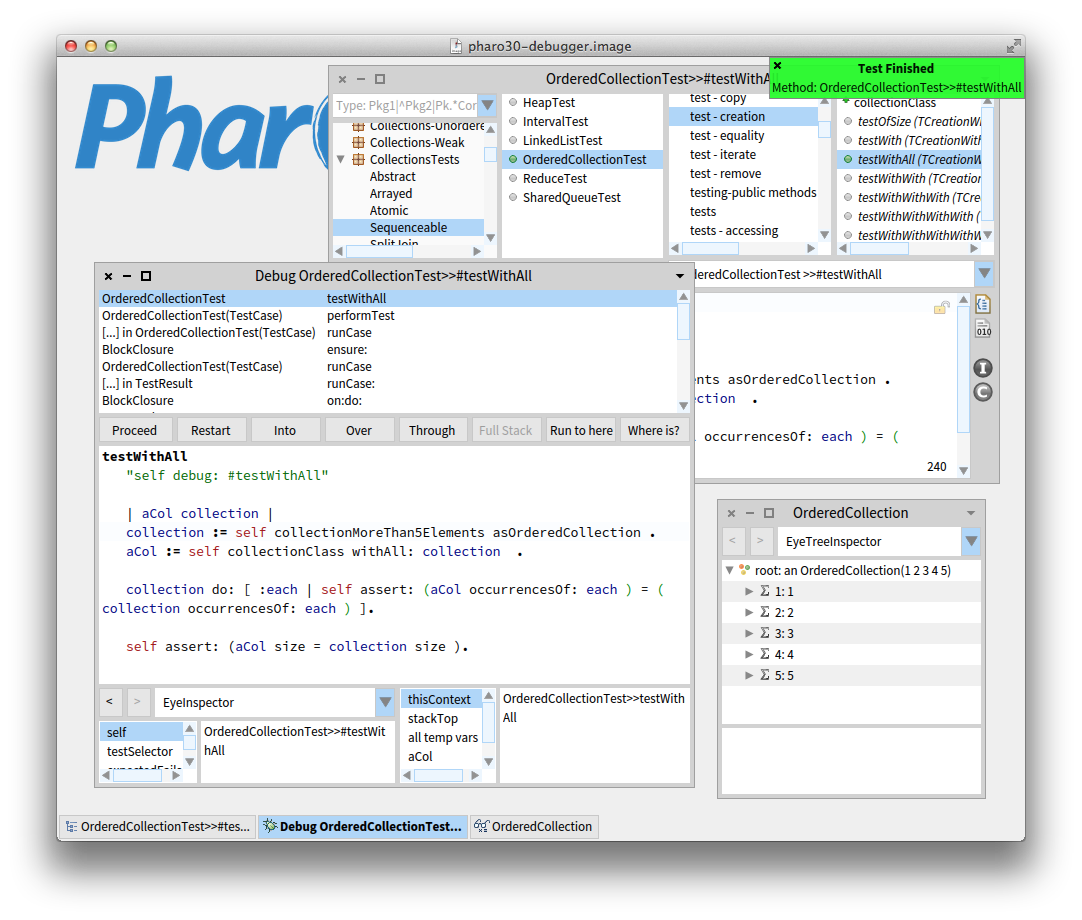
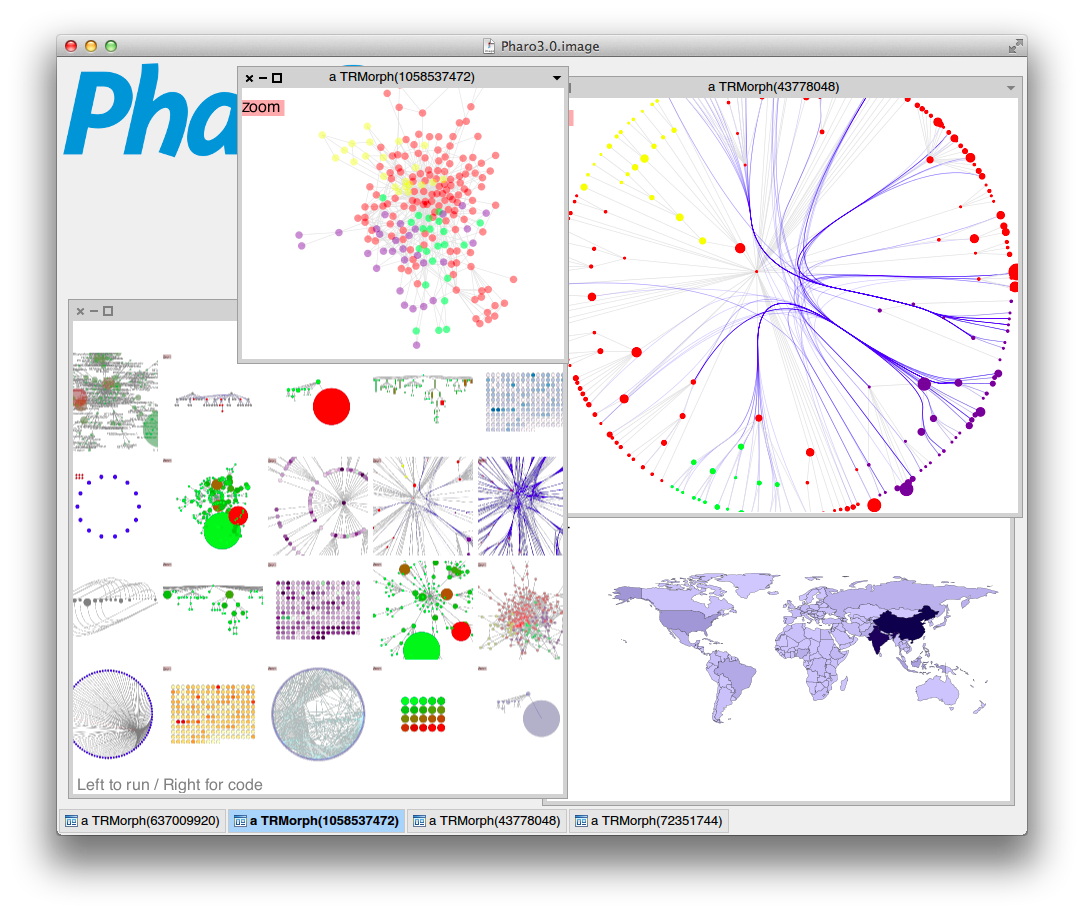
Demo
(one-liners & snippets)
The best way to predict the future is to invent it— Alan Kay
¿Preguntas?
Slides:
Gracias!
