A short overview of Umbrella Apps
Erik Nilsen
@enilsen16

What I am going to Talk About
- Microservices and my thoughts
- Talk about how other languages can be used for a similar approach
- Umbrella Apps and look at a few examples
Microservices
- Lightweight
- Combined together serve a larger goal
- Allows multiple languages to work together
Great!... Oh...
- 1500+ Microservices in prod
- Created a bad culture...
- Unsure what they do
- Things like logging became extremely difficult
- Teams had to rely on others documentation
Well what are the other options?
- Monoliths
- Facebook takes a similar approach
- Break apps into multiple pieces but run on a central server
- Django
- Rails
Umbrella Apps
- Run tests in multiple apps
- Run the entire app as one or each piece individually
- Logically split up multiple apps, but keep them under one git repo
Examples
├── .gitignore
├── .iex.exs
├── .travis.yml
├── LICENSE.md
├── Procfile
├── README.md
├── _build
│   └── dev
├── app.json
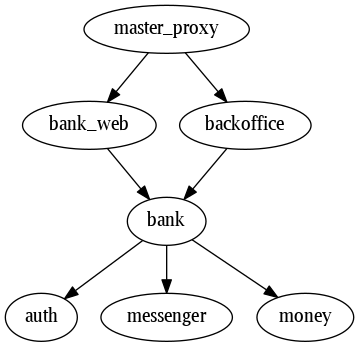
├── apps
│   ├── auth
│   ├── backoffice
│   ├── bank
│   ├── bank_web
│   ├── master_proxy
│   ├── messenger
│   └── money
├── compile
├── config
│   └── config.exs
├── docs
│   ├── diagram.png
│   └── main.md
├── elixir_buildpack.config
├── mix.exs
├── mix.lock
├── phoenix_static_buildpack.config
└── script
└── diagram.exs- Two Web Apps
- Bank Web
- Backoffice
- Logic Specific Apps
- Money
- Messenger
- Bank
- Deployment App
- Master Proxy
Approach
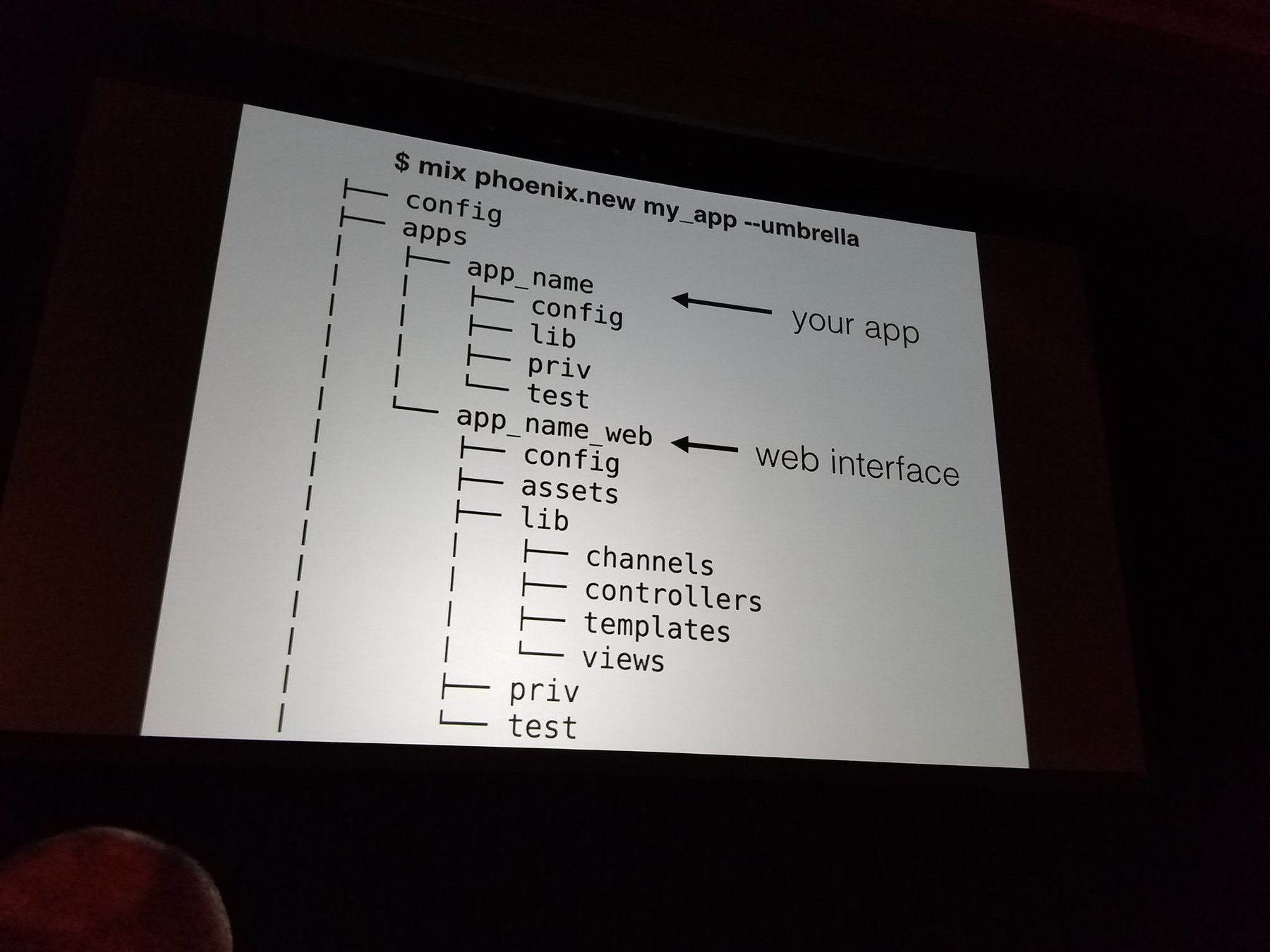
Phoenix 1.3 Umbrella
- Wanted a similar approach
- Going to multiple web applications
- Break entire DB into its own app
- Needed to work either together or individually
- Also needed to work on heroku
What we wanted
Nifty
- Master proxy also calls multiple web apps
- Avoids circular dependencies
├── .gitignore
├── .travis.yml
├── Procfile
├── README.md
├── _build
│   ├── dev
│   └── test
├── apps
│   ├── agent_web
│   ├── auth
│   ├── company_web
│   ├── hook
│   ├── master_proxy
│   └── nifty_db
├── compile
├── config
│   └── config.exs
├── elixir_buildpack.config
├── erl_crash.dump
├── mix.exs
├── mix.lock
└── phoenix_static_buildpack.config
Avoid starting an app multiple times
  def start(_type, _args) do
    import Supervisor.Spec

    # Define workers and child supervisors to be supervised
    children = [
      # Start the endpoint when the application starts
      supervisor(AgentWeb.Web.Endpoint, []),
      # Start your own worker by calling: AgentWeb.Worker.start_link(arg1, arg2, arg3)
      # worker(AgentWeb.Worker, [arg1, arg2, arg3]),
    ]

    repo = if :erlang.whereis(NiftyDB.Repo) == :undefined, do: [supervisor(NiftyDB.Repo, [])], else: []
    # See http://elixir-lang.org/docs/stable/elixir/Supervisor.html
    # for other strategies and supported options
    opts = [strategy: :one_for_one, name: AgentWeb.Supervisor]
    Supervisor.start_link(children ++ repo ++ guardian_db, opts)
  end
Exploration Ideas
- Try an umbrella app where BEAM starts multiple apps from different languages
- Python
- Ruby
- Rust?
Umbrella Apps Don't Solve all Your Problems
You still need to architect correctly :)