Modern e2e testing
for complex web applications


fakiolasmarios@gmail.com
twitter.com/@fakiolinho - medium.com/@fakiolinho
Full-stack JavaScript lover, happy husband, proud father 👨👩👧👧
Software Engineering Manager / Frontend Head at omilia.com
Fakiolas Marios
fakiolasmarios@gmail.com - twitter.com/@fakiolinho - medium.com/@fakiolinho
Workshops Tutor at 2hog.codes

Web technologies evolve rapidly

We are living in an era where
Why this is happening?
-
Browsers are much more reliable and consistent (no more < ie11 craziness)
-
Browsers offer much more features & utilities (HTML5, Service Workers, IndexedDB, PWAs etc)
-
Devices - even mobile ones - are hell stronger (RAM, multi-core processors)
Browsers & Devices evolution
Why this is happening?
-
JavaScript has made huge steps because of ES2015 and nodejs (2009)
-
Frontend frameworks & libraries have evolved so we can build more complex applications
-
RIAs (Rich Internet Applications) and SPAs (Single Page Applications) are flourishing
JavaScript & Frontend evolution

Why this is happening?




New technologies and tools appear every day...
Big players have stepped up their game





























So yeah, web technologies
are skyrocketing


Is there any reason we should worry about this?
All these can backfire

-
Even more complex technology stacks are used
-
Even more side-effects and async events take place
-
It is becoming even more difficult to reproduce production setup in dev and testing environments
Assuring the quality of a modern web application is getting more difficult!!!

Basics about testing
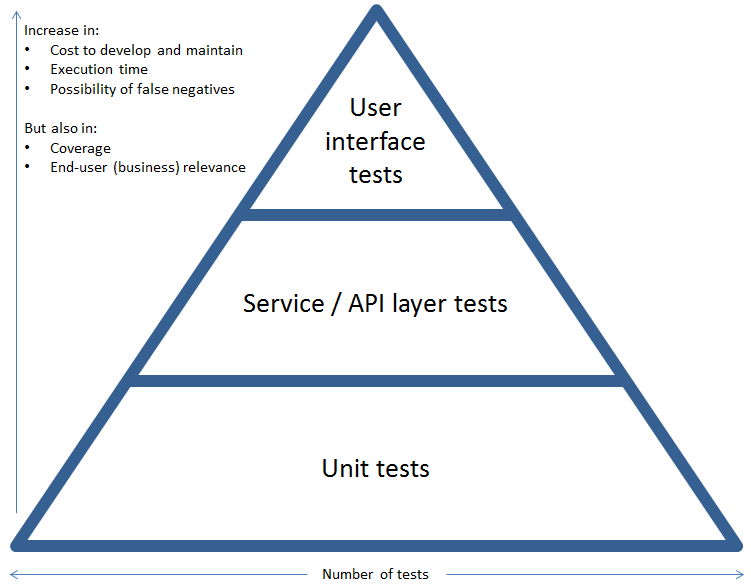
UI / E2E tests options





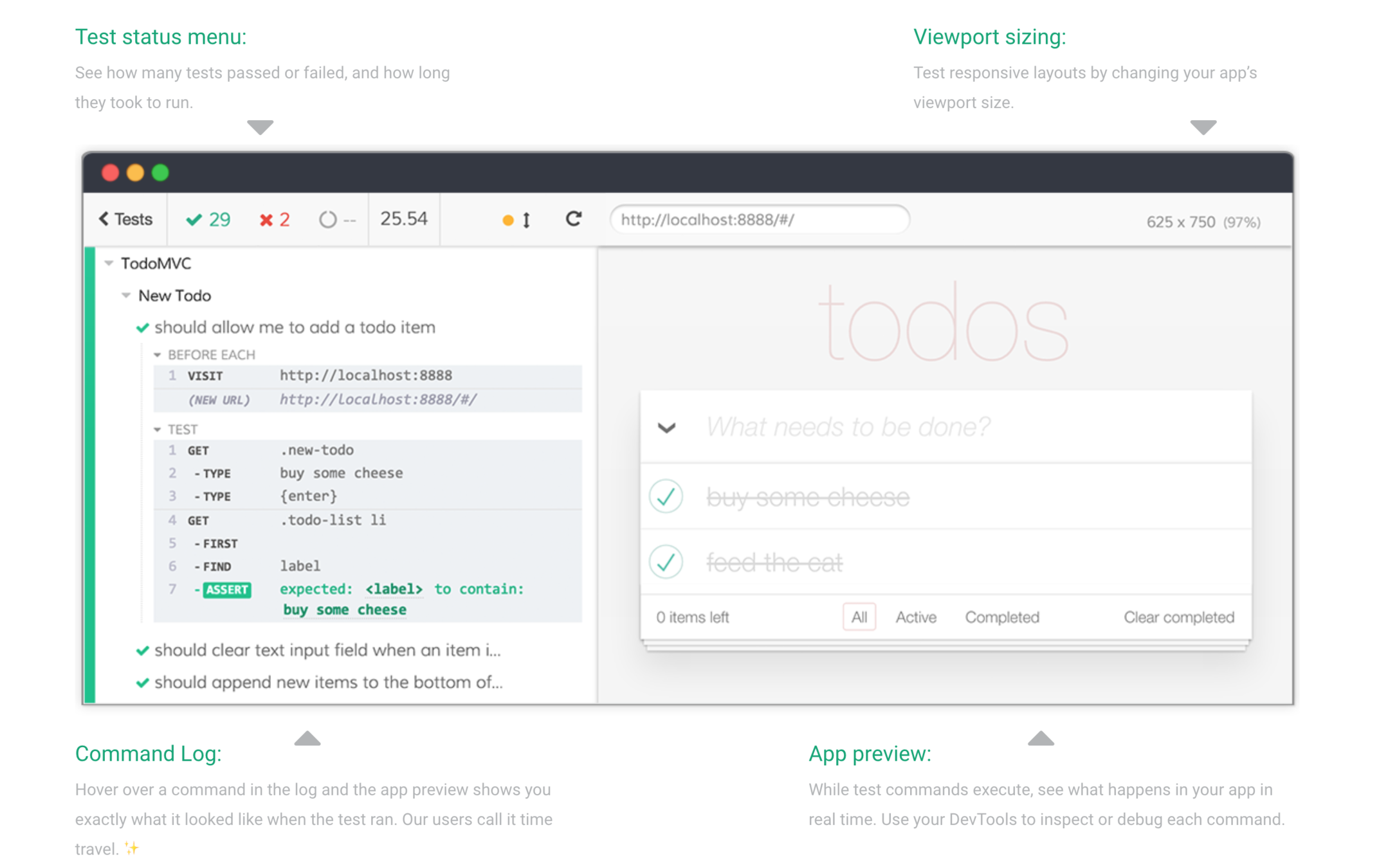
Browsers support
-
Chrome
-
Chromium
-
Canary
-
Electron (headless mode for CI)




Technologies used by Cypress.io
Cypress.io under the hood uses and extends some well-known technologies in JavaScript ecosystem:
-
Mocha testing framework for tests structuring
-
Chai assertions library
-
Sinon library for stubs and spies
-
Lolex to fake native timers


Why Cypress.io?
architecture
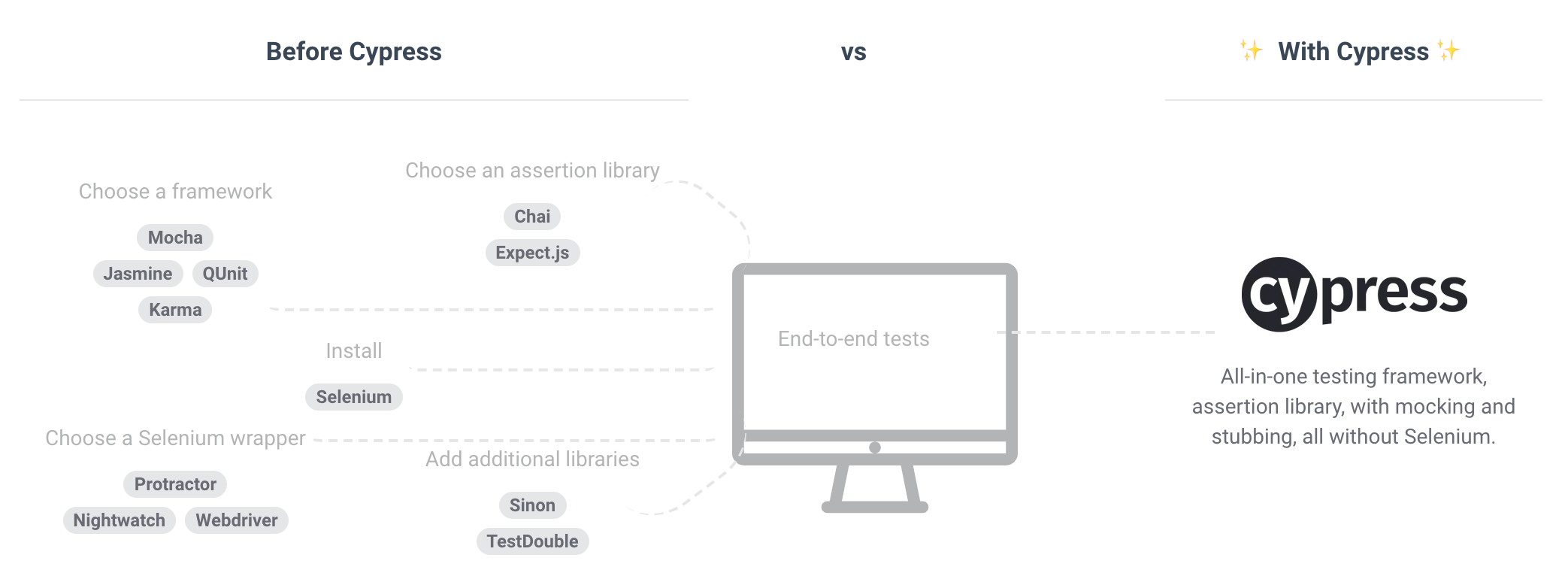
Why Cypress.io?
-
It runs in the browser itself 😍
-
In fact it runs in the same run loop the application is executing
-
From architectural perspective this means that we don't send external commands remotely to control the browser (Selenium, Webdriver API, Puppeteer etc.)
architecture
Why Cypress.io?
-
Cypress is fully aware of all things happening in the browser even of all async events that take place
-
We can spot exactly the root of evil in our application even in super-complex situations (Selenium will return a generic error)
-
More speed, better control and easier debugging
architecture
Why Cypress.io?
-
It makes Developers & QA engineers life easier because they can use the browser to write tests and debug them through Developer tools
-
It feels really familiar right from the start because of the tools it relies on such as Mocha, Chai & Sinon
-
Engineers can write tests really fast by using css selectors (jQuery-like)
engineers perspective
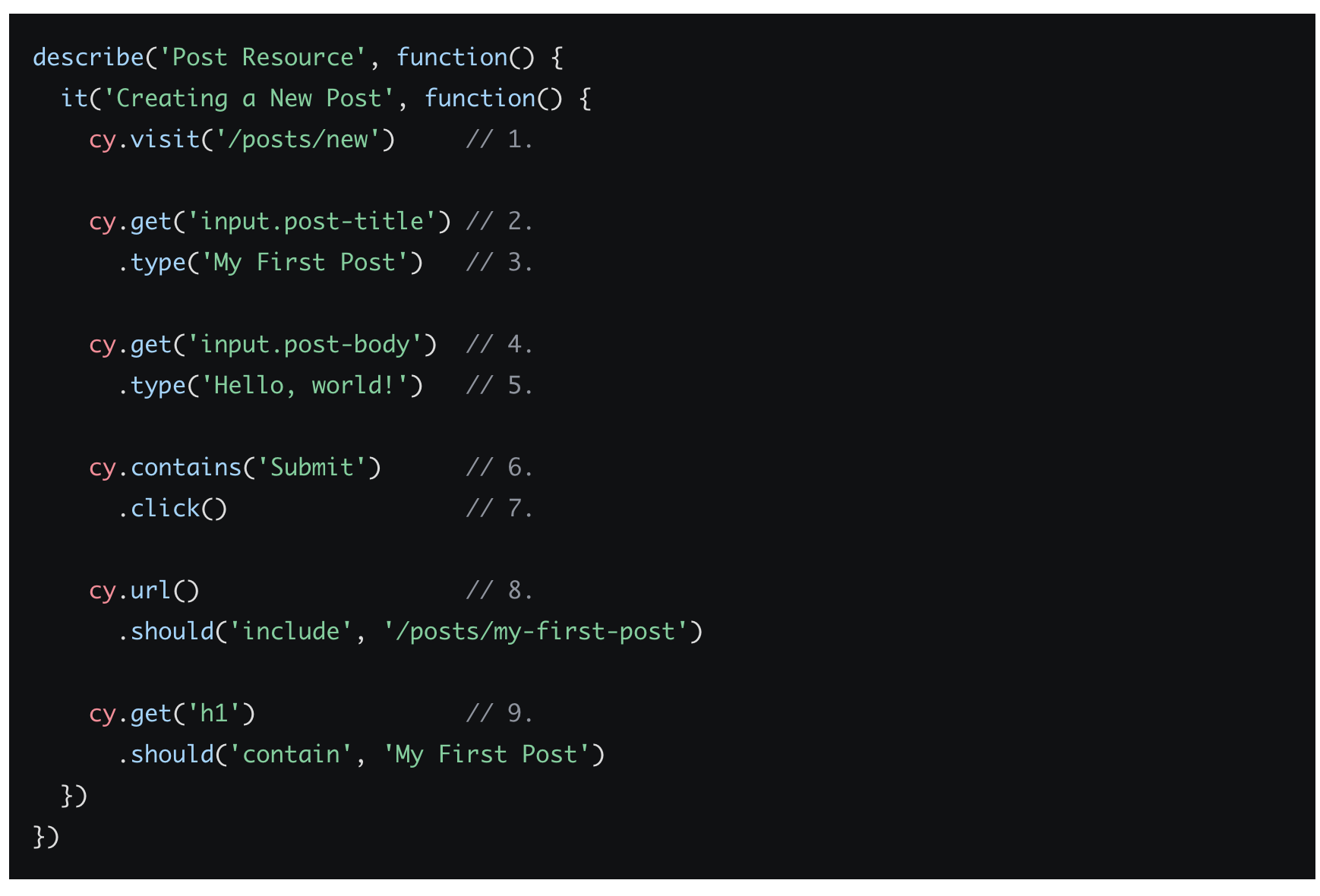
Why Cypress.io?
-
Developers can use it for BDD / TDD while developing a new feature
-
We can access tricky parts of an app like global stores (Redux, Vuex etc), storages, cookies etc.
-
It is framework-agnostic (AngularJS, VueJS, ReactJS, jQuery etc.)
engineers perspective
4 steps that cypress.io makes easy
-
Setup tests
-
Write tests
-
Run tests
-
Debugging (tests and codebase)

Setup tests
Write tests
Run tests
Debugging (tests and codebase)
Cypress.io features
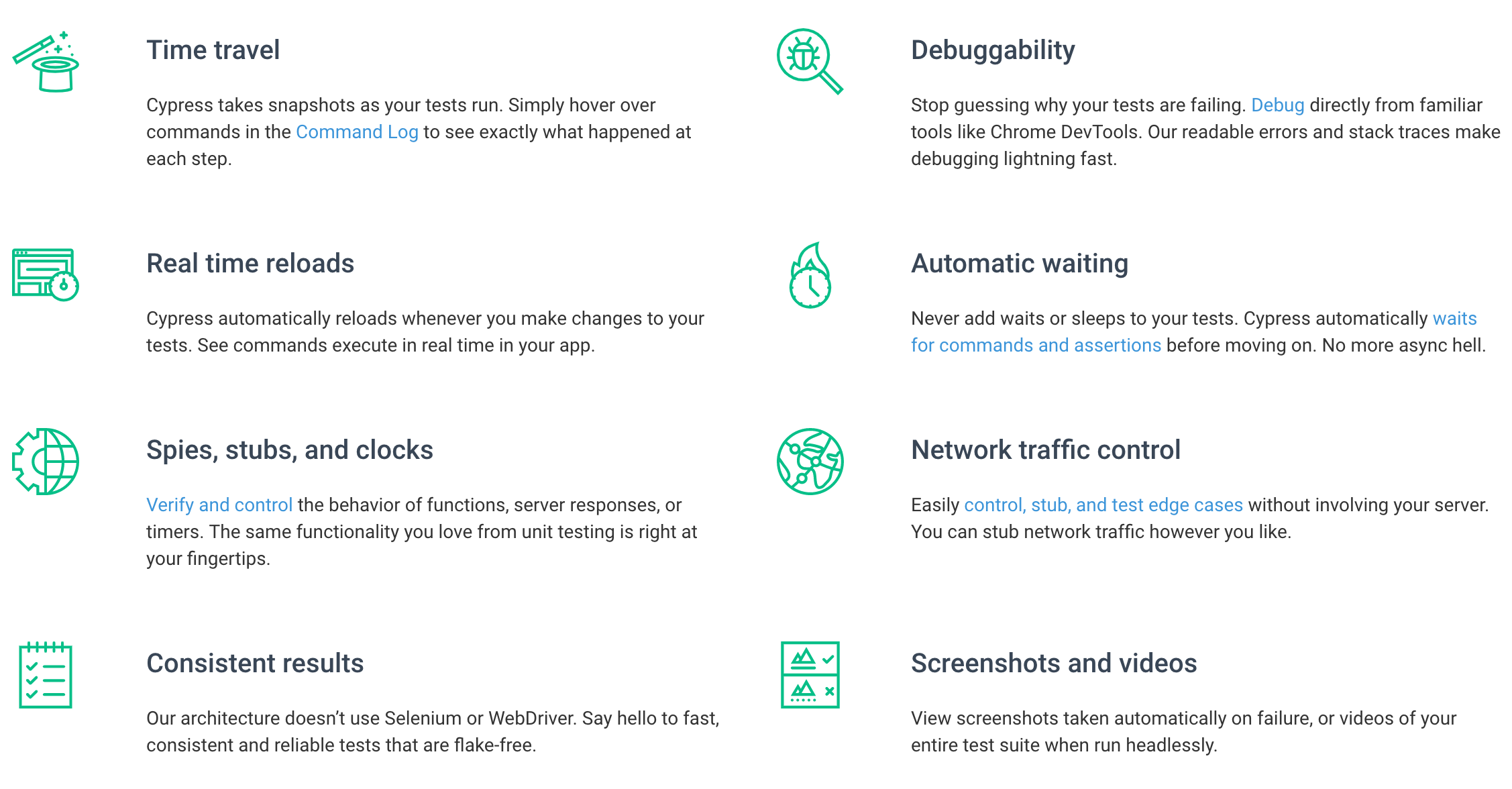
Functional Testing with Cypress.io
Check that the application works as wanted
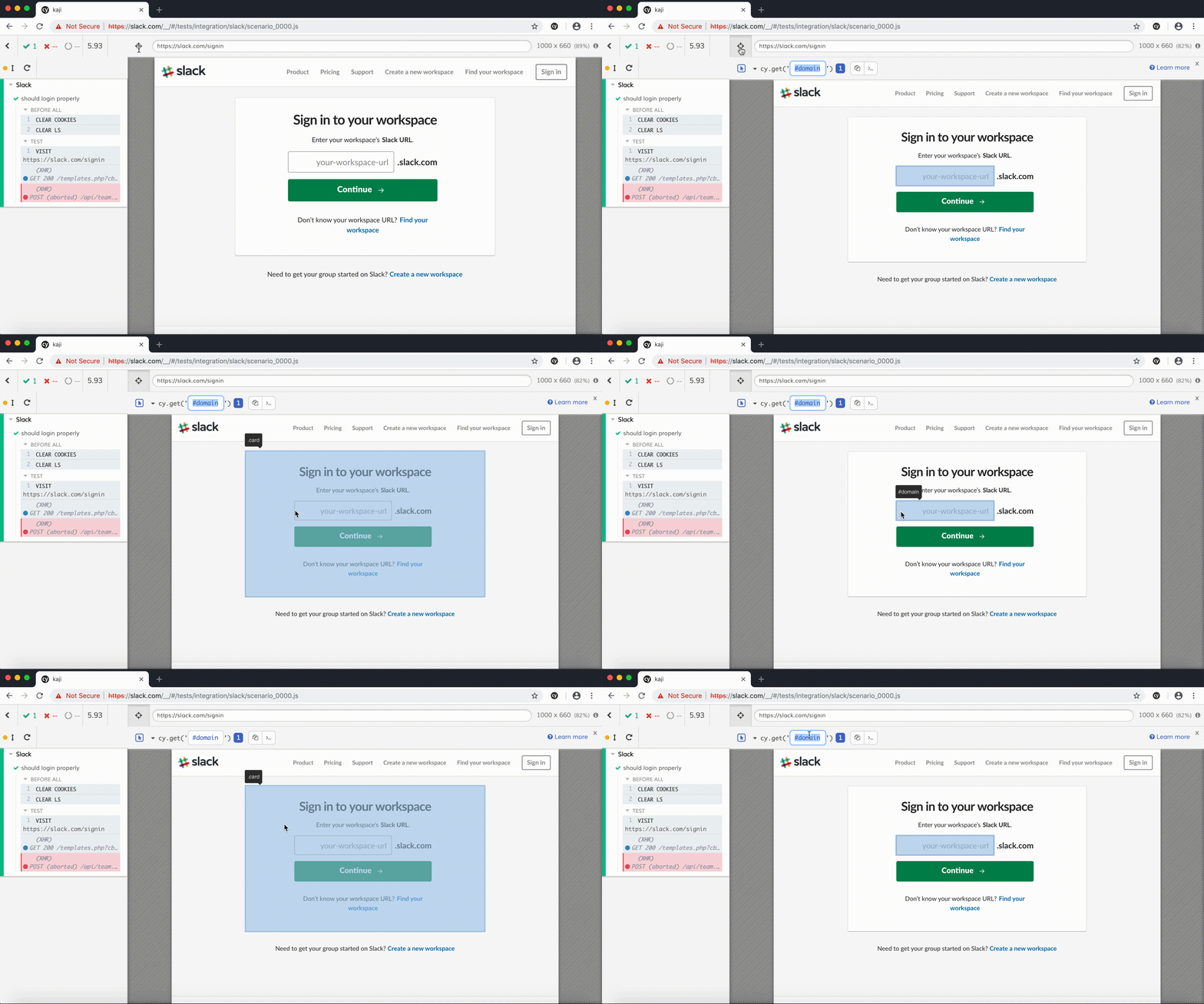
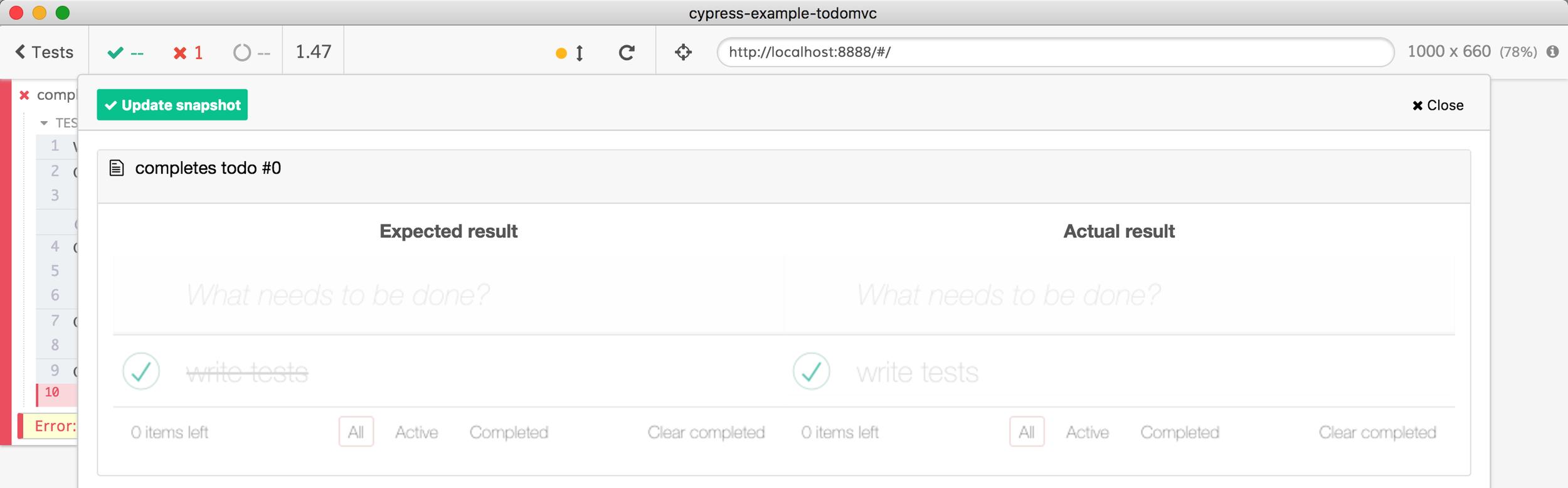
Visual Testing with Cypress.io
Check that the application looks as wanted
cy.screenshot();


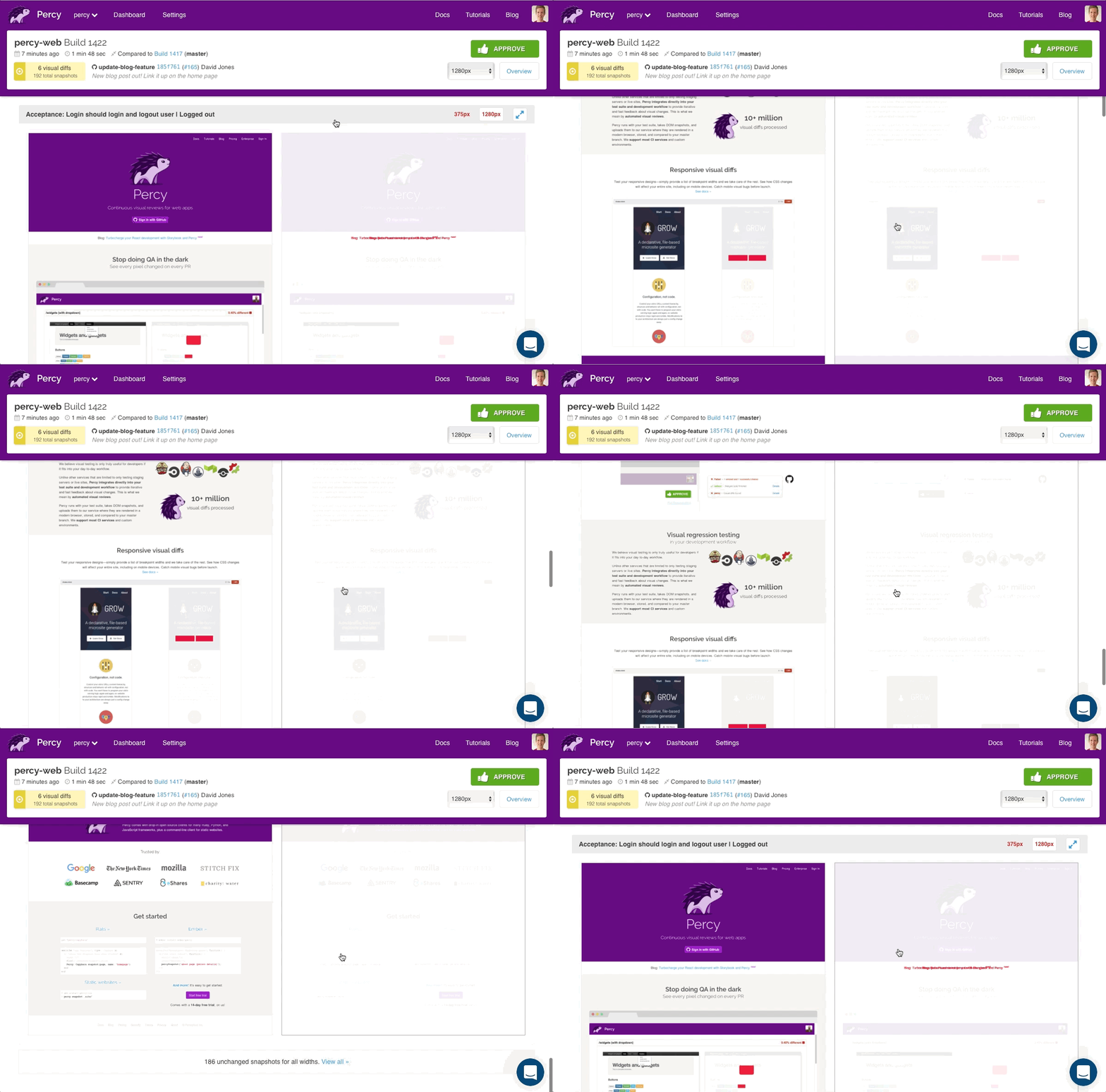
Visual Testing with Cypress.io + Percy
cy.percySnapshot();
Cypress.io cons
-
Cross-browser support (only Chrome family)
-
It works only for apps that have a DOM (not React native etc)
-
It cannot support multi-tabs because it works in the browser
-
It cannot support also multiple open browsers at the same time
-
Each test is limited to only visiting a single superdomain. We cannot visit two different superdomains in the same test
-
There are some difficulties in using it with iframes (Storybook etc)
Questions