Tap!
Unearthing the family tree of music
// brad tamura & gui bueno


Tap!
Tap!
Tap!
Music and sounds in the real world
Music and sounds in the real world
Since a very young age we make connections between sounds and their sources.
For example, a cat meows, a cow moos, and an owl hoots.
Sounds can also be produced by speech, the tapping of objects, instrumentally and even digitally.
But what are sounds after all?


MEOW!
Scientifically, sounds are vibrations that travel through the air and reach a person’s ear.
One of the things that the human ear most enjoys is music, a combination of sounds created to express ideas and emotions.
Just as anything can produce sound, any combination of sounds can produce music.
So how might we help young people connect music to sounds in the real world?

Tangible Music Interfaces
Tangible Music Interfaces
After over two decades of research and experimentation, many different objects have been adapted to become musical interfaces:
tables (Reactable, Scrapple Installation)
blocks (Siftables, Tangible Sequencer)
tokens (BeatBearing, Beatblocks)
artifacts (The Sound of Touch, MixedUp).
In the realm of Arduino and Makey Makey, many other innovative musical interface projects exist, such as Draw it Yourself and Cata Sopros (more examples: [1][2]).
Landscape Audit
Landscape Audit

However, most of these projects do not have instructional purposes.
In other words, either they are targeted at experienced musicians, or they simply lack the necessary scaffolding for beginners.
Additionally, they are rarely appealing to young audience, because of both their inherent difficulty and the absence of narrative elements.
Finally, the vast majority of tangible music interfaces produce digital sounds (like computers), rather than analog sounds (like instruments).
Gaps
Gaps
10101010101010101010101010101010101010110010101010100111001011010010101011010010010101101010101011011010100100010101000
Our Solution
Our Solution
Boom Bassik
Boom Bassik
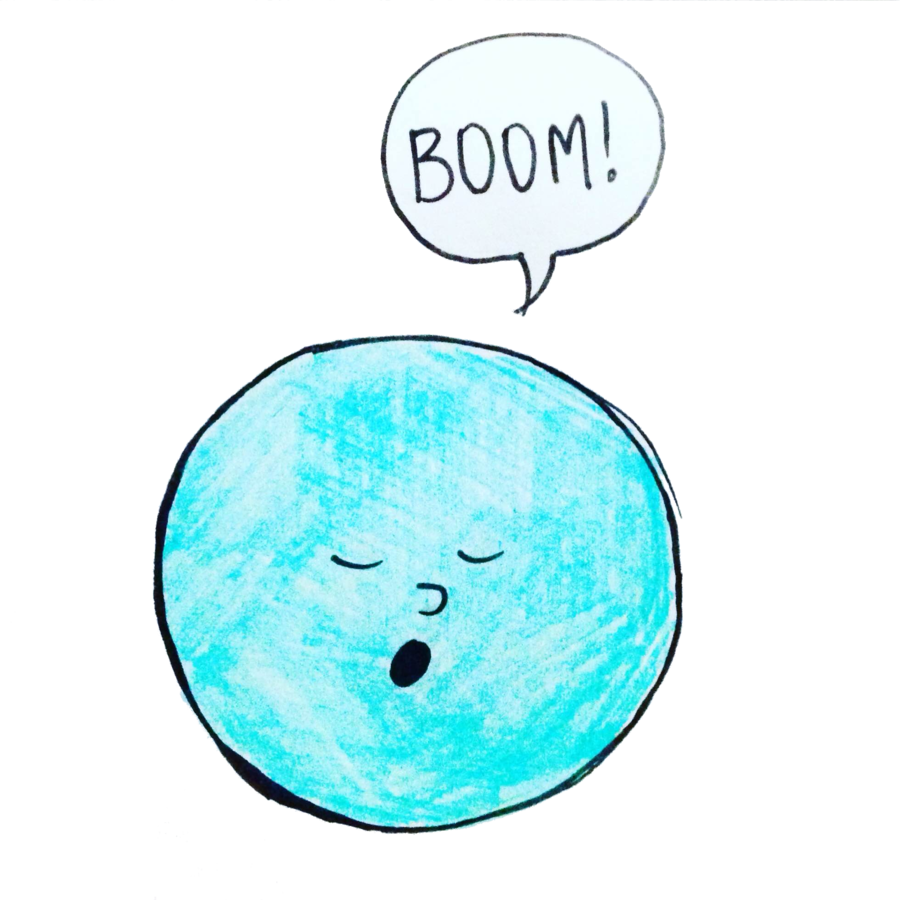
An anthropomorphized basic drum set with an LED screen attached to the front part of the bass drum, which displays the character’s face.
Tap!Tap!
Tap!Tap!
A drumstick with a built-in microphone, which detects the frequency of the its tapping sounds and wirelessly sends these frequencies to a computer.
Before users engage with our proposed intervention, they will be introduced to our anthropomorphized drum set character, which will be set up in a public space.
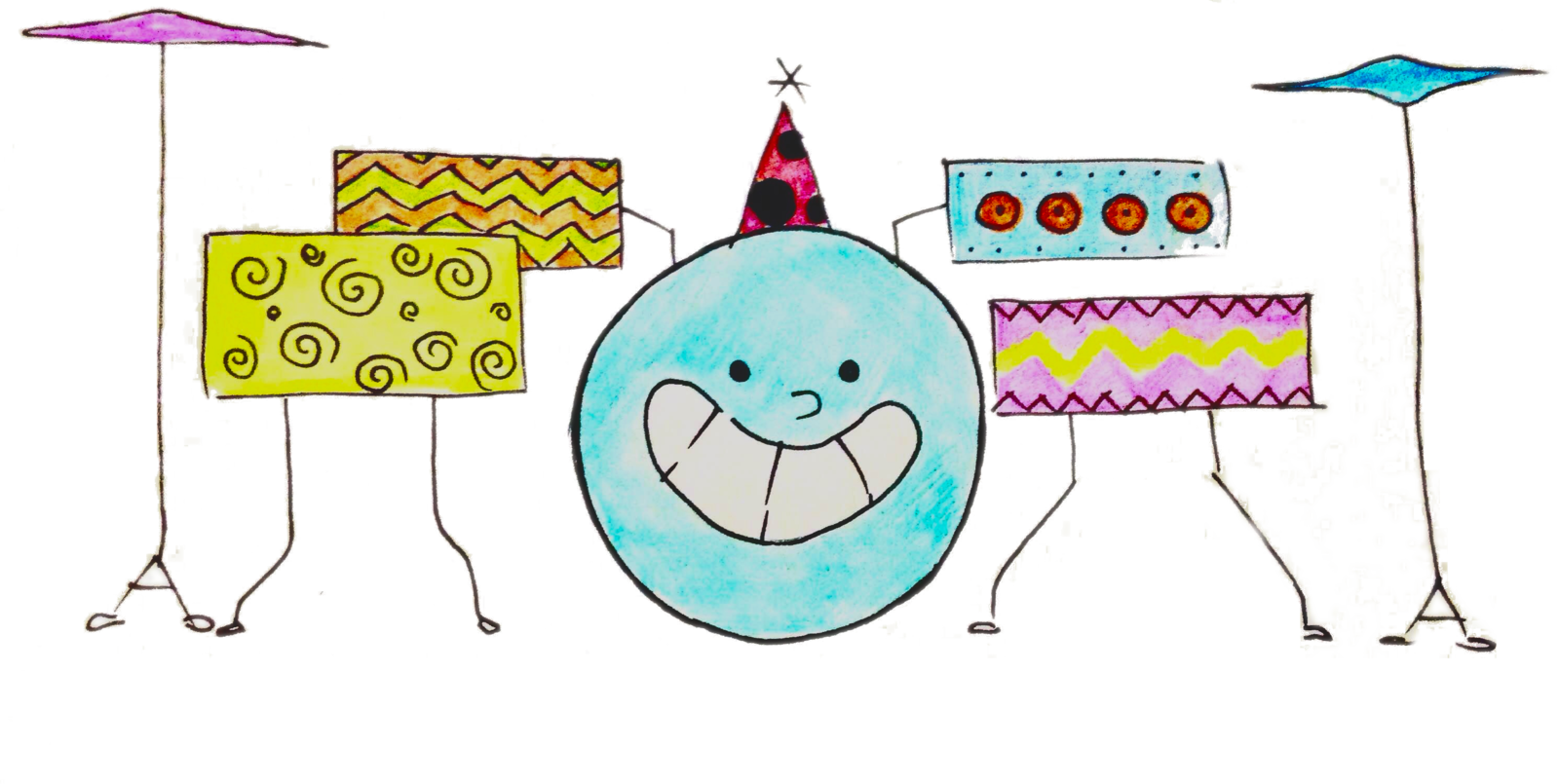
Hi I’m Boom Bassik! I’m looking for my brother and sister sounds in the real world. Can you help me find them? Don’t forget to have fun!
Users will search for sounds in the real world that are similar to the sounds made by a drum set. Users will walk and tap around with Tap!Tap drumsticks.
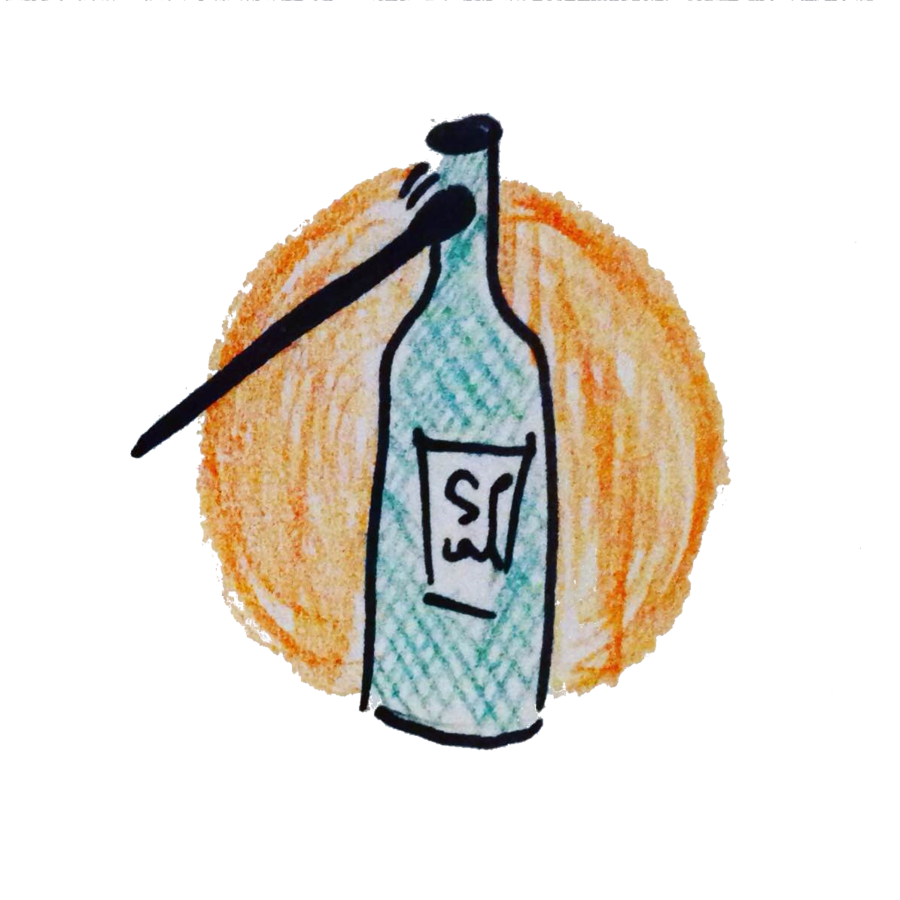
Every time an user taps an object, the sound created will trigger the drum set to immediately respond by hitting its most similar sound, through Arduino boards.
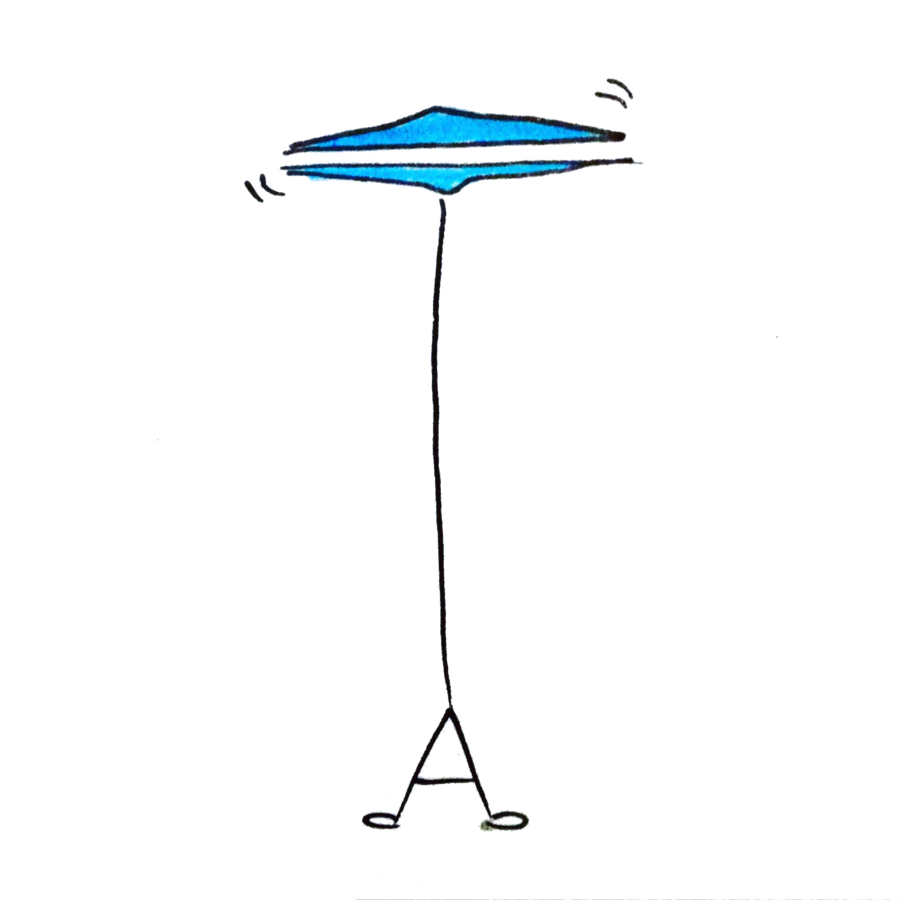
The animated Boom Bassik will also react to sounds! For example, it will open its mouth if the tapping produces a lower frequency sound and the bass drum is hit.
Target Audience
Target Audience
Primary Group
Primary Group
Young individuals new to music: children (PK-12) looking to have fun and open to playing music collaboratively and/or to progress their music skills.

Secondary Group
Secondary Group
Adults seeking to explore new and exciting experimentations with music.

Learning Goals
& Standards
Learning Goals
& Standards
The main learning goal of our proposed intervention is to help learners connect sounds in the real world to musical instruments through these specific objectives:
1. Learners will compare how the tapping of different surfaces and objects results in the production of different sound frequencies.
2. Learners will understand that at the moment they tap an object, an equivalent sound will be produced automatically by the drum set.
3. Learners will evaluate which objects they need to tap to play which parts of the drum set.
4. Learners will plan and attempt to create actual drum rhythms individually and/or collaboratively using the Tap!Tap! sticks.
Secondary goals line up with the following National Coalition for Core Arts Standards (NCCAS), which represent the processes that musicians have gone through for generations:
Creating - Students need to have experience in creating, to be successful musicians and to be successful 21st century citizens.
Performing - Students need to perform – as singers, as instrumentalists, and in their lives and careers.
Responding - Students need to respond to music, as well as to their culture, their community, and their colleagues.
Learning Theories
Learning Theories
In Tap!Tap!, learners tap using a drumstick and cause a physical drum set to play, which simulates the experience of playing an actual drumstick by themselves.
Such process aligns with Bransford’s concept of Anchored Instruction states that realistic scenarios can help learners tie their learning with their experiences.
This experience also relates with the idea of Embodied Cognition, which is that learning happens best when connected to body movements and sensations.
When learners tap around, they are exploring and experimenting to uncover new facts and info, which is basically what Bruner defines as Discovery Learning.
Finally, after playing for some time, learners will be able to recognize and manage patterns in the different sounds, which is an example of Perceptual Learning.
Pilot Test Proposals
Pilot Test Proposals

Public Intervention
Public Intervention
Setup
Public Space (eg.: Washington Sq Park)
6 Tap!Tap! drumsticks
1 basic drum set
Functions
1 Facilitator
1 Video/Audio recorder
1 Note-taker
Test
1. Invite pedestrians, especially children, to participate in the experience.
2. Let them explore by themselves and scaffold/explain when necessary.
3. Conduct an informal interview with the participants afterwards, asking questions such as:
“How did you like it?”,
“What did you learn?”,
“What would you change in it?”.
Focus Groups
Focus Groups
Setup
Controlled environment
6 Tap!Tap! drumsticks, 1 basic drum set
6 same age, pre-selected participants
Functions
1 Facilitator
1 Video/Audio recorder
1 Note-taker
Test
1. Let participants explore Tap!Tap! for themselves for about 10 minutes.
2. Conduct group challenges with participants:
Finding sounds that match all drum parts
Creating a structured rhythm collaboratively
3. Conduct group interview:
“How did you like it?”,
“What did you learn?”,
“What would you change in it?”.
Our Process
Our Process
Music Theory for Children
Inspired by BSharp, a music school for children in the U.K. that was recently nominated for the Guardian Voluntary Sector Network’s Trustee of the Year competition.
BSharp Resources
It's a website with thousands of music lessons. We wanted to incorporate a tangible perspective to those lessons. How might we do it?
Ideation
Ideation
Fruit Orchestra
mute/unmute or solo instruments in a MIDI music file by touching fruits.
Syllabic Tempo
teach music rhythm through words syllables; metronome clicking tempo changes depending on the position of different objects (ball, coffee, orange, avocado).
Solfege
helping people sing in the right pitch; two curtains or blinds that open and/or close to represent the target pitch and the pitch produced by users.
Drum Objects
synesthesia; participants tap different objects and the different sound frequencies are translated into different colors projected on a wall.
From Drum Objects we thought about Tap!Tap!, which we then started to discuss, outline, and further develop.
We added so much to to Tap!Tap! that it became too hard to prototype, so we decided to only explain and describe it.
We now believe in this idea and we would actually like to execute it, but the timing was limited.
Future Iterations
- Have a frequency display embedded in the Tap!Tap! drumstick.
- Incorporate other musical instruments, also anthropomorphized.
- Step-by-step tutorial to scaffold a more meaningful learning experience.
- Integrate this experience into various countries in different languages.
- Incorporate game mode with goals and challenges.
- Help users to gain mastery of rhythms, tempos, chord progressions etc.
Thanks!
- Martin Kaltenbrunner, for listing Tangible Musical Interfaces.
- Amanda Leticia, for drawing all the beautiful sketches.
- Freepik, for providing .AI images and icons.
- Nicole Pallares, for Boom Bassik’s name and the drumstick.