Error Tracking
mit Sentry
Puzzle Tech Kafi, 29.05.2019
Mathis Hofer & Thomas Philipona

Bugs fixen bevor die User sich melden
Weshalb Error Tracking?
Reaching production is only the first step...
The 3 Pillars of Observability
Logging
Metrics
Tracing
While there are many good tools that make development easier, the post-deployment process of discovery, investigation, and remediation is still painful, confusing, annoying, and lengthy.
— Adhiraj Somani, Sentry
Errbit 😃
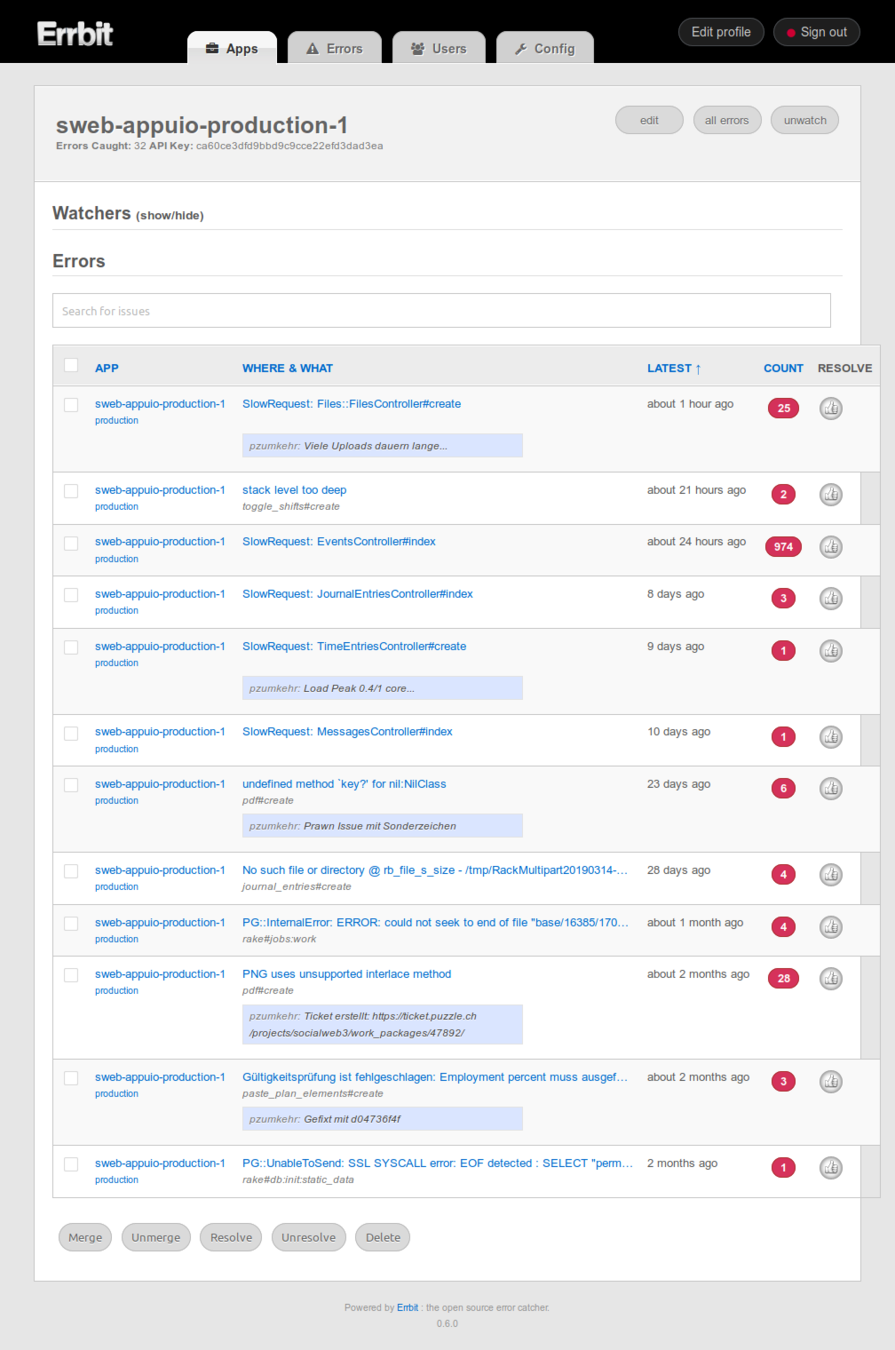
- Airbrake API kompatible Open Source Implementation
- Im Einsatz bei
Rails-Projekten
seit ~2012 (Hitobito) - Frontend-Integration über airbrake-js
seit 2016 (socialweb)
Errbit 😭
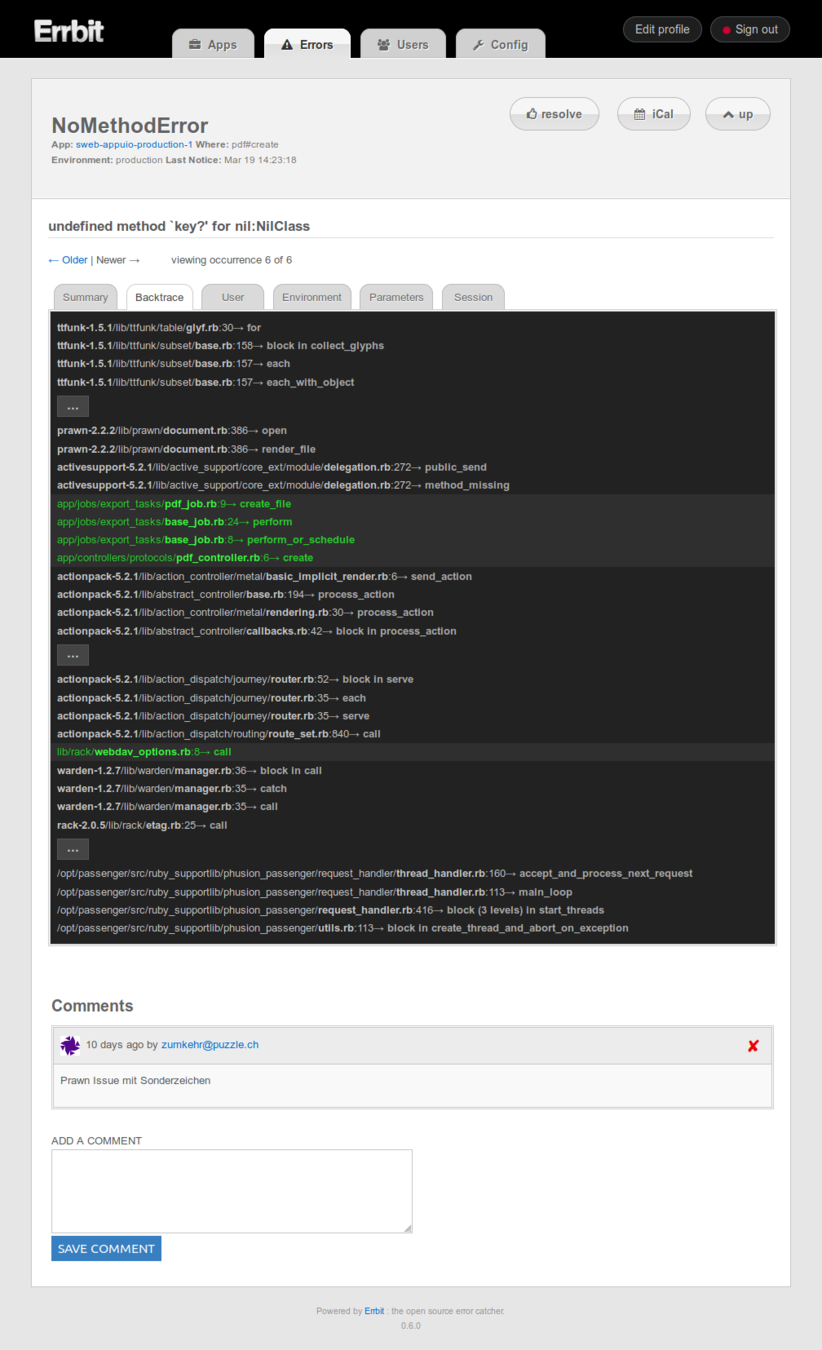
- Nicht sehr aktive Entwicklung
- Java-Integration problematisch
- Featureumfang begrenzt
Sentry @ Puzzle
EST. 21. März 2019
Stand
sentry.puzzle.ch wurde vom Techboard eingerichtet
Erste Projekte verwenden Sentry
(Acrevis, B4U, Marina, PuzzleTime, socialweb, Zeus etc.)
Erfahrungen sammeln
Best Practices erarbeiten
Ziele
Ablösung von Errbit bei allen Ruby Projekten bis Ende Jahr
Für Java Projekte und im Frontend als Standard etablieren
Wichtig zu wissen
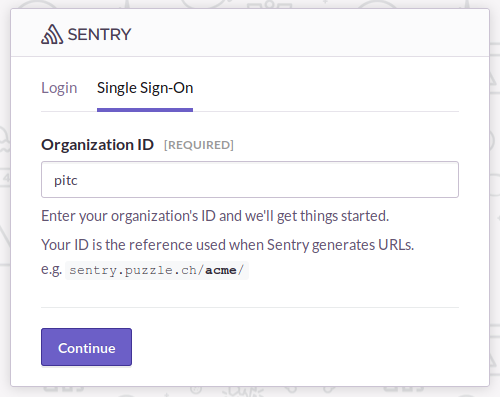
Und: Gewünschte Teams joinen, damit die Projekte sichtbar werden
Best Practices
Es gibt eine Organization: pitc
Pro Projekt ein Team erstellen mit Projektkürzel:
z.B. pofi-b4u
Im Team pro (Micro-)Service ein Project erstellen:
z.B. b4u-backend, b4u-frontend
Umgebungen (Integration, Produktion etc.) als Environment im gleichen Project abbilden:
environment im SDK konfigurieren
Was ist Sentry?

SDKs
JavaScript, Browser JavaScript CDN, Java, Node.js, .NET, PHP, Ruby, Vue, Angular, Ember, React, React Native, Cordova, Electron, Python, Django, Flask, Sanic, Celery, AWS Lambda (Python), Serverless (Python), Pyramid, RQ (Redis Queue), WSGI, AIOHTTP, Tornado, Bottle, Rust, actix-web, Minidump, Elixir, Cocoa, Go
Sentry-supported:
Community-supported:
C++, Clojure, Crystal, Dart, Grails, Kubernetes, Lua, Nuxt, OCaml, Scrapy, Terraform, Wordpress, Zend
Workflow
Triage
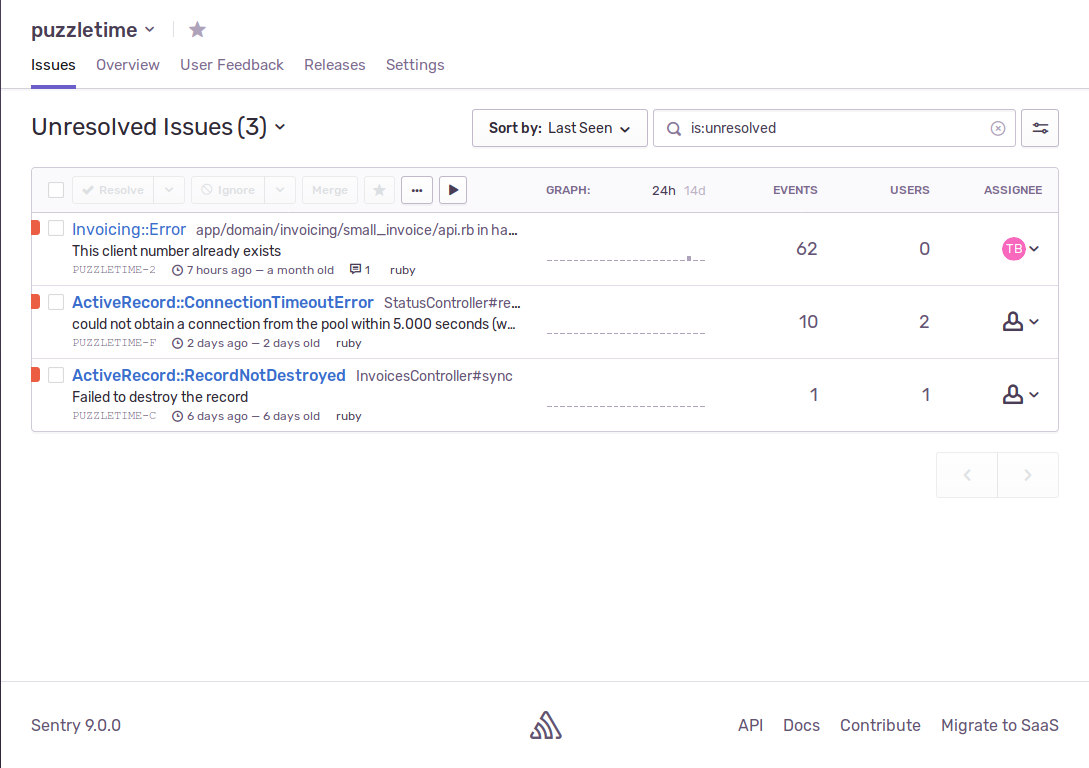
Fehlersuche
Problem gelöst

Ziel soll sein:
0 Issues
Irrelevante Fehler in Applikation handeln
Organisatorisch: Wochenverantwortung
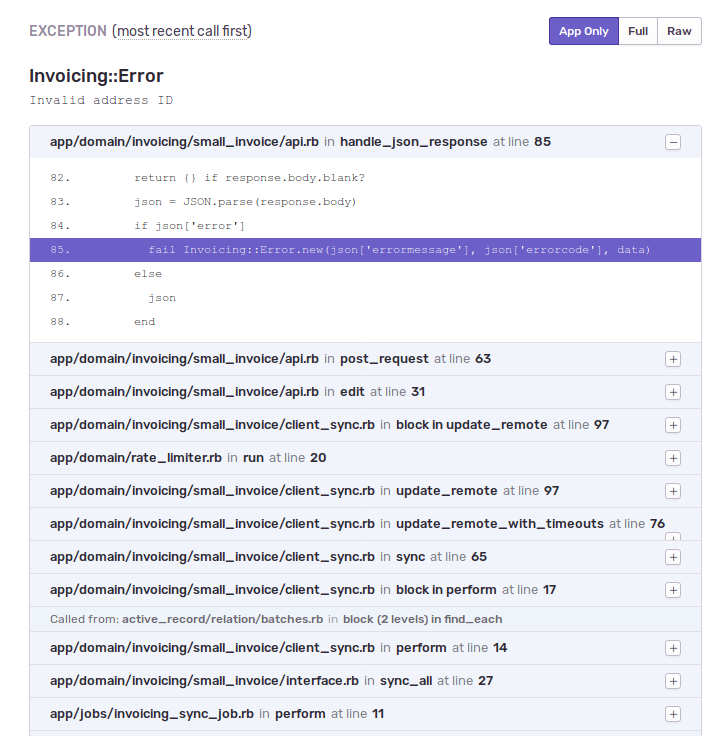
Features
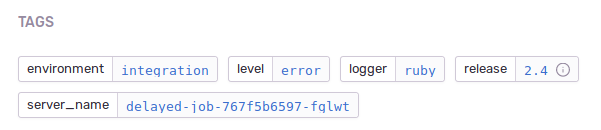
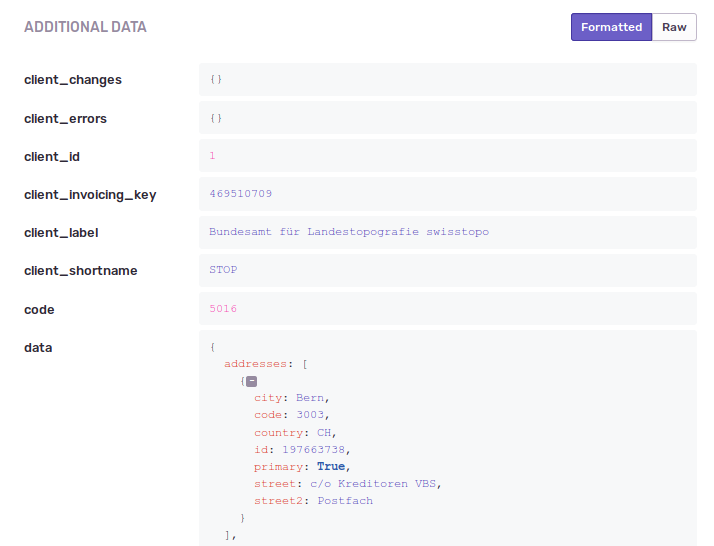
Wichtige Informationen
Exception, Stack Trace
Umgebung, Version
Request URL, Parameter, Headers
Benutzer, Browser, Betriebssystem
Verlauf
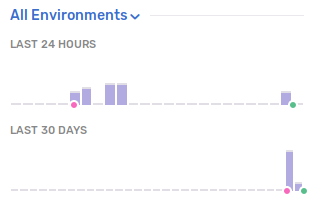
Auf einen Blick:
Wie häufig tritt der Fehler auf?
Erstes Ereignis, letztes Ereignis
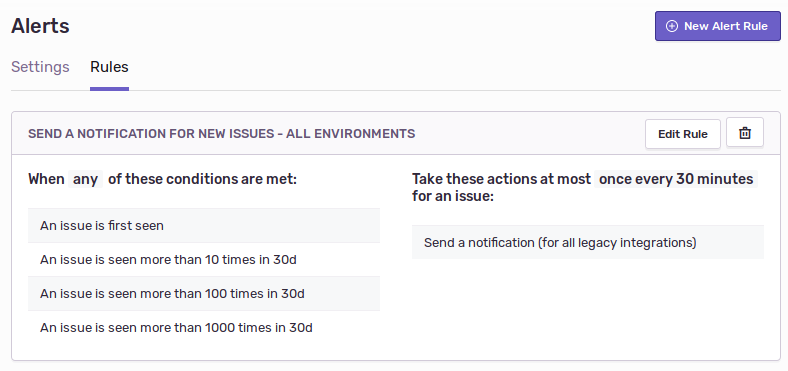
E-Mail Notifications
Fehler werden per E-Mail notifiziert
(kann auch global deaktiviert werden)
Häufigkeit kann pro Projekt/Umgebung konfiguriert werden:
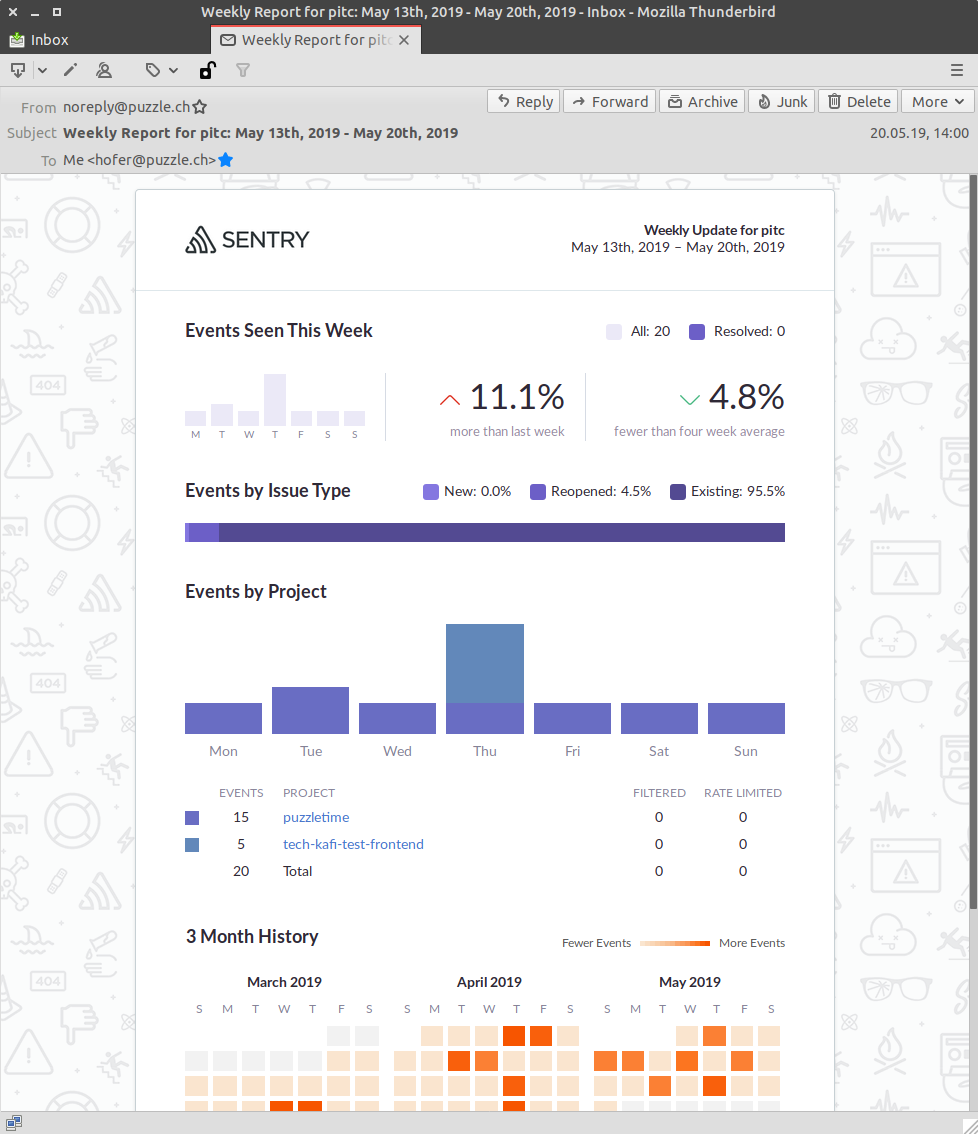
Weekly Report Mail
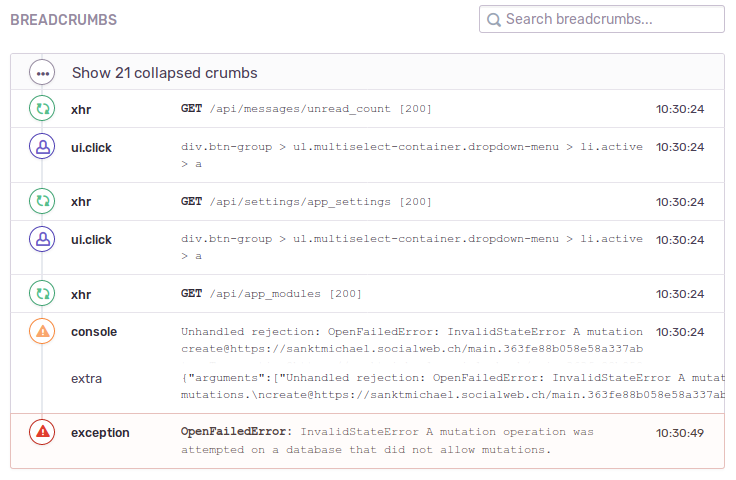
Breadcrumbs
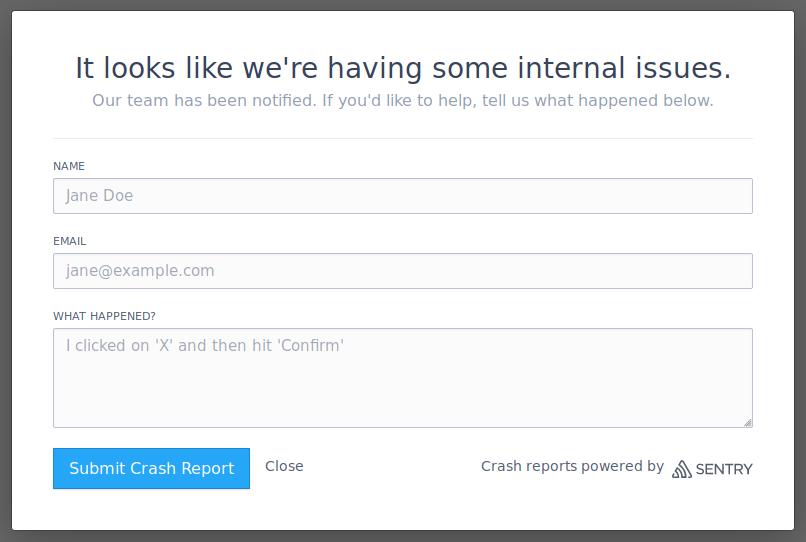
User Feedback
Releases
Mit SDK den release konfigurieren
(z.B. Commit Hash oder Versionsnummer)
Manche SDKs unterstützen automatisches Guessing
Releases (cont. 1)
Issues werden einem Release zugeordnet (getagged):
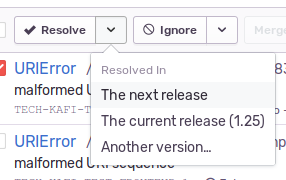
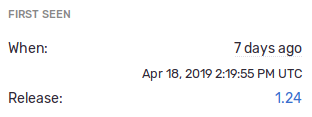
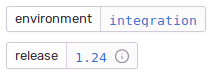
Releases (cont. 2)
Release erstellen:
entweder implizit (durch Issue)
oder explizit (via CLI/API/Webhook)
Weitere Funktionen:
Artefakte (Sourcen/Sourcemaps) anhängen
Verknüpfung mit Commit → Gitlab/Github Plugin konfigurieren
Demo
Integrationen
Java
- java.util.logging
- Log4j
- Logback
- Spring
compile 'io.sentry:sentry-spring:1.7.16'


@Bean
public HandlerExceptionResolver sentryExceptionResolver() {
    return new io.sentry.spring.SentryExceptionResolver();
}


@Bean
public ServletContextInitializer sentryServletContextInitializer() {
    return new io.sentry.spring.SentryServletContextInitializer();
}
Ruby/Rails
Konfiguration in Initializers:
gem "sentry-raven"Rails.application.config.filter_parameters += [:password, :token]
Raven.configure do |config|
config.sanitize_fields =
Rails.application.config.filter_parameters.map(&:to_s)
config.release = ENV['OPENSHIFT_BUILD_COMMIT']
endEnvironment als SENTRY_CURRENT_ENV setzen
Ruby/Rails (cont. 1)
class ApplicationController < ActionController::API

  before_action :set_sentry_request_context
  before_action :set_sentry_user_context

  private

  def set_sentry_request_context
    Raven.extra_context(
      params: params.to_unsafe_h,
      url: request.url
    )
  end

  def set_sentry_user_context
    Raven.user_context(
      id: current_user.try(:id),
      name: current_user.try(:username)
    )
  end

end
Ruby/Rails (cont. 2)
class ApplicationJob < ActiveJob::Base

  rescue_from(Exception) do |e|
    Raven.capture_exception(e, logger: 'delayed_job')
  end

  def deserialize(job_data)
    super(job_data)
    Raven.extra_context(active_job: job_data)
  end

end
JavaScript/Frontend
(bietet neue unified API, raven-js ist veraltet)
Konfiguration:
npm install @sentry/browserimport * as Sentry from '@sentry/browser';
Sentry.init({
dsn: 'https://<key>@sentry.io/<project>'
environment: 'integration',
release: '1.23'
});Erfasst automatisch global alle Exceptions
JavaScript/Frontend (cont. 1)
SourceMaps:
- //# sourceMappingURL=foo.js.map im JS-File
- oder JS Files mit SourceMap Header ausliefern
JavaScript/Frontend (cont. 2)
Bei Angular ErrorHandler implementieren:
@Injectable()
export class SentryErrorHandler implements ErrorHandler {
  constructor() {
    Sentry.init({
      dsn: 'https://<key>@sentry.puzzle.ch/<project>',
      environment: 'integration',
      release: '1.23'
    });
  }

  handleError(error: any) {
    Sentry.configureScope(scope => {
      scope.setUser({ id: myUserId, username: myUserName });
    });
    const eventId = Sentry.captureException(error.originalError || error);
    Sentry.showReportDialog({ eventId });
  }
}
Fragen?
Slides:

This work is licensed under a
Creative Commons Attribution-ShareAlike 4.0 International License.