Week 4
Let,Const, and Var

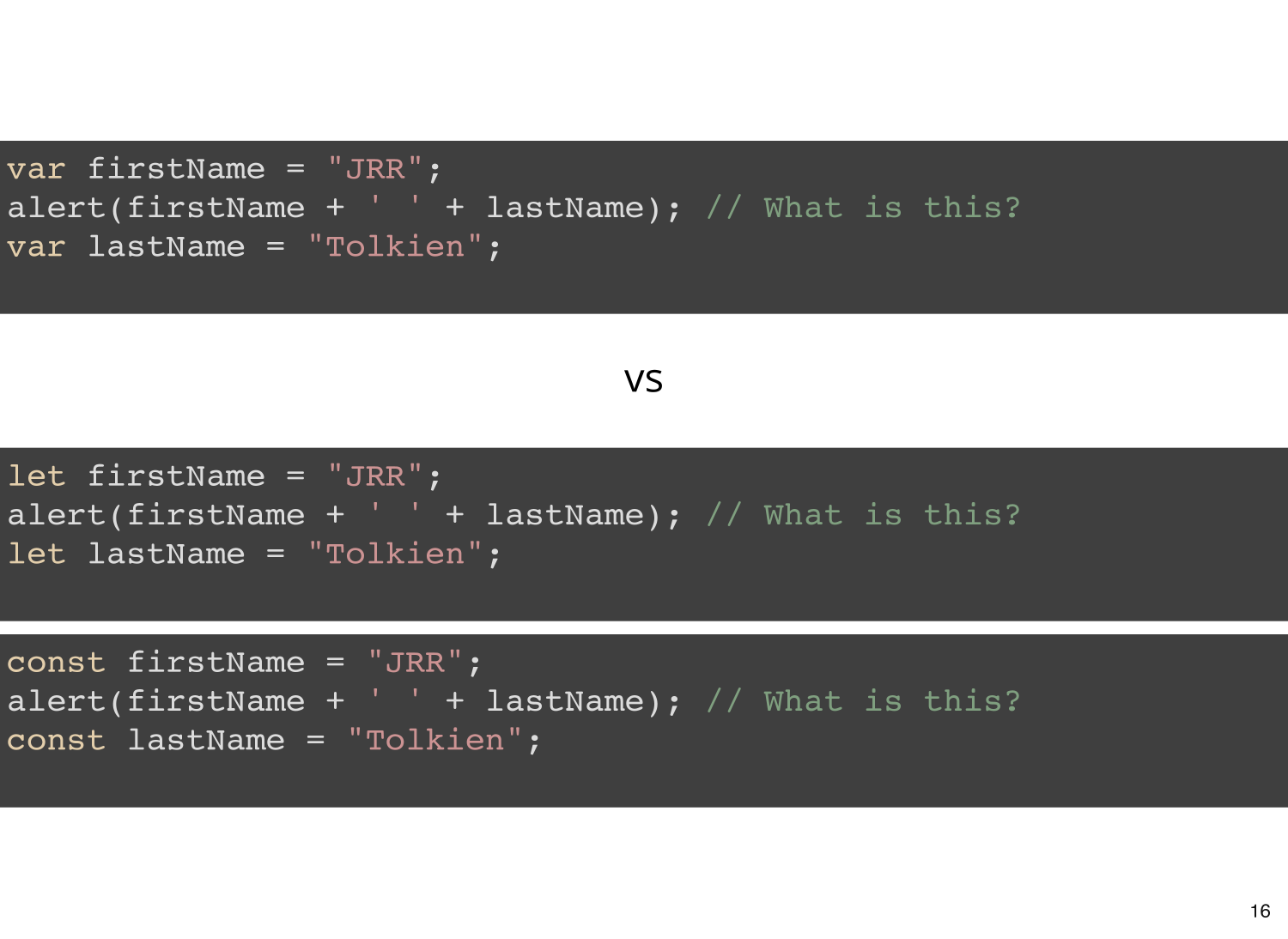
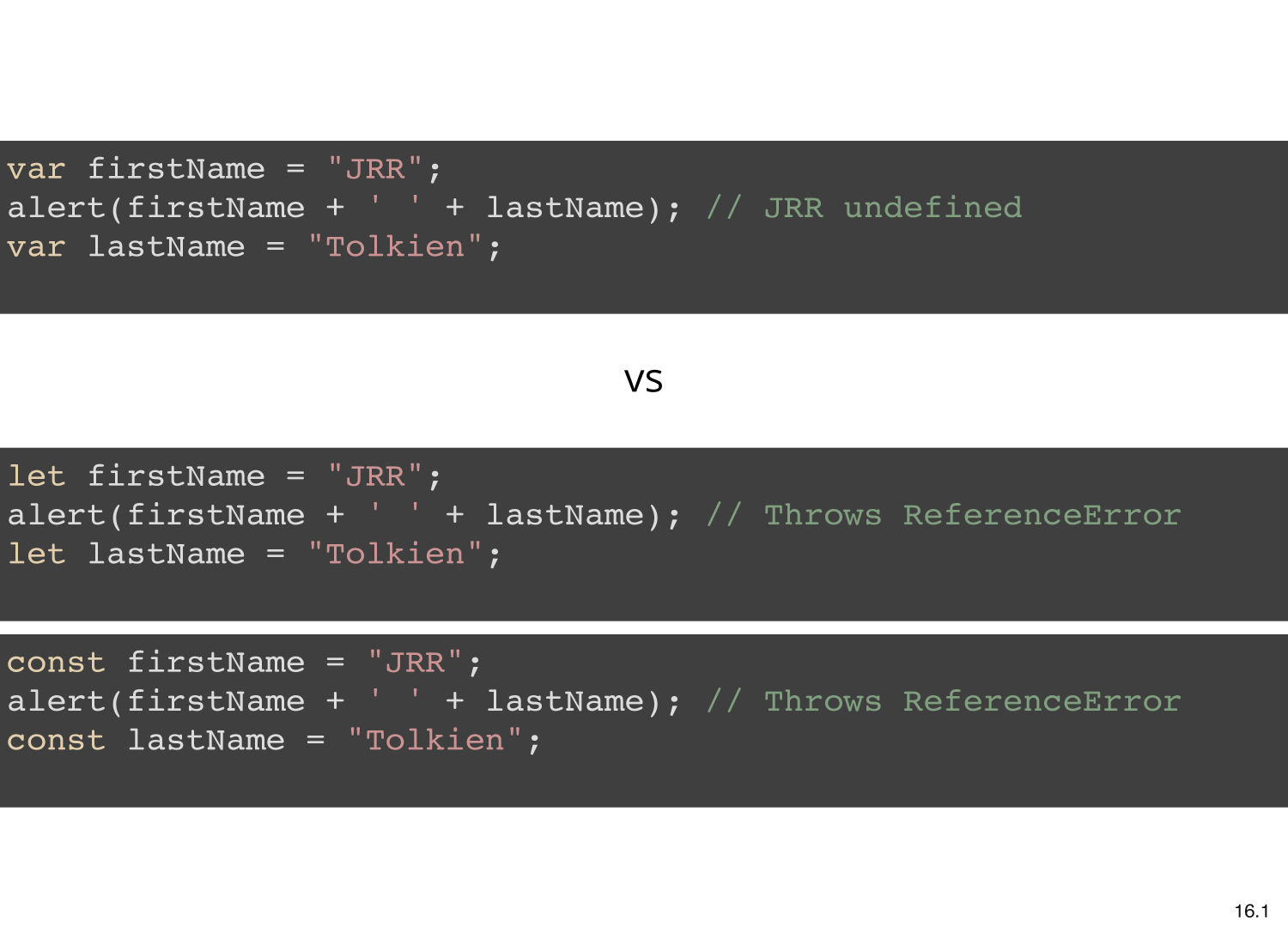
Scope
let

// Scope with conditionals

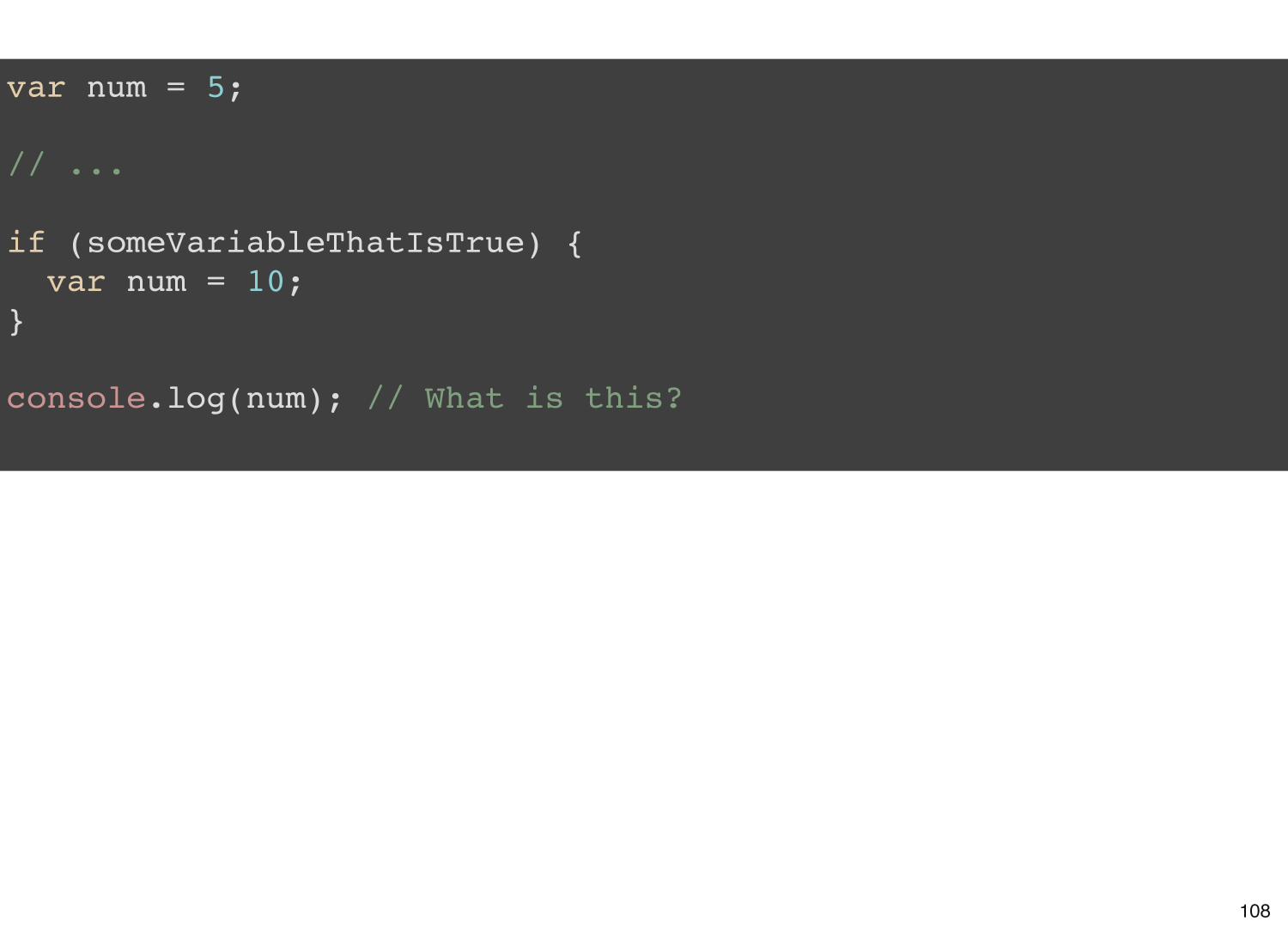
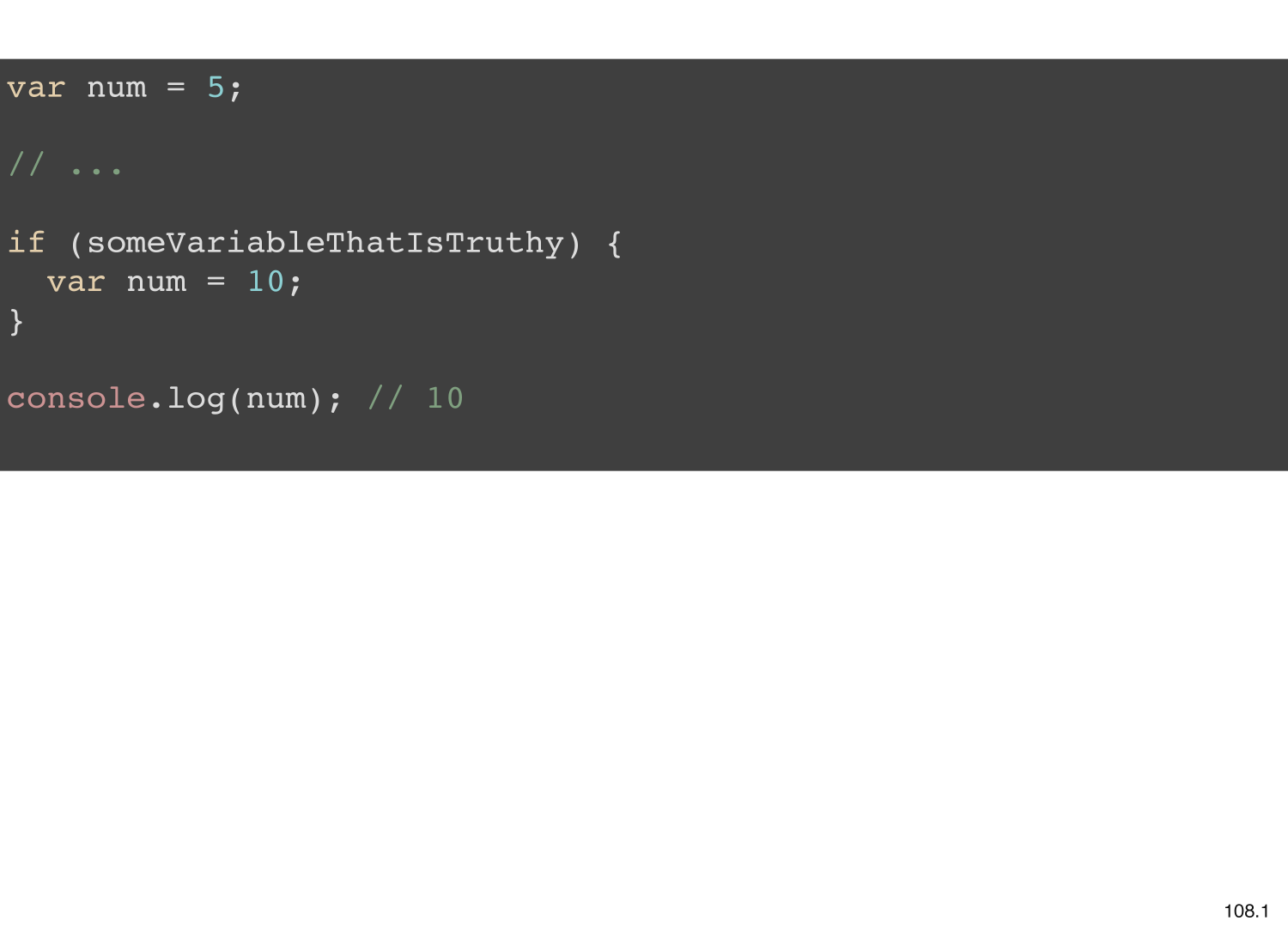
var restaurant = 'Outback Steakhouse'

if (true) {
    var restaurant = 'Chipotle'
}

console.log(restaurant) // What is this?
// Scope with loops

var restaurants = ['Outback Steakhouse', 'Texas Roadhouse', 'Olive Garden']

var temp = ''
for (var i = 0, j = restaurants.length; i < j; i++) {
    var temp = ' ' + restaurants[i]
    restaurants += temp
}

console.log(temp) // What is this?
// Scope with functions
restaurants.push('Subway')
restaurant = ''
var temp = ''
restaurants.forEach(function(r) {
var temp = ' ' + r
restaurant += temp
})
console.log(temp) // What is this?Functions create scope
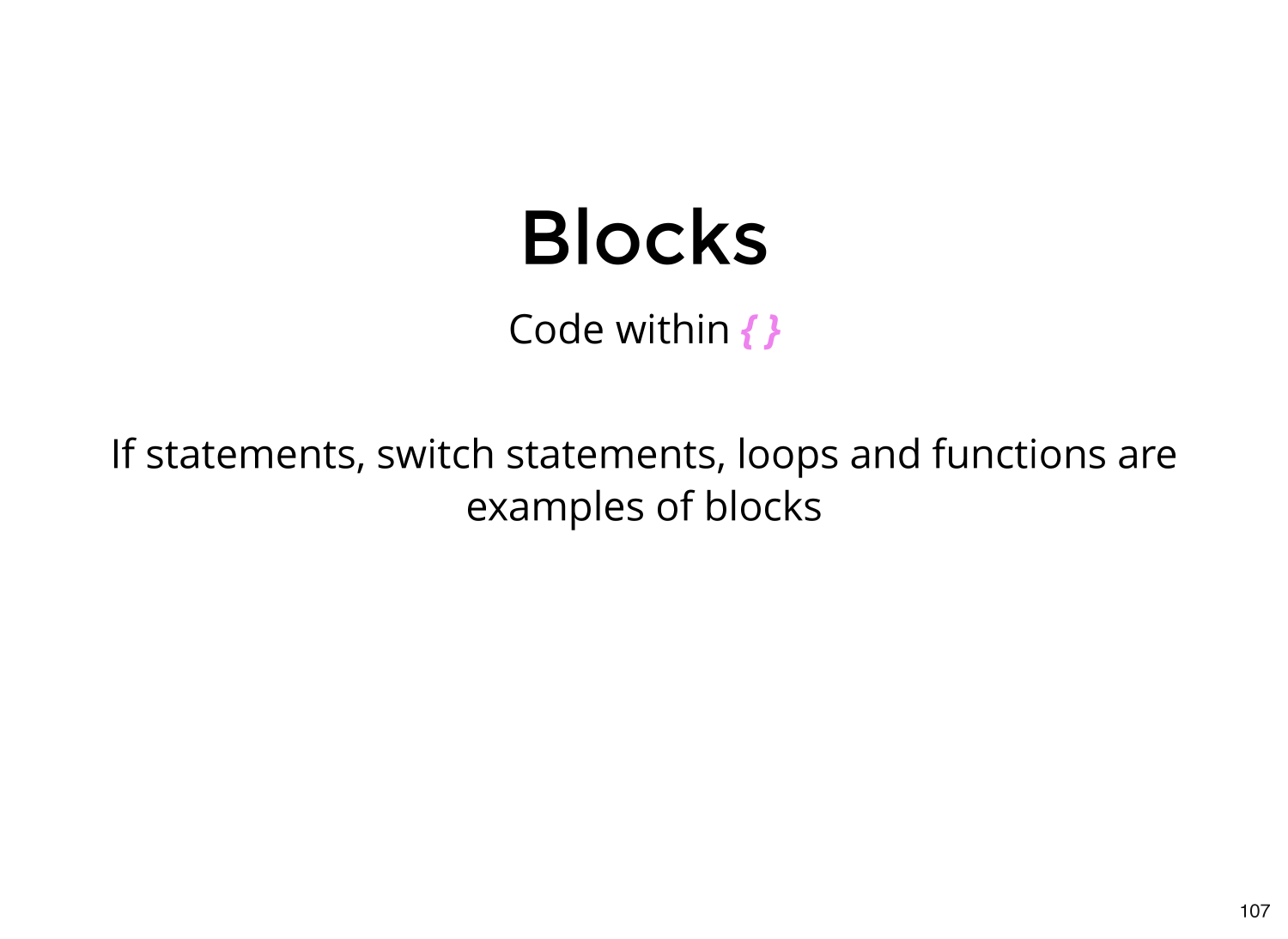
Block statements do not
// Scope with conditionals

var restaurant = 'Outback Steakhouse'

if (true) {
    var restaurant = 'Chipotle'
}

console.log(restaurant) // What is this?
// Scope with immediately invoked function expression (IIFE)

var restaurant = 'Outback Steakhouse'

(function() {
    if (true) {
        var restaurant = 'Chipotle'
    }
})()

console.log(restaurant) // What is this?
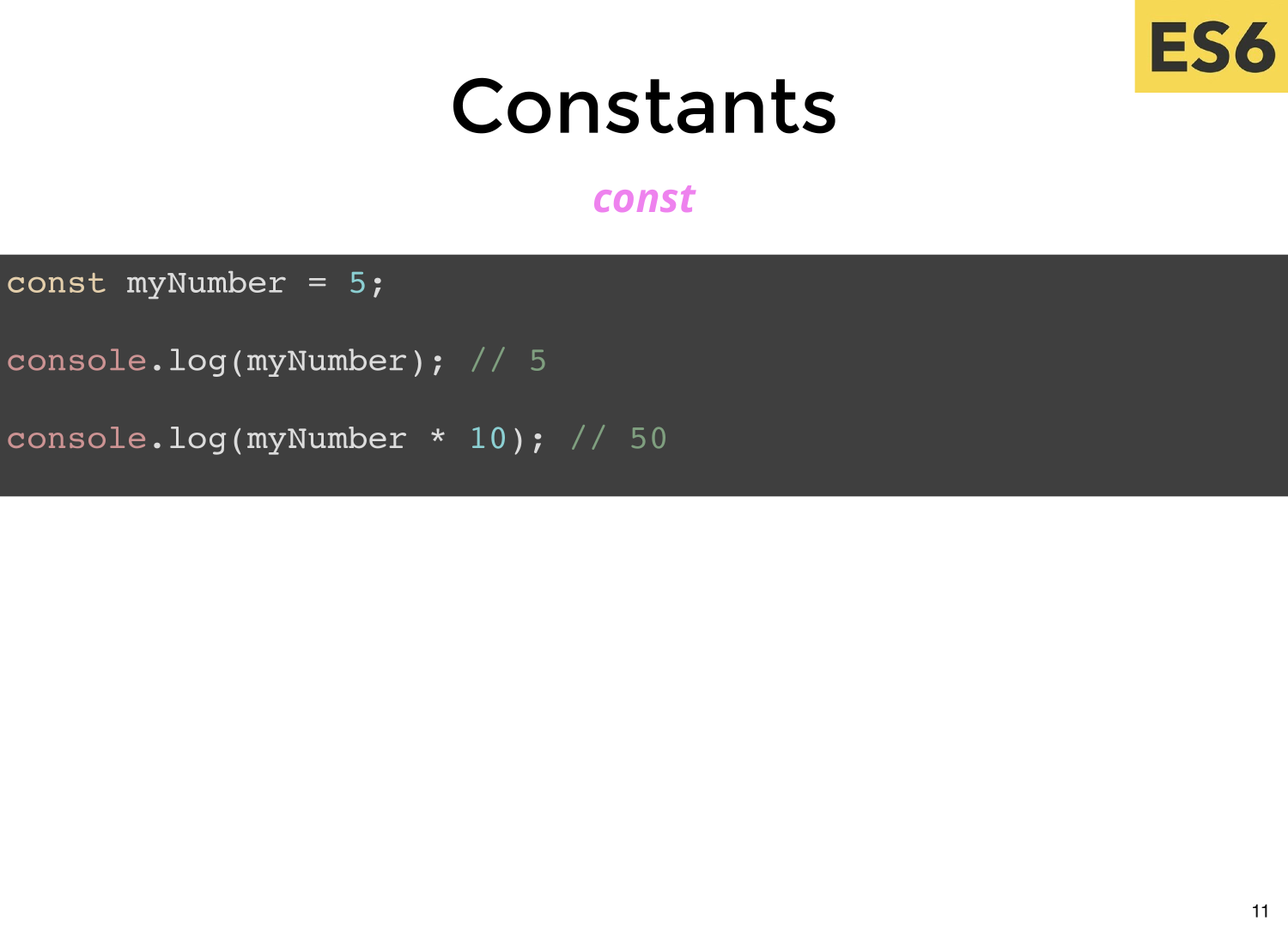
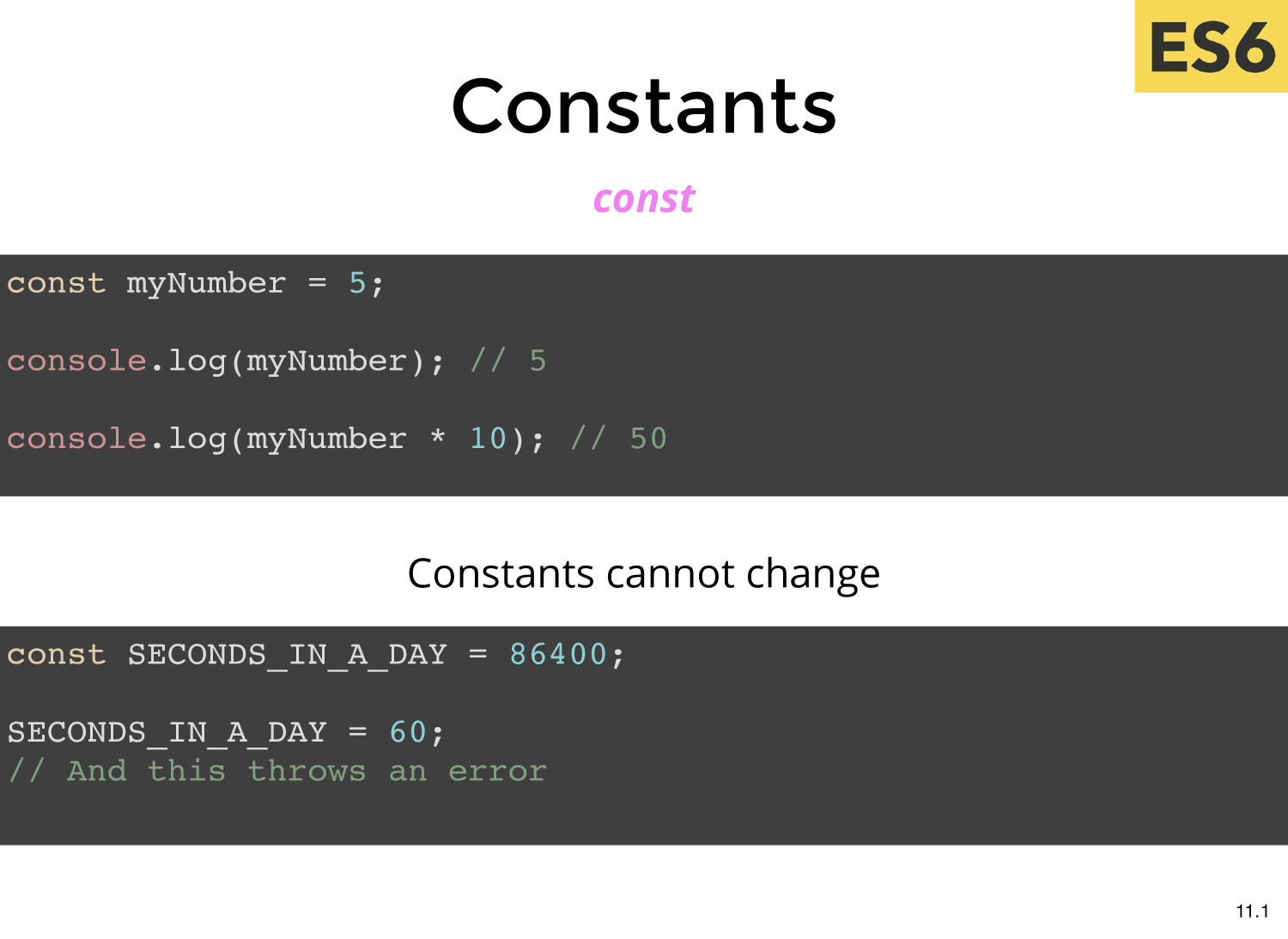
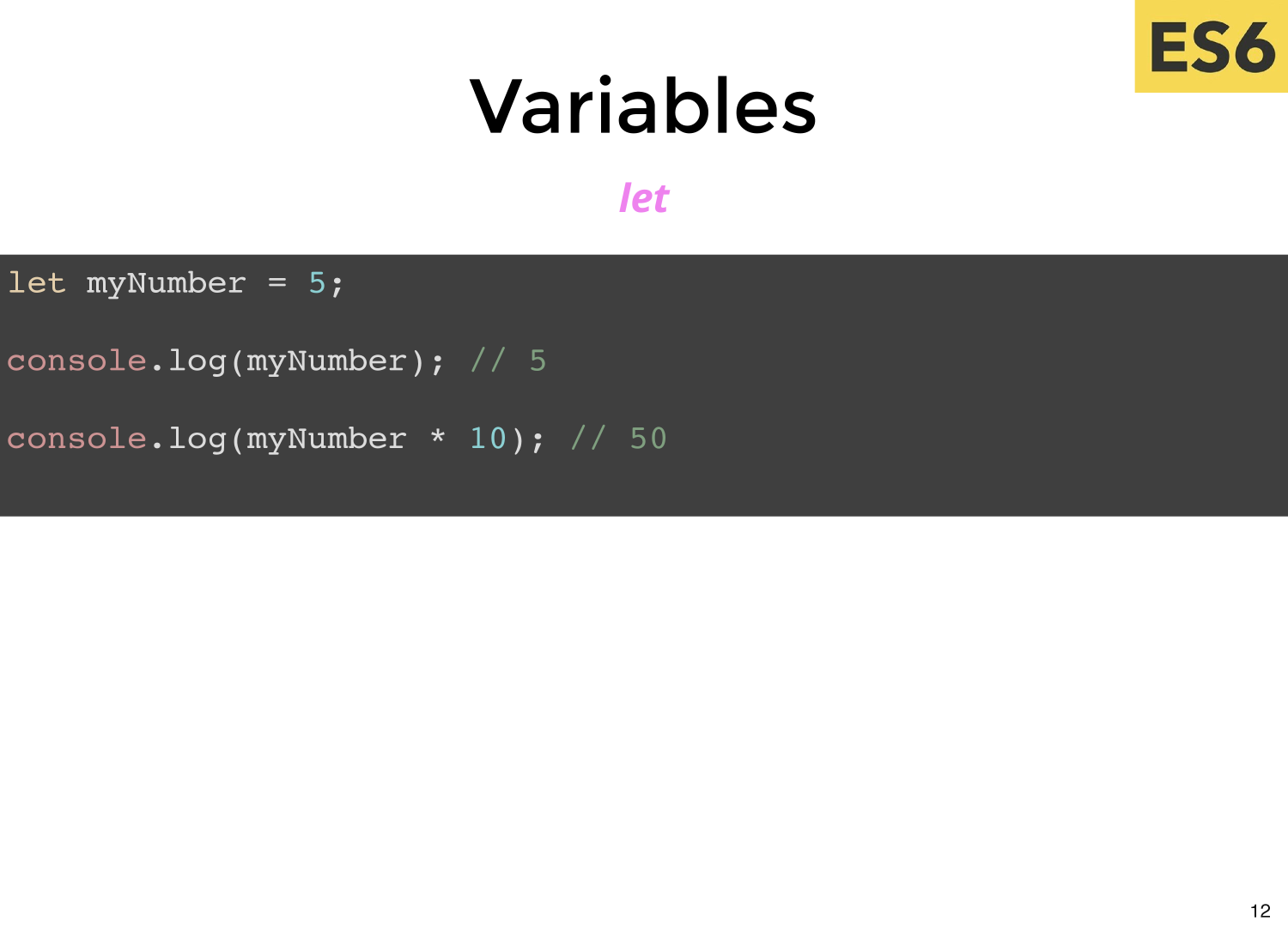
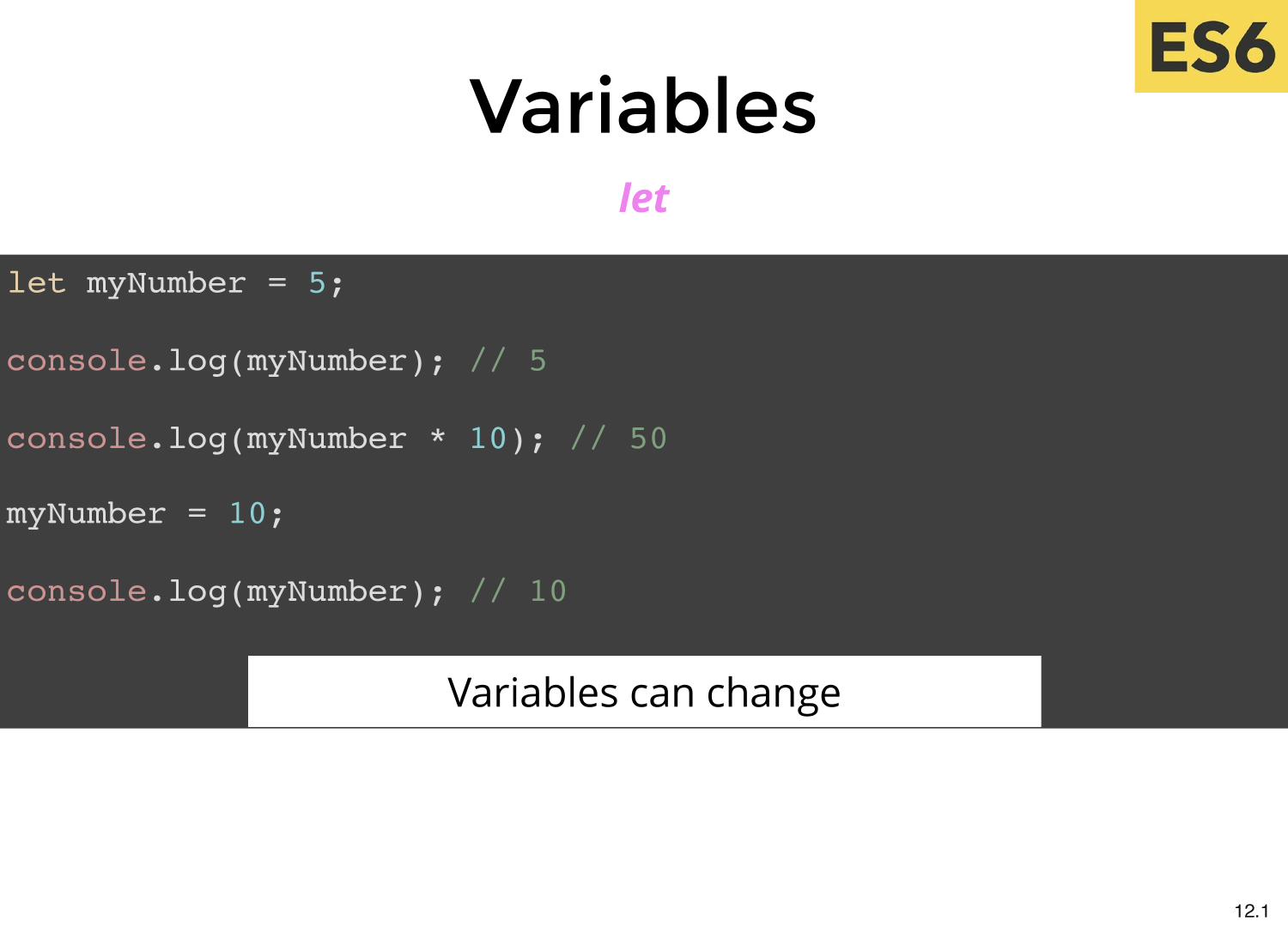
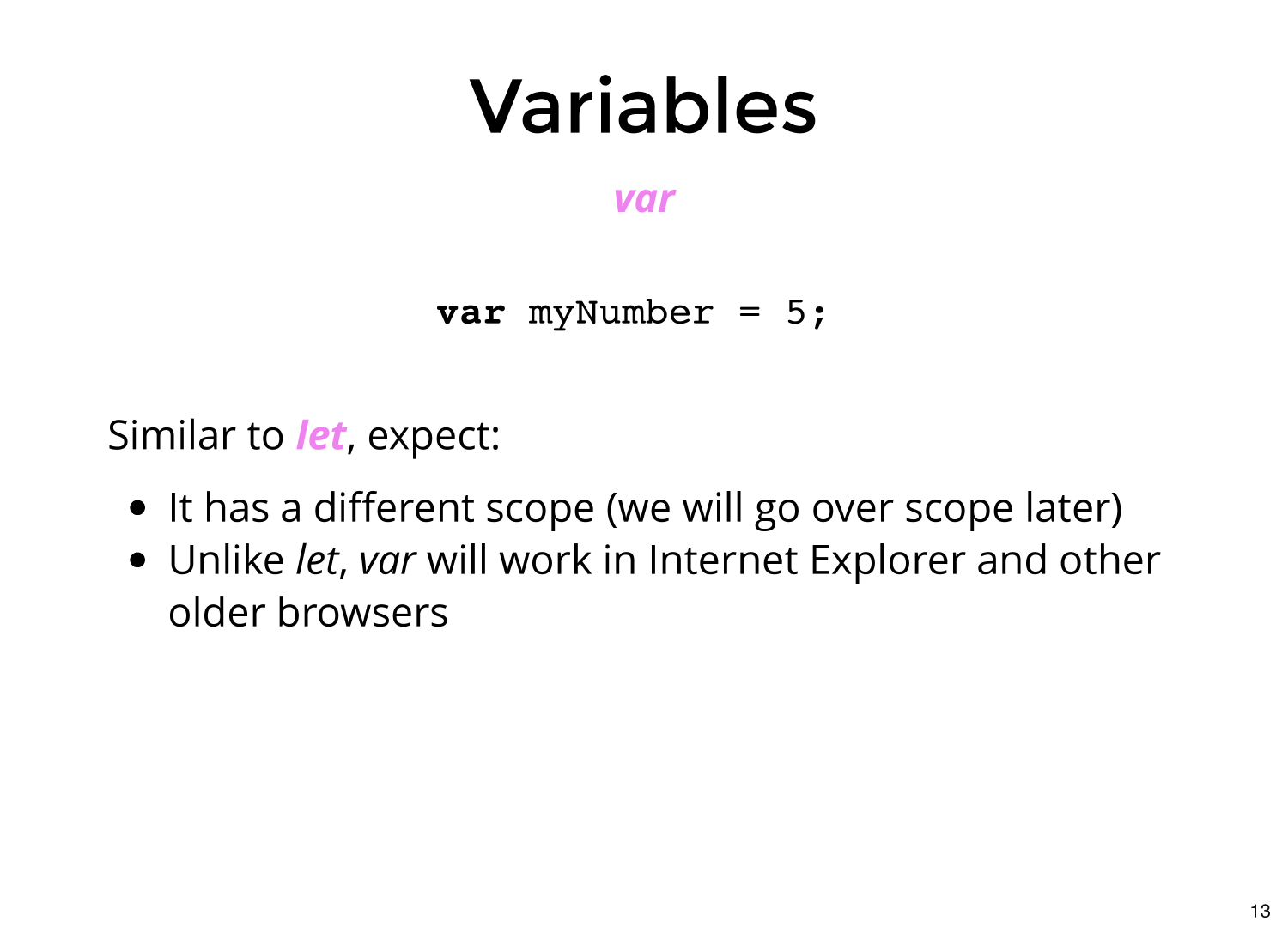
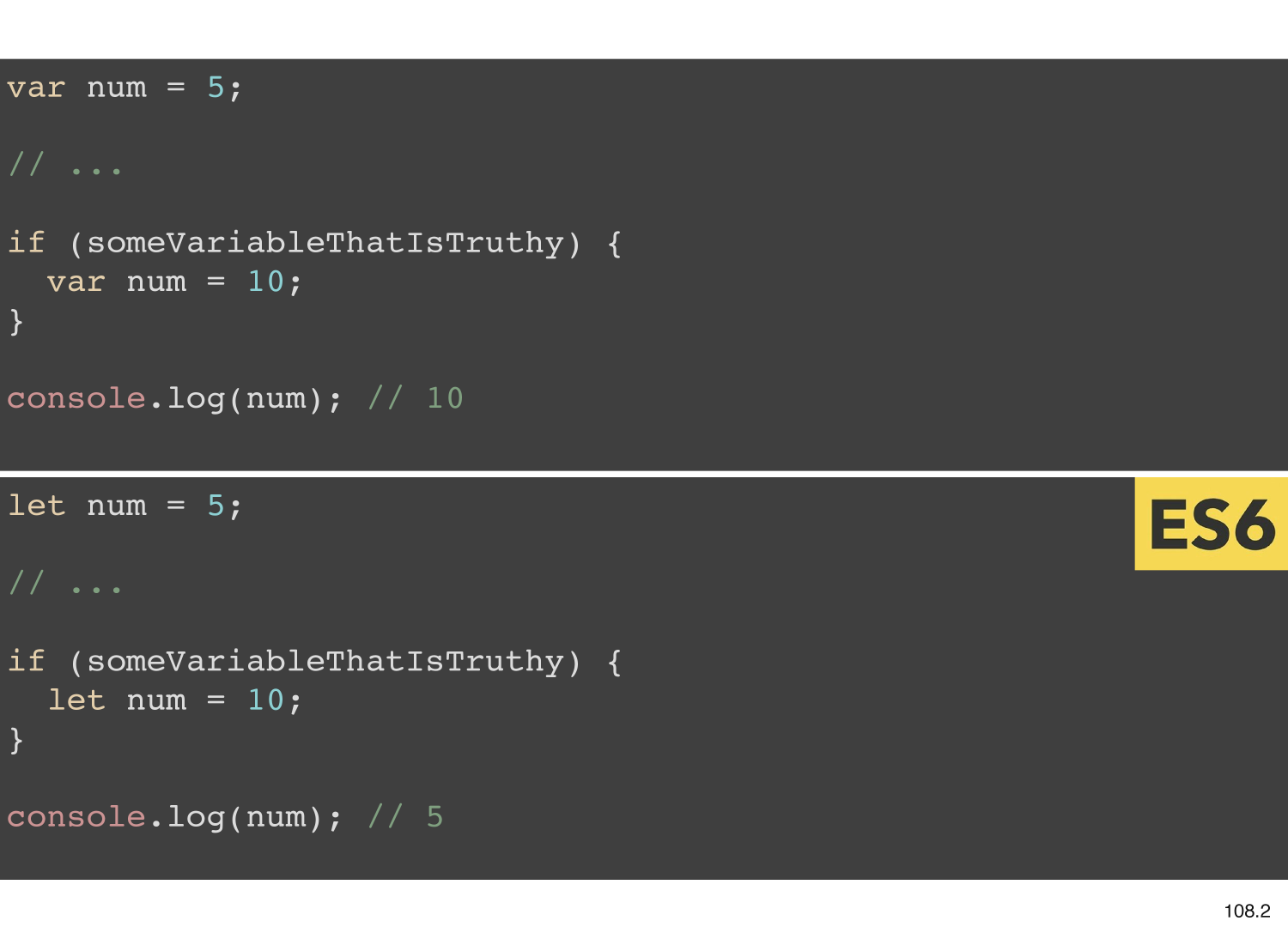
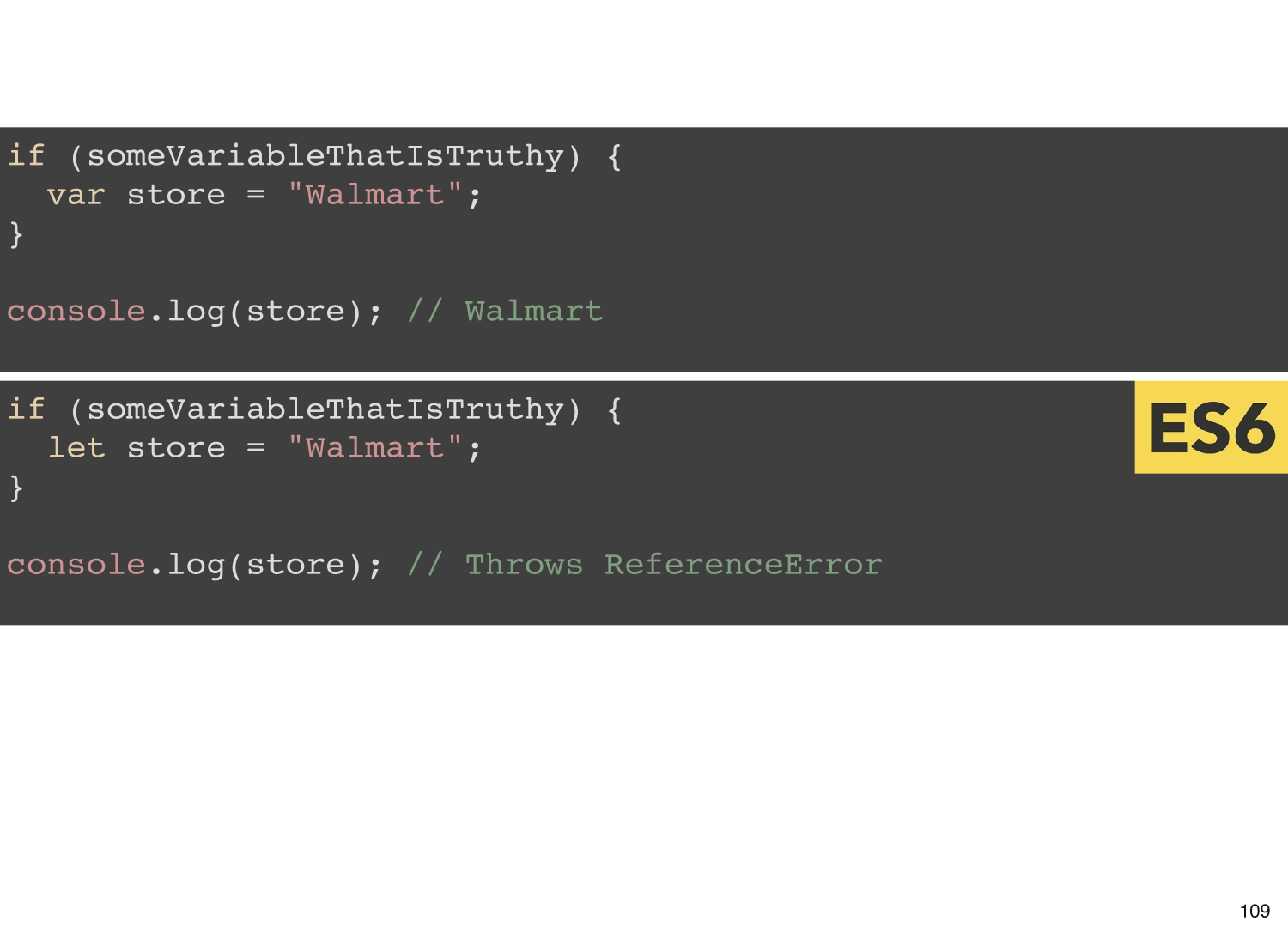
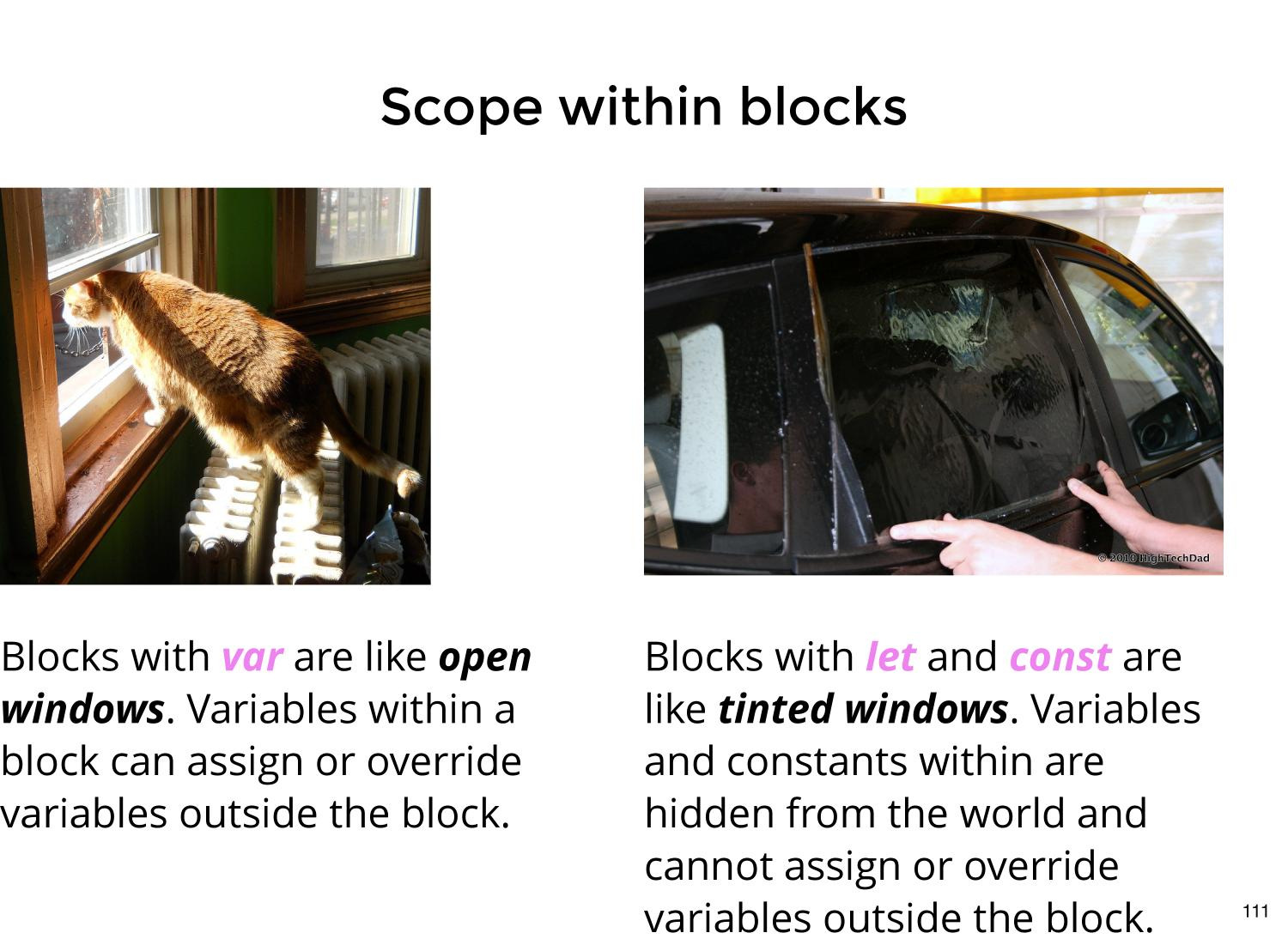
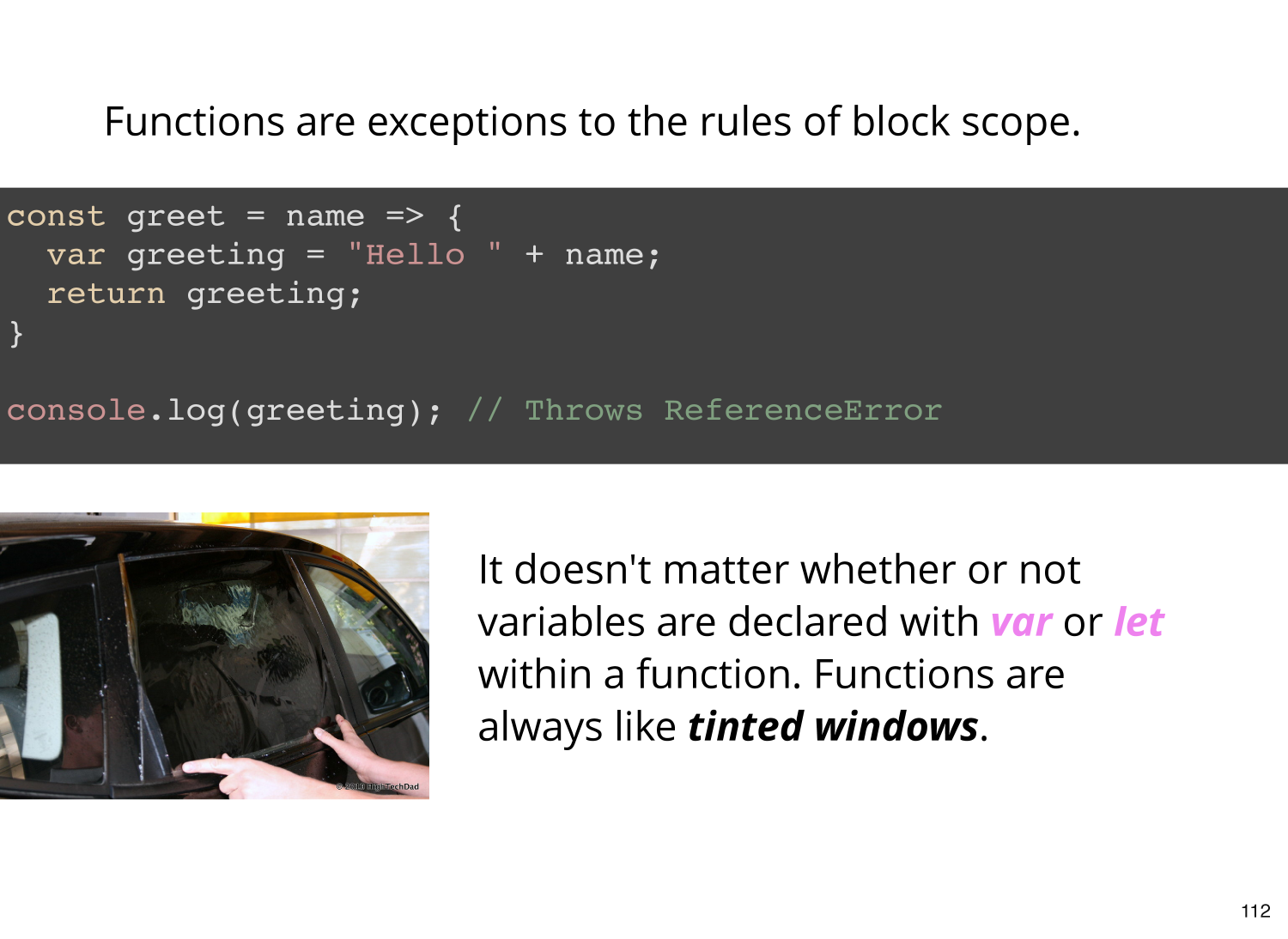
var is a variable that accessible anywhere within a function
let is a variable that is only accessible inside { }
Arrow Functions
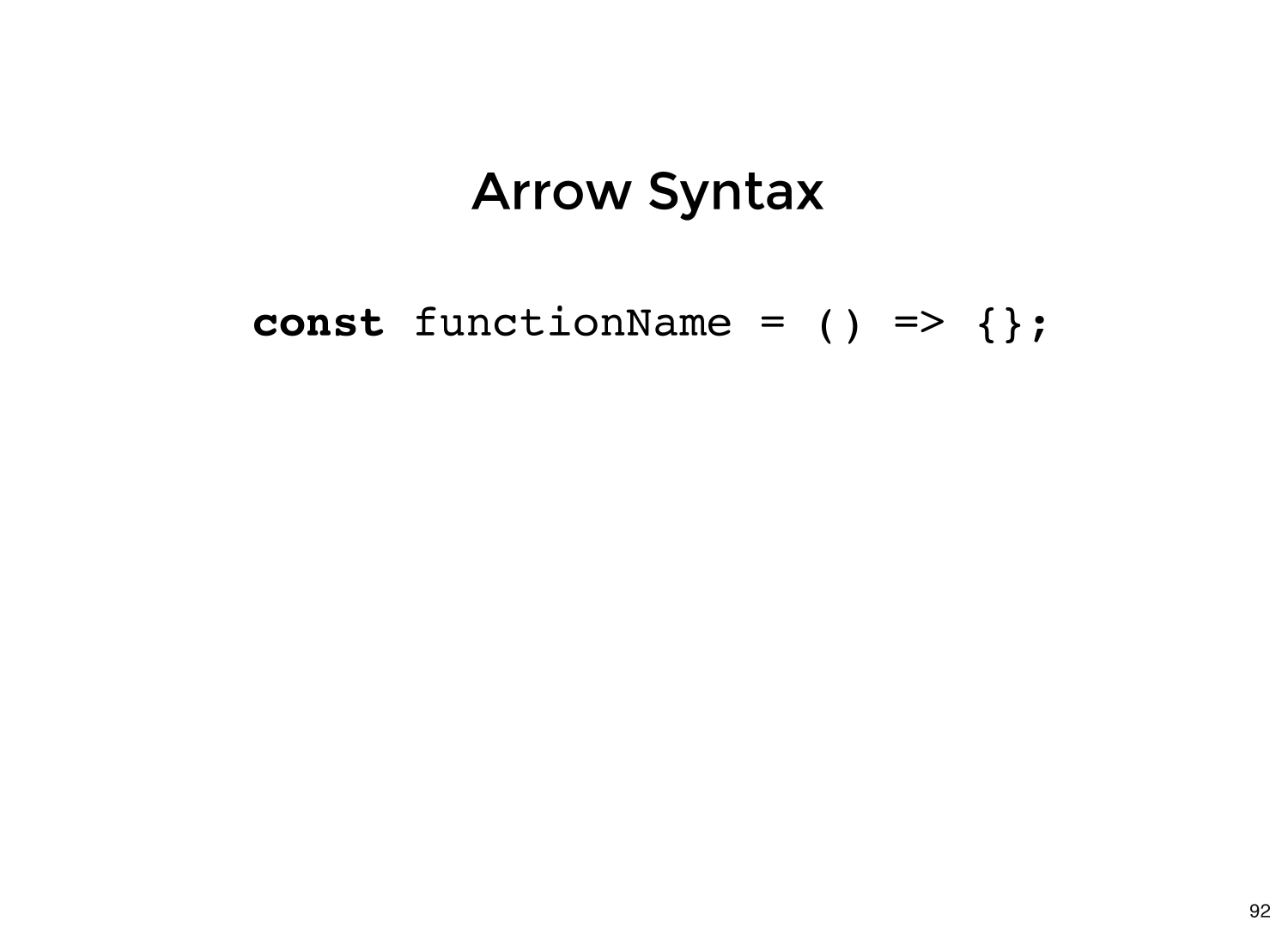
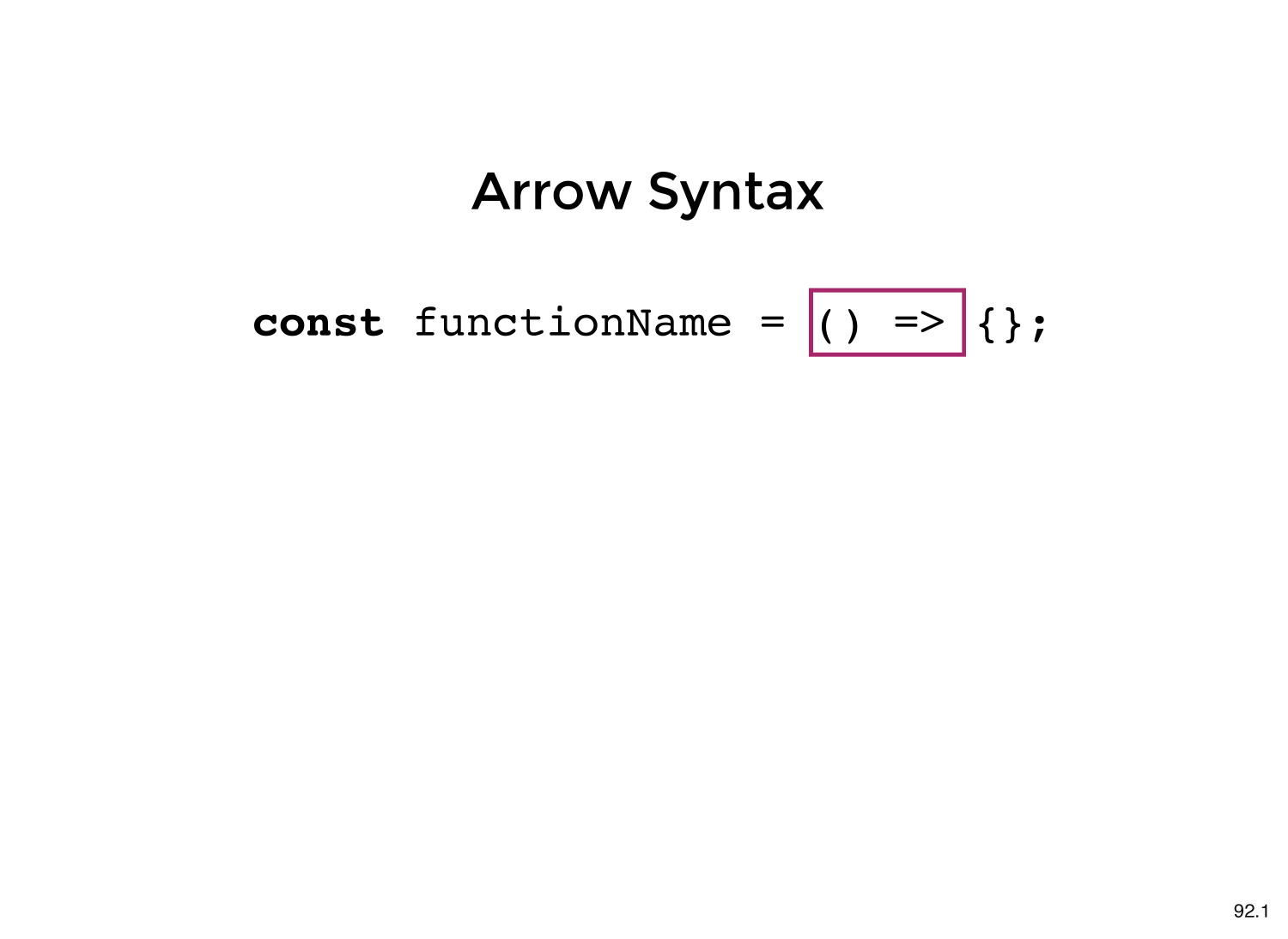
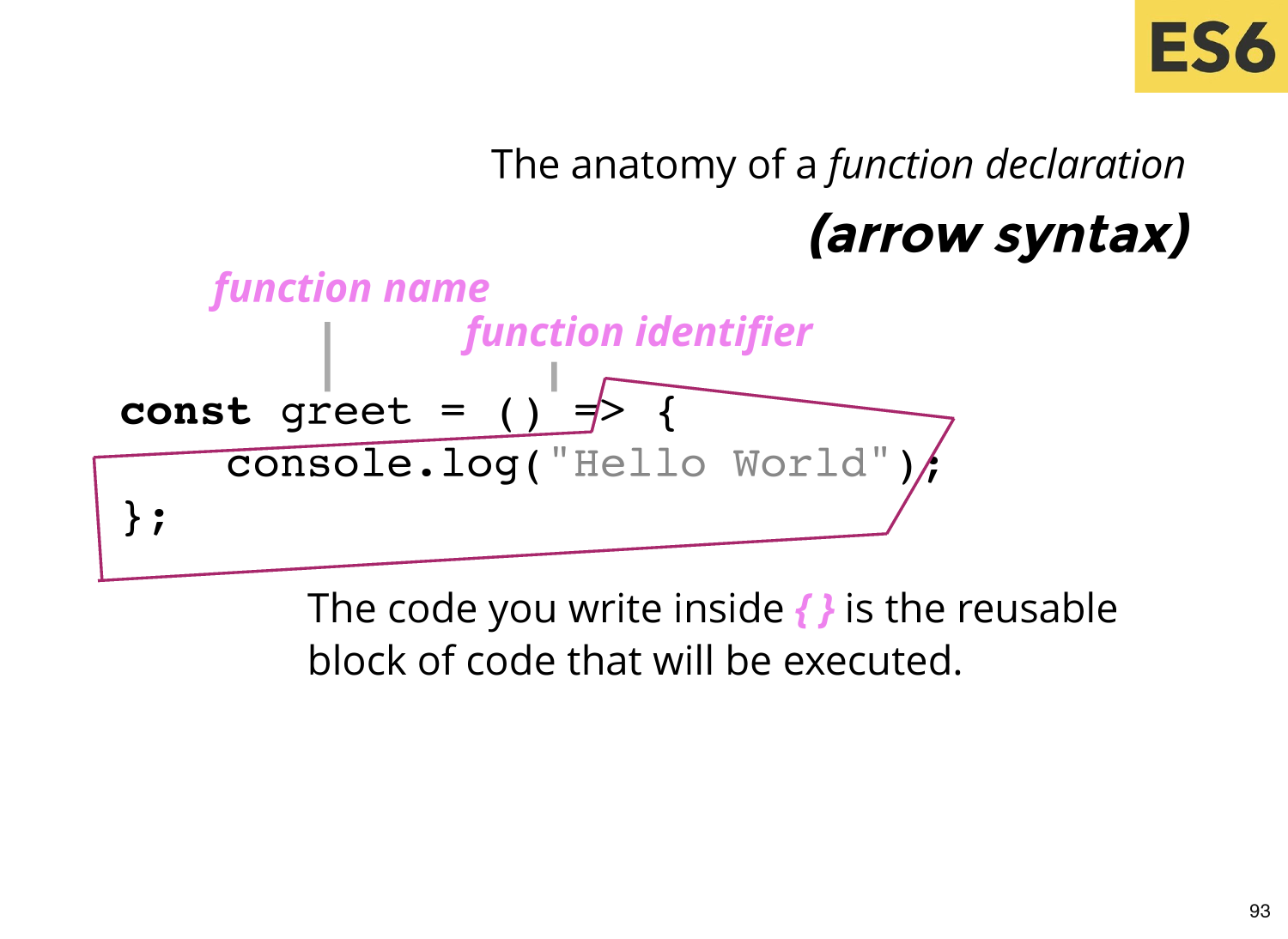
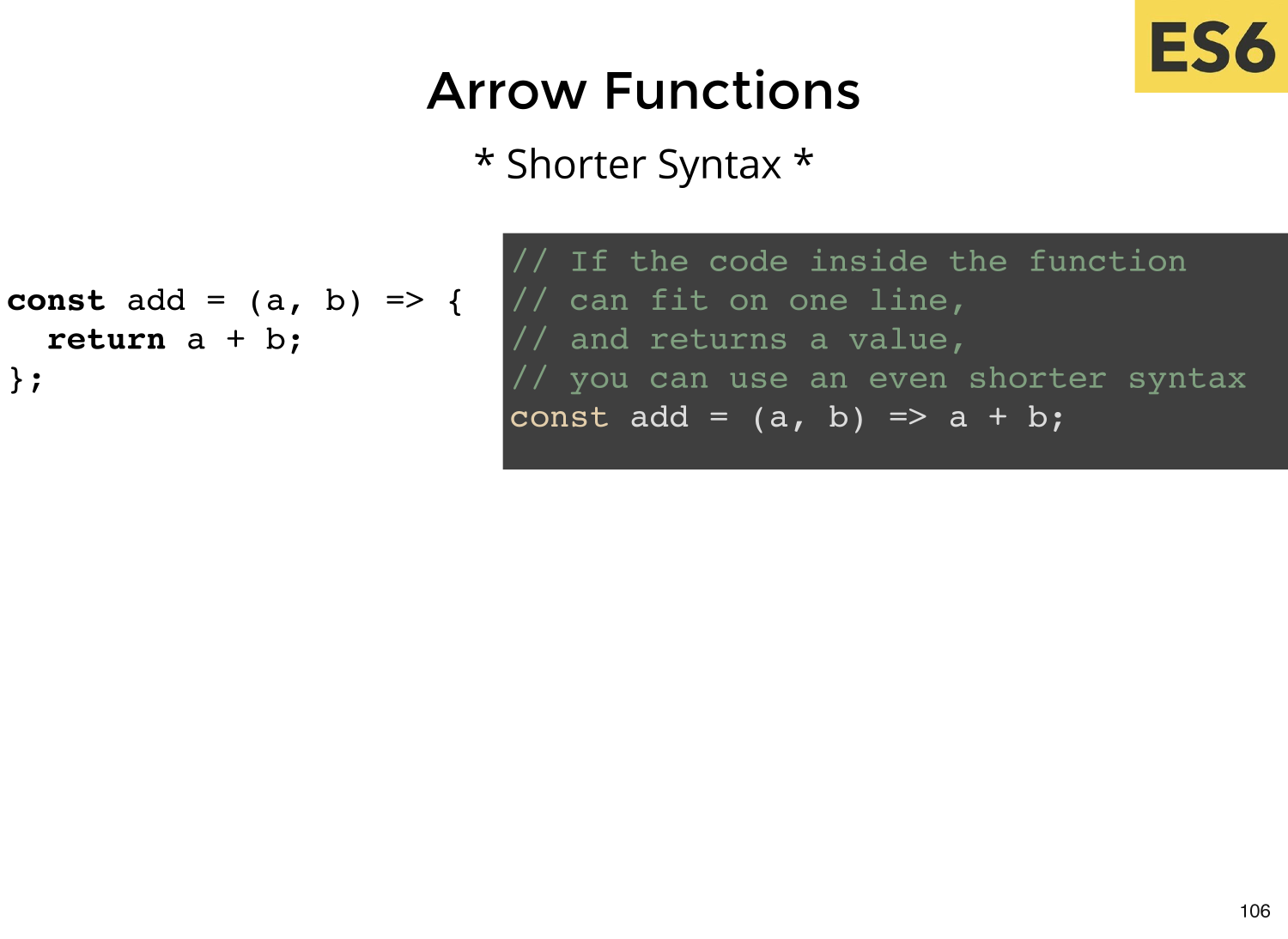
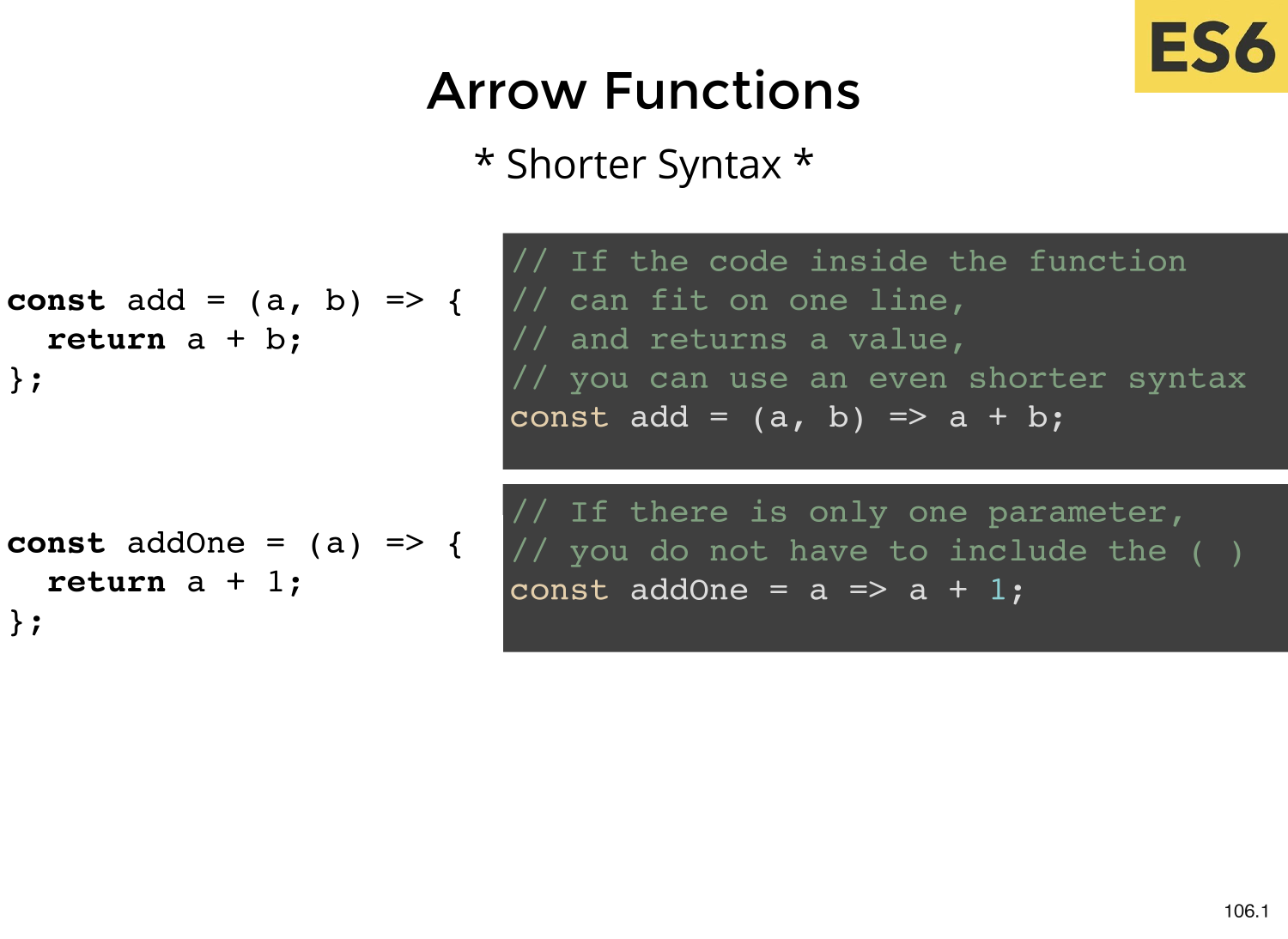
* Shorter Syntax *
// Function in ES5

let add = function(a, b) {
  let total = a + b;
  return total;
}
// Arrow Function
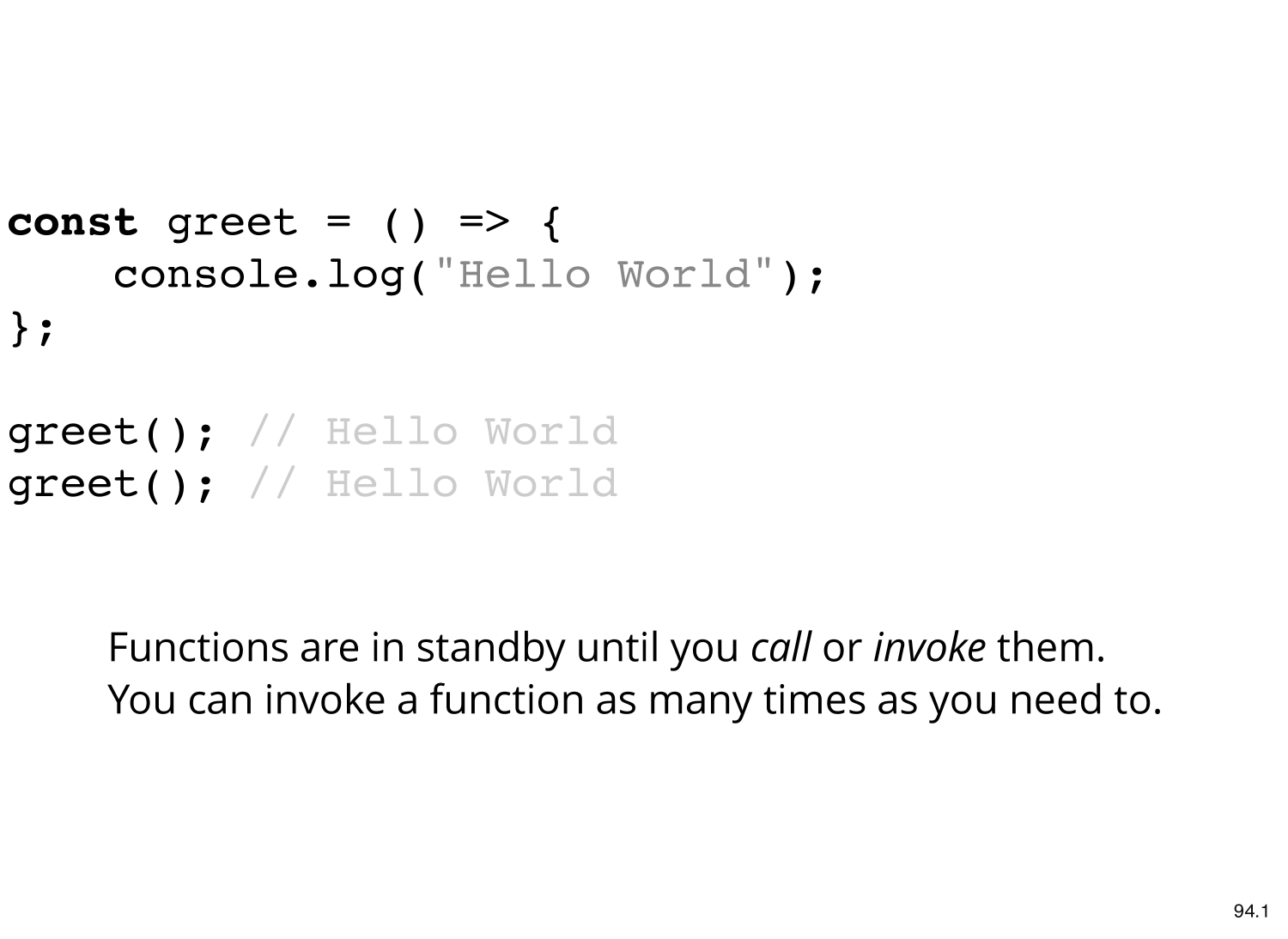
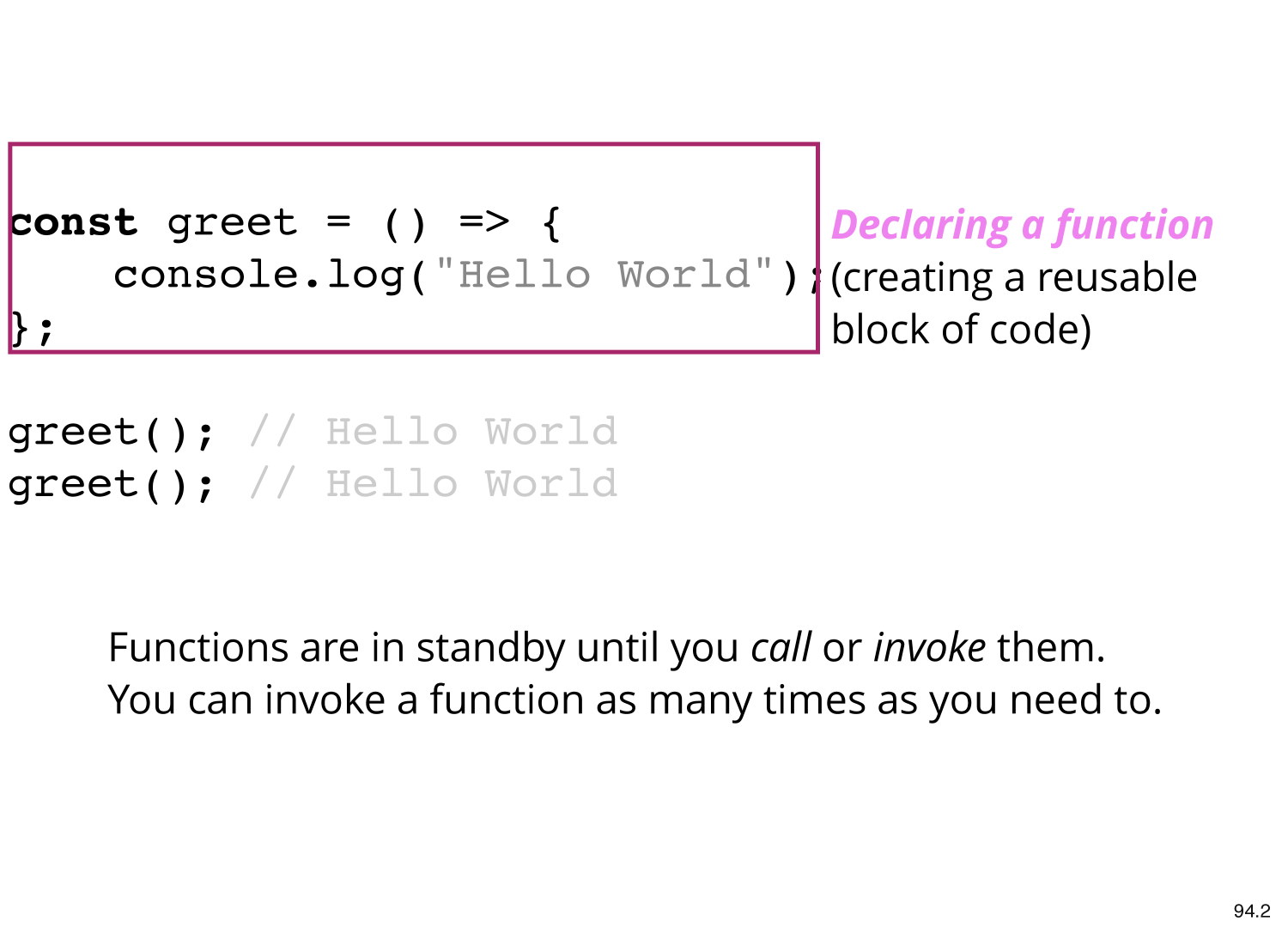
let add = (a, b) => {
let total = a + b;
return total;
}// Function in ES5
let add = function(a, b) {
return a + b; // Fits on one line
}// Arrow Function
// If the code inside the function
// can fit on one line,
// and returns a value,
// you can use an even shorter syntax
let add = (a, b) => a + b;
// Function in ES5

let addOne = function(a) {
  return a + 1;
}
// Arrow Function
// If there is only one parameter,
// you do not have to include the ( )
let addOne = a => a + 1;