What's the worst thing that can happen
Regresja
Regresja – zjawisko niezamierzonej utraty jakiejś funkcjonalności powstałe w nowej wersji programu i zwykle skutkujące komunikatem o błędzie lub brakiem działania. Do regresji dochodzi wskutek wprowadzania zmian w jakiejś części kodu programu. Skutkiem tych zmian jest błędne działanie innej funkcji programu, która w poprzednich wersjach działała prawidłowo. [wiki]
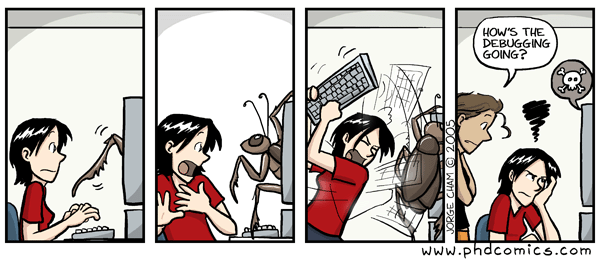
Title Text
def __initialize(self):

    # ...

    self.deposition_reached_bin = self._deposition_reached()

def _deposition_reached(self):
    deposition_reached_at = len(self.full_geometry)

    if self.fit_until_deposition_reaches is not None:
        self.deposition_reached_at = \
            deposition_reached_at_bin(
            self.full_profile,
            self.fit_until_deposition_reaches)

    return deposition_reached_at
Mieliście kiedyś regresię w Waszym kodzie?
- Będziecie mieć!
Wasza praca dyplomowa
Jeśli Wasza praca będzie składała się w dużej części z modelowaia
- Inżynierska to przynajmniej 3-6 miesięcy pracy
- Magisterska to 6m-12m
- Doktorska to kilka lat programowania
Wasza praca dyplomowa
- W pracy dyplomowej będziecie mieli.
What is the worst thing that can happen
Czym kończy się regresja?
Wariant optymistyczny
Program wybucha z wyjątkiem
Program wybucha bez wyjątku (segfault, etc)
Program daje śmieciowe wyniki
Program daje dobrze wyglądające niepoprane wyniki
...co okazuje się na obronie
Wariant (ciągle) optymistyczny
Can it get worse?
Oh damn.
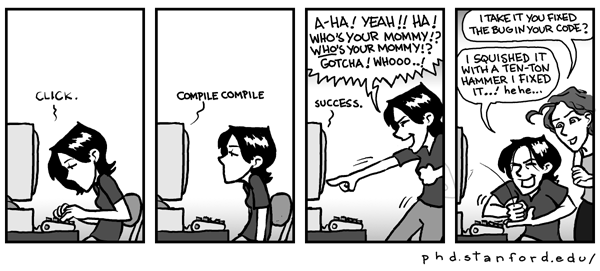
Co robić jak żyć?
- Używać VCS
- Testy!
- Trzeba je uruchamiać
- Defensive programming
Defensive programming
Some people recommend making your software robust by working around problems automatically. This results in the software "failing slowly." The program continues working right after an error but fails in strange ways later on. A system that fails fast does exactly the opposite: when a problem occurs, it fails immediately and visibly. Failing fast is a nonintuitive technique: "failing immediately and visibly" sounds like it would make your software more fragile, but it actually makes it more robust. Bugs are easier to find and fix, so fewer go into production.
