...a weird talk by Jonathan Robson
(July 2016)
About the game
Hive is a bug-themed, two-player, perfect-information, abstract strategy game.
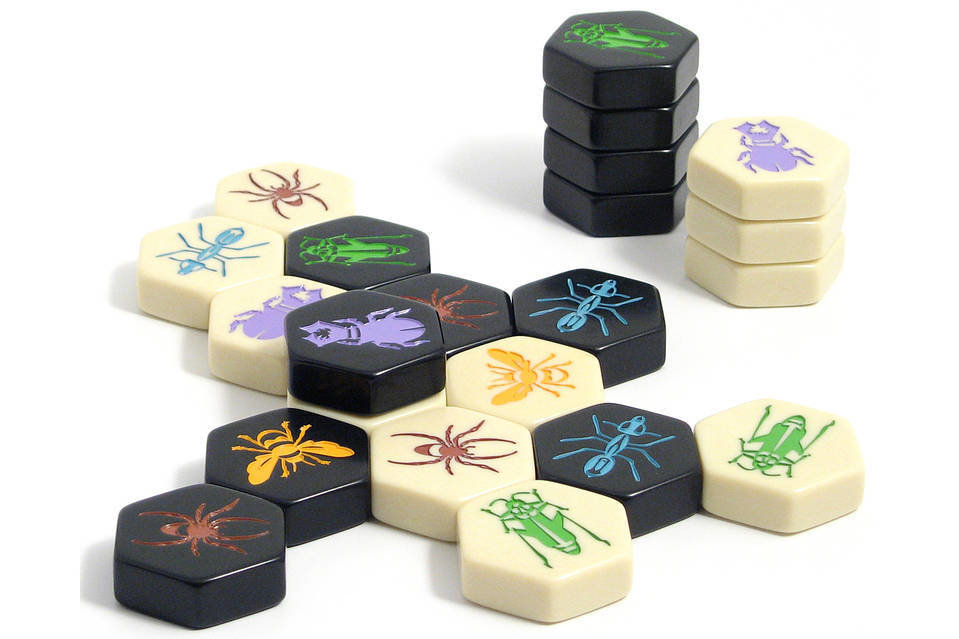
Each player controls a number of bugs of various types (represented by hexagonal tiles) and tries to surround their opponent’s Queen Bee while preventing their opponent from doing the same.
How to win
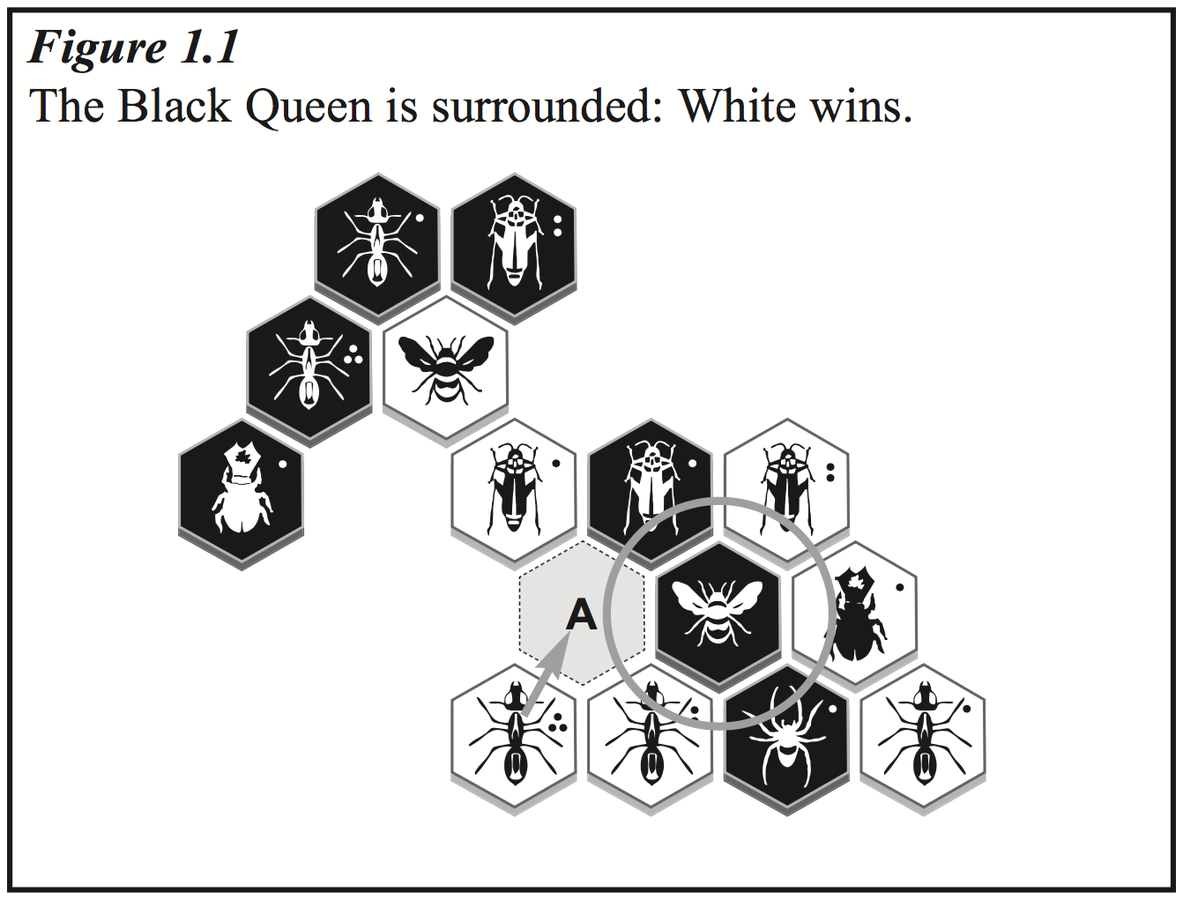
The object of Hive is to completely surround your opponent’s Queen Bee, while at the same time blocking your opponent from surrounding your Queen Bee. The winner is the first player to reach this objective.
Note: The pieces surrounding the Queen can belong to either player.
3 ways to Draw
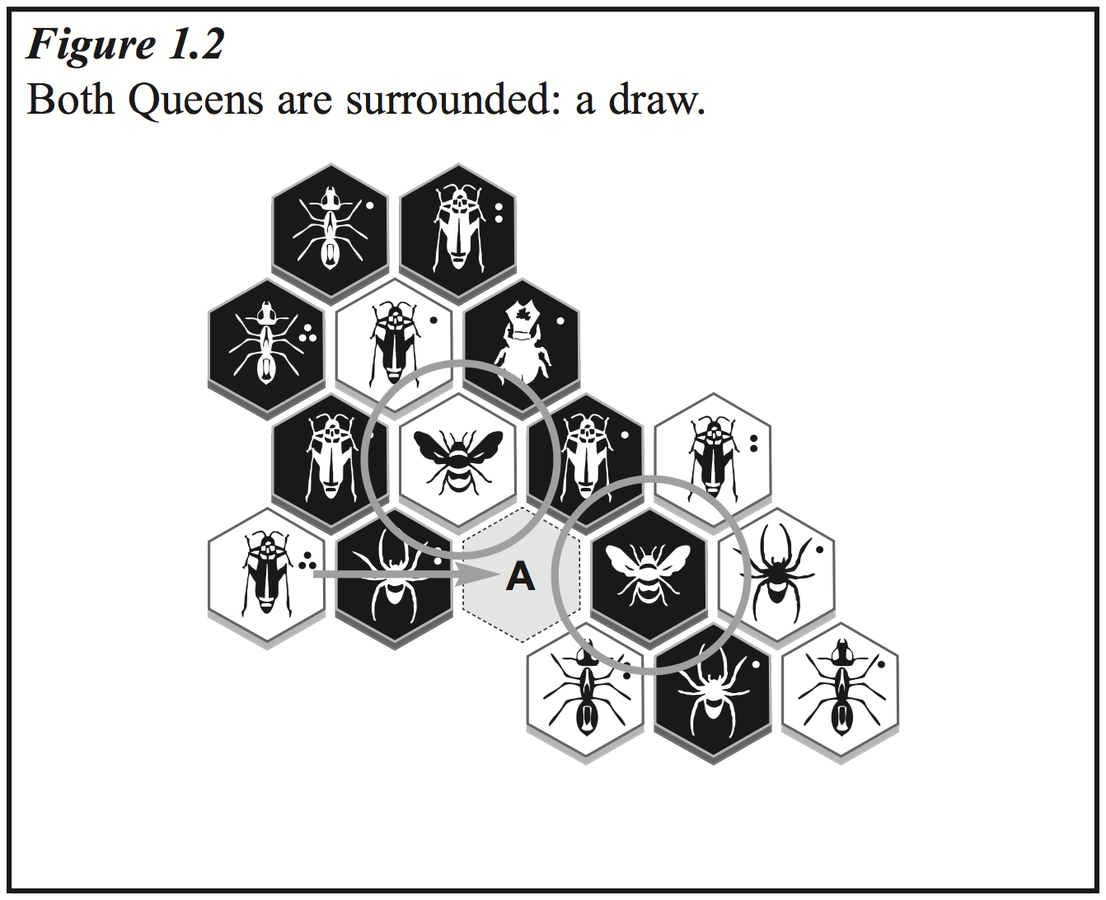
(1) If the final move surrounds both Queens simultaneously, the game is declared a draw.
(2) The game is also declared a draw when the exact same position, with the same player having the next move, occurs three times.
(3) Lastly, a game can be declared a draw by mutual agreement.
Starting the game
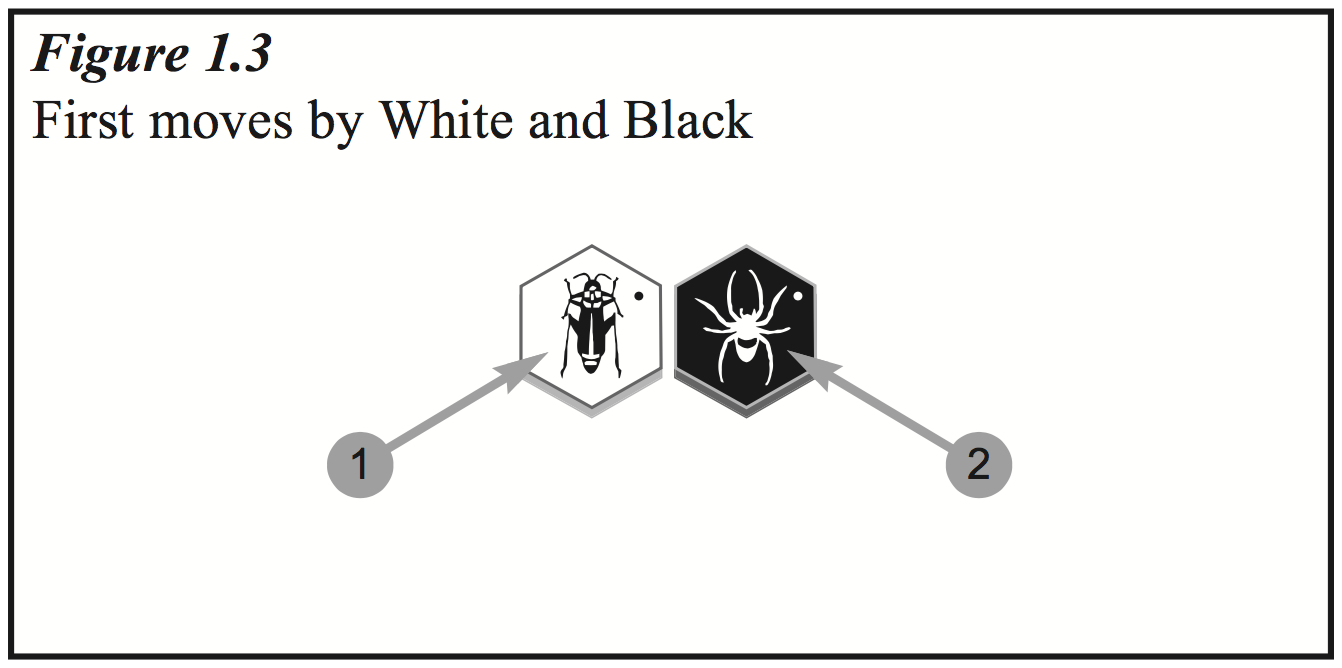
The game begins with the first player, playing White, placing any bug other than the Queen.
Next, the second player, playing Black, places any bug other than the Queen, adjacent to White’s first bug.
Play continues with the two players alternating, placing a new bug or moving a bug of their color already in the hive.
Place, MOVE, or pass
The Queen cannot be placed on the first turn but must be placed no later than a player’s fourth turn. Until the Queen is placed, a player’s bugs already in the hive may not move.
A player with no legal placement or move must pass. A player cannot pass if a legal placement or move is available.
bug placement
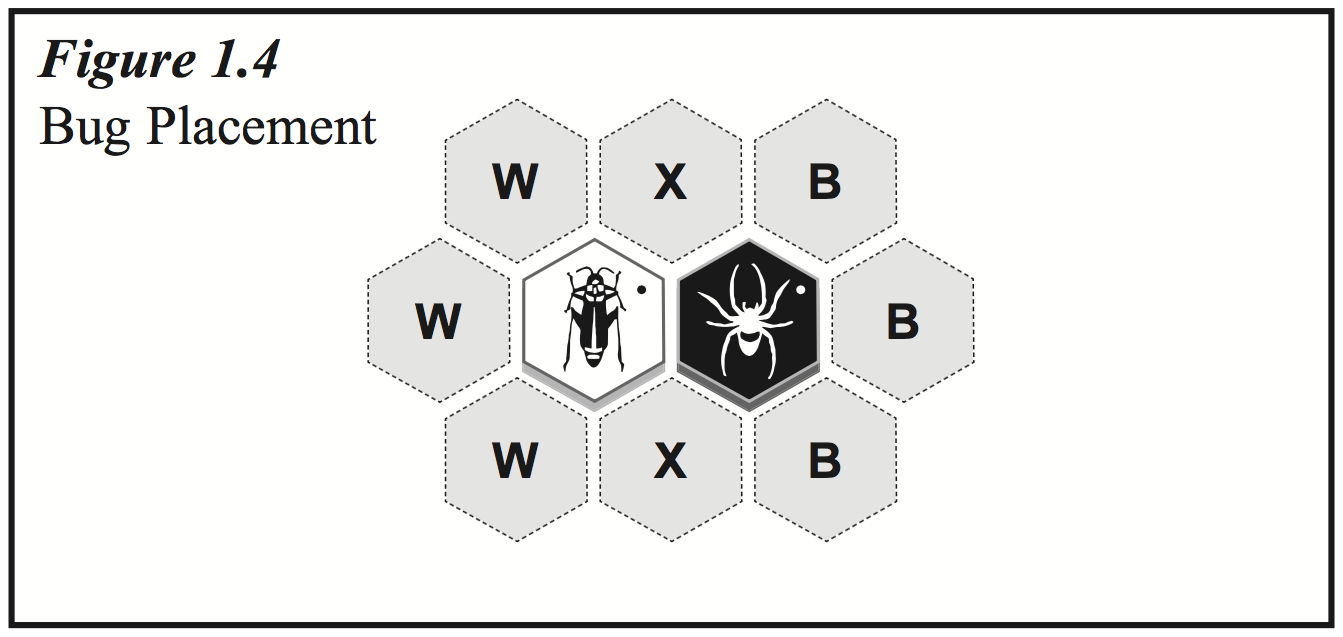
When adding a new bug to the hive, it must be placed adjacent to a friendly bug and not adjacent to any enemy bugs.
If there are currently no spaces that meet these requirements, a new bug may not be placed.
Bugs may not be placed on top of another bug.
Bug movement
Until a player’s Queen is brought into the game, bugs previously placed may not move. Once a player’s Queen has been placed, however, that player’s bugs already in the hive are free to move.
Each bug has its own unique style of movement. Unless otherwise noted bug movement follows three basic rules...
One hive
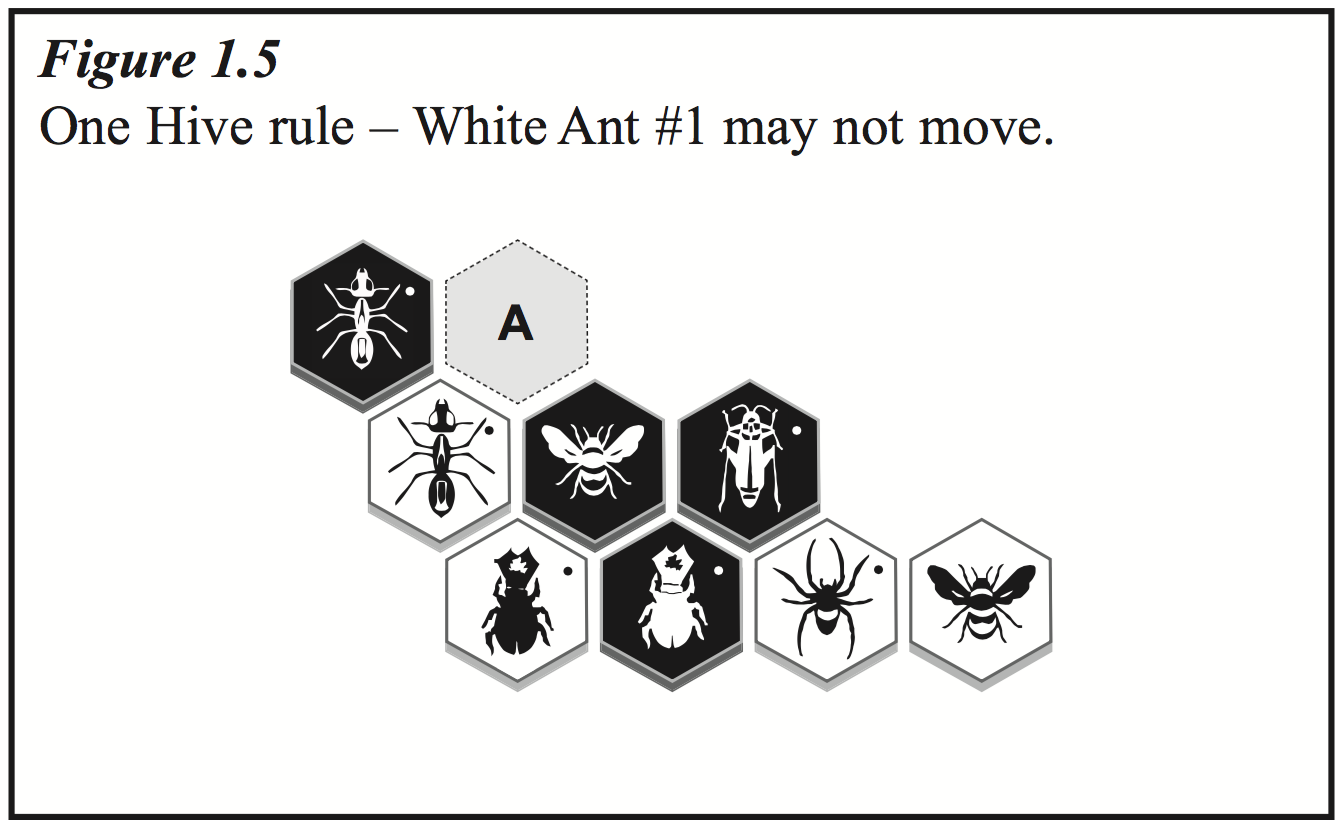
All bugs in play must be linked together in one hive.
At no time during a bug’s move may the hive be separated into more than one group. The One Hive rule applies at the start of a move, during the move, and at the conclusion of the move.
freedom to move
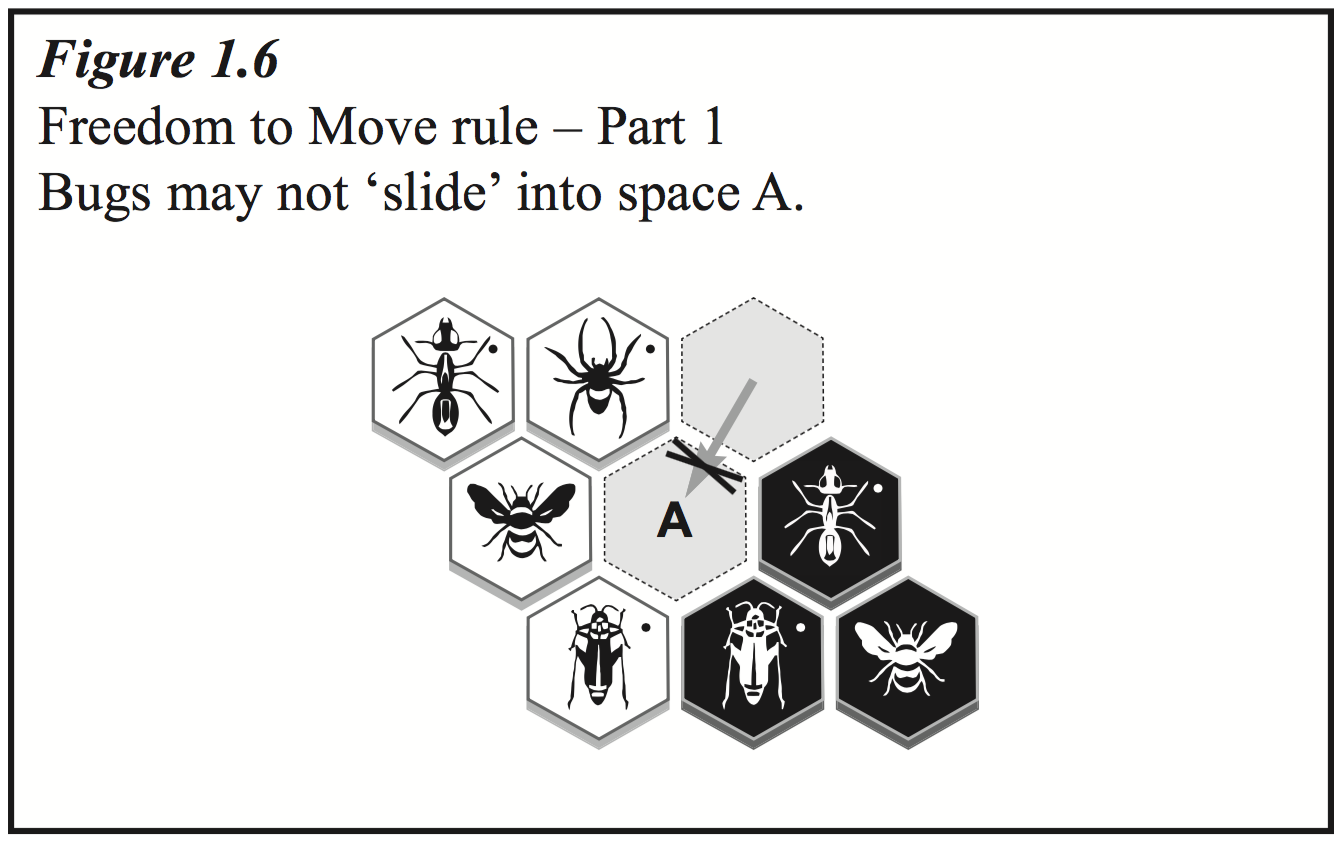
Bugs can only move into or out of spaces that they can physically slide in or out of.
The only exceptions are bugs that can jump or climb out of a space (discussed later).
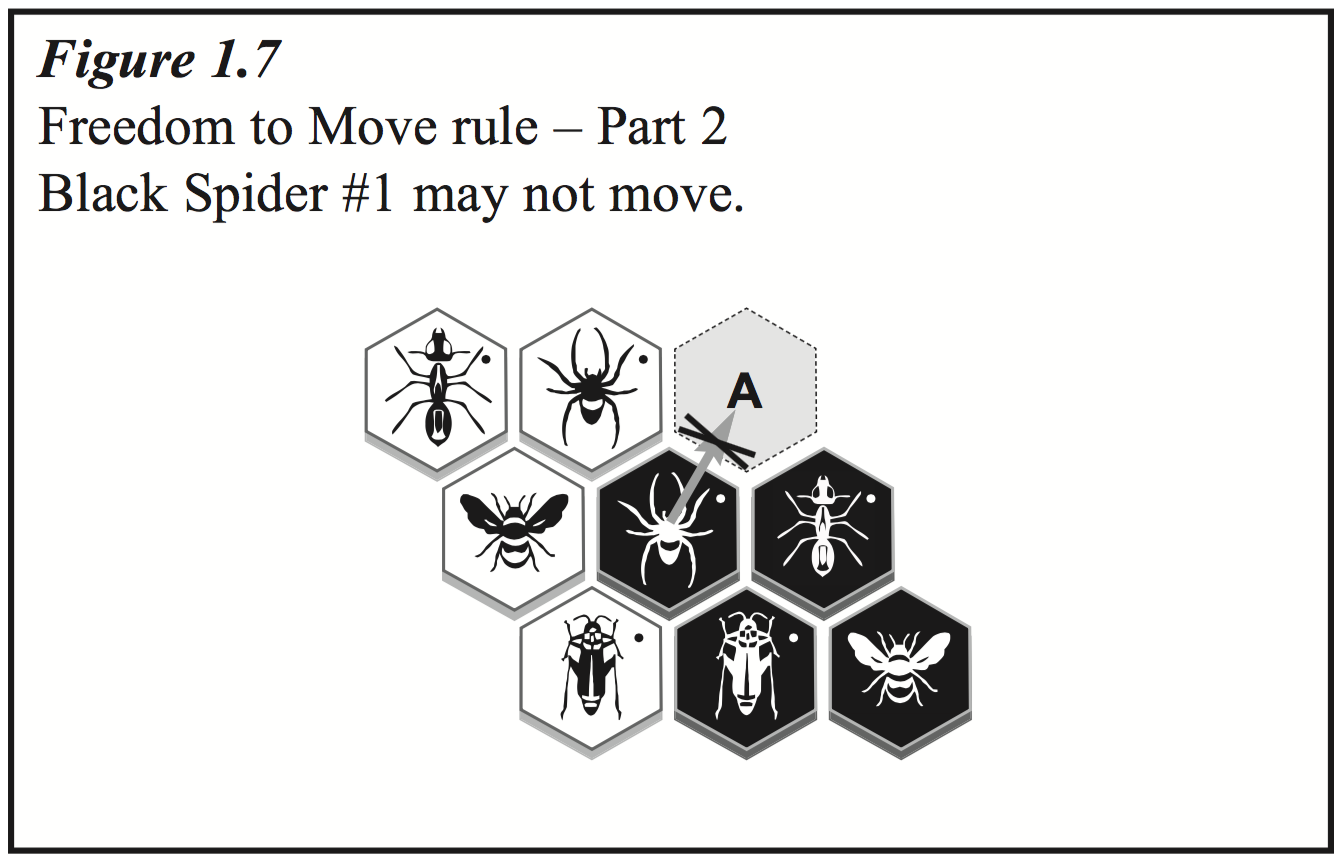
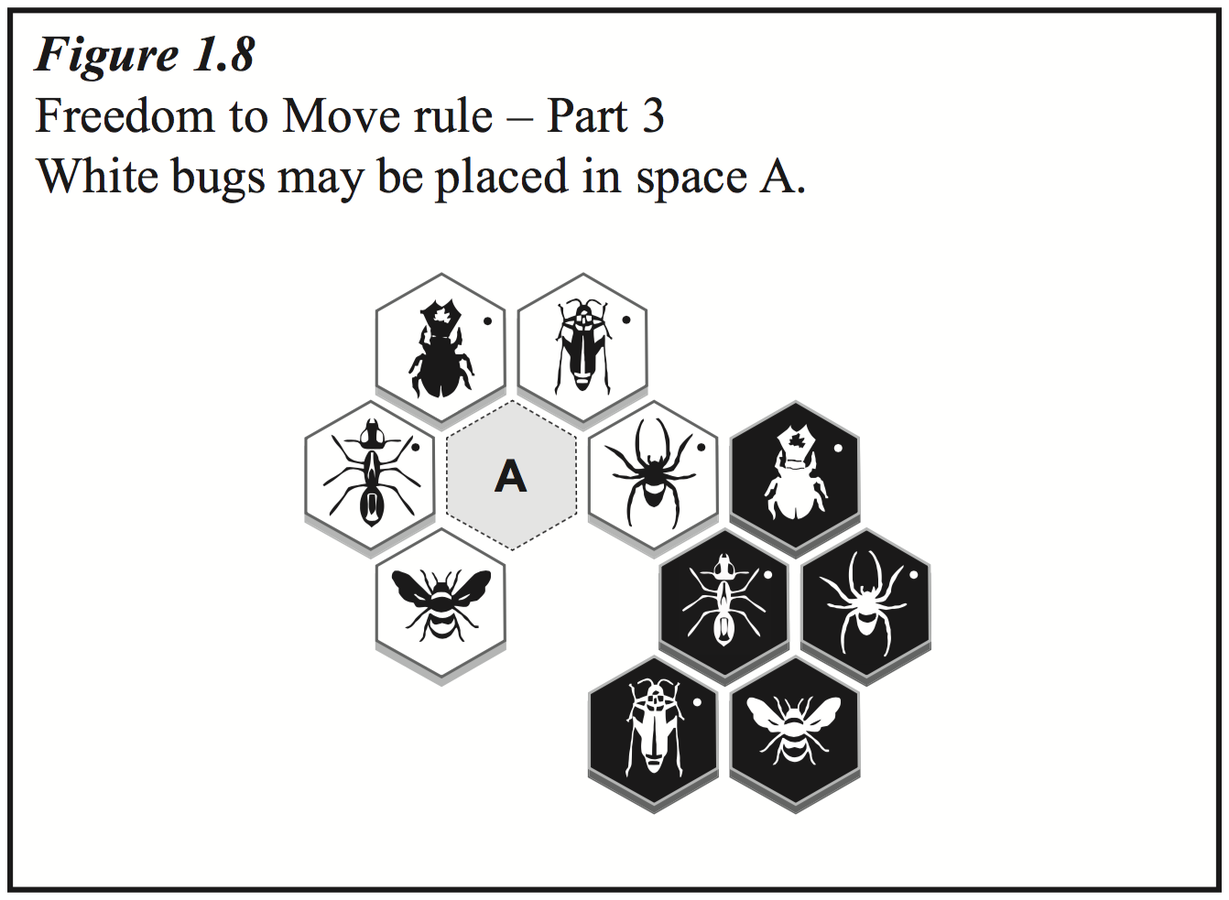
Freedom to move
The Freedom to Move rule does not restrict placement as long as no placing rules are violated.
A bug may be placed into a space from which it may not move.
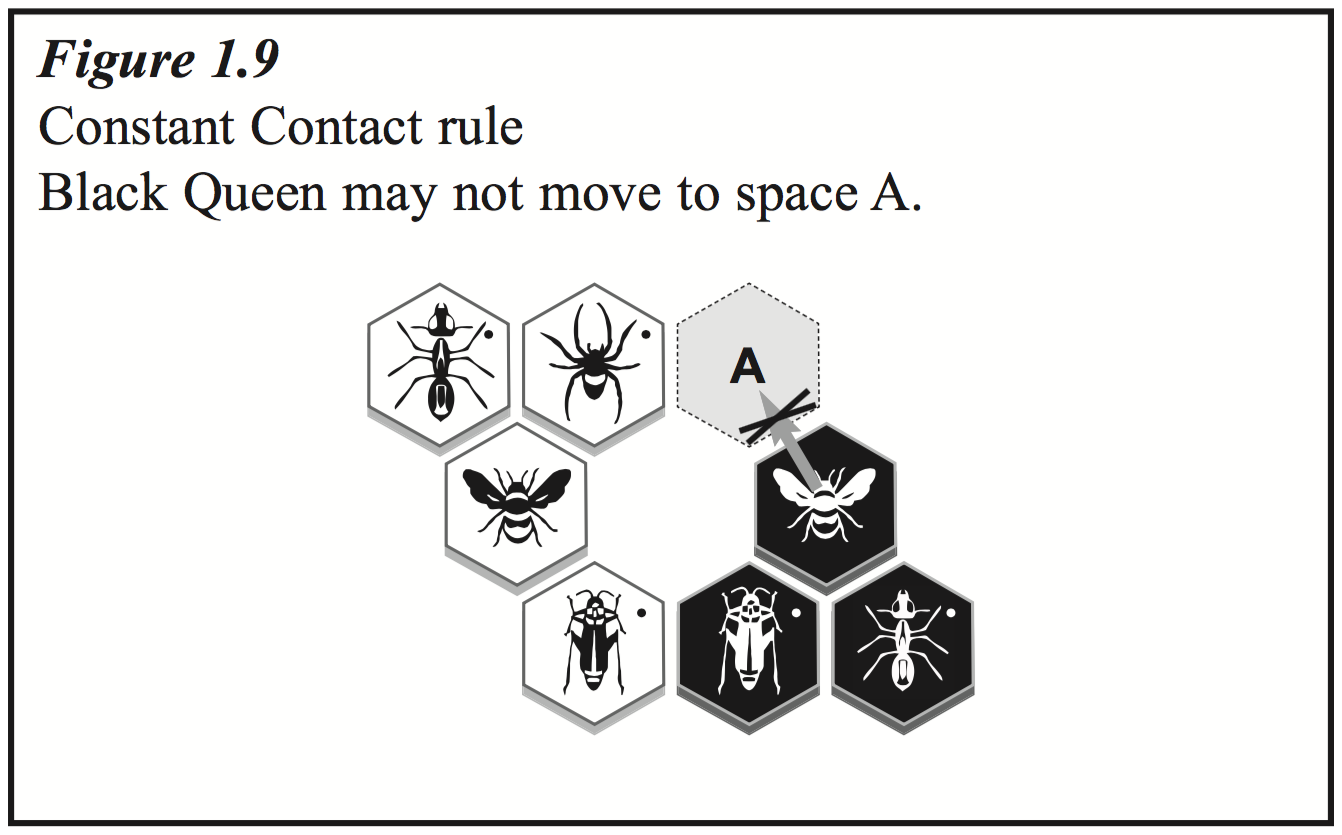
Constant contact
All bugs in play must remain in constant contact with the hive.
At no time during its move may a bug lose contact with the hive.
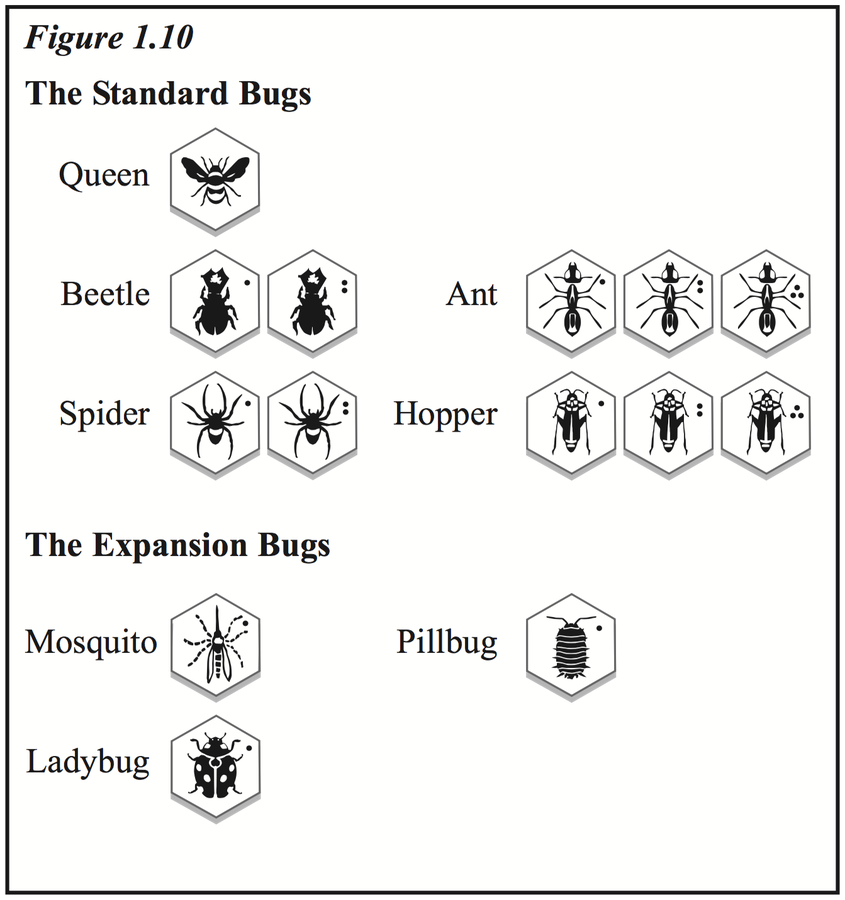
The bugs
Each player has...
- 1 Queen Bee
- 2 Beetles
- 2 Spiders
- 3 Ants
- 3 Grasshoppers (or hoppers)
The expansions are usually added in the following order:
- Ladybug
- Mosquito
- Pillbug
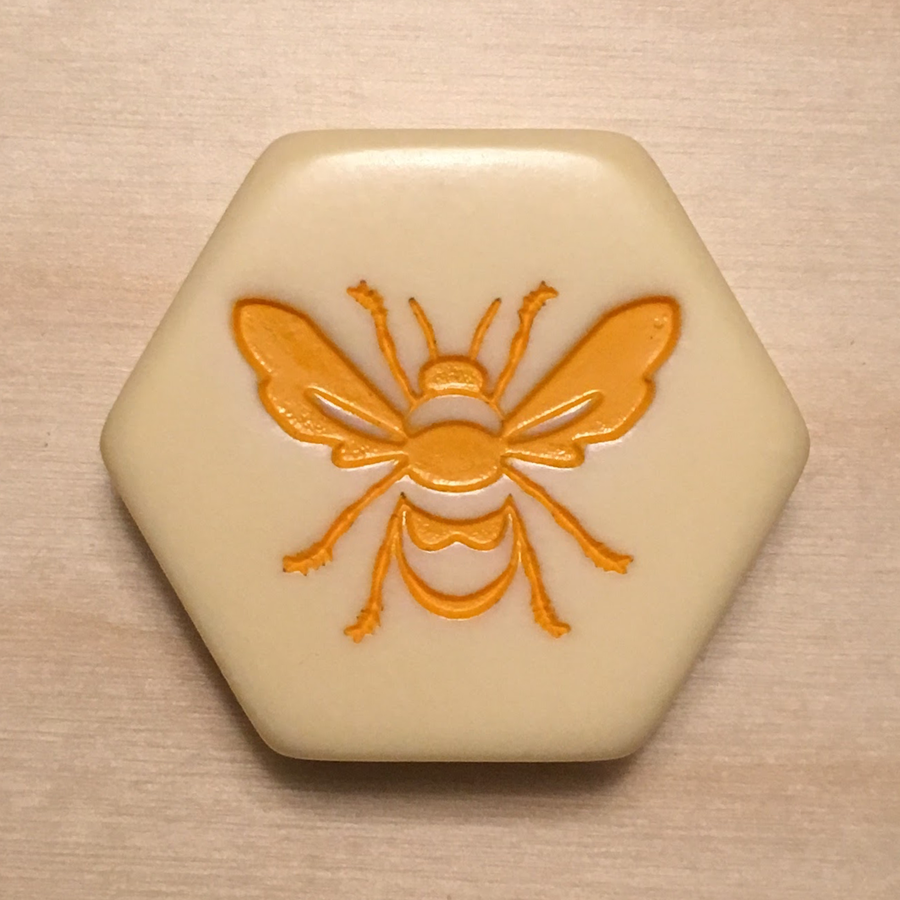
Queen bee
The Queen cannot be placed on the first turn but must be placed by the fourth turn.
Once a player’s Queen is placed, that player’s bugs already in the hive are free to move.
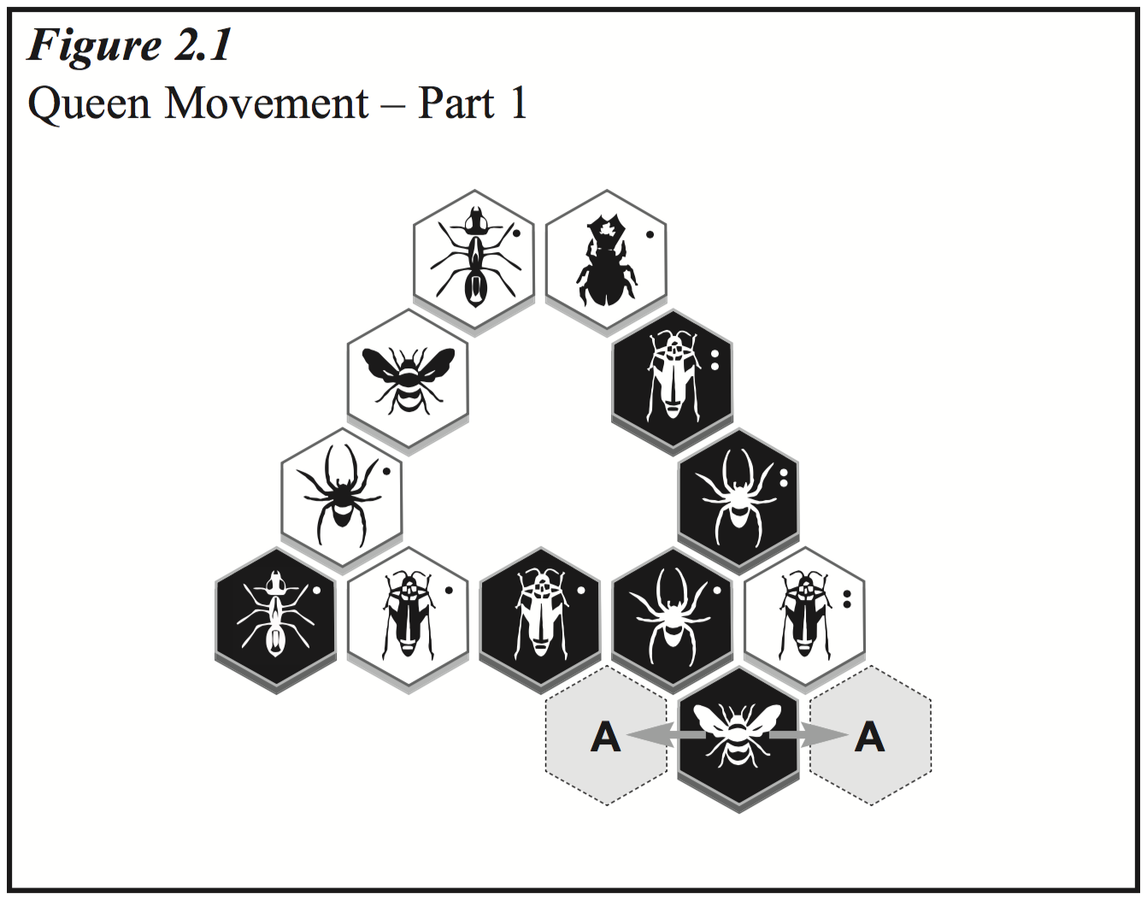
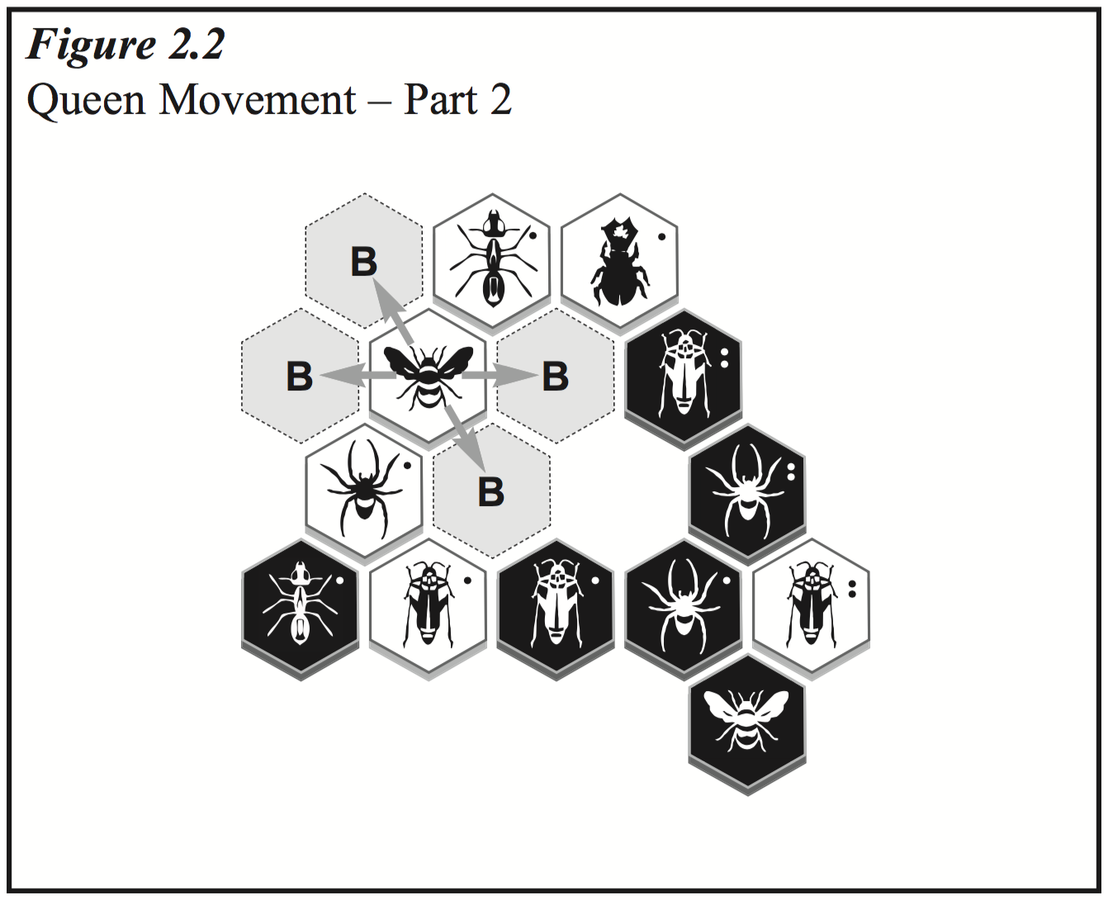
The Queen can move one space at a time in any direction.
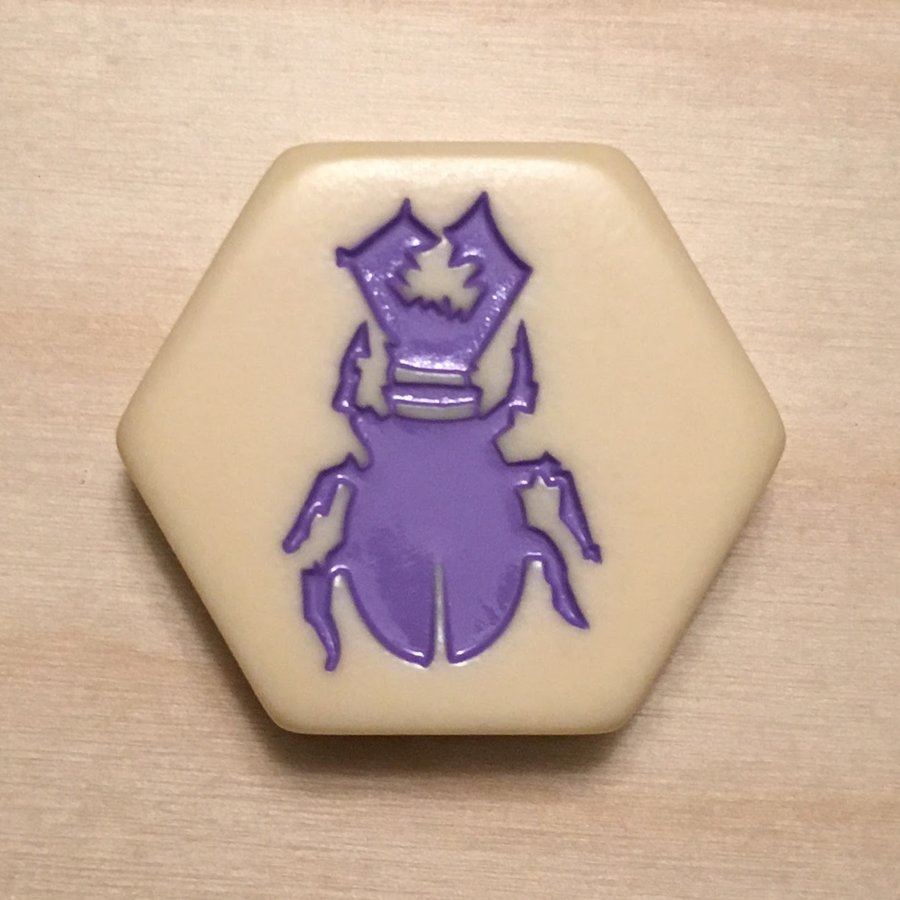
Beetle
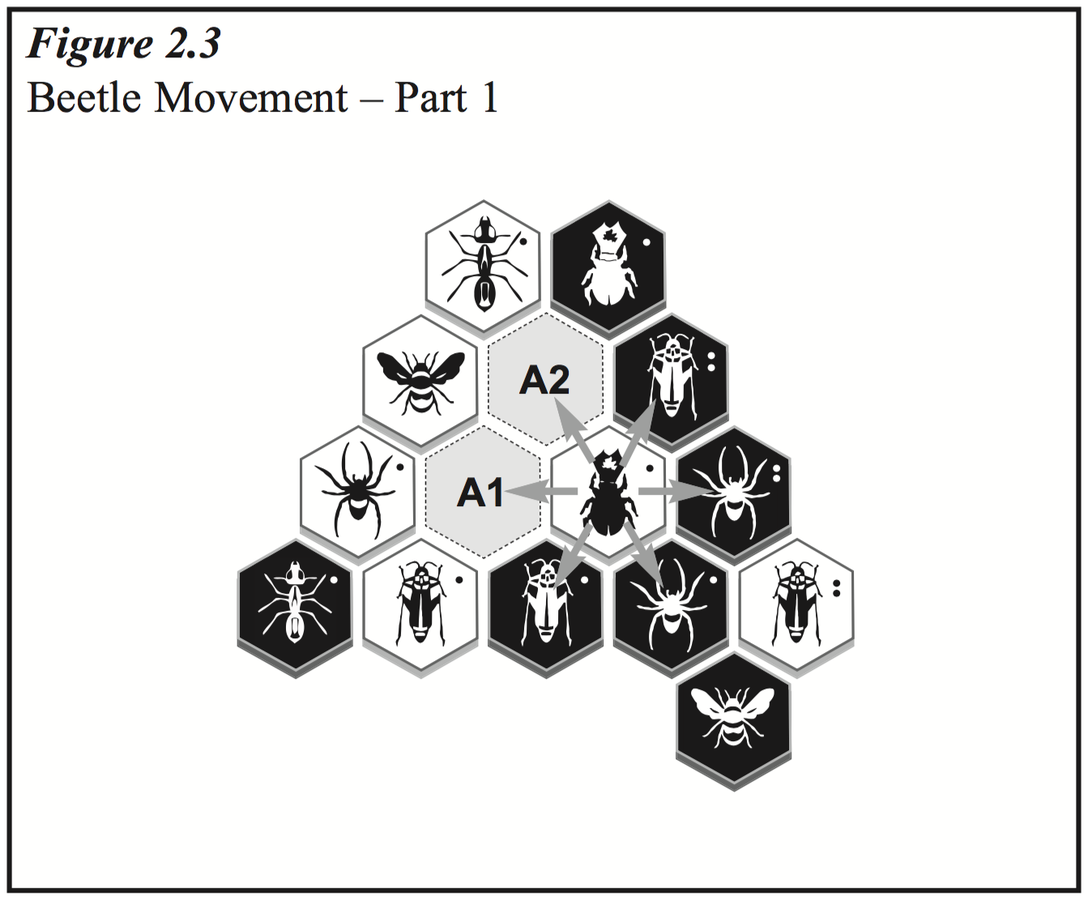
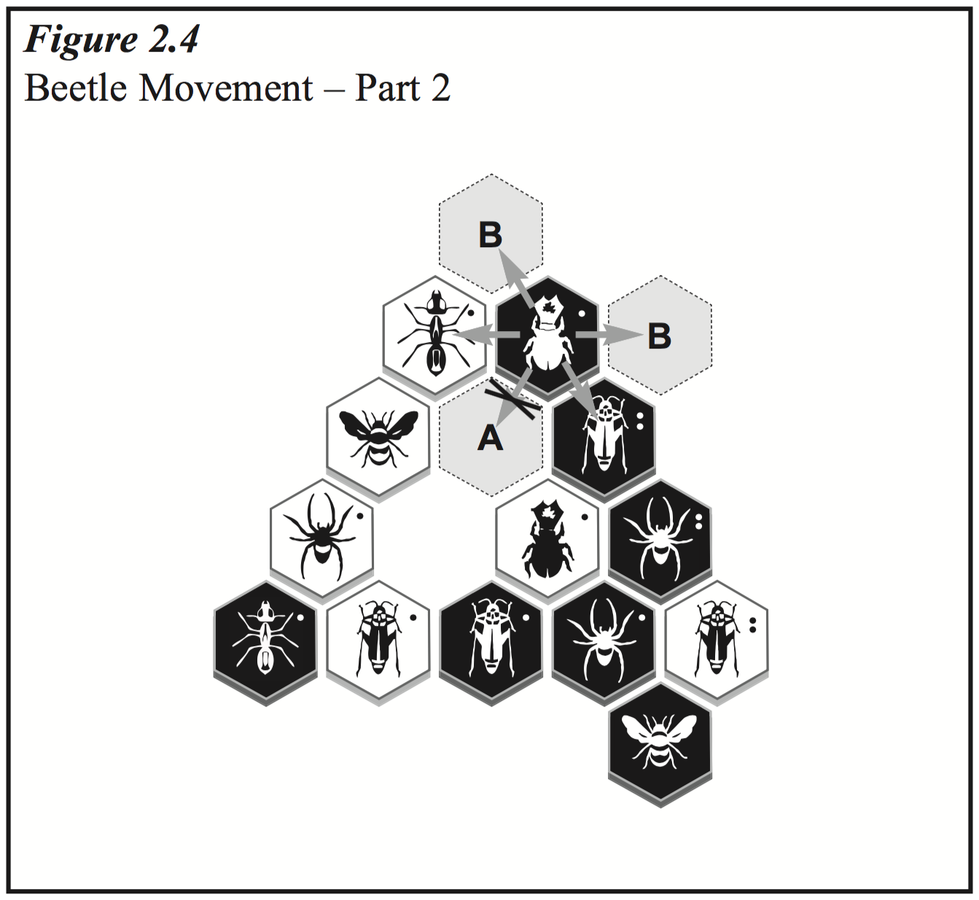
Like the Queen, the Beetle can move one space at a time in any direction.
The Beetle can also climb on top of the hive.
Any bug underneath a Beetle cannot move. When placing new bugs adjacent to a stack, only the color of the topmost bug is considered.
Ant
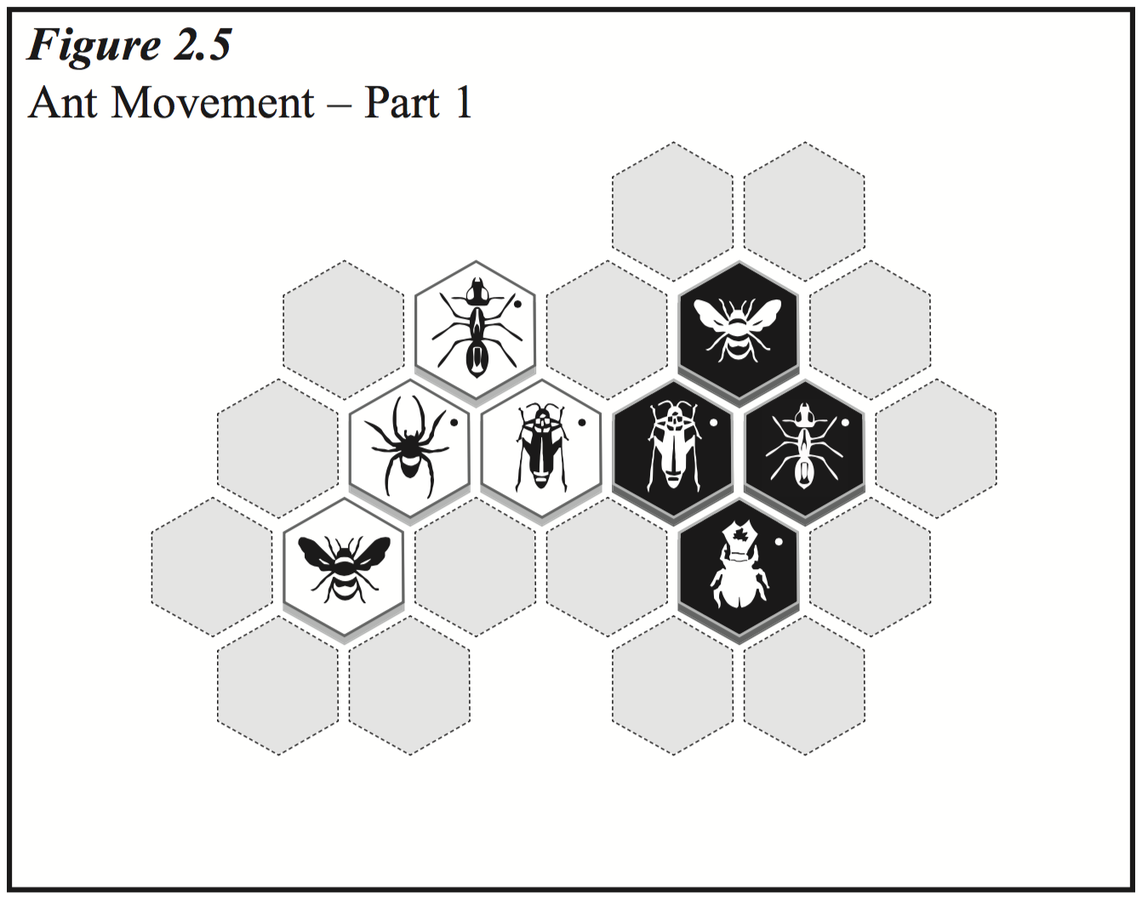
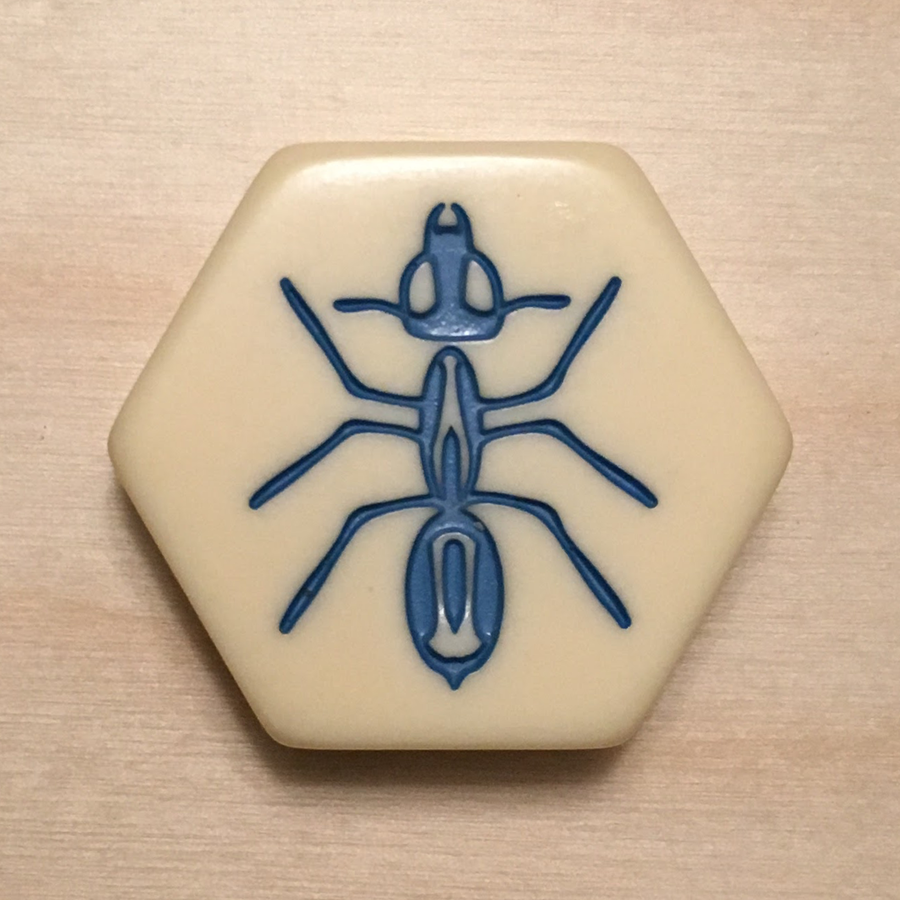
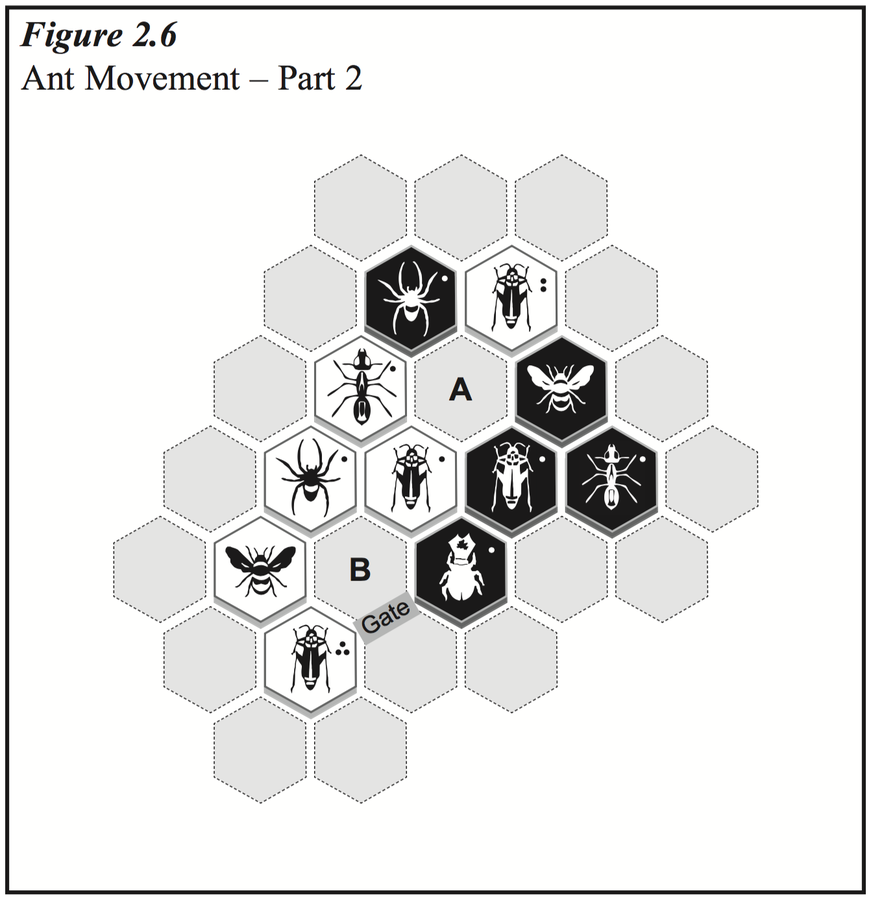
The Ant can move to any space adjacent to the hive as long as the three standard movement rules (One Hive, Freedom to Move, and Constant Contact) are obeyed.
Spider
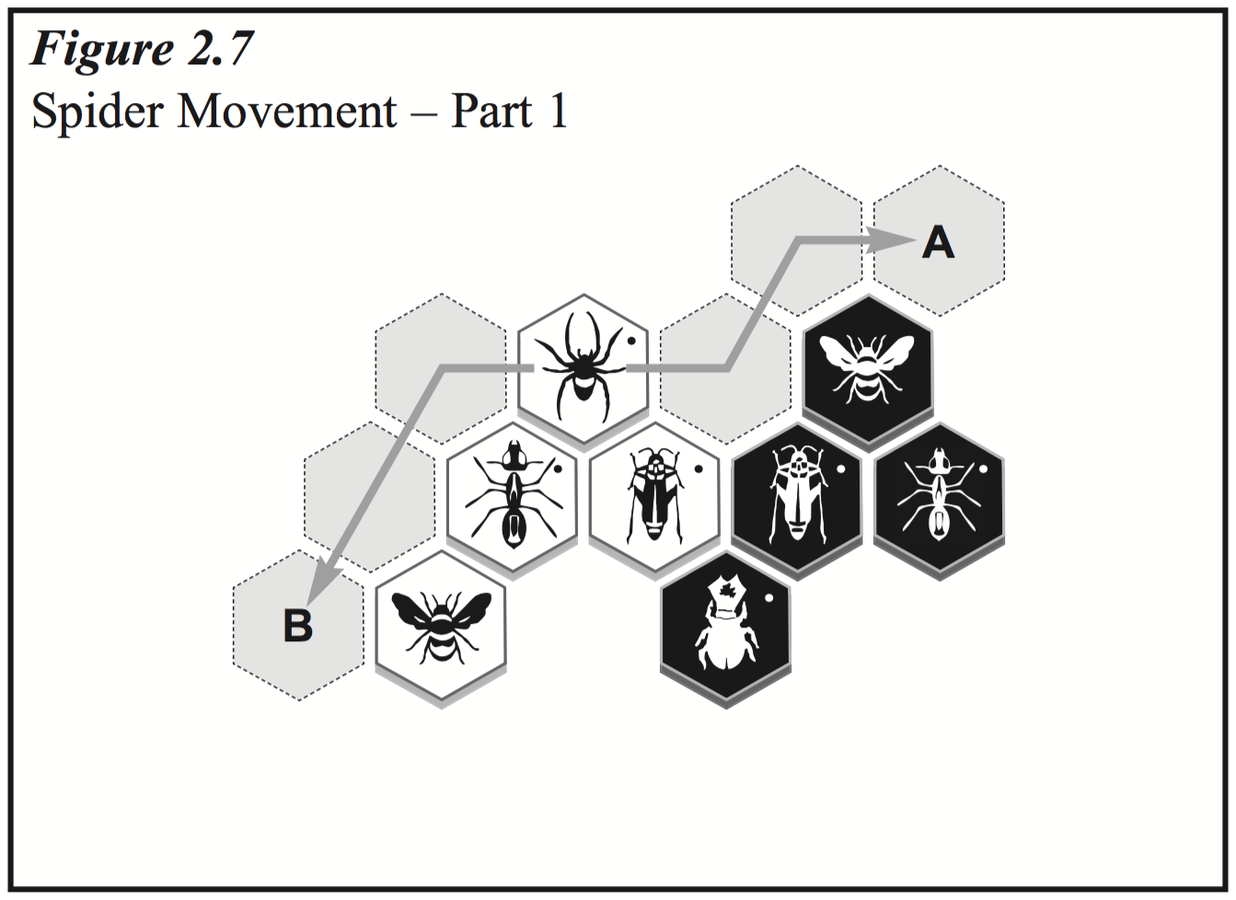
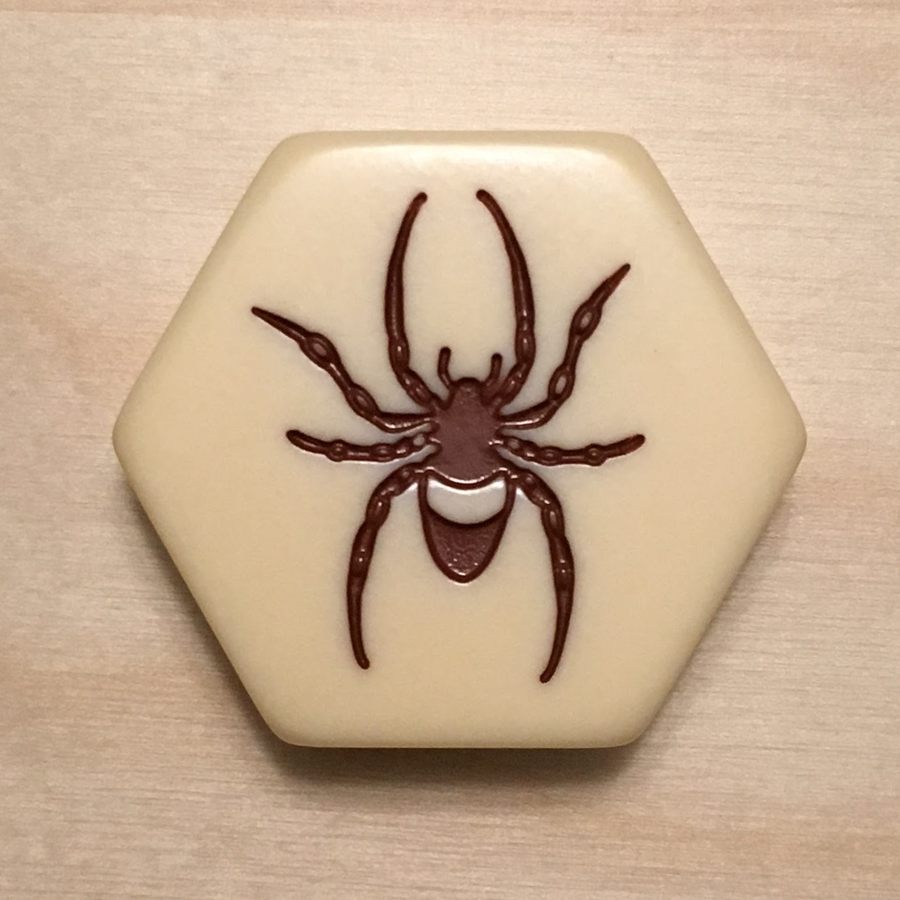
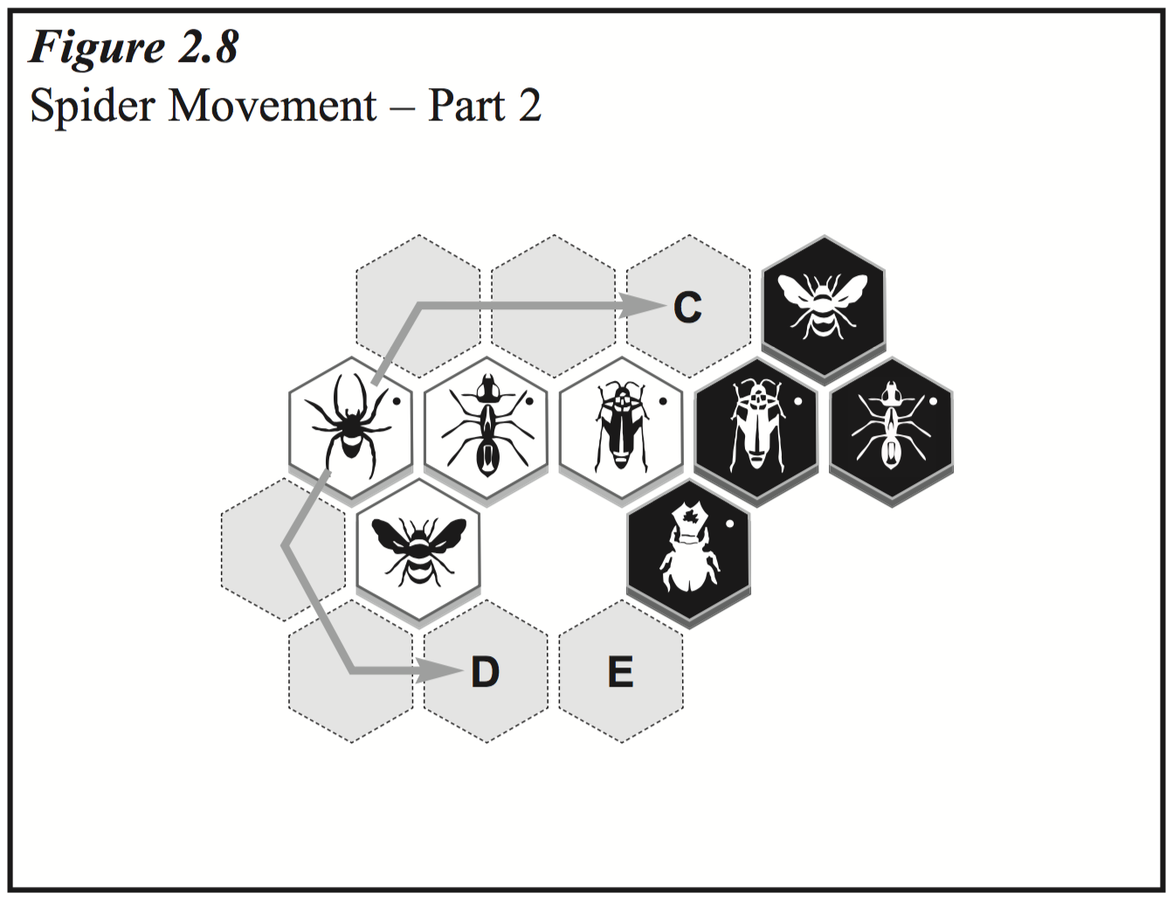
The Spider moves exactly three spaces at a time.
Be careful to remember the Constant Contact rule when moving the spider.
Grasshopper
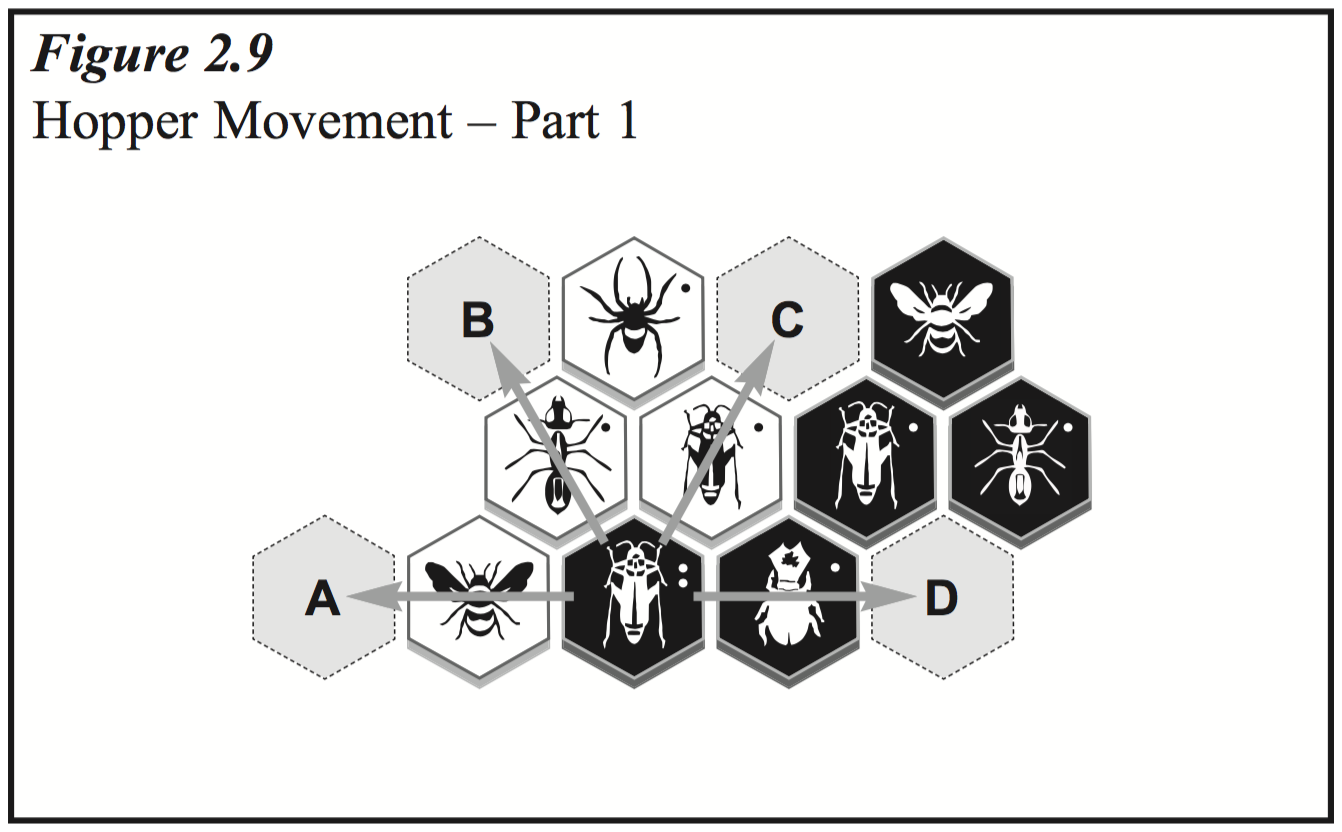
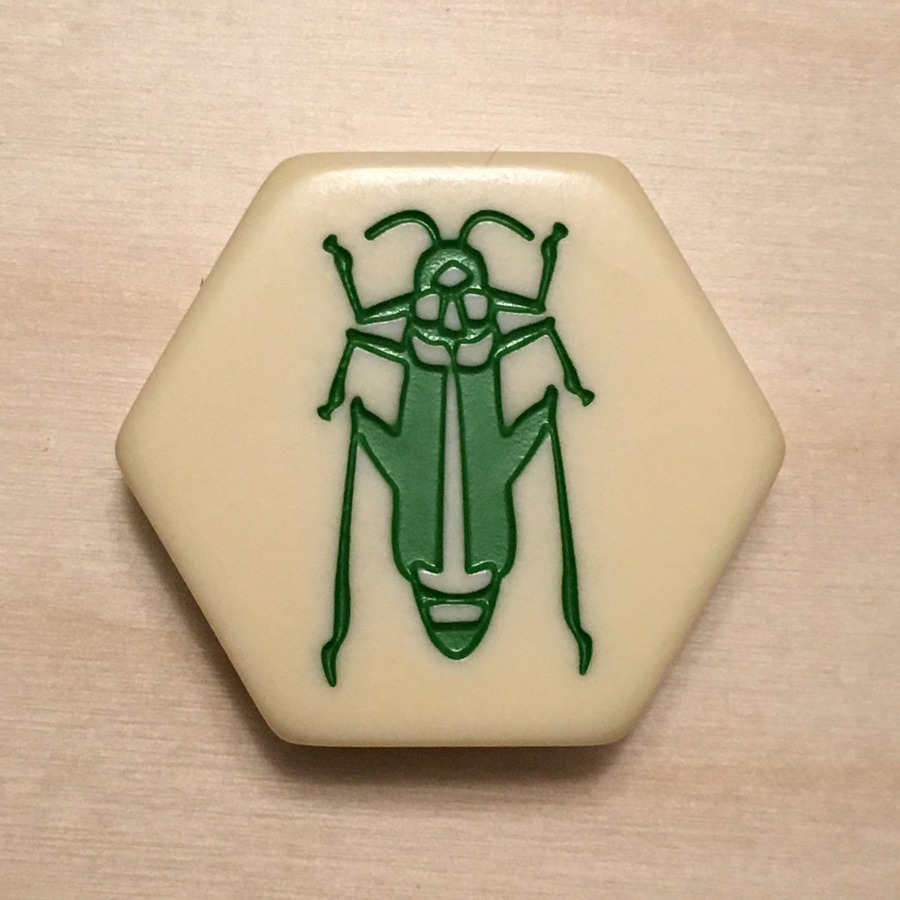
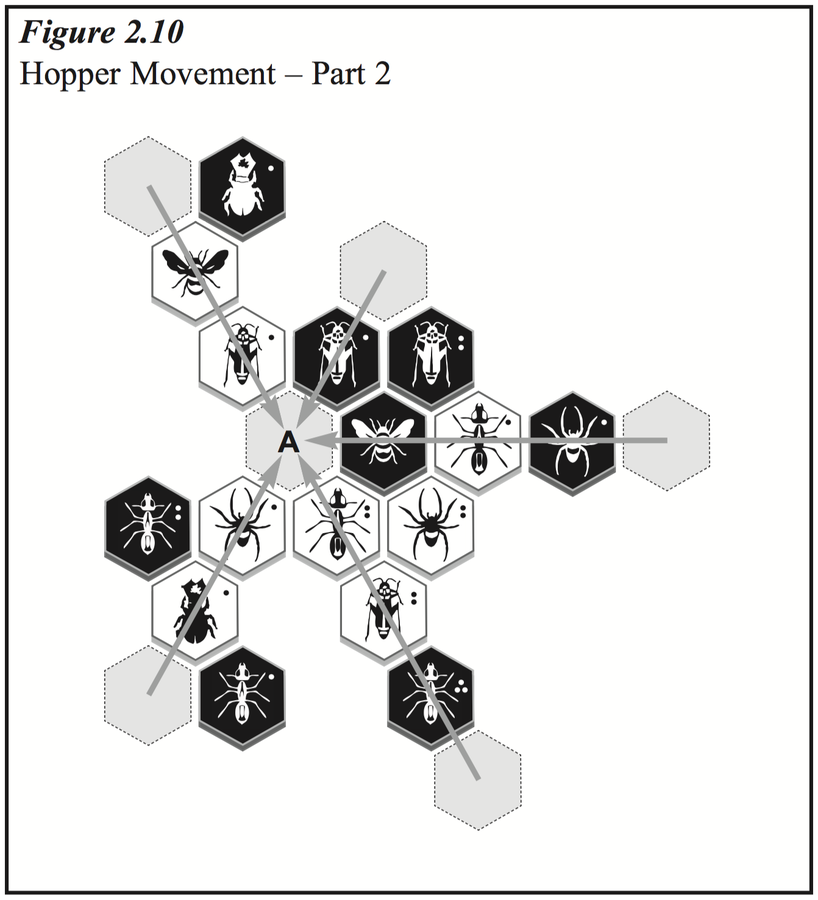
The Grasshopper jumps from its current space, over a straight row of adjacent pieces, to the first unoccupied space along the row.
The Freedom to Move rule does not apply to the Grasshopper.
Example game #1
Example game #2
Basic strategy
- Three basic keys to strategy:
- Mobility: number of mobile and potentially mobile bugs
- Tempo: make sure you’ll win race and don't waste moves
- Strength: number of bugs in attacking positions
- Attack or defend? Watch for the turning point, when the momentum shifts and you should switch from defense to attack and vice versa.
- Place or move? Carefully weigh the potential outcomes.
- Consider each bug’s strengths and weaknesses and use them thoughtfully.
Basic strategy
Opening:
- Play the Queen early.
- White should play aggressively and immobilize the Black Queen as quickly as possible.
- Black should keep good defenders adjacent to their Queen and get their ants in play early.
Midgame:
- Constantly keep all three of the basic keys to strategy in mind: mobility, tempo, and strength
Endgame:
- Keep enough good defenders in reserve for the endgame.
- Look for ways to free bugs if necessary.
Basic tactics
- Pin: attaching one of your own bugs to an enemy bug such that they can’t move because of the One Hive rule
- Cover: covering a bug with a beetle to immobilize it and allow “direct drops” adjacent to it
- Block: forming a “gate” to render a space inaccessible because of the Freedom to Move rule
- Fill: surrounding a bug with four other bugs in a “C” shape (a “pocket”) in order to free it
Beginners’ mistakes
- Don’t misuse your Ants...
- Don’t play an Ant on the first move.
- Try not to allow your Ants to be pinned.
- Don’t waste an Ant pinning a Spider unless you absolutely must.
- Get your Ants in play early.
- Don’t allow the opposing Queen to escape.
- Don’t make a ring.
- Don’t waste tempo in the opening.
- Keep good defenders adjacent to your Queen.
- Watch for and avoid a shutout.