Claimed based authentication using OWIN


- Claims
- Security Flows
- OWIN
- Code diving
Topics
Getting to Know the Identity of .NET 4.5
Where Did We Come From?
Cornerstone of authorization in the last decade
public interface IIdentity
{
    string AuthenticationType {get;}
    bool IsAuthenticated {get;}
    string Name {get;}
}
public interface IPrincipal
{
    IIdentity Identity {get;}
    bool IsInRole(string role);
}
var principal = WindowsPrincipal.GetCurrent();
if (principal.IsInRole("Sales") == false)
{
    // Do something.
}
else
{
    // Access denied or do something else.
}
public void SomeMethodUsingPrincipalPermission()
{
    // Throw exception if not authorized.
    new PrincipalPermission(null, "Sales").Demand();

    // Do something.
}

[PrincipalPermission(SecurityAction.Demand, Role = "Sales")]
public void SomeMethodUsingPrincipalPermission()
{
    // Attibute throws exception if not authorized.
    // Do something.
}
Drawback:
authorization checks are embedded within the code, and authorization checks only work with role information.
var principal = WindowsPrincipal.GetCurrent();
if (principal.IsInRole("Sales") == false)
{
    // Do something.
}
else
{
    // Access denied or do something else.
}
public void SomeMethodUsingPrincipalPermission()
{
    // Throw exception if not authorized.
    new PrincipalPermission(null, "Sales").Demand();

    // Do something.
}

[PrincipalPermission(SecurityAction.Demand, Role = "Sales")]
public void SomeMethodUsingPrincipalPermission()
{
    // Attibute throws exception if not authorized.
    // Do something.
}
The security class structure looked like this through.NET 4.0
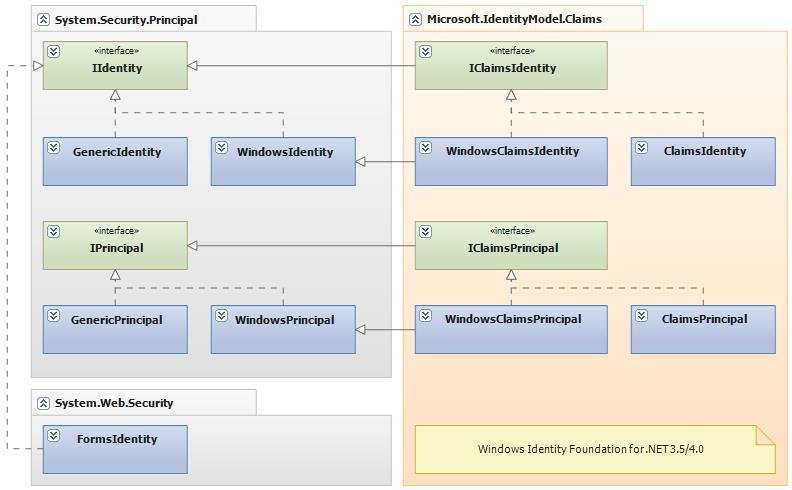
public interface IClaimsIdentity
{
    IClaimsIdentity Actor {get; set;}
    SecurityToken BootstrapToken {get; set;}
    ClaimCollection Claims {get;}
    string Label {get; set;}
    string NameClaimType {get; set;}
    string RoleClaimType {get; set;}

    IClaimsIdentity Copy();
}
public interface IClaimsPrincipal
{
    ClaimsIndentityCollection Identities {get;}

    IClaimsPrincipal Copy();
}
Claims?!
public class Claim
{
    public virtual string ClaimType {get;}
    public virtual string Issuer {get;}
    public virtual string OriginalIssuer {get;}
    public virtual IDictionary<string,string> Properties {get;}
    public virtual IClaimsIdentity Subject {get;}
    public virtual string Value {get;}
    public virtual string ValueType {get;}

    // Methods omitted for brevity.
}
From WIF to .NET 4.5
system.security.principal
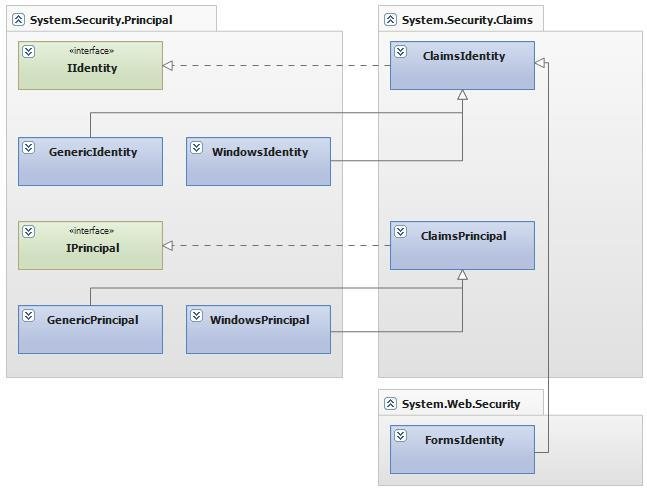
This is the security class structure in .NET 4.5.
Claims-Aware Web Application (Active)
(demo)
Security Protocols
Integrated Windows Authentication
- Accounts
- Usergroups
ASP.NET membership and roles provider
- user names
- passwords
- roles
CLAIMS
ISSUER
(AUTHORITY)
Terminology
-
Service Provider (Resource Server) - this is the web-server you are trying to access information on
-
Identity Provider (Authorization Server) - this is the server that owns the user identities and credentials. It's who the user actually authenticates with
-
Security Token Service (STS) - is a software based identity provider responsible for issuing security tokens, especially software tokens, as part of a claims-based identity system.
-
Smart Client - this is how the user is interacting with the Resource Server, with a native application
-
Passive client - this is how the user is interacting with the Resource Server, with a javascript application
-
Token - Compressed, encoded, possibly encrypted, and it usually looks like gobbly-gook, key passed to SP on each request
SAML 2.0
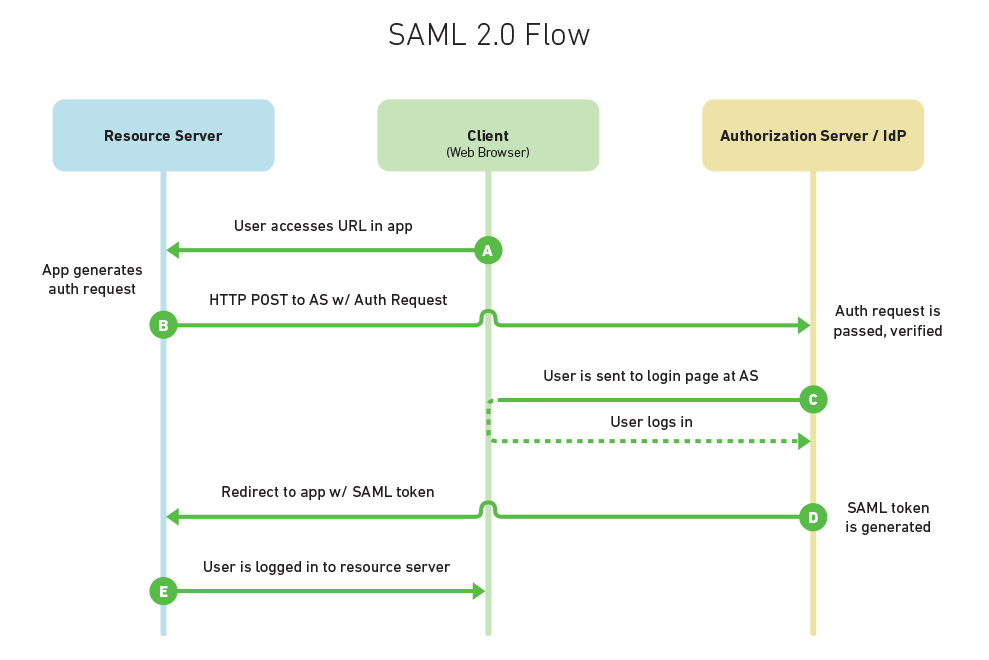
OAuth 2
Strategy
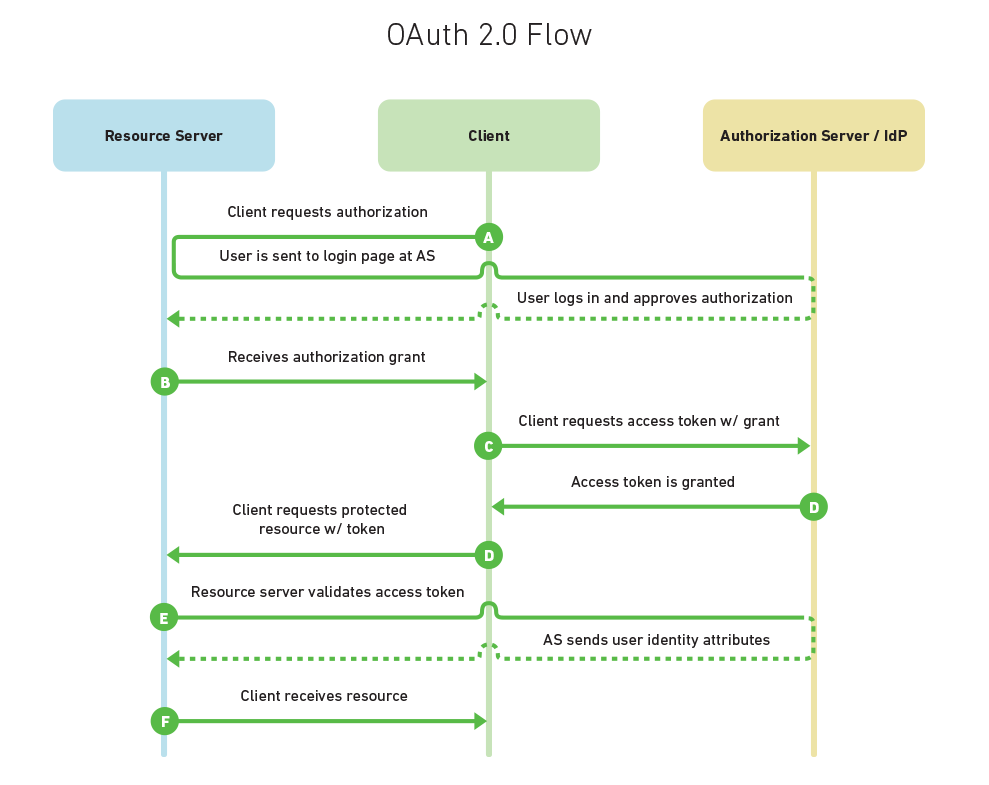
Authorization, not Authentication
You've got me?
OAuth 2

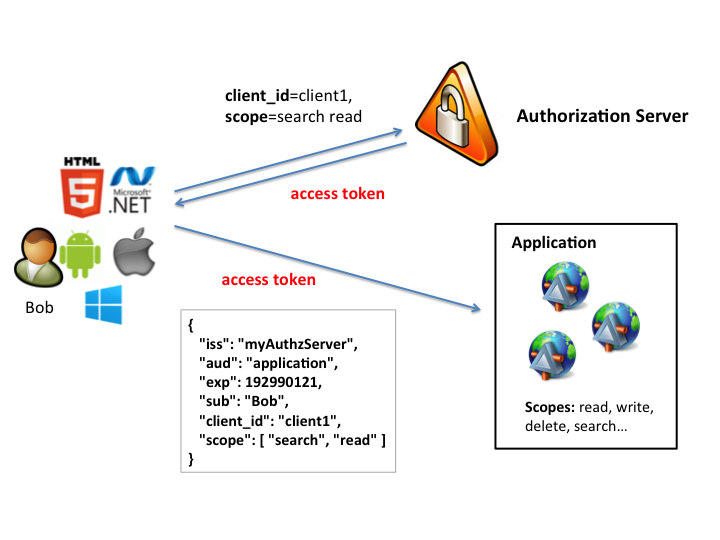
SSL / TLS
.... MITM
SAML 2.0 / OAuth 2
Good & Evil?

OpenID
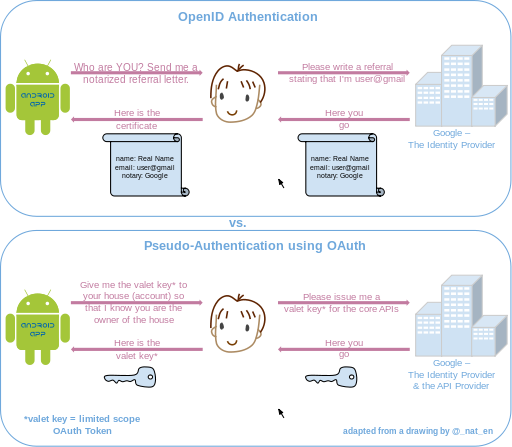
Demo... ?
http://tools.ietf.org/html/rfc6749
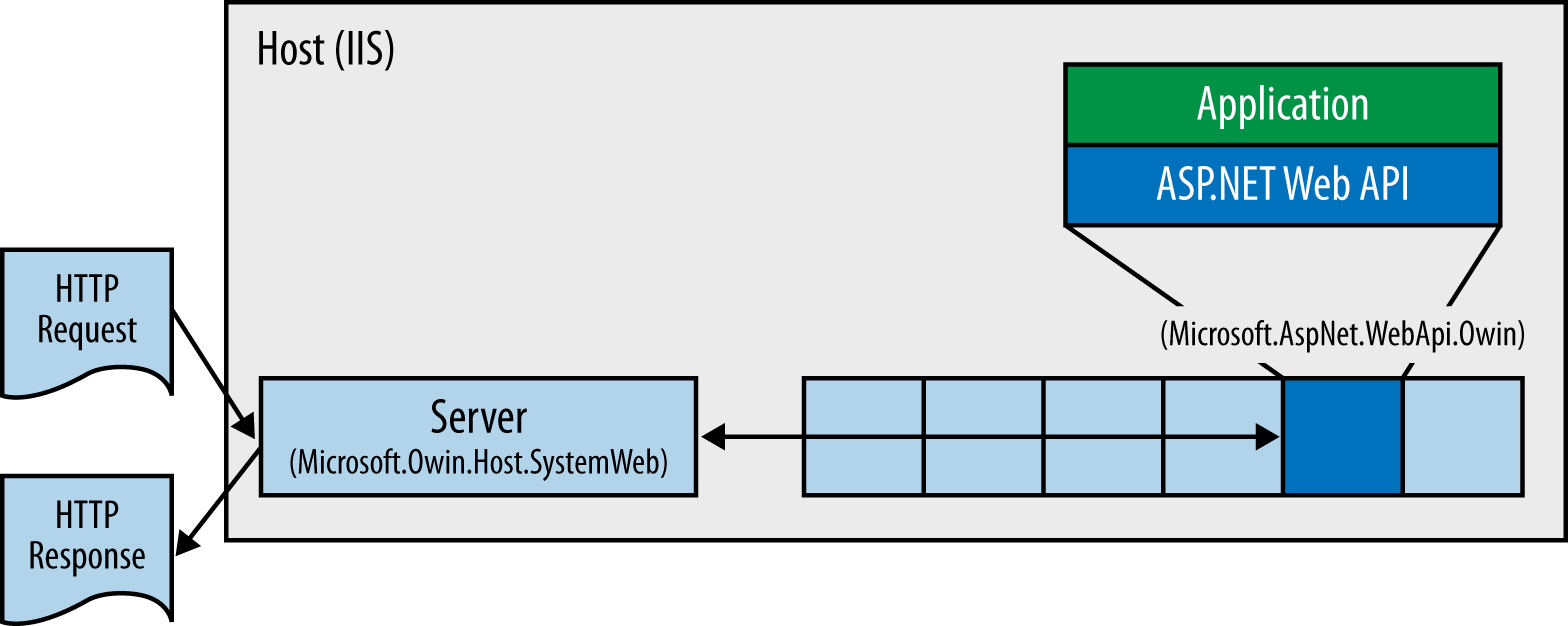
OWIN
Open Web Interface for .NET
Middleware
Application
Server
Host
Demo