Dystopias and Oryx and Crake: an Introduction
Dystopias
"Dystopian speculative fiction takes what already exists and makes an imaginative leap into the future, following current socio-cultural, political, or scientific developments to their particularly devastating conclusions."
Snyder, Katherine. "'Time to Go:' The Post-Apocalyptic and the Post-Traumatic in Margaret Atwood's Oryx and Crake." Studies in the Novel.

"Utopias and dystopias are histories of the present."
from "Introduction" to Utopia/Dystopia: Conditions of Historical Possibility
Utopias
- 1516—release of Thomas More's Utopia
- a place that is, literally, no place—good place (eutopos) that is no place (outopos)
- Sargisson: traditional utopias are actually wrong in terms of contemporary feminisms
Sargisson
Utopias:
- arise from political dissatisfaction and provide political critique
- Articulates estrangement and proposes "alternate perspective, from an alien (or new) space
- "often fictional"
- "has subversive and transformative potential"

Sargisson cont'd.
Utopian thought as transgressive (10):
- "steps over boundaries that order and separate"
- destroys their meaning or ability to establish meaning
- "permits the creation of a space where previously there was none, in which new and different ways of relating to the world can be practiced"
Dystopias
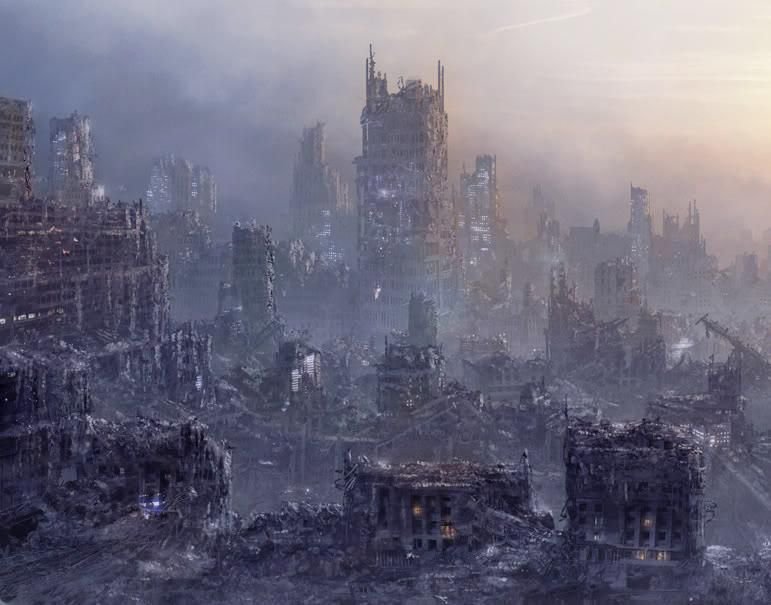
"Despite the name, dystopia is not simply the opposite of utopia. A true opposite of utopia would be a society that is either completely unplanned or is planned to be deliberately terrifying and awful. Dystopia...is a utopia that has gone wrong, or a utopia that functions only for a particular segment of society" (1).
—from "Introduction" to Utopia/Dystopia. Gordin, Tilley, Prakash.
Dystopias (Gordin et al.)
- "dystopia...bears the aspect of lived experience." (2)
- creates a terrifying future that shows the failure of reacting to the present
- tell something of historical context
- "styles of imagination, as approaches to radical change" (5)
Oryx and Crake
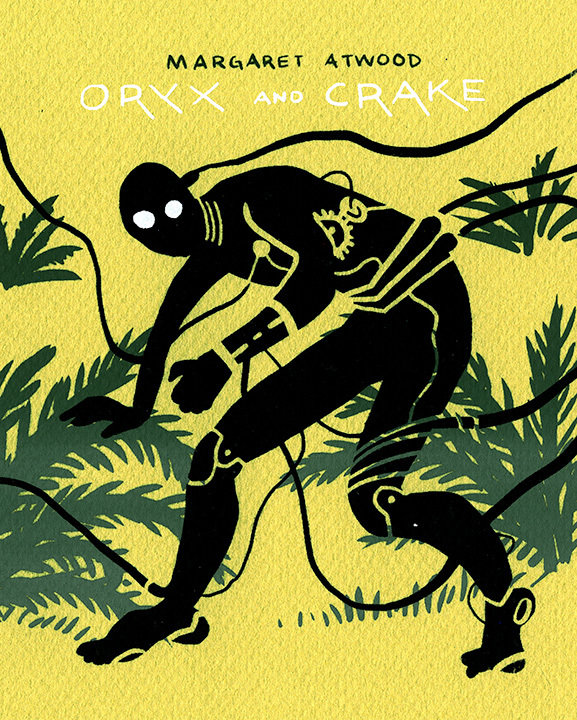
"Indeed, Snowman's post-apocalyptic plight literalizes the temporal disruption that has come to be understood as a hallmark of traumatized consciousness."
—Snyder, 472.
Trauma in Oryx and Crake
- temporal delay—"repeated suffering of the event, but it is also the continual leaving of its site" (Caruth, in Snyder, 472).
- Trauma marked by some later event that triggers it
- "...future moment activates the meaning of the past moment, but that past moment also endows the future moment with meaning; the past determines the future, but the future also redetermines...the past" (472).
Pandemic
- marks time-stopping event of history and as a repetition of past trauma
- juxtaposition of "what happens at home" w/ human extinction—equating of the two?
- Pandemic locates "futility of attempting to quarantine an individual's subjective interiority from relations among historical subjects who are connected to each other in...overlapping circles of power and obligation..." (Snyder, 473)
Other Sources
- Copley—"Rereading Marge Piercy and Margaret Atwood: Eco-Feminist Perspectives on Nature and Technology
- Gordin, Tilley, & Prakash—Utopia/Dystopia
- Sargisson—Utopian Bodies and the Politics of Transgression
- Snyder—"'Time to Go:'..."