React.js Conf
11111011111

You won't believe what happened when Crabman and the Hooverdam went to Palo Alto.
10 reasons why the conference was epic
- Awesome, social community (+ FB people)
- Dem announcements
- Free snacks, free drinks!
- Shoutouts to community people
- Epic tech stack at Facebook
Most awesome
- React Native
- Relay
- GraphQL
- Immutable data
React Native, eh?
- React runs on JS thread (not the UI thread)
- Has no DOM, no HTML, no browser
- Creates native view widgets
(Text, Image, EditText vs span, img, input) - Same diff algorithm, same concepts
- "UIs as a pure function of their state"
React Native, eh?
- Not a write-once-run-everywhere solution.
- Facebook: "learn-once-write-everywhere".
- Share the React paradigm, not necessarily the code
- But it does run Javascript :D
React Native, eh?
- Flexbox implementation for predictable layouts across platforms
- Use native components at will
- Does layout calculation off the main thread, main thread can focus on animation and rendering
- Define styles per component, within JS
React Native, eh?
- Like React; helpful warning/error messages in development
- Debug app in Chrome dev tools (with React extension, too!) on your machine
- ..or even run the JS part on another machine
-
≈ 1 second compile time

Relay
A better way to do data fetching for complex applications.
Relay
How we usually do it now:
Server
...........................................................................
<friendList>
<friendListItem>
<friendInfo>
Relay
There are [at least] two problems with this way of doing it;
- The server needs to know of the components data dependencies
- The data dependencies of the child component leaks to the parent components
Relay
Facebook has a different approach
- Declarative - data dependencies embedded in the component as GraphQL queries
- Single, shared store of data
Query optimizing - no under fetching or over fetching
Relay
Facebook has a different approach
- Efficient query batching
- Updating components when its data changes
Relay
var FriendsInfo = React.createClass({
  statics: {
    user: function() {
      return graphql`
        User {
          name,
          mutual_friends { count }
        }
      `;
    }
  },

  render: function() {
    return (
      <div>
        <span>{this.props.user.name}</span>
        <span>{this.props.user.mutual_friends.count} mutual friends</span>
      </div>
    );
  }
});
GraphQL??
GraphQL is a data querying language designed to describe the complex, nested data dependencies of modern applications.
GraphQL??
- Exploring the graph from the root call
- [Data] backend agnostic
- Removes the need for hard coded compound endpoint in the APIs
- The need for REST API endpoints is up for discussion, but in a lot of scenarios there's a use for both
- Facebook is releasing a spec and a parser soon
Immutable.js
var immutable = require('immutable'),

var list1 = immutable.List.of(1, 2, 3);
var list2 = list1.push(4);

list1 === list2; // false
Immutable.js
var immutable = require('immutable'),

var map1 = immutable.Map({
    a: 1,
    b: 2,
    c: 3
});
var map2 = map1.set('c', 3);

assert(map1 === map2); // true

var map3 = map1.set('c', 50);

assert(map1 === map3); // false
Immutable.js
- List
- Map
- Stack
- Range
- ...
Immutable.js
With React, immutable data is awesome
PureRenderMixin + Immutable.js == Fast
(shouldComponentUpdate? Simple)
Immutable.js
Some things to note:
- Shallow immutability
- Converting to/from:
- _.pluck
- _.without
- other object/array-backed modules
Immutable.js
...is just one approach to immutability:
- immutable.js
- mori
- seamless-immutable
- mugs
High-performance Components
- Purity (PureRenderMixin)
- Data comparability (Immutable data)
- Loose coupling (container components)
- Children are expensive
FormatJS & react-intl
Simple internationalization and formatting
The Intl APIs are currently available on all modern browsers except Safari. It is not available on mobile browsers, older browsers, or Node.js. Polyfill for Intl exists and should be used for cases where Intl is missing.
- [FormatJS] depends on the Intl APIs
- Provides a friently interface for localization
- Integrations with ReactJs, Handlebars and Dust
- Re-uses the Intl instances (which are expensive)
- Uses the ICU (International Components for Unicode) format for string messages
-
7.7kb (min + gz)
-
150+ languages
FormatJS & react-intl
Date and number formatting
<FormattedNumber value={1000} />

<FormattedDate value={Date.now()}
    month="long"
    day="numeric"
    year="numeric" />

<FormattedRelative value={this.props.date} />
# 3 hours ago
FormatJS & react-intl
String messages and pluralization
var msg = `{numComments, plural,
    one   { # comment }
    other { # comments }
}`;

<FormattedMessage message={msg} numComments={1} />
# 1 comment

<FormattedMessage message={msg} numComments={2} />
# 12,345 comments
Note: ES6 multiline strings for slide readability
IntlMixin
var App = React.createClass({
    mixins: [IntlMixin],

    render: function() {
        return <FormattedNumber value={this.props.price}
            style="currency"
            currency="USD" />
    }
});

React.render(
    <App locales="fr-FR" price={1999.95} />,
    document.getElementById('container')
);

# Renders:
1 999,95 $US
Hot loading
Webpack + React =
Awesome
Demo?
Abstract Syntax Tree
- Parse code, inject/modify/extract
- Diff-tree
- Documentation generation
- Dev-tools
Static typing and Flow
- Introduces types into your JS and allows for type checking as part of the build procedure
- Code transpiling
# sum.js
/* @flow */

function sum (a: number, b: number) {
    return a + b;
}

sum("1", 2);

$ flow
hello.js:7:5,7: string
This type is incompatible with
  [...]/sum.js:3:17,22: number
Static typing and Flow
In this example, flow detects that one of the values is not a number.
/* @flow */

function total(numbers: Array<number>) {
    var result = 0;

    for (var i = 0; i < numbers.length; i++) {
        result += numbers[i];
    }

    return result;
}

total([1, 2, 3, 'Hello']);

$ flow
arrays.js:11:17,23: string
This type is incompatible with
  /arrays.js:3:31,36: number
Netflix
Beyond the DOM
- Netflix uses React.js for all their platforms (soon)
- TVs does not use the DOM (slow) instead use native draw calls with a Canvas-like API
- React makes this easy - prototype in 5 days
Channels
- Coordinate actions without talking to the helpers
- Similar to channels in Go an Clojure
- Implement goroutine-like code on top of ES6 generators
- Attempt at decoupling different parts of the application in an asynchronous way
Channels with js-csp
Four basic keywords:
CHAN
creates a channel
CHAN
puts a value
TAKE
takes a value
GO
starts a process
Channels with js-csp
let { chan, go, take, put } = require('js-csp');
let ch = chan();

go(function*() {
    while(true) {
        console.log(yield take(ch));
    }
});

go(function*() {
    yield put(1);
    yield put(2);
    yield put(3);
});

// Output: 1 2 3
Channels with js-csp
Take/put is blocking by design, so when a value is put execution will wait for a take before continuing. Because of this, we know that when an event has gone through our system, the two parts are at the same state.
Our packagers use machine learning [...] we log CDN traffic and once a week we process the data and figure out what next weeks site is very likely to need based on that.
- Tom Occhino, ReactJS team @ Facebook
ES6 is being embraced by React
- ES6 classes in React 0.13
- A lot of internals will be using ES6
- Should we be using it too?
Summary

Welcoming, awesome conference

Awesome venue

Great organizing, packed schedule
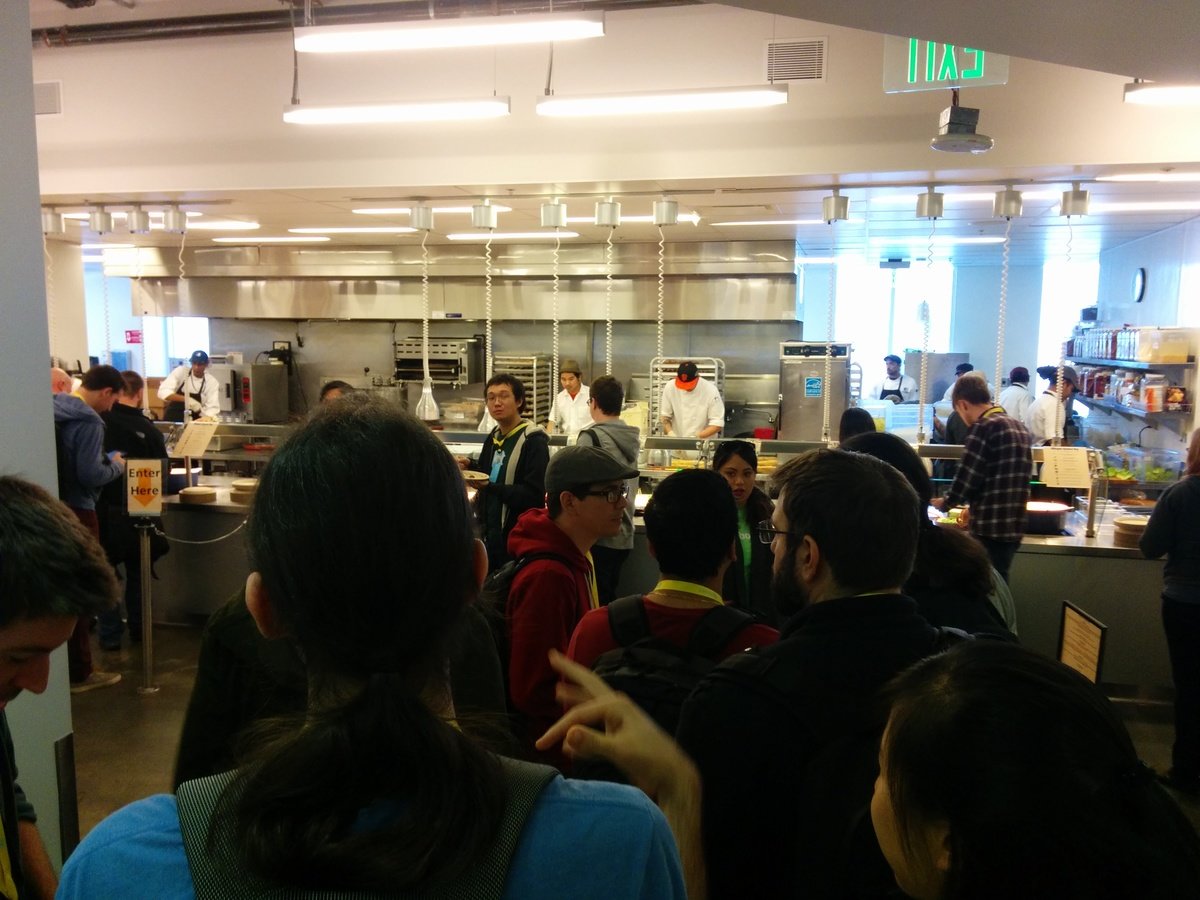
Great food!
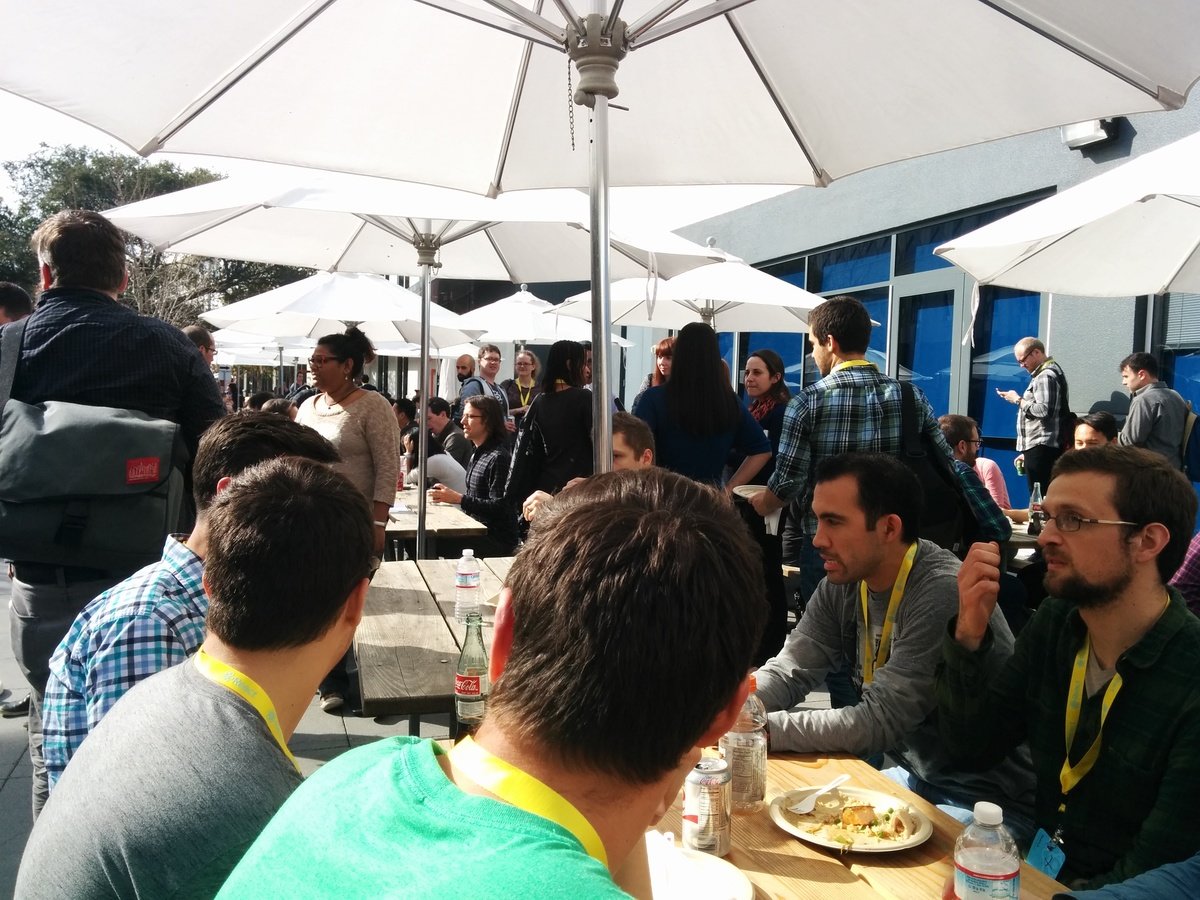
Nice weather!

Epic work environment
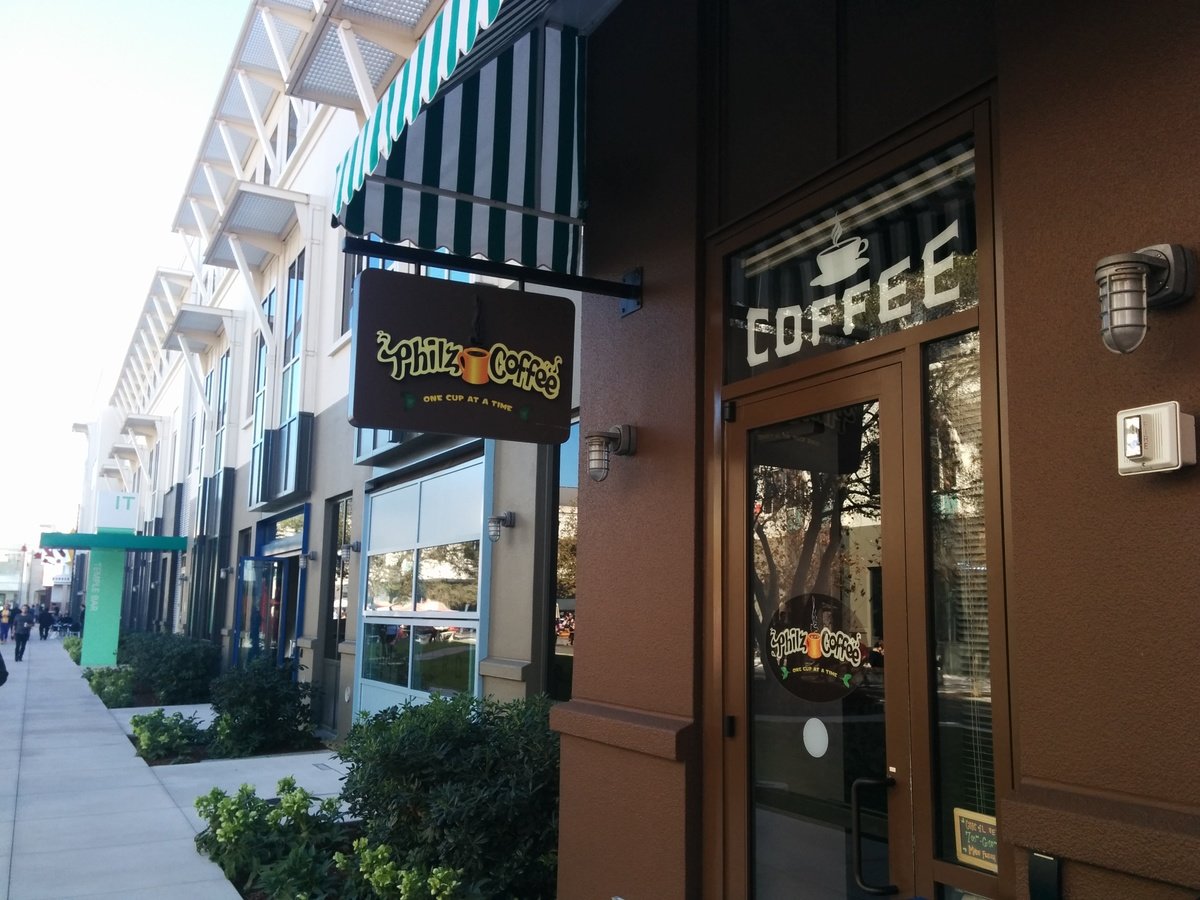
Facebook cares about their employees

California has some awesome beer :-)

Great conference, would go again.