Women Garment Workers
in
BANGLADESH
Siqi Long Jingyu Zhang Pan Fu Xu Wang
introduction
- Background
- Socio-economic Effect
- Wages & Working Conditions
- Wages & Household Needs
- Conclusion
background
- Poverty Level
- Fertility
- Patriarchal Society
- Micro-credit Programmes
- Exported-oriented Garment Industry
Poverty Level
70%
(1970s)
40%
(2000)
Fertility
7
(1970s)
3
(Now)
1,000,000
Patriarchal Society
Restriction on Women's Mobility
Micro-credit Programmes
Export-oriented Garment Industry
Trade Liberalisation Policies
4%
(1974)
55%
(1985-86)
12%
(1983-84)
20.5%
(1995-96)
1.5 million (women)/1.8 million (total)
socio-economic effect
Text
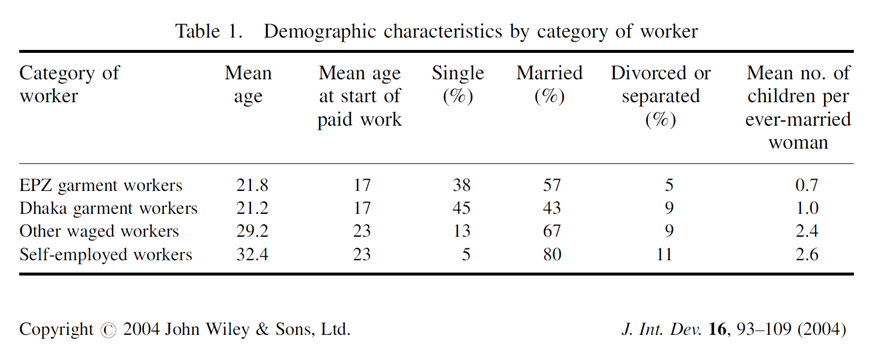
- EPZ: younger, single, have fewer children (were younger, more likely to be single, if married to have fewer children)
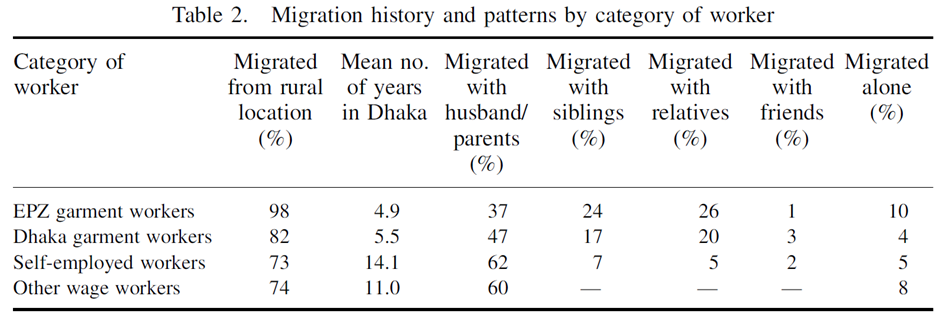
- Women: 38% of self-employed & 25% of other workers worked for garment in their earlier stage
- Migrated from rural to urban
Text
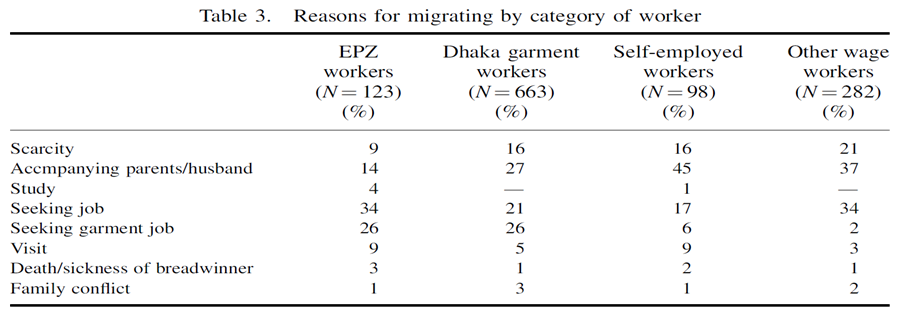
- More workers are seeking for a job to migrate in EPZ & Dhaka garment
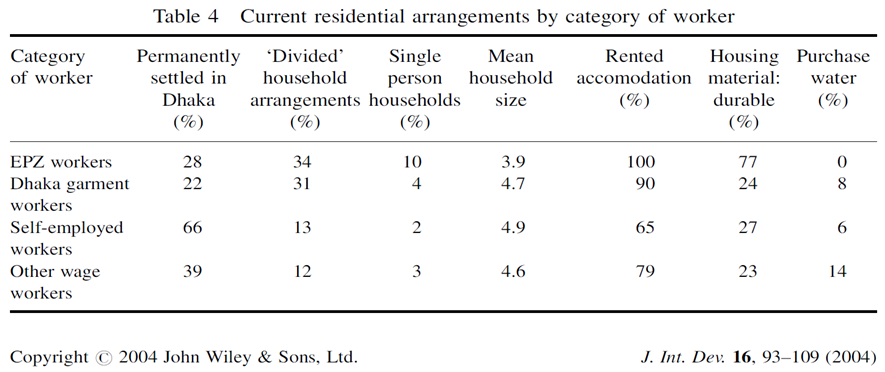
- The garment workers, did not consider themselves permanent residents of the city
- 90% of Dhaka garment workers & 100% of EPZ workers lived in rented accomodation
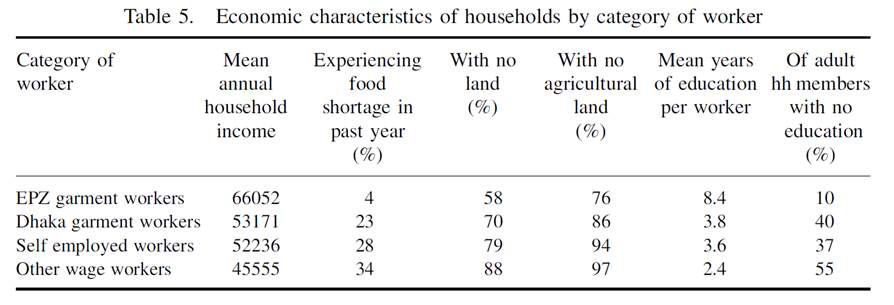
EPZ workers reported the highest mean annual household incomes, were least likely to have experienced a period of food shortage in the previous year(4%), get more average education than other.
Women working in the Dhaka garment industry will not currently see themselves as permanent residents of the city.
wages & working conditions
Montly Income
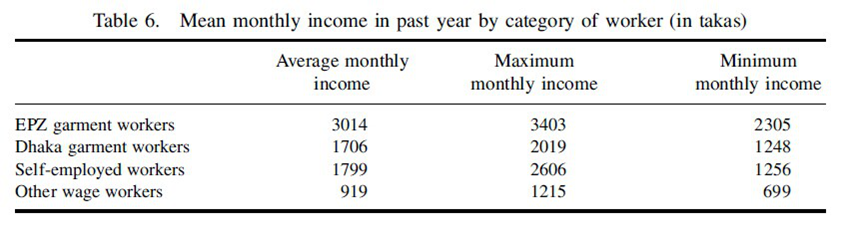
the poorer the worker, the more desperate her household, the lower her education, the fewer her options in the labour market and the lower the ‘reserve’ price of her labour.
poverty line’ income :725 takas in urban areas and 635 takas in rural areas in 2000 (Government of Bangladesh, 2002).
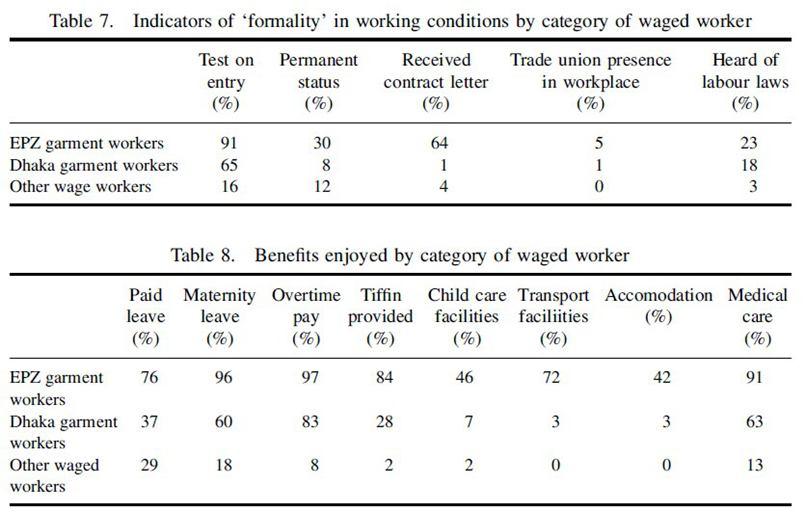
Working Conditions & Benefits
Text
Advantages & Disadvantages of Employment
- Regularity in the payment of salaries and overtime (Dhaka garment workers)
- The provision of meals at work (EPZ workers)
- Working in a domestic environment (Other workers)
- Low salaries
- Management behaviour and irregularity in overtime payments (Dhaka garment workers)
- Difficulty of getting to work (other wage workers)
To Sum Up
- EPZ workers : enjoying more benefits, higher wages and better working conditions. While other workers not.
- Garment workers in general earned enough to support themselves and at least one other adult member of their family.
- Married women faced a trade-off between regularity of income and flexibility needed to also take care of their children.
women's wages & household needs
Title Text
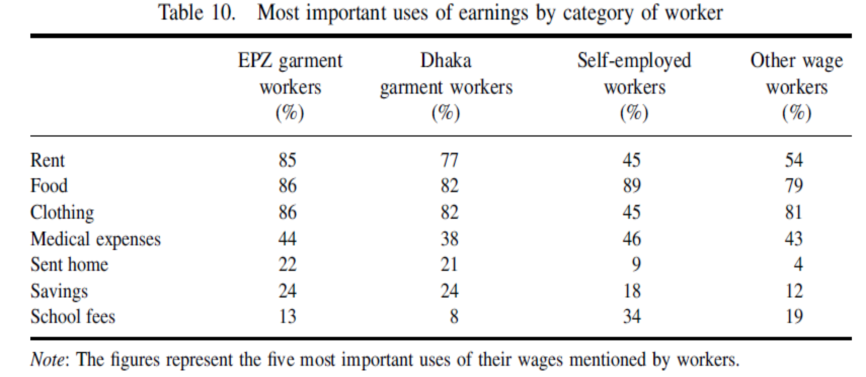
- Best paid has the most ability of saving. (EPZ)
- A net flow from urban to rural areas.
- The poorest are more likely to be satisfied
Title Text
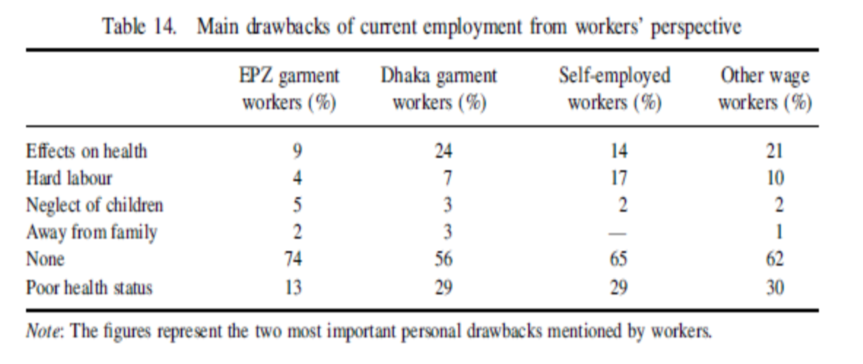
- Main drawback is related to effects on health (Dhaka and other wage workers)
- Heavy work burden (self-employed and other wage workers)
- Other three categories are suffering from poor health status except EPZ workers
- Best paid, least drawbacks