Programming Singapore's quantum computers
Marek Gluza
Senior Research Fellow
Nanyang Technological University
What I do: Programming Singapore's quantum computers
Together we can: Operate Singapore's quantum computers
-
How to be successful in quantum computing?
-
What is the moonshot project of quantum computing?
-
How will we get there?
4 stages of creating quantum algorithms
Guidelines for using quantum computing
Stage 1: Think. What is the goal?
Important problems that are difficult yet doable.
Encode what we know in \(\vec{v}_{input}\).
Decode information from \(\vec{v}_{output}\).
Find effective heuristics to reduce the runtime of rotations \(R_k\)
Find rotations such that
\(\vec{v}_{output} \approx R_1 R_2 \ldots R_n \vec{v}_{input}\)

Stage 2: Design. How to encode task in quantum mechanics?
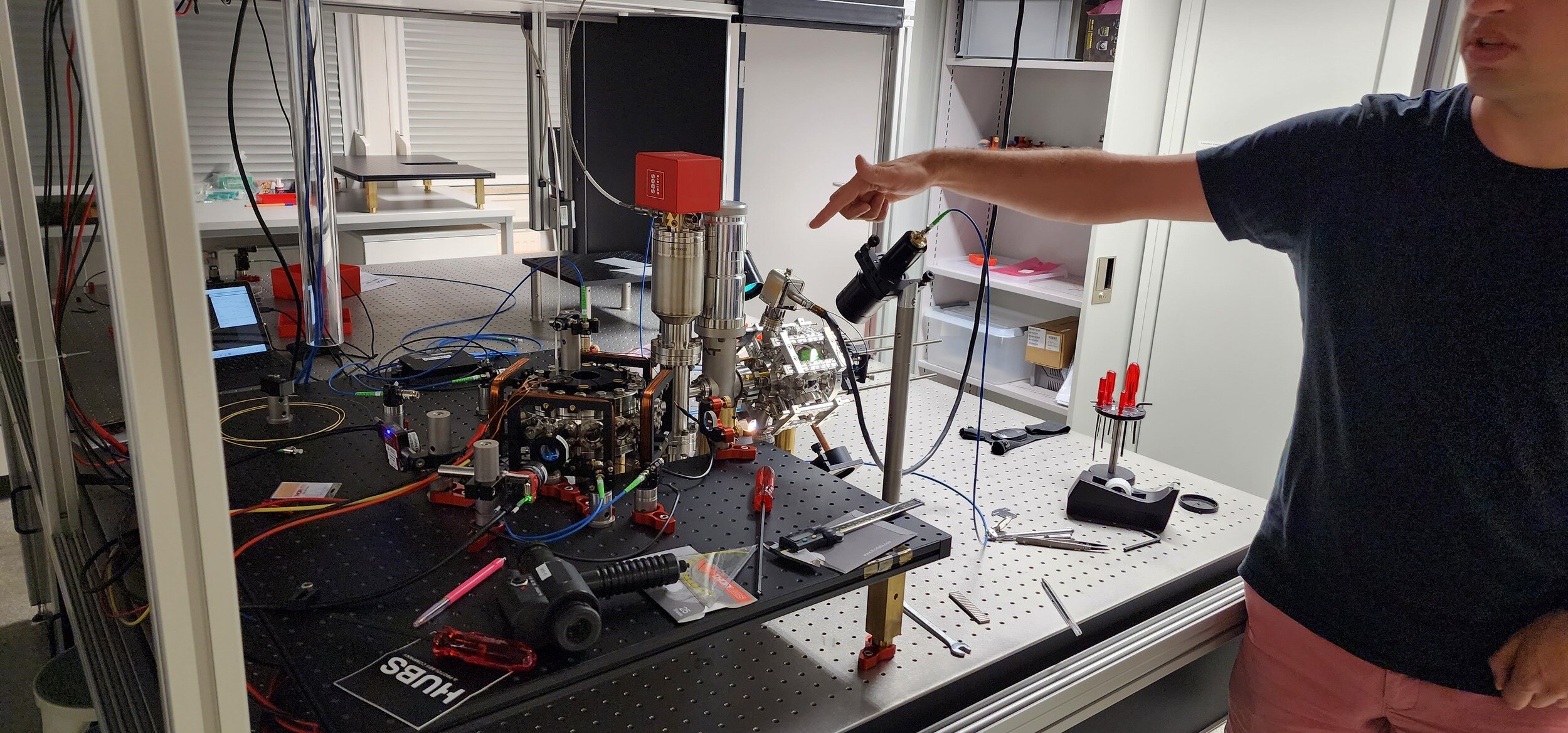
Stage 4: Run it.
What instructions to send?
Stage 3: Algorithm. How to find \(\vec{v}_{output}\)?
Guidelines for extracting utility from quantum computing
Stage 1: Think. What is the goal?
- Bridge between needs of humans and technological feasibility.
- Exchange domain expertise with industry partners.
- My work: General-purpose optimization solver in quantum computing based on non-Euclidean geometry.
- My expertise: Algorithms optimized for execution on leading prototypes.
Stage 4: Run it.
What instructions to send?
Stage 2: Design. How to encode task in quantum mechanics?
Stage 3: Algorithm. How to find \(\vec{v}_{output}\)?
My work: Geometrical construction of quantum algorithms
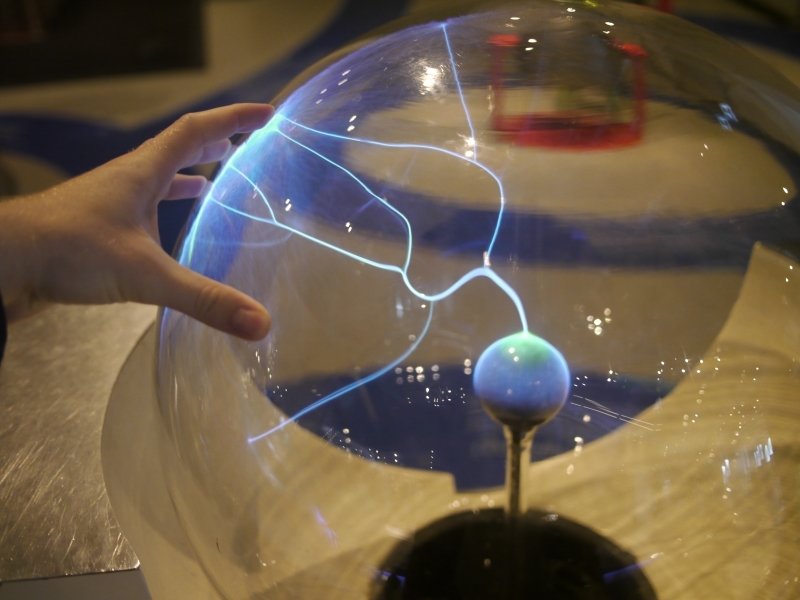
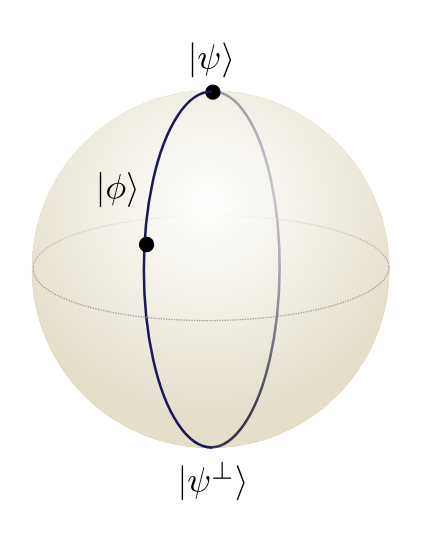
Mathematically, states of the quantum computer are like arrows pointing from the center of the sphere to its surface.
Observation leading to my algorithms: Earth is not flat. I.e., when we walk along of the equator, we think we are going straight but eventually we will wrap around it.
Fixing a direction and rotating the arrow, corresponds to a type of of quantum computing operation.
Stage 3: Algorithm. How to find \(\vec{v}_{output}\)?
On a flat surface DOWN-LEFT-UP-RIGHT will return to point of origin.
Stage 3: Algorithm. How to find \(\vec{v}_{output}\)?
My work: Geometrical construction of quantum algorithms
On a flat surface DOWN-LEFT-UP-RIGHT will return to point of origin.
On a curved surface SOUTH-WEST-NORTH-EAST will spiral way.
Stage 3: Algorithm. How to find \(\vec{v}_{output}\)?
My work: Geometrical construction of quantum algorithms
Marek Gluza
My teaching and supervision approach:
I grew up around these mountains where Poland meets Czech Republic and Slovakia (in Europe)

June '22: Single-author double-bracket proposal

- As postdoc brought together collaboration of 25 co-authors \(\rightarrow\) Leadership skills
- Thanks to tutoring and lecturing experience \(\rightarrow\) Effective coaching younger peers (hired research assistants, supervised and evaluated FYP, BSc., MSc. projects; communication and clarity was key).
- Values guiding us \(\rightarrow\) Creativity is a sustainable intellectual drive! (And it's fun)

October '21: Arrived to Singapore
4 years of working on the real-deal in quantum computing:
Quantum algorithmic protocols for extracting properties of materials
Marek Gluza
Nanyang Assistant Professor
Nanyang Technological University
Marek Gluza
My journey:
I grew up around these mountains where Poland meets Czech Republic and Slovakia (in Europe)
June '22: Single-author double-bracket proposal
- As postdoc brought together collaboration of 25 co-authors on [1-9], 37 co-authors on [1-14]! \(\rightarrow\) Leadership skills
- Thanks to tutoring and lecturing experience \(\rightarrow\) Effectively coaching younger peers
- Values guiding us \(\rightarrow\) Creativity is a sustainable intellectual drive! (And it's fun)
Successful research program:
[10-14] In prep.
October '21: Arrived to Singapore
4 years of working on the real-deal in quantum computing:
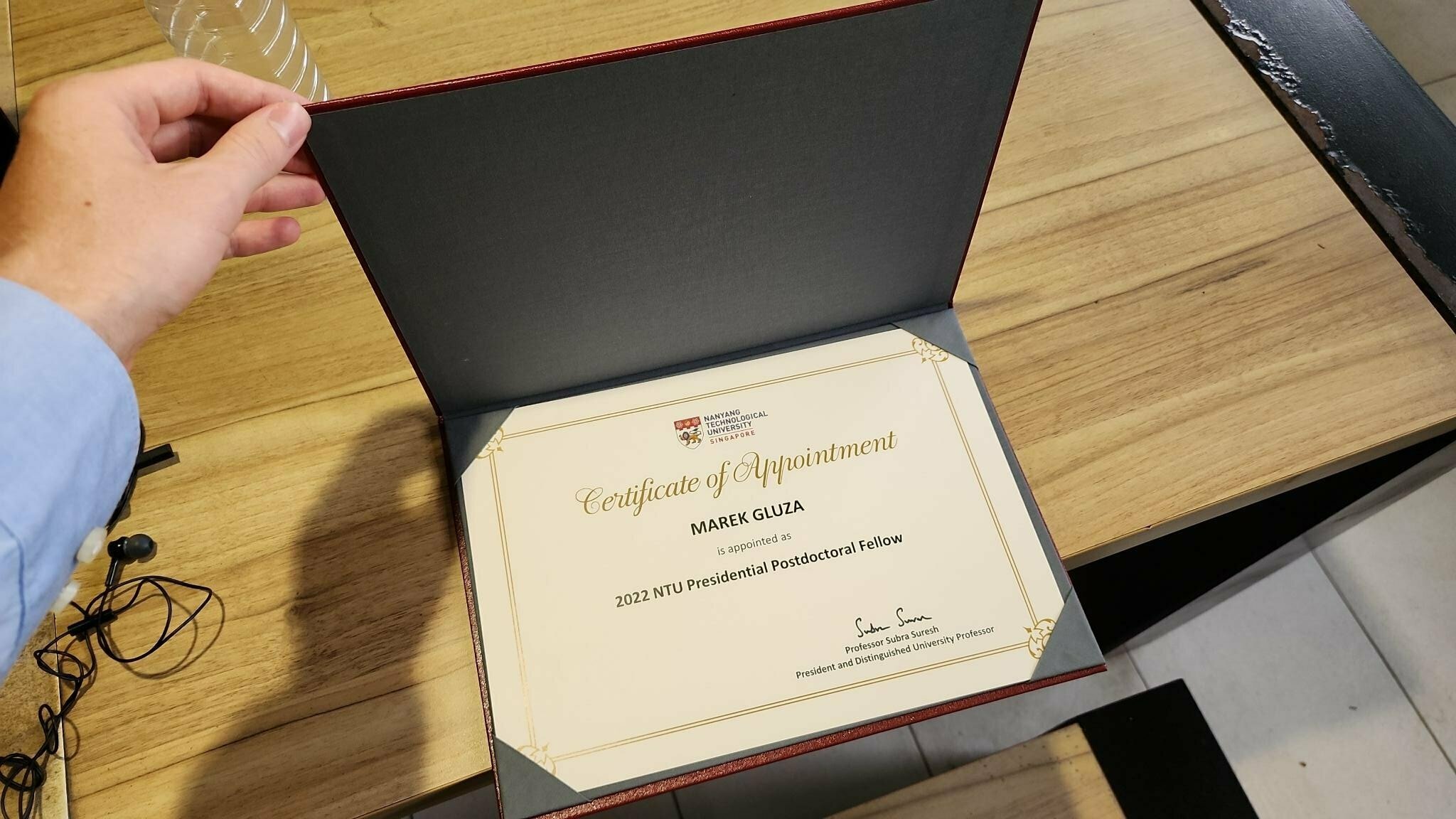
March '26: Started NAP
Why would a quantum computing guy be showing you jetfighters?
Vision: Use quantum computers as an economically viable filter helping to select the one-in-a-million stoichiometric ratio
Characterization bottleneck:
- It is easy to fabricate many samples of materials with different compositions
- A 'human' lab can test only few of them
- How do you select the best one?
What do I mean by 'the best' stoichiometric ratio?
Optimize properties like:
- Charge mobility
- Specific heat
- Density of states
- Structure factor
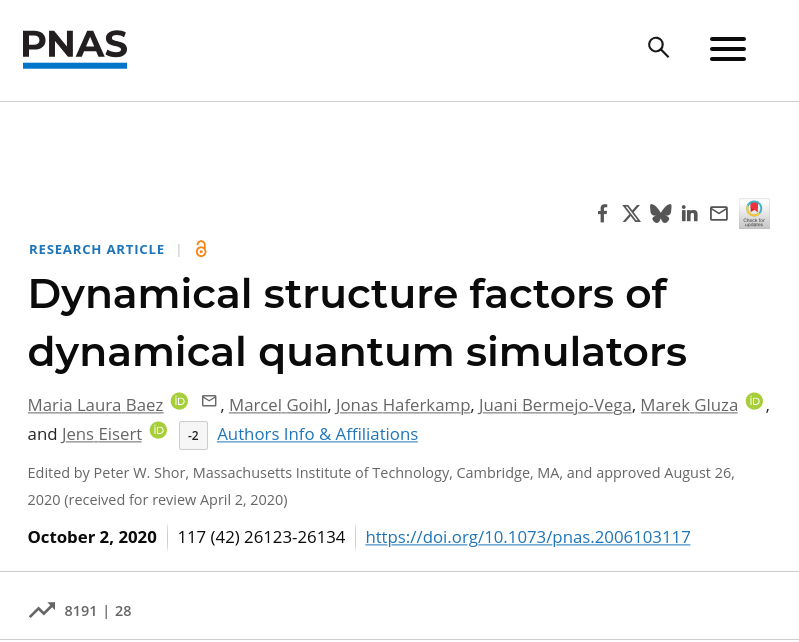
Leadership position in using quantum hardware for condensed-matter and solid state physics studies
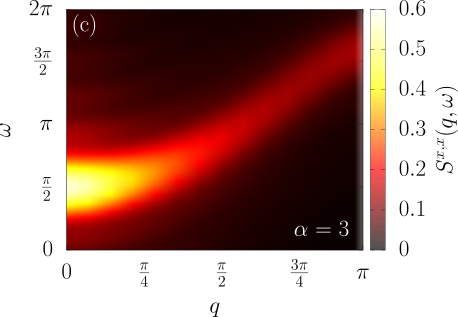
What do I mean by 'the best' stoichiometric ratio?
Optimize properties like:
- Charge mobility
- Specific heat
- Density of states
- Structure factor
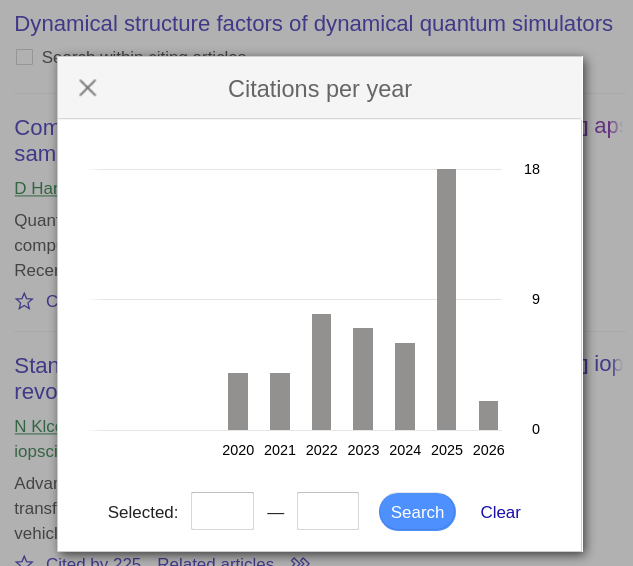
50 citations even though we all moved to other topics
Next:
- Three challenges ahead
- Proposal how to solve them
- Summary
How do we make a quantum computer talk about a material?
How do we account for failures of a quantum computing prototype?
How do we increase our understanding of material?

The Nanyang Quantum Solutions group sets out to serve as the bridge between the quantum software and hardware, between technological capacities and civilizational needs.
How do we make a quantum computer talk about a material?
We need to prepare a quantum state representing low-energy physics of the material.
Low-energy landscape is barren and computationally hard.
We outperform state-of-the-art and benefit from machine learning warm-starts, an approach which alone failed due to the barren plateau phenomenon.

(Physical Review Letters '26)
Work-package 1:
Enable reaching sufficiently low energies on a quantum computer to emulate physics of materials.
3 deliverables:
- Optimized circuit compilation
- Nesterov acceleration in q. computing
- New DBQAs for effective models
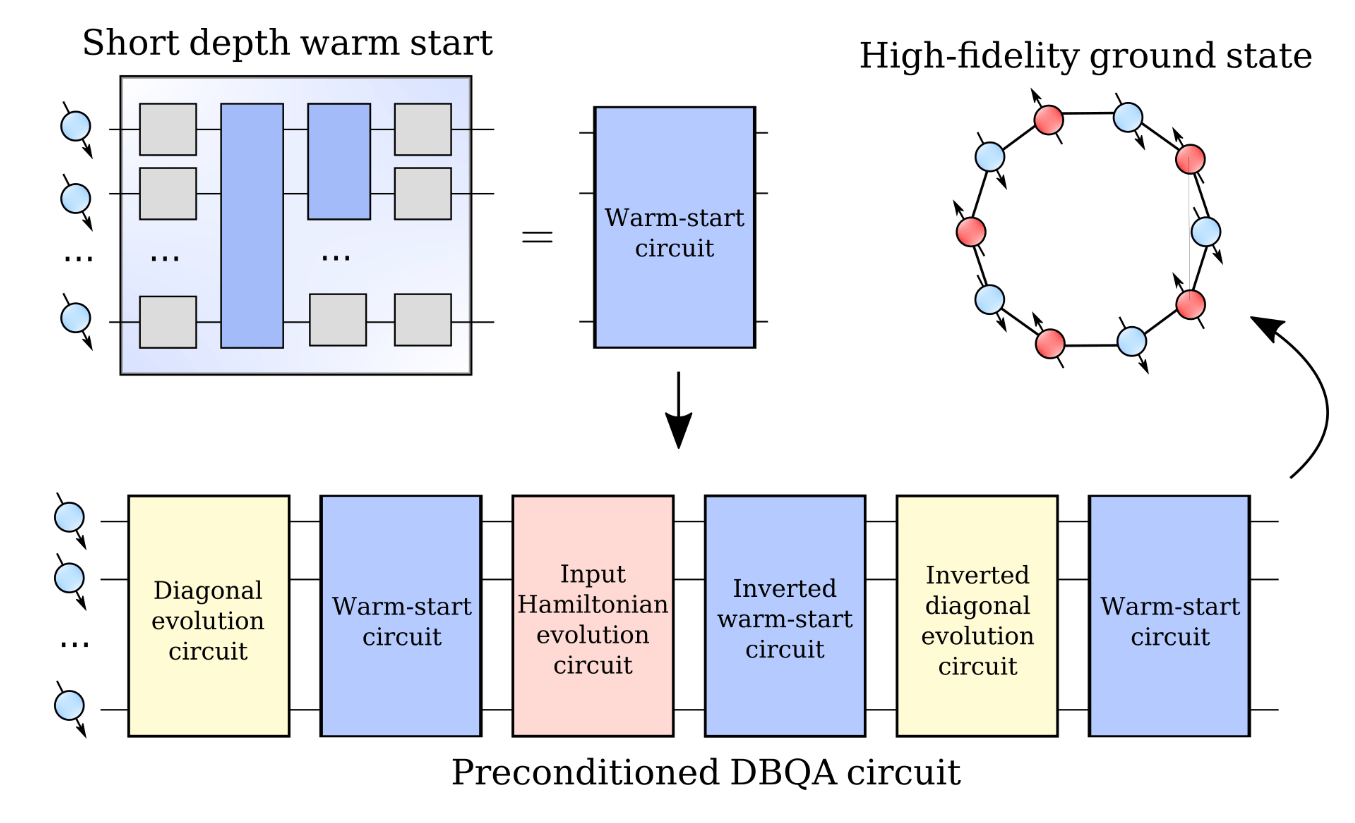
My work established double-bracket quantum algorithms as a leading solution for preparing low-energy states of quantum many-body systems.
How do we increase our understanding of material?
Work-package 2: Provide predictions for precise linear-response functions expected from quantum computations and demonstrate readiness
Deliverable A: Quantitative selection guidelines for unequal-time correlation measurement methods
Deliverable B: Guide for quantum computing experts which response function to study
Deliverable C: Demonstrate readiness of quantum hardware to guide material discovery
WP2-A: Add more!
WP2-B: 2d numerics
WP2-C: 9x9 q. computations
S. Thomson, Edinburgh
NQO collaboration with Quantinuum
How to disentangle from depending on quantum computing prototypes?
Does the success of this research rest on waiting for better hardware?
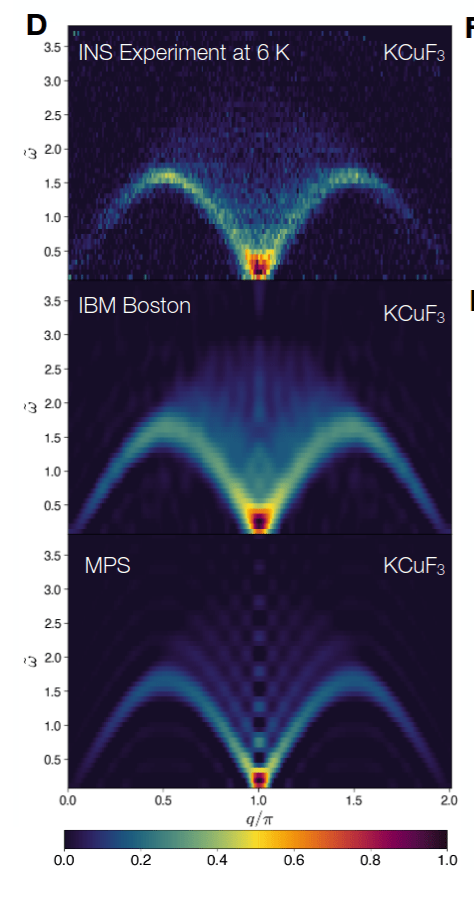
Deliverable A. It is already good: "IBM Heron outputs in 10 mins what my tensor networks does in 1 week on a cluster." Show that existing hardware has faster time-to-solution runtime for DSF.
Work-package 3: Map-out robustness of linear-response functions allowing to prioritize focus points for error mitigation.
Deliverable B. Ask a physicist: Response functions are 'nice' observables. Previous reports of evolution simulation robustness, our PNAS was first for DSF. Broadcast this!
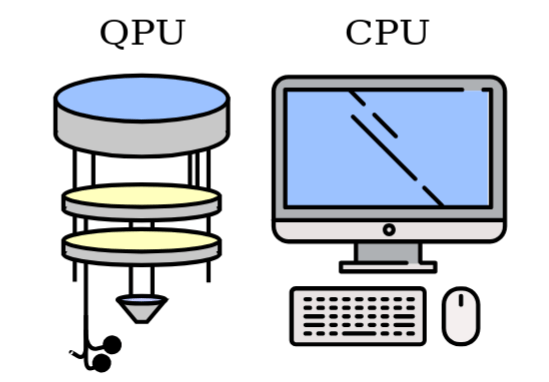
Deliverable C. No need for qubits: Materials science is about fermions. DBQAs can program fermionic quantum computers.
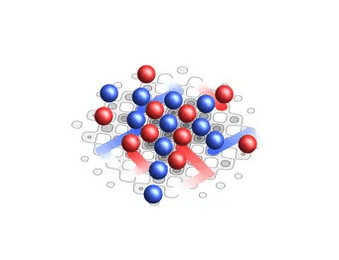
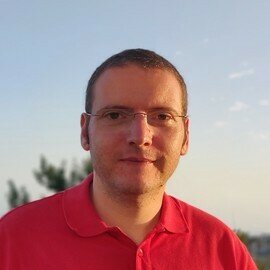
P. Preiss
MPQ Munich
Summary & next steps:
Vision: Develop specialized quantum computations of linear-response functions to help filter which compositions of materials are advantageous.
Timely: I have leadership position in this field, and it will only grow in importance.
Feasible: Not just develop quantum computers but use them!
Work-package 2: Materials applications
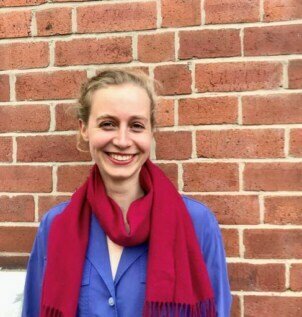
S. Thomson, Edinburgh


Work-package 1: State preparation
Work-package 3: Quantum hardware
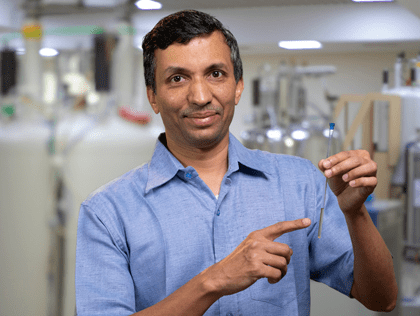
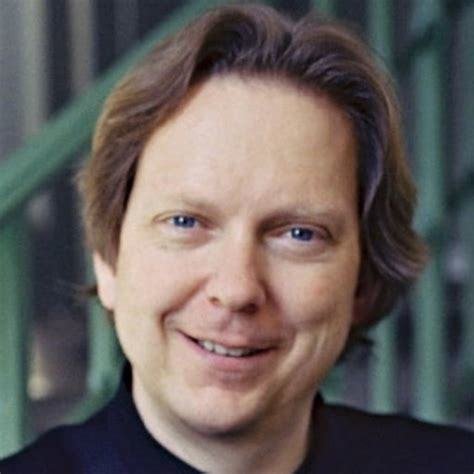

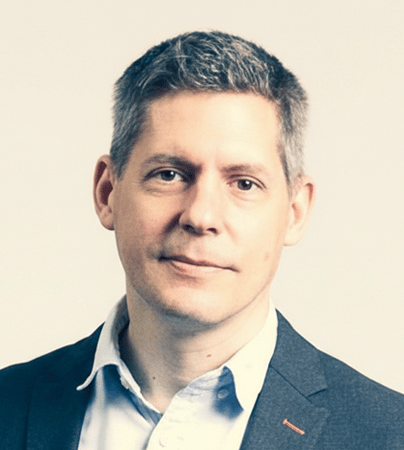
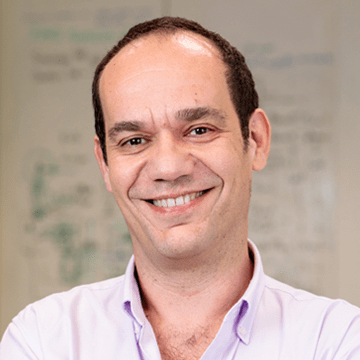
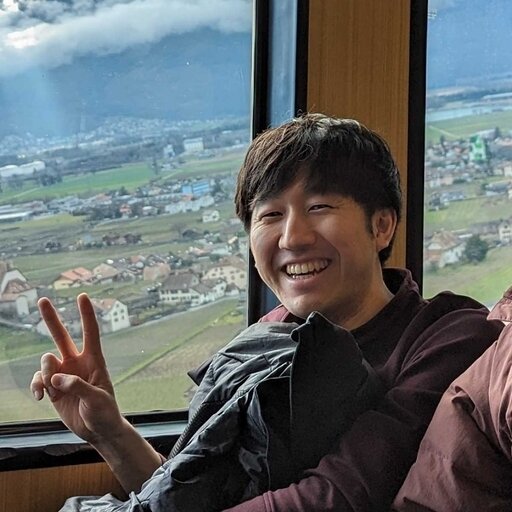


R. Seidel, IQM
S. Thanasilp,
Chulalongkorn, Thailand
F. Barbaresco, Thales
C. Mostajeran,
NTU
N. Ng,
NTU
Y. Suzuki,
EPFL
Z. Holmes, EPFL, Algorithmiq
C. Arenz,
Arizona S. U.
R. Zander,
Fraunhofer
Berlin
T. Silva,
TII Abu Dhabi
S. Carrazza, CERN
TS. Mahesh
IISER Pune
P. Preiss
MPQ Munich
J. Schmiedmayer,
TU Wien
R. Dumke,
NTU Singapore
D. Wilkowski,
NTU Singapore
Double-bracket quantum algorithms
- Coherently implement Riemannian gradient steps
-
Give rigorous unitary synthesis for
- imaginary-time evolution
- quantum signal processing
- diagonalization unitaries
- Grover's as an approximation to imaginary-time evolution
- Training quantum circuits from data doesn't work well, unlike in classical machine learning applications. However those variational learning methods are great for warm-starting double-bracket quantum algorithms!


Tell me when not fast enough? Get stuck? Something else?
Your input is needed to improve them!
N. Ng
Z. Holmes
R. Zander
R. Seidel
Y. Suzuki
B. Tiang
J. Son
S. Carrazza
Stay in touch on LinkedIn:
Text
Text
Text