Ember Outside the Box

By Michael Lange
@DingoEatingFuzz
What do you do when the framework doesn't have a solution to your problem?
What’s a framework and what’s a library?
Frameworks call your code
You call library code
Frameworks
are boxes
Libraries
are bags



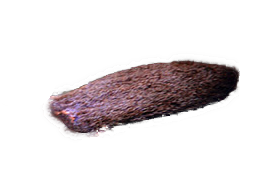
Frameworks are rigid
And they can feel restricting.
There's an inversion
There's an inversion
of ownership.
But frameworks are so good!
All software has unique problems
So what do we do?
You're bumping into walls, now what?
Four Quick Suggestions
- Desperately scroll through Ember Observer
- Abandon Ember and try to figure out Webpack again
- Scold ourselves for not listening to all those Google evangelists who tell us to only use vanilla js
- Leave tech, move to Wyoming, and become a rancher
What we did at Lytics
The Problem
- A complex UI for building boolean algebra formulas
- An overly complicated API for expressing these formulas
- A series of UX optimizations to make boolean algebra more approachable
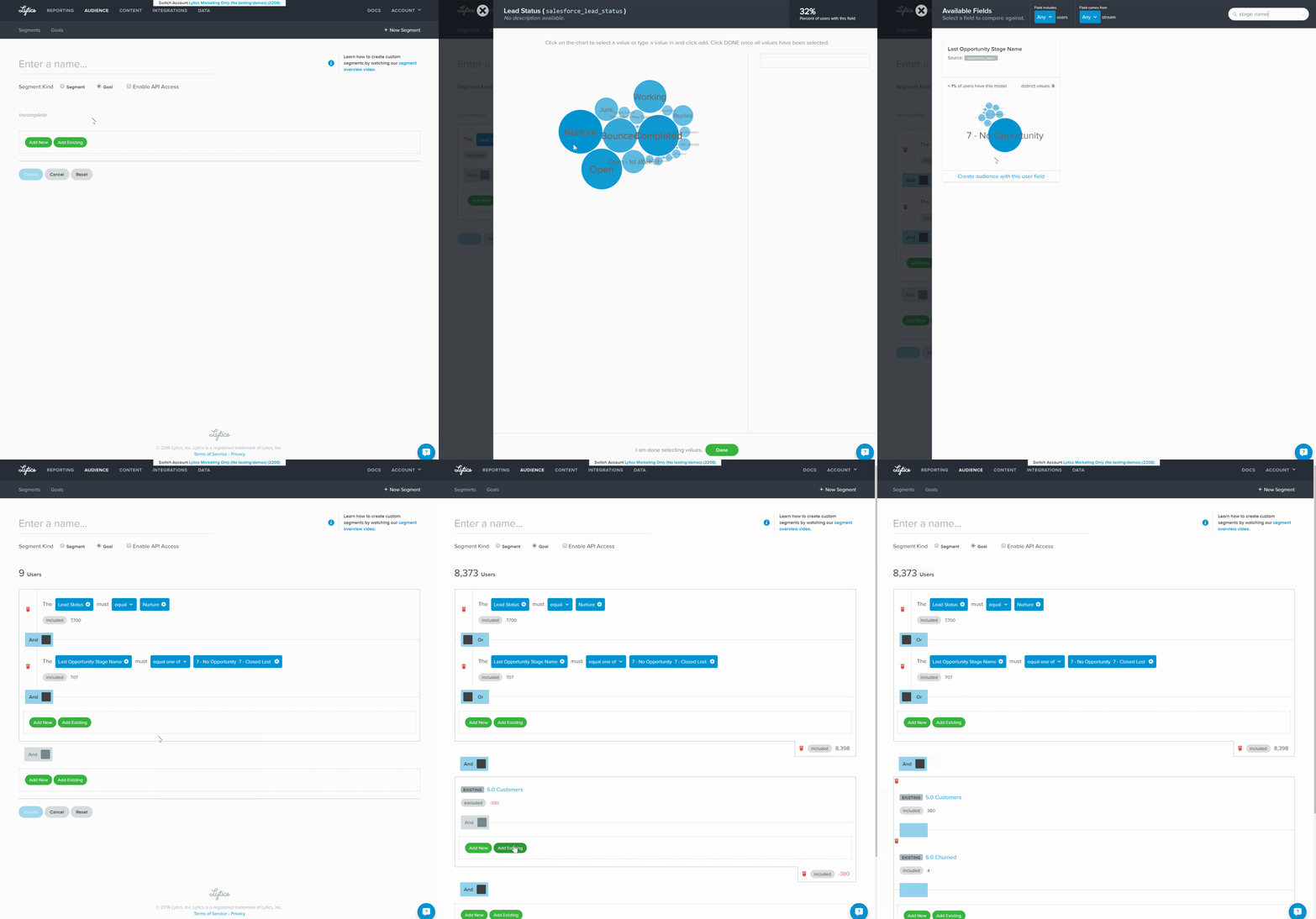
Ember didn't have the answers.
Controllers + Views
Not so great for nested views decoupled from the router
ED Dependent Relations
A custom answer to ED not dirtying "parent" models
But the concerns still mingled.
Image from http://www.52kitchenadventures.com/2011/09/12/melted-crayon-art-tutorial/
// Converts the composite segment into a copy of the first child segment
collapseSegment: function() {
  const collapsing = this.get('model');
  let onlyChild = collapsing.get('children.firstObject');

  // TODO dependency: This is a bug in ED, who knows if it's been fixed by now
  if (!collapsing.get('children.length')) {
    onlyChild = null;
  }

  // To maintain the root segment's ID, it must take on the operator and
  // children/fields of the only child
  if (this.get('isRoot')) {
    if (!onlyChild) {
      // Revert to an undefined type if there are no children
      collapsing.set('operator', null);
    } else if (!onlyChild.get('isNamed')) {
      const type = onlyChild.get('type');

      // Replace the collapsed segment with its only child by converting to a rule, or
      // copying its children (or just clearing them if the segment has no type yet)
      if (type === 'rule') {
        collapsing.setProperties(onlyChild.getProperties([
          'type',
          'operator',
          'fieldName',
          'fieldKey',
          'isInverted'
        ]));
        collapsing.get('values').setObjects(onlyChild.get('values').toArray());
        collapsing.get('children').clear();
      } else if (type === 'composite') {
        collapsing.get('children').setObjects(onlyChild.get('children').toArray());
      } else {
        collapsing.get('children').clear();
        collapsing.set('type', 'rule');
      }
    }
  } else {
    const siblings = this.get('parentSegment.children');

    // Replace the collapsed segment with its only child
    siblings.replace(siblings.indexOf(collapsing), 1, [ onlyChild ]);
  }
},
{{!-- This is the top-level container that is used to expand the root segment,
which only allows the segment tree to be expanded to the max depth --}}
{{#segments/node-container
selectedField=selectedField
model=model
availableSegments=availableSegments
showAddButtons=(lt model.maxDepth maxAllowedDepth)
alwaysExpand=true
class="top-level"}}
{{#if model.isComposite}}
{{segments/node-composite
model=model
availableSegments=availableSegments
totalSize=totalSize
class="item segment"}}
{{else if model.isRule}}
{{segments/node-rule
model=model
totalSize=totalSize
class="item segment"}}
{{/if}}
{{/segments/node-container}}didLoad: function() {
// Consider the following scenario:
//
// 1. A segment is created
// 2. The app is reloaded
// 3. A batch segment size request includes the id of the new segment
// 4. The segment's size is returned as `null` since it hasn't been cached
//
// What needs to happen is for the segment's size to be reloaded using the
// non-caching API. However, at this point only the segment size serializer
// knows that the given segment doesn't have a cached size. So the size
// could be reloaded 1) in the serializer or 2) here in the model. Note that
// no matter how it is reloaded, the segment size adapter must use the
// correct API based on the fact that the record has already loaded.
//
// I present to you the lesser of two evils.
if (!isPresent(this.get('value'))) {
this.reload();
}
}.observes('value')Quick Fixes?
Desperately scroll through Ember Observer?
Desperately scroll through Ember Observer?
Domain specific problems won't be solved by add-ons alone.
Abandon Ember and try to figure out Webpack again?
Abandon Ember and try to figure out Webpack again?
>70,000 LOC (not counting tests), and who is to say this problem wouldn't follow us?
Scold ourselves for not listening to all those Google evangelists who tell us to only use vanilla js?
Scold ourselves for not listening to all those Google evangelists who tell us to only use vanilla js?
This wasn't about time to first paint and it couldn't be fixed by service workers.
Leave tech, move to Wyoming, and become a rancher?
Leave tech, move to Wyoming, and become a rancher?
So tempting, but it defies the three virtues of a great programmer. Notably #3, hubris.
So the API was rewritten...
(i.e., refactoring time)
Now an AST API
Abstract Syntax Tree
Treat the AST like an embedded record
But don't use ED for this embedded record!
export default BaseModel.extend(Eventable, {
  name                : DS.attr('string', { defaultValue: '' }),
  description         : DS.attr('string', { defaultValue: '' }),
  isPublic            : DS.attr('boolean', { defaultValue: false }),
  slug                : DS.attr('string', { defaultValue: '' }),
  modifiedAt          : DS.attr('date'),
  kind                : DS.attr('string', { defaultValue: 'segment' }),
  tags                : DS.attr(),
  isServerSideInvalid : DS.attr('boolean', { defaultValue: false }),
  schema              : DS.belongsTo('schema', { async: false }),
  cachedSize          : DS.belongsTo('segment_size', { async: true }),

  // A SegmentDefinition object
  definition          : DS.attr(),

  // The segments that rely on this segment
  dependents   : DS.hasMany('segment', { async: false, inverse: 'dependencies' }),
  // The segments that this segment relies on
  dependencies : DS.hasMany('segment', { async: false, inverse: 'dependents' }),

  works : DS.hasMany('work', { async: true }),
  trend : DS.belongsTo('segment-trend', { async: true }),

  // Since it is possible to receive `null` for the cached size from the API,
  // a fallback is needed.
  size: function() {
    if (this.get('isServerSideInvalid')) { return null; }

    const cachedSize = this.get('cachedSize');
    if (cachedSize.get('value') != null || cachedSize.get('isLoading')) {
      return cachedSize;
    }

    return sizeForDefinition(this.store, this.get('definition'));
  }.property('cachedSize.value', 'isServerSideInvalid', 'definition'),
  // ...
}
normalize(type, hash, prop) {
// The 'table' field is the schema FK
hash.schema_id = hash.table;
// The segment id is the segment_trend FK
if (hash.id) {
hash.trend_id = hash.id;
hash.cached_size_id = hash.id;
}
// Keep track of all other segments this segment utilizes
hash.dependency_ids = dependenciesForAST(hash.ast);
// Convert the ast into a modelish
hash.definition = SegmentDefinition.create({
ast: hash.ast,
store: this.store
});
return this._super(type, hash, prop);
},export default function sizeForDefinition(store, definition, schema = 'user') {
if (schema instanceof Schema) { schema = schema.get('name'); }
return store.findRecord('segment_definition_size', JSON.stringify({
table: schema,
ast: definition instanceof SegmentDefinition ? definition.get('ast') : definition
}));
}normalizeSingleResponse(store, type, payload, recordId) {
const sizeArray = payload.data;
const size = Array.isArray(sizeArray) ? sizeArray[0] : null;
const record = JSON.parse(recordId);
const data = {
id: recordId,
schema_id: record.table,
ast: record.ast,
value: size
};
return this._super(store, type, data, recordId);
},utils/segments/size-for-definition.js
serializers/segment-definition-size.js
findRecord(store, type, id, snapshot) {
  const params = { segments: `[${id}]` };
  return this.ajax(this.buildURL(type.modelName, id, snapshot), 'GET', { data: params });
},
adapters/segment-definition-size.js
Segment
SegmentDefinition
SegmentDefinitionSize
ED model
custom
custom
JSONSerializer
RESTAdapter
Make Segment Definitions "immutable"
replace imperative property changes with object diffing
invertSegment() {
  const store = this.get('store');
  const siblings = this.get('parentSegment.children');
  let inverter, original;

  if (this.get('model.isInverter')) {
    inverter = this.get('model');
    original = inverter.get('children.firstObject');

    // Replace the inverter segment with its only child
    siblings.replace(siblings.indexOf(inverter), 1, [ original ]);
  } else {
    original = this.get('model');
    inverter = store.createRecord('segment', {
      operator: 'not',
      schema: original.get('schema')
    });

    // Add the original segment as the first child of the new inverter segment
    inverter.get('children').addObject(original);

    // Replace the original segment with the new inverter segment
    siblings.replace(siblings.indexOf(original), 1, [ inverter ]);
  }
},
invertSegment() {
const model = this.get('model');
if (model.get('isInverted')) {
model.transform(model.get('children.firstObject').clone());
} else {
model.transform(S('not', model.clone()));
}
}Before
After
Where have I heard this before...
Virtual DOM?
Eliminating state management
Disaster Mitigation
🔥
declarative programming
Imperative code describes what a program does
Declarative code describes what a program is
model.transform(S('or',
  S('and',
    S('>', 'field_name', 50),
    S('include', 'segment_name')
  ),
  S('>=', 'field_two', 99)
));
Segment Builder component focuses on UI
Declarative Segment Definition transforms make model code a detail rather than a concern
  addChild(child) {
    const targetModel = this.get('targetModel');
    const operator = targetModel.get('operator');

    if (this.get('depth') >= this.get('maxDepth')) {
      targetModel.transform(S(operator,
        ...targetModel.get('children').mapBy('ast'),
        child
      ));
    } else {
      targetModel.transform(S(operator,
        ...targetModel.get('children').mapBy('ast'),
        S(operator === 'and' ? 'or' : 'and', child)
      ));
    }
},-
Fitting a custom model implementation into Ember Data
-
Replacing common imperative get/set code with declarative transformations
-
Making Handlebars more powerful
Outside the Box
Handlebars is intentionally low-power
The segment builder component of choice is a function of the segment definition
Strategy Pattern
In the strategy pattern, behaviors are defined as separate interfaces and specific classes that implement these interfaces. This allows better decoupling between the behavior and the class that uses the behavior.
{{#each childrenForBuilder as |child|}}
  {{#if child.builder}}
    {{component (concat "segments/builders/builder-" (or child.builder "empty"))
      definition=child.definition
      depth=nextDepth
      maxDepth=maxDepth
      blacklist=blacklist
      schema=schema}}
  {{/if}}
  <div class="segment-toggle">
    <div class="bar"></div>
    {{and-or-toggle
      value=viewOperator
      disabled=(lte targetModel.children.length 1)
      action="toggleOperator"
      toggleClass="and-or-toggle action-toggle segment-operator"}}
  </div>
{{/each}}
builder-composite.hbs
each child gets rendered using the appropriate component
{{#if model.hasSiblings}}
  <div class="segment-rule-controls">
    <a class="segment-remove action-remove" {{action "removeSegment"}}>
      {{lio-icon "trash"}}
    </a>
  </div>
{{/if}}
<div class="segment-definition">
  <span class="label label-default label-invert">Existing</span>
  <span class="segment-name">{{targetModel.reference.name}}</span>
  <div class="segment-controls">
    <div class="segment-invert">
      <small>
        <button class="btn btn-xs {{if isExcluded "btn-secondary"}} action-toggle" {{action "toggleExcluded"}}>
          {{if isExcluded "excluded" "included"}}
        </button>
      </small>
    </div>
    {{segment-size segment=model}}
  </div>
</div>
builder-reference.hbs
simple component knows nothing about how it got here
import { typeFromOperator } from '../../models/segment-definition';

/**
 * Segment Builder Stategies
 *
 * A strategy takes the form of [ componentName, predicate ]
 */
const strategies = {
  rule: [
    [ 'rule', () => true ],
  ],
  composite: [
    [ 'rule', ast => ast.op === 'not' && typeFromOperator(ast.args[0].op) === 'rule' ],
    [ 'composite', ast => ast.op === 'not' && typeFromOperator(ast.args[0].op) === 'composite' ],
    [ 'reference', ast => ast.op === 'not' && typeFromOperator(ast.args[0].op) === 'reference' ],
    [ 'composite', () => true ],
  ],
  reference: [
    [ 'reference', () => true ],
  ],
  all: [
    [ 'all', () => true ],
  ],
};

export default function componentForSegmentDefinition(definition) {
  const strategiesForType = strategies[typeFromOperator(definition.get('operator'))];
  return strategiesForType.find(strategy => strategy[1](definition.get('ast')))[0];
}
builder-strategies.js
an extensible set of predicates used to determine a builder
Don't map UI one-to-one with your API
API surface area is finite, but the design space is unbounded
Results
Before
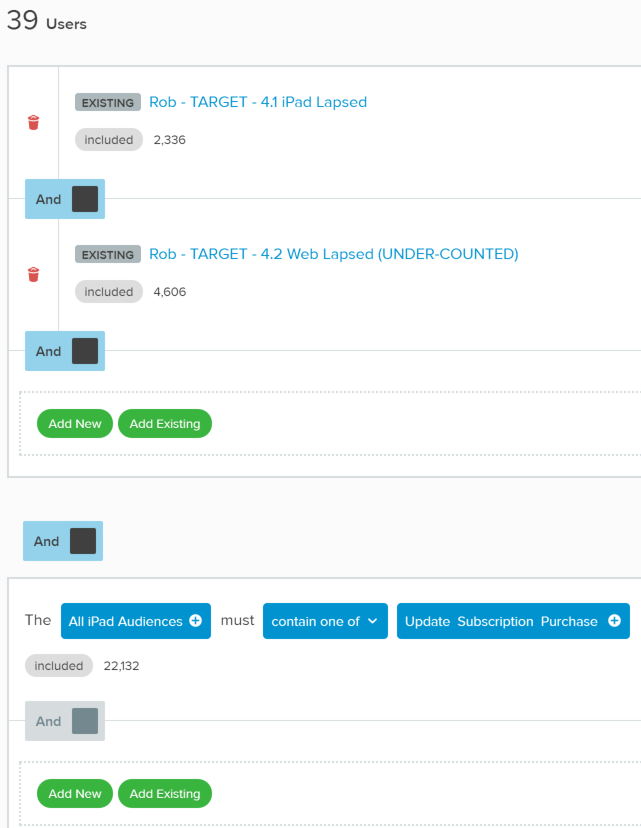
After

225 PR comments
76 commits
116 files changed
3,292 insertions
2,522 deletions
¯\_(ツ)_/¯
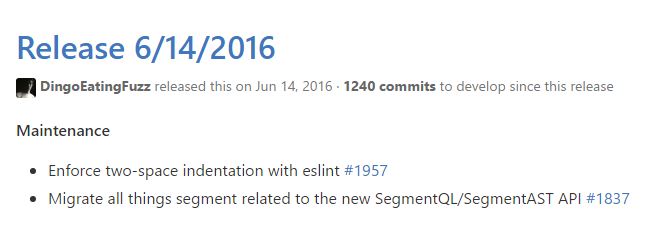
The Aftermath
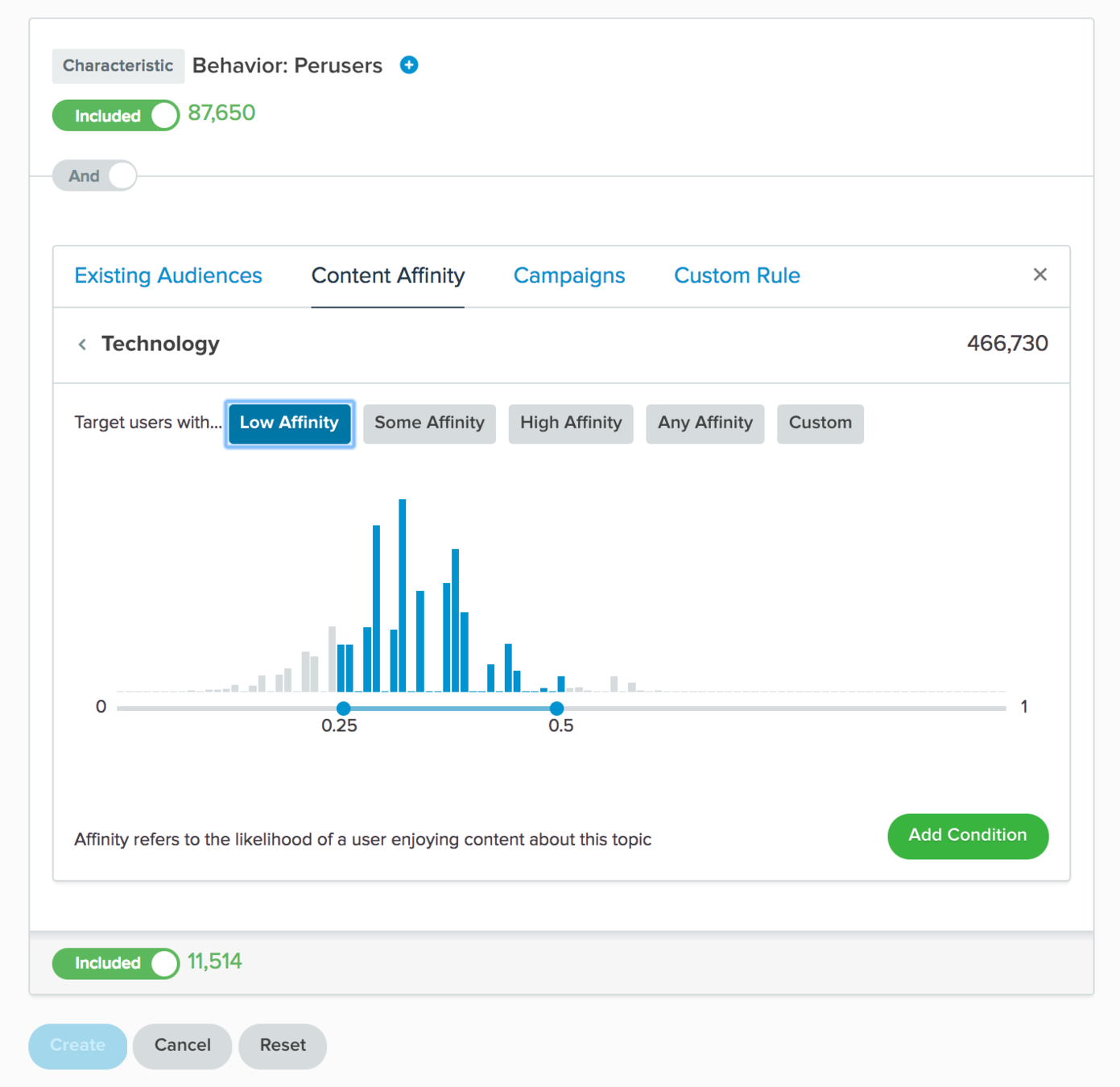
New Segment
Builder
- New Content Affinity Tab
- New Campaigns Tab
- New condition builder UI concept
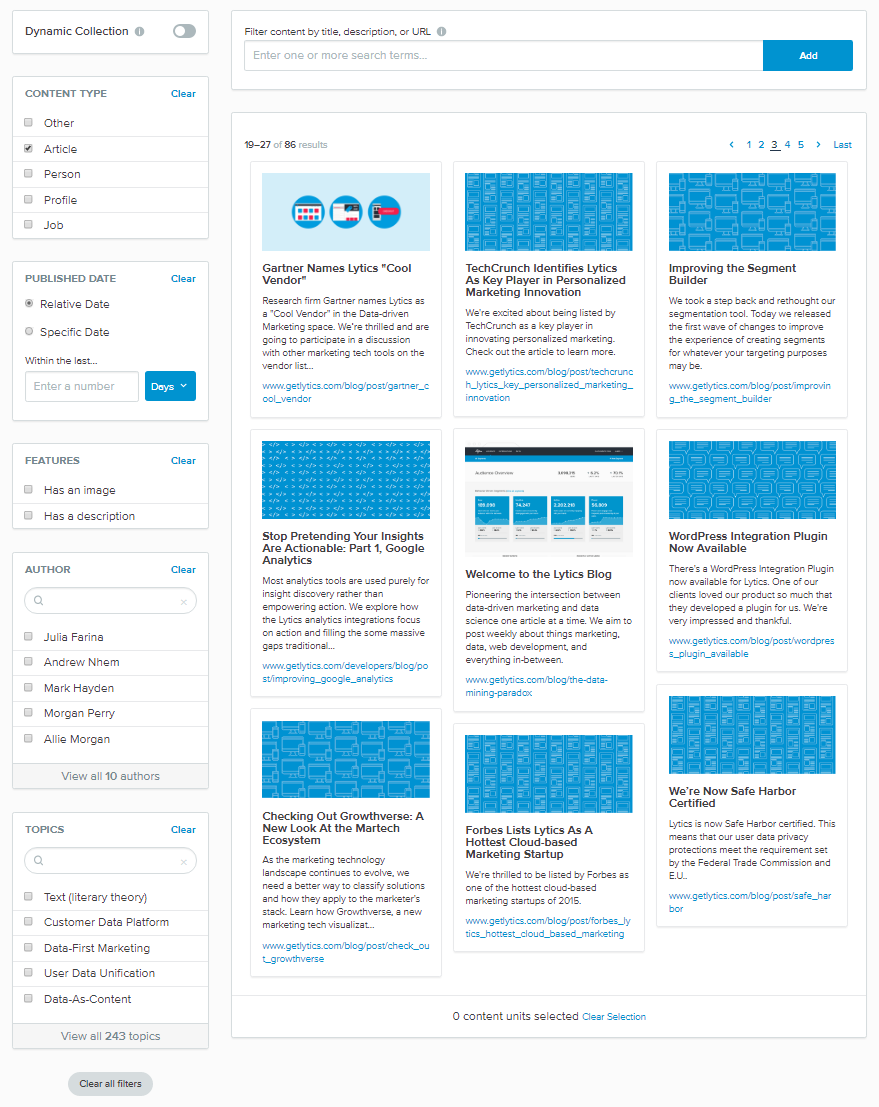
Content Segment
Builder
- Very different UI
- Very different requirements
- No builder strategies
- Still using segment transforms
Ember 1.11 → 2.9
No problems
(in this code)
Takeaways
Takeaways
- When given the chance to write domain-specific code, align designs with the business
- Maintenance opportunities are always opportunities for hammock time1
- Frameworks are amazing, but they will never have all the answers
- Frameworks are all created with philosophies that are bigger than their implementations
1: Rich Hickey on Hammock Time: https://www.youtube.com/watch?v=f84n5oFoZBc
Thank you!
twitter: @DingoEatingFuzz
github: DingoEatingFuzz