App development guide
Presentation objective:
- Deliver a foundation on what to focus to start building an MVP
¿What is an MVP?
By definition, an MVP must have the "core" functionality of your product so you can get a "quick win". This implies having a clear picture of what you are solving to a very specific type of user.
Statistically as your customer base grows, their needs grows and you need more ways of solving those needs, which implies having to develop additional features to keep your value proposition relevant and innovative.
Think big but start small.
To achieve innovation, quality and project speed

I. Value oriented
Understand what your solving
- Outcomes (value) rather than outputs (deliverables)
* Focus on:
- Prioritize product features "must have" rather than "nice-to-have"
- Eliminate the waste of low priority features that are not essential for customers
Value oriented example
Neil has created and evergreen pre-recorded webinar where he explained the benefits of using his methodology to achieve high performance on speed reading.
- He created value (outcome) through curated content in order to create his customer base through sign ups.
* What he did:
Pay close attention to what isn't being served by others and understand the value it will provide to your users.

II. Customer centered
Listen to your potential customer
- Being customer centric rather than product centric. Consider products not as an objective but as a tool to meet your customer's needs
* Focus on:
- Listen closely to "the voice of your customers"
- Ask customers about their needs but not the proposed solutions
Customer centered example
Daniel wants to do a portfolio management tool but instead of start building his product, he decides to collect user feedback through surveys.
- He setup an add campaign, sent people to his landing page and offered a 90 day free trial to early testers so he could listen to peoples comments and before building his product, he refined his prototype through user feedback.
* What he did:
Pay close through active listening of your audience in order to deliver what actually meet your customer's needs.
III. Iterative
Rome was not build in a day
- Customer feedback
* Focus on:
- Move evolutionary rather than revolutionary
- Release a core version of the product including only high priority features
IV. Simplistic
Less is more
- Less is much more. Do not complicate it
* Focus on:
- Appreciate downsizing the product by removing nonessential features, rather than upsizing it with bells ans whistles
- Focus on just enough and what is really necessary to satisfy customer needs
Simplistic example
Tom builds a nutrition advice progressive web application with what he considered the minimum features and later he decides to tell his friends and asks them to test his app.
- After his friends used the application, he realized he needed to downsize his application to make it more useful and easy to navigate because he never realized that one specific feature was not needed and that was creating more confusion and a less pleasant experience.
* What he did:
It's much more useful to listen to beta testers to gather early customer feedback and avoid confusion and waste.
V. Optimize the workflow
Establish clear communication between business and technical teams
- Prevent waste by creating a sufficient detail in requirement analysis and design artifacts
* To optimize the workflow:
- Create these at the right time to prevent work in progress waste
- Understand the development lifecycle to prevent project's scope creap
Workflow example
Laura (marketing manager) sits down with a client to present him the new workflow to prevent work in progress and client's budget waste.
- She realized how important it was to have a clear picture of both client's expectations and team's work in progress waste so she went ahead and create the business requirements, user stories and acceptance criteria, information architecture, customer journey mapping and system and technical requirements.
* What she did:
By removing ambiguity, you can confidently predict a more realistic outcome and prevent waste.
What to focus
¿What's worth doing?
¿For whom are we doing it?
¿What's the real value of it?
* Must know:
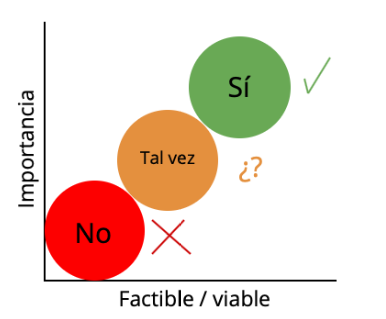
* Focus on what can be done by first having all written down and then spending time on what's really worth doing.
Let's get cracking