why every product team should practice
[BEHAVIOUR-DRIVEN DEVELOPMENT]
It is important for everyone in a product or service team to understand how practicing behaviour-driven development will grow your output 10x
Disclaimer: no fancy graphs 📈
what is behaviour-driven development?
Since BDD is a subset of test-driven development, let's start there.
[BEHAVIOUR-DRIVEN DEVELOPMENT]
what is test-driven development?
TDD is the practice of writing test code before the implementation code for a new feature or functionality.
[BEHAVIOUR-DRIVEN DEVELOPMENT]
what's the difference?
It is a set of best practices for performing TDD within a team.

It carries the same principles and desired outcomes but the primary differentiation comes from focusing on behaviours rather than implementation when writing test cases.
[BEHAVIOUR-DRIVEN DEVELOPMENT]
Example
Let's consider the following new feature request from our product owner:
Description:
As a user, I want to be able to input two numbers in a calculator to see their sum.
Scenario 1:
I type 10 and 2 into the calculator input fields.
I press the `add` button.
I see the result of 12 appear on the screen.
[BEHAVIOUR-DRIVEN DEVELOPMENT]
TDD
BDD
suite('calculator', function() {
  test('add', function() {
    Calculator calculator = new Calculator();
    assert.equal(12, calculator.add(10, 2));
  });
});
describe('when using the calculator', function() {
describe('and adding two numbers', function() {
it('should give the user the sum of the two numbers', function() {
Calculator calculator = new Calculator();
int expectedSum = calculator.add(10, 2);
assert.equal(12, expectedSum);
});
});
});public class Calculator {
...
public int add(int a, int b) {
return a + b;
}
}Why practice BEHAVIOUR-DRIVEN DEVELOPMENT?
[BEHAVIOUR-DRIVEN DEVELOPMENT]
It is not complex, wasteful or backwards.
In fact, it is the complete opposite.
high confidence
-
😎 Push changes that you know will not break anything in your code base
-
🤝 Push changes that won't break API contracts with paying partners
-
🐞 Reduce possibility for bugs: eliminate wasted time, maintain uninterrupted daily delivery cadence
[BEHAVIOUR-DRIVEN DEVELOPMENT]
code becomes human
-
📚 Heightened understanding of the task at hand is paramount to reducing ambiguity, therefor reducing waste
-
🚮 Significantly replace need for technical documentation since the tests explain the codebase from a human perspective
-
👨👩👧👦 Increase engineers commercial understanding of and empathy for the task at hand, improving implementation code quality
[BEHAVIOUR-DRIVEN DEVELOPMENT]
optimise your people
-
👫 Shared knowledge !== shared understanding; Onboard new team members far quicker
-
⛑ DevOps, full-stack and support all become far easier to reason with due to the natural language most of your codebase is written in
[BEHAVIOUR-DRIVEN DEVELOPMENT]
Other related testing stuff
BDD by itself is great, but it gets even better with other related practices.
[BEHAVIOUR-DRIVEN DEVELOPMENT]
100% Test coverage
-
💰 Good for business; increased reliability, satisfaction & speed to market
-
⏱ Corrects perception of scope vs time. Time spent writing tests now to get that high test coverage will save you time, therefore money, fixing issues in the long run, fact
[BEHAVIOUR-DRIVEN DEVELOPMENT]
all types of testing
-
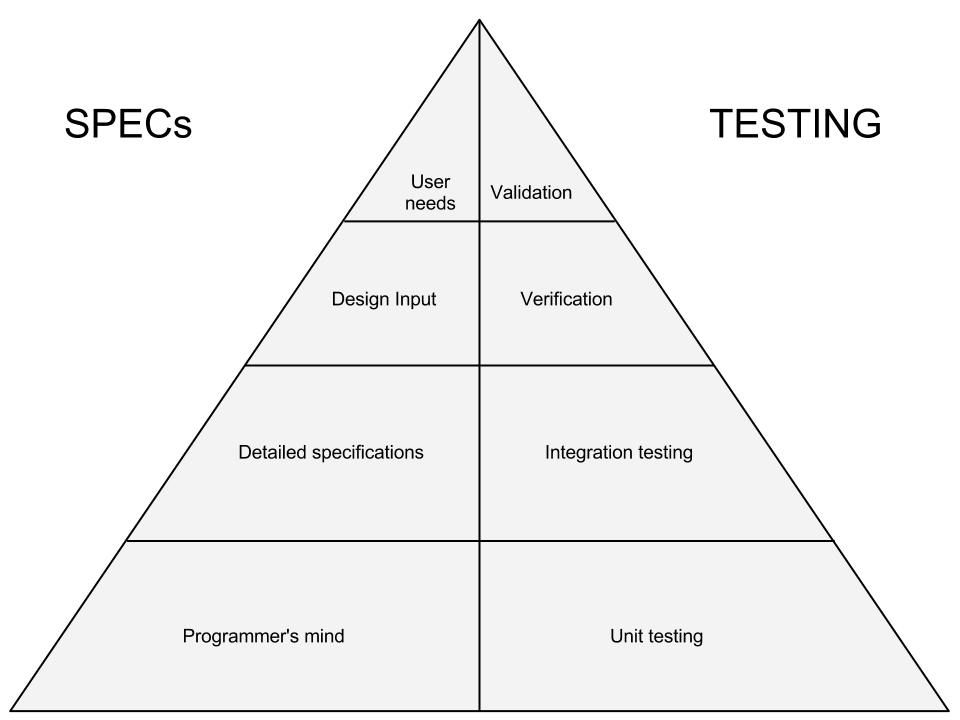
△ Unit tests (easy, solid, do it) -
⟁ 100% customer journey's via e2e (cumbersome, brittle, vital)
-
⧋ 100% integration tests with third parties, decoupled system components etc. (hard, fiddly, integral)
[BEHAVIOUR-DRIVEN DEVELOPMENT]
Continuous Integration,
continuous delivery
Nothing is of value until a customer is using it, so getting things in front of customers faster in order to start learning is the smartest thing we can do.
BDD adds extra robustness to a CI/CD pipeline.
The combination of solid tests and coverage along with automated testing gives you plenty of confidence on getting new features into production as quick as possible.
[BEHAVIOUR-DRIVEN DEVELOPMENT]
What about the rest of the team?
-
🧬 UI/UX designers need to create simplistic design shifts for individual stories that minimalise potential engineering faults -
🤹♀️ Product owners need to write stories that contain scenarios which allow engineers to move fast -
🔎 Data engineers, scientists or analysts need to provide solid measurable outcomes for success for user stories. -
🏈 Scrum masters need to ensure highly regular planning meetings occur and that engineers vote & discuss as a team and concrete outcomes.
[BEHAVIOUR-DRIVEN DEVELOPMENT]
red > green > refactor
Simple rule to follow:
1. red:
   write the test cases first
   tests will fail ❌
2. green:
   implement the code
   tests will pass ✅
3. refactor:
   improve/refine the code
   tests should still pass ✅
[BEHAVIOUR-DRIVEN DEVELOPMENT]