Humanizing react apps with AI-powered reconciliation
nik72619c
@niksharma1997


AI can build apps...


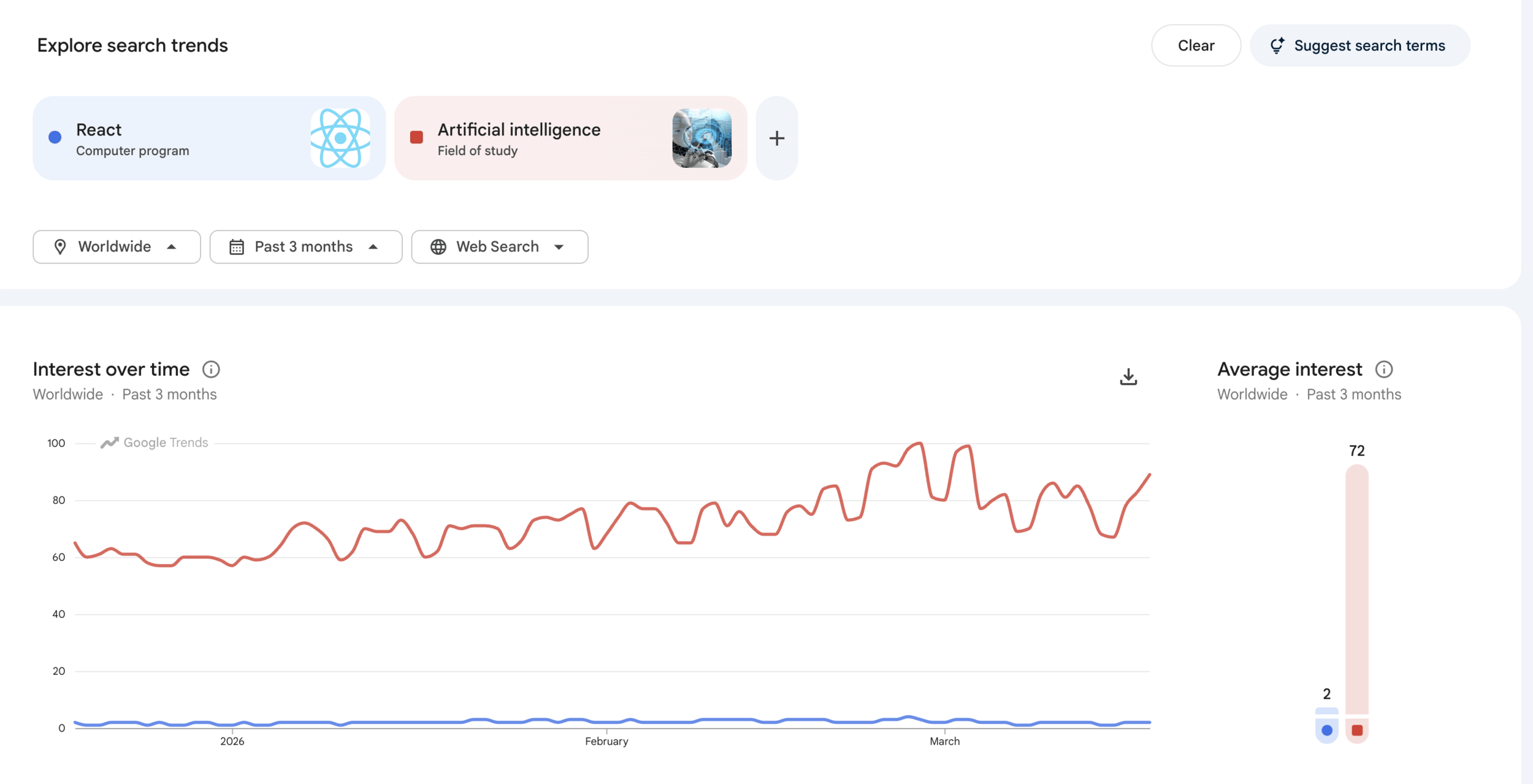
Saving dev time
Devs using ai
FE apps with aI
60%
90%
60%
Saving dev time
Devs using ai
FE apps with aI
60%
90%
60%






Saving dev time
Devs using ai
FE apps with aI
60%
90%
60%
What if we shift to react??

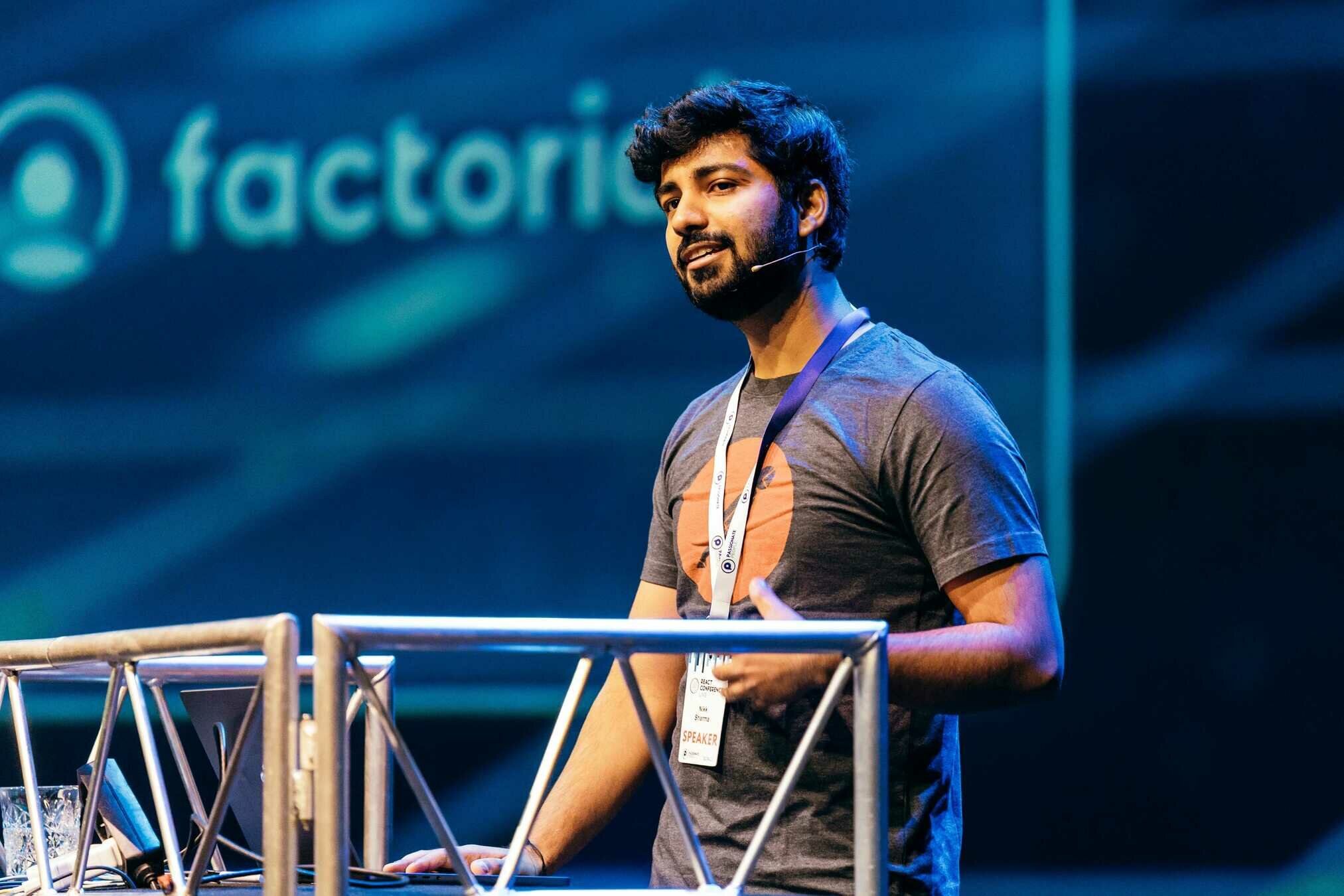




Hey, I'm Nikhil 👋
I love to talk about performance, react and design systems
nik72619c
@niksharma1997
Events

Events
Reconcile all updates
Events
Events
Reconcile meaningful updates

1
1
scenario
Should this update trigger a repaint?
- Virtualization
- useMemo & useCallback
- Value change
- Scroll velocity
- Click / hover on a post
- last updated / frequency
How it works?
Create a tfjs model with parameters
// model.js

export function createModel() {
  const model = tf.sequential();
  model.add(
    tf.layers.dense({
      inputShape: [8],
      units: 12,
      activation: "relu",
    })
  );
  model.add(
    tf.layers.dense({
      units: 1,
      activation: "sigmoid",
    })
  );
  model.compile({
    optimizer: "adam",
    loss: "binaryCrossentropy",
    metrics: ["accuracy"],
  });
  return model;
}
How it works?
Create a tfjs model with parameters
// Fake streams: build a row of 8 numbers, label 1 = “meaningful update”, 0 = skip
for (let i = 0; i < 700; i++) {
  // ... pick random delta, viewport, dwell, scroll, etc. ...
  rows.push([/* 8 normalized numbers */]);
  labels.push(/* 1 or 0 from your “meaningful” rule */);
}
await model.fit(tf.tensor2d(rows), tf.tensor2d(labels, [labels.length, 1]), {
  epochs: 20,
});
Train the model on sample data
How it works?
Create a tfjs model with parameters
// Ask the model: should we commit this new count?
const p = model.predict(tf.tensor2d([[/* same 8 numbers, live */]])).dataSync()[0];

// Commit if model says “yes” OR huge jump safety rule
if (p > 0.52) {
  setLikeCount(nextCount); // ← this triggers React reconcile / flash in the demo
}
Train the model on sample data
Predict on each candidate update

How it works?
Create a tfjs model with parameters
// 1. Collect features for each row in the same order as your list (or keep parallel arrays of rowId and feature row):
// rows[i] = [f0, f1, ... f(F-1)] for row i
const rows = items.map((item) => buildFeatures(item));

// 2. One tensor, one forward pass
const input = tf.tensor2d(rows);        // shape [n, F]
const output = model.predict(input);     // shape [n, 1] for your sigmoid head
const scores = Array.from(output.dataSync()); // length n
input.dispose();
output.dispose();

// 3. Map scores back to work
items.forEach((item, i) => {
  const p = scores[i];
  const shouldCommit = p > 0.52; // your threshold
  // apply or skip for item.id
});
Train the model on sample data
Predict on each candidate update
optimise to use less predictions

2
2
scenario
Where do users visit the most?
<Charts />
<Expenses />
<Summary />
	<div>
      <Chart />
      <Expenses />
      <Summary />
    </div>
<Charts />
<Expenses />
<Summary />
let Chart = React.lazy(() => import('./Chart'));
let Expenses = React.lazy(() => import('./Expenses'));
let Summary = React.lazy(() => import('./Summary'));

...
...
...


<div>
  <Suspense fallback={<Loader />}>
    <Chart />
   </Suspense>
  <Suspense fallback={<Loader />}>
    <Expenses />
  </Suspense>
  <Suspense fallback={<Loader />}>
    <Summary />
  </Suspense>
</div>


- Click counts
- Sequence of routes
Chart
Expenses
Summary
.train()
.predict()
Create the model
const WIDGET_COUNT = 5;
function oneHot(widgetId) {
  return Array.from({ length: WIDGET_COUNT }, (_, i) => (i === widgetId ? 1 : 0));
}
// Example: widget 2 → [0, 0, 1, 0, 0]

function createPreferenceModel() {
  const model = tf.sequential();
  model.add(
    tf.layers.dense({
      inputShape: [5],
      units: 10,
      activation: "relu",
    })
  );
  model.add(
    tf.layers.dense({
      units: 1,
      activation: "sigmoid",
    })
  );
  model.compile({
    optimizer: "adam",
    loss: "meanSquaredError",
  });
  return model;
}
1. capturing clicks
Create the model
import * as tf from '@tensorflow/tfjs';

const model = tf.sequential();

model.add(tf.layers.lstm({
  units: 0,
  inputShape: [sequenceLength, linksCount]
}));

model.add(tf.layers.dense({
  units: linksCount,
  activation: 'sigmoid'
}));
2. capturing sequence of clicks
Create the model
import * as tf from '@tensorflow/tfjs';

async train (sequencesBatch, labelsBatch) {
  await this.model.fit(
  sqeuencesBatch, labelsBatch, {
    epochs: 30,
    validationSplit: 0.15
  });
}
Train the model
Create the model
import * as tf from '@tensorflow/tfjs';


model.predict(sequence);


// UI
 startPreloadTransition(() => {
   setPreloadedWidgetId(predictedWidget);
   setPreparedWidgetId(predictedWidget);
});
Train the model
predict based on the clicks or sequence
3
scenario
Batch updates intelligently
3
Click
Click
state update!
state update!
state update!
Click
state update!
state update!
state update!
Click
batch update!

Click
batch update!
Was everything needed to be batched?

Click
state update!
state update!
state update!
Click
state update!
important batch of state change!
state update!
Click
important batch of state change!
For our example...
1. Creating the neural network
export function createBatchModel() {
  const model = tf.sequential();
  model.add(tf.layers.dense({ inputShape: [2], units: 6, activation: "relu" }));
  model.add(tf.layers.dense({ units: 1, activation: "sigmoid" }));
  model.compile({ optimizer: "adam", loss: "binaryCrossentropy" });
  return model;
}
1. Delta change
2. Event count
For our example...
2. Training the model
for (let i = 0; i < 240; i++) {
  const absNetDelta = Math.random() * 8;
  const eventCount = 1 + Math.floor(Math.random() * 6);
  rows.push([absNetDelta / 8, eventCount / 6]);
  const meaningful = absNetDelta > 3.8 || eventCount >= 4 ? 1 : 0;
  labels.push(meaningful);
}


// model.js
const xs = tf.tensor2d(rows);
const ys = tf.tensor2d(labels, [labels.length, 1]);
await model.fit(xs, ys, { epochs: 10, verbose: 0 });
1. Delta change
2. Event count
For our example...
3. Predict meaningful batches
const FLUSH_MS = 360;
const eventBufferRef = useRef([]);
const flushRef = useRef(null);

const scheduleFlush = () => {
  if (flushRef.current) return;

  flushRef.current = setTimeout(async () => {
    const batch = [...eventBufferRef.current];
    eventBufferRef.current = [];
    flushRef.current = null;

    if (!batch.length || !modelRef.current) return;

    // → next block: merge, predict, set state once
    const summary = await summarizeBatch(batch, modelRef.current);

    setAiBoard((prev) => applyPatches(prev, summary.patches));
  }, FLUSH_MS);
};

// On each simulated tick (AI path only):
eventBufferRef.current.push({ cardId, delta });
scheduleFlush();
1. Delta change
2. Event count
Card A
Card B
Card C
+2, +1, -1 -> netDelta = +2, eventCount = 3
+3, +2 -> netDelta = +5, eventCount = 2
+1 -> netDelta = +1, eventCount = 1
Card A
Card B
Card C
Features:
- A:
[2/8=0.25, 3/6=0.50] - B:
[5/8=0.625, 2/6=0.33] - C:
[1/8=0.125, 1/6=0.17]
Possible model scores:
- A ->
0.48(skip) - B ->
0.57(keep) - C ->
0.22(skip)


Card B



Is AI replacing React

What if predictions are wrong
Nope, its gonna suggest
Fallback to normal behaviour, training is the key
Train your models with care
await model.fit();
Backend
Web workers
Train your models with care
await model.fit();
Backend
Web workers
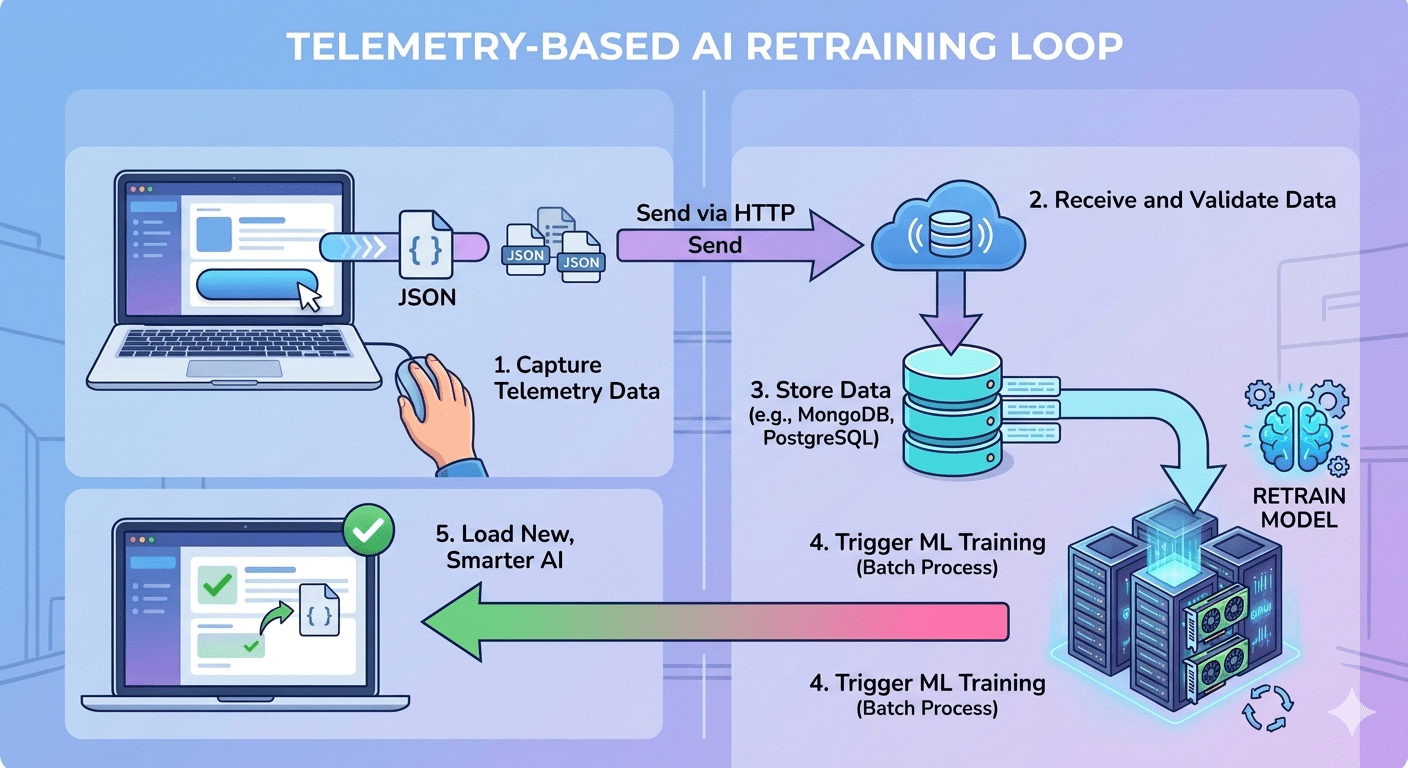
Train your models with care
await model.fit();
Backend
Web workers
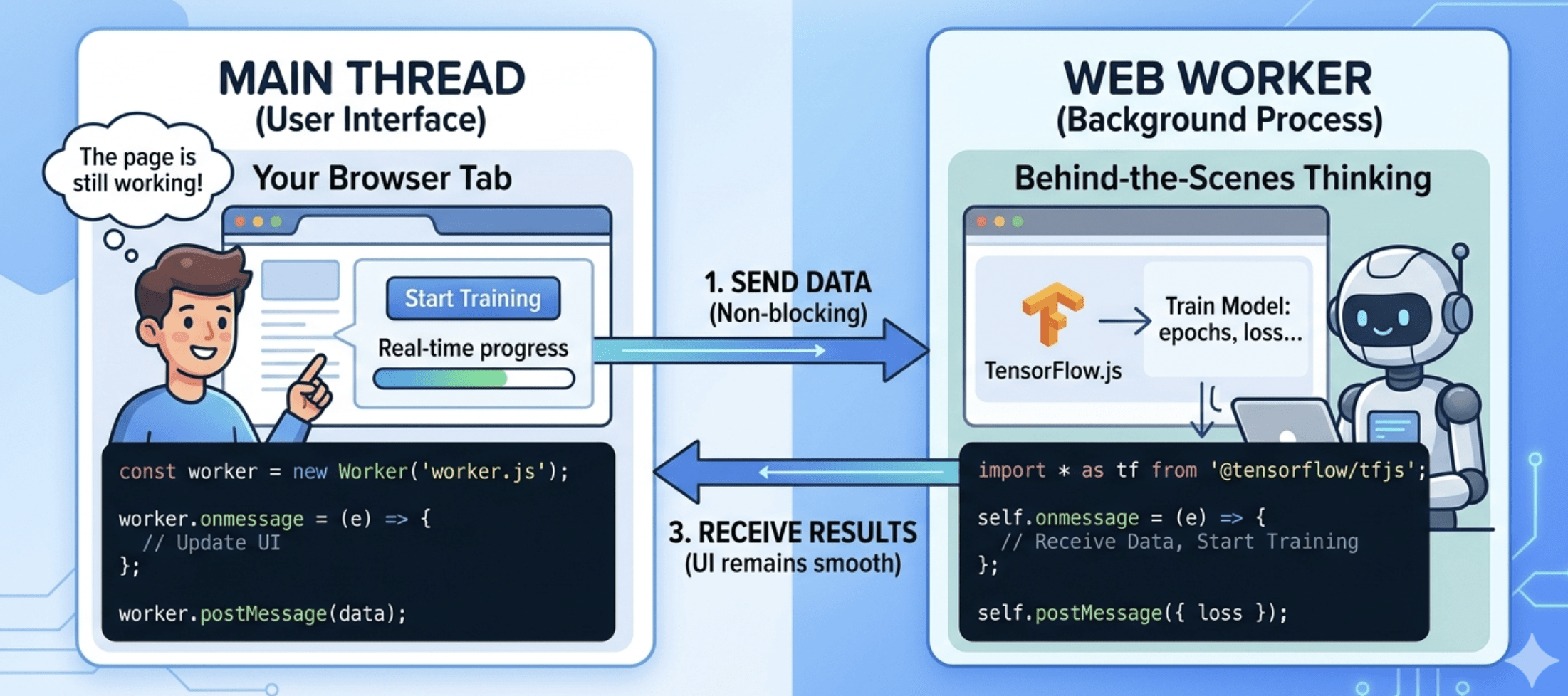
Beware of memory leaks
// Wrap your code in tf.tidy() to automatically clean up intermediate tensors, or manually call tensor.dispose() for long-lived ones.
useEffect(() => {
  const model = tf.sequential(); // Create simple model
  model.add(tf.layers.dense({ units: 1, inputShape: [1] }));

  // CLEANUP: React runs this when the component disappears
  return () => {
    model.dispose(); // Wipes the GPU memory
    console.log("Memory Cleaned");
  };
}, []);
“The best code is no code at all.”
“The best code is no code at all.”
RENDER
RENDER
We're hiring!!! 🙌🏻

https://www.deel.com/careers/open-roles/
Happy coding
✌️
nik72619c
@niksharma1997