Philip Young MD - Chemical Peel of Seattle Bellevue
Before And After Images
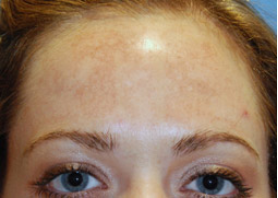
Before Chemical Peel to Improve Skin Tone | Appearance and Reduce Sun Spots | Hyperpigmentation
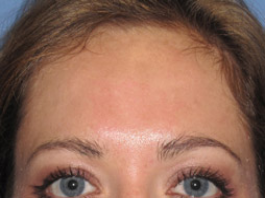
After Chemical Peel to Improve Skin Tone | Appearance and Reduce Sun Spots | Hyperpigmentation
Seattle Bellevue Chemical Peel Experts
Learn the Benefits of Beauty: Are you tired of looking weathered and aged? Do you feel like you've lost the confidence that you've had in the past. Rejuvenating your skin through Chemical Peeling can help you feel refreshed. Feeling better about yourself can sometimes make everything that happens in your life a little bit better as well. Dr. Philip Young who has studied beauty for the past 12 years and who has developed a New Theory on Facial Beauty, knows how beauty can tip things in your favor.
This is our current beginners skin care regime instructions
1. In terms of the at home glycolic peels you only want to start that on Sunday night once a week. Basically put it on and take it off immediately when you first start using at home chemical peels. You can then increase it by the number of times of week and how long you keep it on your skin. Just be careful not to burn yourself and cause scarring. If in doubt, just put it on and take it off immediately. Don't put any skin products on after the chemical peel. Start these peels first and then add on Retin A and then the Glycolic Cream 10% respectively & slowly as tolerated.
Skin Care Regime Instructions
2. Start the Retin A on Wednesday night and only do that once a week as well. You can increase that as tolerated and for each of the products you never want to put it on if you are ever red or irritated. Retin A can make you sensitive to sunlight so it should only be applied during the nighttime.
3. For the Glycolic Cream 10% or the Rebrightalyzer Kit, do this once a week for starters and do it on Fridays. You can increase that as tolerated but you never want to put it on if you are ever red or irritated.
More on Chemical Peeling
A chemical peel exfoliates the skin's top layers to reveal the softer and healthier skin below. Chemical peels are used to treat a variety of skin conditions, including environmentally damage/hyperpigmented skin, sun spots, acne, fine wrinkles and more. In many cases, wrinkles caused by sun damage, age and your genetic predisposition can be reduced and eliminated through the use of a series of chemical peels.
Irregular skin pigmentation, sun-damaged skin, and even pre-cancerous keratoses may also improve as a result of chemical peels. This is done by removing pre cancerous cells and allowing new cells to resurface your skin. The strength of the chemical peel is determined by each patient's individual skin type and the degree of damage to the skin.
Glycolic Peels
For quick superficial peels we can help you with 10-20% Glycolic Peels. Glycolic peels are Alpha-Hydroxy Acid Peels and originate from Fruit. They can be used for conditions like Melasma, Acne, Seborrhea, Photoaging, and Post Inflammatory Hyperpigmentation. These Gylcolic Peels lead to slight redness and will really lead to no significant peeling. The recovery is quick. Glycolic acid peels have antiinflammatory, keratolytic, and antioxidant properties. Glycolic Acids are hydrophillic, meaning that they are more attracted and blend into water. They are less likely to penetrate oily barriers (our skin contains a lot of oil). This property prevents Alpha-Hydroxy Acids from deeper penetration into the skin than Beta-Hydroxy Acids which are lipophillic or oil attracting (Beta-Hydroxy Acids blend in with oil substances and chemicals more).
Before And After Images
Before
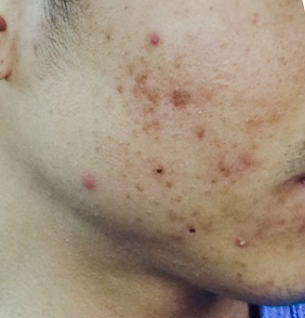
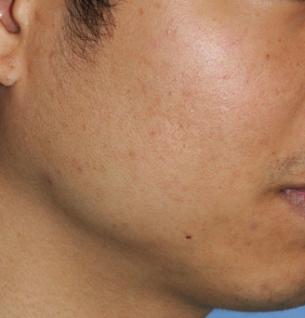
After One Year of our Skin Care Approach to treat Active Acne to reduce scarring and improve the appearance of the skin.
Jessner Peels
A Jessner's Peel is made up of 14 g of resorcinol, 14 g of salicylic acid (a beta-hydroxy acid) and 14 g of lactic acid (an alpha-hydroxy acid) dissolved in enough ethanol to make a total of 100 cc / ml of solution.
Salicylic Acid
Is a beta-hydroxy acid. This chemical is oil soluble and is able to penetrate deeper than alpha-hydroxy acid peels. The connection of epidermal skin cells depends on desmosomes, which contain many proteins, like desmogleins. Salicylic acid attacks these desmosomal proteins. As a result of this, the attachment of epidermal skin cells is broken which leads to the breakdown and removal of progressive layers of the skin. Beta-hydroxy acid peels are able to control sebum production, a major contributor to poor skin issues. Oily skin can be cosmetically unacceptable and can also be uncomfortable for people. Sebaceous glands that are overactive can cause excessively oily skin by secreting and producing Sebum. Sebum is the source for skin's oiliness.
Lactic Acid
Is also an Alpha-Hydroxy Acid Peel. It is a bigger molecule than Glycolic Acid and is, thus, thought to penetrate less deep than the smaller Glycolic Acid. They work in the same way and are both treat to a degree dark spots, wrinkles, acne, skin scarring, surface wrinkles, large pores and oily skin.
Resorcinol
Resorcinol is one of the main natural phenols in argan oil (Traditional Phenol peels have been used in the deepest type of peels. Dr Young has performed a number of old fashioned phenol peels during his 16 years of practice. He no longer does Phenol peels in this way but does use Resorcinol in the Jessner's peel). The effectiveness of resorcinol in treating a number of skin conditions is likely related to its antibacterial, antifungal, local irritative, and keratolytic actions. Resorcinol causes protein precipitation which is likely the source of its anti-bacterial and anti-fungal actions. It breaks down the skin like the other hydroxy acids (the exact mechanism is unknown) and this may contribute to the antifungal effect because removal of the top layers of the skin suppresses fungal growth.
Trichloroacetic Acid Peels
These peels have been used for over 100 years. One of the fist documented use was in 1882 by Dr. Unna of Germany. In the past, these peels were used in 8-80% concentration. Now most clinicians do not use more than 35%. Some use up to 80% for ice pick scars which we do as well. One of the more popular formulations is the Modified Monheit peel using Jessner's then 30-35% Trichloroacetic acid peels in combination for a medium depth peel. The TCA peels can be used for improving skin tone, fine lines, melasma, hyperpigmentation and facial scarring including acne scarring. This chemical is similar in structure to vinegar. It is the only chemical peel approved by the FDA for treating pre-cancerous skin lesions (Actinic Keratoses).
Post Chemical Peel Care
For one week before and after your peel, you may be advised to stop using electrolysis, waxing, depilatories, masks, peels or dermabrasion, Tretinoin (Vitamin A creams), Lightening Creams, Hyperpigmentation Skin Products and aggressive cleansing with Loofas. Aggressive skin care using Retin A, Lightening Creams, glycolic creams, etc are to be avoided until 2-4 weeks after your peel depending on how deep the peel is applied. Superficial peels, like glycolic 10-20% peels, need 1-2 weeks before resuming aggressive skin care products. Jessner's peels usually need 2-3 weeks. Medium depth Trichloroacetic Acid with Jessner's peels (Monheit Peel) need 3-4 weeks off after these peels before resuming aggressive skin care.
Chemical Peel Before & After Images
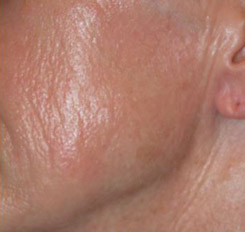
Before Chemical Peel Trichloroacetic Acid, Jessner’s, Dermasanding Cheek
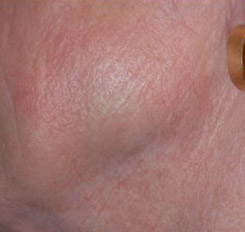
After Chemical Peel Trichloroacetic Acid, Jessner’s, Dermasanding Cheek