Testing 101
Extremely opinionated,
use on your own risk,
don't trust anyone
talk by that white dude with beautiful voice
Grant me the serenity to omit tests for things that aren’t worth testing,
Courage to write tests for things that deserve test coverage,
And wisdom to know the difference.
- Dan Abramov, sort of famous dude dunno

A small pray before long road
Everyone tell testing is great, I just don't know how to do it
Testing is daunting 😫
What is a good test?
Where do I start?

TDD?? BDD?? Acceptance??
Exploration??
How would I test my test?
Why Do We Want Tests?
- To verify that things that we created are working (to some extend)
- To catch bugs in the code before users will
- To guard our code from unintended use or malicious users
- To document how the application works
- To be able to refactor functionality with confidence
To have a good sleep at night
What To Test?
Test everything, Yo

Recent
Expertise
Core
Problematic
Risk
Parts of Application
Recent
Expertise
Core
Problematic
Risk
I'm in Trouble BINGO

Bob developed new core functionality, sadly he got sick and the code is so complex nobody can read it
Functionality
- Start with trivial happy path
- Try to think about interesting/sensitive input/output
- Test error states
- Test logic branches
- Take it a bit further with Equivalence partitioning and Boundary value analysis
Pro-tip: Machines are better at generating unexpected values, see Hypothesis package
How much tests do I need??

Mike Cohn Testing Pyramid
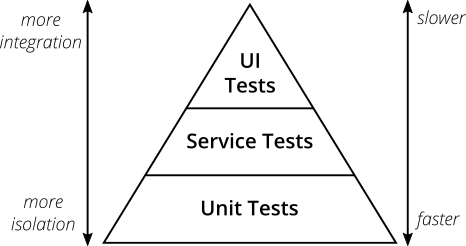
10% E2E
20% Func
70% Unit
10% End-to-End
These kind of tests run against real-life application, with all it dependencies, emulating user flows.
20% Functional Tests
Also can be called integration tests, they test how different parts of the application work with each other in the context of the feature
70% Unit Tests
Fastest type of test as they should not do any database requests or writing to the disc, they test one function, one class in isolation.
Unit Tests
Content Warning: Subjective opinion
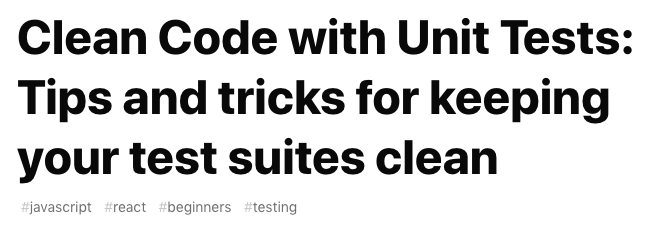
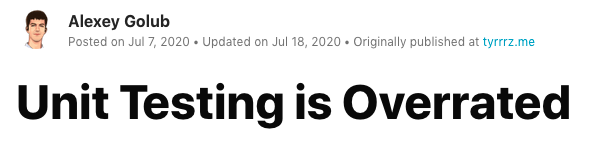


- Tests have to be blazing fast or they won't get run
- Unit tests should not touch the database or write to disc
- Jumping through hoops to make your tests faster just makes them harder to maintain and is a form of premature optimization
- You might complicate your system design just for a sake of unit testing
- You can have 10 unit tests and still for end-user nothing will work
Service Tests
Integration Tests
Functional Tests
Neither Tests
You are free to use whatever, but it is not a user journey yet
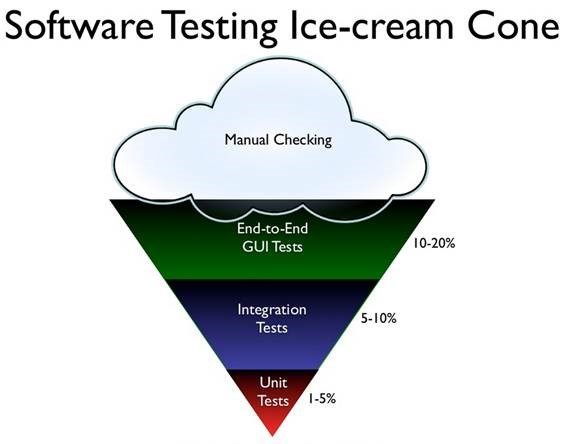
EVIL TWIN!
Testing Ice-Cream Cone

Anton's Reasoning
- Isolated tests are a LIE, no functionality exists without context
- Difference in speed between unit test and functional on modern hardware is not huge anymore
- I have written many unit tests, then boot the project and test it manually - in most cases the functionality was not working even thought tests were passing
- Logically make sense to me
- 70% E2E for UI user flows
- 20% Integration tests for management commands and celery tasks
- 10% Unit tests for algorithmic pure functions without dependencies
A Good Test

- Focused on one thing
- Partially Isolated
- Short
- Readable
Everything will be reversed for E2E tests, lol
Framework
methodology/approach
Given
Everything we need to setup to successfully reproduce a test in isolation
When
The part of the code under test
Then
This is the part where you confirm your expectations
import pytest


@pytest.mark.django_db
def test_get_dataframe_for_buy_act_with_reports(
    buy_act, company, report_with_report_file
):
    # GIVEN Act of buying attached to a Report with report file
    # and report_file contains 3 rows, 2 of them with unrelated
    # acts_rows and one with attached buy_acts
    buy_act.seller = company
    buy_act.save()
    report_with_report_file.act_of_purchase.add(buy_act)

    # WHEN we creating a dataframe for XLSX export
    df = buy_act.get_dataframe()

    # THEN it should contain only related to act report rows
    assert df.shape[0] == 1
    for row in df.itertuples(index=False, name="Row"):
assert row.buyer == company.name- Communicate the purpose of your test more clearly
- Focus your thinking while writing the test
- Make test writing faster
- Make it easier to re-use parts of your test
- Highlight the assumptions you are making about the test preconditions
- Highlight what outcomes you are expecting and testing against.
Who's testing the tests?

Especially crucial when adding tests for existing functionality
- Inverse code in testing functionality to make your test fail
- Make feature code return different result
- Inverse your assertion in the test case so it should fail
All cool kids do
Test-Driven-Development

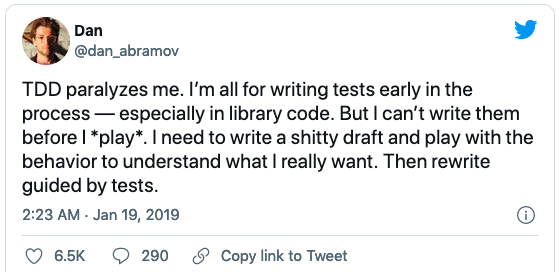
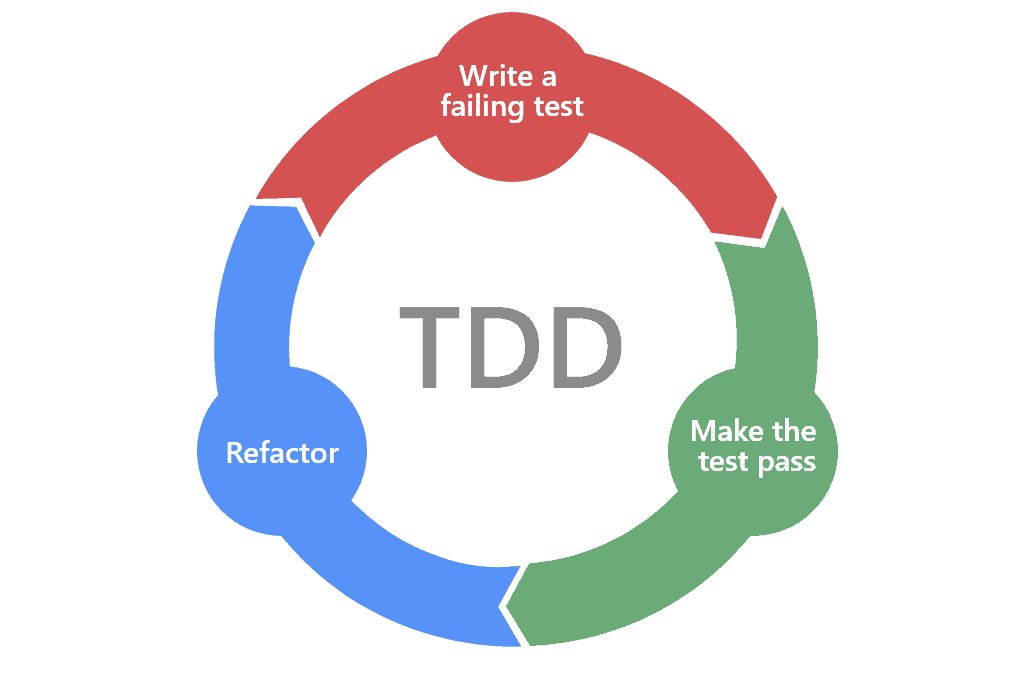
Test First Development
- Write the specification
- Write the tests to the specification
- Write the code until all of the tests pass
Practical Example

class VerificationAttemptResultView(GenericAPIView):
    """Returns Verification results of the request as they sent to the Monolith"""

    authentication_classes = [authentication.TokenAuthentication]
    permission_classes = [permissions.IsAuthenticated]
    serializer_class = VerificationAttemptResultSerializer

    def post(self, request: Request) -> Response:
        verifier = self.get_serializer(data=request.data)
        if not verifier.is_valid():
            return Response(status=400)

        data = verifier.data
        if data["type"] == VerificationType.TYPE_PROOF_OF_ADDRESS:
            return Response(status=400)

        try:
            verification_request = VerificationRequest.objects.get(
                user_id=data["user_id"],
                verification_reference=data["verification_reference"],
            )
        except VerificationRequest.DoesNotExist:
            return Response(status=404)

        ...
        if no_history_created or attempt_is_missing:
            return Response(status=500)

        ...

        if last_verification_history_record.status not in FINAL_STATES:
            return Response(status=400)

        return Response(json.loads(last_verification_attempt.verification_results))
Why do we want to test it?
- ✅ RECENT
- ✅ CORE - this endpoint allows client to re-fetch data if something is broken on their side
- ✅ RISK - this view has a lot of logic branches, hard to track execution
- ❌ Problematic - we don't know yet
- ❌ Expertise - code is mediocre, not too easy, not too hard to read
How we will test?
- Test permissions
- Test invalid inputs
- Test logic branches
- Test happy path
def test_attempt_response_view_permissions(api_client):
    # GIVEN unauthorized client
    # WHEN it does request to fetch results
    res = api_client.post(reverse("verification_attempt_result"), data={"foo": "bar"})
    # THEN permissions should be checked and correct code returned
    assert res.status_code == 401
1. Permissions check
2. Validation Checks
@pytest.mark.django_db
def test_attempt_response_view_invalid_data(authenticated_api_client):
    # GIVEN authenticated client and invalid data
    invalid_data = {"user_id": 123, "foo": "bar"}
    # WHEN client makes request to results endpoint
    res = authenticated_api_client.post(
        reverse("verification_attempt_result"),
        data={"user_id": 123, "foo": "bar"},
    )
    # THEN validation error is returned with correct error code
    assert res.status_code == 400
    response_body = res.json()
    assert response_body["error"]["message"] == "Validation Error"


@pytest.mark.django_db
def test_attempt_response_view_proof_of_address_not_implemented(authenticated_api_client):
    # GIVEN request data with not implemented yet functionality
    data = {
        "user_id": "test",
        "verification_reference": "ZZZ",
        "type": VerificationType.TYPE_PROOF_OF_ADDRESS,
    }
    # WHEN making request to result endpoint
    res = authenticated_api_client.post(
        reverse("verification_attempt_result"),
        data=data,
    )
    # THEN Not implemented message should be part of response
    assert res.status_code == 400
    response_body = res.json()
    assert "not implemented" in response_body["error"]["message"]
3. Logic Branches
@pytest.mark.django_db
def test_attempt_response_view_missing_request(authenticated_api_client):
    # GIVEN valid request body AND no verification request saved in DB
    verification_attempt_request_data = {
        "user_id": "test",
        "verification_reference": "ZZZ",
    }
    # WHEN request made to result endpoint
    res = authenticated_api_client.post(
        reverse("verification_attempt_result"),
        data=verification_attempt_request_data,
    )
    # THEN Not found code should be returned without body
    assert res.status_code == 404
    assert res.content == b""
@pytest.mark.django_db
def test_attempt_response_view_missing_attempt(authenticated_api_client):
    # GIVEN valid request body AND verification request without attempt
    verification_attempt_request_data = {
        "user_id": "test",
        "verification_reference": "ZZZ",
    }
    VerificationRequestF.create(
        user_id=verification_attempt_request_data["user_id"],
        verification_reference=verification_attempt_request_data[
            "verification_reference"
        ],
    )
    # WHEN request made to result endpoint
    res = authenticated_api_client.post(
        reverse("verification_attempt_result"),
        data=verification_attempt_request_data,
    )
    # THEN 500 should be returned as no request should exist without attempt
    assert res.status_code == 500
    assert res.content == b""
@pytest.mark.django_db
def test_attempt_response_view_attempt_is_pending(authenticated_api_client):
    # GIVEN valid request body
    #   AND verification request with attempt
    #   AND Attempt status is WAITING
    verification_attempt_request_data = {
        "user_id": "test",
        "verification_reference": "ZZZ",
    }
    VerificationAttemptF.create(
        status=VerificationAttemptStatus.WAITING,
        verification_request__user_id="test",
        verification_request__verification_reference="ZZZ",
    )
    # WHEN request made to result endpoint
    res = authenticated_api_client.post(
        reverse("verification_attempt_result"),
        data=verification_attempt_request_data,
    )
    # THEN 400 should be returned with the specific "PENDING" reason
    assert res.status_code == 400
    response_body = res.json()
    assert response_body["error"]["message"] == "Verification attempt is pending"
4. Happy Path
@pytest.mark.django_db
def test_attempt_response_view_happy_path(authenticated_api_client):
    # GIVEN valid request body
    #   AND verification request with attempt
    #   AND Attempt status is COMPLETED
    verification_attempt_request_data = {
        "user_id": "test",
        "verification_reference": "ZZZ",
    }
    verification_results = {"status": VerificationStatus.APPROVED.value}
    VerificationAttemptF.create(
        status=VerificationAttemptStatus.COMPLETED,
        verification_results=json.dumps(verification_results),
        verification_request__user_id=verification_attempt_request_data["user_id"],
        verification_request__verification_reference=verification_attempt_request_data[
            "verification_reference"
        ],
    )
    # WHEN request made to result endpoint
    res = authenticated_api_client.post(
        reverse("verification_attempt_result"),
        data=verification_attempt_request_data,
    )
    # THEN request is successful and we return results
    assert res.status_code == 200
    assert res.json() == verification_results
How to start with testing?
- Analyze if functionality needs to be tested :)
- Think how thoroughly it needs to be tested (maybe some edge-cases are not important)
- Plan your test cases
- Happy path
- Sad paths
- Error handling
- Boundaries
- Write compact and separate cases using Giving Then When method
- Validate that your tests are working
THANK
YOU
Such empty
Resources
Podcasts
Articles