Roshan Bhandari
Computer Engineer, IOE Pulchowk
IOE Entrance Exam
- 432 seats, Computer based
- 140 marks, 2 hours, no -ve marking
|
Subject |
Full Marks |
Total No of Questions |
1M |
2M
|
|
English |
22 |
18 |
14 |
4 |
|
Chemistry |
20 |
16 |
12 |
4 |
|
Physics |
40 |
25 |
10 |
15 |
|
Mathematics |
40 |
25 |
10 |
15 |
|
Engineering Aptitude |
18 |
16 |
14 |
2 |
Unit, Dimension and Error Analysis
Fundamental Quantity
- 7 fundamental quantities
Mass
- Do not depend on other quantities
Length
Time
Temperature
Luminous intensity
Electric Current
Amount of substance
Measurement
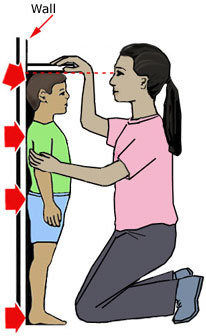
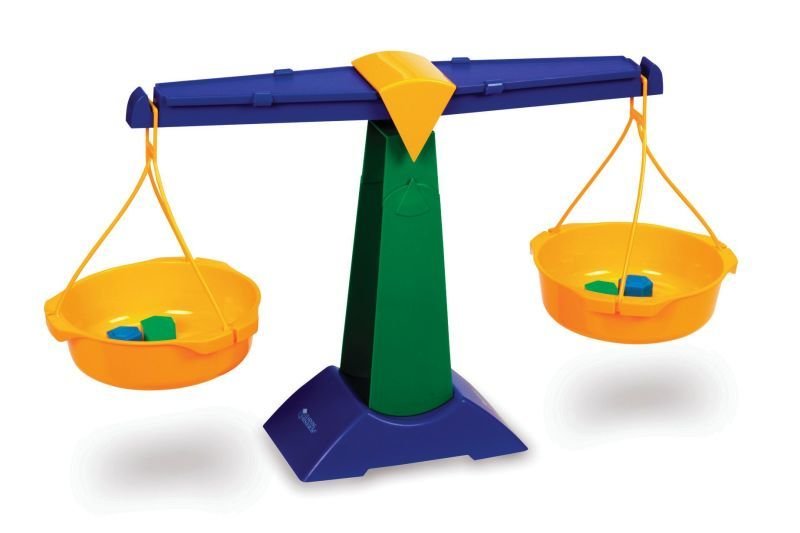
Measurement is the process of comparing any amount of physical quantity to standard amount of another physical quantity.

Q1: In Astronomy , there is a unit of distance called A.U. - the astronomical unit. This denotes the distance between [BPKIHS 1997]
a)The sun and Earth
b)The sun and the planet Mercury
c)The Moon and Earth
d)The two poles of Earth (its diameter)
Correct: a
Unit
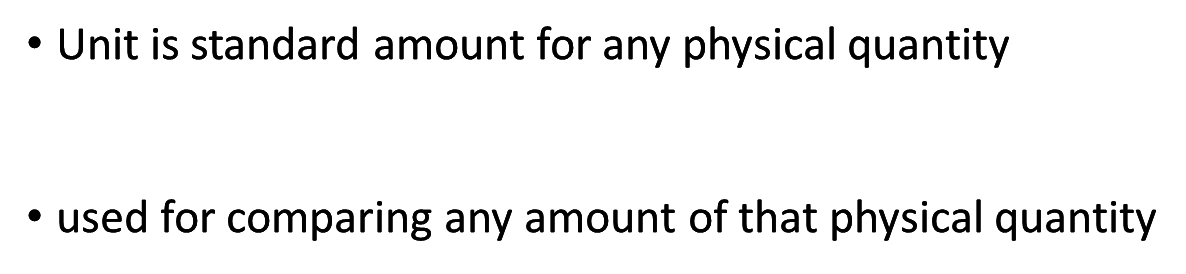
157cm
50 Kg
10:20 AM
Q2: The fundamental quantity is
a)Specific gravity
b) angle
c) Temperature
d) density
7 Fundamental Units
|
Physical Qty |
Units |
Symbol |
|
Length |
Meter |
M |
|
Mass |
Kilogram |
Kg |
|
Time |
Second |
S |
|
Temperature |
Kelvin |
K |
|
Luminosity |
Candela |
Cd |
|
Electric Current |
Ampere |
A |
|
Amount of substance |
Mole |
mol |
Correct: c
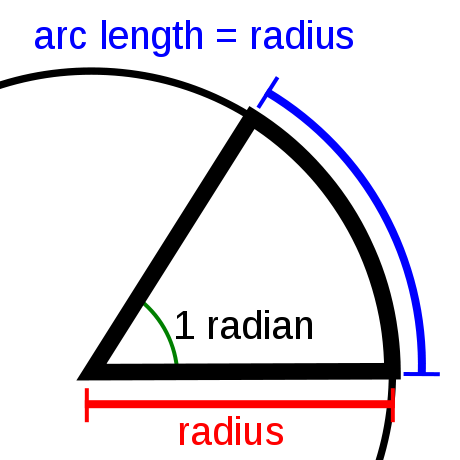
Q3: Which is a supplementary unit?
a)Radian
b)Second
c) Micron
d) lux
Supplementary Units
|
Physical Qty |
Units |
Symbol |
|
Plane Angle |
Radian |
R |
|
Solid Angle |
Steradian |
Sr |
Correct: a
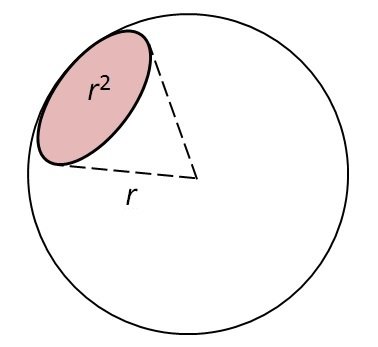
Dimension
•The power on fundamental quantities when a physical quantity is expressed in their terms are called dimensions.
Dimension of Time = T
Dimension of Force =
Calculation of Dimension
Dimension of Force =
Mass * Acceleration
=
=
*
=
Calculation of Dimension
Dimension of Work=
Force * distance
=
Q4: Dimensional Formula of velocity gradient is
a)
c)
b)
d)
Correct: c
Q5: Plank’s constant has the dimension of[MOE 2069]
a) Energy
c) Frequency
b) Mass
d) Angular Momentum
Correct: d
Angular momentum = r * P = r * mv
E = hf =
so, h =
= L *r = P
Q6: Newton/coulomb has the same dimension of [IOE]
a) Volt /meter
Correct: a
b) Volt-meter
c) Farad/meter
d) Farad-meter
Q7: A unit less physical quantity
a) may have non zero dimension
Correct: c
b) must have non zero dimension
c) never has non zero dimension
d) never exists
A unit less physical quantity is always dimensionless but a dimensionless physical quantity may have unit.
Dimensionless physical quantities having unit:
- Angular Displacement,
- solid angle,
- plane angle,
- intensity level, etc
Dimensionless and unit less physical quantity:
- Strain,
- Mechanical equivalent of Heat
- Ratio of specific heat
- Refractive index
- Relative Permittivity
Significant Figures
Q8: The number of significant figures in 300 is
a) 1
c) 2
b) 3
d) Not defined
Correct: d
Significant figures are defined only for measurement and is number of digits present in measurement.
Q9: The number of significant figures in 3.00 is
a) 1
c) 2
b) 3
d) Not defined
Correct: c
Zeros to the right of nonzero are significant.
Q10: The number of significant figures in 0.054 is
a) 1
c) 2
b) 3
d) Not defined
Correct: c
Zeros to the left of nonzero are insignificant.
Q11: The number of significant figures in 312.1 + 1.32 is
a) 1
c) 4
b) 3
d) Not defined
Correct: c
- For addition and subtraction, significant figures is taken after the component having less digit after decimal.
- For multiplication and division, significant figures is taken after the component having less number of significant figure.
Q12: The density of a material of a cube is calculated by measuring its mass and a side. What is the maximum percentage error in the density if errors in measurement of a side and mass are 2% and 5% respectively?
a) 13%
b) 11%
c) 7%
d) 3%
Correct: b
Error Analysis
If p =
after measuring x, y, z with error
then percentage error =
Density =
So, Error =
=
%
Meroanswer.com
You will have free access to Meroanswer.com for 6 months
- 15,000 + questions
- Subject wise and chapter-wise practice
- Old Questions, Model questions
- Assignments, Assessments will be updated