Cluster!
The plan
- Talk about our problems
- Discuss and play with contenders for solving our problems
- The Decision
- Wrap up with some general advice for you
Our use case
ProblemS to Requirements
Problem

REquirement
Problem

Requirement
Problem

Requirement
Problem

Requirement
Problem

Requirement
Problem

Requirement
our requirements so far...
- Must support blue/green or rolling deployments, preferably both
- Must support auto-healing
- Must support dynamic scale-in of hosts and containers
- Must keep machines/containers from being terminated before jobs complete during deployments or scale-in
- Must support dynamic scale-out of hosts and containers
- Must run in AWS GovCloud
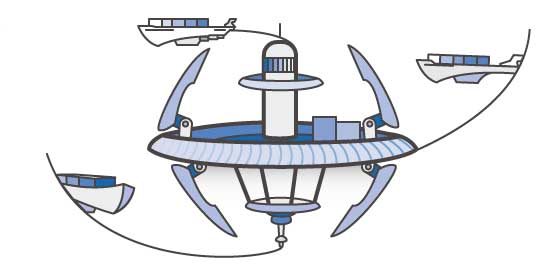
THE CONTENDERS
The Contenders

The Contenders
WHAT IS IT?
Amazon's native solution for managing containerized applications across multiple hosts in a cluster.
Provides mechanisms for application deployment, scheduling, updating, maintenance, and scaling.
Provided out of the box on AWS, cannot use on non-AWS systems. No extra cost.
1.0 release ~ July 2015
Key features
Container auto-recovery
Container load balancing with ELBs
Zero downtime deploys
Integrates with Docker Compose files
Integrates with CloudWatch monitoring and CloudTrail logging
Nice UI for management with AWS Console
Setup
- Setup AWS account
- Get IAM credentials and set AWS_ACCESS_KEY_ID and AWS_SECRET_ACCESS_KEY in your environment
- Install aws cli
Demo
New ECS CLI: Jérôme Petazzoni at AWS Reinvent
Pros
- Built into AWS - tight integration
- Easy to understand
- No management of tool itself
- Good documentation
- Works with Docker compose
- Nice GUI to play with
Cons
- AWS only
- Prebuilt ami doesn't support Docker networking yet (introduced in 1.9)
- Not available in all regions.
- Docker compose support is early days
- ELBs only allow mapping to a single port for all container instances (therefore, 1 task per instance)
How it Fairs against our requirements...
-
Must support blue/green or rolling deployments, preferably both
- Rolling deployments out of the box.
- Must support auto-healing
- Yes, services out of the box
- Must support dynamic scale-in of hosts and containers
- Combined with AWS Auto-scaling, yes. link
- Must keep machines/containers from being terminated before jobs complete during deployments or scale-in
- Yes, with new instance protection on AWS. link
- Must support dynamic scale-out of hosts and containers
- Yes, see scale-in above
- Must run in AWS GovCloud
- No
Good links
Contender #2
What is iT?
http://kubernetes.io/v1.1/docs/user-guide/overview.html
Open source system for managing containerized applications across multiple hosts in a cluster.
Provides mechanisms for application deployment, scheduling, updating, maintenance, and scaling.
Provided out of the box on Google Computer Engine, but can be used on any system
1.0 release: July 2015
Key Features
Opinionated framework that handles a lot for you
Supports Docker and Rocket containers
Everything runs inside Pods that are managed by replication controllers -- monitoring state and restarting/creating as necessary
Uses labels to handle grouping
Every pod gets its own virtual IP address, networking is flat
Pods can be grouped into services that gives one IP address for the group and a DNS name
Kube-proxy keeps track of pod changes for a service
Setup
http://kubernetes.io/v1.1/docs/getting-started-guides/README.html
AWS:
export KUBERNETES_PROVIDER=aws; wget -q -O - https://get.k8s.io | bash
Local: Can run in Docker
GCE: Provided
Anything else: Complicated
DEmo
Pros
- Run on any platform
- Pretty good documentation
- Handles almost everything required out of the box (does not handle scaling hosts)
- Can use on top of other clustering platforms such as Mesos
- Every container in a pod can talk on local host
Cons
- Many moving parts. Setup is either hard or opaque unless on GKE
- Concepts are very unique
- No support of native Docker APIs
How it Fairs against our requirements...
-
Must support blue/green or rolling deployments, preferably both
- Rolling deployments out of the box.
- Must support auto-healing
- Yes, services out of the box
- Must support dynamic scale-in of hosts and containers
- Combination of auto-horizontal scaling and AWS Auto-scaling - doable but complex
- Must keep machines/containers from being terminated before jobs complete during deployments or scale-in
- Yes, with new instance protection on AWS. link
- Must support dynamic scale-out of hosts and containers
- Yes, see scale-in above
- Must run in AWS GovCloud - Yes!
Contender #3
What is it?
Docker's native clustering platform
Simple tool for clustering a group of hosts that supports to full Docker API
1.0 release in Nov 2015
Key Features
Supports full docker API which means any existing docker tools can work with the cluster
Integrates with Docker machine for easy swarm creation, Docker compose, and Docker networking (introduced in 1.9)
Can schedule container placement based on "spread", "binpack", or "random" as well as filters such as general constraints (OS, kernel version, etc), health, affinity, dependency, or port
"Batteries removable" philosophy - users choose what to add/subtract or how to use
Setup
Download docker toolbox:
https://www.docker.com/docker-toolbox
Run "docker-machine" to create instances
Demo
Pros
- Run on any platform
- Each component is simple to understand and deploy
- Full Docker tooling support
- Future proof... Docker
Cons
- Have to compose/build a lot of solutions yourself
- Auto-healing, monitoring - Consul watchers -> update scale in docker-compose
- Lots of flux
- Rely on external tool for service discovery
- Less mature
- No "out of the box" solution compared to Kubernetes on GKE and ECS on AWS
How it Fairs against our requirements...
-
Must support blue/green or rolling deployments, preferably both
- Can do it. But we have to build it using Consul, HAProxy, etc.
- Must support auto-healing
- Can do it... but we have to build it using Consul. Docker will auto restart if container dies.
- Must support dynamic scale-in of hosts and containers
- AWS Auto-scaling will handle this
- Must keep machines/containers from being terminated before jobs complete during deployments or scale-in
- Yes, with new instance protection on AWS. link
- Must support dynamic scale-out of hosts and containers
- Can do it... but we have to build it using Consul health checks.
- Must run in AWS GovCloud - Yes!
Good links
Decision Tree
Are you running in GKE? Yes, Kubernetes
Are you running in AWS EC2 exclusively? Yes, ECS
If no to both.... it's complicated.
Do you want a lot of power now? Yes --> Are you willing to build a lot of your own plumbing? Yes, Docker Swarm, No, Kubernetes
Do you want a one framework solution? Yes? Kubernetes.
Do you want the most future proof solution? Yes, probably Docker Swarm
Wondering what we picked? I'll tell you next month.