CAS @ River
Adviser Training 2014/2015

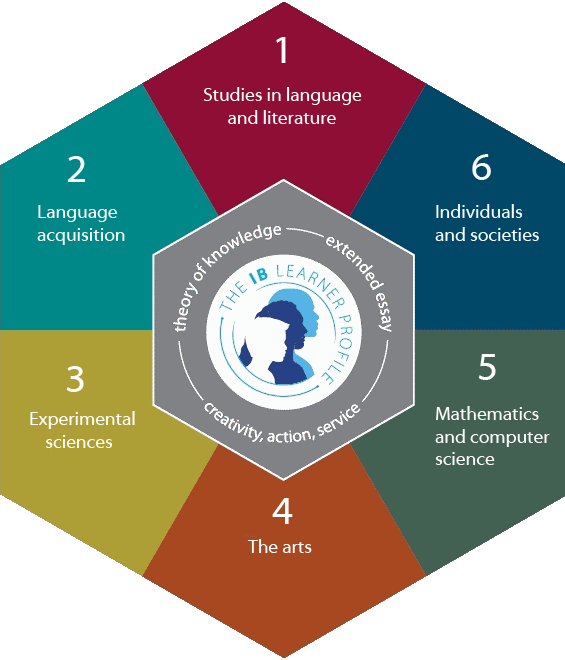
The Heart of the ib programme
Why CAS?
-
enables students to enhance their interpersonal development through experiential learning
-
provides an important counterbalance to the academic pressures of the rest of the IB diploma programme
-
challenging and enjoyable journey of self-discovery

Advisers
-
Help students to identify personal and social goals
-
Monitor the range and balance of activities undertaken by individual students
-
Develop students’ powers of reflection through group discussion and individual consultation

Advisers
Support students in their consideration of ethical concerns
Listen/read and respond to reflections
Help students to make connections (for example, CAS activity to subject learning, local activity to global concerns, and to look for generalizable understandings.

Adviser/StudentProcess
- Adviser approval of activity via Managebac
- Student completes the activity
- Student adds evidence to Managebac: pictures, videos, artwork, written reflection, ect.
- Student reflects orally during Pride Time (or written- November and March only).
- Rubric is stored as evidence of reflection by Silbernagel.
- If the reflection is satisfactory, student sends the supervisor of the activity an evaluation (via Managebac). At this point, the student is "locked out" of editing or adding to the activity.
- Activity is complete once the supervisor completes the review via Managebac.
Adviser Approval
Pgs. 4-5 and 20-21 in Handbook

Basics:
- What category does the student identify the activity as: Creativty, Action, or Service? Is it accurate?
- What learning outcome(s) does the student identify?
- Could this activity be a paid position? If so, more questions need to be asked. If it's an "internship", it's a red flag.
- Who is the supervisor? An email address is required. Can't be a parent.
- Is it religious or does it help someone practice their religion? See page 6 of handbook.
- If you consult your handbook and still have a concern, please contact me.
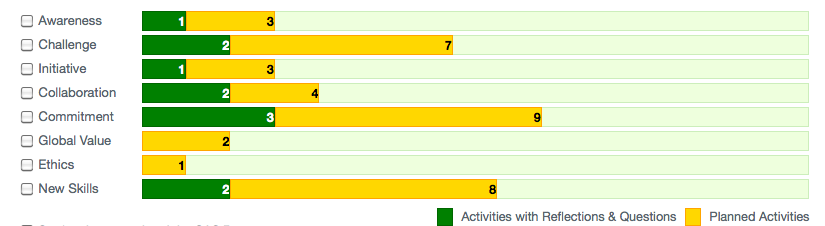
Learning Outcomes
*Requirement for IB: Show evidence of meeting each learning outcome once.
**Requirement for River: Show evidence of meeting each learning outcome three times.
(Pgs. 7-8 in Handbook)
Reflections!
Two major changes for CAS: advisers and oral reflections.
- Oral reflections will take the place of all but 2 uploaded reflections (November and March).
- Students will come to Pride Time with a prepared reflection to share with the small group.
- You will mark on the assessment grid to indicate if the learning outcome(s) were met and if the reflection is appropriate.
- I will collect the assessment grid at the end of each Pride Time and store them.
(Pg. 9-11 of Handbook)
Evaluation for Oral Reflection

CAS Project!
- Must be student initiated
- Must include two of the three CAS strands (Creativity, Action, Service)
- Must be of significant duration
- Must include collaboration
- Ideally, completed towards the end of the junior year.
- At least 3 reflections: pre, mid point, post
The CAS project is in addition to the typical CAS activities. Ideally, a CAS activity would inspire the CAS project. The main requirements are listed below:
Confidentiality
Key to the success of our CAS programme
Advisers and students are to keep all reflections and information shared during Pride Time confidential.
- Students have the right to reflect other than orally in a small group. If a student would prefer to write, draw, video tape, ect. their reflection due to the sensitivity of the material, we need to be open to that.
- If a student chooses to not orally reflect during Pride Time, their reflection needs to be uploaded to Managebac on the designated day, and the student needs to communicate with their adviser regarding their choice.