Listen What I Gotta Say: Women in the Blues
Lesson Hub 11:
Capturing and Documenting the Blues
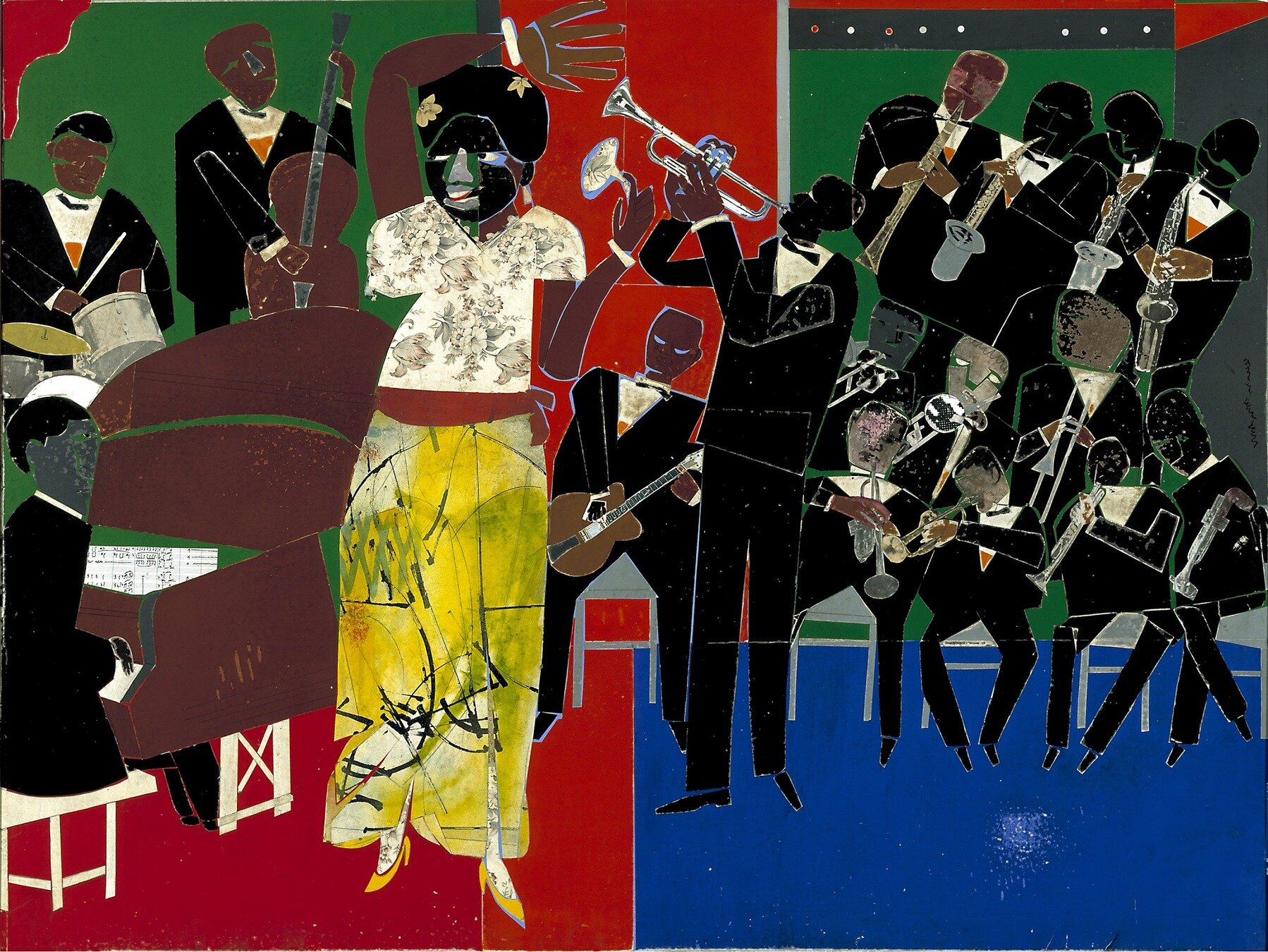
6th grade–8th grade


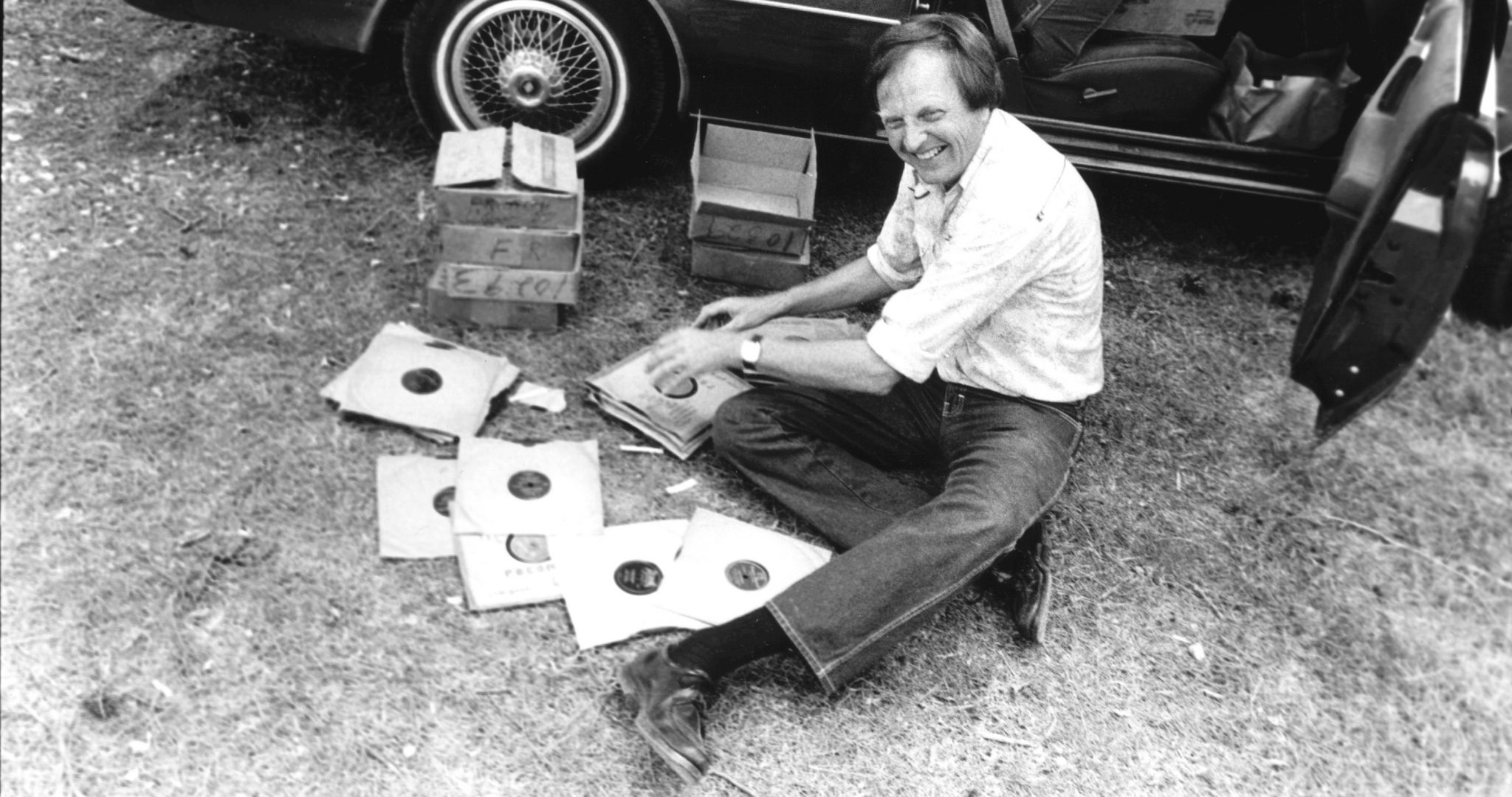
Chris Strachwitz in Louisiana, unknown photographer. The Arhoolie Foundation.
The question to consider in this lesson is . . .
How do we know so much about the history and development of the blues?
Capturing and Documenting the Blues


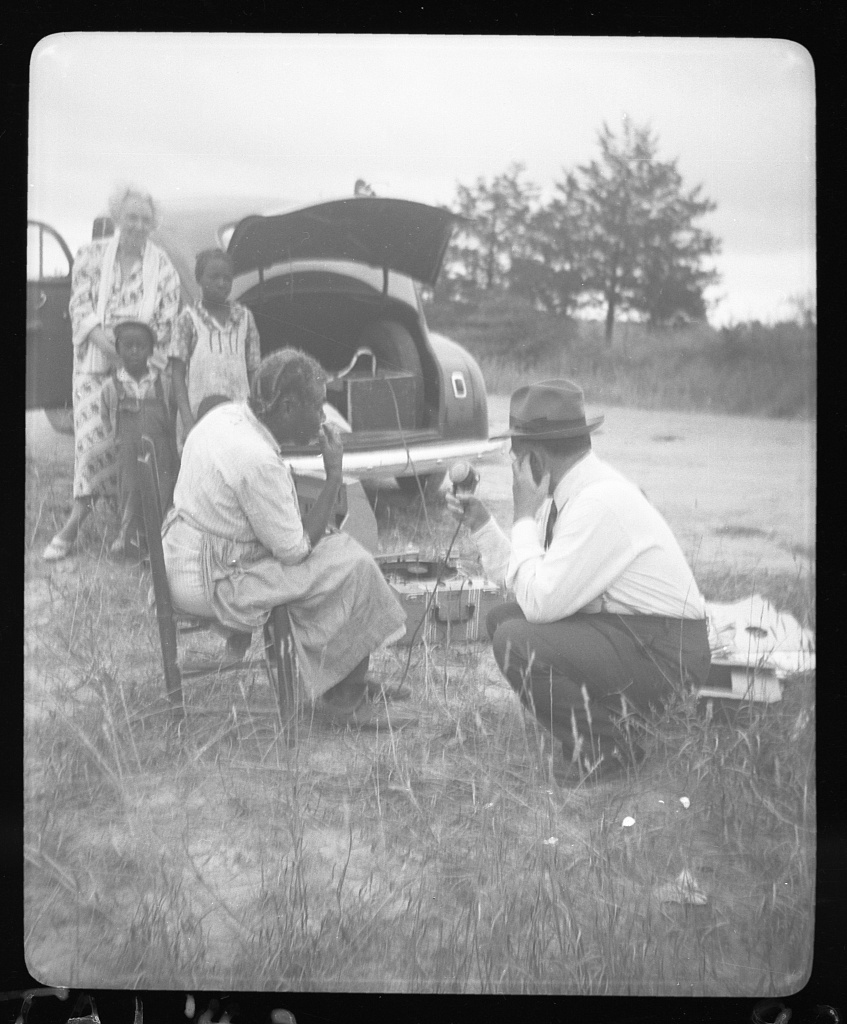
At the Microphone with John A. Lomax, Sr. Near Sumterville, Alabama, by Ruby Terrill Lomax. Library of Congress.
"Collecting" the Blues
Path 1
30+ minutes
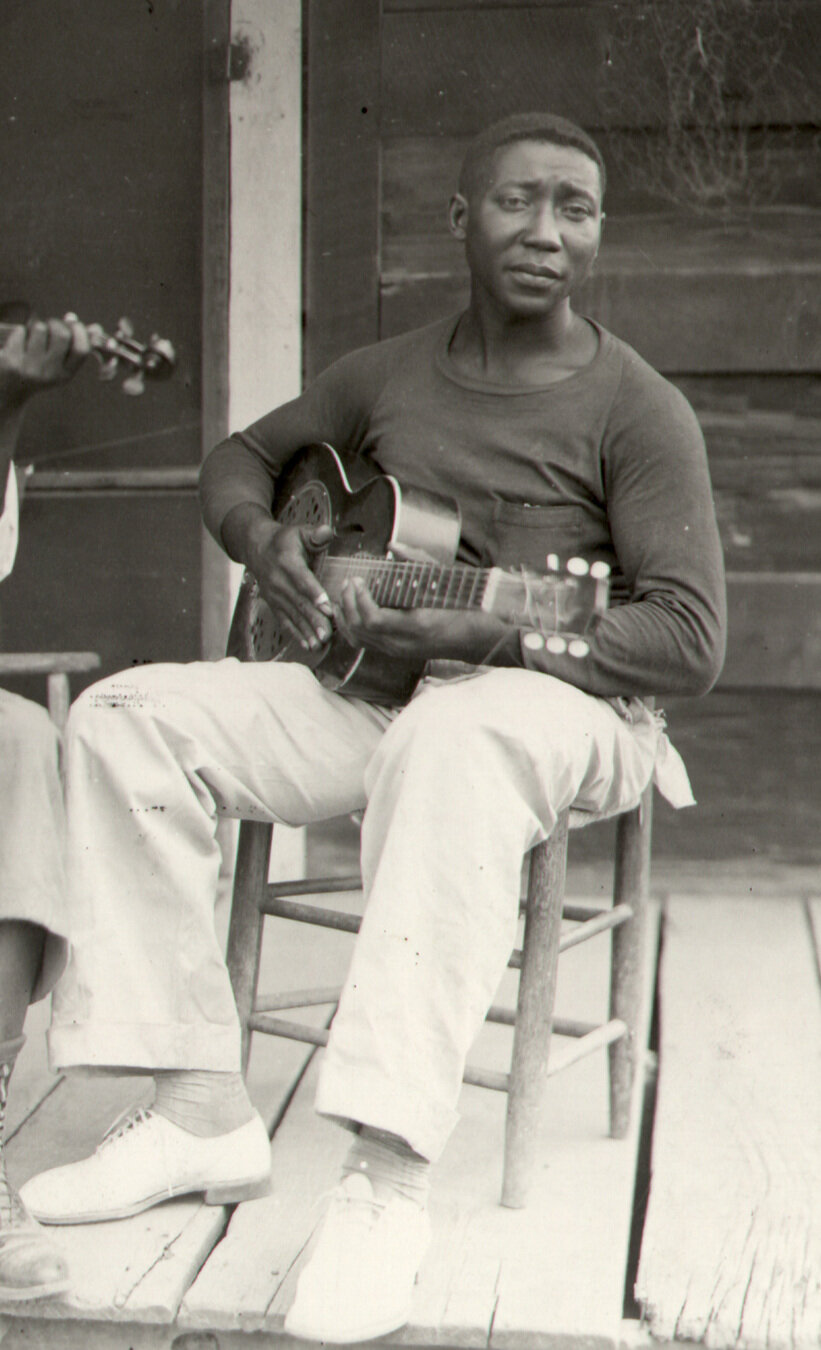
Muddy Waters, by John Work Wesley III. Middle Tennessee University.
The Birth of the Blues?
Like most music genres, it is nearly impossible to pinpoint exactly where and when the “blues,” as a genre, emerged.
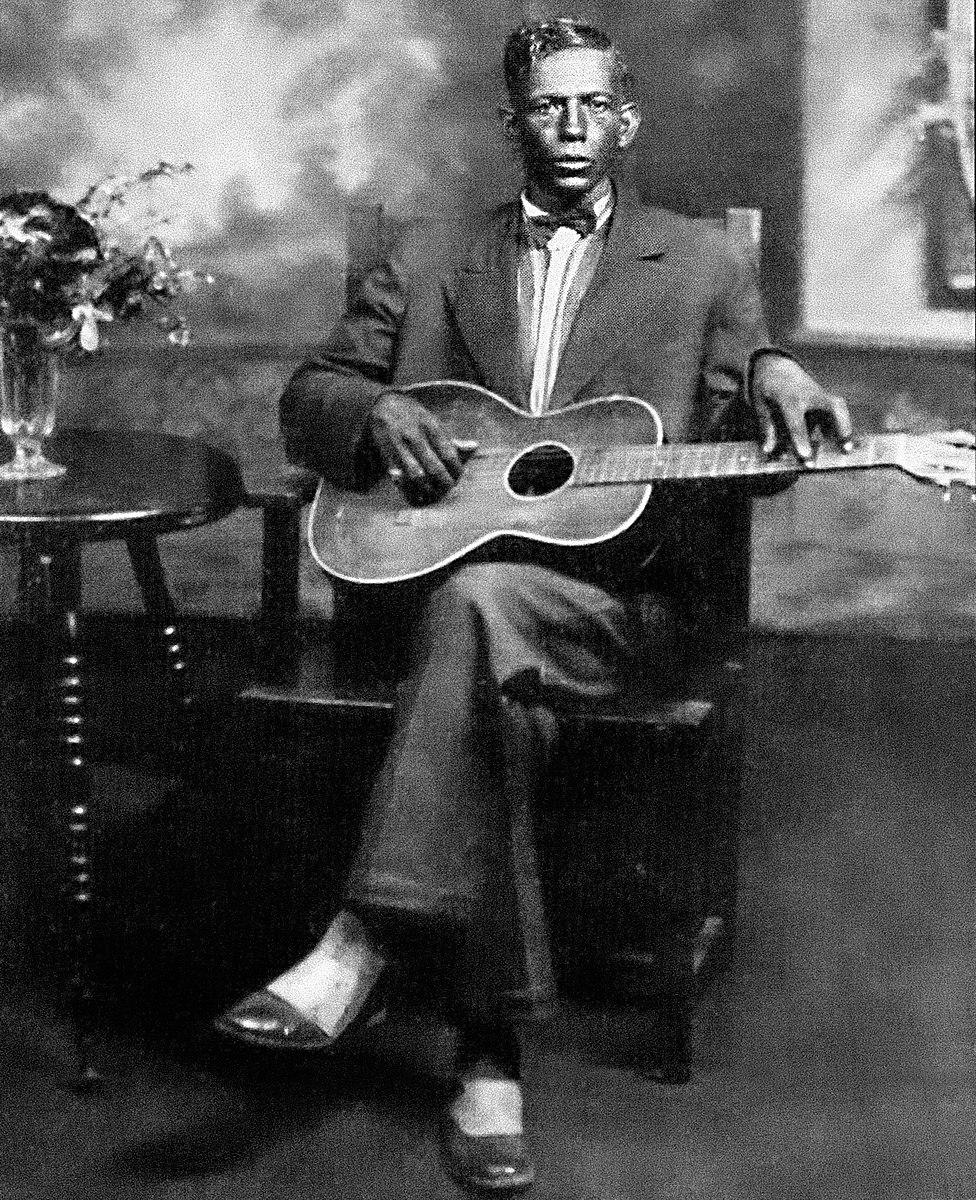
Charlie Patton, unknown photographer. PD-old, via Wikimedia Commons.
Charlie Patton was a famous “Delta” blues musician. Some people have called him the “Father of the Blues.”
"Charlie Patton," by J. D. Short
The Birth of the Blues?
Mural of Mississippi Jazz Musician Robert Johnson in Clarksdale, a Music Center in the Mississippi Delta, photograph by Carol M. Highsmith. Library of Congress.
The most well-known myth around the birth of the blues circles around bluesman Robert Johnson and the alleged deal with he made with the devil to gain unnatural talent on the guitar.
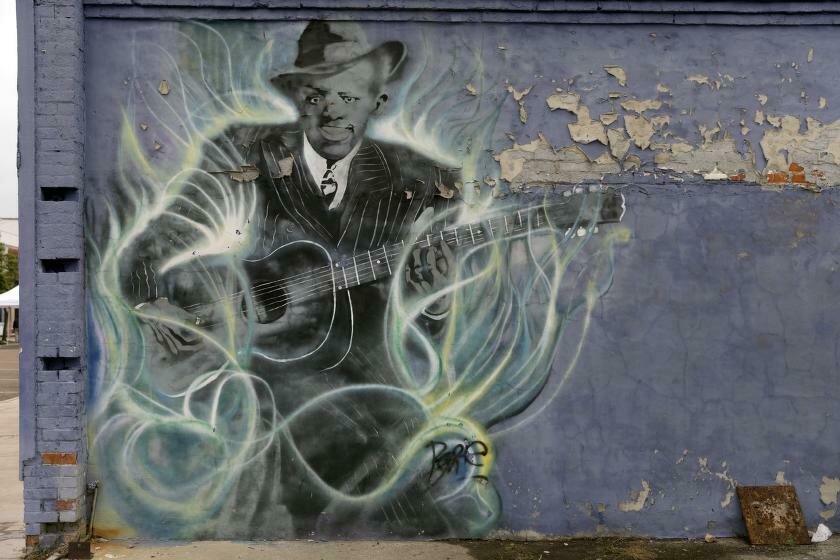
Legend has it ...
… Robert Johnson was a terrible guitar player until he disappeared for a few weeks.
He took his guitar to the crossroads of Highways 49 and 61 in Clarksdale, Mississippi, where the devil retuned his instrument in exchange for his soul.
He returned with a formidable technique and a mastery of the blues.
"I Believe I'll Dust My Broom," by Robert Johnson
Generally Speaking .....
Discussion
Myths aside . . . how do you think we currently know so much about the evolution of the blues?
How was the history of the blues captured?
John and Alan Lomax
Folklorist John Lomax and his son Alan Lomax (pictured here)were some of the first to record and "collect" the songs of blues artists in the early 20th century.
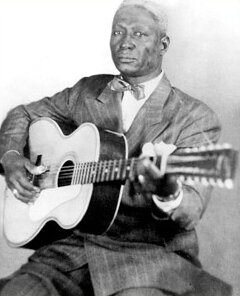
Their public releases of artists such as Lead Belly and Muddy Waters aided in popularizing the blues of the rural South.
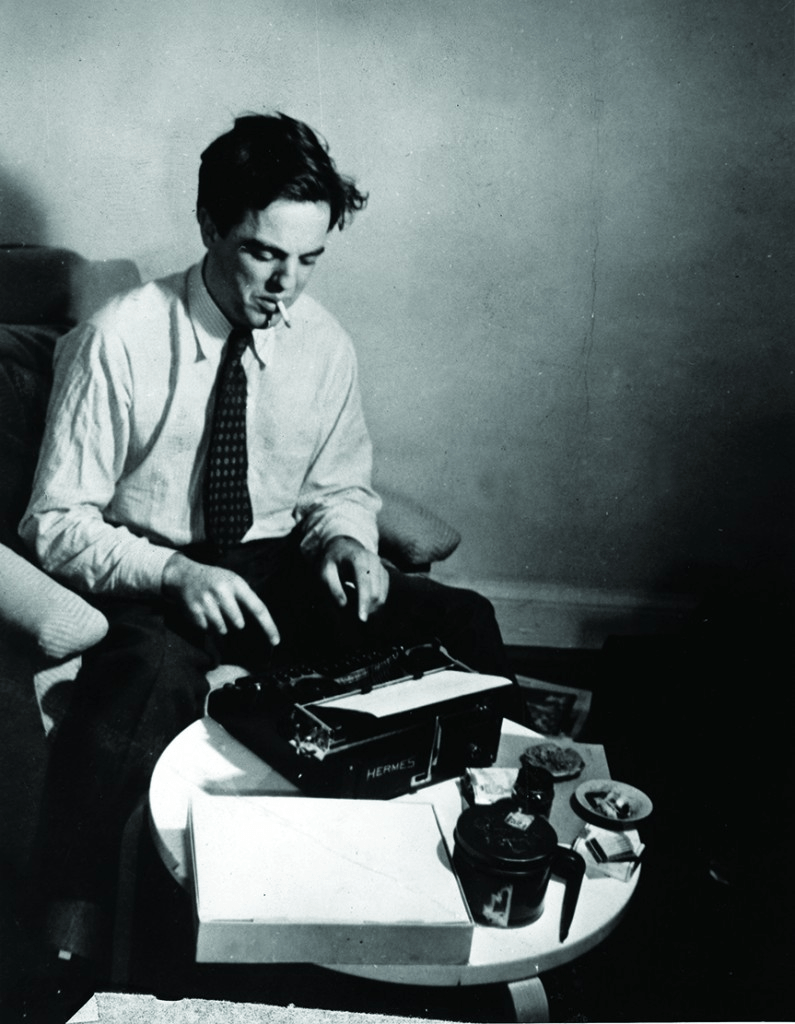
Left: Alan Lomax at Typewriter, Unknown photographer. Alan Lomax Collection, American Folklife Center, Library of Congress.Top Right: Lead Belly, by Alan Lomax, PD-author, via Wikimedia Commons. Bottom Right: Muddy Waters, by John Wesley Work III. Middle Tennessee University.
What is a Folklorist?

Folklorists go out into communities, neighborhoods, and people’s homes to do their work.
- This is sometimes called fieldwork.
Folklorists carry out their fieldwork by:
-
Making notes and then writing up observations.
-
Making audio recordings of music performances or interviews with tradition bearers.
-
Taking still photographs or making videotapes.
Folklorists study and document traditional ways of doing things.
- This can include ways of making crafts, playing music and dancing, working, telling stories, telling jokes, or celebrating the important stages of life.
Attentive Listening: Lead Belly
Listen to excerpts from some of Lead Belly's songs, originally recorded in the 1930s by folklorists John and Alan Lomax.
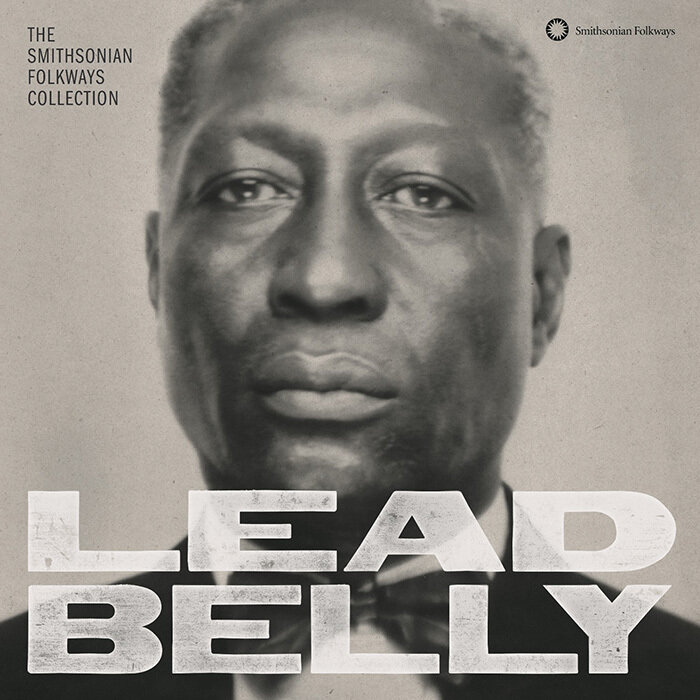
Lead Belly: The Smithsonian Folkways Collection, cover design by Visual Dialogue. Smithsonian Folkways Recordings.
"The Bourgeois Blues"
"Leaving Blues"
"Jail-house Blues"
"Packin' Trunk Blues"
What do you notice about:
sound quality
instrumentation
vocal quality
performance style
Lead Belly’s "Bourgeois Blues" has an interesting history ... listen again, paying closer attention to the lyrics.
What is this song about?
Digging Deeper: "The Bourgeois Blues"
What does the word "bourgeois" mean?
The word “bourgeois” (originally a French term) can mean:
What is Bourgeois?
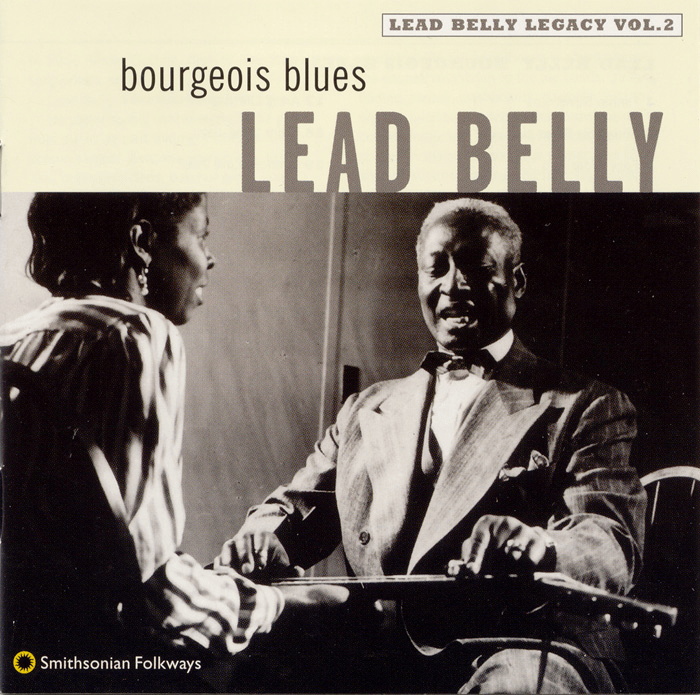
Bourgeois Blues: Lead Belly Legacy, Vol. 2, cover design by Visual Dialogue. Smithsonian Folkways Recordings.
- Middle Class
- Materialistic
-
Capitalistic
- Conventional
-
Urban (not rural)
- Upholding traditional values
Read this excerpt from the album liner notes, which explains the context within which this song was written:
Digging Deeper: "The Bourgeois Blues"
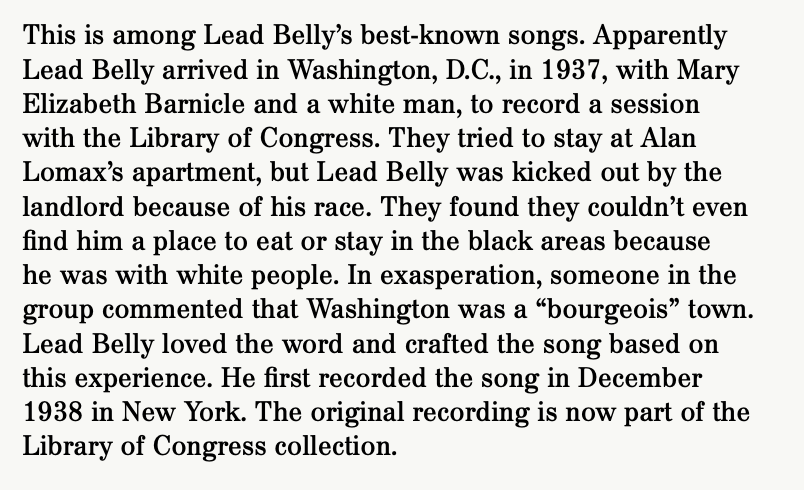
"The Bourgeois Blues" Track Notes, from Lead Belly: The Smithsonian Folkways Collection, by Jeff Place and Robert Santelli. Smithsonian Folkways Recordings.
Chris Strachwitz
For example, record producer Chris Strachwitz also collected many recordings of music from folk or roots musicians throughout the United States—especially blues musicians.
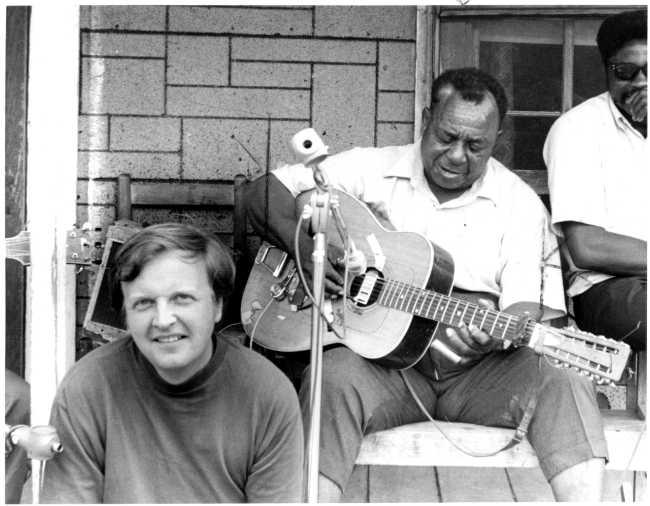
The Lomaxs were definitely not the only folklorists who collected and preserved early blues music.
Chris Strachwitz with Delta Blues Musician Joe Lee "Big Joe" Williams, unknown photographer. The Arhoolie Foundation.
Generally Speaking .....
Arhoolie Records
Chris Strachwitz was the founder of a record label called Arhoolie Records.
For over 60 years, Strachwitz collected and published audio recordings—introducing generations of fans to a variety of musicians who might otherwise have remained unknown.
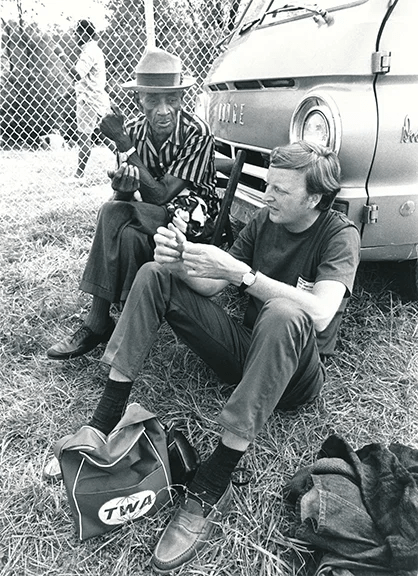
Mance Lipscomb with Chris Strachwitz at Ann Arbor Blues Festival, by Tom Copi. The Arhoolie Foundation.
The Blues Women of Arhoolie!
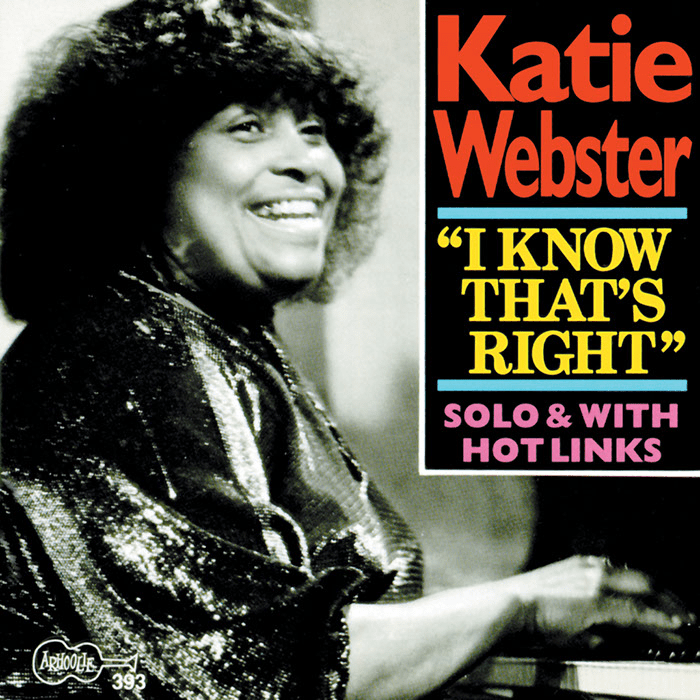
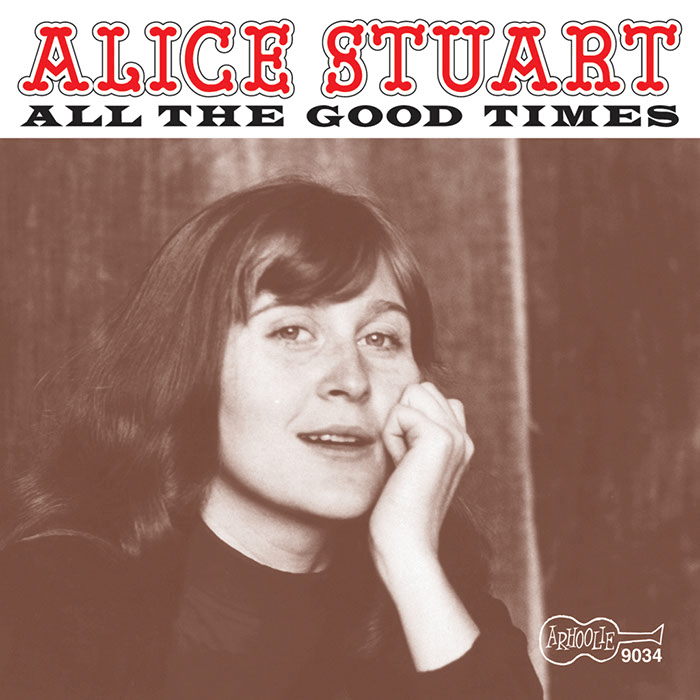
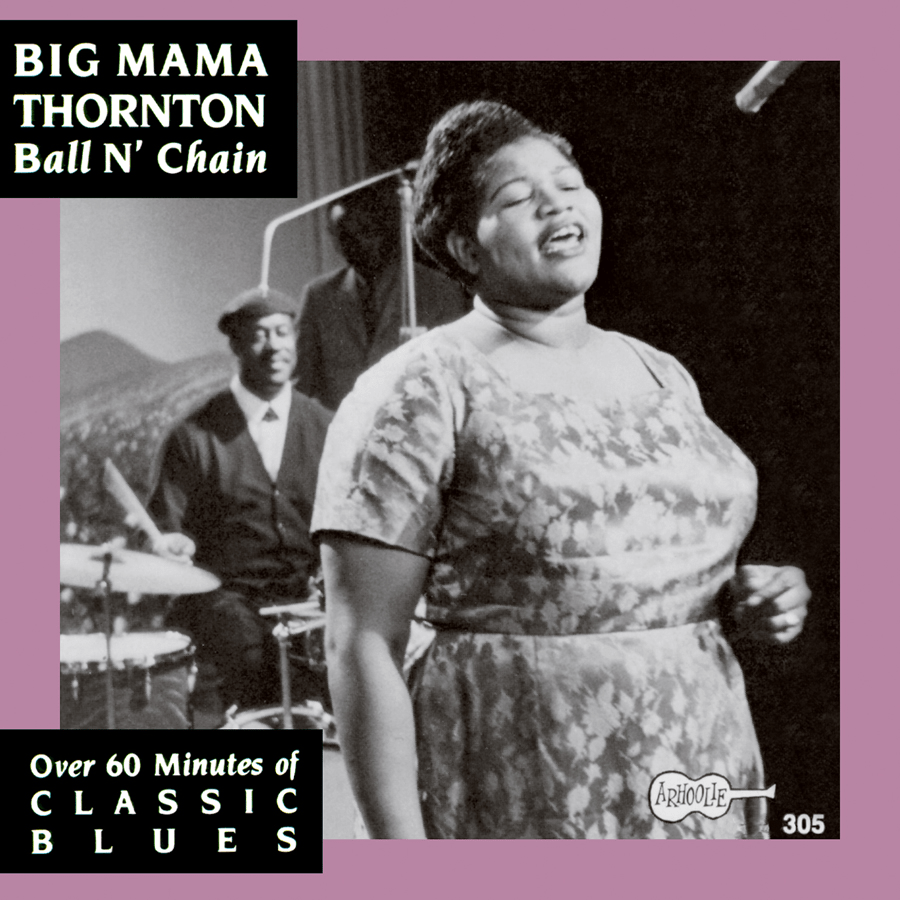
From Left to Right: I Know That's Right, by Katie Webster, by Wayne Pope. Ball N' Chain, by Big Mama Thornton, by Elizabeth Weil. All the Good Times, by Alice Stuart, by Wayne Pope. Arhoolie Records.
Importantly, Arhoolie Records was responsible for bringing the music of important blues women to listening audiences all over the country.
Optional Extension Activity: Learn About an Arhoolie Blues Woman
Listen to an audio track from one (or all) of these blues women and learn more about her by reading the album liner notes.
"I Want You to Love Me"
"Ball N' Chain"
"James Alley Blues"
Generally Speaking .....
Ralph Rinzler Folklife Archives and Collections
In 2016, Ed Littlefield’s Sage Foundation purchased the Arhoolie label and gave it to Smithsonian Folkways Recordings in order to preserve Strachwitz’s important contributions to the history of American music.
The Arhoolie Collection is now housed in the Ralph Rinzler Folklife Archives and Collections, which is a part of the Smithsonian Institution's Center for Folklife and Cultural Heritage in Washington, DC.
Archives and archivists are very important—they help to preserve culture and history!

Ralph Rinzler Folklife Archives and Collections Repository, by Sonia Penchava. Center for Folklife and Cultural Heritage.
Generally Speaking .....
The Importance of Liner Notes in Archives
Most albums at Smithsonian Folkways recordings (including those in the Arhoolie collection) have detailed liner notes, which can help us understand the music, musicians, and historical and cultural context of the music.
Liner notes are very important historical documents that archivists preserve and sometimes create. Watch this video to learn more.
Jeff Place on Lead Belly's Legacy [Interview Video]. Smithsonian Folkways Recordings.
Generally Speaking .....
Personal Connections: What is your passion?
Chris Strachwitz (founder of Arhoolie Records) was a self-proclaimed “record man” – collecting music was his passion.
What are you passionate about?
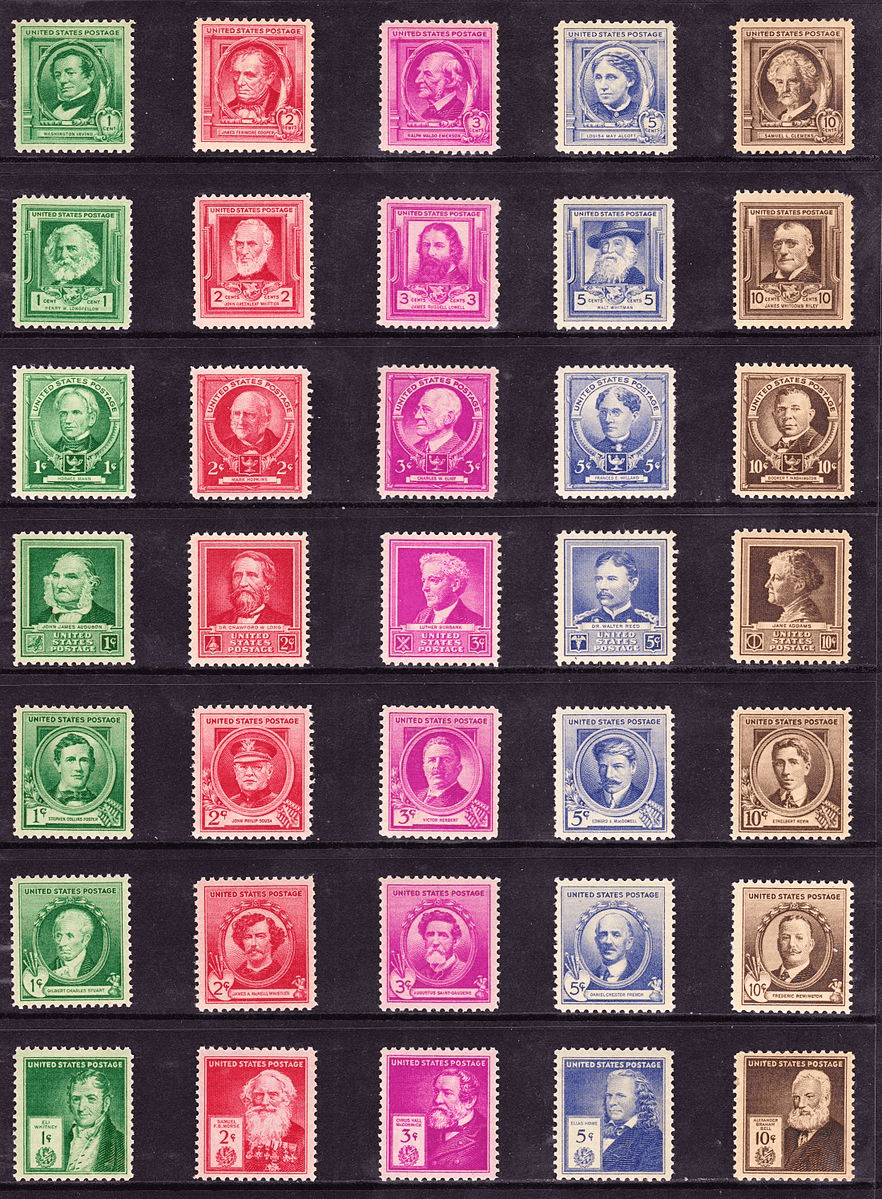
Stamp Collection, stamps by the United States Postal Service, photo by Gwillhickers, CC-PD-Mark, via Wikimedia Commons.
Do you have a collection?
If so, what types of items do you collect?
Why do you collect these items?
Learning Checkpoint
- What do folklorists and archivists do and why is their work important?
- What are liner notes, and why are they an important part of music archives?
- How do we know so much about the history and development of blues music?

End of Path 1: Where will you go next?

What Makes the Blues?
Path 2
30+ minutes
At the Microphone with John A. Lomax, Sr. Near Sumterville, Alabama, by Ruby Terrill Lomax. Library of Congress.
Imagine ...
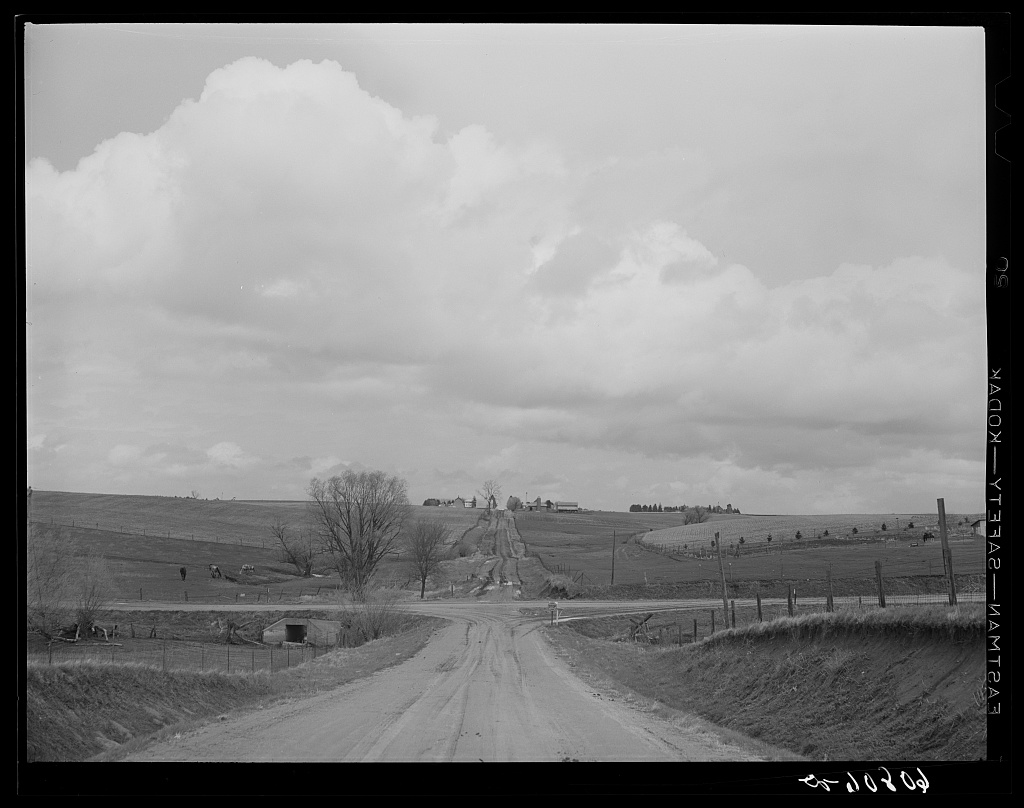
Crossroads. Marshall County, Iowa, by John Vachon. Library of Congress.
You are a folklorist traveling around rural America in the 1930s.
How are you able to distinguish the "blues" from other music genres of the time?
If you are looking for blues musicians, what are you listening for?
What Makes the Blues?
Throughout this Pathway, we have learned about some key indicators of blues music, related to:
Blues, by Robert Cottingham. Smithsonian American Art Museum.
Form
Style
Lyrics
Instruments
Improvisation
Pitches
Time
Generally Speaking .....
Listening Activity: "Collecting" the Blues
Now imagine you are an archivist working at a music archive.
How will you decide whether each track belongs in the blues collection?
You have been tasked with listening to several newly acquired audio tracks to see if they belong in the archive's "blues" collection.
You'll have a checklist to guide you, but this task is not quite as straightforward as it might seem ...
- What will you do if the artist has included some (but not all) characteristics expected with the blues?
- Are some characteristics more important than others?
There are no "right" or "wrong" answers ... but you do need to provide rationale for your decisions.
Listening Activity: "Collecting" the Blues
Katie Webster: "Don't Accuse Me"
Debbie Green: "Who's Going to Be My Man?"

Big Mama Thornton: "Your Love is Where it Ought to Be"
Alice Stuart: "James Alley Blues"
Barbara Dane: "You Don't Know Me"
Essie Jenkins: "The 1919 Influenza Blues"
Select one of the blues women below and analyze one of her recordings for “blues” characteristics.
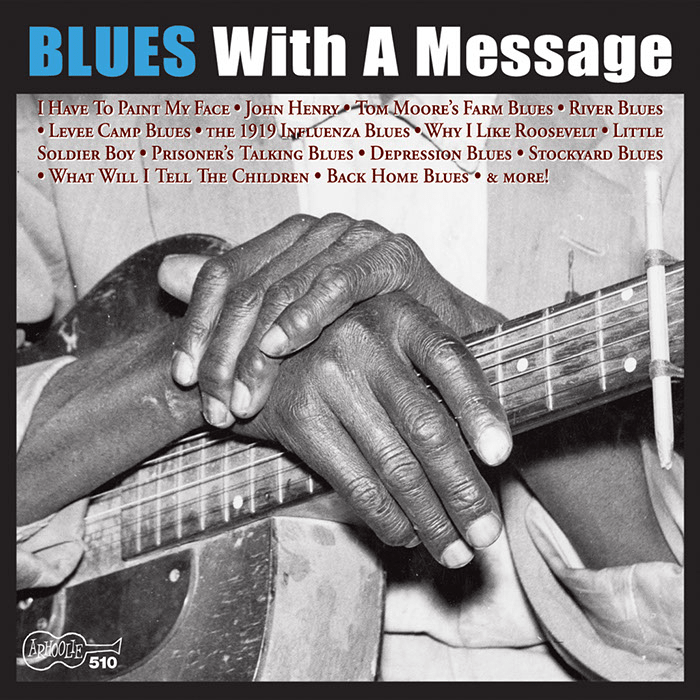
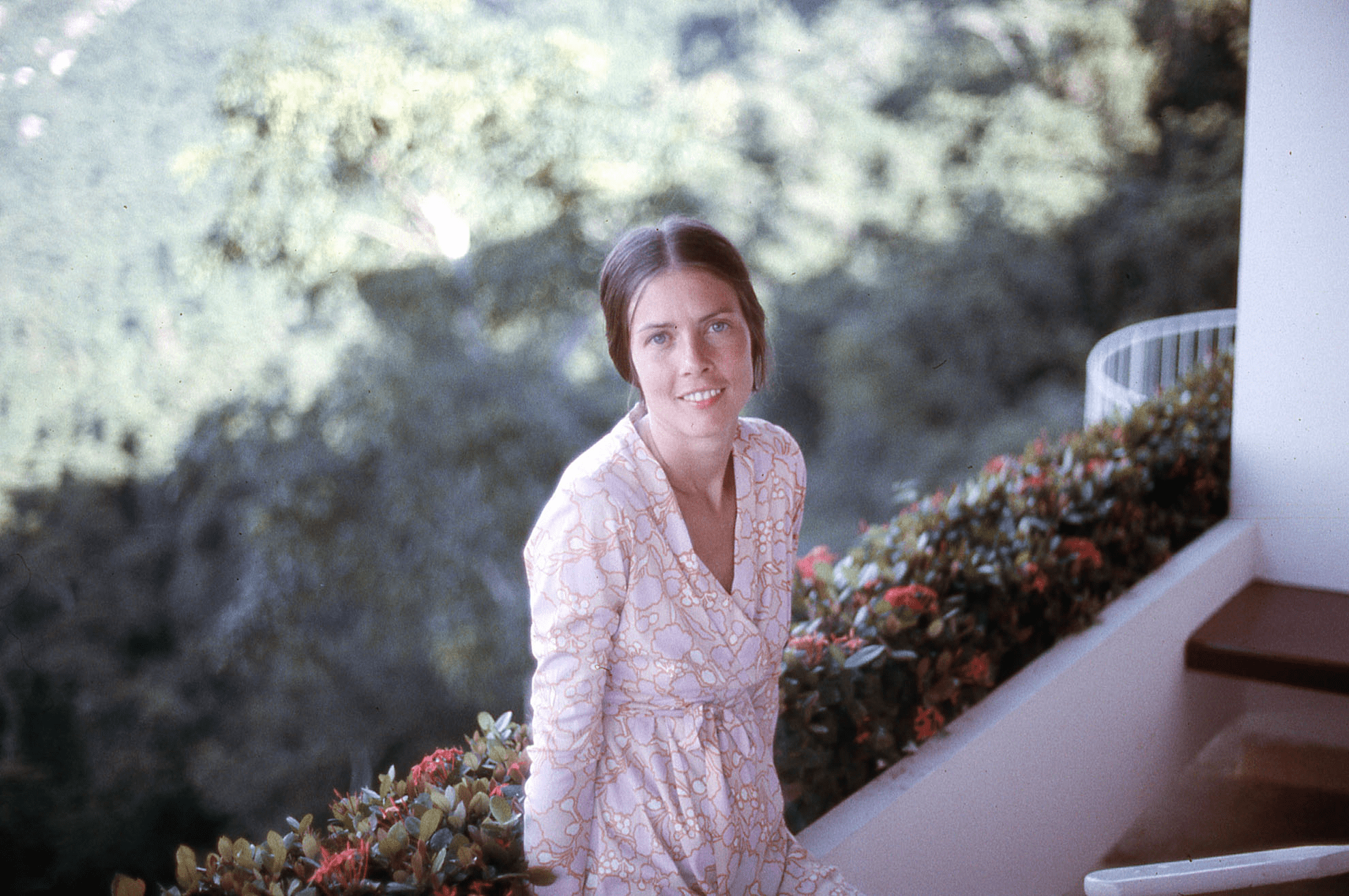
Katie Webster, known for her unique style of playing the piano, worked for many years as a studio musician and before launching a solo career. The liner notes that accompany her album state:
Katie Webster: "Don't Accuse Me"
She served as a utility person who could be counted on to provide just the right backing for any style of music, be it blues, rock 'n roll, soul, country and western, Cajun or Zydeco.
She recorded this original song in 1985.
Big Mama Thornton is best known for her hit song, “Hound Dog.” After its release in 1953, Big Mama found herself in high demand, touring from coast to coast. Later, Elvis Presley recorded the song and made a monster hit for himself utilizing mostly the same arrangement.
Big Mama Thornton: "Your Love is Where it Ought to Be"
No one ever formally taught her how to sing or how to play the harmonica and drums—she learned from watching others.
Alice Stuart's repertoire included traditional folk and old-time country and blues songs that were a staple of American folk music in the 1960s.
Alice Stuart: "James Alley Blues"
"James Alley Blues" was originally recorded in the late 1920s by New Orleans "songster" Richard "Rabbitt" Brown.
According to Debbie's daughter, Sari:
Debbie Green: "Who's Going to Be My Man"
Debbie was a key force in the 60’s folk revival. She was amongst the original folk music pioneers, researchers, and interpreters, always searching for a great song. Inspired by her mesmerizing voice and songs, Joan Baez adopted Debbie’s arrangements for own first album.
In the early 1970s, Barbara co-founded Paredon Records with Irwin Silber. Through this endeavor, she sought to amplify the voices of artists and activists that were full of hope, and sometimes desperation—voices that expressed the struggles and victories of people standing up for peace, equity, and social justice.
Barbara Dane: "You Don't Know Me"
Born in 1929, Barbara Dane is a trailblazing singer, songwriter, political activist, and record producer who embraced a wide variety of musical styles, including jazz, blues, and folk. She is now 97 years old!
Very little is known about Essie Jenkins—a pianist and singer. It appears that "The 1919 Influenza Blues" (ca. 1930s) was the only song she ever recorded.
Essie Jenkins: "The 1919 Influenza Blues"
The liner notes that accompany this album had this to say about the song::
In Essie Jenkins' view, and in that of many of her contemporaries, the epidemic was God's retribution for the sins of the world.
Learning Checkpoint
- What are some key characteristics of blues music? (If you were a folklorist or archivist, collecting "blues" music, what would you be listening for?)
End of Path 2: Where will you go next?
Create Your Own Collection!
Path 3
30+ minutes
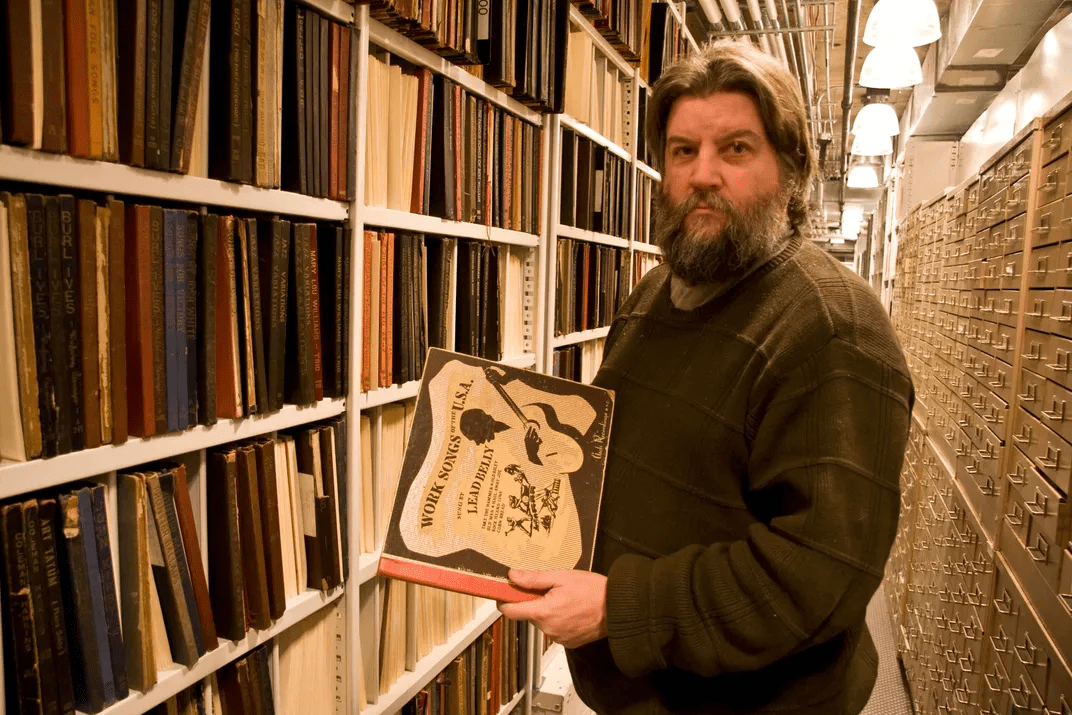
Senior Archivist Jeff Place, unknown photographer. Smithsonian Folkways Recordings.
Archives and Archivists
An archive is a place (physical or virtual) that houses collections of historical documents / records that provide information about something (e.g., a place, institution, or group of people).
An archivist is a record keeper (kind of like a keeper of culture) ... someone who assesses, collects, organizes, preserves, and maintains control over historical documents and artifacts.
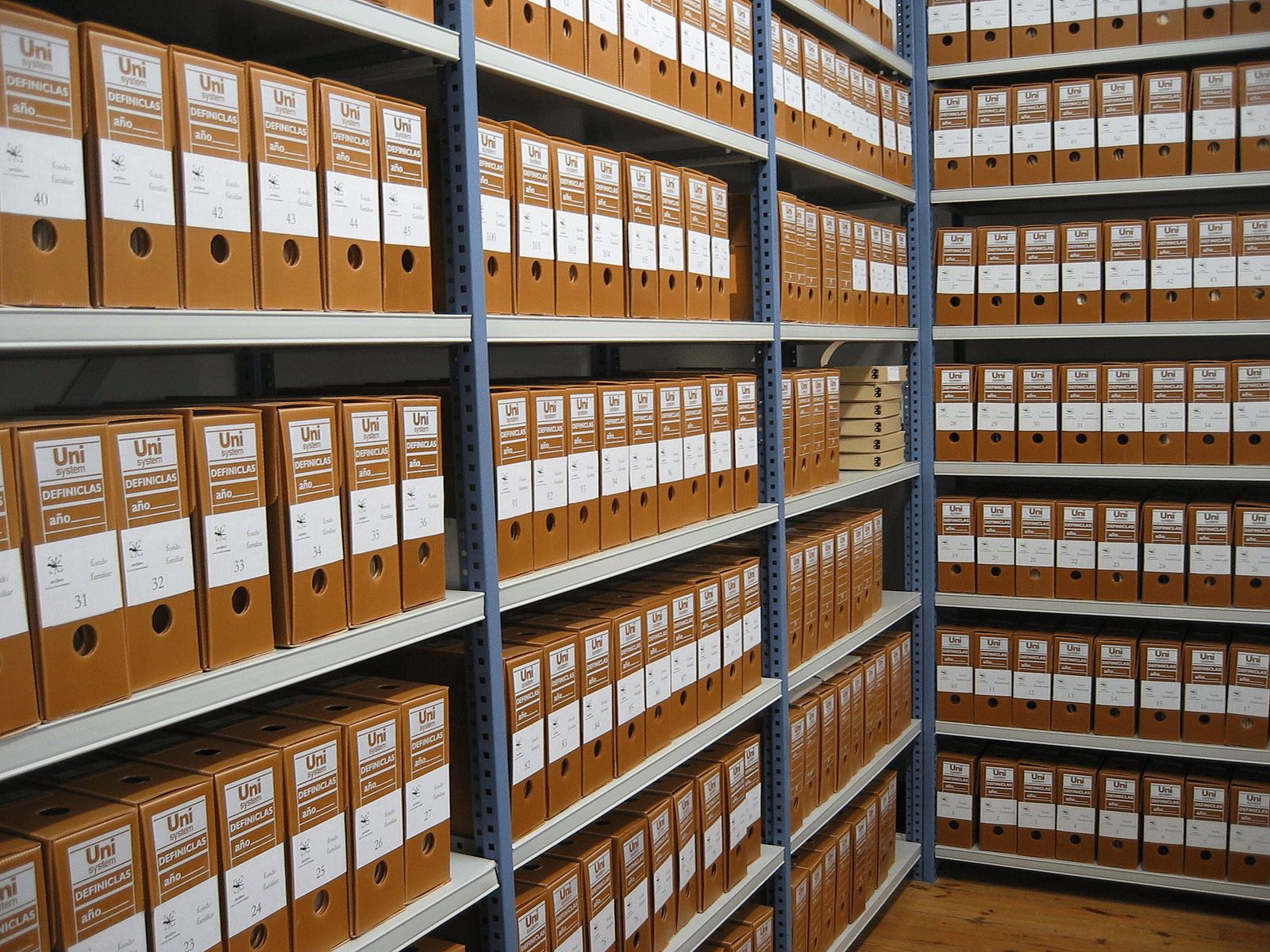
Shelved Record Boxes at an Archive, by Archivo-FSP, CC-BY-SA-3.0, via Wikimedia Commons.
Archival Projects
The main purpose of a personal archival project (compiling and organizing a collection) is to document the story of something (e.g., a person, family, place, corporation, association, community, nation, song, musical genre, social movement, etc.).
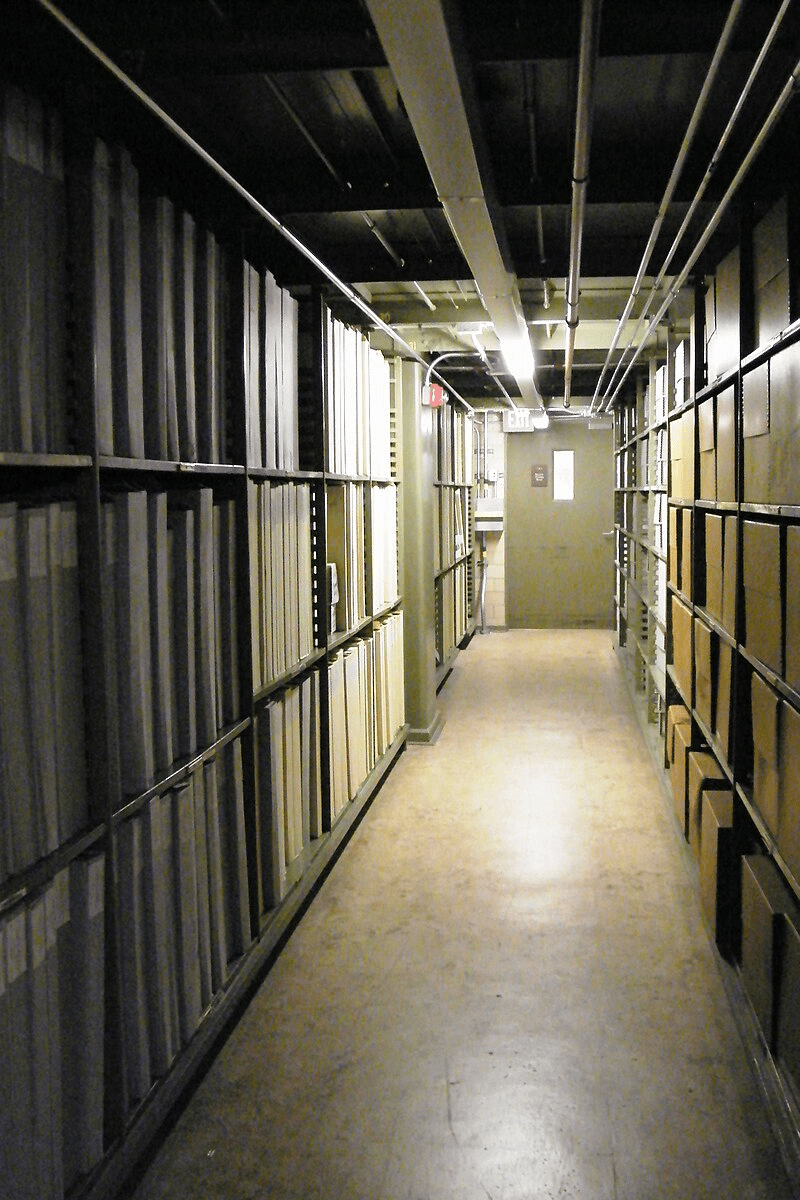
You don't need to be Chris Strachwitz or Alan Lomax to collect and organize stories and songs!
Storage Hallway at the National Archives, by Sarah Stierch, PD-user, via Wikimedia Commons.
Digitizing Archives
Over the past several decades, the Internet has completely changed the way that people access information.
Analog Tape Recording in the Process of Being Digitized at Smithsonian Folkways Recordings, by Sauerkrautrock, CC-BY-SA-4.0, via Wikimedia Commons.
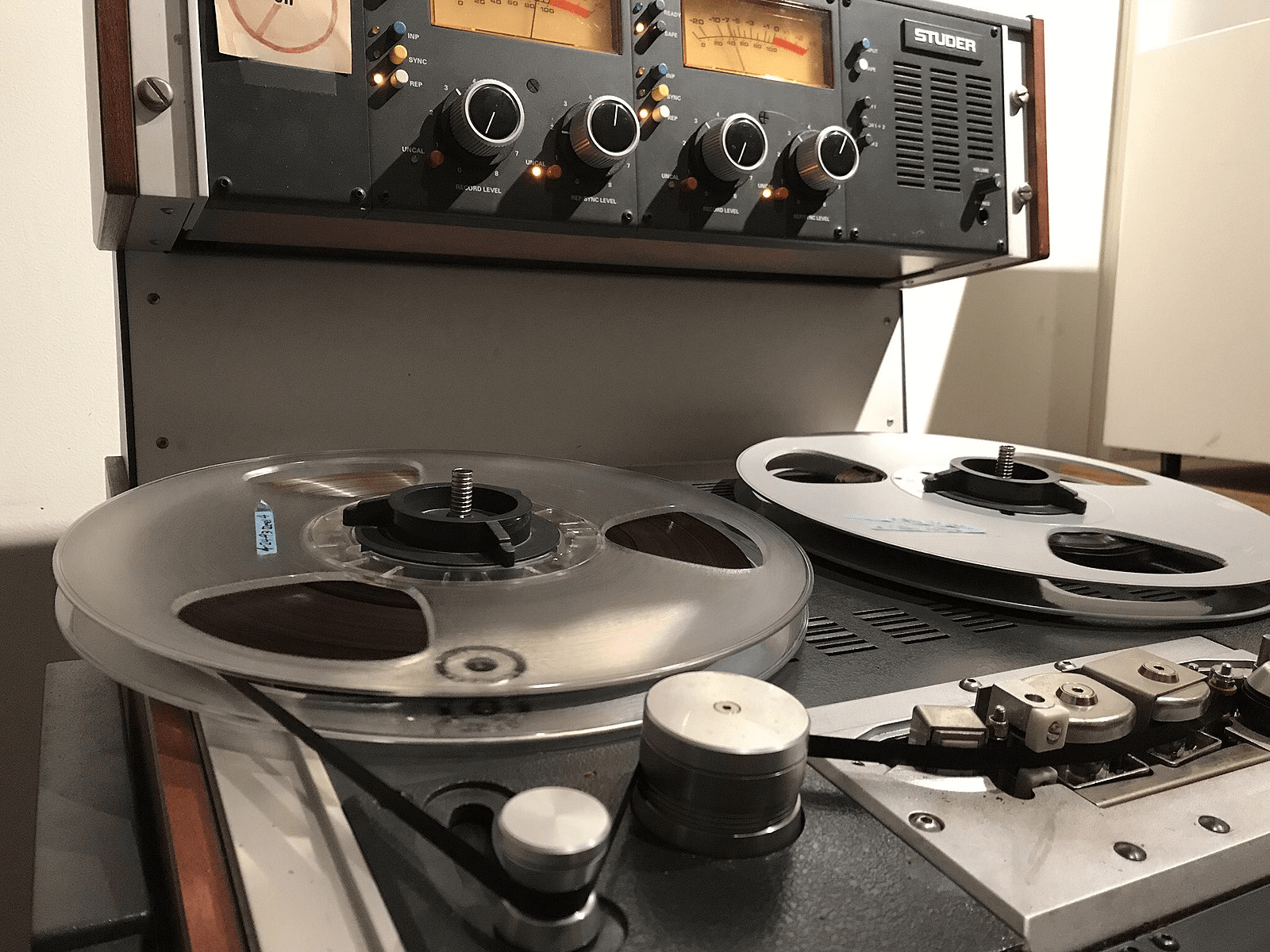
To reach a broader audience and reduce the wear and tear of frequent handling, many physical archives are now being digitized.
The process of digitization involves converting information, such as text, photographs, audio and video files, into digital format.
Become an Archivist!
In this activity, you will use Smithsonian Learning Lab to create your own online archival collection ... perhaps you’ll tell the story of your family, friends, a hobby, a place, a music style you like, an artist or musical group ... the possibilities are endless.
Smithsonian Learning Lab
The Smithsonian Learning Lab is a free, interactive platform for discovering millions of authentic digital resources, creating content with online tools, and sharing in the Smithsonian's expansive community of knowledge and learning.
Generally Speaking .....
Getting Started with Smithsonian Learning Lab
As a class, navigate to the Smithsonian Learning Lab website.
Type “blues music” into the search bar (under the discover tab). What items appear? What collections appear?
Browse a collection . . . What did this archivist collect in order to tell a story about this topic?
Next, brainstorm another topic and type it into the search bar. What did you find? Images? Audio tracks? Documents? Articles? Website links?

Why might this collection be useful for someone?
Generally Speaking .....
Choose a Topic
Now it is your turn to create a collection using the Smithsonian Learning Lab!
What will your topic be?
(Choose something you are passionate about!)

Eyes of a Teenager Boy, ID 97867105, © Neirfy | Dreamstime.com.
Remember, folklorists and archivists (such as Alan Lomax, Chris Strachwitz, and Jeff Place) try to preserve cultural traditions by telling the stories of everyday people.
Generally Speaking .....
What Can You Collect?
Now it is your turn to create a collection using the Smithsonian Learning Lab!
-
Images?
-
Articles?
-
Websites?
-
Audio files?
-
Videos?
-
Documents?
-
Something else?

Do you know someone who knows something about your topic? If so, you could interview them!
Line Of High School Students Working at Screens In Computer Class, ID 134206977 © Monkey Business Images | Dreamstime.com.
- Ask them questions.
- Write down their words.
Generally Speaking .....
Create Your Collection!
Here are some ideas and hints to help you get started:
To create a collection on Smithsonian Learning Lab, students (or parents or teachers) will need to set up a free account using an email address.
- Once logged in, click My Account. Click Collections and then Create a Collection. Name your collection and write a short description
- Begin your search in Smithsonian Learning Lab itself. Enter search terms related to your topic. When an interesting resource pops up, copy it directly into your own collection.
- When you are done collecting items, organize them into a logical order.
- Curate your collection by adding descriptions to your items.
-
Once your collection is curated and complete, present your work to the class.
Learning Checkpoint
- What is the role of an archivist, and why is archiving useful?
- What types of items do archivists collect?
- What is Smithsonian Learning Lab and how can people use it?
End of Path 3 and Lesson Hub 11: Where will you go next?
Continue to Lesson Hub 12:
The Blues Influence


Lesson 11 Media Credits
Images courtesy of
The Arhoolie Foundation
National Museum of American History
Center for Folklife and Cultural Heritage
Smithsonian Folkways Recordings
Sari Andersen
Library of Congress
The Center for Popular Music, Middle Tennesee State University
Smithsonian American Art Museum
Audio courtesy of
Smithsonian Folkways Recordings
Video courtesy of
Smithsonian Folkways Recordings
Center for Folklife and Cultural Heritage
© 2023 Smithsonian Institution. Personal, educational, and non-commercial uses allowed; commercial rights reserved. See Smithsonian terms of use for more information.
This Pathway was funded in part by the Smithsonian Youth Access Grants program and received Federal support from the Smithsonian American Women's History Initiative Pool, administered by the Smithsonian American Women's History Museum. It also received in-kind, collaborative support from the Society for Ethnomusicology and the National Association for Music Education.
For full bibliography and media credits, see Lesson 11 landing page.