{Python extendibility}
Python Catania - Stefano Borzì

Python extendibility
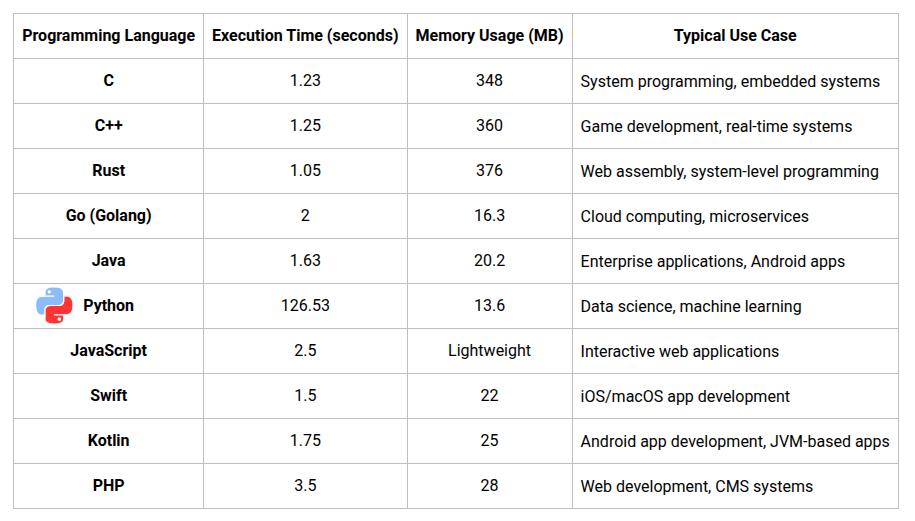
Programming languages comparison
Python extendibility
Programming languages comparison
print('Hello World!')#include <iostream>
using namespace std;
int main() {
cout << "Hello World!" << endl;
return 0;
}
public class HelloWorld {
    public static void main(String[] args) {
        System.out.println("Hello World");
    }
}
打印 你好世界
Python extendibility
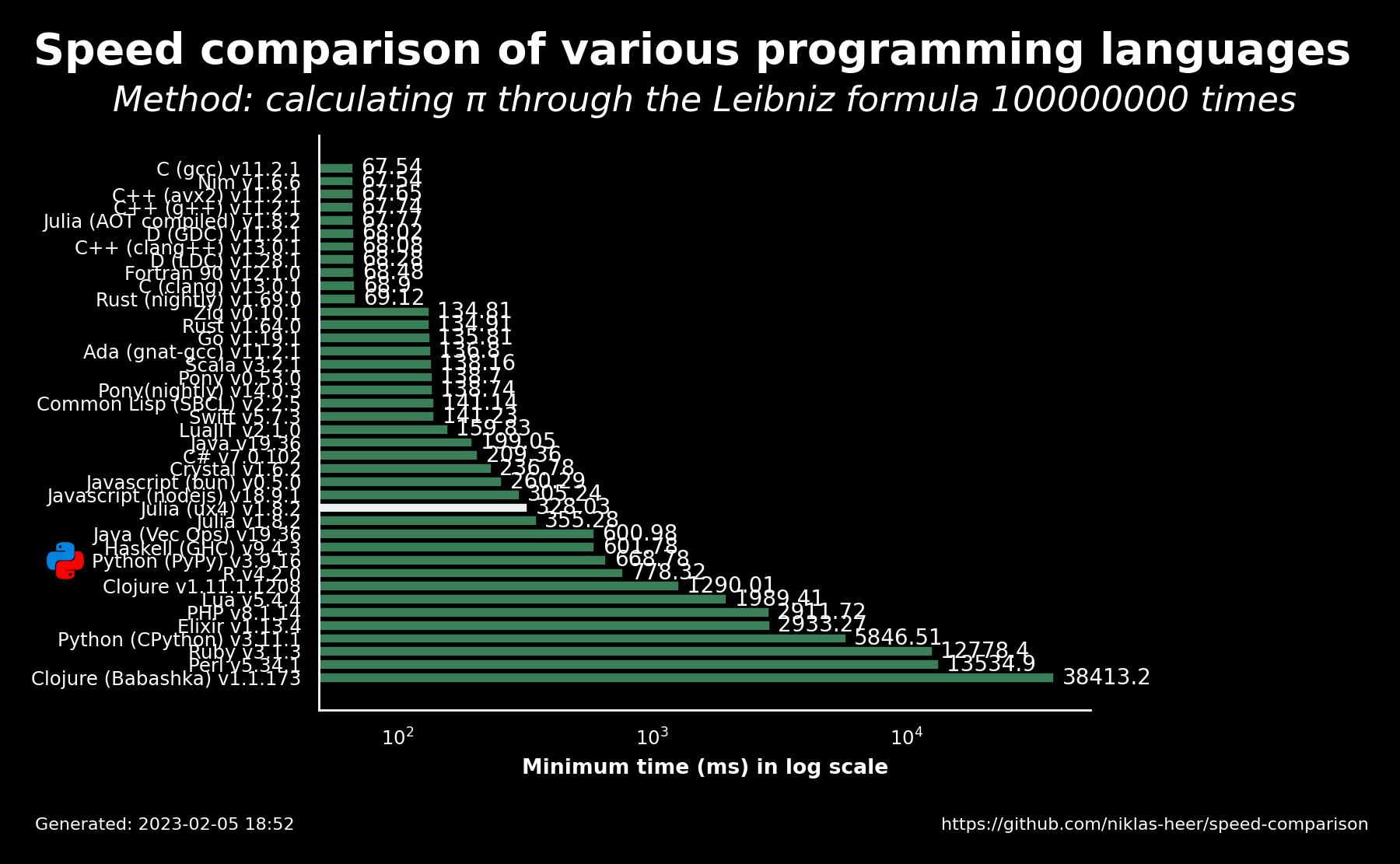
Programming languages comparison
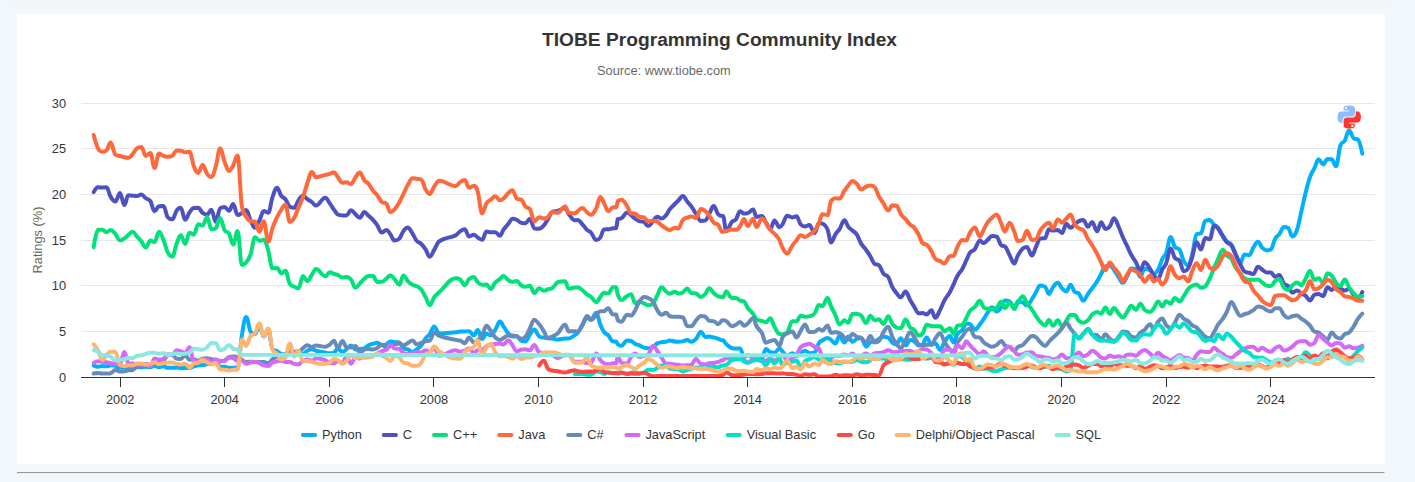
" The ratings are based on the number of skilled engineers world-wide, courses and third party vendors "
Python extendibility

" In 2024, Python overtook JavaScript as the most popular language on GitHub "
Python extendibility
CPython
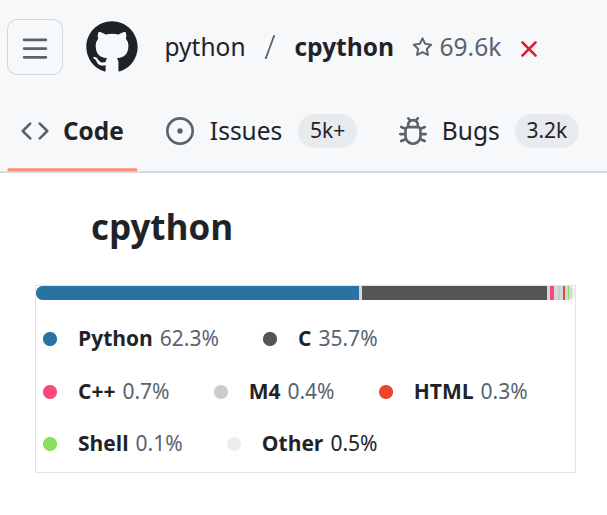
Python extendibility
counts = {}
for x in data:
    counts[x] = counts.get(x, 0) + 1
from collections import Counter

counts = Counter(data)
Python extendibility
import time
from collections import Counter

data = [i % 10 for i in range(10_000_000)]

# Manual loop
t0 = time.time()
counts = {}
for x in data:
    counts[x] = counts.get(x, 0) + 1

t1 = time.time()
print("Manual loop:", t1 - t0)

# Counter
t0 = time.time()
counts2 = Counter(data)
t1 = time.time()
print("Counter:", t1 - t0)
Manual loop: 0.727339506149292
Counter:
0.31299853324890137
Implemented in

Python extendibility

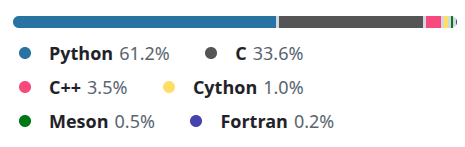

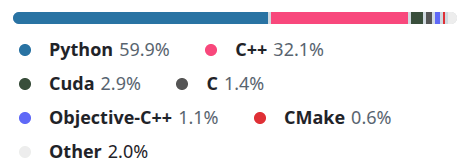
Python extendibility
Python extendibility
#define PY_SSIZE_T_CLEAN
#include <Python.h>

// Define the C function that implements "add"
static PyObject* myext_add(PyObject* self, PyObject* args) {
    double a, b;
    if (!PyArg_ParseTuple(args, "dd", &a, &b)) {
        return NULL;  // invalid arguments
    }
    double result = a + b;
    return Py_BuildValue("d", result);  // return a Python float
}

// Method definitions
static PyMethodDef MyExtMethods[] = {
    {"add", myext_add, METH_VARARGS, "Add two numbers"},
    {NULL, NULL, 0, NULL}
};

// Module definition
static struct PyModuleDef myextmodule = {
    PyModuleDef_HEAD_INIT,
    "myext",   // module name
    NULL,      // optional docstring
    -1,        // size of per-interpreter state or -1
    MyExtMethods
};

// Module initialization
PyMODINIT_FUNC PyInit_myext(void) {
    return PyModule_Create(&myextmodule);
}
myext.c
Python extendibility
Python extendibility
from setuptools import setup, Extension

module = Extension("myext", sources=["myext.c"])

setup(
    name="myext",
    version="1.0",
    description="Simple example of Python C extension",
    ext_modules=[module],
)
$ pip install .
setup.py
import myext

print(myext.add(3.5, 4.2))
Python extendibility
End
{Python multithreading}
Python Catania - Stefano Borzì
Python multithreading
from time import sleep

arr = range(100)

for x in arr:
  print(x)
  sleep(1)
Python multithreading
tqdm
from time import sleep
from tqdm import tqdm

arr = range(100)

for x in tqdm(arr):
  # print(x)
  sleep(1)

$ pip install tqdm
Python multithreading
pathos
from time import sleep
import pathos as pa

arr = range(100)

def parallel():
   sleep(1)

ncpu = pa.helpers.cpu_count()
with pa.multiprocessing.ProcessingPool(ncpu) as p:
    p.map(parallel, arr), total=len(arr)
$ pip install pathos
Python multithreading
pathos + tqdm
from time import sleep
from tqdm import tqdm
import pathos as pa

arr = range(100)

def parallel():
   sleep(1)

ncpu = pa.helpers.cpu_count()
with pa.multiprocessing.ProcessingPool(ncpu) as p:
    list(tqdm(p.imap(parallel, arr), total=len(arr)))
Python multithreading
multiprocessing vs multithreading
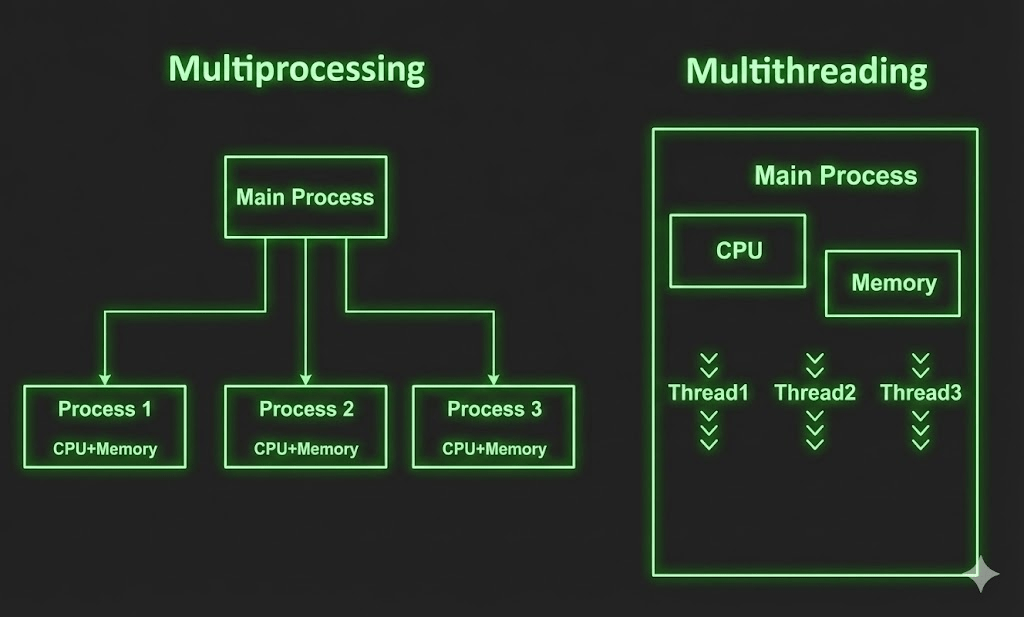
Python multithreading
multithreading in Python 3.12 (single-thread)
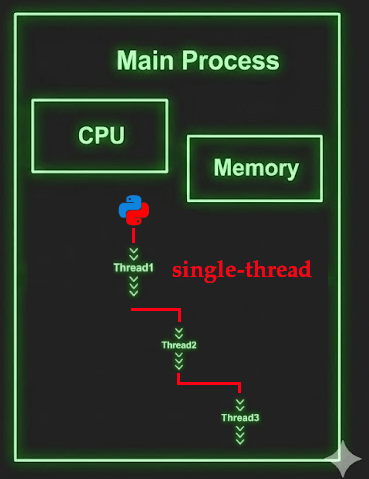

Python multithreading
multithreading - Python GIL
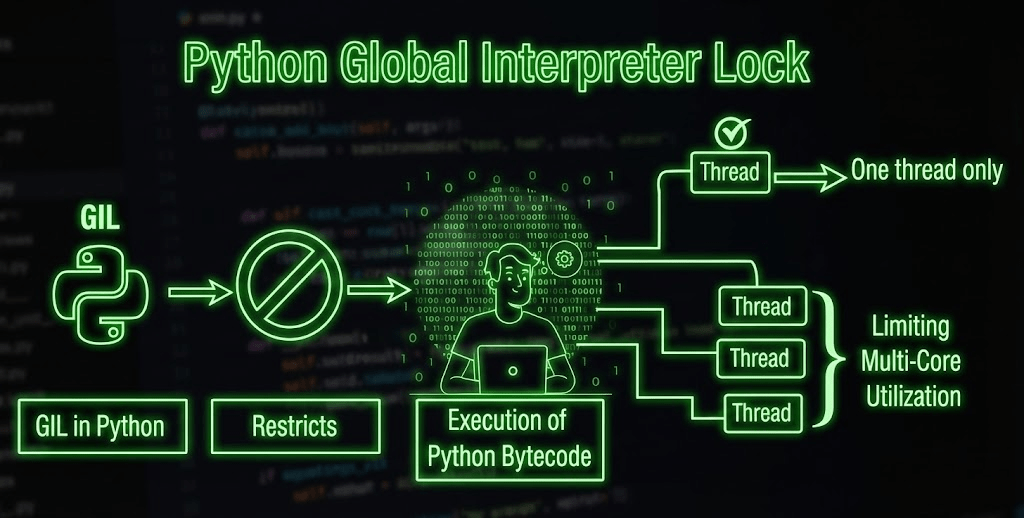
Python has a built-in mechanism that limits how threads are executed, and it’s called the Global Interpreter Lock, or GIL.
Python multithreading
CPU simulation - single thread (gil)
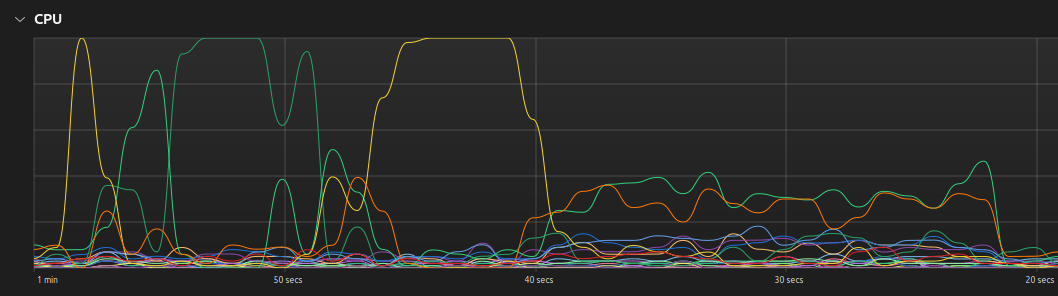
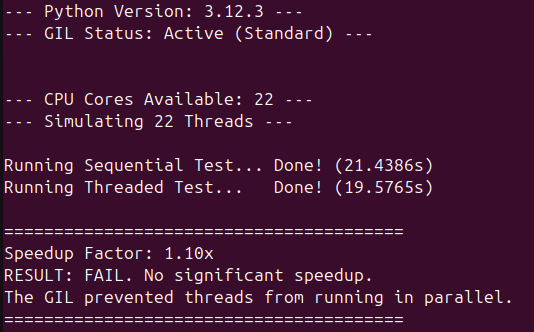
Python multithreading
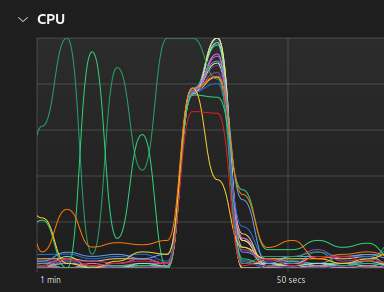
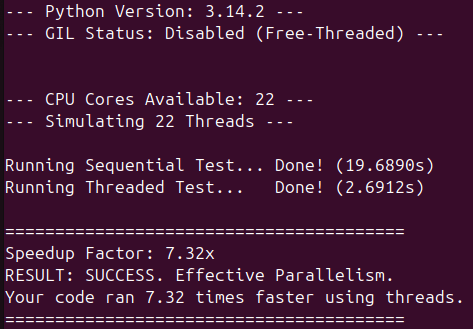
CPU simulation - multithreading (no-gil)
Python extendibility
exit(0)