SOCI 409
Fall 2026 library workshop
RESOURCES FOR YOU
Google: sociology concordia library
(SOAN 820)
ask questions - GET HELP:


at the AskUs desk
via chat
via email
by phone

your subject librarian:
susie.breier@concordia.ca
AskUs Desk
Webster LB building:
most Wednesdays 1 - 3 pm
pronouns: she/her/elle
Questions about the
thematic overview of news coverage assigment?
2. Statement of research topic and initial bibliography:
You are asked to prepare a convincing statement of your proposed research topic in three parts: 1) a contextualisation of your topic, including its relevance in both the academy and society at large; 2) an outline of your topic, including your preliminary research question(s); and 3) an initial bibliography comprised of your “golden articles” (3-4), which will set the stage for your preliminary bibliography.
your next assignment
YOUR QUESTIONS & CONCERNS
agenda items
- ZOTERO bibliographic management [zotero slides]
- LITERATURE REVIEW sources & examples
- Search Strategies & KEYWORDS (boolean operators, wildcards, quotation marks)
-
"Cited by" and relational searching: Google scholar and beyond
-
Using AI for your research and literature review [AI slides]
- Ensure articles are academic / PEER-REVIEWED / scholarly
- Referencing and bibliographies (Chicago)
- ACCESS STUFF at Concordia & beyond using Sofia

click on/open one or more of the following articles on the next two slides and try to determine:
-
which one(s) might be relevant to your topic?
-
what do most seem to have in common?
-
what is their research method?
-
Policies on and Experiences of Foreign Domestic Workers in Canada
-
Sojourners, Not Settlers: Temporary Labor Migration Since the Nineteenth Century
-
Exploring the Link Between Masculinity and Violent Extremism
-
New Worlds Arise: Online Trust and Safety
-
Rethinking Legitimacy and Illegitimacy in Violent Political Conflict
- Moral Language and Political Polarisation: An Overview
-
Fascism and Populism: Comparative Sociological Analysis?
- Class Position and Political Opinion in Rich Democracies
- Transgender student experiences in single-sex colleges
- The Development of Transgender Studies in Sociology
- Sociology of Sex Work
- A critical review of sociological research on sexual pleasure
- Media Capture
-
The racial and colonial dimensions of gentrification
- Developing social robots for aging populations: A literature review
topics from 2025
Academic articles that contextualize and summarize important sociological or social science scholarship around past and current topics. Reviewing the literature is their research method.
Literature Reviews
Literature Review Sources



these are not really journal articles but rather bibliographic overviews
Did you find anything??
Save it to Zotero!!
More Lit review sources: Theses
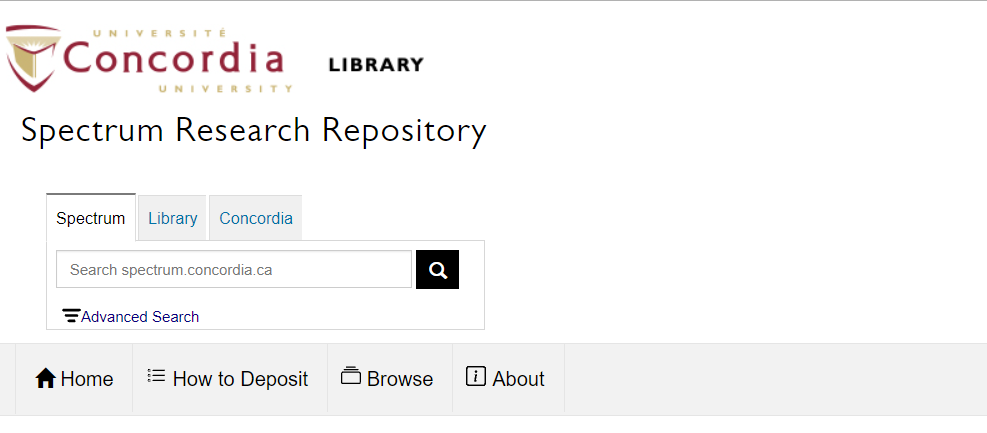
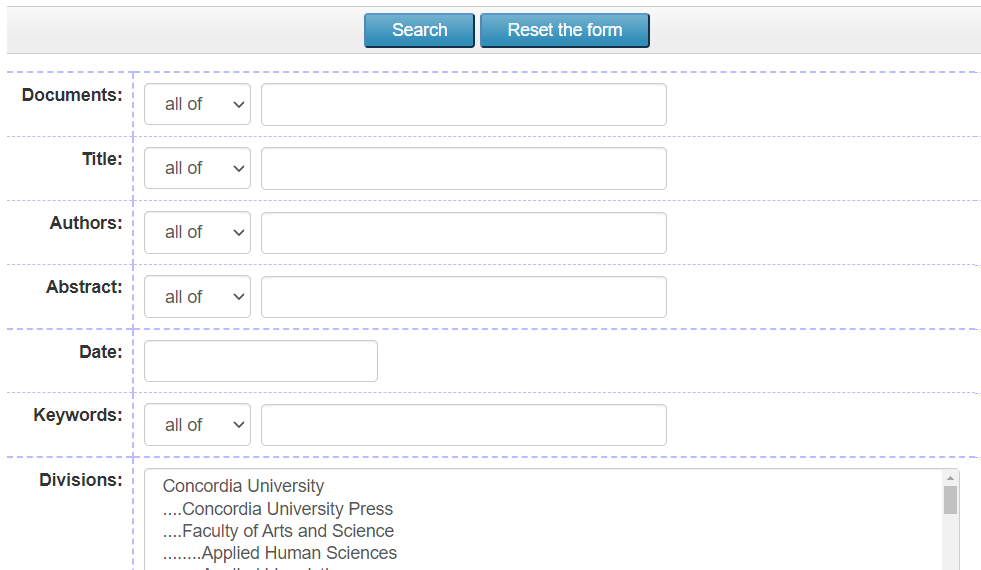
Did you find anything??
Save it to Zotero!!
Search strategies
& keywords
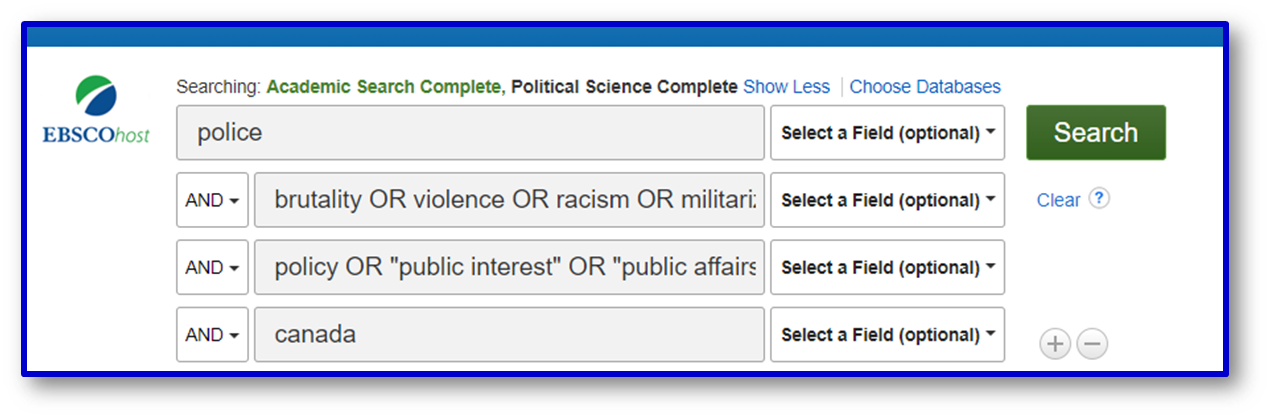
("police brutality" OR "police violence" OR "police shootings")
AND
(racis* OR discriminat* OR bias or profiling)
AND
(defund OR aboli* OR reform)
IN LIBRARY ARTICLE DATABASES:
IN GOOGLE SCOLAR:
("police brutality" OR "police violence" OR "police shootings") (racism OR discrimination OR bias OR profiling) (defund OR abolition OR reform)
| TIP | WHAT IT DOES | EXAMPLE |
|---|---|---|
|
AND |
Combines concepts. Limits how many results your search produces |
police AND violence |
|
OR |
Allows for synonyms or alternative terms. Increases the number or results your search produces. |
violence OR brutality |
|
* |
Near the end of a word, retrieves all words that start with the letters entered. Increases the number of results a search produces | Canad* (retrieves Canada, Canadian) |
| “ ” | For two words or more, search for an exact phrase only, rather than each keyword separately. Limits how many results your search produces | “systemic racism” (retrieves systemic racism, but not systemic oppression related to racism) |
search tips & tricks: standard library databases
Google Scholar strategies:
-
don't need to use AND (it is implied)
- use OR for alternative terms
- use quotation marks " " for phrases
- DON'T use * ( happens automatically)
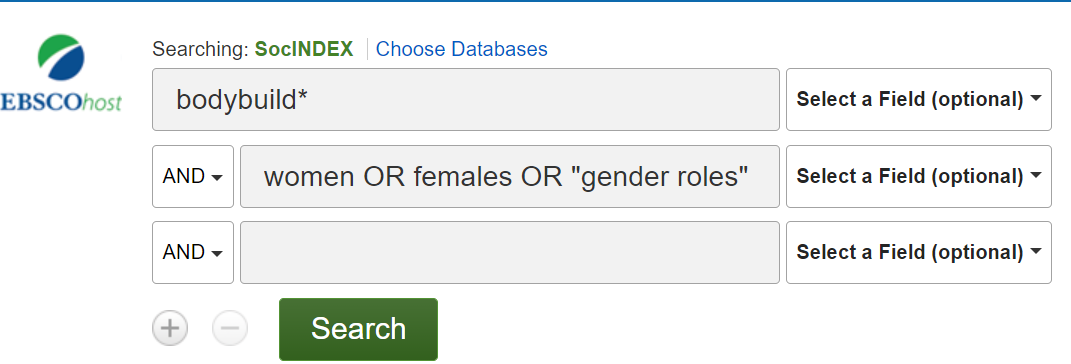
another example of a keyword
combination in SocINDEX
handout to download:
search strategies

from our Library Skills Tutorial- Search Strategies:
Subject-specific databases for your topic
why use them?
(why not just the Sofia/Concordia Library homepage)
where can I FIND them?
what are they?
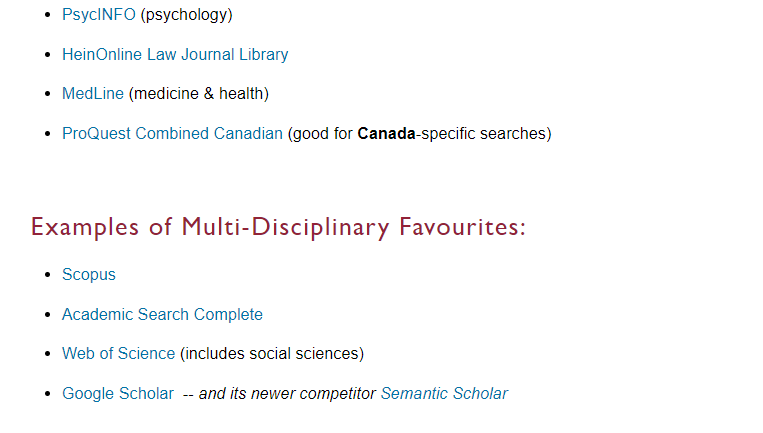
Subject-specific databases: what are they?



Text
Text
**multidisciplinary with SUBJECT CATEGORIES**
Subject-specific databases:
where can I FIND them?
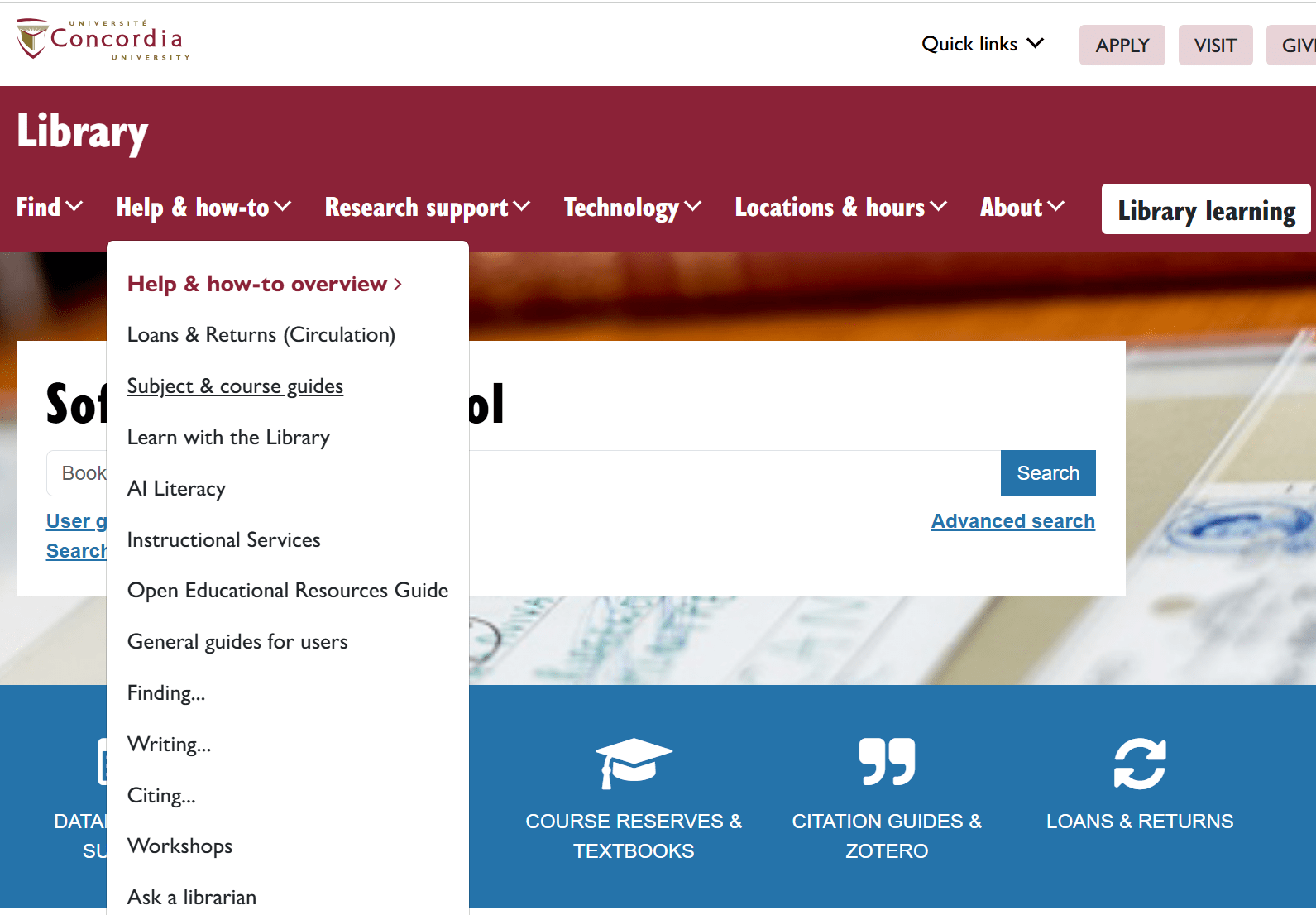
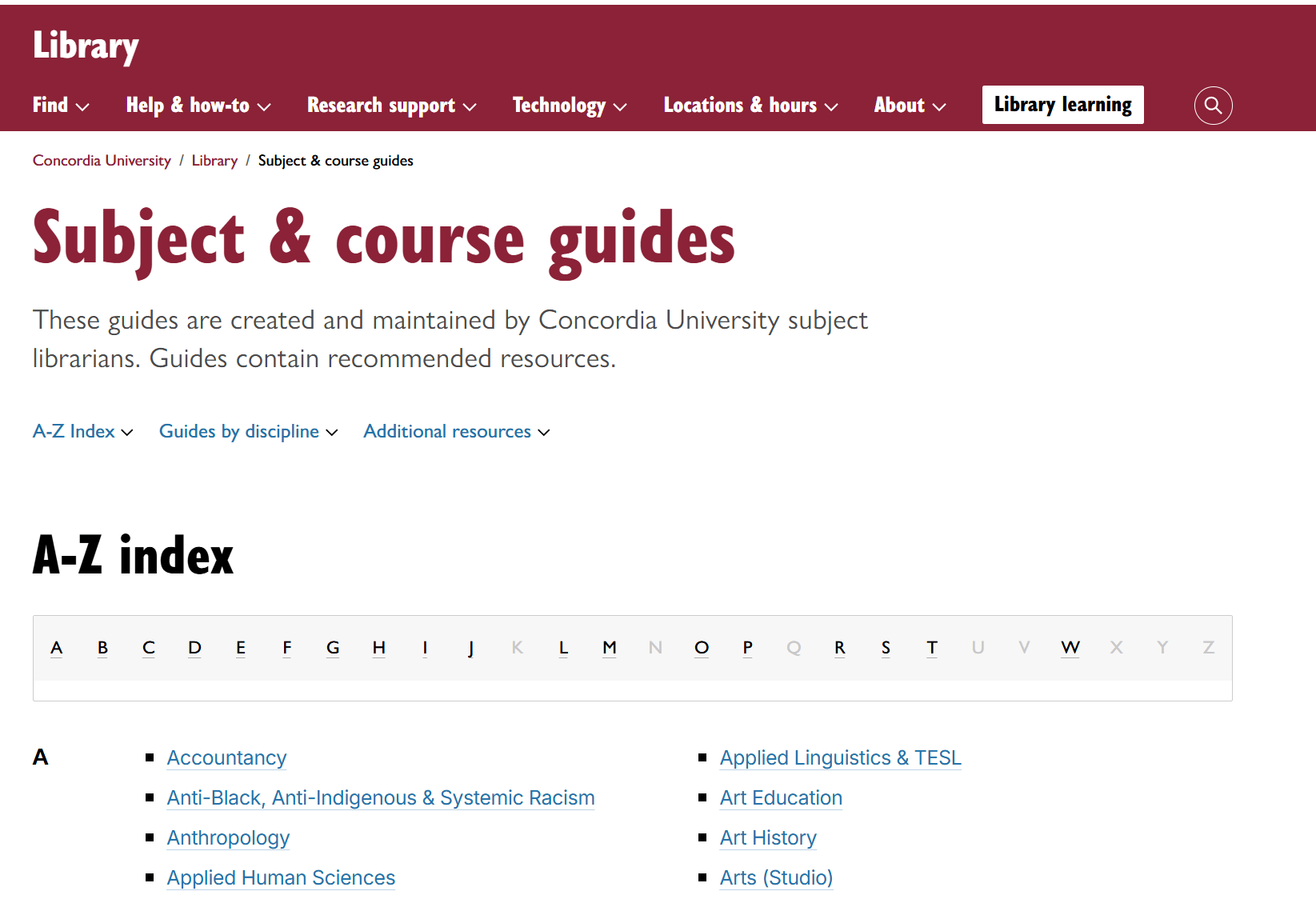
or:
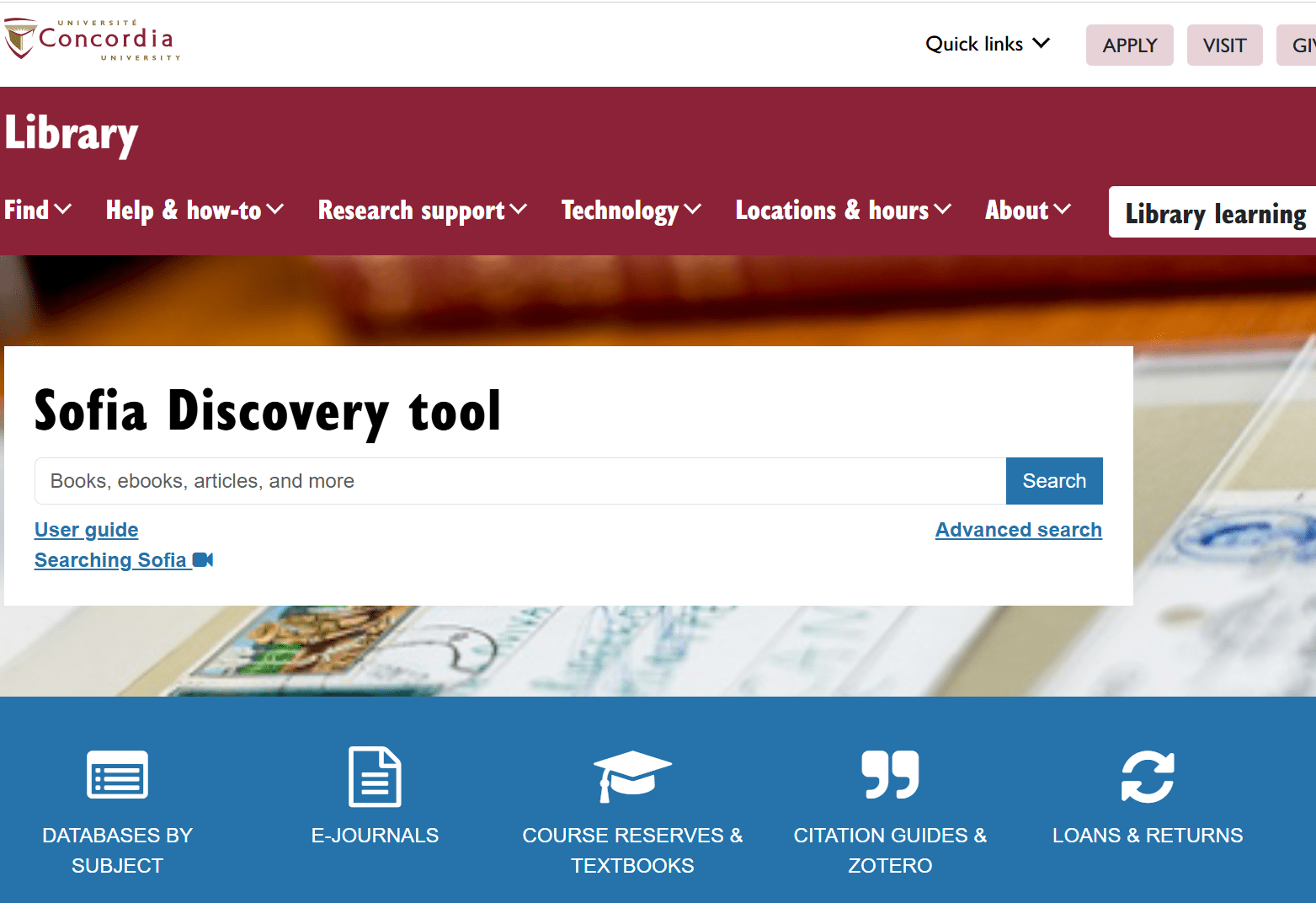
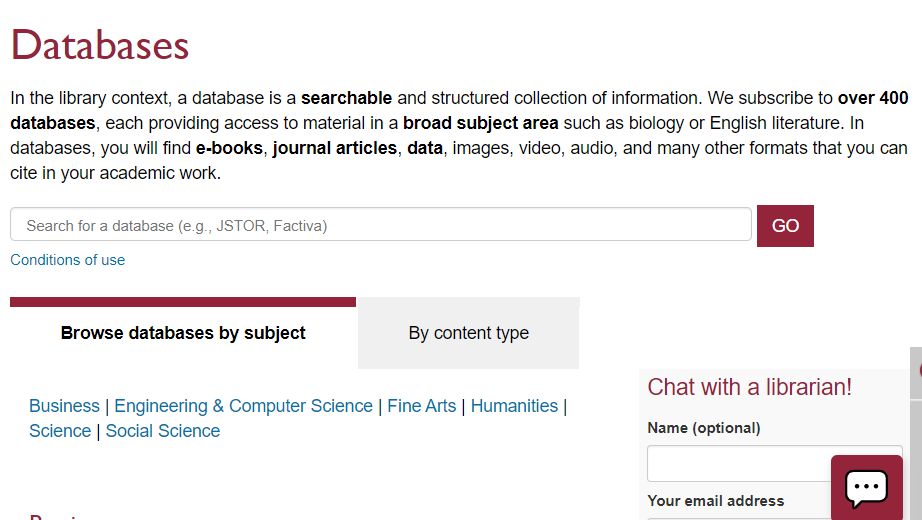
or:
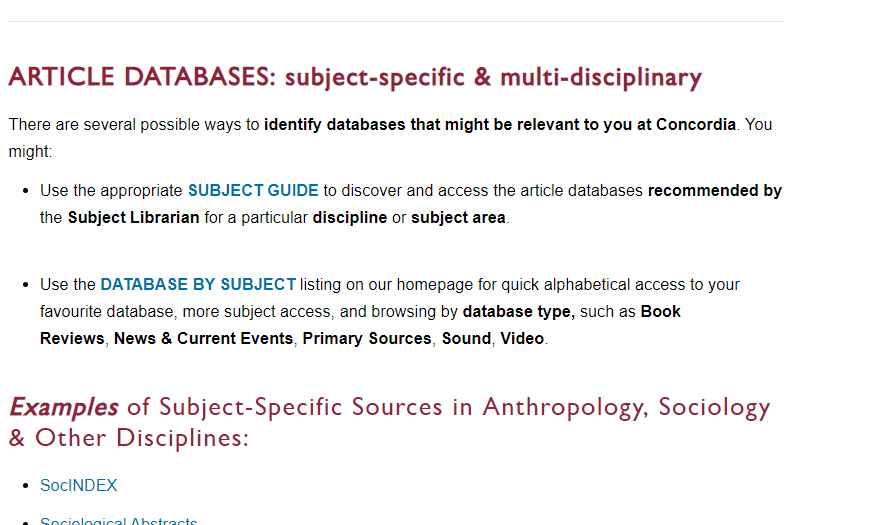
Subject-specific databases: why use them?
Try it for yourself
Try some search queries related to your topic in SocINDEX (or another subject-specific database) and compare with Sofia and/or Google Scholar
If you are not getting anywhere you can try any of these ready-made search phrases just to compare databases:
- "climate change"
- "capital punishment"
- homelessness
How are your results? Did you adjust with limits or filters?
Did you find anything??
Save it to Zotero!!
subject-specific databases can help you focus your search and take advantage of specialized search features.
Subject-specific databases: why use them?
but also....

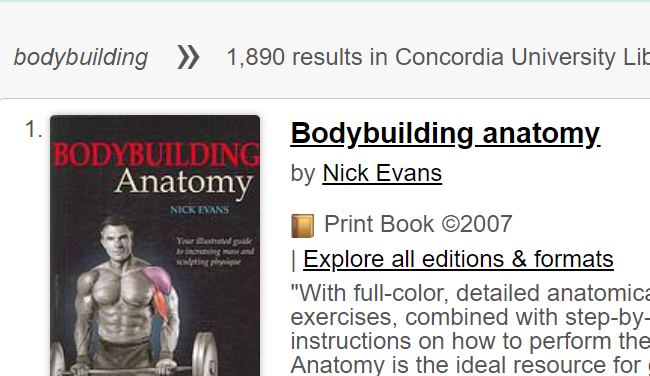
where you search affects
what you find and how you find it
reminder of another example:
Sociology subject database:
Sofia Discovery tool:


use multidisciplinary library article databases & Google Scholar to broaden your search across disciplines and find connections
use subject-specific ARTICLE DATABASES like SocINDEX or MEDLINE to focus your search using a disciplinary or thematic lens
my advice:
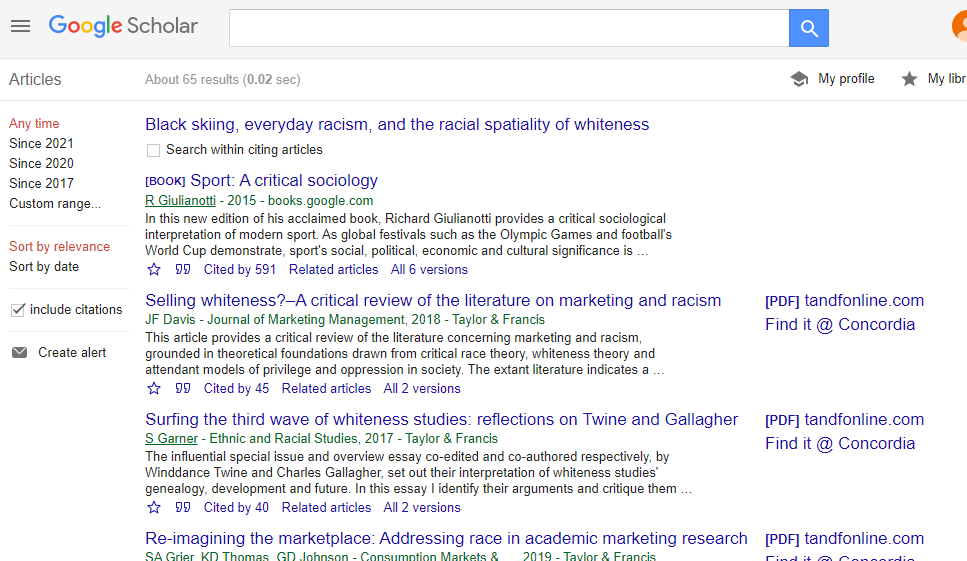
"Cited by" or
relational searching
once you have found a relevant article, use
"cited by" to find more recent, related material




1
2
3
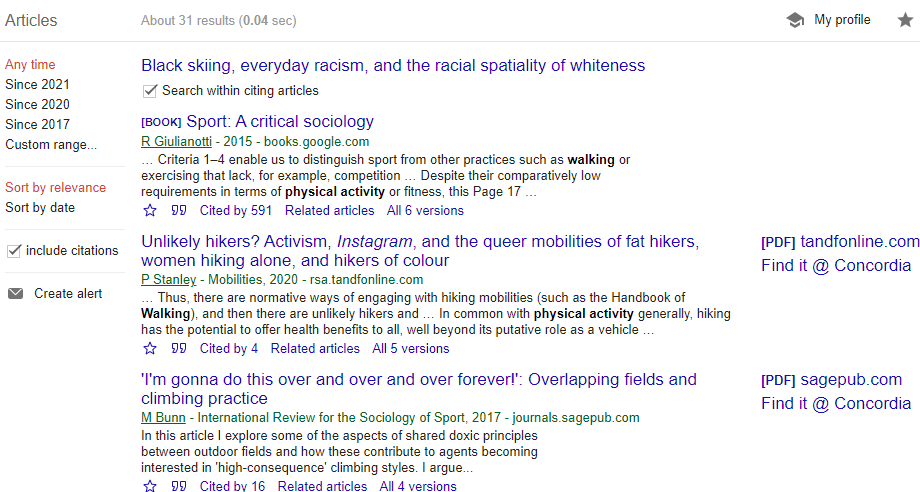
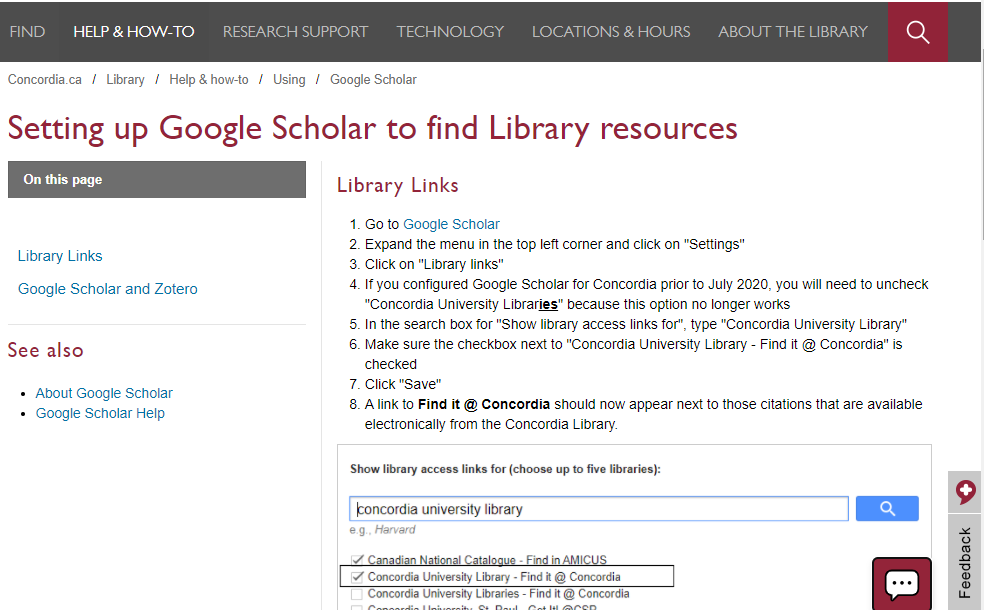
GOOGLE SCHOLAR findit@concordia TIP:
Did you find anything??
Save it to Zotero!!
Google Scholar competitors:



???

$$$$


Think of YOUR relevant (or 'golden') articles and give one of these databases or tools a try!
Did you find anything??
Save it to Zotero!!
SCHOLARY /ACADEMIC / PEER-REVIEWED SOURCES
test yourself - which one(s) is/are peer-reviewed?
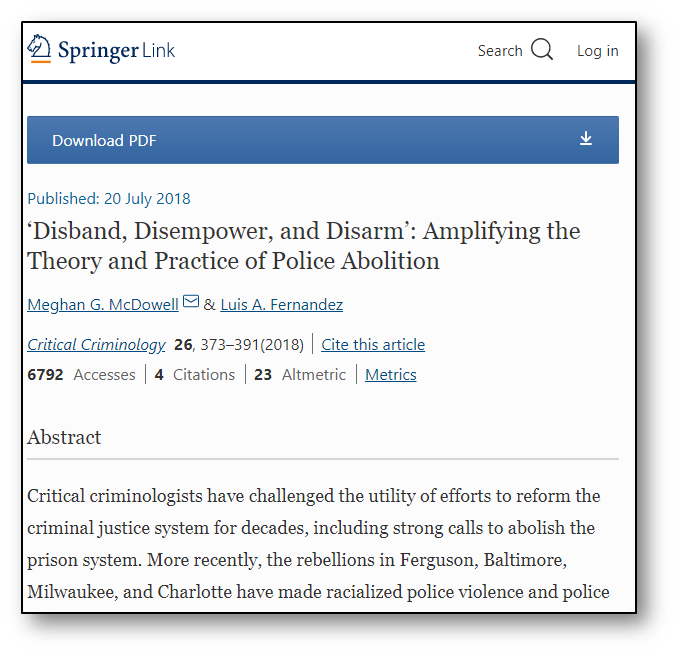
bit.ly/4d6bqxH
bit.ly/3VyW8eN
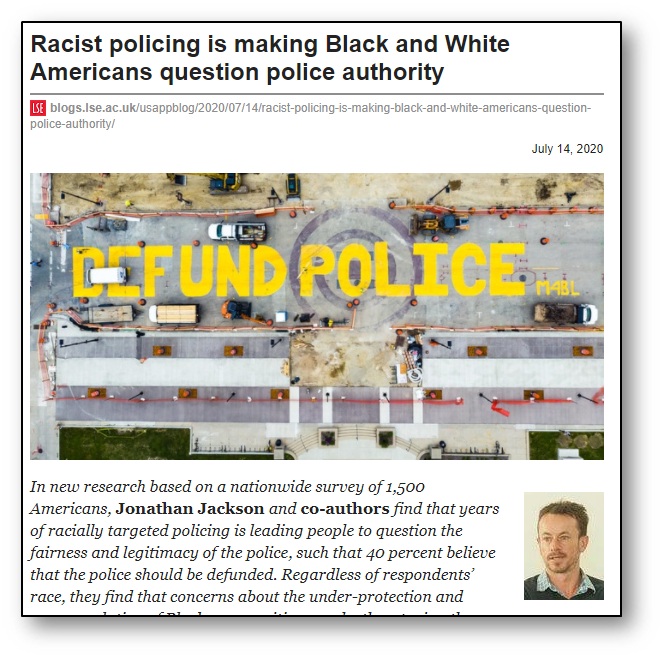
This blog entry reports on an interesting study which involved many academics, but it is NOT an academic/scholarly/ peer-reviewed article
This IS an academic/scholarly/
peer-reviewed article. Important clues: academic language, distinct sections, long bibliography of references, appears in a journal which can be verified as peer-reviewed.
anatomy of a typical
scholarly research article

ENSURING YOUR SOURCES ARE ACADEMIC/SCHOLARLY
Check the academic/peer-reviewed/scholarly journals box or tab when doing searches in Library Databases and Sofia
Look up the journal name (or look for scholarly book reviews or books published by a university press if you are hoping to use a book or book chapter).
Take a look at our “How do I know if an article is scholarly or peer reviewed?” checklist with companion videos

peer-reviewed articles checklist

still not quite getting it?
Here are some tips & tools.....
Concordia video
In many Library Databases you can use a checkbox:


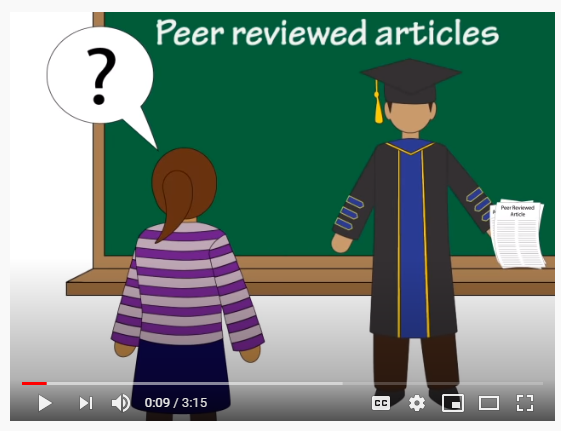
VIDEO: peer-review in 3 minutes
Referencing & Bibliographic Management
Start by picking a
citation style:
Reference formatting & management good practices
use a citation style guide:
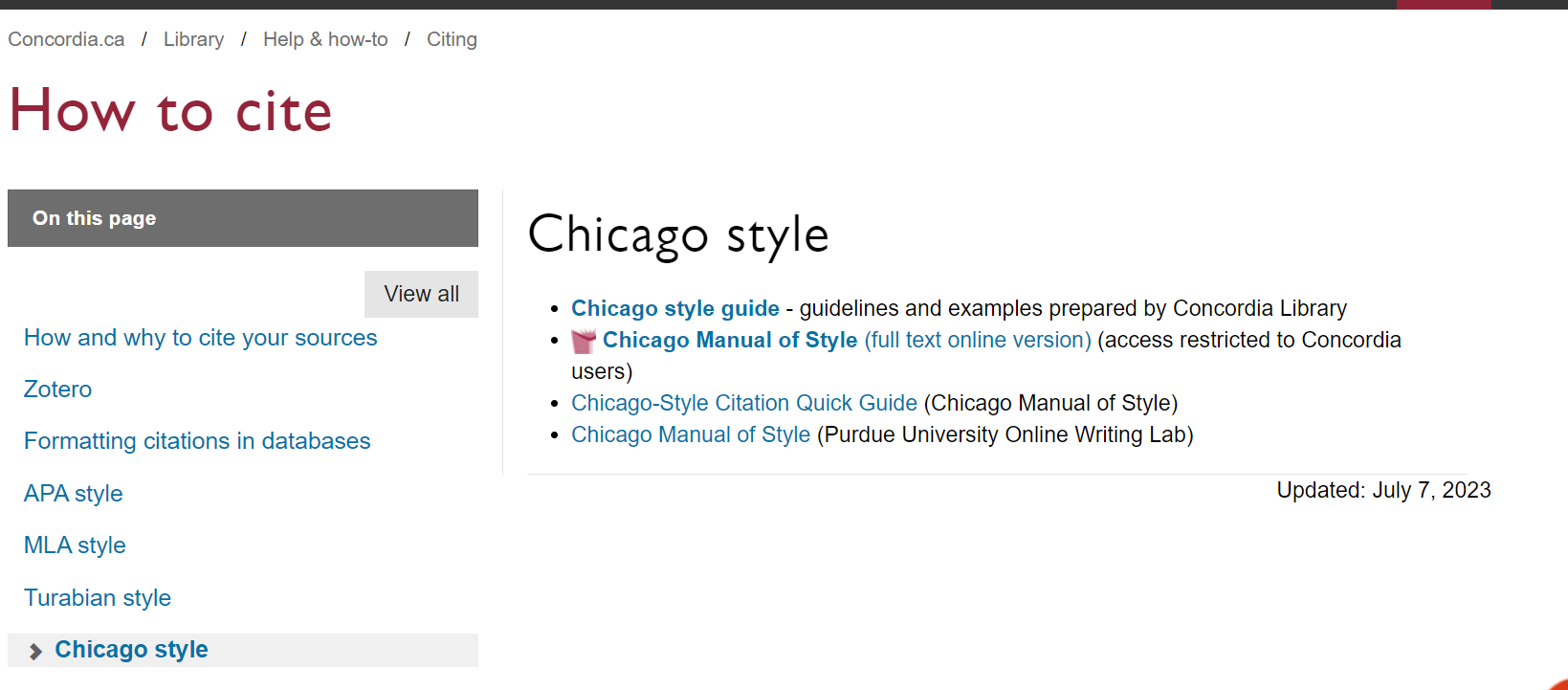
CHICAGO STYLE: typical examples:
in-text citations
People from any ideological background are open to hearing about climate change (Hakkinen and Akrami 2014)
Hakkinen and Akrami (2014) found that “individuals are receptive to climate change communications, regardless of ideological position” (65).
CHICAGO style: typical examples:
Bibliography
Doherty, Thomas. J., and Susan Clayton. 2011. “The psychological impacts of global climate change.” American Psychologist 66, no. 4: 265-276.
Hakkinen, Kristi, and Nazar Akrami. 2014. “Ideology and climate change denial.” Personality and Individual Differences 70: 62-65.
McCright, Aston M., and Riley E. Dunlap. 2011. “Cool dudes: The denial of climate change among conservative white males in the United States.” Global environmental change 21, no.4: 1163-1172.
References
What about automatic citation tools?
take your pick:
a) citation generators*
b) citation management tools*
Make sure to double check your generated citations - they are not always correct! Use those citation style guides to make sure all the required elements of the citation are present and correctly formatted.

*
a) citation generators
Many library databases (for example: Sofia Discovery tool, EBSCO and ProQuest databases) as well as Google Scholar will provide you with formatted citations in the style of your choice that you can copy and paste into your bibliography, reference list or works cited list!
b) citation management tools
Sometimes also called bibliographic management tools, these allow you to:
- Download citations you find in library catalogues, databases, Google Scholar, and on the web.
- Store and organize citations, and prepare a bibliography or reference list automatically.
-
Automatically format and insert in-text citations and a bibliography into papers you are writing with Microsoft Word, for example.
There are several citation management tools available. Concordia Library provides support for Zotero...........
Accessing resources at Concordia & beyond
using Sofia


Search for library books, ebooks, articles and films


what if the library doesn't have it ONLINE?
request a book and pick it up later....


or use the call number and locate button to find it


what if the library DOESN'T have it at all?
search for it in any library worldwide:
... and simply request it!

but you CAN'T borrow
eBOOKS from other libraries!!


search for it in any library worldwide:

... and simply request it!
FIND:
Duina F. Consciousness in Classical Sociological Theories. Journal of Consciousness Studies, v. 25, no. 9-10, 2018, pp. 99–124.

TIP: go back the last slide to see how to find and request it via Interlibrary Loans!
JOURNAL finding/browsing option:
Use the E-journals search
FIND:
Canadian Review of Sociology


still unsure or CONFUSED ?

use library article databases & google scholar to search for literature on a topic
use Sofia to search for and access items like (e)books, journals and films, but:
Accessing items -final words of advice