AV1: The next generation video codec

David Chou

We are Umbo Computer Vision
We build autonomous video security system
Why we should care about codec?
Machine Learning on the Cloud
-
Video quality
-
Bandwidth consumption
-
Storage size


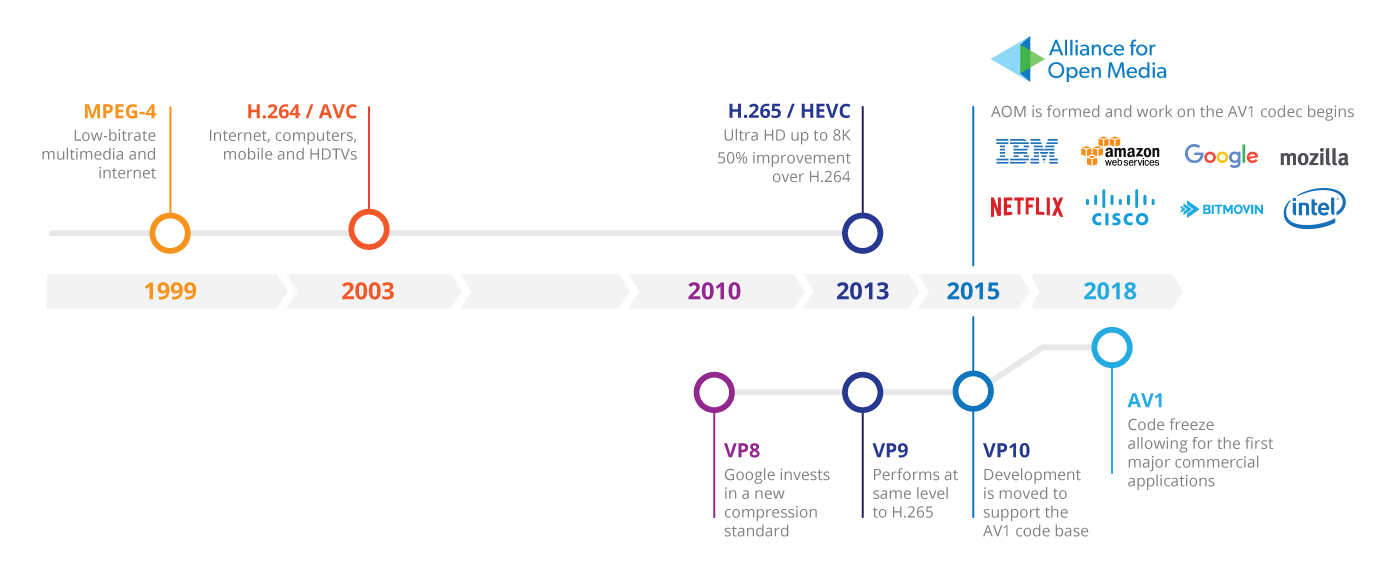
History of Video Codecs




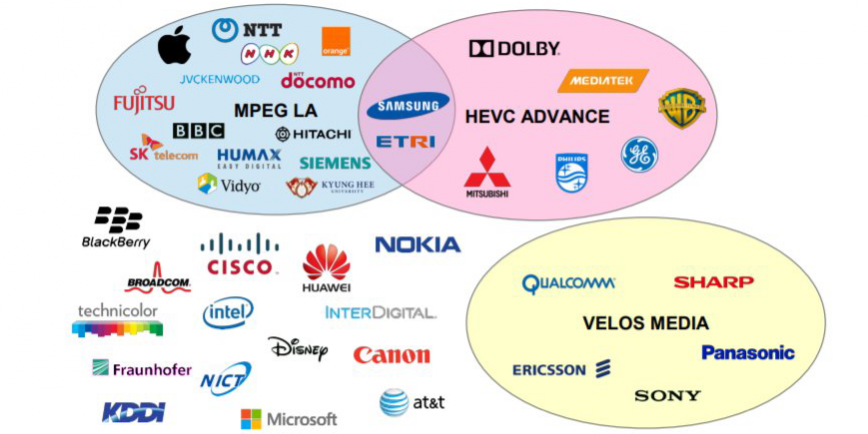
H.265 IP Mess
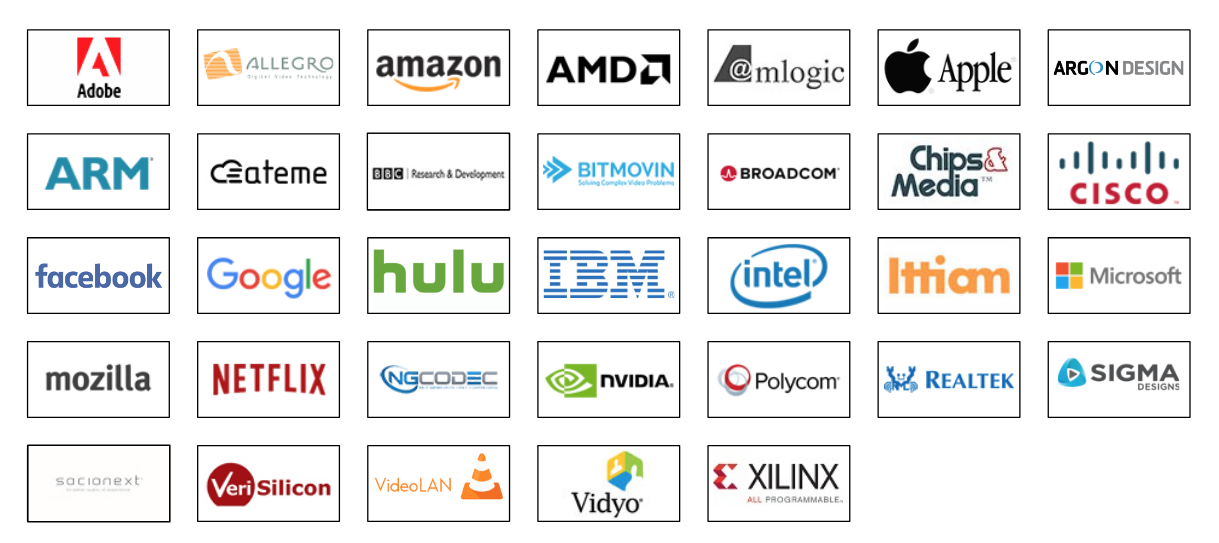
Alliance for Open Media (AOM)
AV1
AOMedia Video 1
AV1: Status
-
Released at 2018/03/28
-
AV1 aims to be a video format for the web that is both state of the art and royalty free
-
AV1 is meant to succeed its predecessor VP9 and compete with HEVC/H.265.
-
AV1 is a combination of Google's VP10, Mozilla's Daala and Cisco's Thor
AV1: Development Process
-
Coding tools are added as experiments into the AV1 codebase.
-
The hardware team reviews the experiments to ensure it can be implemented in hardware.
-
Each experiment also needs to pass an IP review to ensure no IPs are violated.
-
Once reviews are passed the experiment can be enabled by default.
AV1: Container
-
Audio: Opus
-
Container: webm, mkv, mp4
-
WebRTC:
VP8, VP9, H.264, AV1
AV1: Profiles/Levels
| Profiles | Color sampling | Bit depth |
| Main | 4:2:0 | 8, 10 |
| High | 4:2:0, 4:4:4 | 8, 10 |
| Professional | 4:2:0, 4:2:2, 4:4:4 | 8, 10, 12 |
| Levels | Mbps | Examples |
|---|---|---|
| 2.0 | 1.5 | 426x240@30fps |
| 4.1 | 20.0 | 1920x1080@60fps |
| 5.3 | 60.0 | 3840x2160@120fps |
| 6.3 | 160.0 | 7680x4320@120fps |
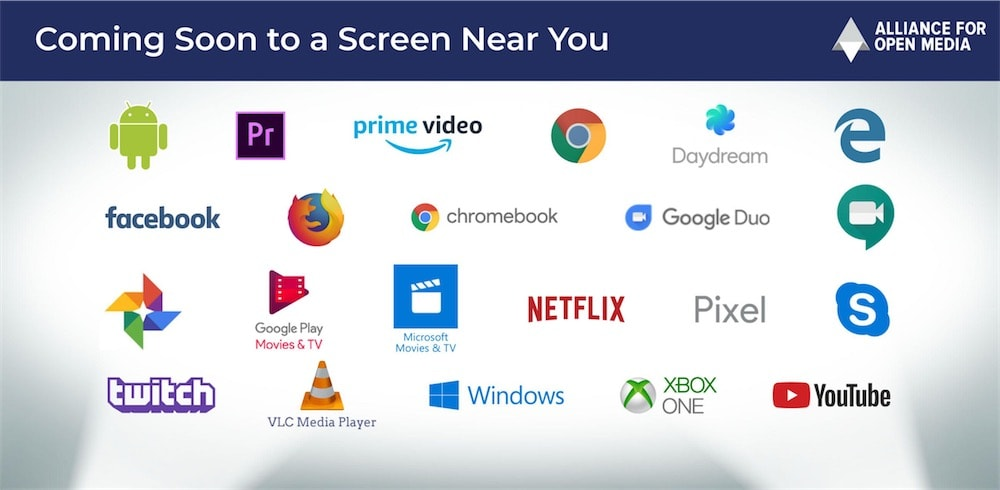
AV1: Software Adoption
AV1: Hardware Adoption
-
Early hardware support will be software running on non-CPU hardware.
-
CUDA, OpenCL
-
-
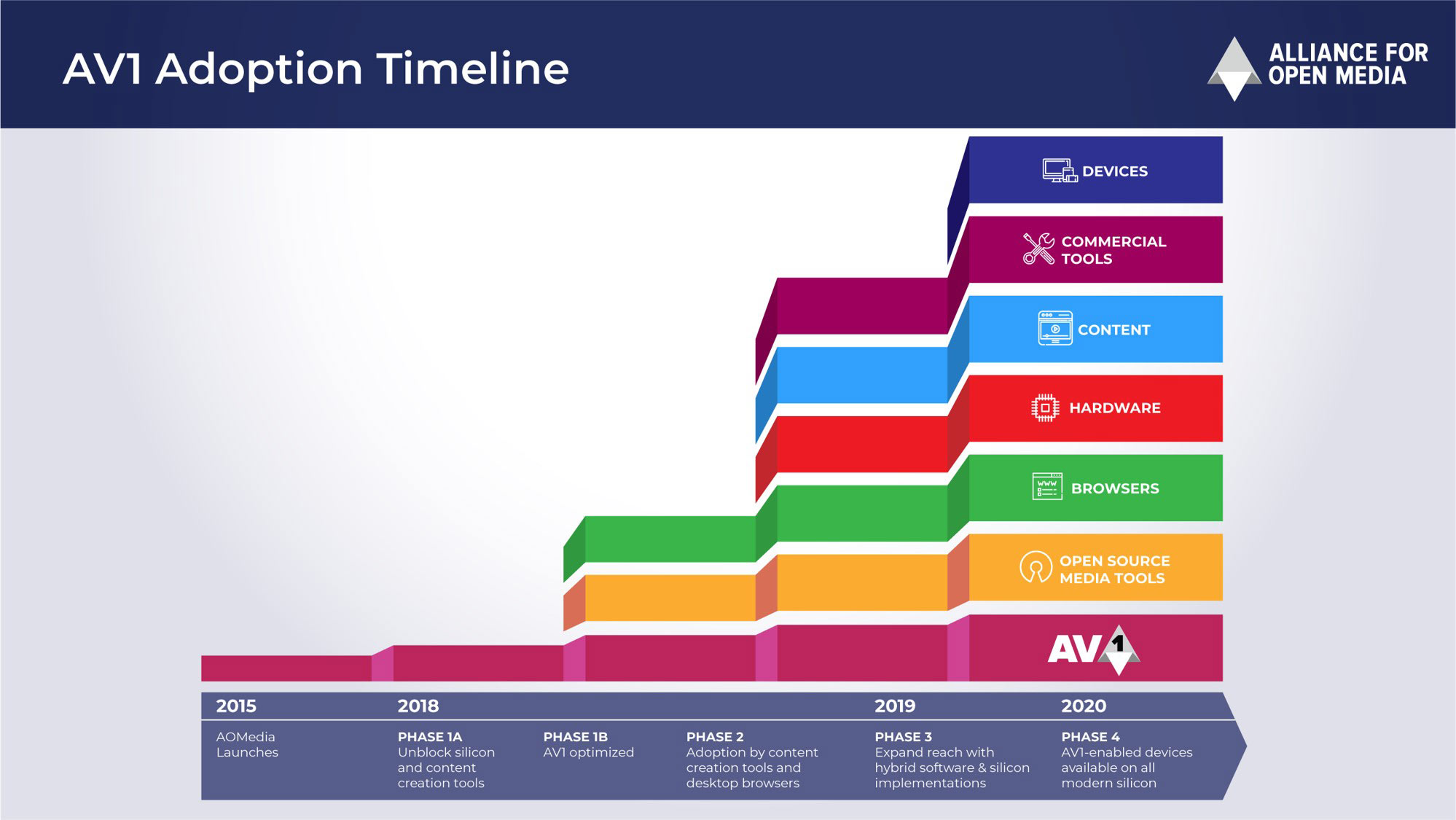
Fixed-function hardware will take 12–18 months after bitstream freeze
-
March - Auguest 2019
-
-
Google's codec group is developing a free AV1 HW decoder
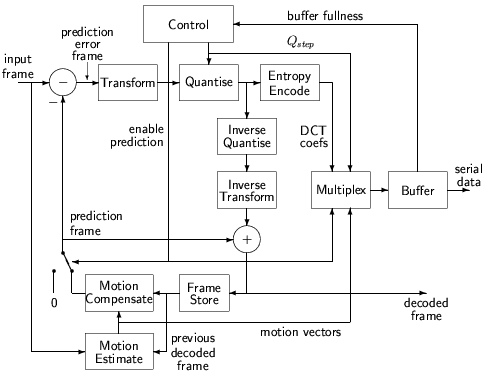
AV1 Coding Tool Overview
-
More block sizes
-
Prediction blocks
-
from 128x128 down to 4x4
-
Rectangular blocks:
1:2, 2:1 and 1:4, 4:1 ratio
-
-
Transform sizes
-
from 64x64 down to 4x4
-
Rectangular transforms:
1:2, 2:1 and 1:4, 4:1 ratios
-
-
-
More transform type
-
4 transform types
DCT, ADST, FlipADST, Identity
-
-
More prediction modes
-
Intra:
-
56 directions
-
Chroma from luma prediction
-
-
Inter:
-
Expanded reference list
-
Compound mode
-
-
-
New adaptive multi-symbol entropy coding
-
Spatial and temporal scalability
AV1 vs Other Codecs
Bitmovin
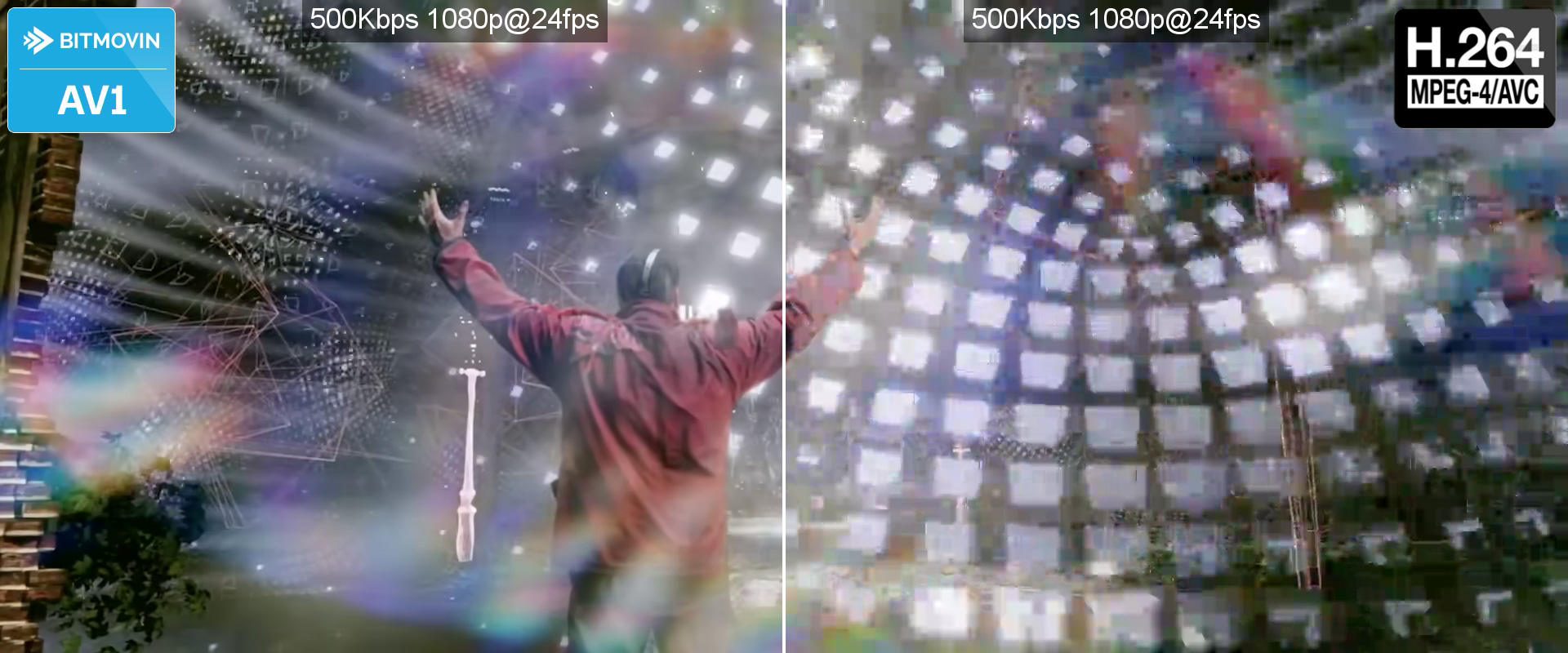
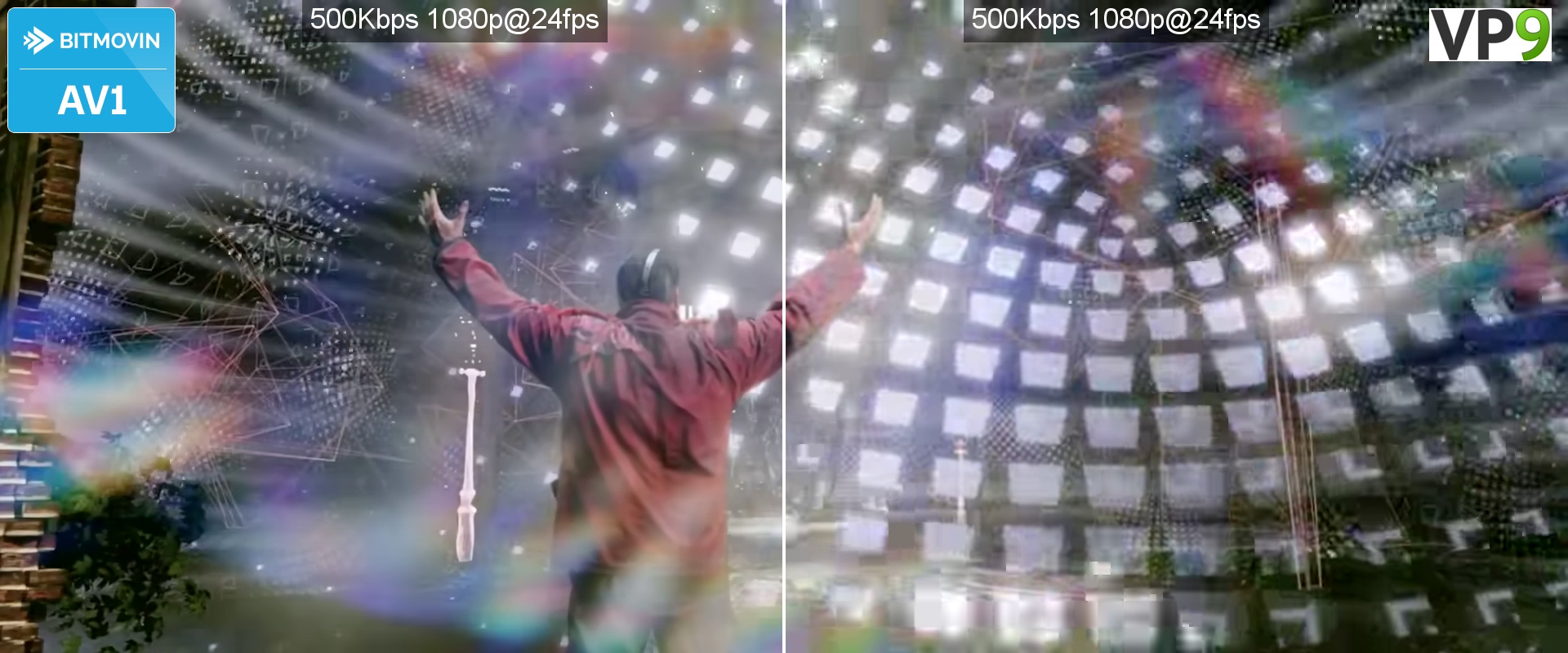
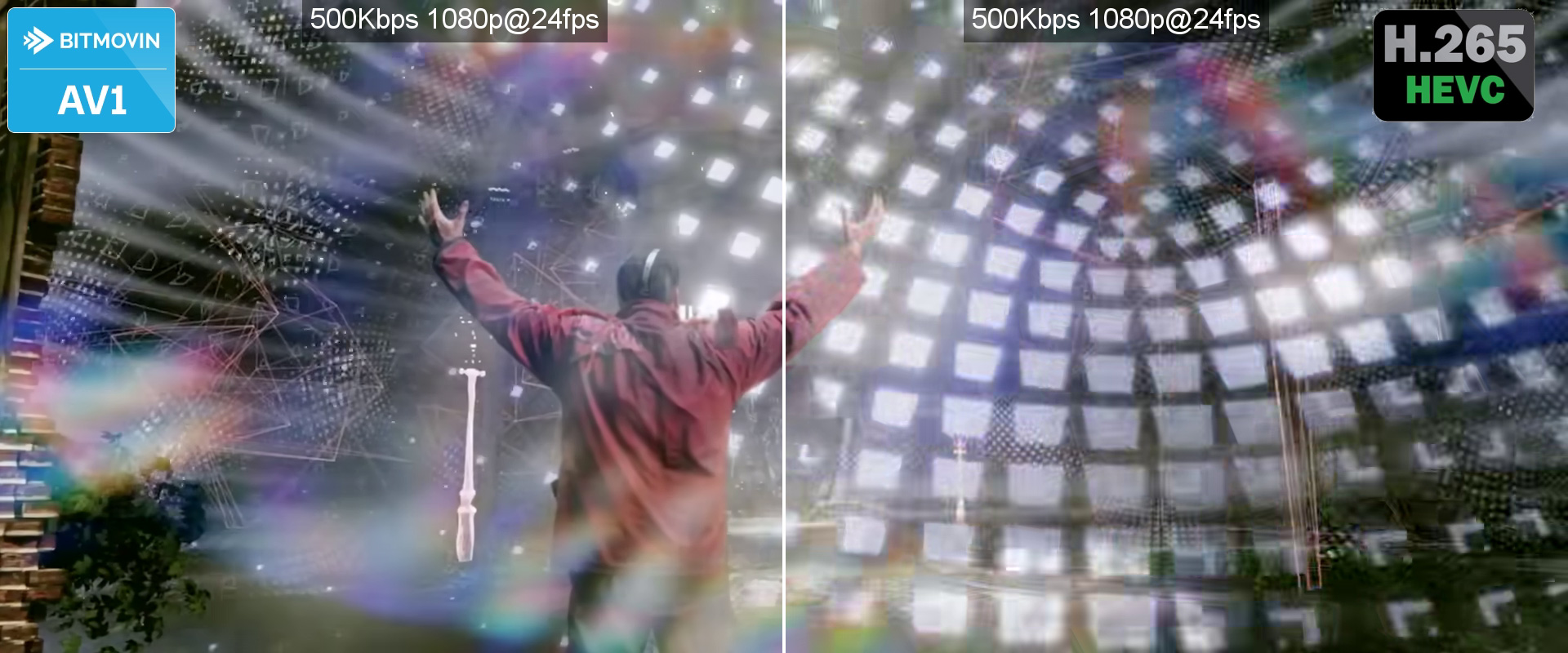
This scientific evaluation puts AV1 to the test against industry standard codecs and shows that AV1 is able to outperform VP9 and even HEVC by up to 40%
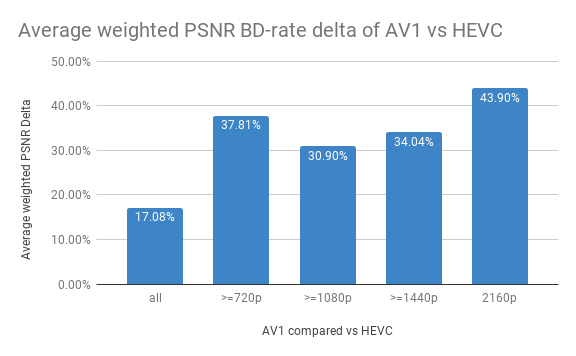
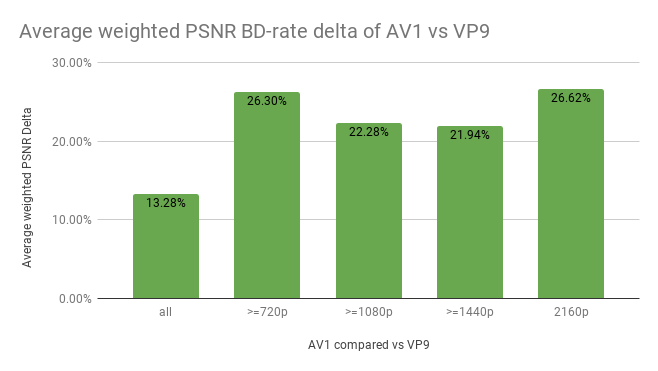
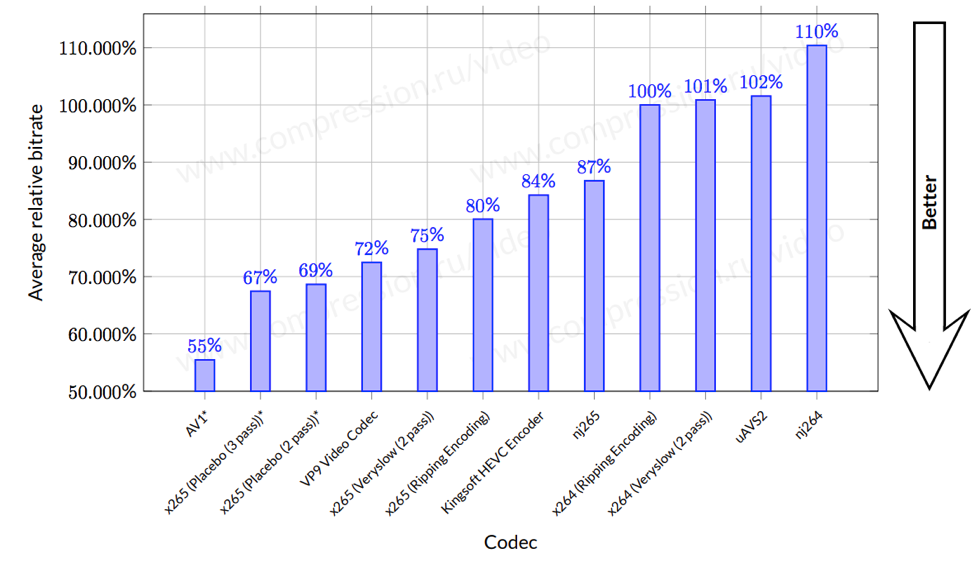
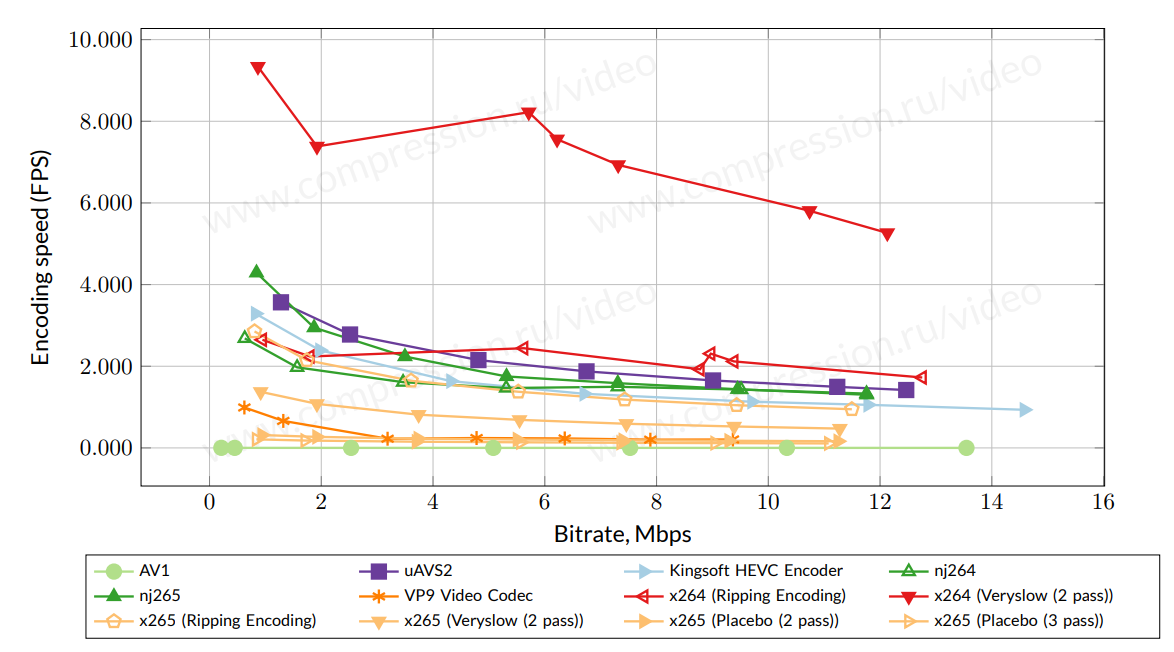
Moscow State University
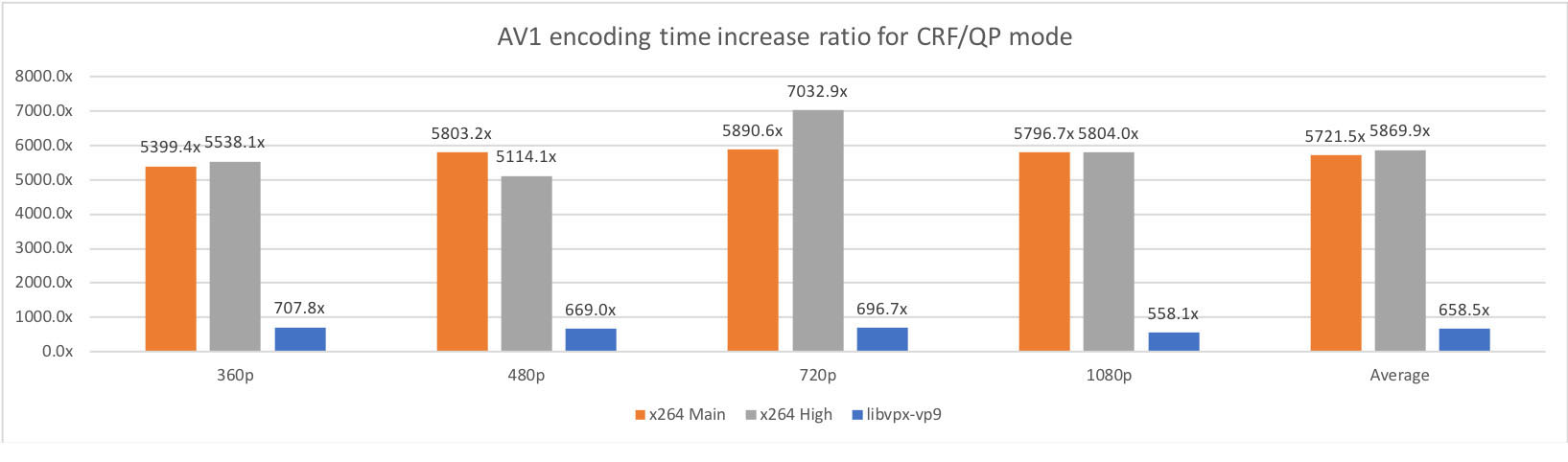
AV1 has extremely high encoding quality inapproachable to other encoders and extremely low encoding speed due to lack of speed optimization.
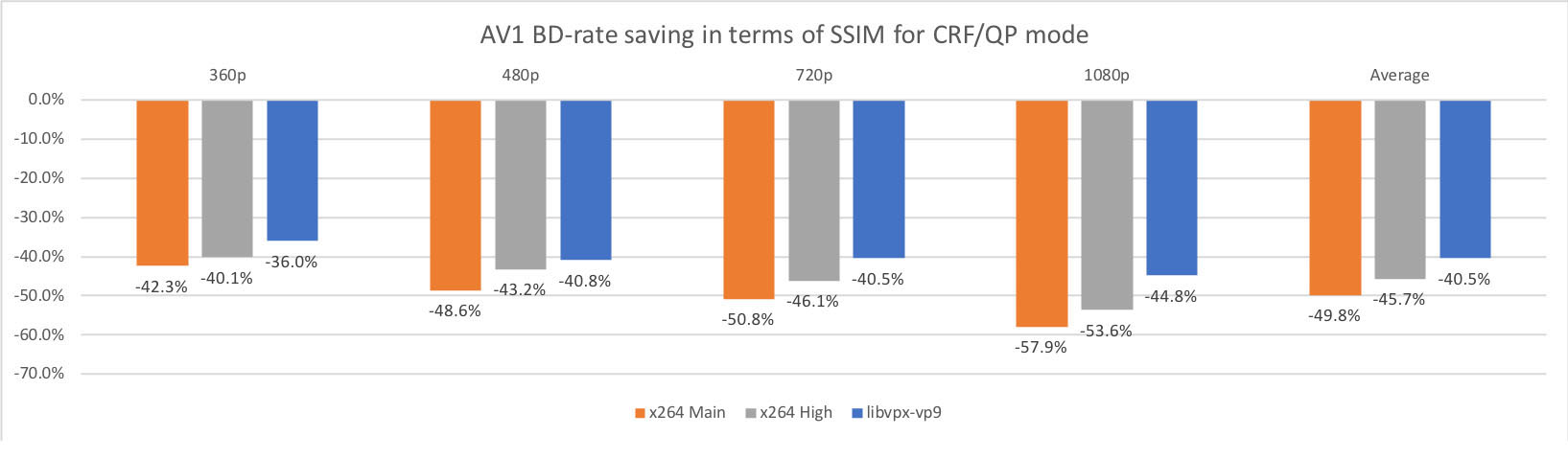
Users watching AV1 content will enjoy better quality at the same bit rate or see 30% to 50% less buffering at the same quality compared with VP9 or H.264/AVC content.
AV1 Roadmap
Conclusions
-
AV1 is able to outperform VP9 and H.265
-
Still needs lots of optimization
-
Product adoption would be expected
-
Hardware support is critical
-
H.265 royalty fee issues
Any Question?
