Intro to
HTML & CSS
Objectives!
- Describe the purpose of HTML and identify common tags
- Give HTML elements more description with attributes
- Introduce CSS & common styling properties
- Use HTML & CSS to create a basic page from scratch with basic styling
What is HTML?
HyperText Markup Language
What is HTML?
CONTENT!
STRUCTURE!
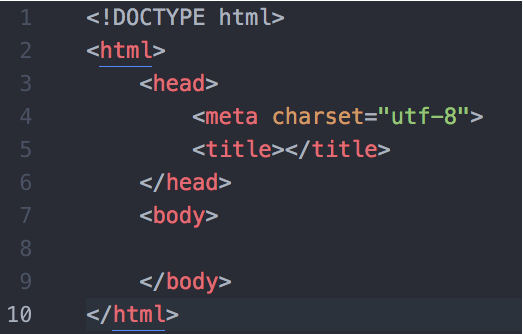
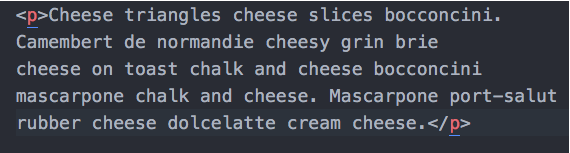
What is HTML?
Tell your neighbor in your own words the purpose of HTML
HTML Syntax
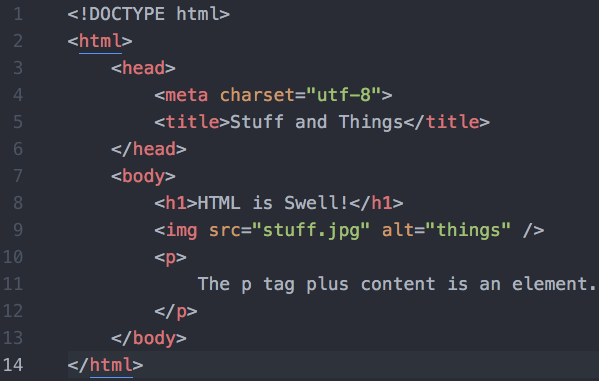
HTML Syntax
<p> The p tags plus this content is an element. </p>Opening tag
Closing tag
Element
HTML Syntax
<img src="../img/stuff.jpg" alt="img is a self-closing tag" >- br
- hr
- img
- input
- link
Common Self-closing Tags
Is this an element?
HTML Syntax
Resources
Exercise!

- Start a new Codepen pen.
- Make an unordered list all of the cities you've lived in.
- Make an ordered list of the top three cities you would like to visit.
- Add a heading before each list that says what the list is.
- Add a description under the items of each list explaining how you came to live in each of those cities, and why you would like to visit those cities respectively.
HTML Attributes
Additional information attached to an element.
"id" and "class" attributes are typically used to generate content or to act as a reference for other technologies like CSS & JS.
<img src="./resources/stuff.jpg" alt="Write something descriptive"><p class="lead">Content content content</p><h1 id="brand">Apple</h1><input type="password"
required
minlength="8"
>HTML Attributes
Now add appropriate attributes to 3 elements on your codepen
HTML Structure
<ul>
    <li>List item #1</li>
    <li>List item #2</li>
    <li>List item #3</li>
</ul>
Nesting Elements
<nav>
    <ul>
        <li><a href="http://slides.com">Home</a></li>
        <li><a href="http://google.com">About</a></li>
        <li><a href="https://developer.mozilla.org">Contact</a></li>
    </ul>
</nav>
Semantic HTML
Don't be like this guy.
Semantic HTML
Which of these is more intuitive?
<!DOCTYPE html>
<html>
    <head>
        <meta charset="utf-8">
        <title>Stuff and Things</title>
    </head>
    <body>
        <div>
            <h1>Big Header</h1>
        </div>
        <div>
            <p>
                <b>Middle Content!!</b>
            </p>
        </div>
        <div>
            <p>
                © 2016
            </p>
        </div>
    </body>
</html>
<!DOCTYPE html>
<html>
<head>
<meta charset="utf-8">
<title>Stuff and Things</title>
</head>
<body>
<header>
<h1>Big Header</h1>
</header>
<main>
<p>
<strong>Middle Content!!</strong>
</p>
</main>
<footer>
<p>
© 2016
</p>
</footer>
</body>
</html>Semantic HTML
Why use semantic HTML?
- Readability
- Accessibility
- SEO
Semantic HTML
Examples of structural semantic HTML
<header>
<nav>
<main>
<aside>
<section>
<footer>
<figure>
Semantic HTML
Examples of text markdown semantic HTML
<strong>
<em>
<figcaption>
<summary>
<date>
<time>
<details>
<pre>
Block-level vs. Inline elements
Elements are usually either "block-level" elements or "inline" elements.
Block-level
-
occupies an entire row space of its parent element (container), thereby creating a "block."
-
Block-level elements may appear only within a <body> element.
Inline
-
occupies only the space bounded by the tags that define the inline element.
- Elements that are inline
CSS

CSS
p {
    color: red;
}

p {
    color: blue;
}
Cascading Style Sheets (CSS) is a language that add style to the HTML.
Cascading is key here. The file is read top to bottom.
If you style one element twice, it will accept the second styling as the truth.
CSS
p {
    color: red;
}

p {
    color: blue;
}
Syntax
Targeted Element
Property
Value
CSS
Targetting IDs and Classes
Classes
IDs
.red-text {
    color: red;
}
#intro {
    color: red;
}
CSS
Common Properties
- color: color of text
- background-color: background of an element
- text-align: easily center, left or right justify text
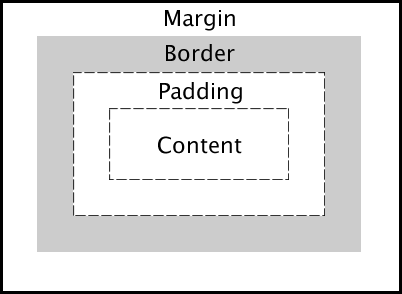
- margin: space outside the element
- padding: space inside the elements container before getting to content
CSS
Resources
- CSS Tricks (the almanac is great)
- MDN
- W3Schools
CSS

Review!

What is the purpose of HTML?
<p>
Tag or element?
Example of a self-closing tag.
What is the primary difference between an id and a class?
Why do we use semantic HTML?
What is the difference between block-level and inline elements?
How do you know your HTML is valid?
vALERIE kRAUCUNAS
valeriekraucunas@gmail.com
vkraucunas.com