Type of organizational justice
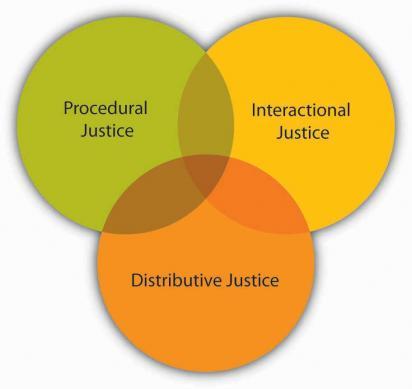
DISTRIBUTIVE JUSTICE
Equity : Rewarding employees based on their contribution
Equality : Providing roughly same compensation to each employee
Need : Providing a benefit based on one's personal requirement
Appropriateness of outcome
Procedural justice
Appropriateness of the allocation process.
Consistency : All employee are treated the same
Lack of Bias : no person or group is singled out for discrimination
Accuracy : Decisions are based on accurate information
Representation of all concern : Appropriate stakeholders have input into a decision
Correction : There is an appeal process or other mechanism for fixing mistakes
Ethics : Norms of professional conduct are not violated
Fair process effect
INTERACTIONal Justice
Appropriateness of the treatment one receives from authority figures
Interpersonal Justice : Treating an employee with dignity, courtesy and respect
Informational Justice : Sharing relevant information with employee
Outcomes of organizational justice
Employee's perceptions of injustice within the organization can result in a myriad of outcomes both positive and negative
Title
Trust on Supervisor : A positive relationship between an employee and supervisor can lead to trust in the organization( Hubbell & Chory-Assad, 2005)
Title
Performance : Improving justice perceptions improves productivity and performance (Karriker & Williams, 2009)
Title
Job satisfaction and organizational commitment: was found to be positively associated with overall perceptions of organizational justice (Al-Zu'bi, 2010) (DeConik, 2010 : Cohen- Charash & Spector, 2001)
Title
Organizational citizenship behaviors : are actions that employee takes to support the organization that go above and beyond the scope of their job description. OCBs are related to both procedural justice and distributive justice perception (Karriker & Williams, 2009)
Title
Counterproductive work behavior : Increased judgments of procedural injustice, for instance can lead to employee unwillingness to comply with an organization's rules. Thus the more perceptions of procedural injustice leads employees to perceived normative conflict, the more it is likely that CWBs occur. (Cohen- Chatash & Spector, 2001) (Zoghbi- Manrique-de-lara & Verano Tacoronte, 2007)
Title
Absenteeism and withdrawal : Failure to receive a promotion is an example of a situation in which feeling of injustice may result in an employee being absent from work without reason. (Johns,2001) (Cohen-Charash & Spector, 2001)
Title
Emotional exhaustion : Which related to employee health and burnout, is related to overall organizational justice perceptions. As perceptions of justice increase employee health increase (Liljegren & Ekberg, 2009)