Architecture technique
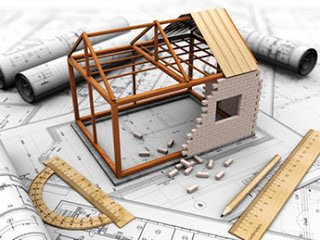
The nature of the materials and their use must be considered. The main traditional materials are stone, wood and brick, to which metal and cement have been added modernly.
Pierdra classes used in architecture are very numerous. They are called ashlars when they are of good size and in the form of well-finished prisms; Sillarejos if they are small of irregular size; blocks when they are large and you are not evenly carved, but only rough.
The ideal stone for construction, for the ease with which it is carved, is the limestone. Marble is a variety of limestone susceptible to beautiful polish; there are marbles of different colors; the white marbles of Paros and the Pentélico, in ancient Greece, and those of Carrara in Italy were famous. Sandstone, granite and volcanic rocks are also used. In countries that did not have stone, wood was the main building material.
In Western Europe, their employment is currently limited to screening, scaffolding and carpentry. But in the USA, in Canada and in Nordic Europe, wooden buildings are still built, due to the abundance of this material; Its main drawback is the danger of fire, a danger that has now diminished thanks to the use of non-flammable materials; it offers, instead, advantages for being insulator of the cold.
The metal, already used by the Greeks to reinforce the union of the ashlars (iron staples, leaded), acquires decisive importance at the end of the s. XIX. The frame of the house (beams and pillars) can be metallic, but in Europe the reinforced concrete is used more; In the US, steel is more frequent.
The covering can be made through a roof, vault or dome. Above there is always a cover to protect the building from the weather; In Western Europe, this deck used to be made of wood or iron, covered with masonry, frequent in Mediterranean countries.