Wojciech Odrobina Carrick On Shannon - What types of plans are in the architecture? and which of these plans do you need in your home?
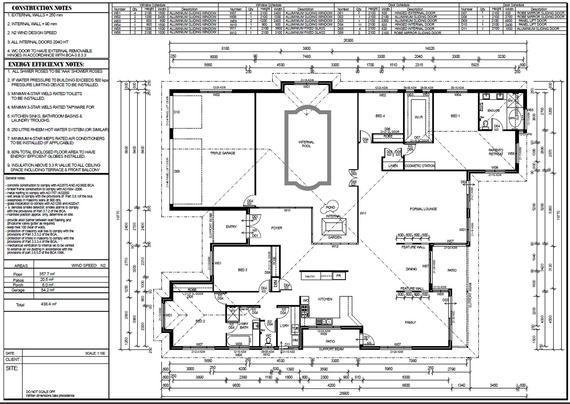
Now that you know the usefulness of the plans, you may be wondering if there is more than one type.
You are right!
There is a fairly simple classification but very consistent with certain criteria.
Each flat style responds to a need.
So it will depend on you, what you want and what your tastes and needs demand to choose the one that suits you best:
On the one hand we have the sketch
This first type is the simplest of all when drawing a plan.
But what is a sketch?
It is a freehand drawing that seeks to represent a place, an object or an idea.
It won't matter if you draw very well or not. The only thing that should worry you is that it represents the best possible existing space, that's the only thing that should worry you!
Bounded Plans
Although a sketch always tries to save a proportion, it does not give you a real measurement, it is only an approximation.
So something that is extremely important when launching the execution of a plan is to limit it.
Especially if then what we want is to translate proposals safely
Therefore, the next step of any sketch is to narrow it down.
You know what they say, what you don't measure you can't improve.
A good bounded plan should give you all the information to redefine and redraw each of the points and elements that make it up.
Dimensioning a plan is not a difficult job, but rather thorough.
In addition, it is usually quite easy to leave parts without measuring what causes the definition of all the elements that make up the space.
The next step is to clean it up or make a technical plan
This third type is in a nutshell the opposite of the sketch.
Technical drawings are generally made with drawing instruments and try to be cleaner and more precise.
But first of all for it to be considered a technical plan it has to be made to scale, and for this there are the dimensions that you have taken.
Scales of a plane:
* If the drawing is at 1/100 scale it means that 1 meter will be 1 centimeter.
* In the 1/50 scale drawing each meter will be 2 centimeters.
For that, it is best to use a flowmeter.
Here, you will test your accuracy of dimensioning since it is very easy that once you start you lack some measure to define the entire space.
But nothing happens, that your house is at hand.
In technical drawings it is important to always indicate the scale either graphically or directly by writing it.
You can also add some representative dimension, but it is not necessary to limit everything, since it can always be measured on the plane.
So that these plans can be useful, they are the ones that you can really work on to make changes in a reliable way, with vegetable paper or drawing on top.
Once you have a solution that convinces you, if you put it back to clean, you can use it to request up to budgets
The digital planes and the 3D or three-dimensional representations
The 3D plans, although they are not strictly floor plans, may be the most colorful and the ones that attract your attention the most.
After all, these types of graphics are much easier to understand, it gives you many more nuances, and they have also had a great boom thanks to very intuitive programs and softwares