Listen What I Gotta Say: Women in the Blues
Lesson Hub 2
Before the Blues: From Africa to the United States
6th grade–8th grade


What West African influences can you hear in blues music?
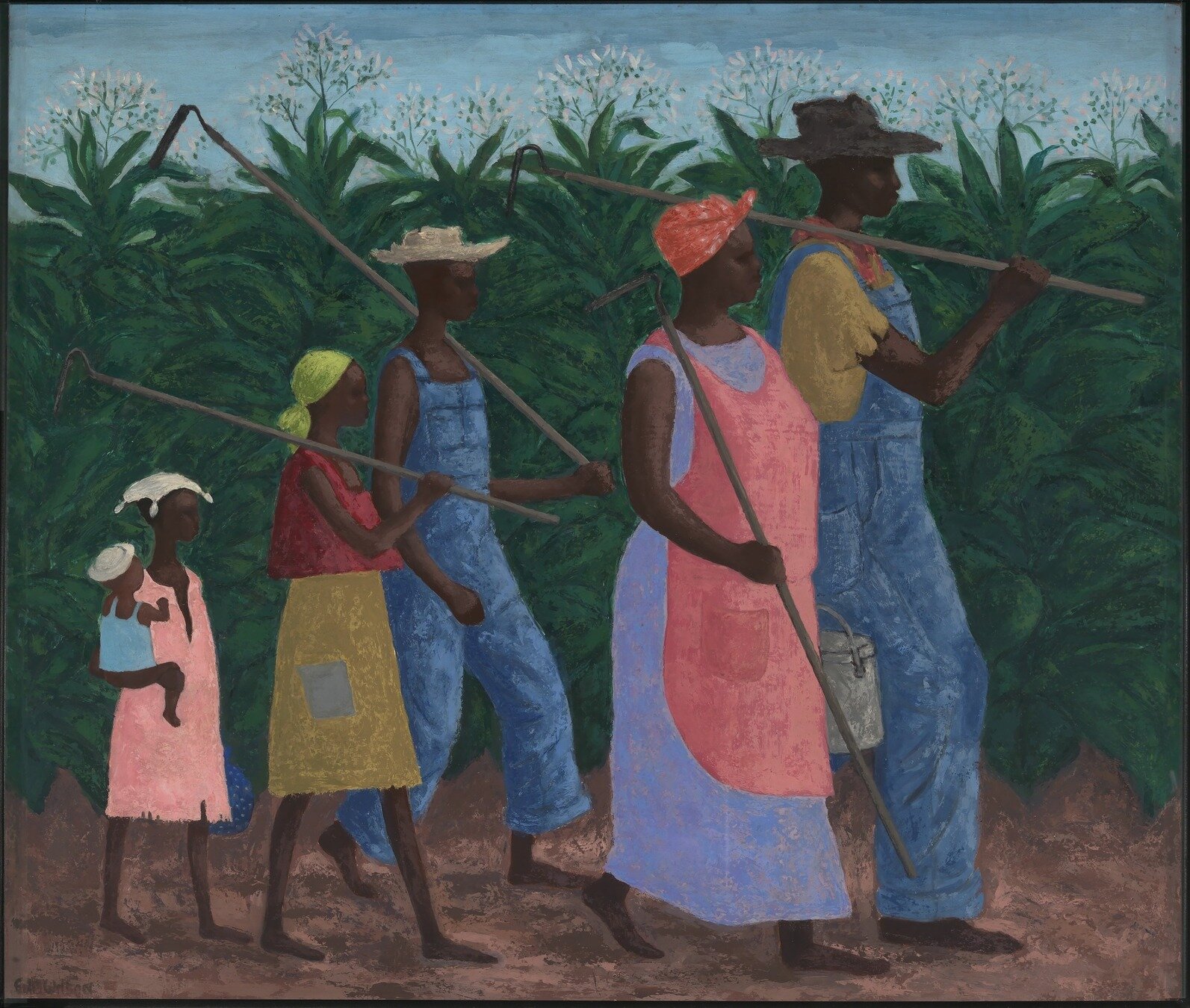
Field Workers, by Ellis Wilson. Smithsonian American Art Museum.
The question to consider throughout this Lesson is:
Before the Blues: From Africa to the United States
Blues, by Robert Cottingham. Smithsonian American Art Museum.



West African Connections to the Blues
Path 1
30 minutes
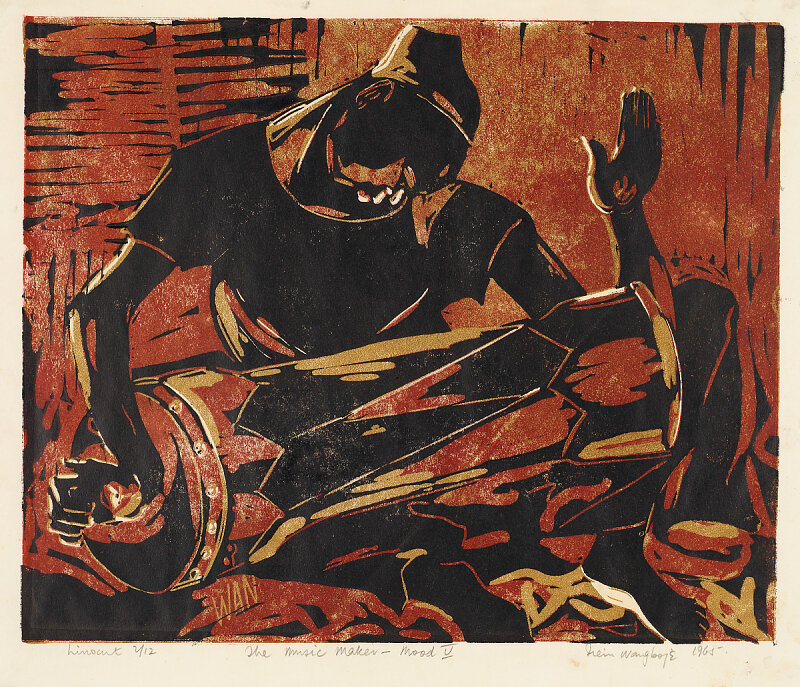
The Music Maker - Mood V, by Solomon Irein Wangboje. Smithsonian National Museum of African Art

Tracing the Origins of the Blues
Much like other music styles, the blues developed from many factors (time, people, location, and need).
"Session Blues," by Big Mama Thornton.
It is impossible to trace the exact roots of the musical style that became known as the blues.
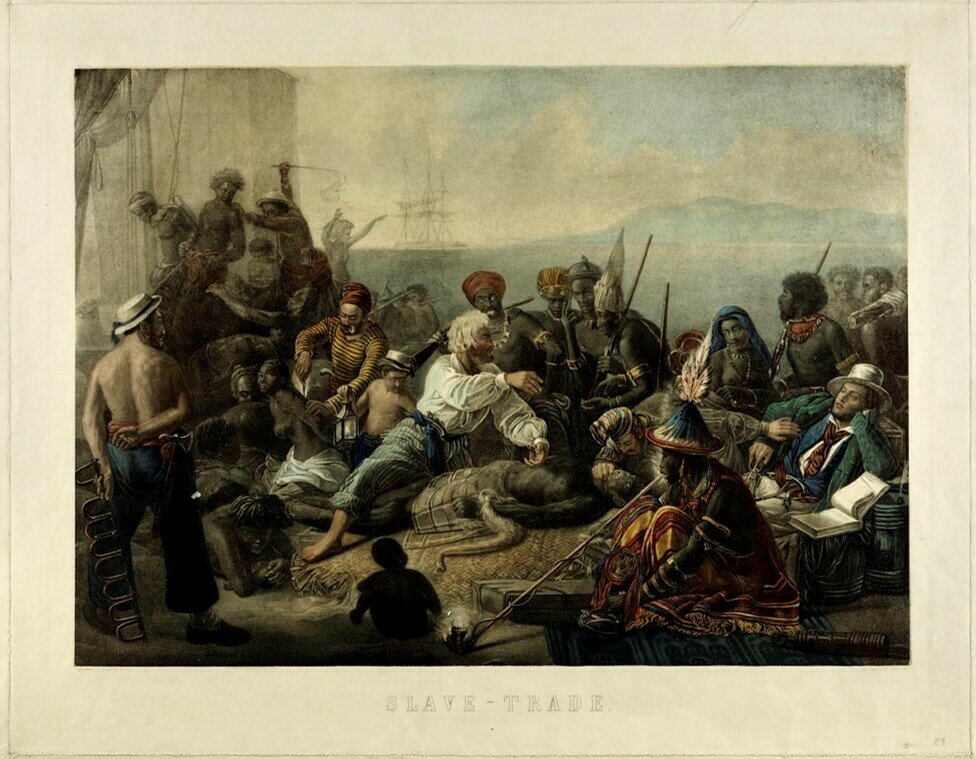
Historical Context: Transatlantic Slave Trade
-
Over 300 years ago, millions of people from Africa were forcefully enslaved and brought to the Americas to develop the “New World.”
-
Though forced from their lands and families, these enslaved peoples maintained aspects of their culture.
Slave-Trade, by Currier & Ives. National Museum of American History.
People
But ... the blues itself was not born in Africa, nor the moment when the first Africans set foot on American soil in 1619.
The blues was developed by people of African descent as they merged their music traditions with those learned in the Americas.
Time
-
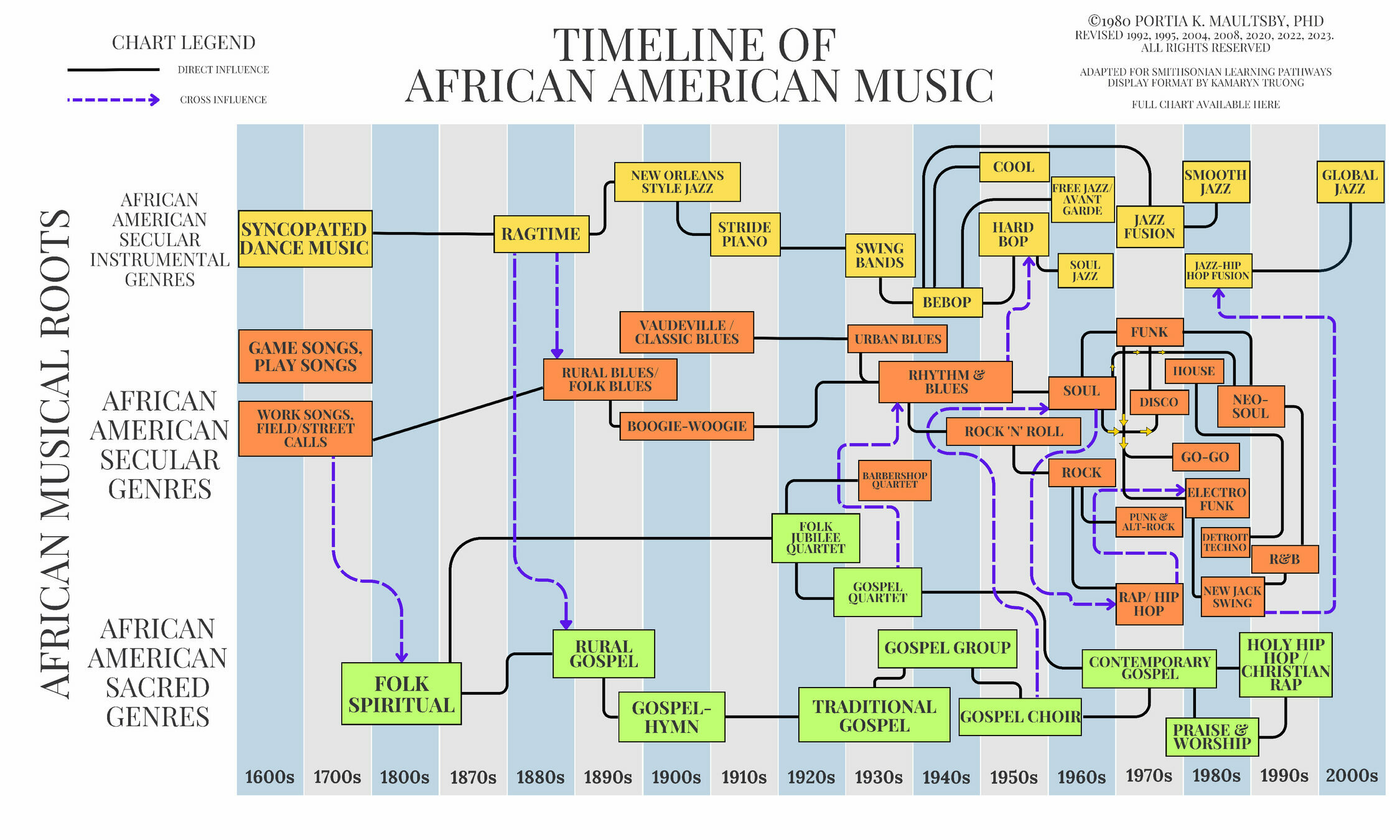
The blues, like other music genres, developed over time.
-
Between the 17th and 19th centuries, new sounds formed from many different music styles, including Field hollers/Work songs, Ring Shouts, and Spirituals.
-
The merging of these sounds eventually developed into what we now know as the blues.
Click to the next slide to analyze a timeline that shows the evolution of African American music.
Jump to discussion at end of Path (Slide 21)
Location
The blues was created in the American South.
Until the 20th Century, the bulk of African Americans lived in the American South, in states such as...
State Drawings, by Danielle Nalangan.
South Carolina
Georgia
Texas
Mississippi
North Carolina
Alabama
Louisiana
Need: Post-Emancipation
Blues music began to emerge during this time, as a way for people to express their feelings about these circumstances.
After the end of the Civil War (1865), slavery was legally abolished and African Americans freed themselves.
But many African Americans were still restricted from voting, getting an education, moving freely, and working certain jobs.
Some African Americans were forced to continue working on farms for little or no money.
Combining Influences: Becoming the Blues
-
As people created and played music to express their feelings, they pulled from familiar musical characteristics that existed around them (local, African, and European).
But, through listening, we can guess where some characteristics of blues came from . . .
- Because this process happened over centuries, it is impossible to identify exactly which musical practices were of African roots, local, or of European influence.
Listening for Blues Characteristics
Listen for these common musical characteristics in blues music . . .
Where do you think these characteristics originated?
1
2
3
4
Polyrhythm
“Session Blues” - Big Mama Thornton
Call and Response
“Session Blues” - Big Mama Thornton
Narrative Storytelling
“A Good Man Is Hard to Find” - Bessie Smith
Guitar Picking Style
“Steamboat Whistle” - John Jackson
Generally Speaking .....
West African Connections
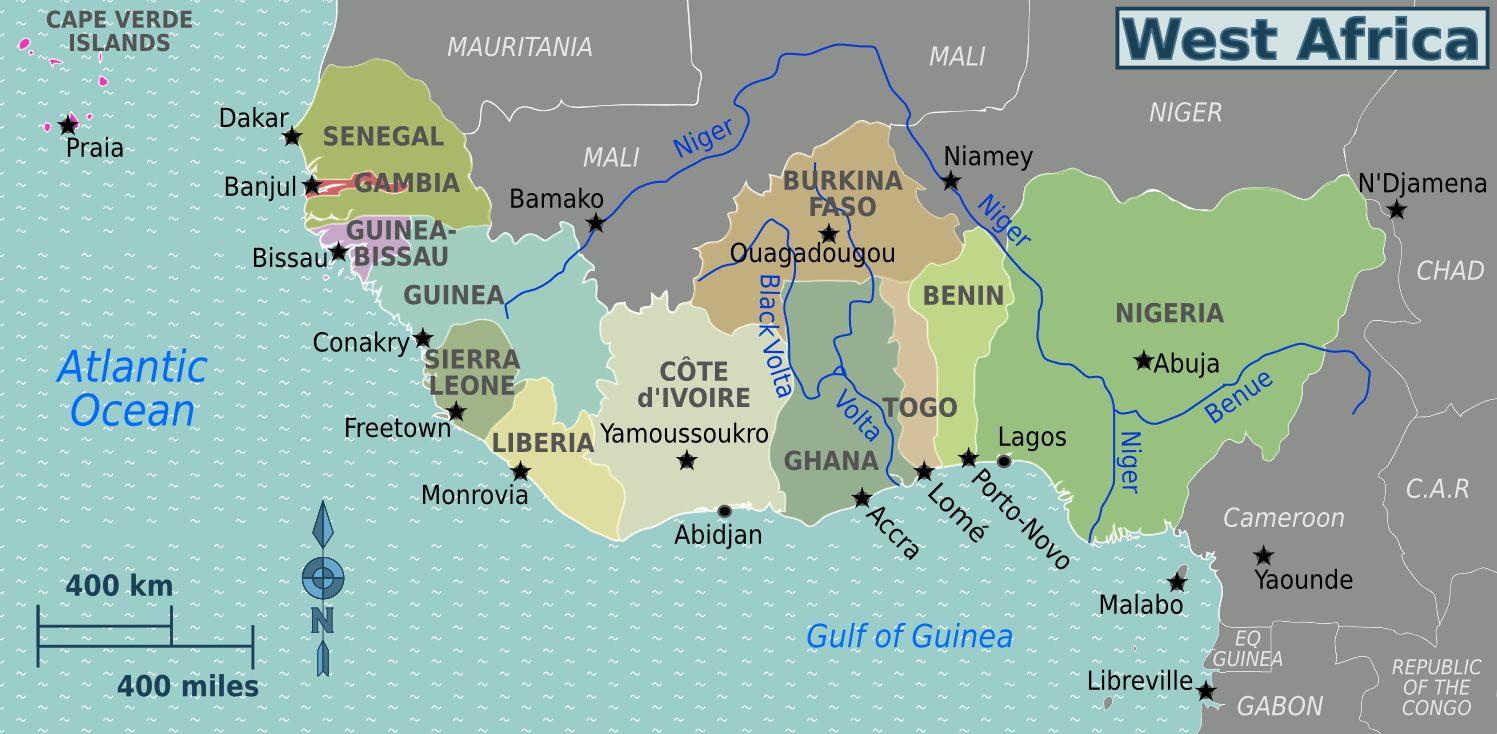
Musical characteristics like narrative storytelling, call and response, polyrhythms, and certain guitar picking styles were influenced by music practices found in West Africa.
West Africa Regions Map, by Peter Fitzgerald, CC BY-SA 3.0, via Wikimedia Commons.
Generally Speaking .....
Listening Activity
Within this activity, you will listen to examples of music traditions from several regions in West Africa.
As you listen, try to identify the musical characteristic represented:
- Call and response
- Polyrhythms
- Narrative storytelling
- Picking styles
Once you figure it out, fill in the blank.
Click to the next slide to get started!
Generally Speaking .....
West African Connections: Example 1
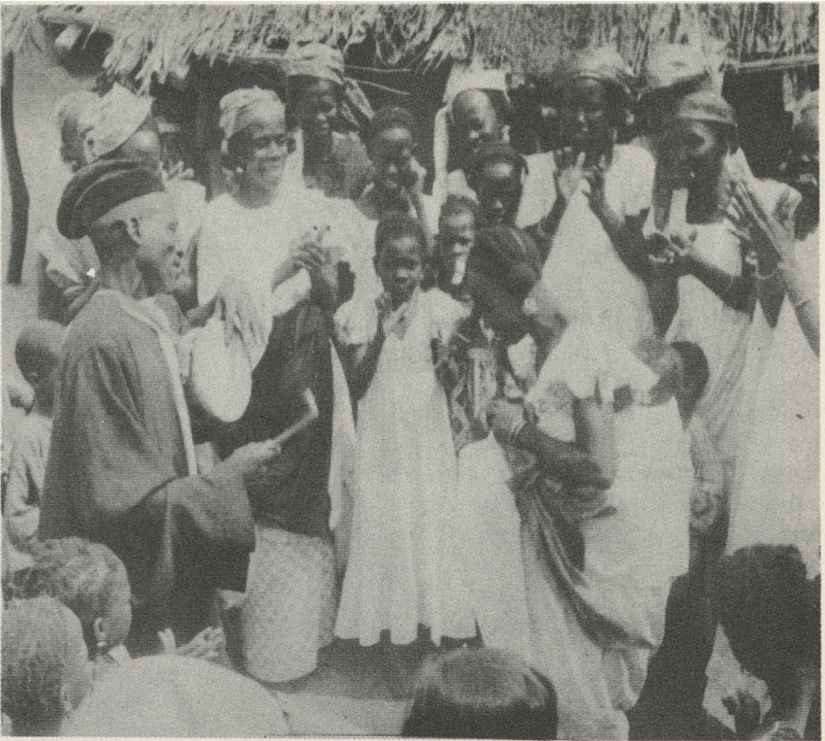
Wolof Naming Ceremony, photograph by David Ames. Folkways Records.
Generally Speaking .....
Call and Response
The Wolof (an ethnic group in current day Senegal and Gambia, West Africa) song Ndei Kumba (“Mother Petticoat”) shows the musical practice of CALL AND RESPONSE. The young women singers respond to the lead singer.

Generally Speaking .....
West African Connections: Example 2
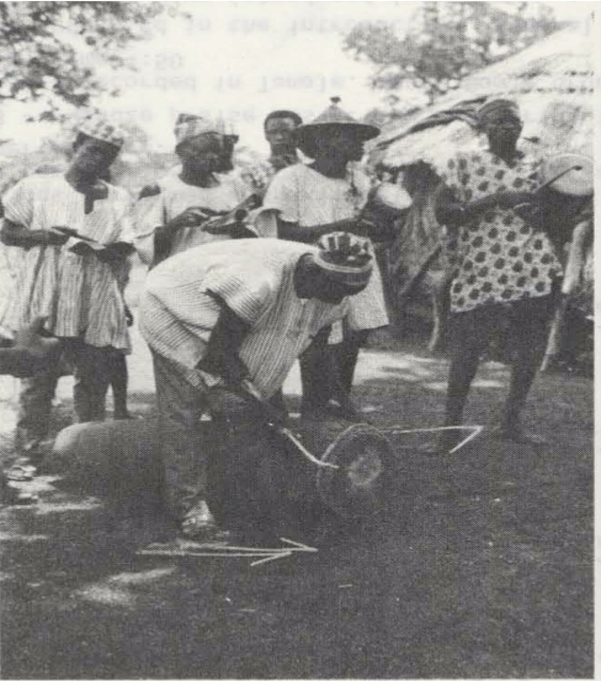
Doalga Drum in Village of Nanton, Photograph by Verna Gillis. Folkways Records.
Generally Speaking .....
Polyrhythm
The Dagomba people (an ethnic group in current-day northern Ghana) use three hourglass pressure drums (lunga) to perform their annual “Harvest Songs.” The relationship between the drums creates a POLYRHYTHM.
Generally Speaking .....
West African Connections: Example 3
Musician Playing a Musical Bow, unknown photographer. Folkways Records.

Generally Speaking .....
Narrative Storytelling
Generally Speaking .....
West African Connections: Example 4
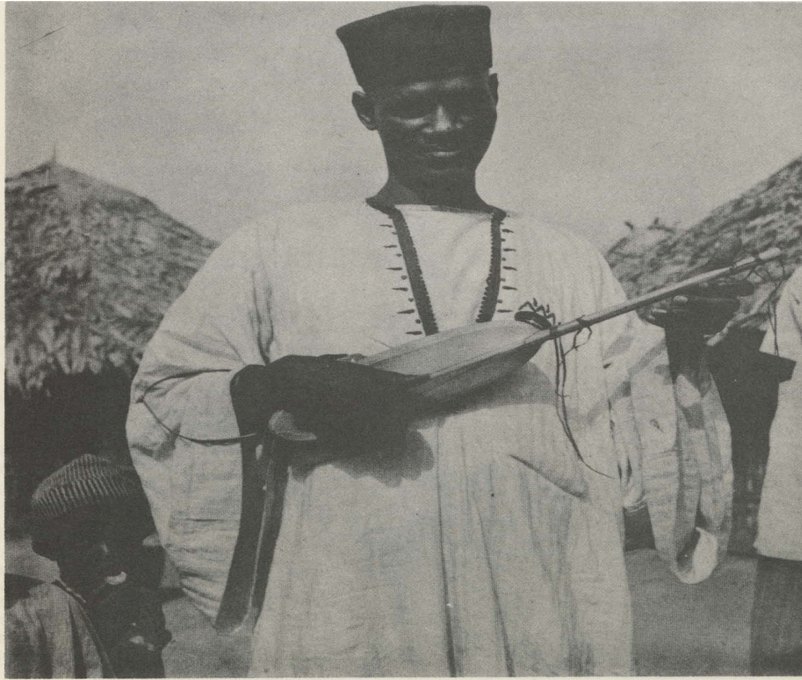
Gewel Playing Halam, photograph by David Ames. Folkways Records.
Generally Speaking .....
Picking Style
Listening for Blues Characteristics, Take 2
Listen again to these blues songs.
Can you hear the West African elements we just learned about?
Polyrhythm
“Session Blues” - Big Mama Thornton
Call and Response
“Session Blues” - Big Mama Thornton
Narrative Storytelling
“A Good Man Is Hard to Find” - Bessie Smith
Style of Playing
“Steamboat Whistle” - John Jackson
1
2
3
4
Discussion
As you learned in Lesson 1, the blues has influenced many other American popular music styles.
Do you hear any of the West African musical characteristics we identified today in any other popular music styles?
- Call and response
- Polyrhythms
- Narrative storytelling
- Picking styles
Go back to blues timeline to review (Slide 9)
Learning Checkpoint
- Where, when, and why did the blues develop?
- What are some of the musical practices found in the blues that can be traced back to West African music traditions?

End of Path 1: Where will you go next?


Before the Blues: Ring Shouts and "Jubilee"!
Path 2
30+ minutes

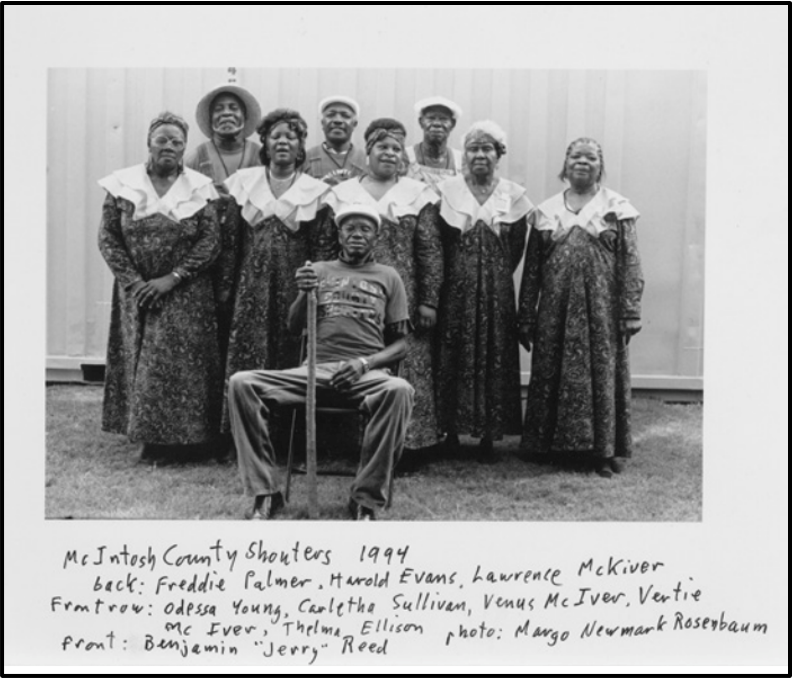
McIntosh County Shouters 1994, photograph by Margo Newmark Rosenbaum. Smithsonian Folkways Recordings.
Attentive Listening: "Jubilee"
Listen to an excerpt from a song called "Jubilee".
What musical timbres do you hear?
Attentive Listening: "Jubilee"
Listen again.
How would you describe the structure / form of this song?
Attentive Listening: "Jubilee"
Listen to the short excerpt one more time.
How would you describe the rhythm?
Integrating Context: What is a Ring Shout?
McIntosh County Shouters - 'Spirituals and Shout Songs' [Behind the Scenes Documentary],
Smithsonian Folkways Recordings.
Watch this short documentary video to learn more about ring shouts.
More About Ring Shouts
The shout is one of the oldest African American performance traditions still alive in North America.
This tradition was first noticed by outsiders in 1845 in the coastal areas of South Carolina and Georgia.
The ring shout brings together call-and-response singing, percussive rhythm, and expressive dance-like movement, which emphasizes togetherness and strong religious beliefs.
The term “shout” refers to a being overwhelmed by religious feelings and moving in a joyful, excited way to this emotion.
West African Influences in Ring Shouts
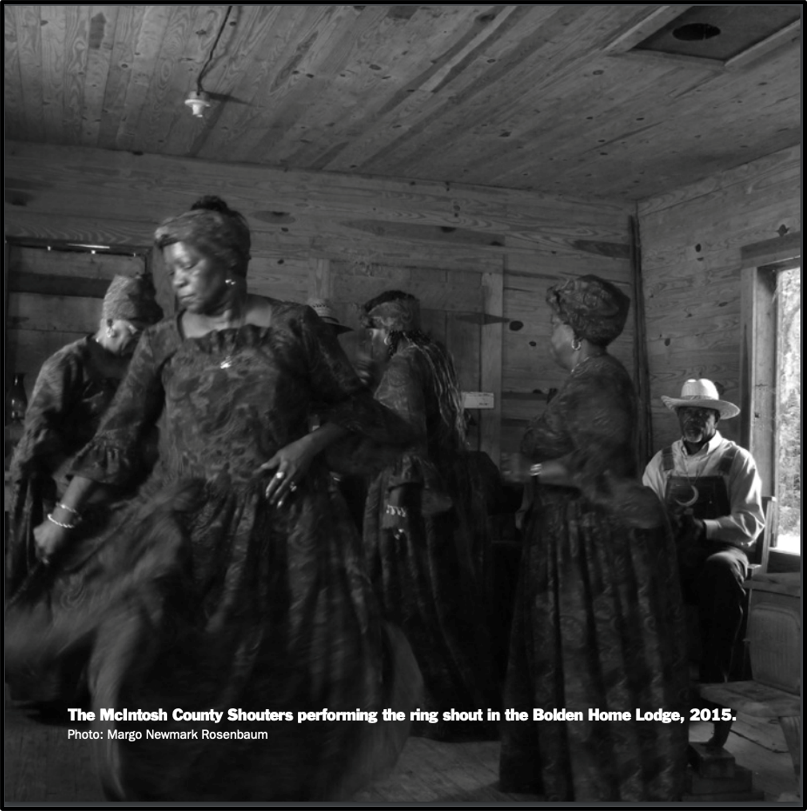
The McIntosh County Shouters performing the ring shout in the Bolden Home Lodge, by Margo Newmark Rosenbaum.
Smithsonian Folkways Recordings.
The defining characteristics of ring shouts (call and response, syncopated, repeated rhythmic patterns, and emphasis on ritual and dance) can be traced back to West African music traditions.
Engaged Listening: "Jubilee"
Listen for the repeated rhythmic pattern (hand-clap) in the audio recording of "Jubilee".
When you are ready, try to clap along.
Engaged Listening: "Jubilee"
Listen for the two main melodic “response” patterns.
When you are ready, sing along.
“Oh, my Lord!”
“My Lord, Jubilee!”
Challenge time: Can you sing along with the response while walking a steady beat OR clapping the syncopated rhythmic pattern?
Integrating Context: McIntosh County Shouters

Cover art by Visual Dialogue. Smithsonian Folkways Recordings.
This group formed sometime in the early 1900s.
The ring shout tradition began to fade away in the 1930s, but the McIntosh County Shouters (then known as the Georgia Sea Island Singers) kept it alive.
They began presenting this tradition to the public in 1980.
All current McIntosh County Shouters are descendants of original members and are related to each other by blood or marriage.
Watch "Jubilee"
What is the meaning of this song?
McIntosh County Shouters - 'Jubilee' [Behind the Scenes Documentary], Smithsonian Folkways Recordings.
Do you notice anything else about the rhythm?
How is the rhythmic pattern created?
How would you describe the movement?
Enactive Listening: Syncopation
The syncopated rhythmic pattern we just performed is often referred to as 3+3+2.
Most often, the resulting 3+3+2 pattern is notated like this:
4
4
One measure of 4/4 time has 8 subdivisions (eighth notes):
4
4
Within a 3+3+2 pattern, the eighth notes are grouped together like this:
4
4
1 (2) (3) 4 (5) (6) 7 (8)
1 2 3 4 5 6 7 8
1 2 3 1 2 3 1 2
Optional: Create a Class Arrangement of "Jubilee"
Some ideas:
- Choose two "responses" to sing for your version of "Jubilee".
- At first, the teacher can sing a "call" with all students singing the "response". (When/if comfortable, a student could take over as the leader.)
- Walk/shuffle counter-clockwise in a circle to the beat, while singing the response.
- Sing while clapping or stomping the repeated rhythm pattern.
- Assign / let students choose roles in the ensemble (e.g., sing, clap rhythm, etc.)
- Collaboratively create and document the structure / form for your arrangement.
- As a class, practice and refine your performance of "Jubilee".
Learning Checkpoint
- What are ring shouts?
- Can you demonstrate a ring shout?
- What are some of the musical practices found in ring shouts that can be traced to West African music traditions?
End of Path 2: Where will you go next?

Before the Blues: Field Hollers
Path 3
30 minutes

What is a field holler?

Field Workers (Cotton Pickers), by Thomas Hart Benton. Hirshhorn Museum and Sculpture Garden.
Between the 17th–19th centuries, many enslaved Africans were forced to work as plantation laborers in the American South. For fear of rebellion and uprising, they were not permitted to mingle with friends and family on nearby plantations.
Over time, the melodies sung back and forth came to be known as “field hollers.” Field hollers helped maintain a feeling of community among those enslaved.
Men and women working together over a wide stretch of fields maintained social contact throughout the workday by calling back and forth and singing songs together.
Attentive Listening: Field Hollers
Listen to this example of a field holler.
As you listen, think about the following guiding questions:
What do you notice about the structure?
Who do you think is singing?
What do you think the singer is feeling?
What do you notice about the texture?
"Field Call," by Annie Grace Horn Dodson.
Annie Grace Horn Dodson
On this recording of "Field Call," a woman named Annie Grace Horn Dodson recalls (from memory) the call of the field workers during her childhood.

This field call is based on the first three notes of the minor scale (do, re, me), which gives it a melancholy feel.
Annie Grace Horn Dodson, by Harold Courlander. Folkways Records.
More about Field Hollers
Sometimes field hollers were sung in unison (everyone all together), and sometimes the “calls” and “responses” were sung from different parts of the field.
On this recording, you can clearly hear one singer (no harmony or other instruments) and the “call and response” form.
Cotton Pickers, by Merritt Mauzey. Smithsonian American Art Museum.

Annie Grace Horn Dodson sings both the “call” and the “response.”
Field Hollers as Communication
In addition to fostering a sense of community, field hollers also served as a form of communication.
Photo of Workers in the Field on Drew Plantation, by Henry Clay Anderson. National Museum of African American History and Culture.
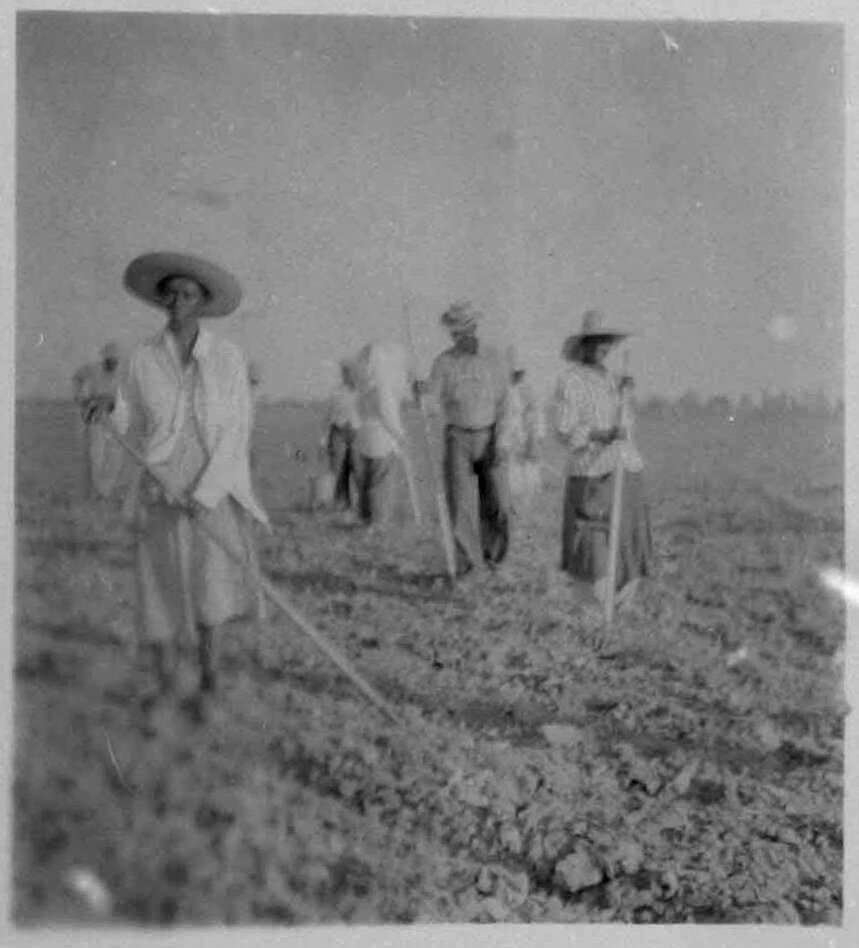
Sometimes, the calls included coded messages or a familiar signal.
Field Hollers: Example 2
Listen to another example of a “field holler.”
- As you listen, think about the following guiding question:
What are some similarities and differences between this recording and the previous recording?
"Greeting Call," by Annie Grace Horn Dodson.
This track is entitled “Greeting Call”
-
It was recorded by the same singer . . . Annie Grace Horn Dodson.
-
The mood seems a bit more upbeat.
-
This melody is less repetitive and seems to have some improvisation.
-
Both hollers are secular (no religious meaning).
-
Both hollers utilize call and response form.
About "Greeting Call"
This call has lyrics that tell a story:
A man has returned after a long absence, and is greeted by this question...
(Call): Hey, Rufus! Hey boy! Where in the world you been s0 long? Hey buddy, hey boy!
(Response): Well I been in the jungle! Ain't goin’ there no more!
From the album liner notes:
“The answer is of course metaphoric. It would be understood by the listener to mean that Rufus has been in prison or some other kind of trouble.”
Performance Activity: "Field Hollers"
Within the next activity, you will have a chance to actively engage with the first field holler we listened to today, with and without the recording.
1. Echo Sing
Echo-sing short melodic patterns that include the notes “do, re, me” (the first three notes in a minor scale).
You can echo the patterns using neutral syllables (such as “loo”) or solfège syllables.
2. Echo Sing with Call and Response
Echo-sing the the call and response pattern sung by Annie Grace Horn Dodson in "Field Call" (with the recording):
-
Call: “Who hoo, who hoo”
-
Response: “Yeh hee, yeh hee”
3. Engaged Listening
Listen to the recording again . . .
This time, sing along only with the “responses.”
4. Perform
Split your class into two halves . . .
- Half of the class will sing the “call” while the other half sings the “response.”
- Then . . . feel free to do it without the recording!
- Perform it with a small group of singers or a soloist on the "call"
5. Use Notation
Look at the staff notation for this call and response pattern.
- Sing the pattern while following along with the notation.
-
Discuss: Is it possible to accurately represent this pattern using staff notation? Why or why not?

Extension Activities:
Improvising, Creating, and Documenting
Play with a question/answer activity using the notes “do, re, me”:
- Create a “call” and then rather than echoing, answer back using a different combination of the same three notes.
- Create and notate your own short call and response patterns, using the notes “do, re, me.”
Field Hollers and Blues Connections
Form
-
Many field hollers utilized call and response form.
-
Call and response between the vocalist and instrument(s) is an important part of the blues tradition.
Vocal Style
-
Many field hollers utilized bent pitches
-
Bent pitches or "blue notes" are important to the performance style of the blues.
Improvisation
-
They were often developed without preparation.
-
Improvisation is also an important part of the blues tradition.
Field Hollers after the Civil War
This tradition continued after the Civil War (which ended in 1865), disappearing slowly as the conditions of life changed.
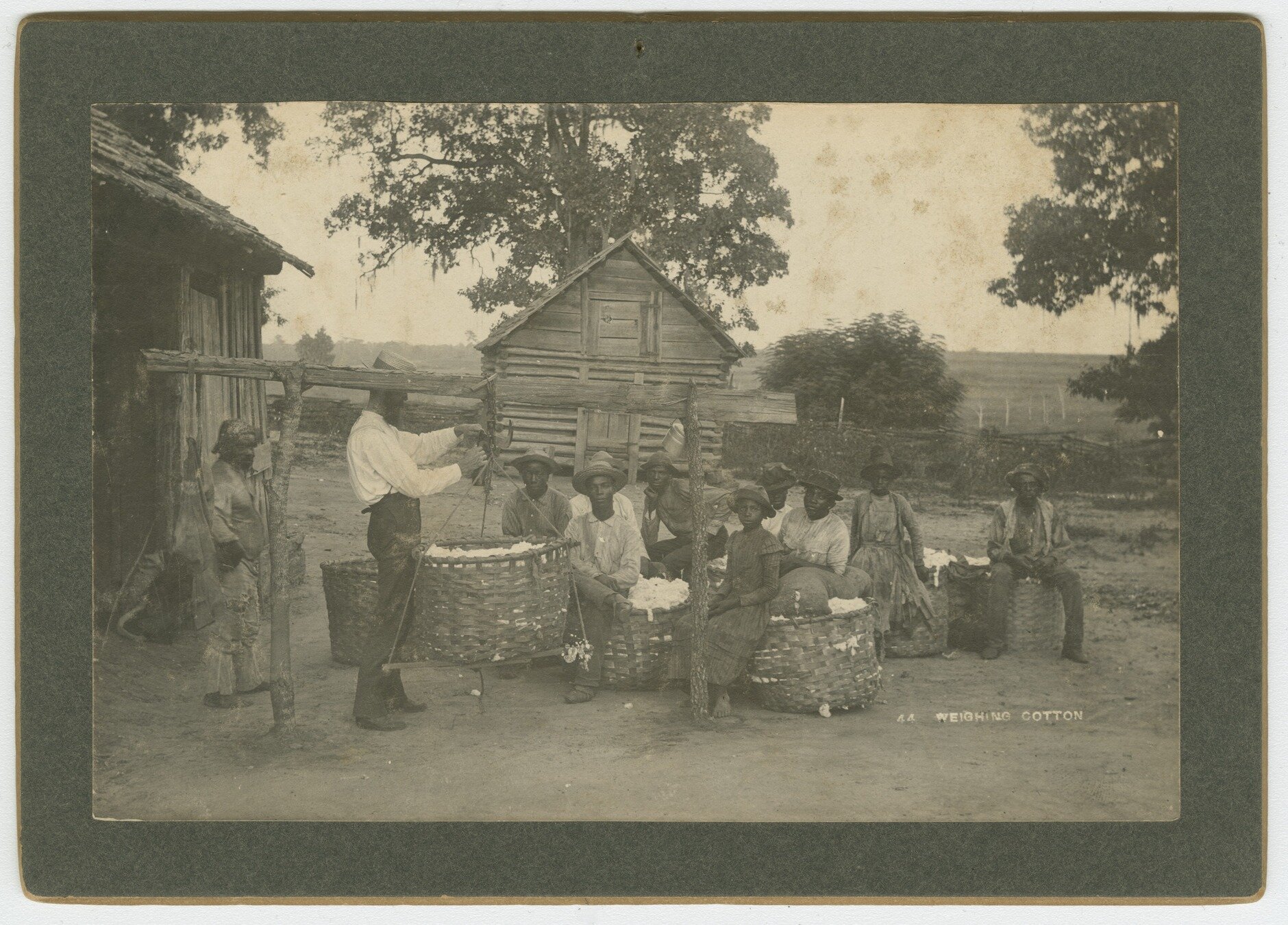
However, when an album of this music was released in 1951, these types of field calls were still heard in many rural parts of the southern United States.
No. 44, Weighing Cotton, photograph by A. W. Möller.
National Museum of African American History and Culture.
Learning Checkpoint
- What are some common features of field hollers?
- What are some of the musical practices found in field hollers that are also found in the blues?
End of Path 3 and Lesson Hub 2: Where will you go next?


Lesson 2 Media Credits
Audio courtesy of
Smithsonian Folkways Recordings
Sony Music Entertainment
Video courtesy of
Smithsonian Folkways Recordings
Images courtesy of
Peter Fitzgerald
Hirshhorn Museum and Sculpture Garden
Portia K. Maultsby
National Museum of African Art
National Museum of African American History and Culture
National Museum of American History
Smithsonian American Art Museum
Smithsonian Folkways Recordings
© 2025 Smithsonian Institution. Personal, educational, and non-commercial uses allowed; commercial rights reserved. See Smithsonian terms of use for more information.
This Lesson was funded in part by the Grammy Museum Grant and the Smithsonian Youth Access Grants Program, with support from the Society for Ethnomusicology and the National Association for Music Education.
For full bibliography and media credits, see Lesson 2 landing page.