





























Jonathan Morgan
Adjunct Professor of Art at Lone Star College & South Dakota State University, PhD candidate at IDSVA
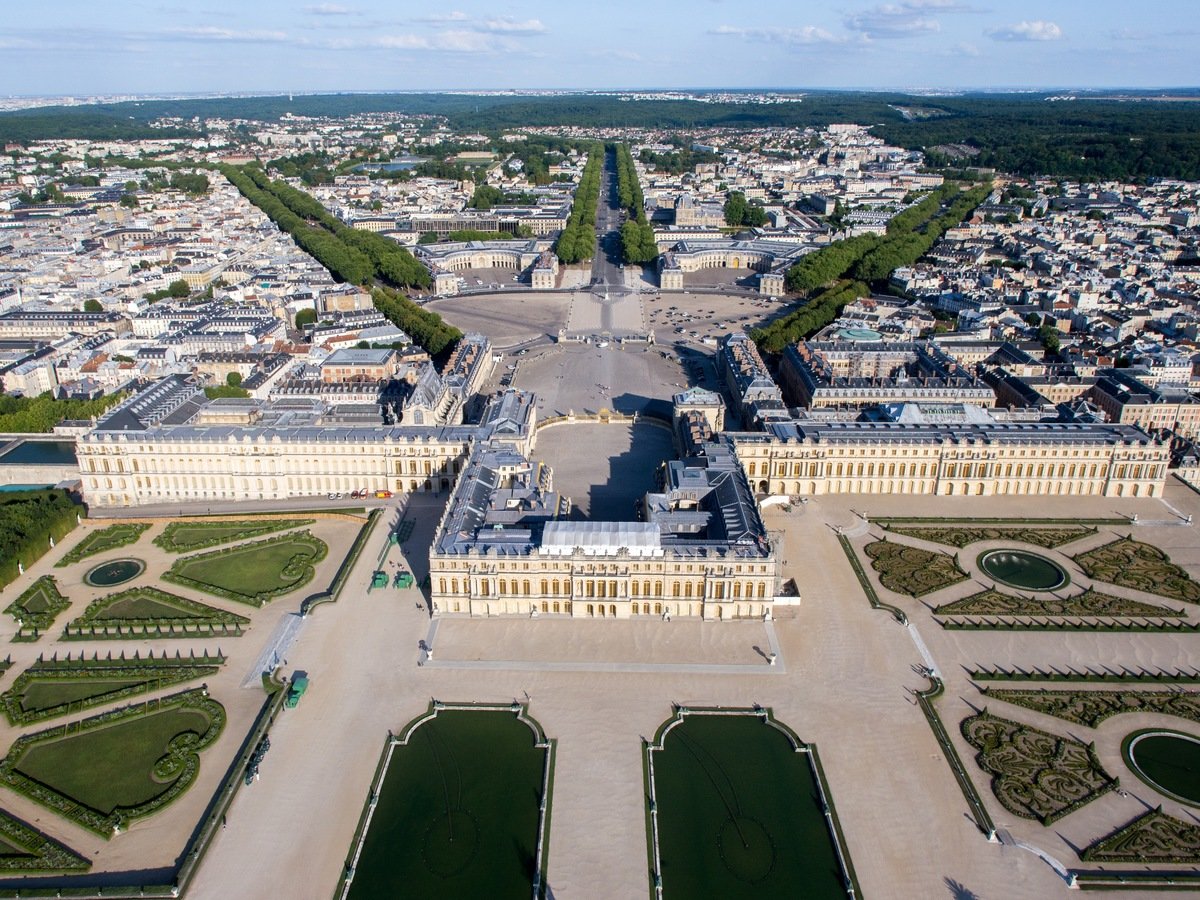
Rococo luxury & excess in France
The false narratives of Neoclassicism
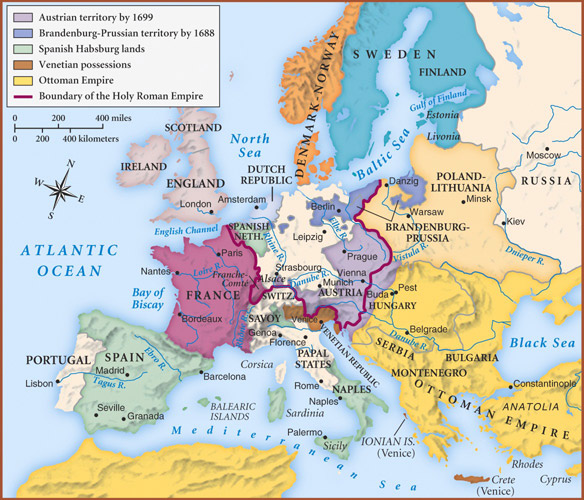
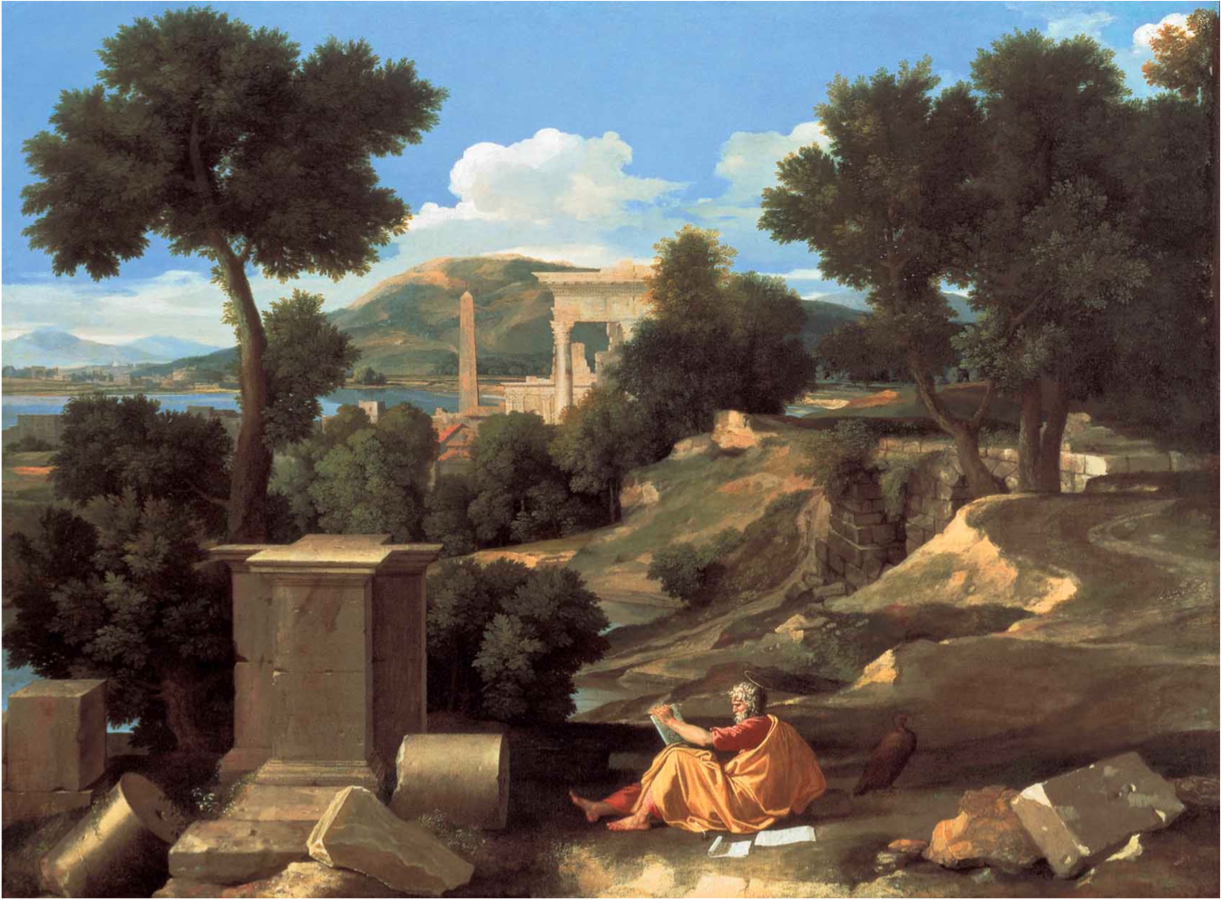
Landscape with St. John on Patmos
Nicolas Poussin | 1640 CE | Oil on canvas
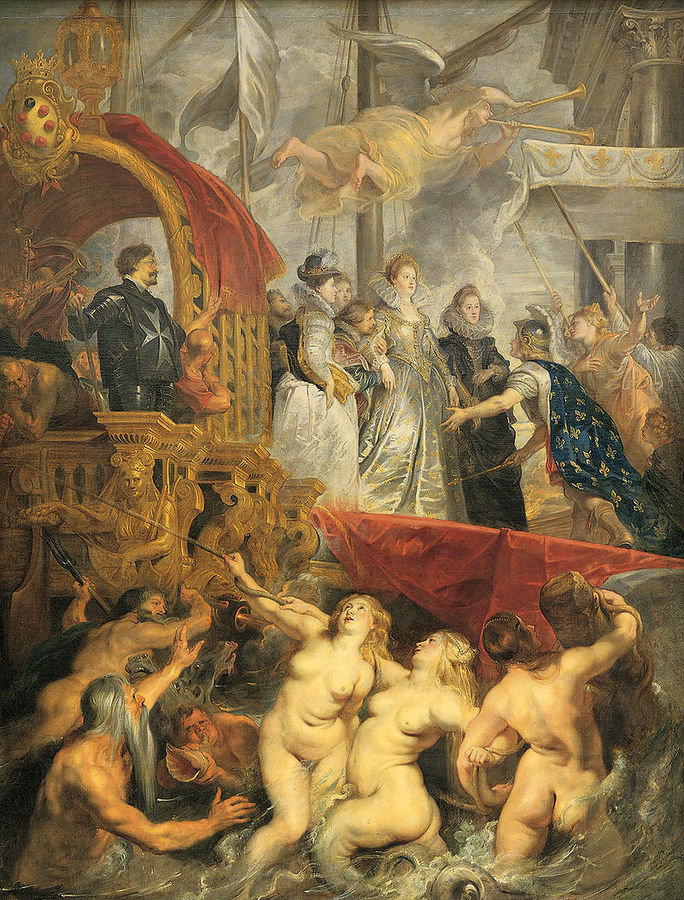
The Disembarkation of Marie de' Medici
Peter Paul Rubens
1600 CE
Oil on canvas
Rubens (Dutch, Baroque)
Poussin (French, Classicist)
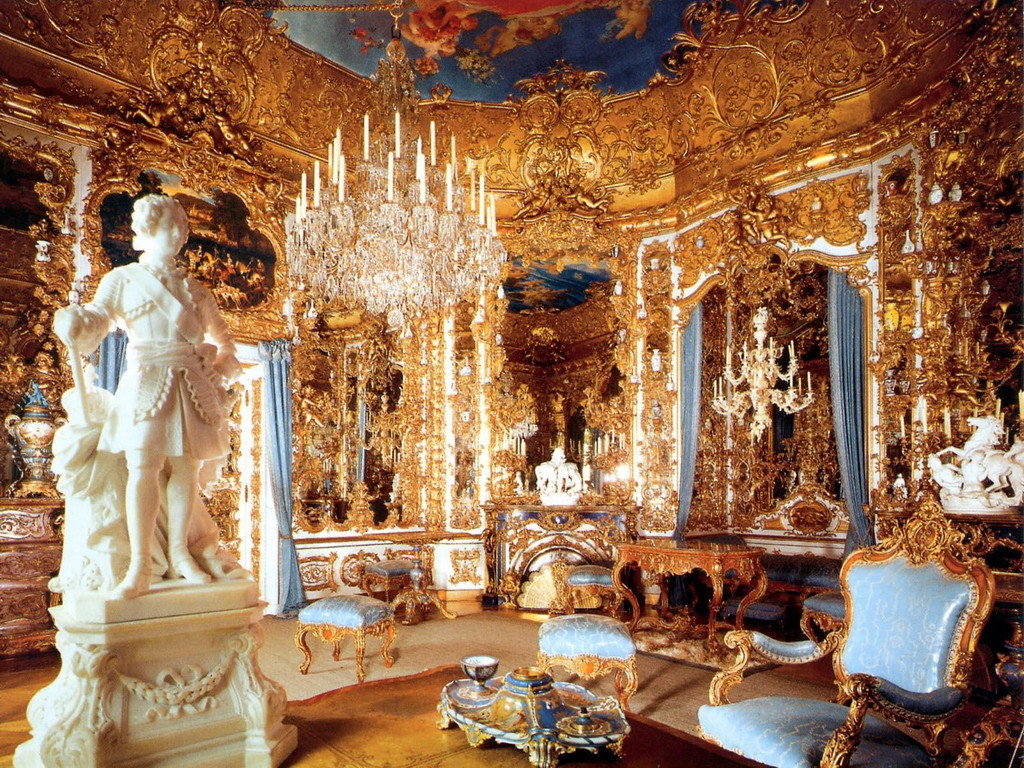
Salon de la Princesse
Germain Boffrand
Paris, France, 1737-1740 CE
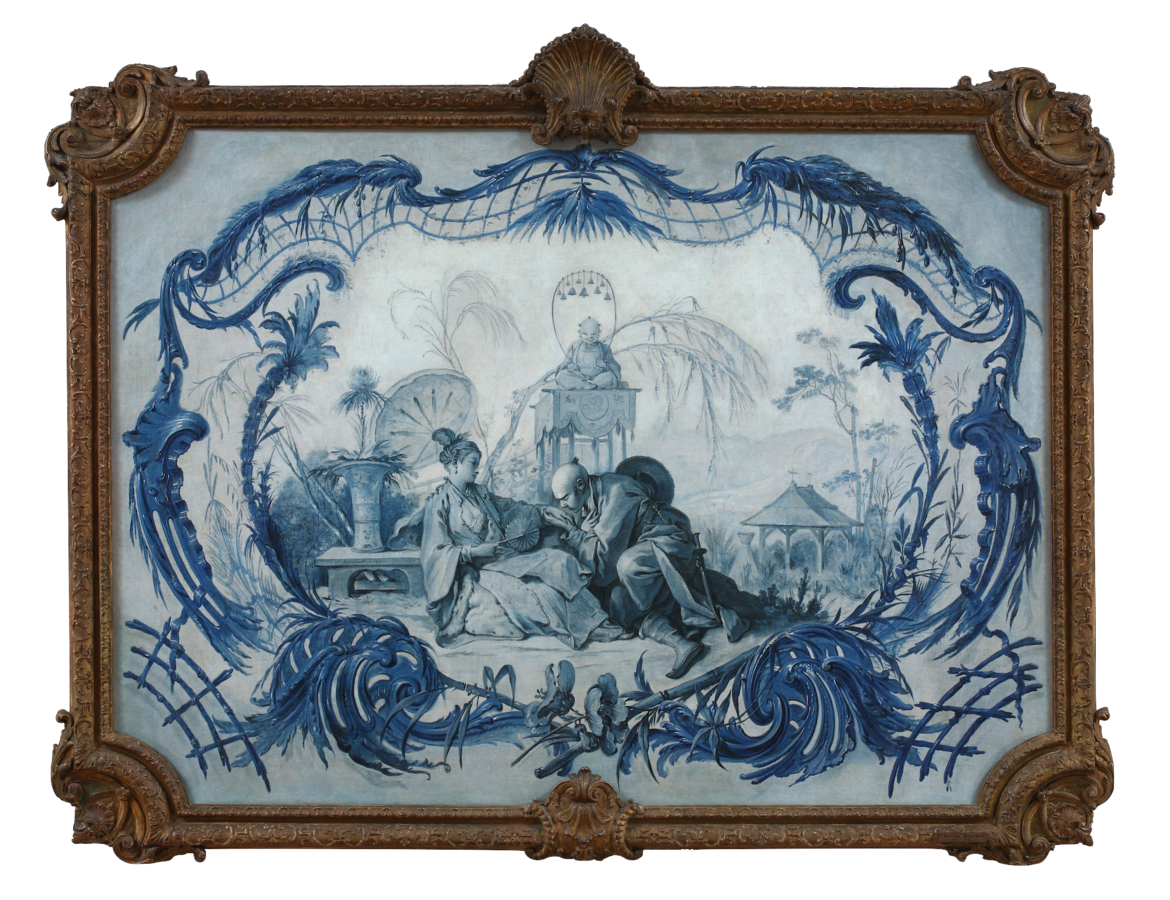
Le Chinois Galant
François Boucher
1742 CE | Oil on canvas
Cupid a Captive
François Boucher
1754 CE
Oil on Canvas
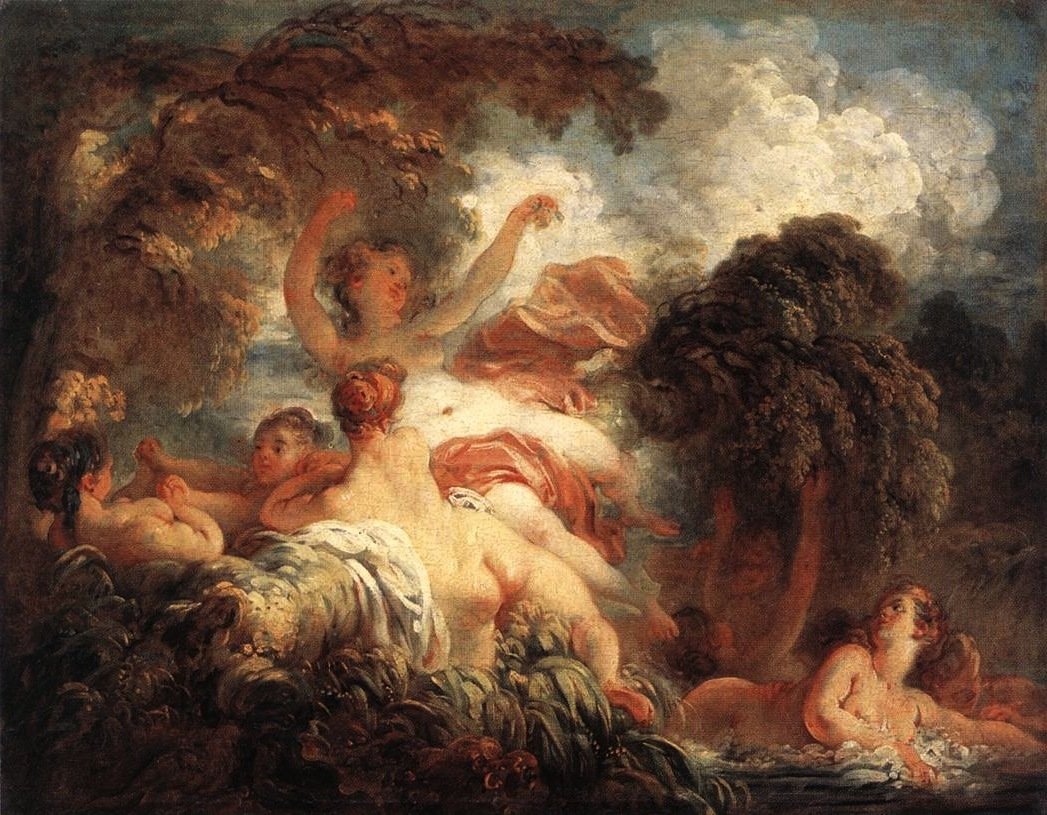
The Bathers
Jean-Honore Fragonard
1761-1765 CE | Oil on canvas
The Swing
Jean-Honore Fragonard
1766 CE
Oil on canvas
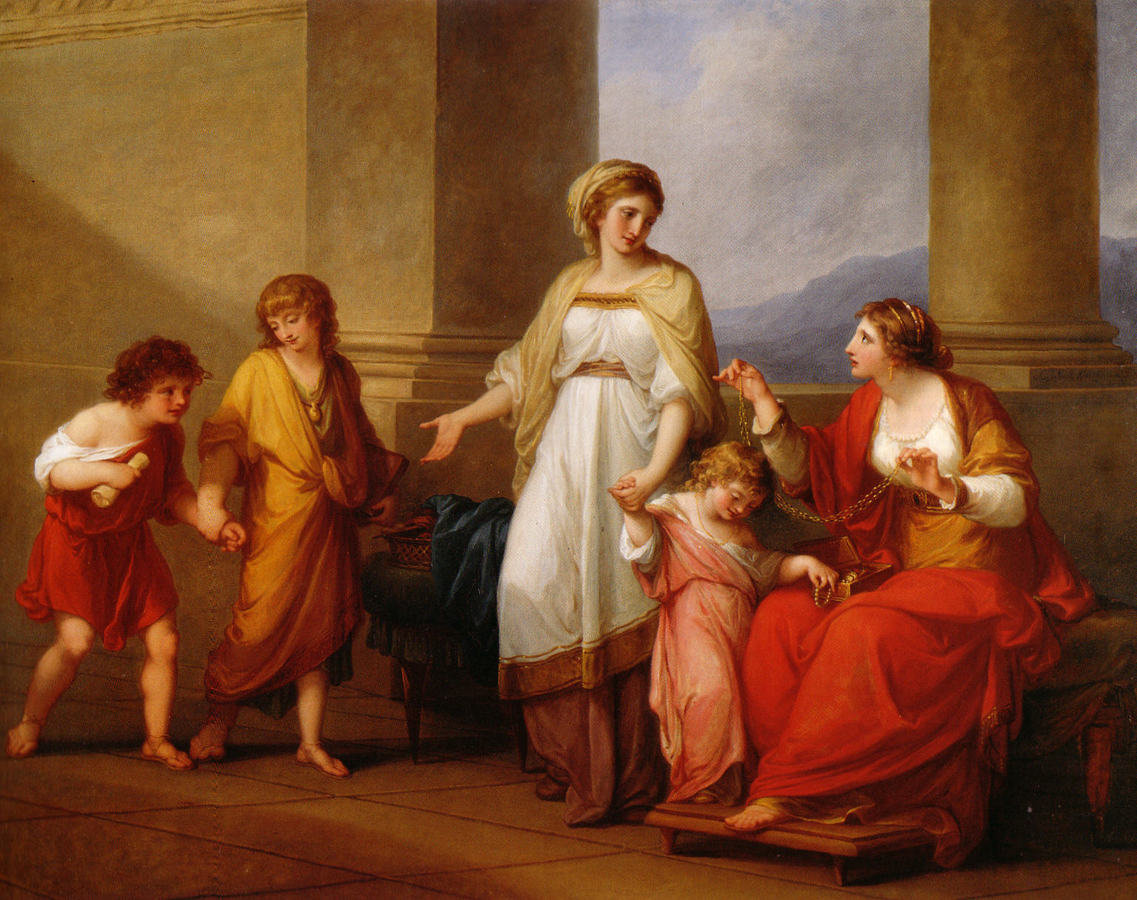
Cornelia, Pointing to her Children as her Treasures
Angelica Kauffman
1785 CE | Oil on canvas
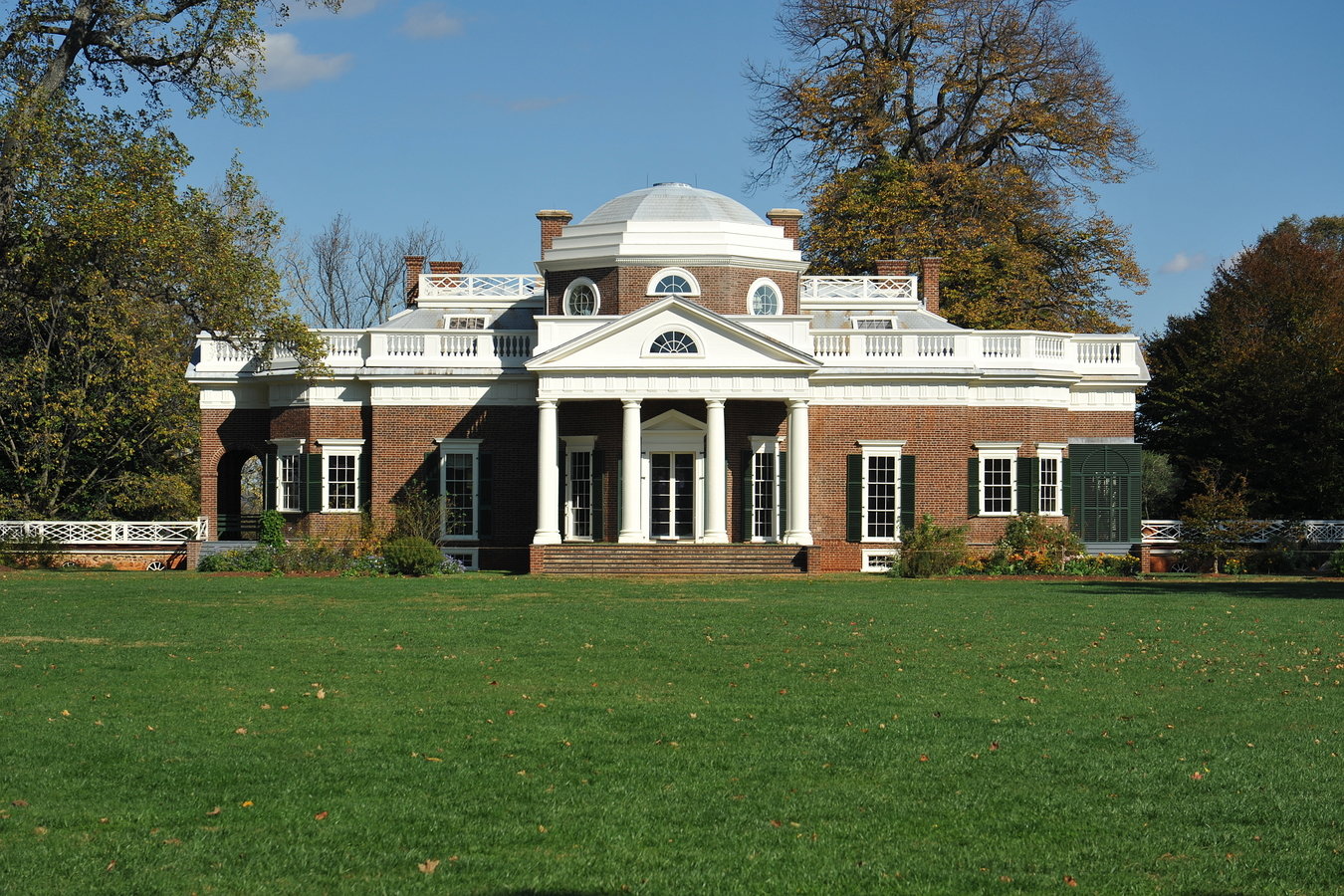
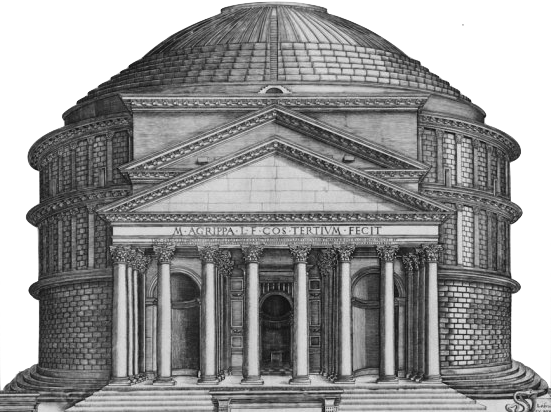
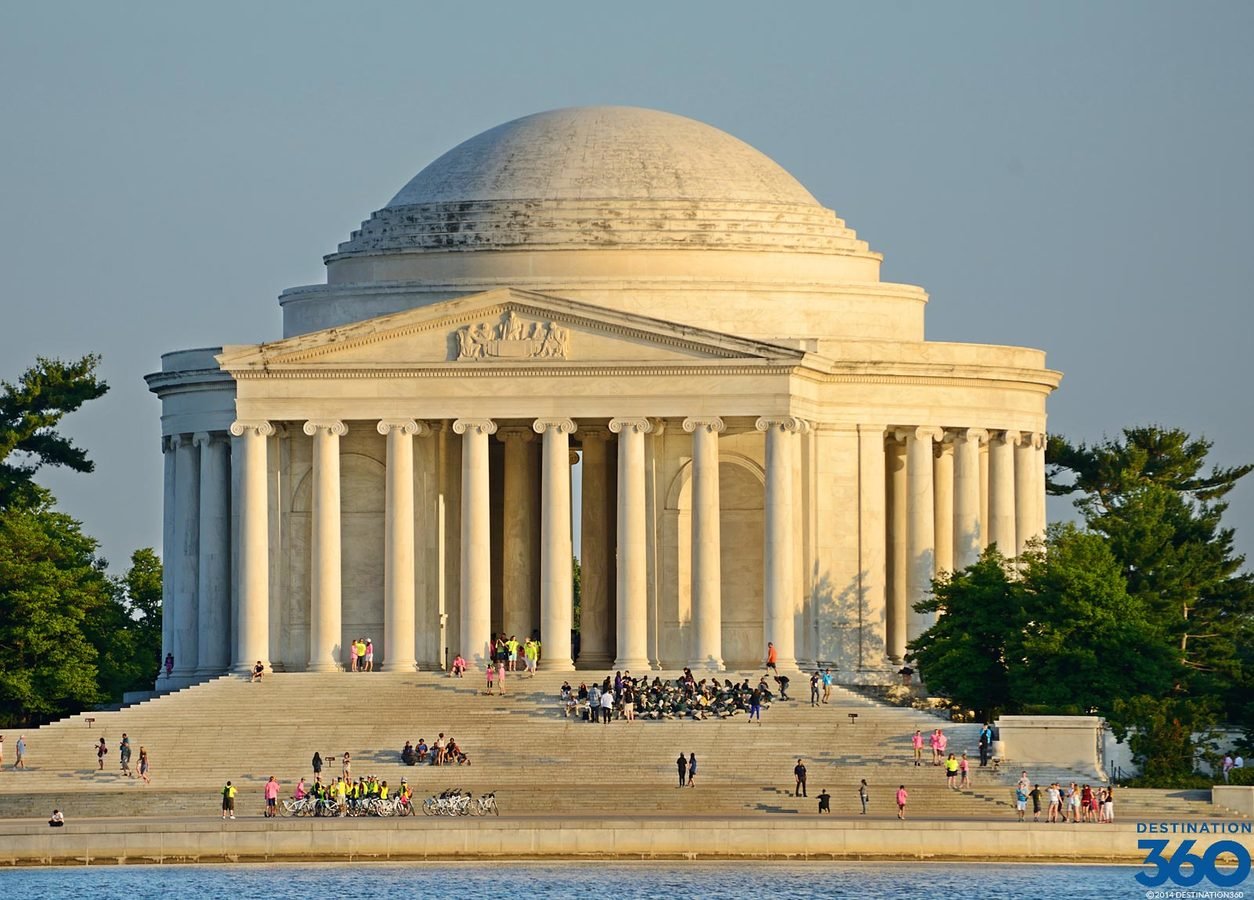
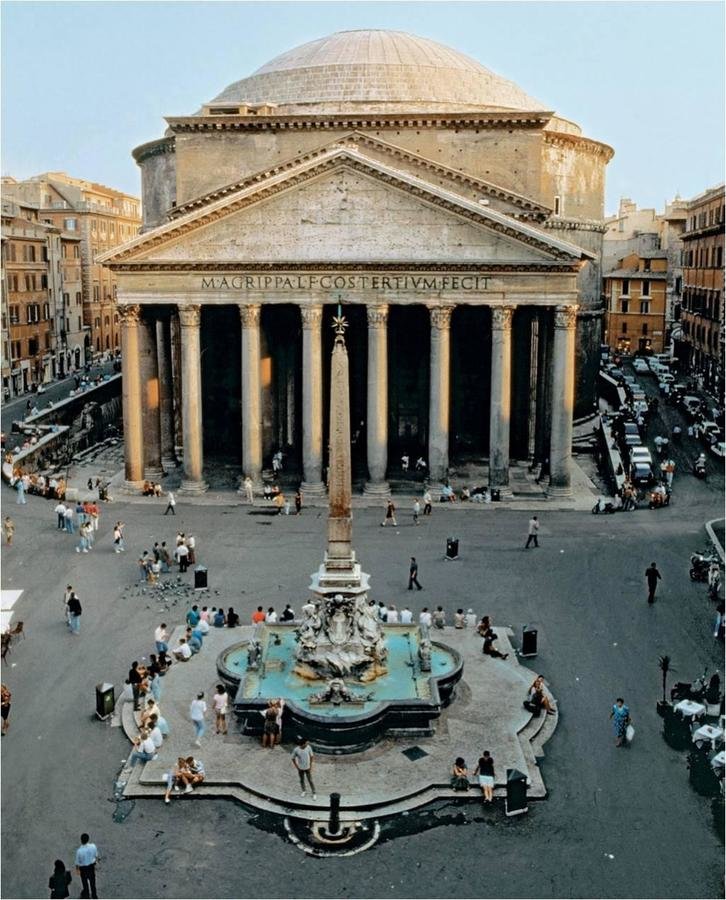
Monticello
Thomas Jefferson
Charlottesville, VA, 1772 CE
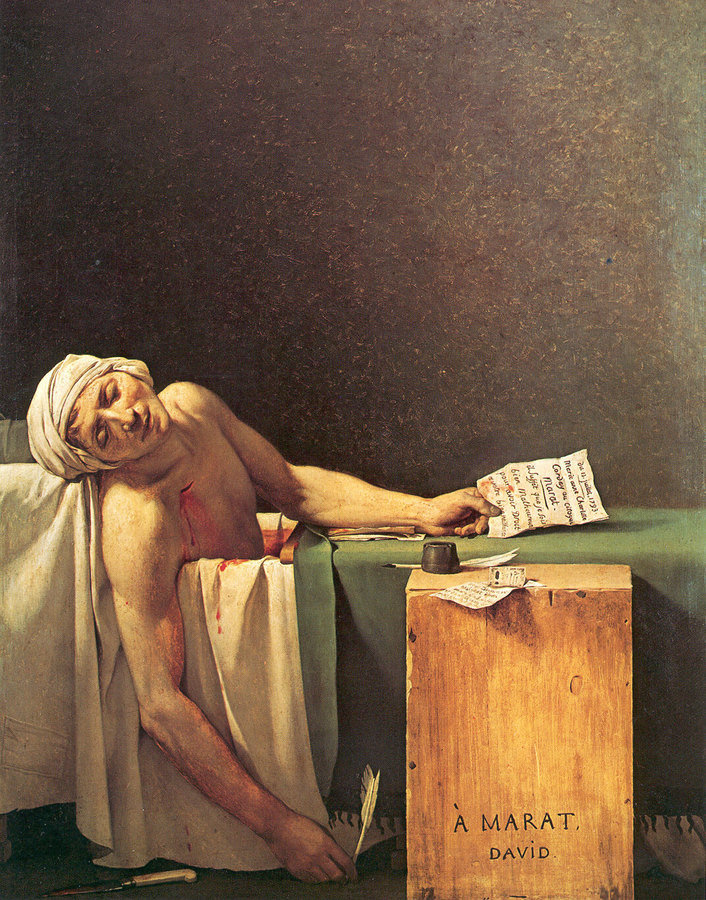
The Death of Marat
Jacques Louis David
1793 CE
Oil on canvas
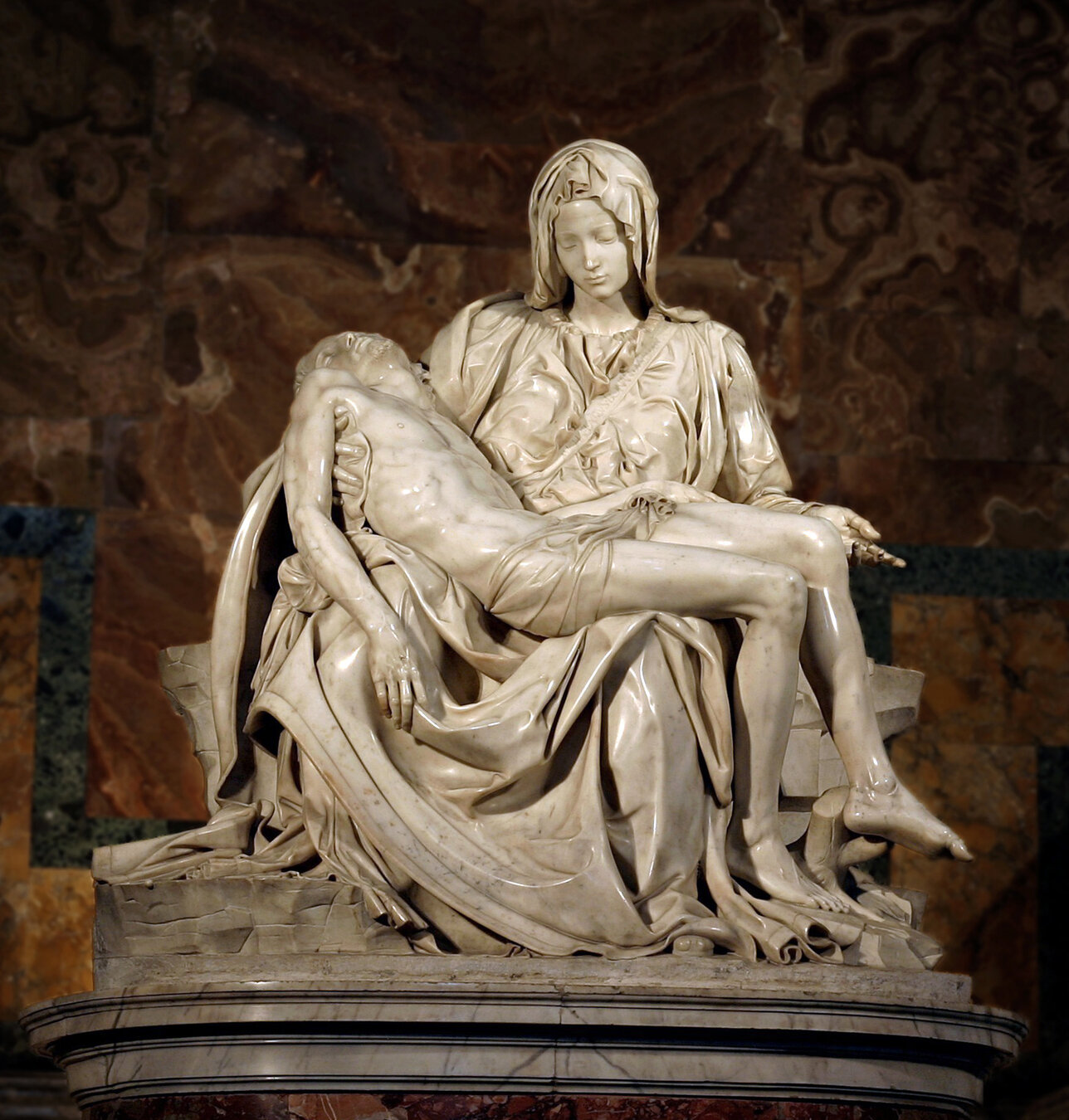
Pieta | Michelangelo | 1498-1499 CE | Marble
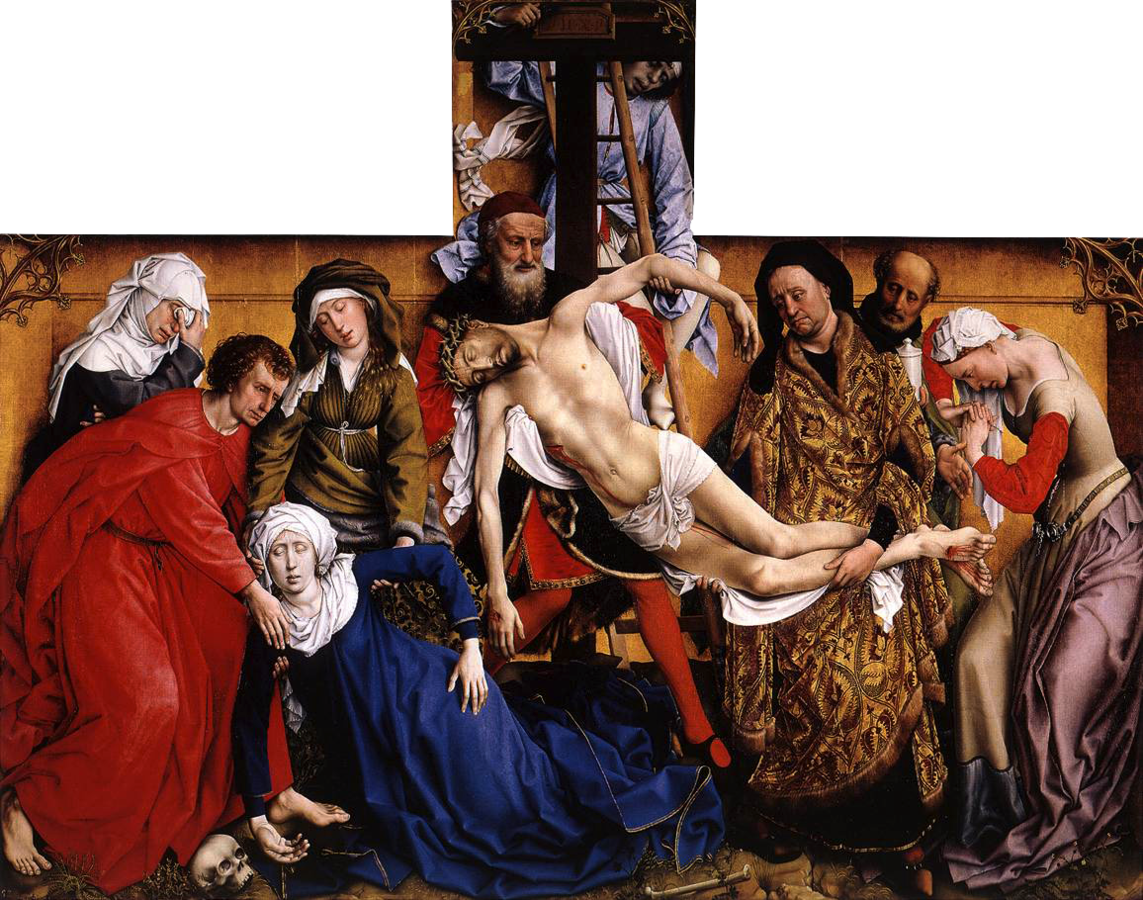
Deposition | Van der Weyden
Intensity & Subjectivity within Romanticism
Realism and the Rise of Empiricism
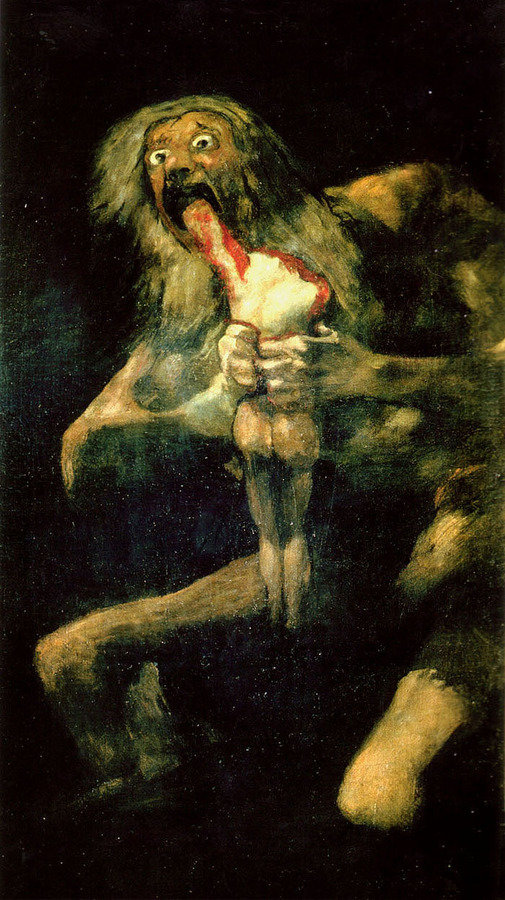
Saturn Devouring One of His Sons
Francisco Goya
1820-1822 CE
Oil mural transferred to canvas
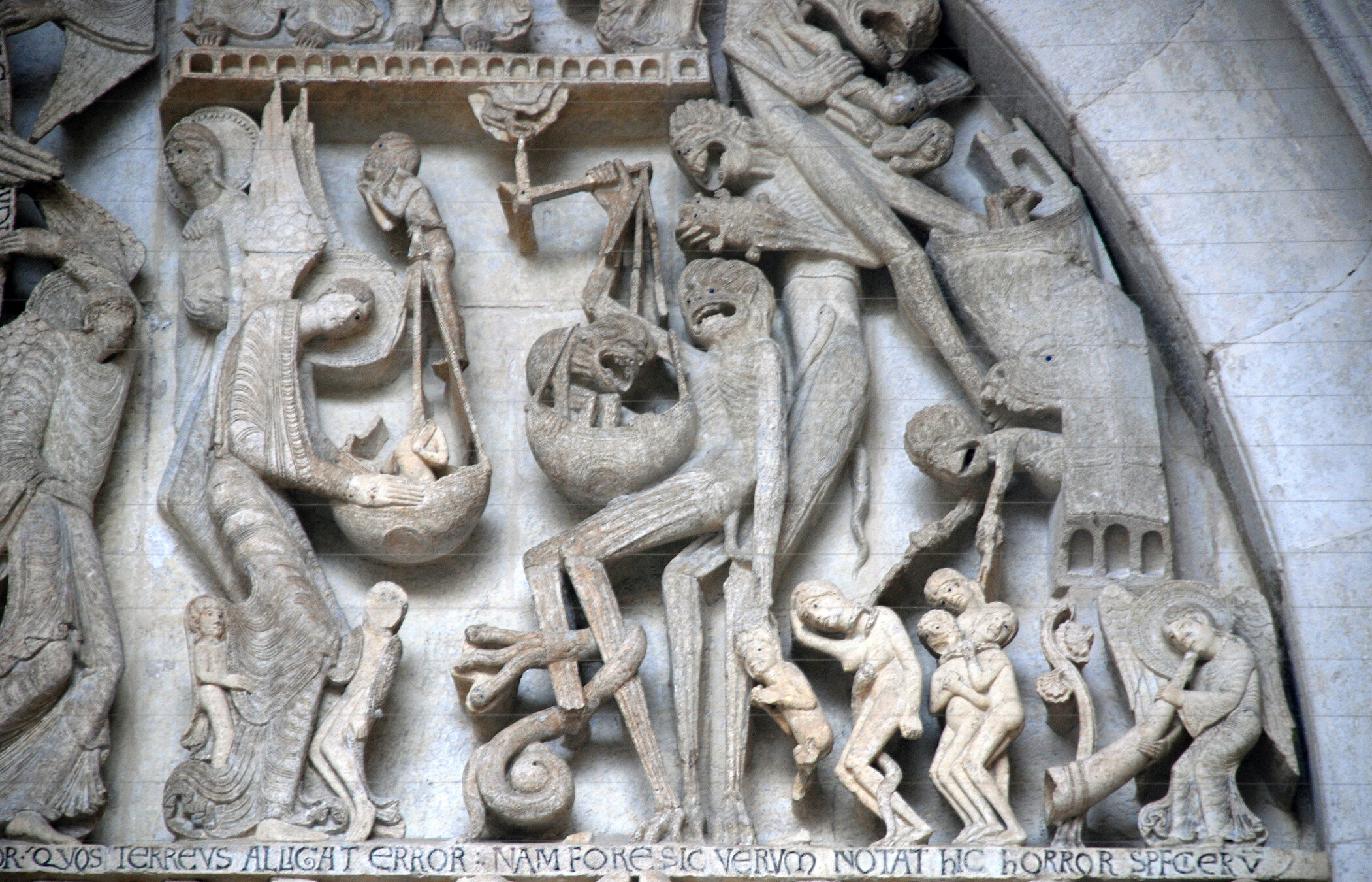
Gisleburtus' Last Judgement (detail)
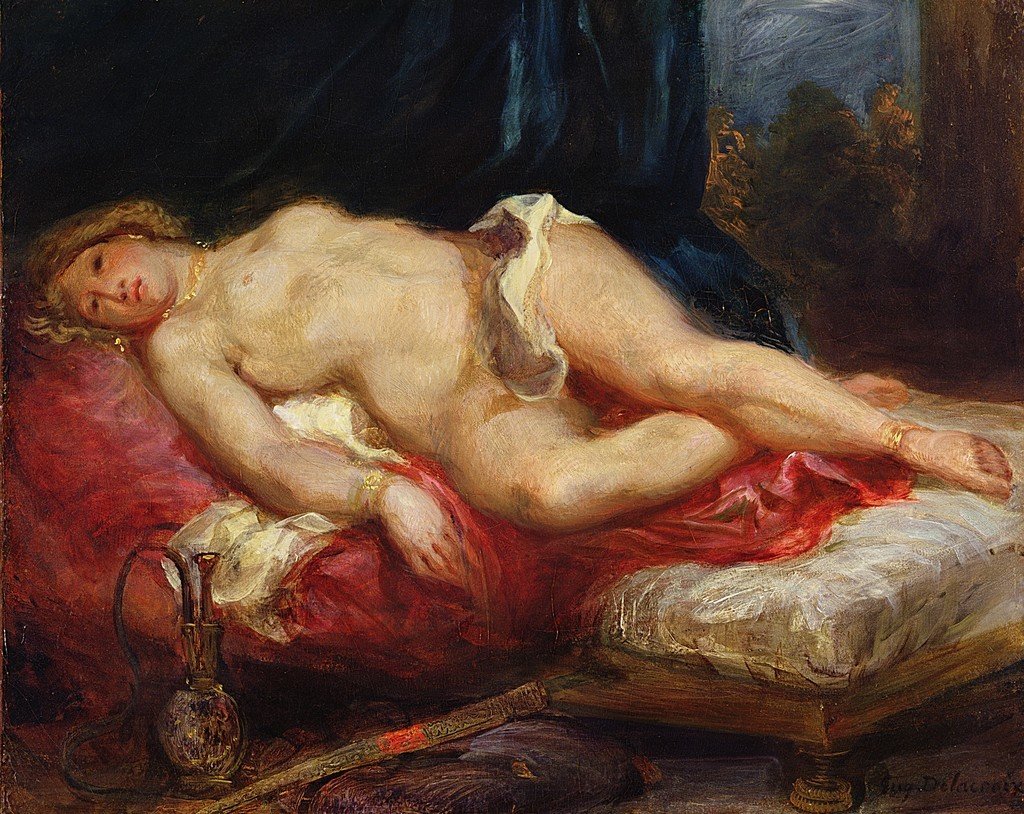
Odalisque
Eugène Delacroix
1845-1850 CE | Oil on canvas
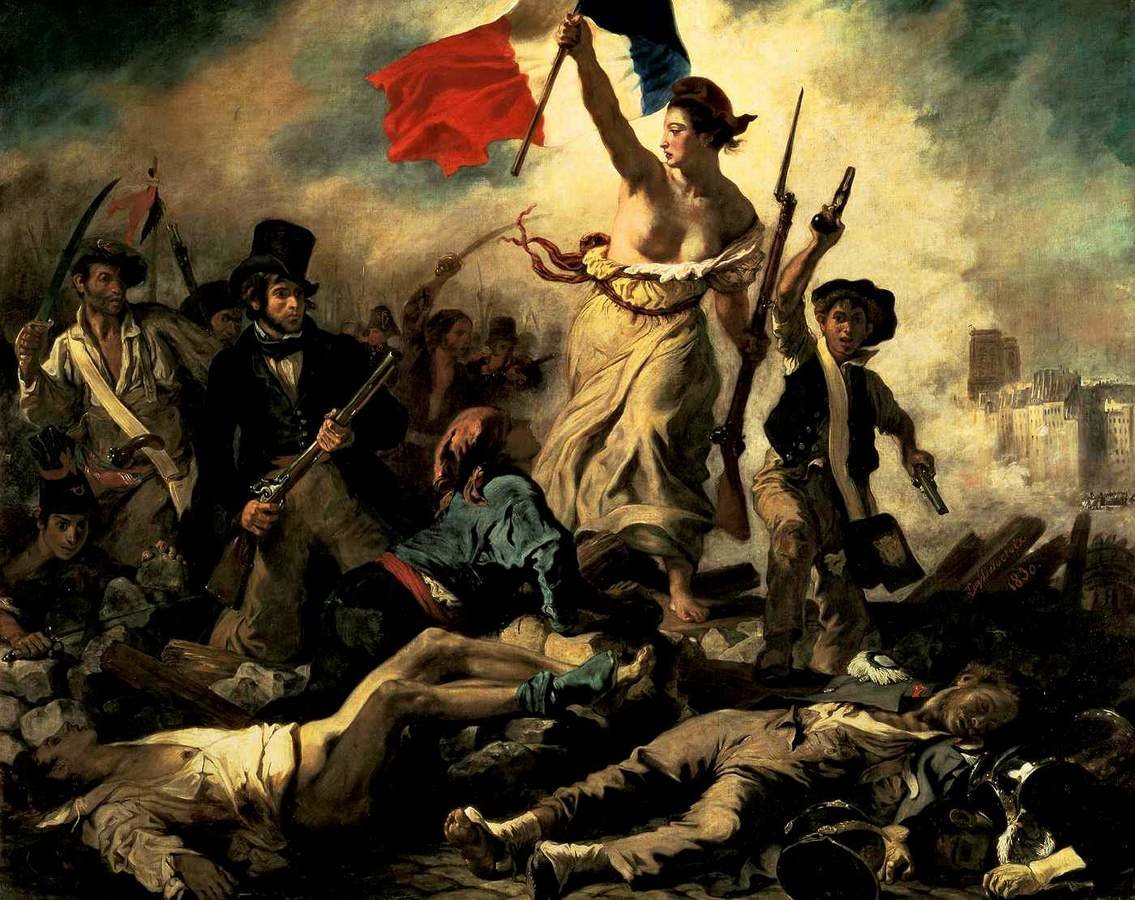
Liberty Leading the People
Eugène Delacroix
1830 CE | Oil on canvas
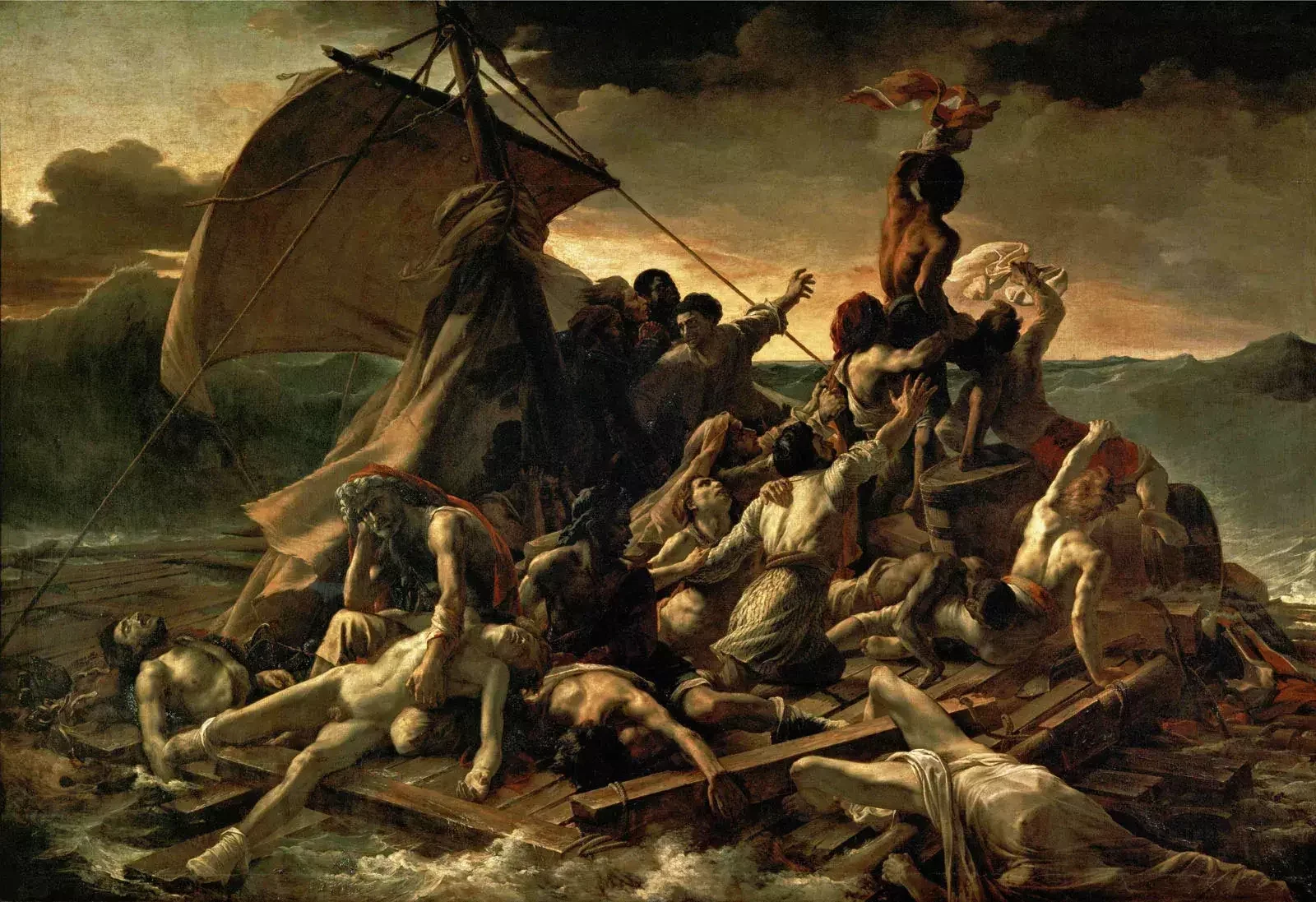
Raft of the Medusa
Théodore Géricault
1819 CE | Oil on canvas
Wanderer above a Sea of Mist
Caspar David Friedrich
1817-1818 CE
Oil on canvas
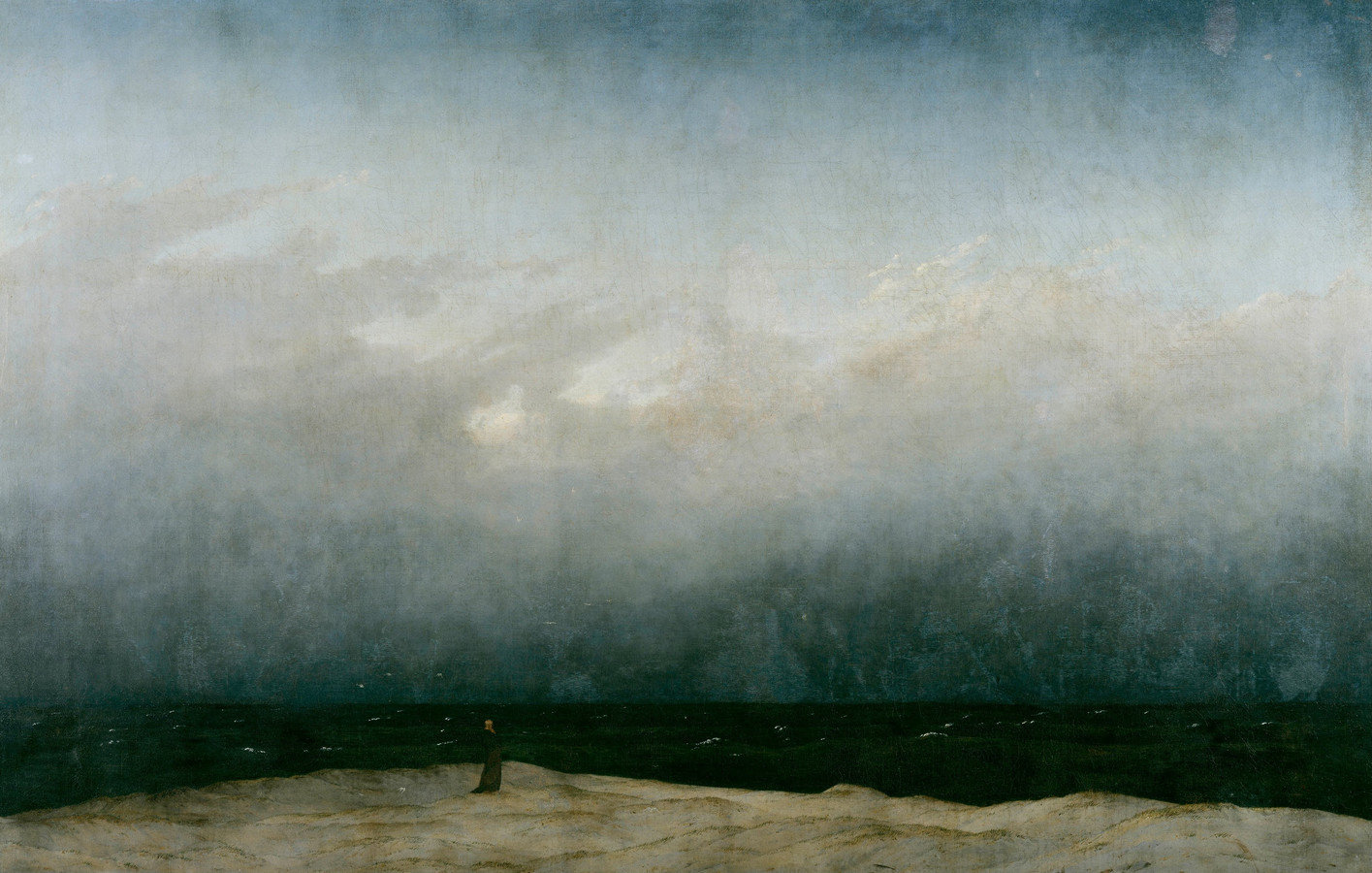
Monk by the Sea
Caspar David Friedrich
1809-1810 CE | Oil on canvas
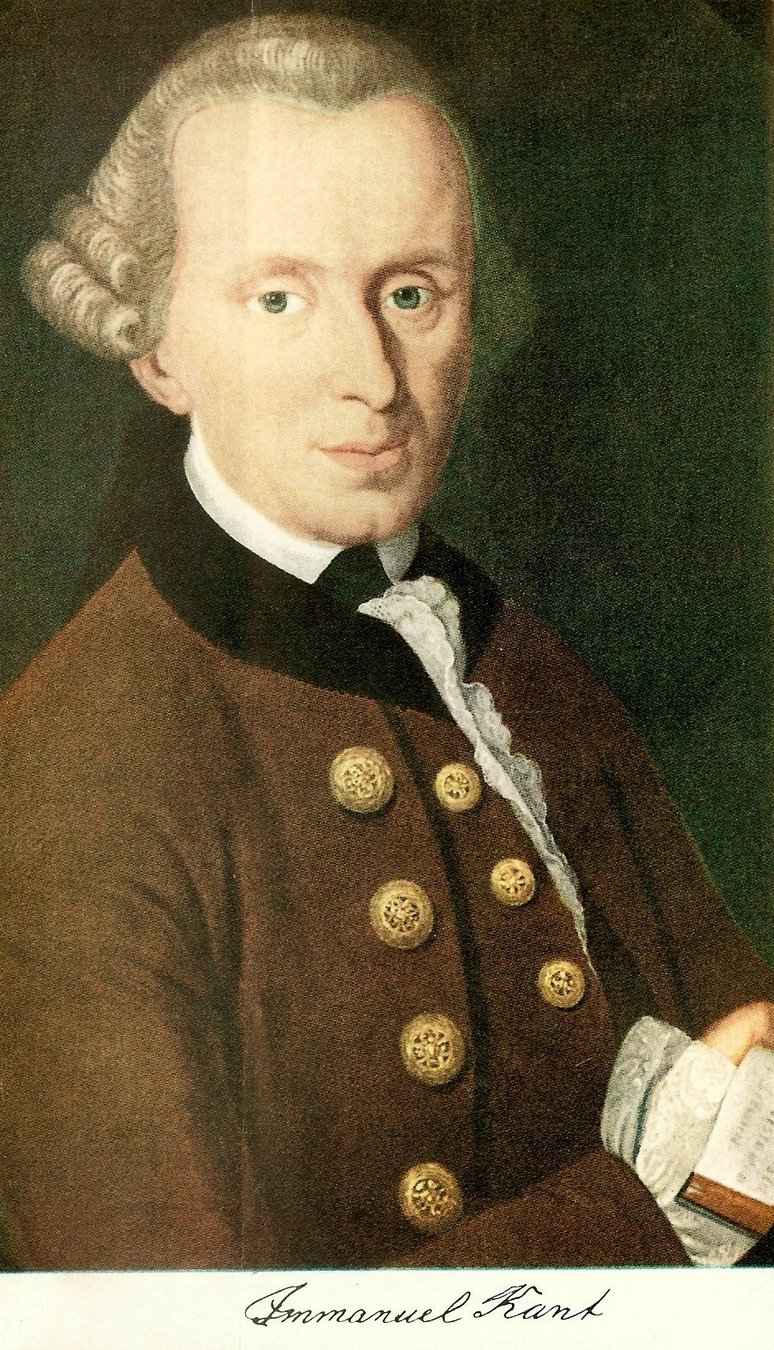
Whereas the beautiful is limited, the Sublime is limitless, so that the mind in the presence of the Sublime, attempting to imagine what it cannot, has pain in the failure but pleasure in contemplating the immensity of the attempt.
Immanuel Kant,
Critique of Pure Reason, 1781
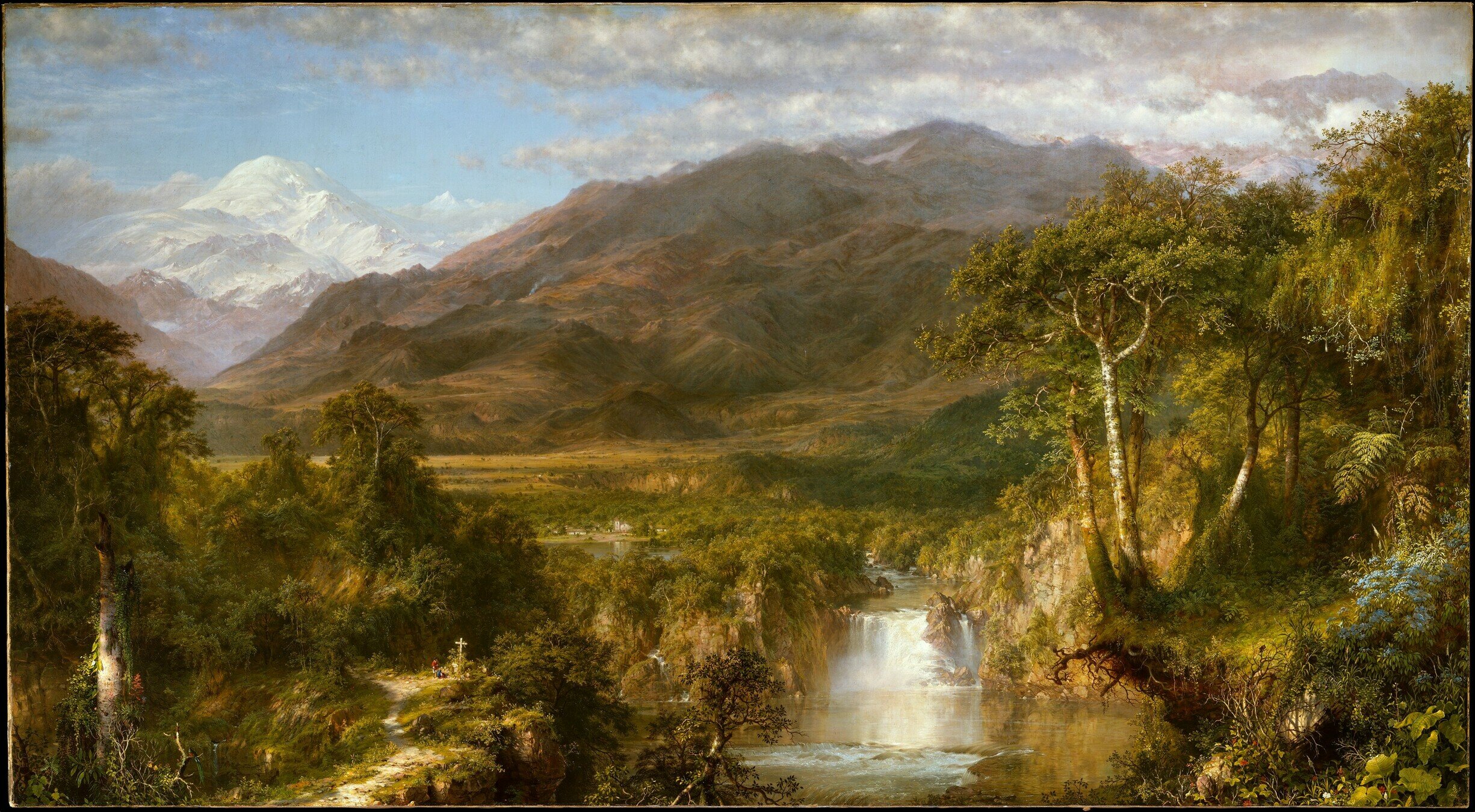
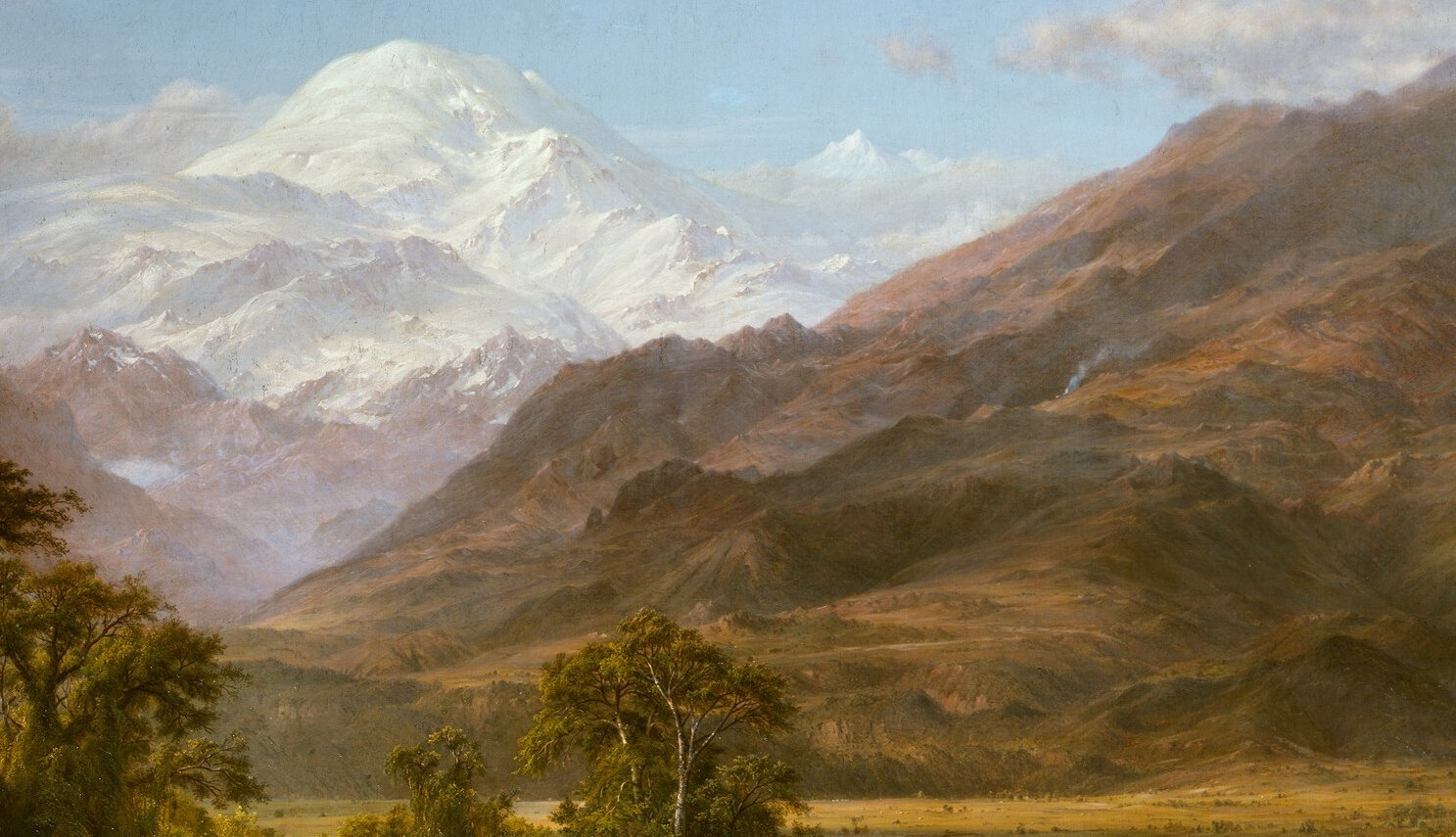
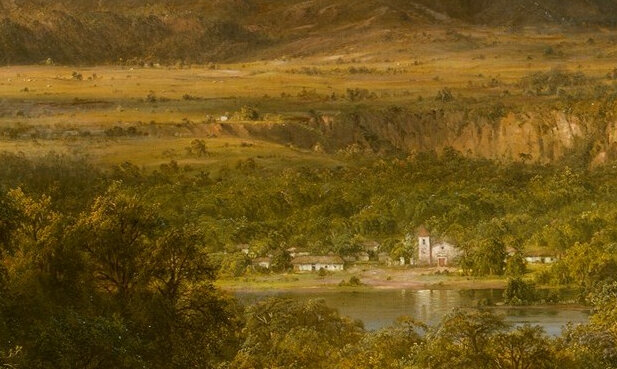
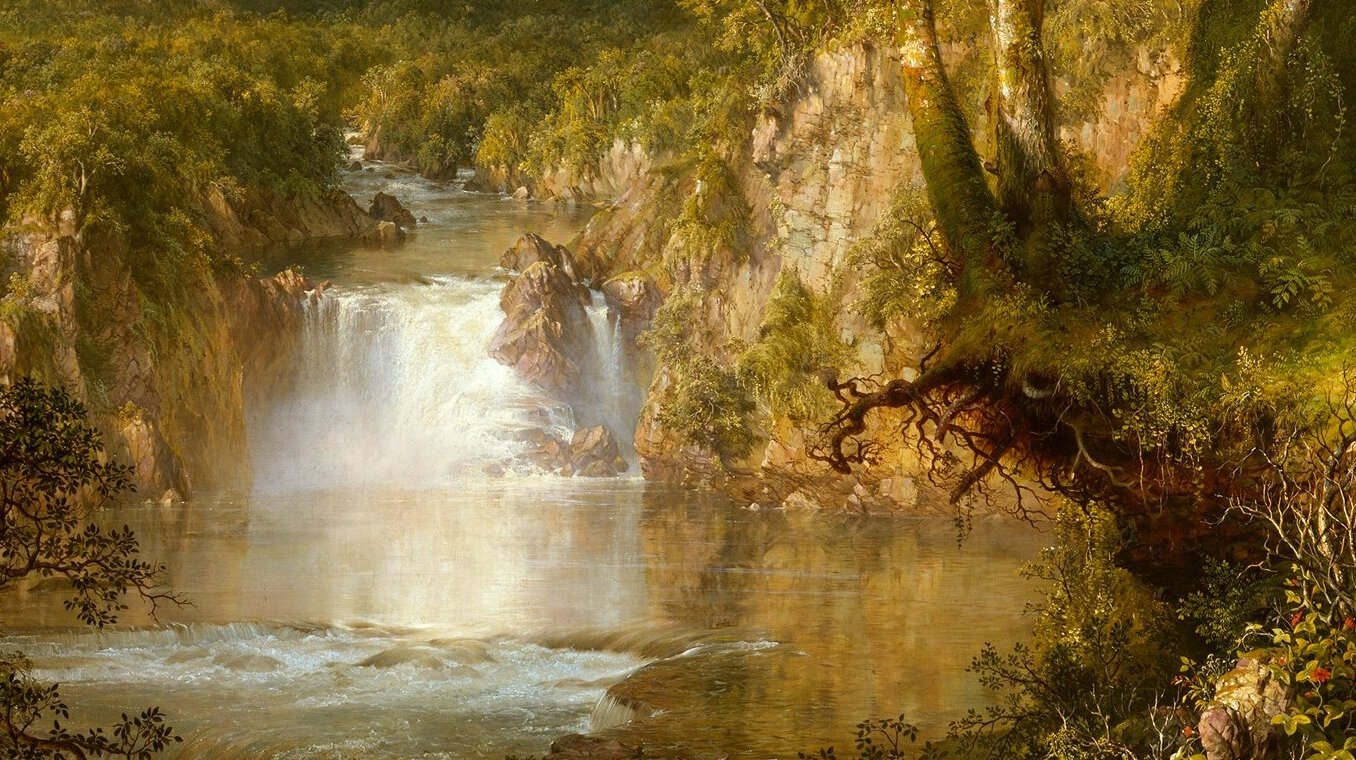
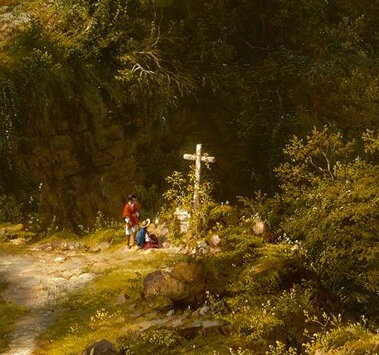
The Heart of the Andes
Frederic Edwin Church
1859 CE | Oil on canvas
The Barricade (Memory of Civil War)
Ernest Meissonier
1850 CE
Oil on canvas
Burial at Ornans
Gustave Courbet
1849 CE
Oil on canvas
Rue Transnonain, April 15, 1934
Honoré Daumier
1834 CE | Lithograph
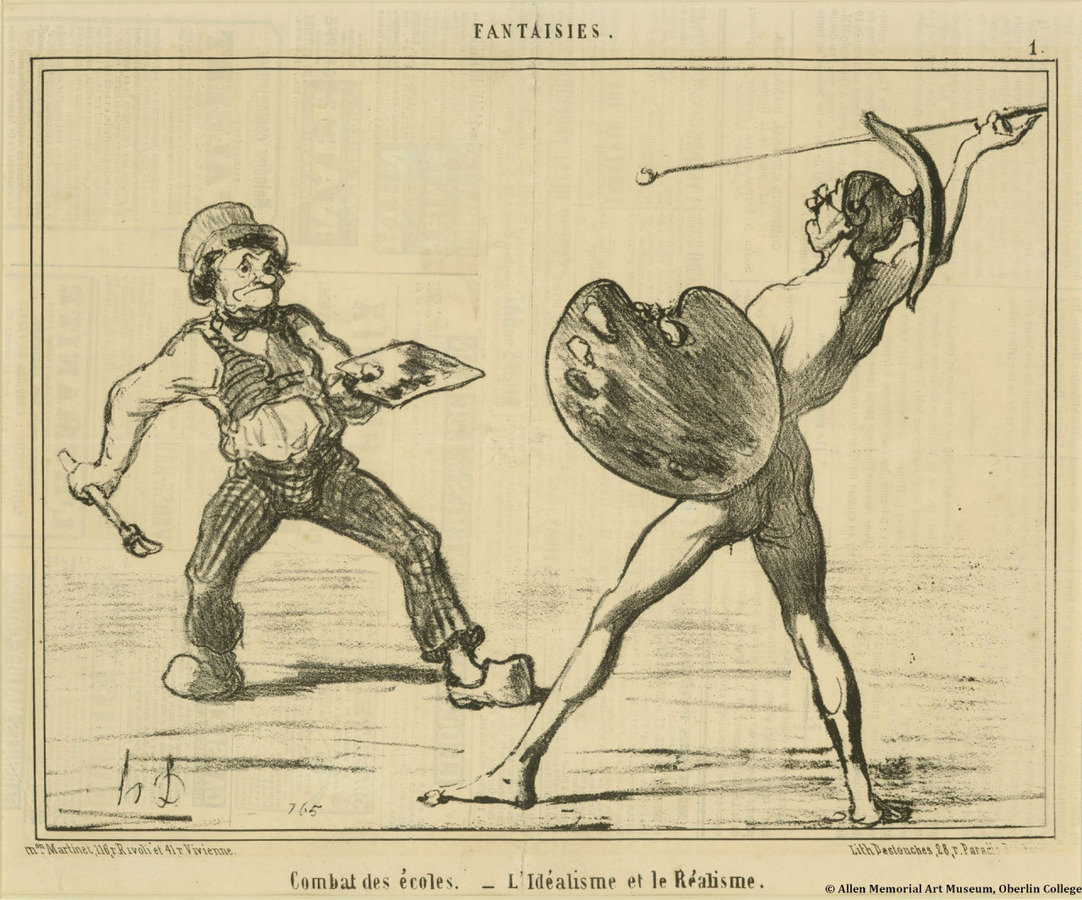
Fight between Schools
Honoré Daumier
1855 CE | Lithograph on newsprint
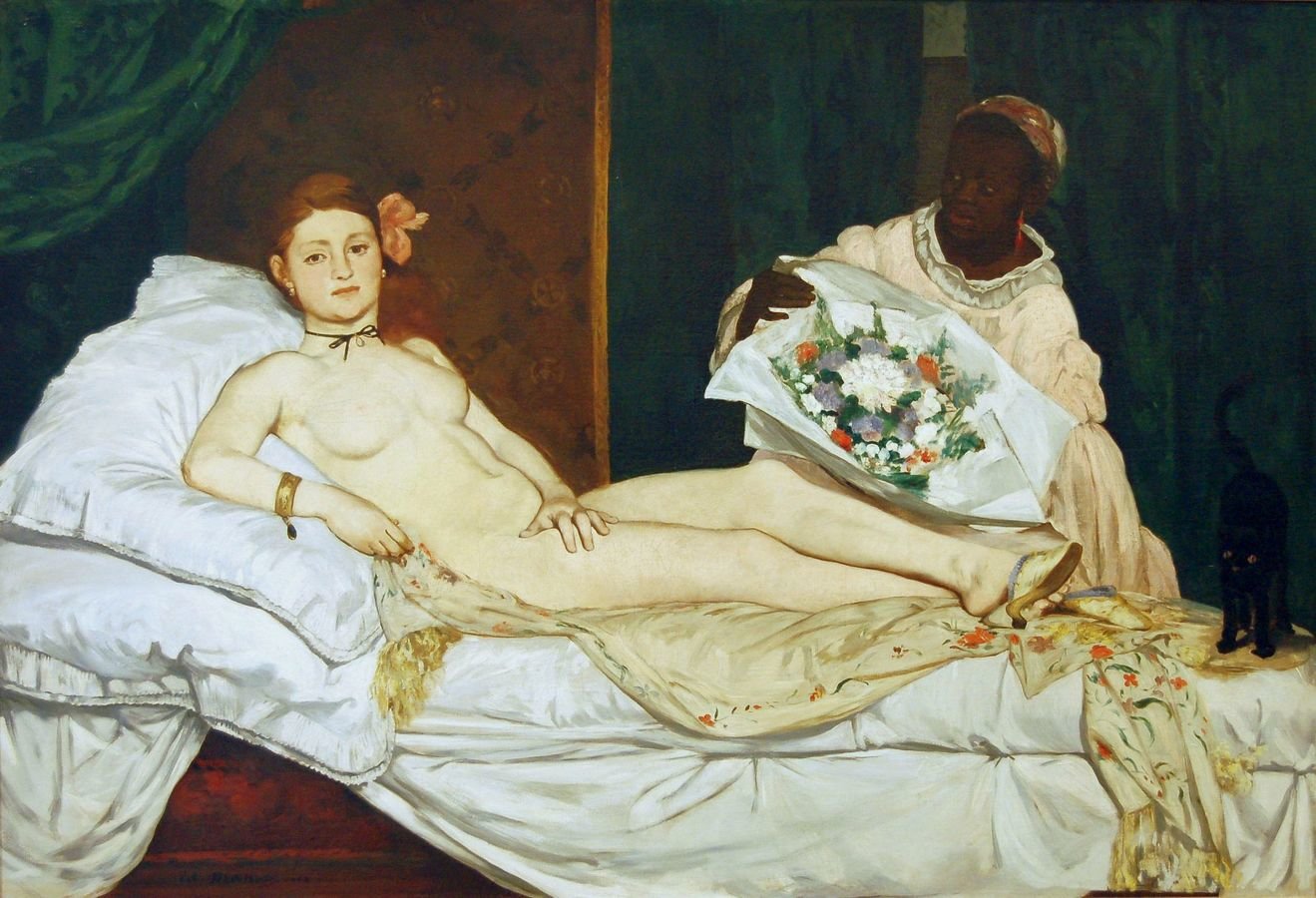
Olympia
Edouard Manet
1863 CE | Oil on canvas
Impressionism
& Ephemerality
The Goals of the
Post-Impressionists
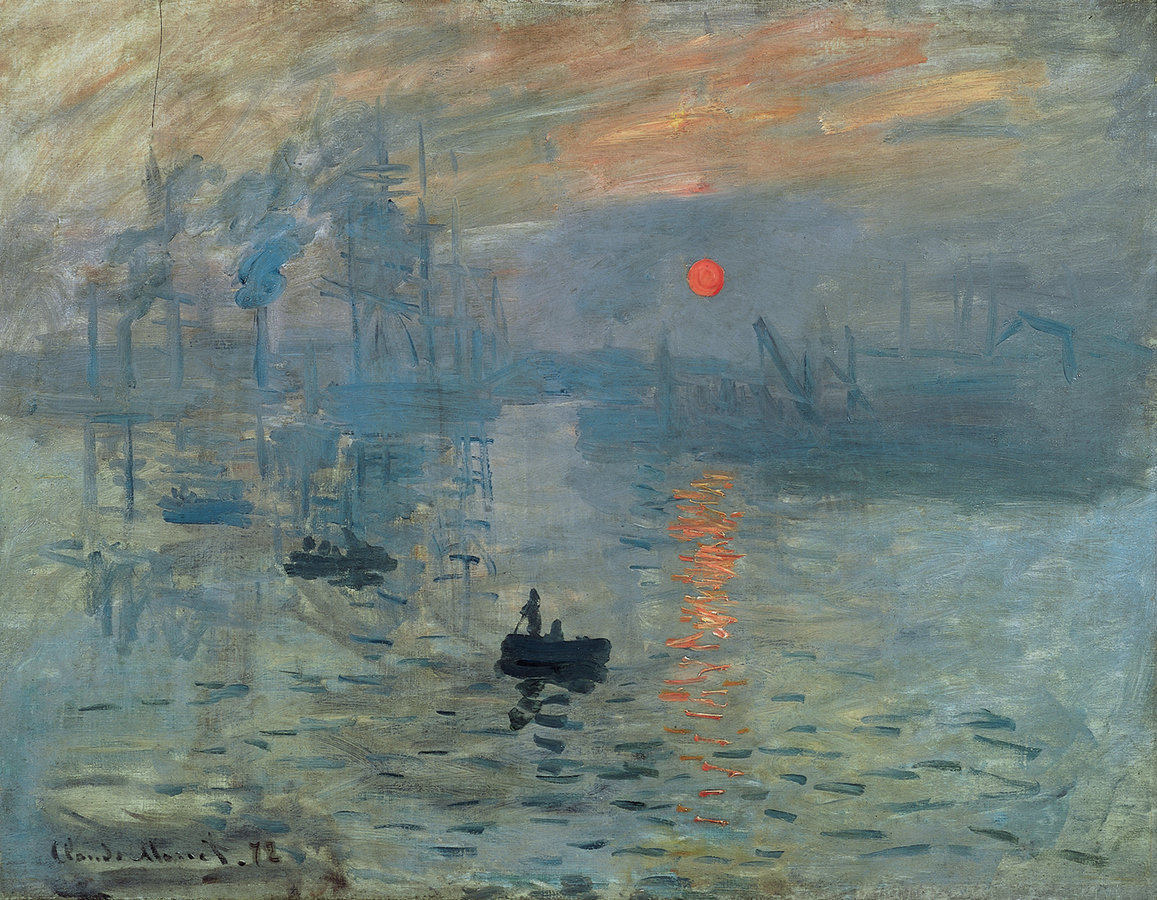
Impression-Sunrise
Claude Monet
1872 CE | Oil on canvas
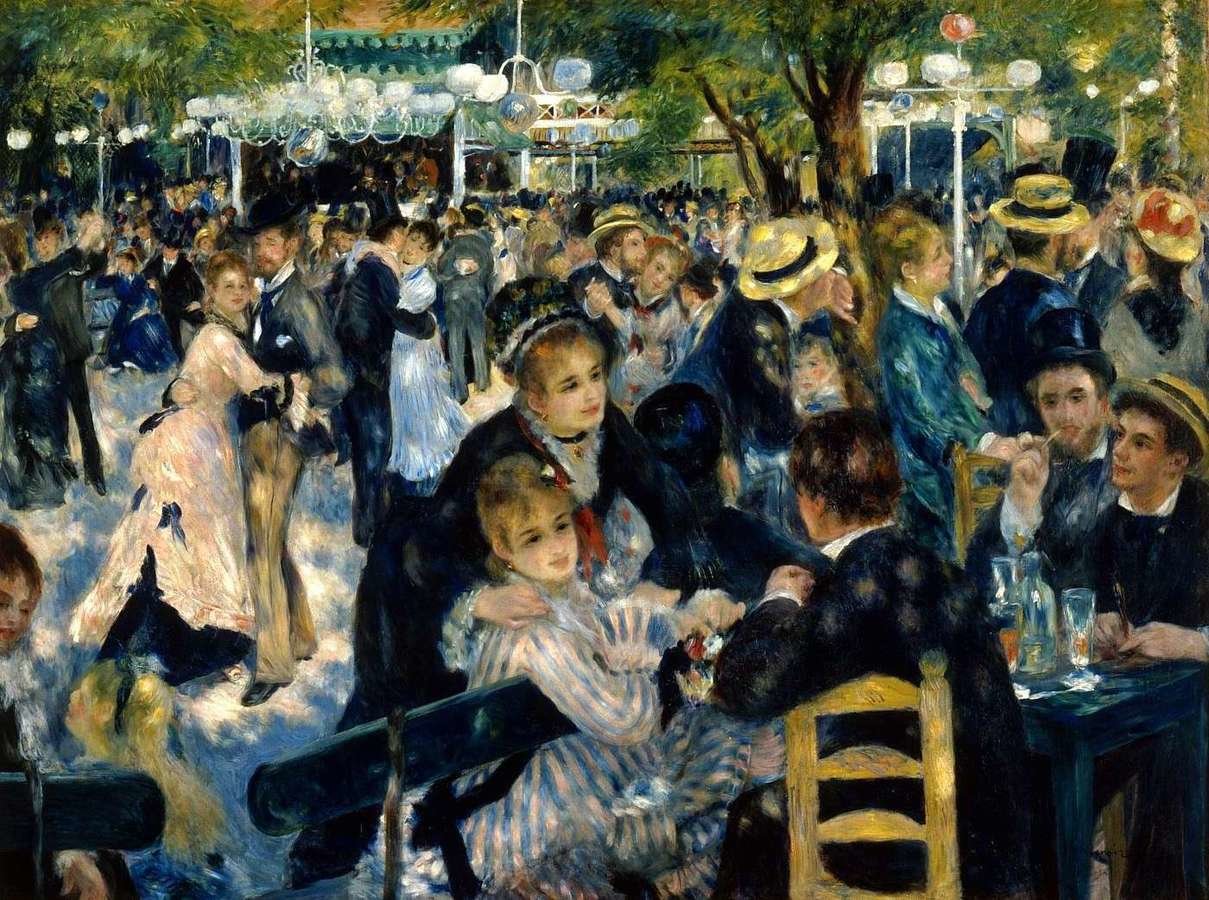
La Moulin de la Galette
Auguste Renoir
1876 CE | Oil on canvas
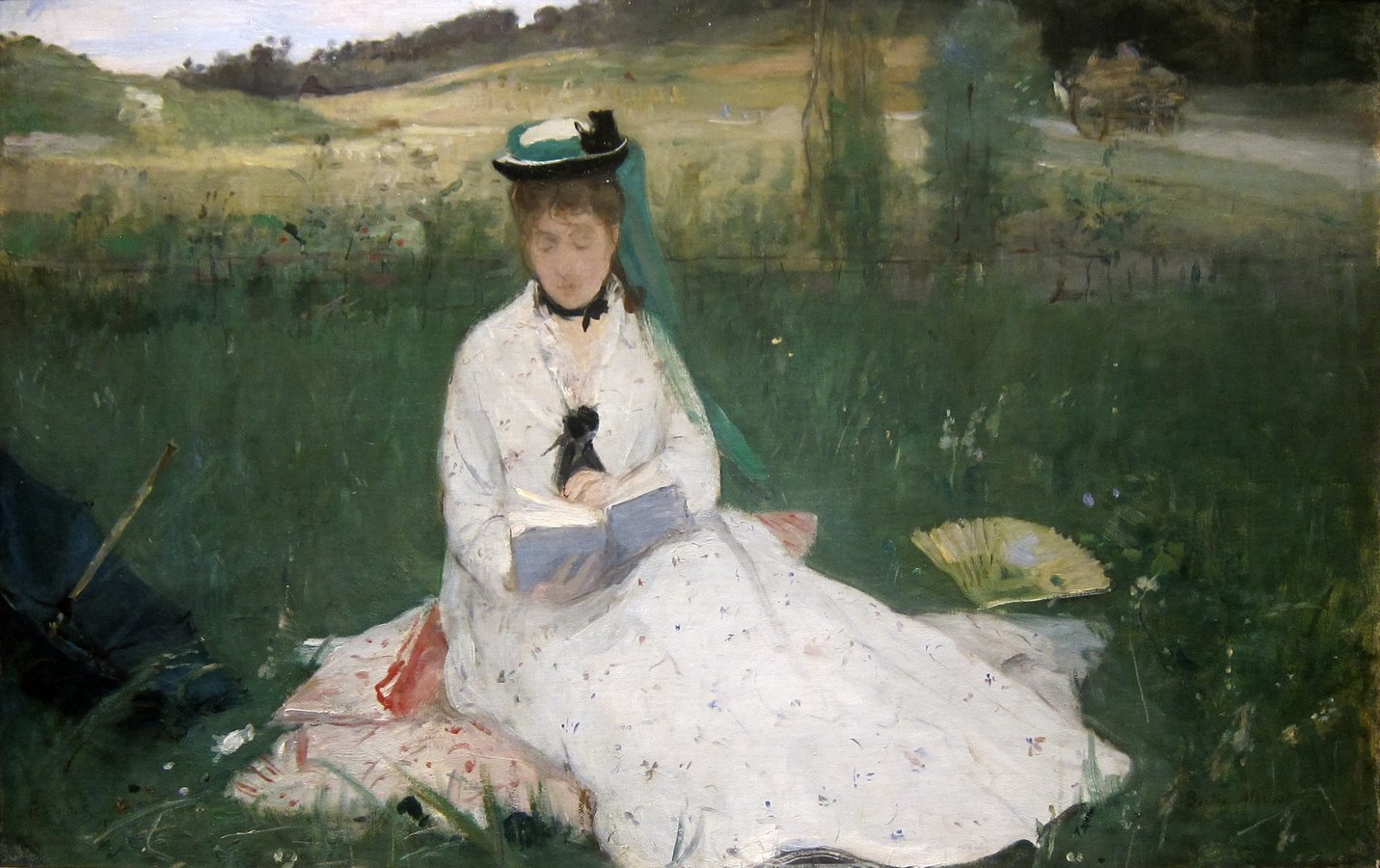
Reading
Berthe Morisot
1873 CE | Oil on canvas
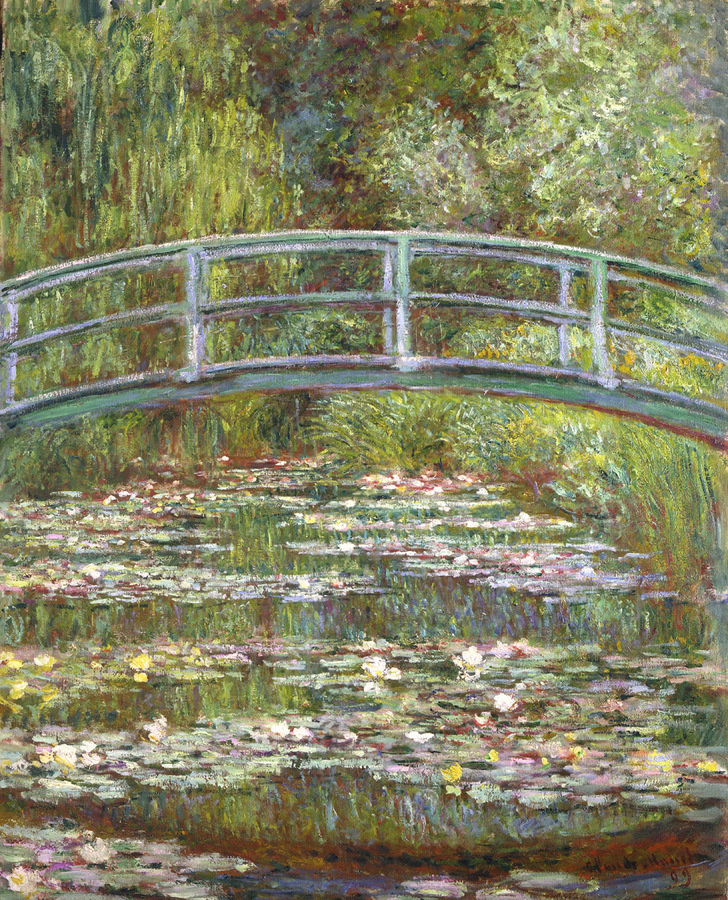
Bridge Over a Pool of Lilies
Claude Monet
1899 CE
Oil on canvas
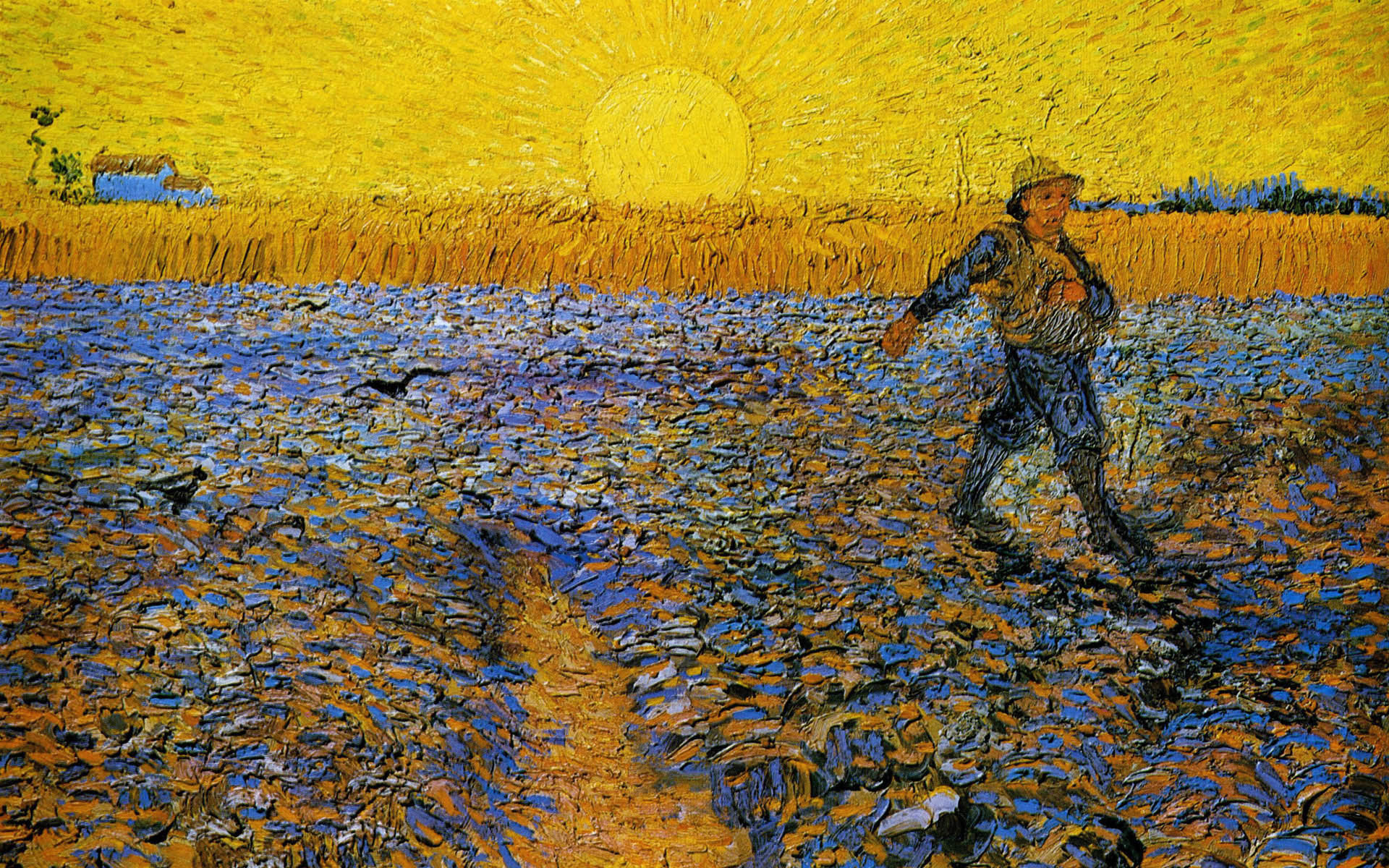
The Sower
Vincent Van Gogh
1888 CE | Oil on canvas
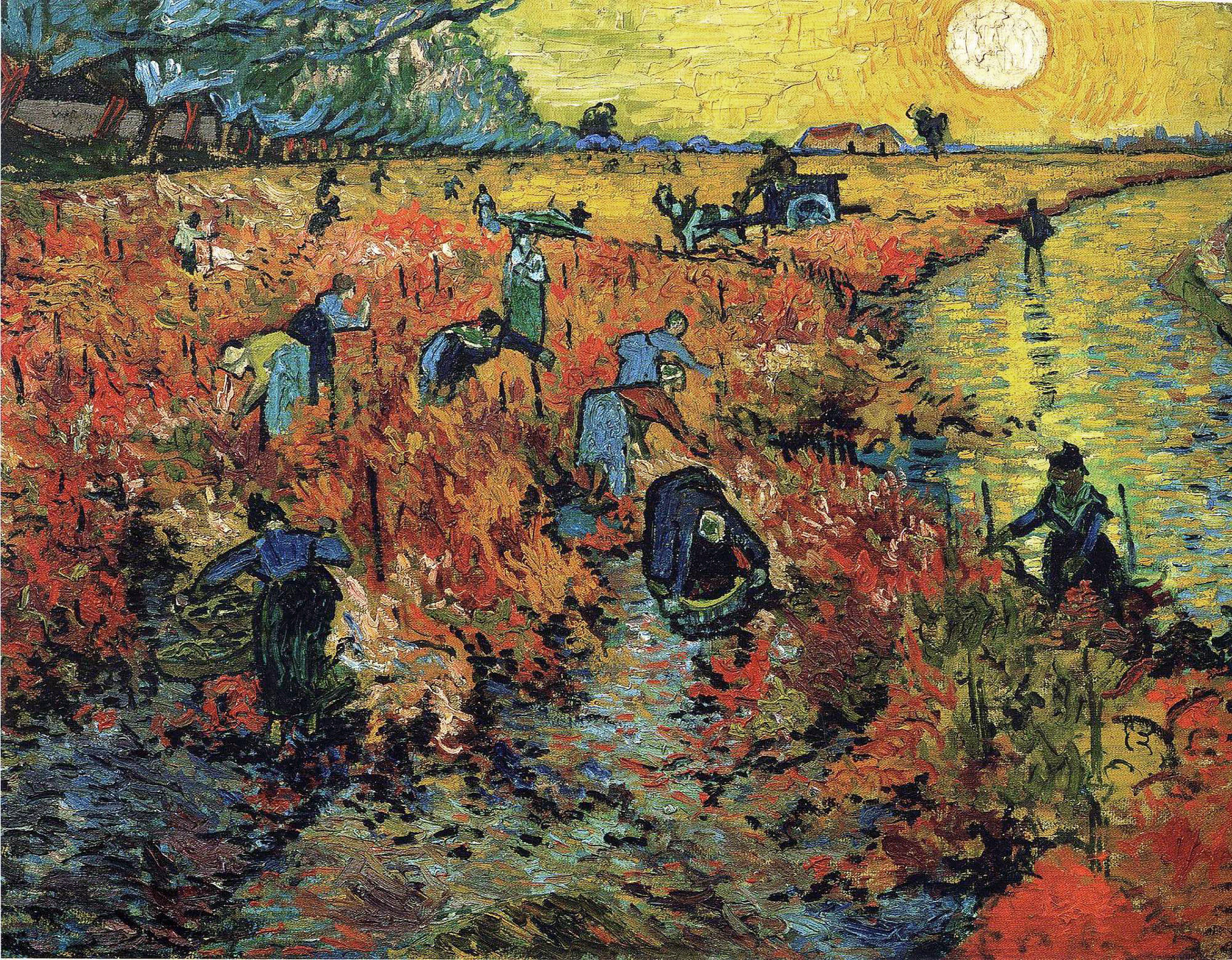
The Red Vineyard
Vincent Van Gogh
1888 CE | Oil on canvas
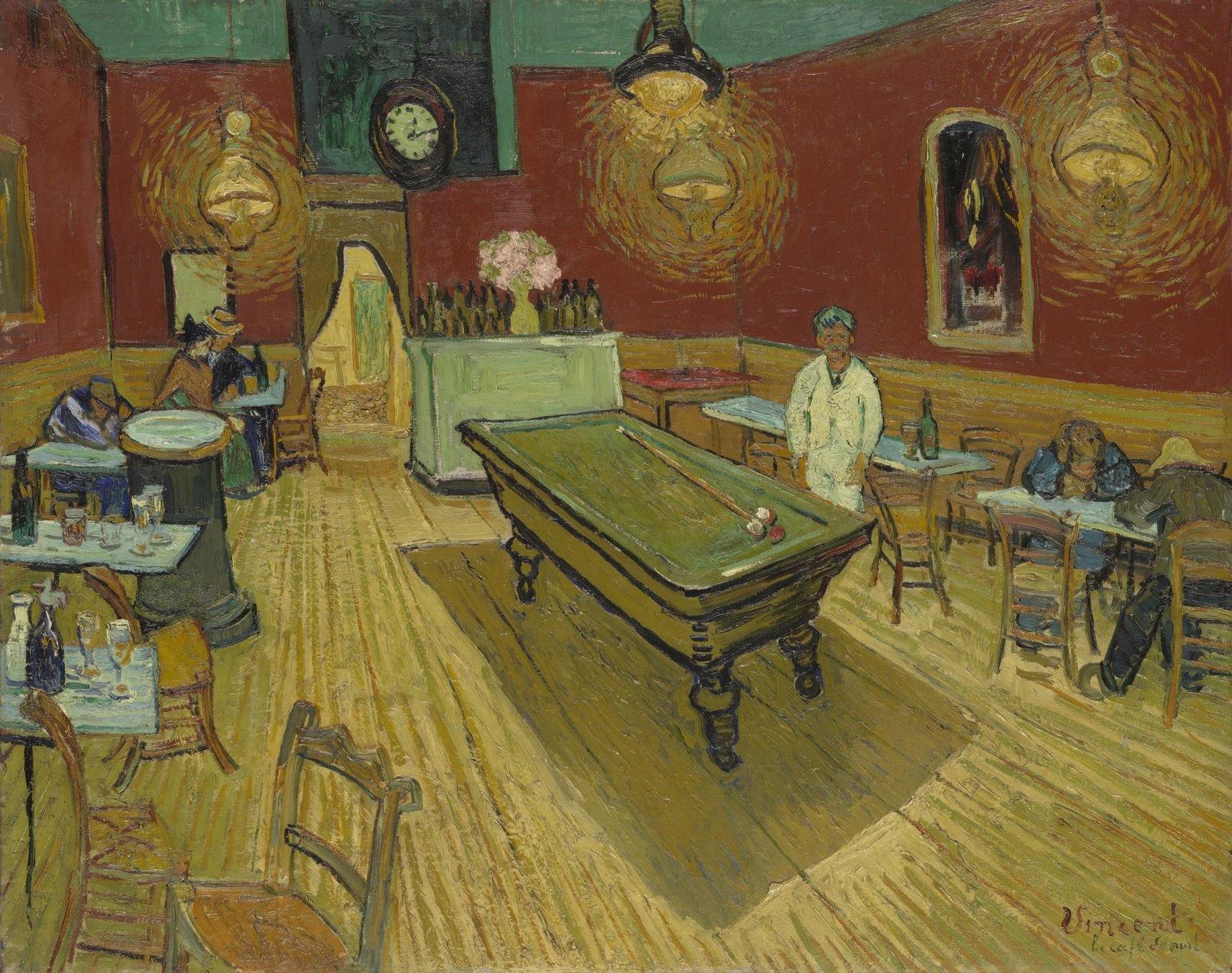
The Night Café
Vincent Van Gogh
1888 CE | Oil on canvas
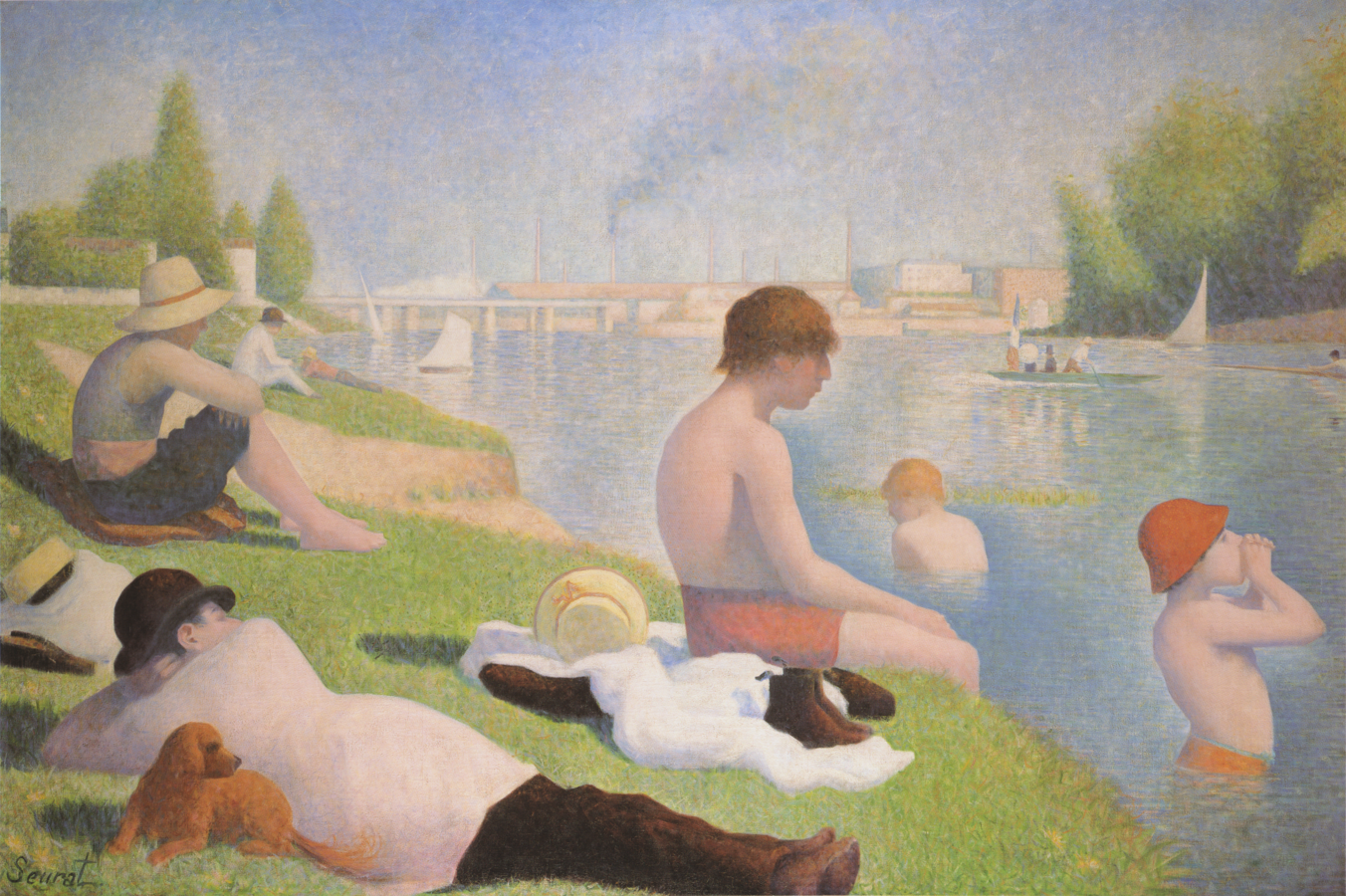
The Bathers
George Seurat
1883-1884 CE | Oil on canvas
Cornelia, Pointing to her Children as her Treasures
Angelica Kauffman
1785 CE
Neoclassical
The Bathers
Jean-Honore Fragonard
1761-1765 CE
Rococo
Mont Sainte-Victoire
Paul Cézanne
1902-1904 CE | Oil on canvas
When you go out to paint, try to
forget what objects you have before you,
a tree, a house, a field, or whatever.
Merely think, here is a little square of blue, here an oblong of pink, here a streak of yellow, and paint it just as it looks to you, the exact color and shape, until it lives your own naïve impression of the scene before you.
-Claude Monet, c. 1889 -1909
via Lilia Cabot Perry "Reminiscences of Claude Monet"
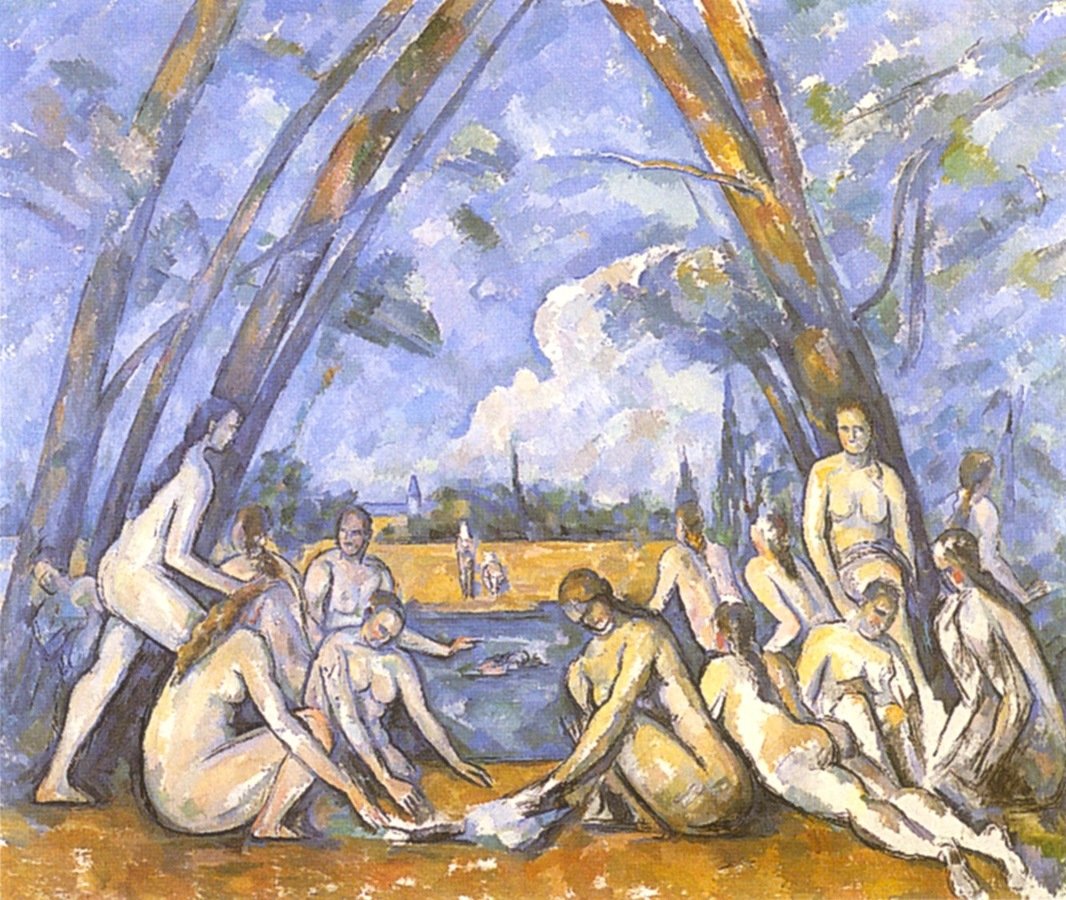
The Large Bathers
Paul Cézanne
1906 CE | Oil on canvas
Ways of Seeing: Cubism to Surrealism
Futurism vs. Dada
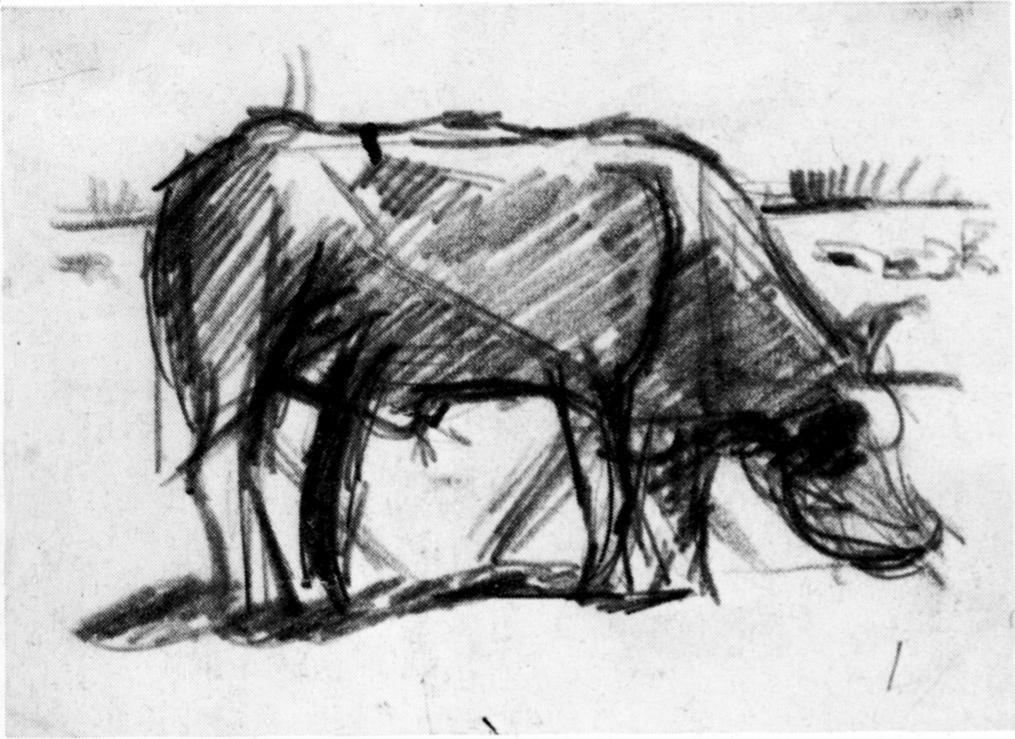
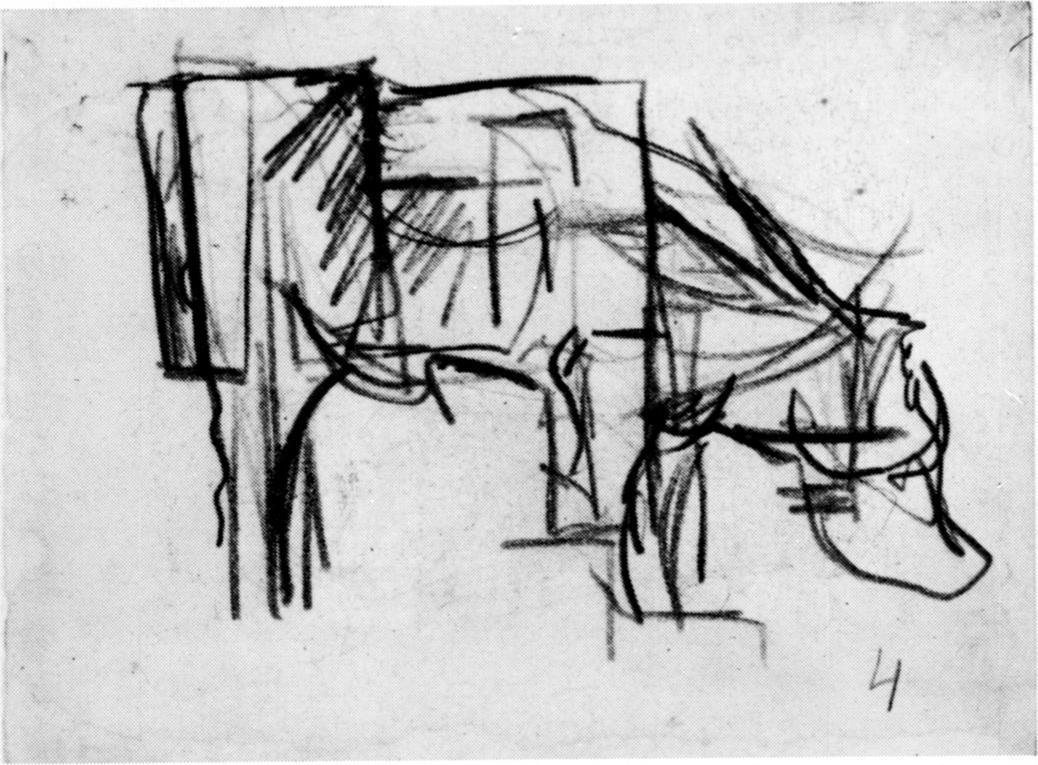
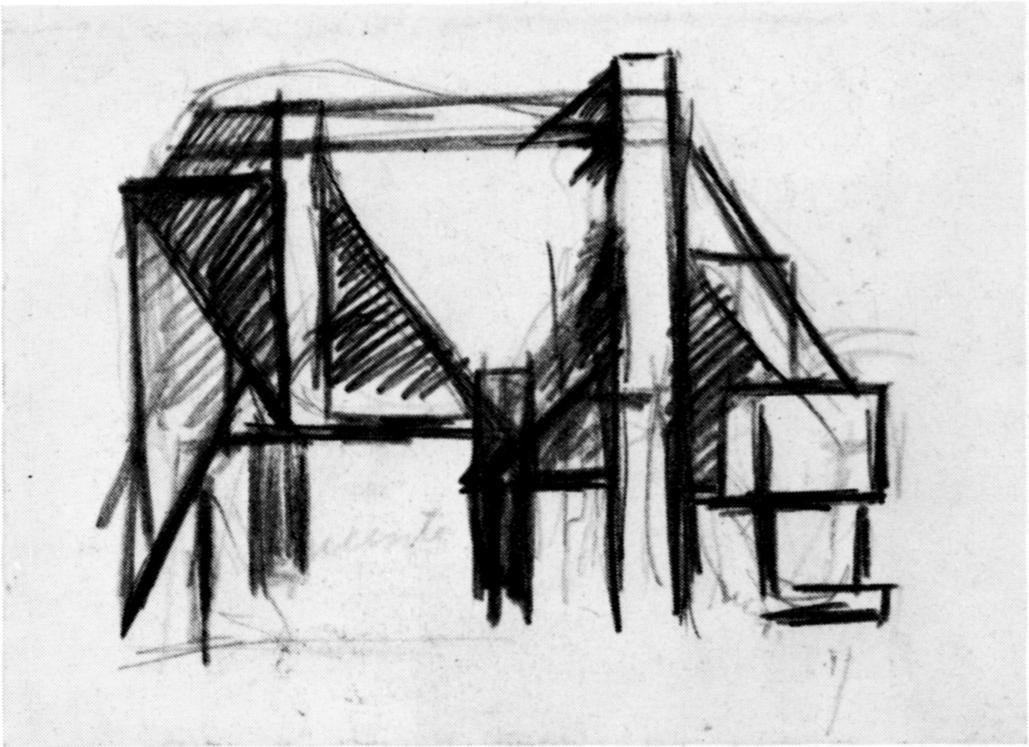
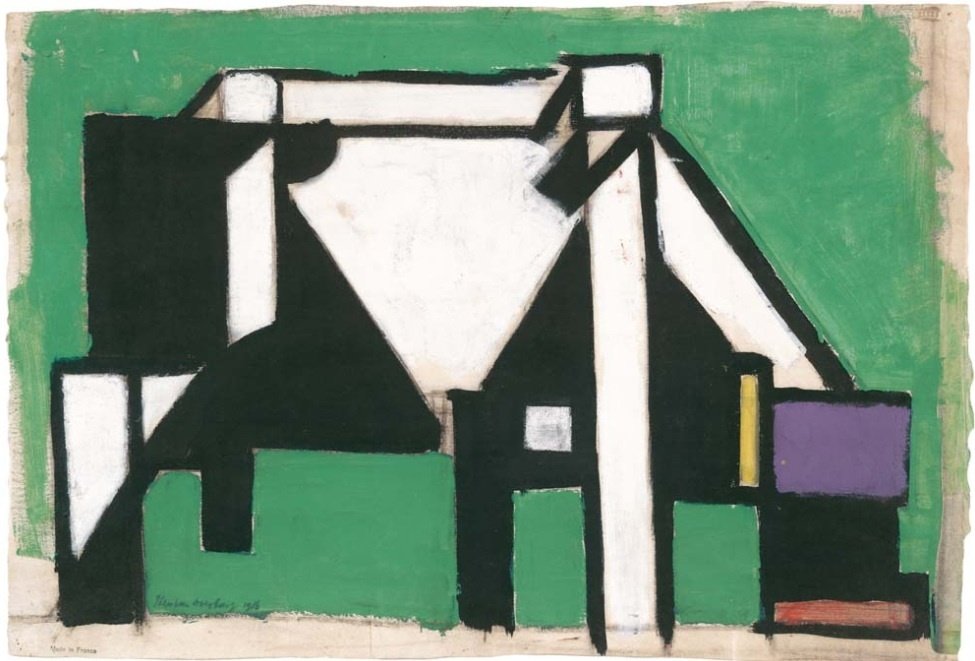
Composition VIII (The Cow)
Teo van Doesburg | 1917 CE | Oil on canvas
-Theo van Doesburg
Principles of Neo-Plastic Art, 1919 CE
The visual artist can leave the repetition of stories, fairy-tales, etc., to poets and writers.
The only way in which visual art can be developed and deployed is by revaluing and purifying the formative means.
Painterly means are:
colors, forms, lines & planes.
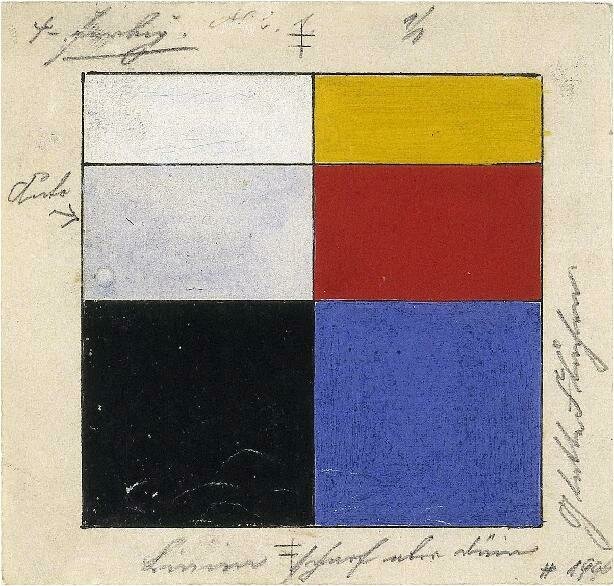
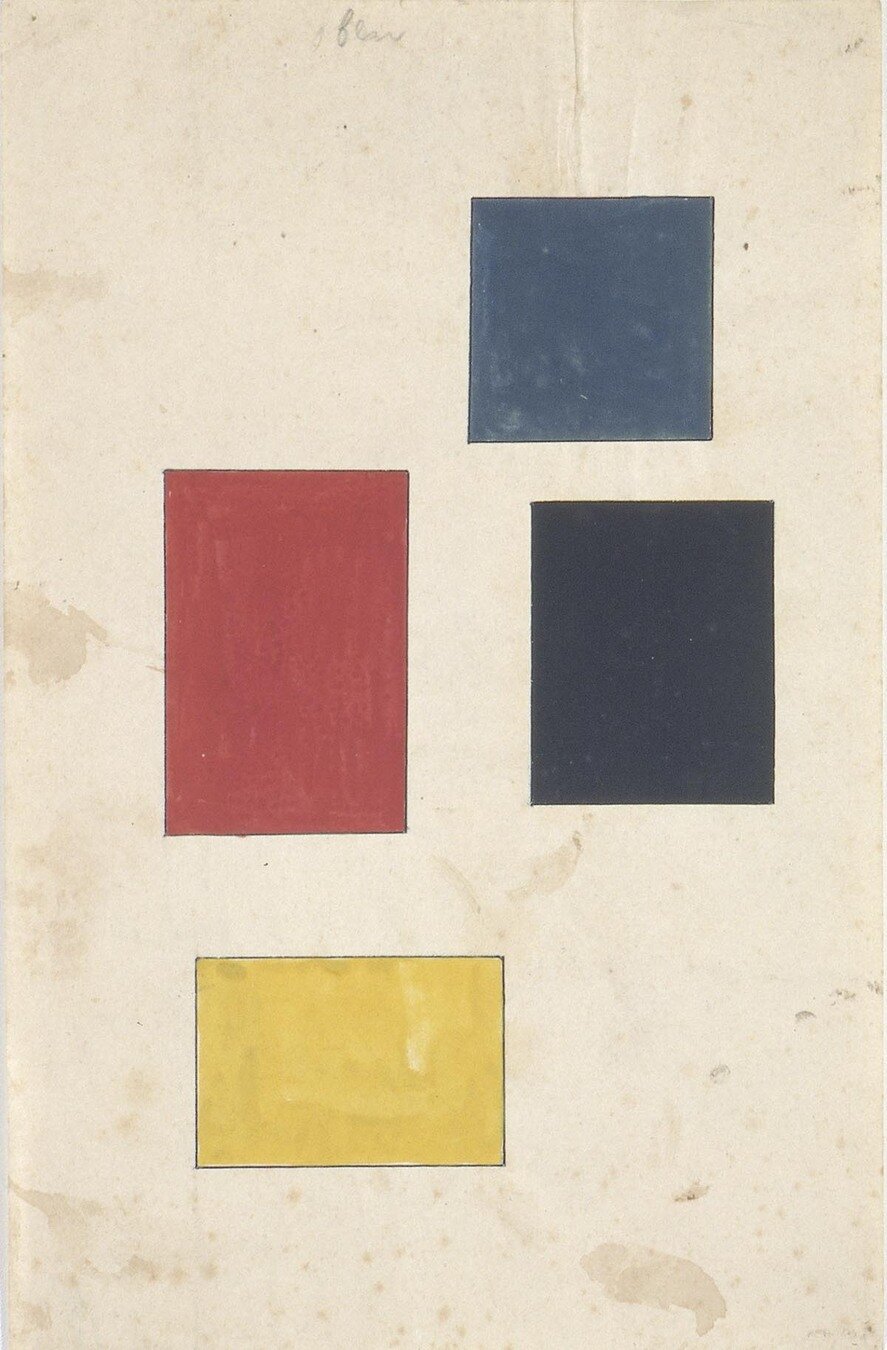
The Elementary Means of Expression in Painting
Theo van Doesburg | c. 1915
Fundamental Elements of Painting
Theo van Doesburg
1922
Evening; Red Tree
Piet Mondrian | 1908 CE | Oil on canvas
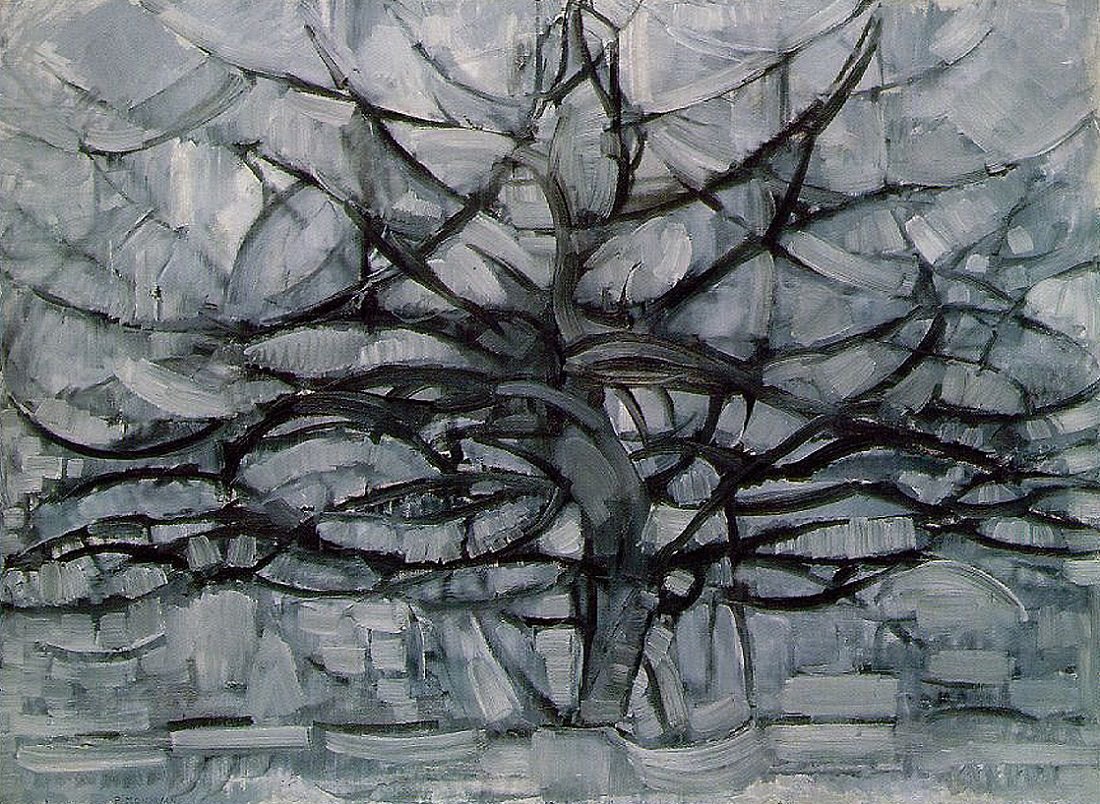
Grey Tree
Piet Mondrian | 1911 CE | Oil on canvas
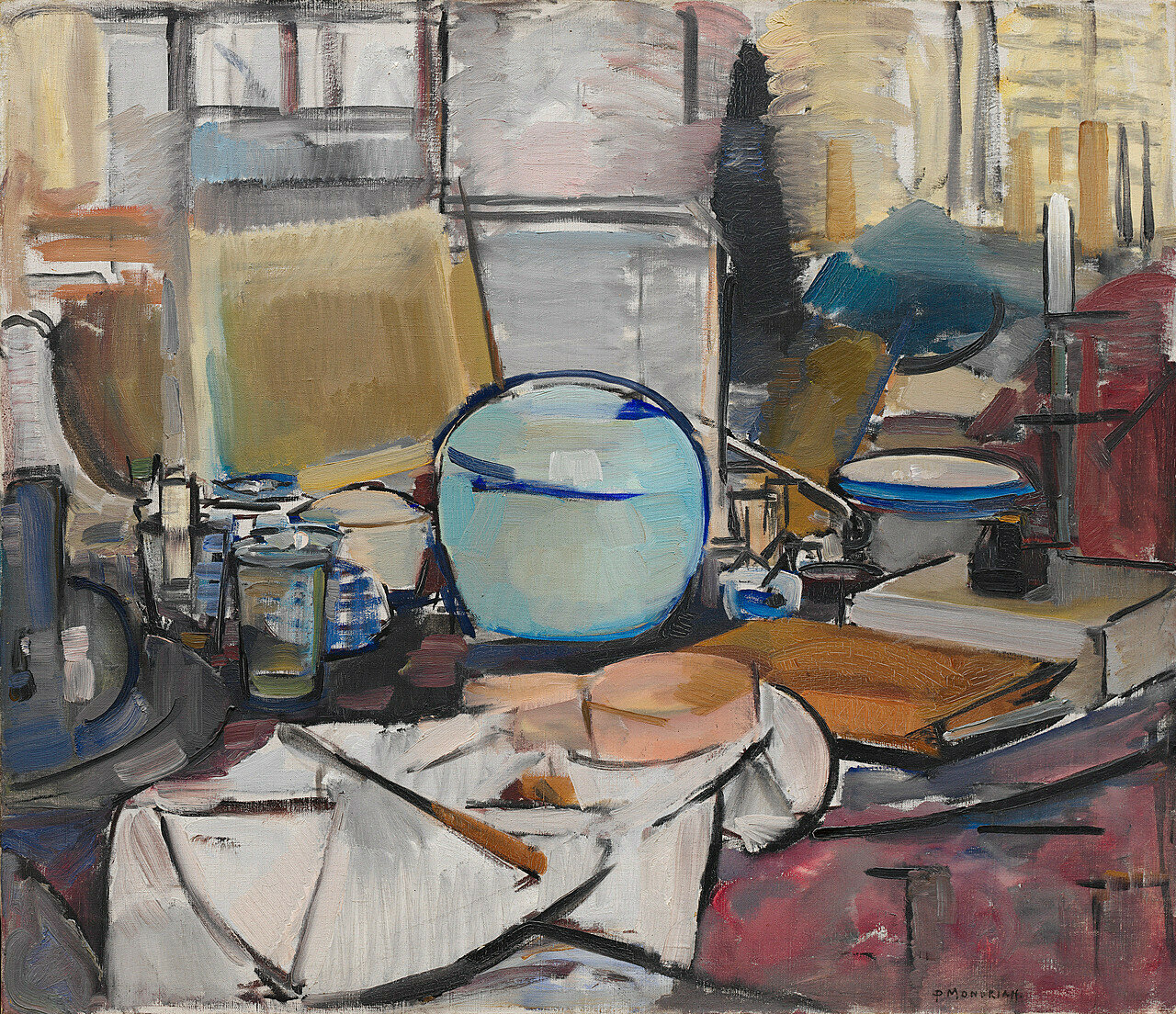
Still Life with Ginger Pot I
Piet Mondrian | 1911-12 CE | Oil on canvas
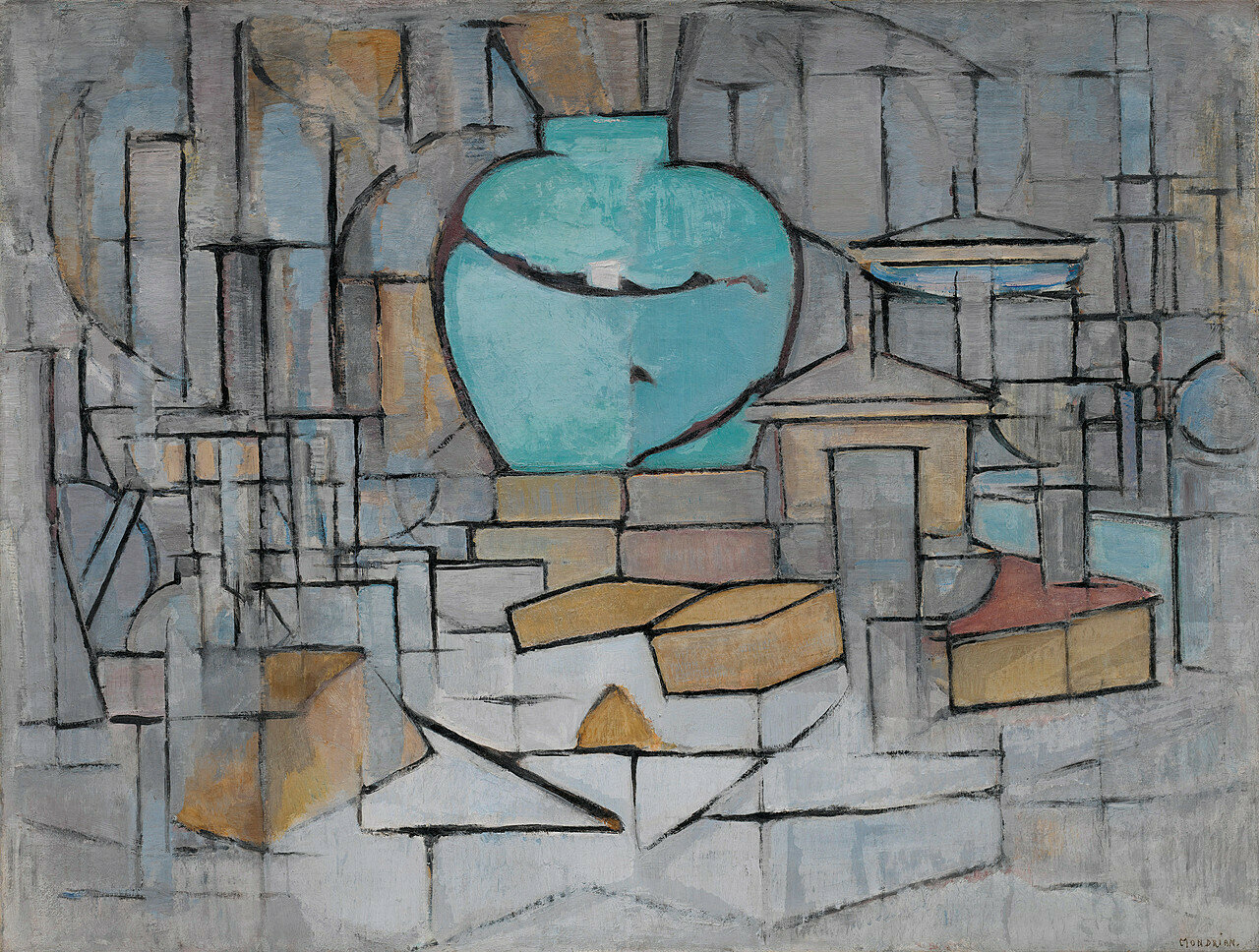
Still Life with Ginger Pot II
Piet Mondrian | 1911-12 CE | Oil on canvas
Still Life with Ginger Pot II
Still Life with Ginger Pot I
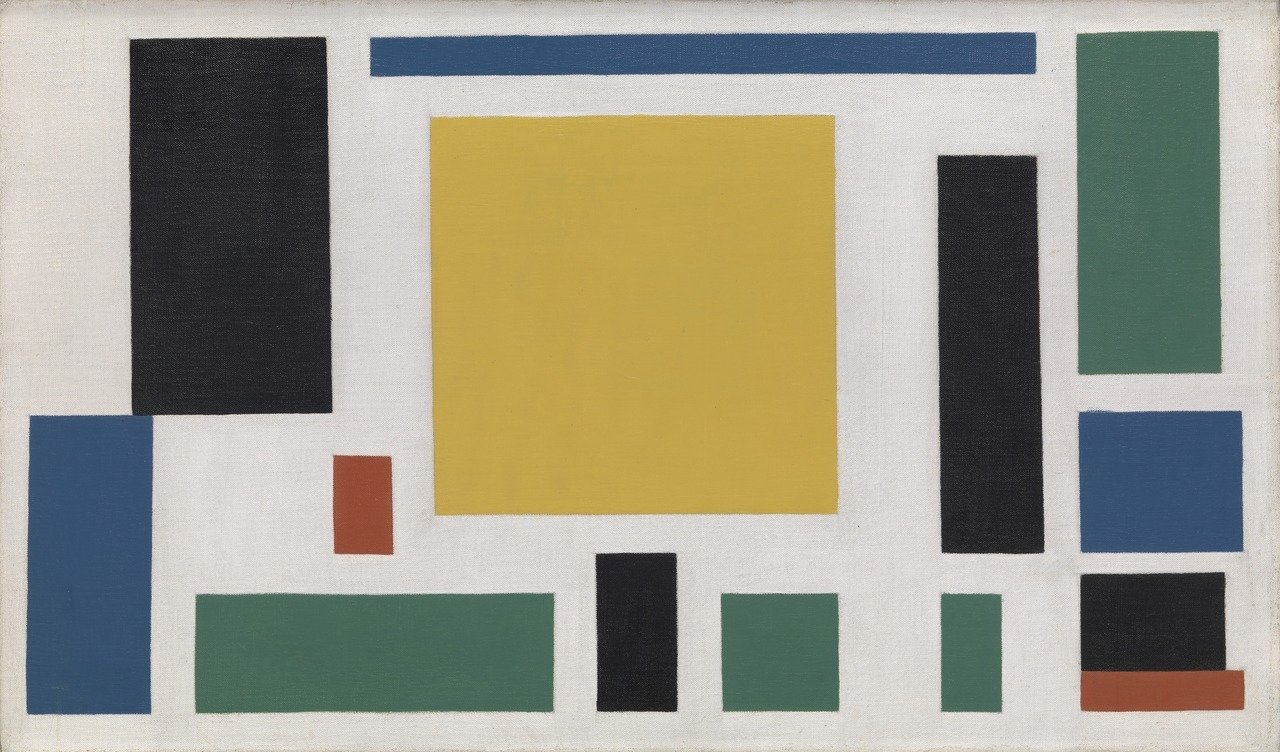
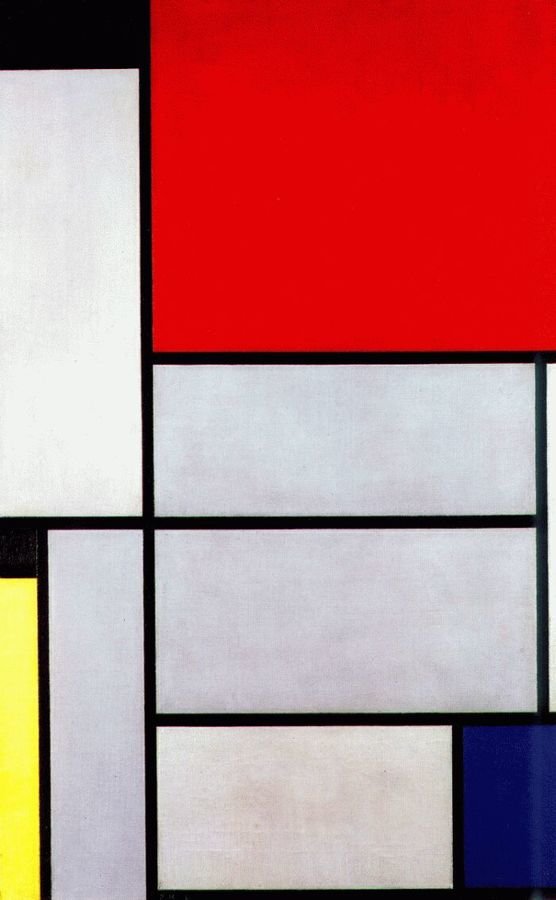
Tableau I
Piet Mondrian
1921 CE
Oil on canvas
Composition with Red, Blue, and Yellow
Piet Mondrian | 1930 CE | Oil on canvas
van Doesburg
Mondrian
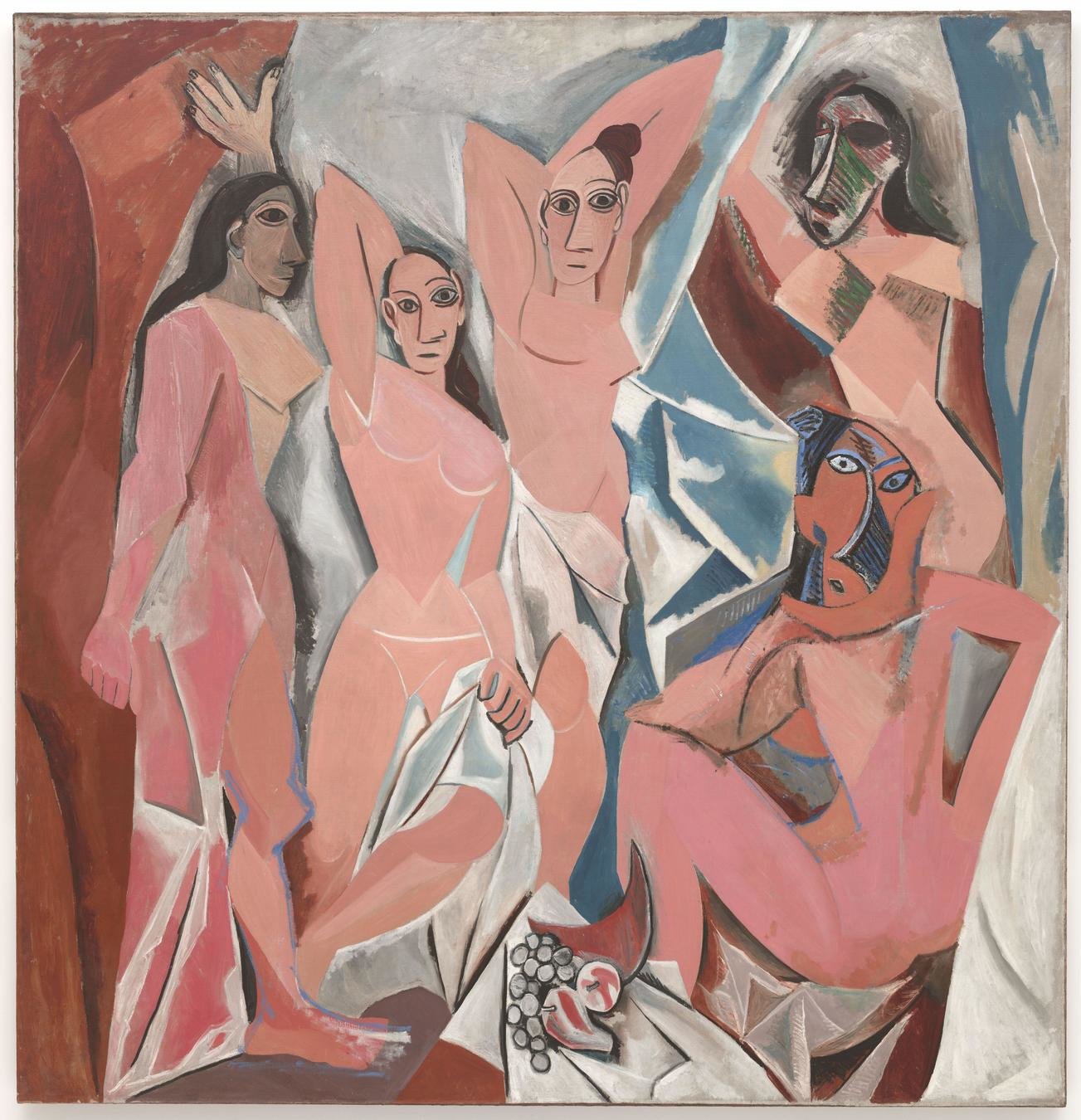
Les Demoiselles d’Avignon
Pablo Picasso
1907 CE
Oil on canvas
Gertrude Stein
Pablo Picasso
1906–1907 CE
Oil on canvas
The Portuguese
Georges Braque
1911 CE
Oil on canvas
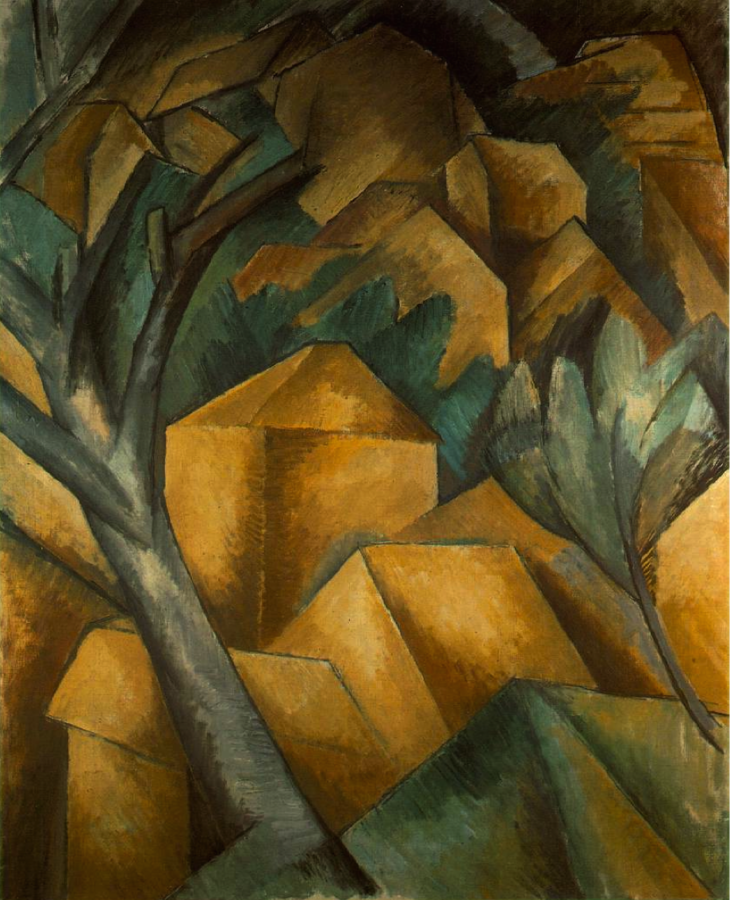
Houses at l'Estaque
Georges Braque
1908 CE
Oil on canvas
In the year 1906, Braque, Derain, Matisse and many others were still striving for expression through color, using only pleasant arabesques, and completely dissolving the form of the object.
This chiaroscuro can provide only an illusion of the form of objects.
In the year 1906, Braque, Derain, Matisse and many others were still striving for expression through color, using only pleasant arabesques, and completely dissolving the form of the object.
Cezanne's great example was still not understood. Painting threatened to debase itself to the level of ornamentation; it sought to be 'decorative,' to 'adorn' the wall.
Cezanne's great example was still not understood. Painting threatened to debase itself to the level of ornamentation; it sought to be 'decorative,' to 'adorn' the wall.
In the actual three dimensional world the object is there to be touched even after light is eliminated.
Thus the painters of the Renaissance, using the closed form method, endeavored to give the illusion of form by painting light as color on the surface of objects. It was never more than 'illusion.'
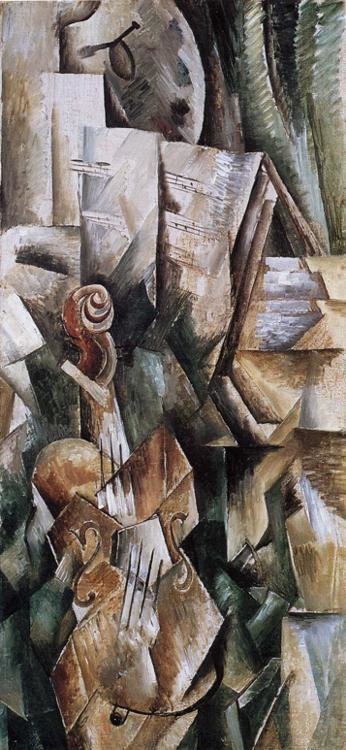
Violin & Palette
Georges Braque
1908 CE
Oil on Canvas
Violin & Palette
Georges Braque
1908 CE
Oil on Canvas
The Portuguese
Georges Braque
1911 CE
Oil on canvas
Still Life with Chair-Caning
Pablo Picasso | 1912 CE | Oil and oilcloth on canvas
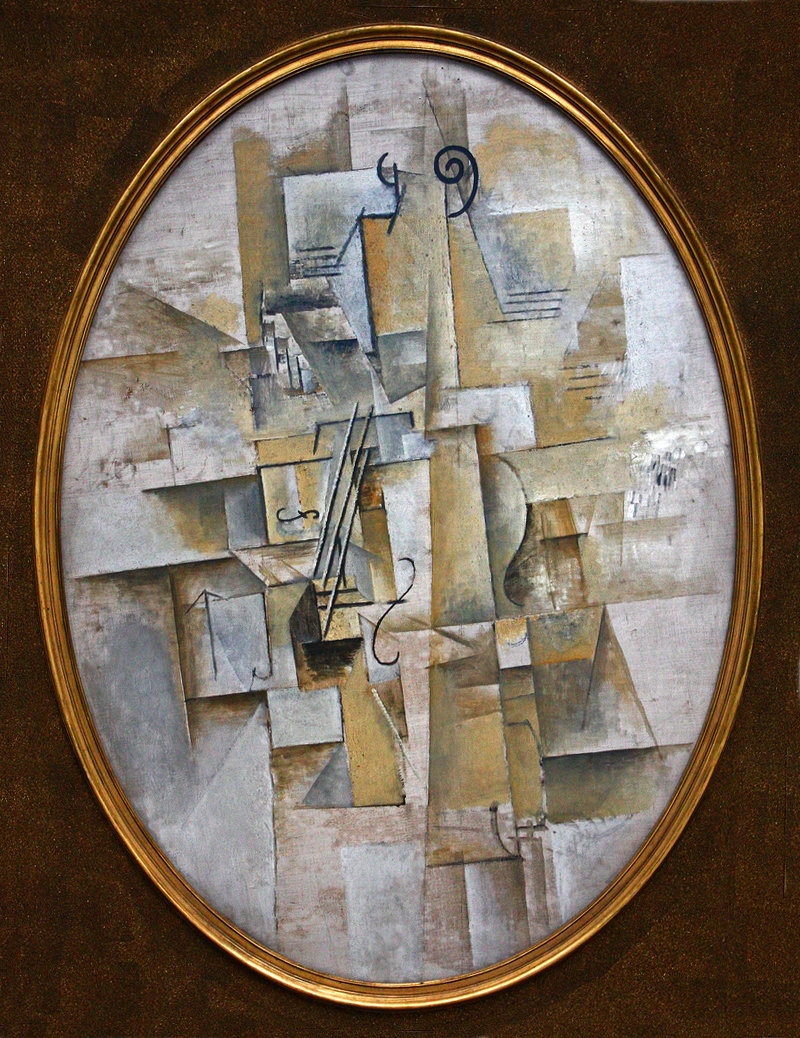
Violon
Pablo Picasso
1911-1912 CE
Oil on canvas
The Persistence of Memory
Salvador Dali
1931 CE | Oil on canvas
Object (Le Déjeuner en fourrure \ Breakfast in Fur)
Meret Oppenheim | 1936 CE | Fur-covered cup
Painting
Joan Miró
1925 CE
Oil on canvas
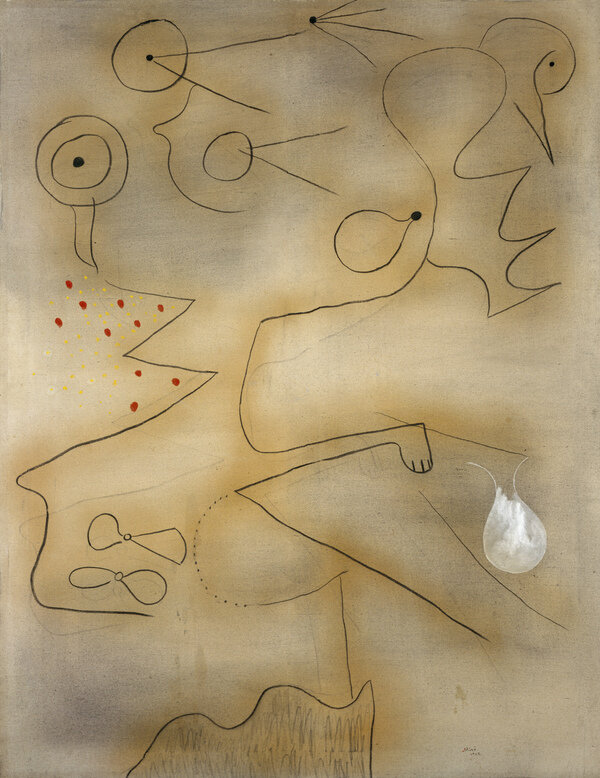
Painting
Joan Miró | 1933 CE | Oil on canvas
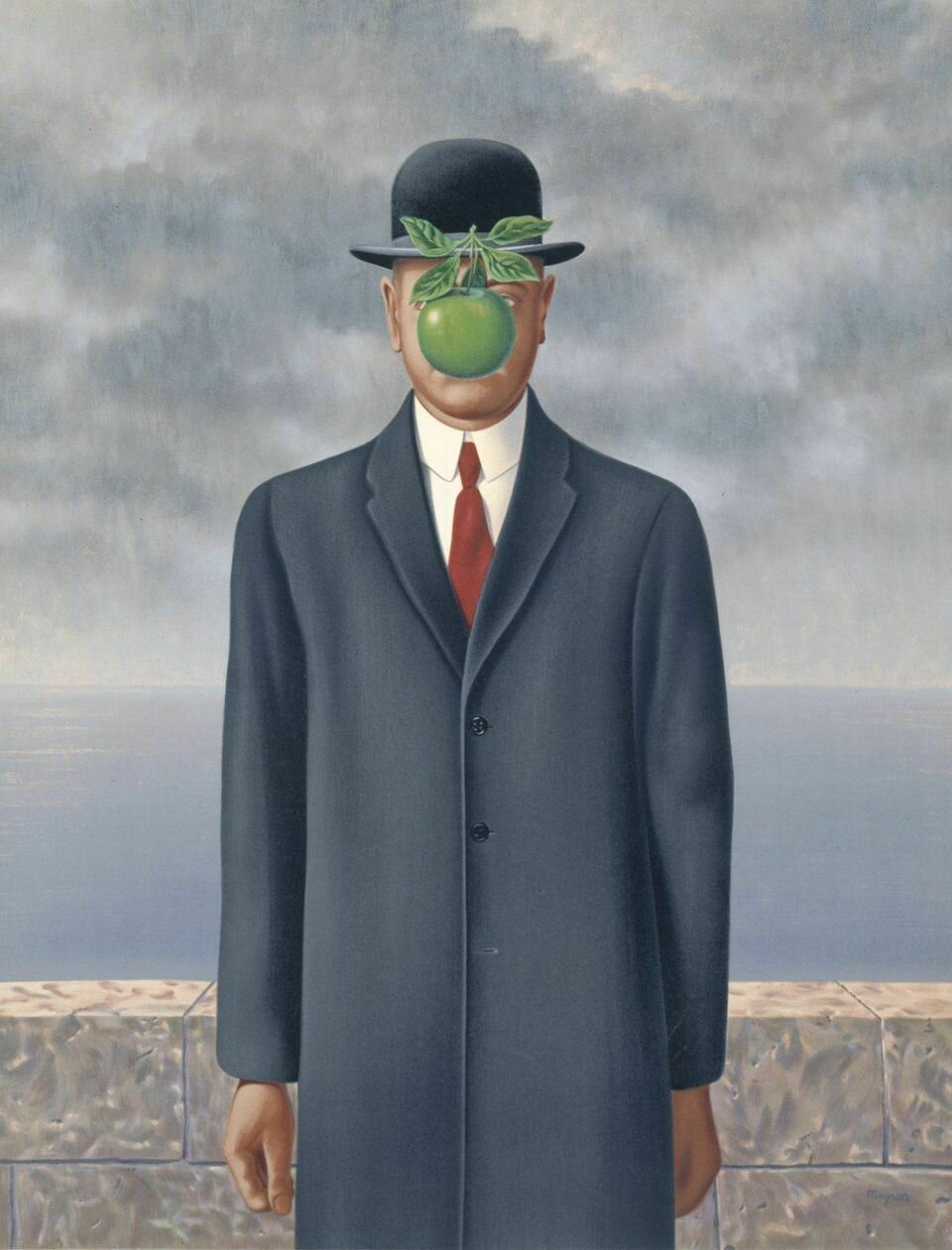
The Son of Man
René Magritte
1964 C
Oil on canvas
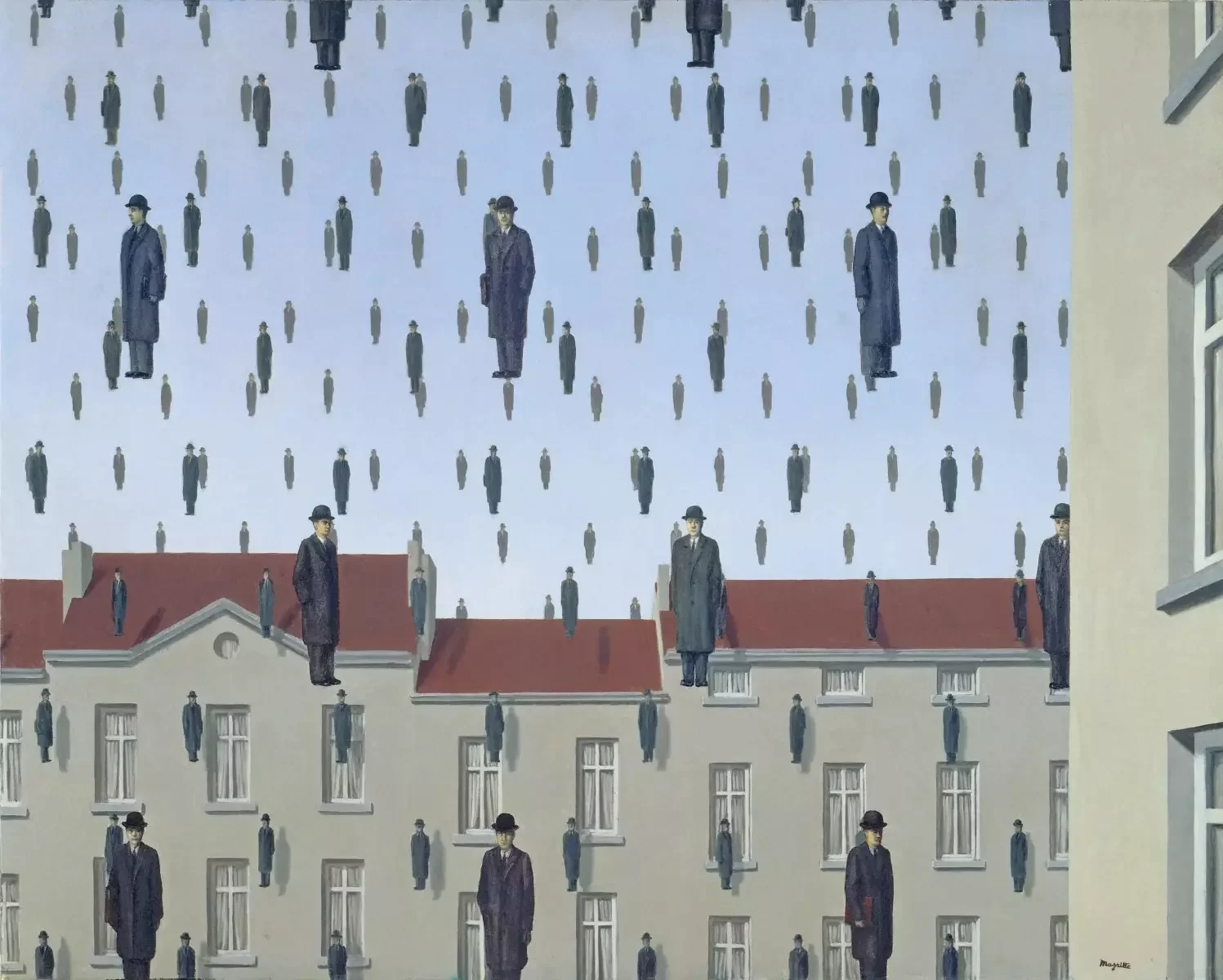
Golconda
René Magritte | 1953 CE | Oil on canvas
Magritte was fascinated by the seductiveness of images.
—Charly Herscovici, 2007 CE
Ordinarily, you see a picture of something and you believe in it, you are seduced by it; you take its honesty for granted.
But Magritte knew that representations of things can lie.
These images of men aren't men, just pictures of them, so they don't have to follow any rules.
This painting is fun, but it also makes us aware of the falsity of representation.
The Treachery (or Perfidy) of Images
Rene Magritte | 1928–1929 CE | Oil on canvas
"The famous pipe. How people reproached me for it!
And yet, could you stuff my pipe?
No, it's just a representation, is it not?
So if I had written on my picture "This is a pipe",
I'd have been lying!"
—Magritte
1. We intend to sing to the love of danger, the habit of energy and fearlessness.
2. Courage, boldness, and rebelliousness will be the essential elements of our poetry.
3. Up to now literature has exalted contemplative stillness, ecstasy, and sleep. We intend to exalt movement and aggression, feverish insomnia, the racer’s stride, the mortal leap, the slap and the punch...
4. We affirm that the beauty of the world has been enriched by a new form of beauty: the beauty of speed. A racing car with a hood that glistens with large pipes resembling a serpent with explosive breath [...] a roaring automobile that seems to ride on grapeshot — that is more beautiful than the Victory of Samothrace.
GIACOMO BALLA
Dynamism of a Dog on a Leash
1912 CE | Oil on canvas
UMBERTO BOCCIONI
Unique Forms of Continuity in Space
1913 CE (cast 1931 CE)
Bronze
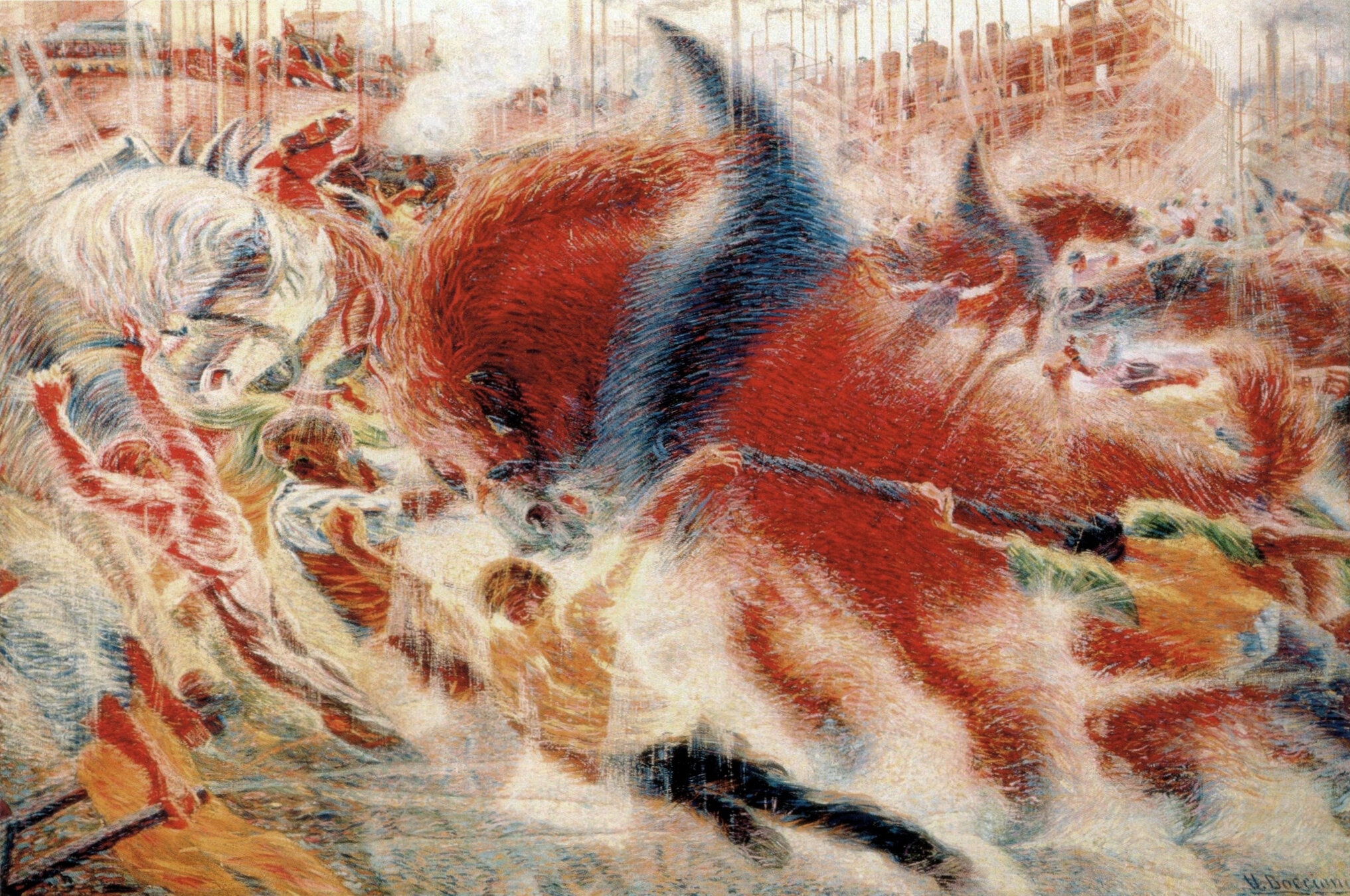
The City Rises
Umberto Boccioni | 1910 CE | Oil on canvas
GINO SEVERINI
Armored Train
1915 CE
Oil on canvas
MARCEL DUCHAMP
L.H.O.O.Q.
1919 CE
Pencil on paper color reproduction of Leonardo da Vinci’s Mona Lisa
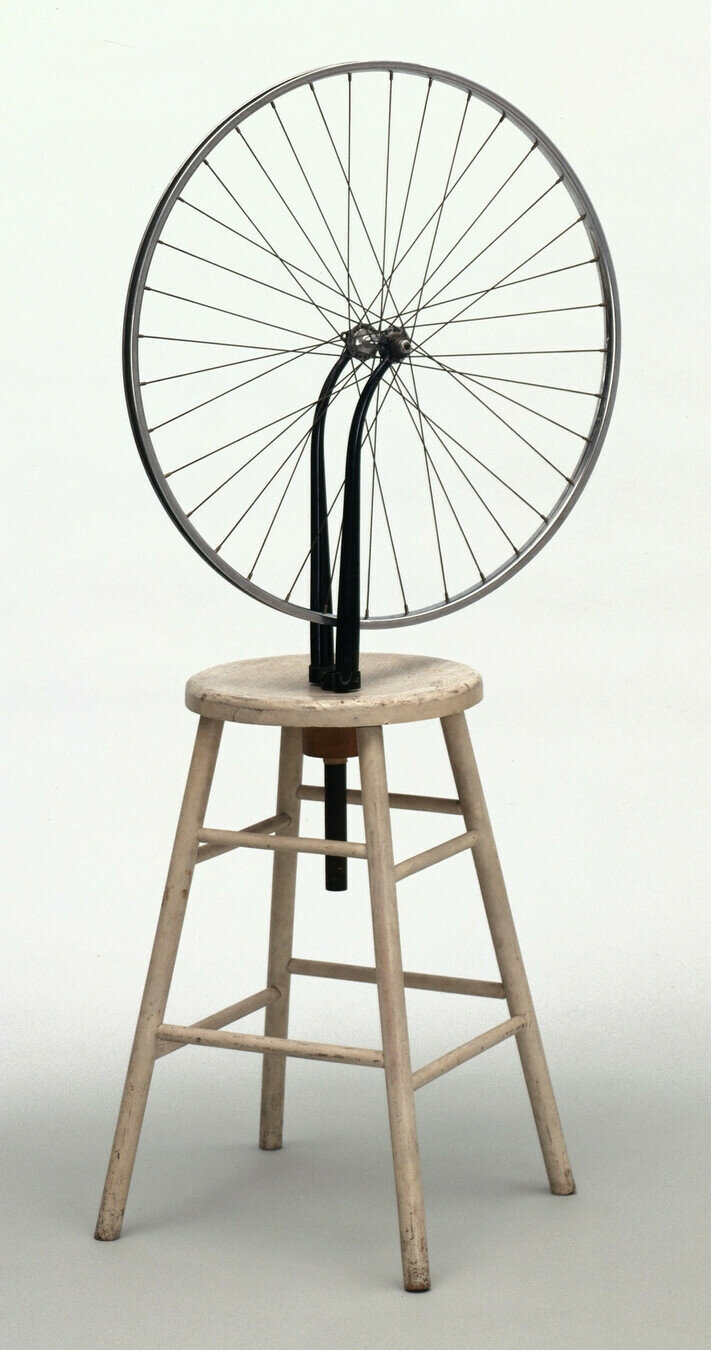
Bicycle Wheel (Third Version)
Marcel Duchamp
1952 CE (Orig. 1913; 2nd ver. 1916-17)
Found objects
I enjoyed looking at it, just as I enjoy looking at the flames dancing in the fireplace.
-Marcel Duchamp
MARCEL DUCHAMP
Nude Descending a Staircase, No. 2
1912 CE
Oil on canvas
MARCEL DUCHAMP
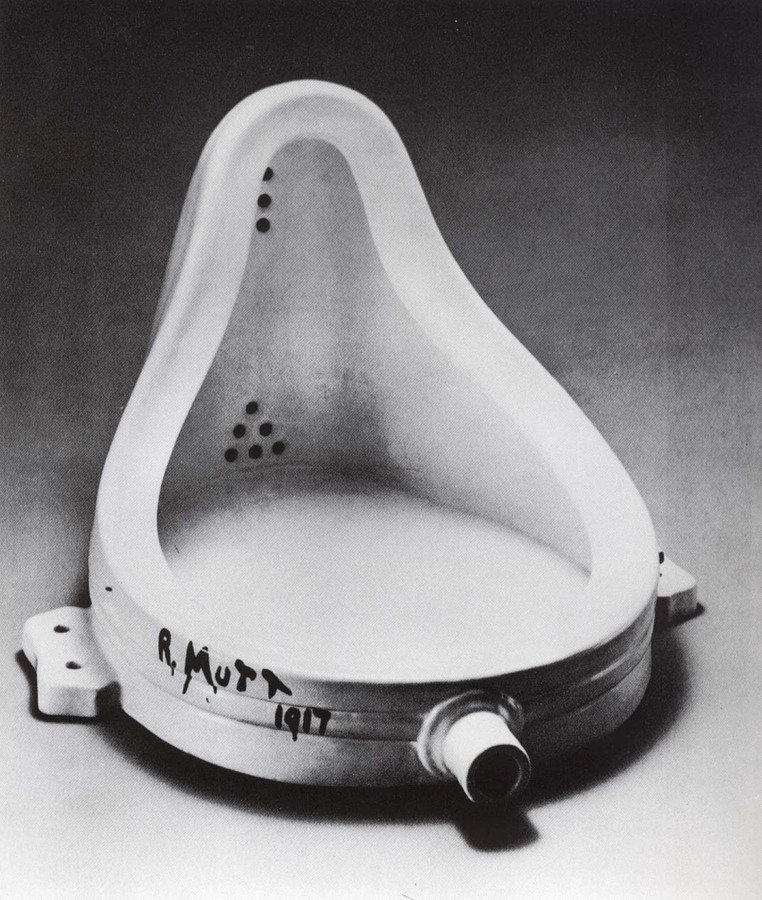
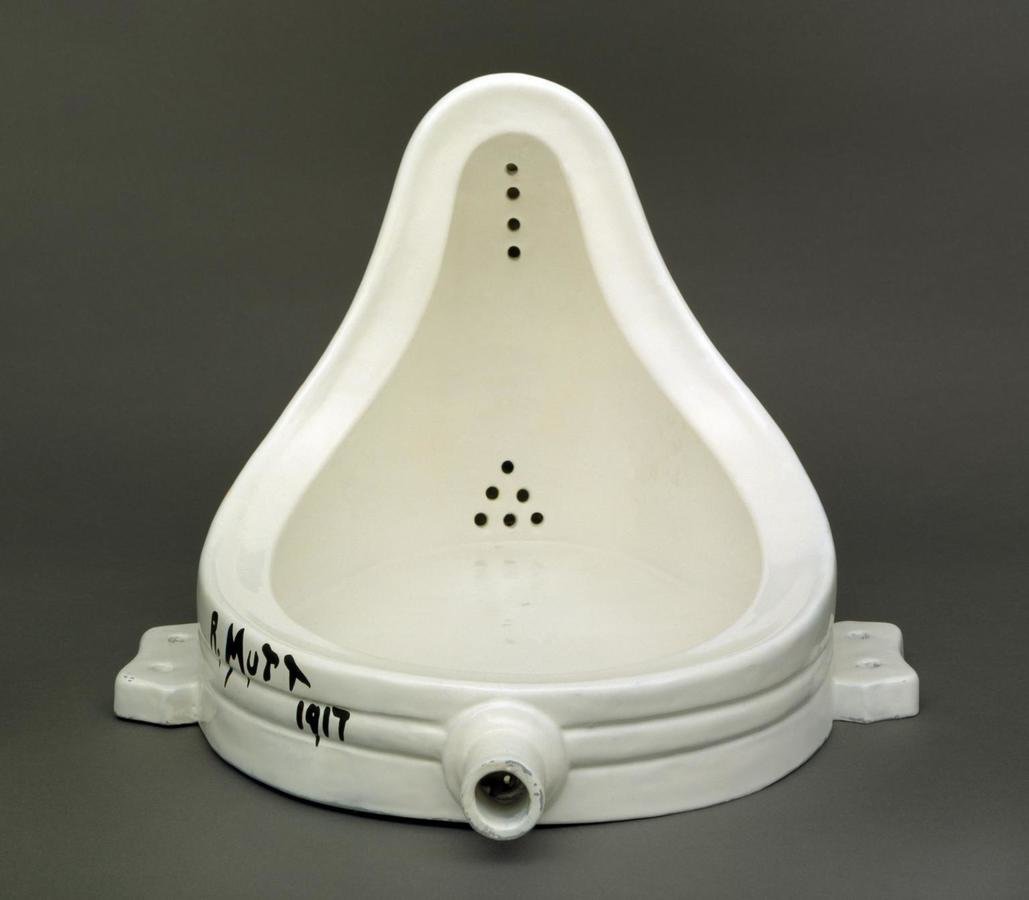
Fountain
1917 CE
Porcelain
No, not rejected. A work can't be rejected by the Independents.
It was simply suppressed.
-Marcel Duchamp, 1971
I was on the jury, but I wasn't consulted, because the officials didn't know that it was I who had sent it in; I had written the name "Mutt" on it to avoid connection with the personal.
The Fountain was simply placed behind a partition and, for the duration of the exhibition, I didn't know where it was. I couldn't say that I had sent the thing, but I think the organizers knew it through gossip.
No one dared mention it. I had a falling out with them, and retired from the organization.
He chose it.
He took an ordinary article of life, placed it so that its useful significance disappeared under the new title and point of view – created a new thought for that object.
Whether Mr. Mutt with his own hands made the fountain or not has no importance.
MARCEL DUCHAMP
Fountain, (second version)
1950 CE
Porcelain
Sold in 1999 at Sotheby's auction house to the Tate Britain museum...
...for $1.7 million
That's equal to $3.3 million in 2025.
Jacques-Louis David
Napoleon Crossing Saint-Bernard
1800-1801 CE | Oil on canvas
Jean-Auguste-Dominique Ingres
Napoleon on His Imperial Throne
1806 CE | Oil on canvas
Pierre-Alexandre Barthélémy Vignon
La Madeleine
Paris, France, 1807-1842 CE
Jacques-Louis David
Coronation of Napoleon
1805-1808 CE | Oil on canvas
Jean-Auguste-Dominique Ingres
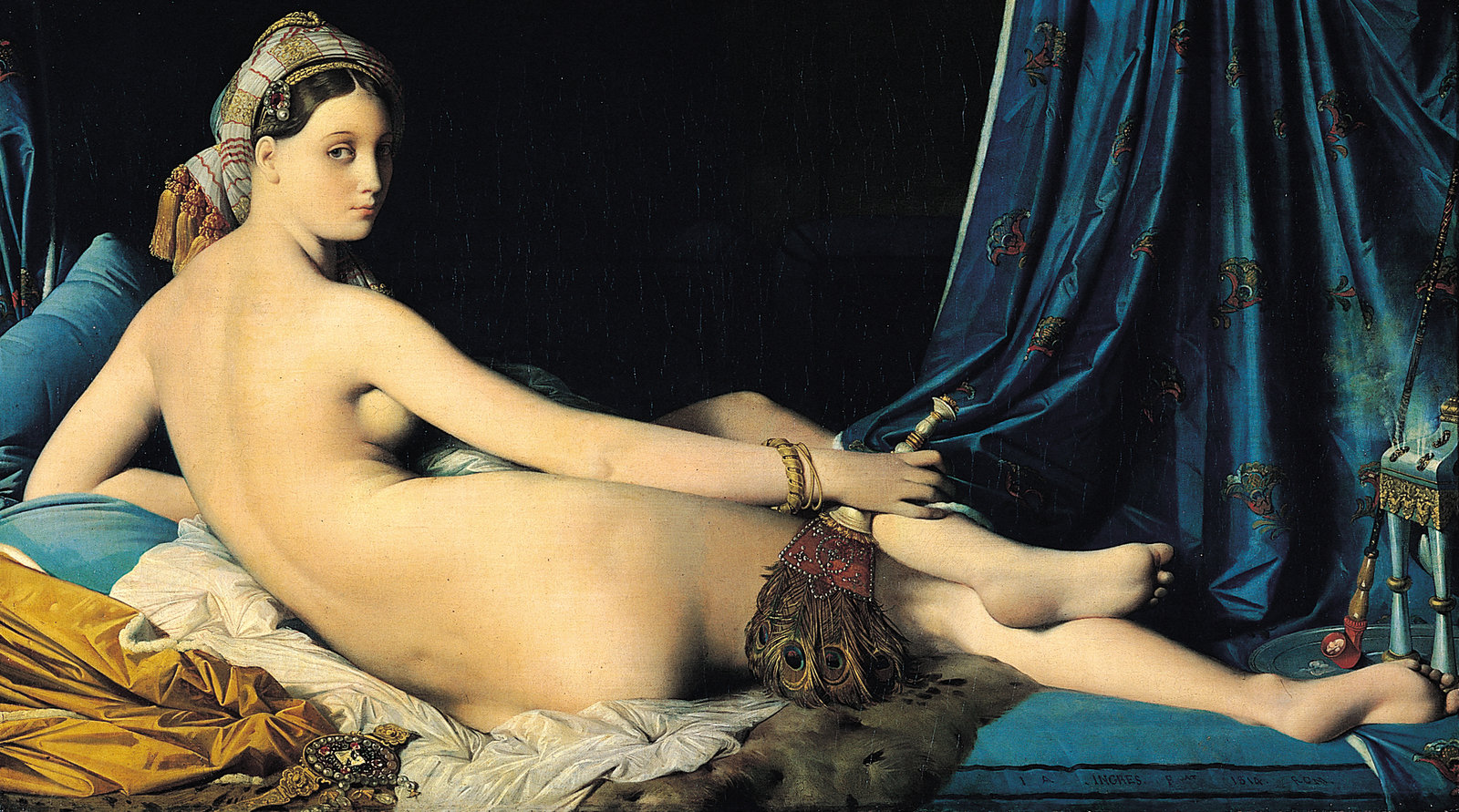
Grand Odalisque
1814 CE | Oil on canvas
By Jonathan Morgan
Prof. Morgan | Updated Fall 2025


