



































Content ITV PRO
This is Itvedant Content department
Hello Python
Learning Outcome
5
Set up Python environment and run their first basic program
4
Recognize real-world applications of Python and companies that use it
3
Differentiate between high-level, medium-level, and low-level programming languages
2
Identify key features of Python and why it is widely preferred by developers
Explain what a Dockerfile is
1
Understand what a programming language is and why it is used in real-world problem solving
6
Write and execute a simple “Hello World” program confidently
Analogy
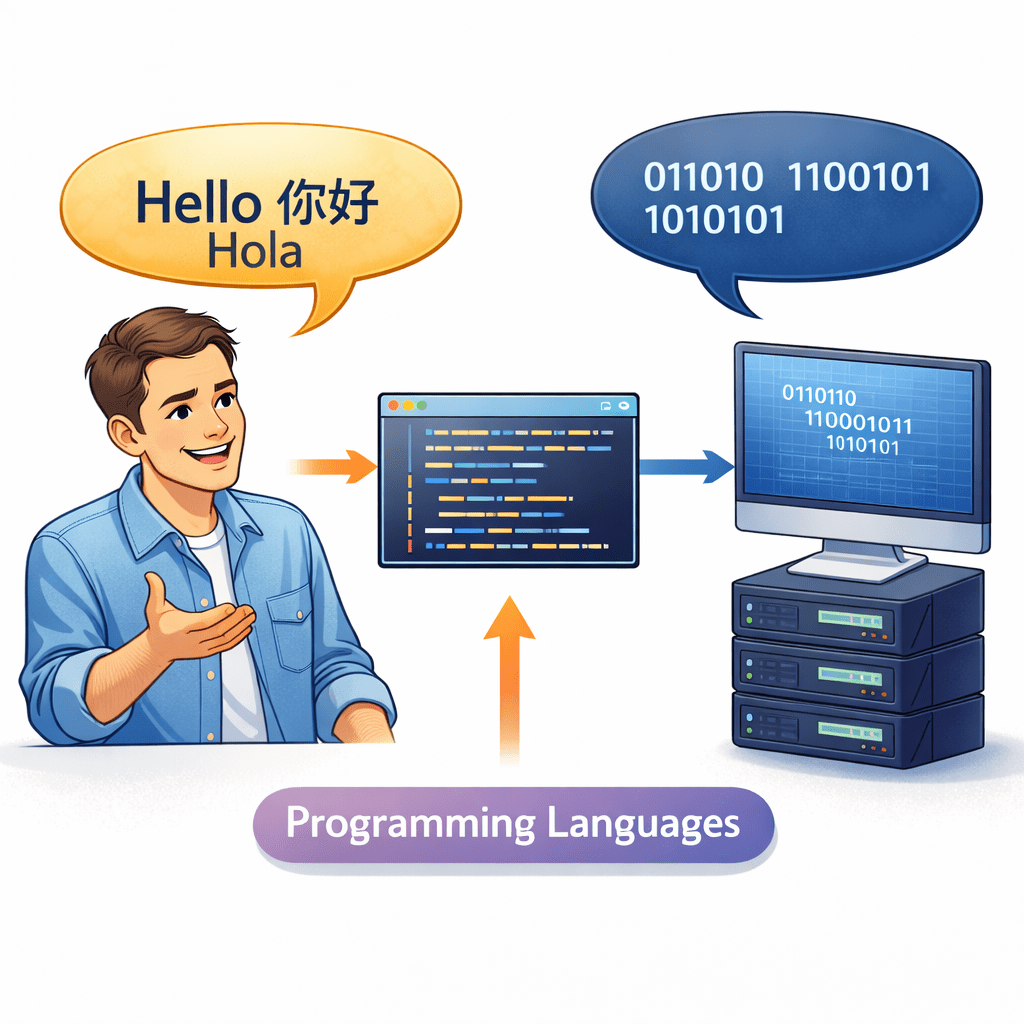
Imagine you want to order food in a foreign country
If you speak your native language the waiter won’t understand
If you speak their language communication becomes smooth
Similarly:
Humans speak natural languages
Computers understand only machine language (0s and 1s)
Programming languages act as a translator between humans and computers
Just like learning a common language helps you communicate globally,
learning a programming language helps you communicate with computers effectively
Among all programming languages, Python stands out because:
Let’s understand what programming languages are and where Python fits in
What is a Programming Language?
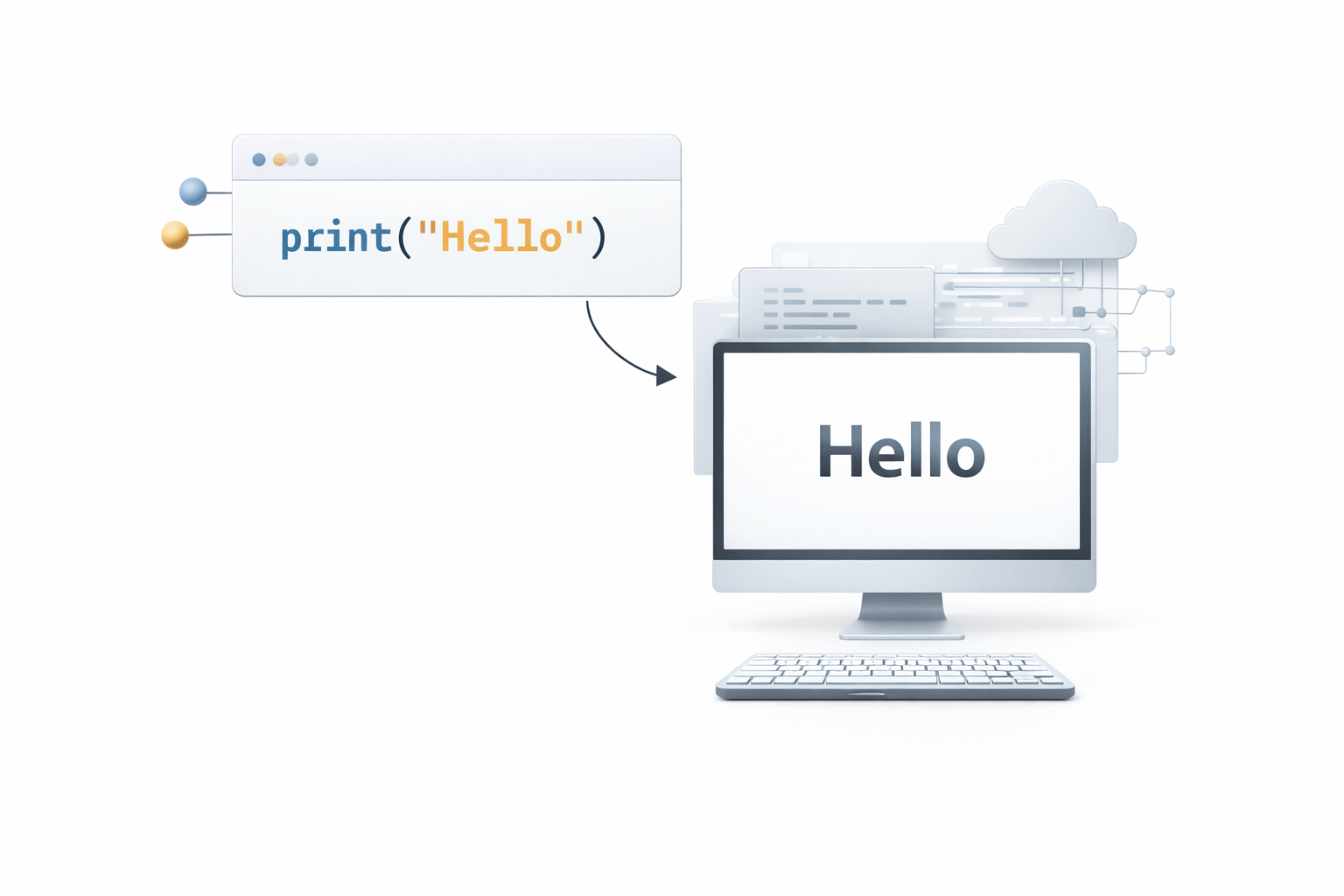
A programming language is a set of instructions used to communicate with a computer
Example:
print("Hello")
This tells the computer: display Hello on the screen
Types of Programming Languages
Low-Level Language
Close to machine (binary)
Very fast but hard to understand
Example: Machine Code
Medium-Level Language
Balance between hardware and human understanding
Example: C
Types of Programming Languages
High-Level Language
Easy to read and write
Examples: Python, Java
Each level serves a different purpose—from performance optimization to ease of development and productivity
Features of Python
Simple and readable syntax (almost like English)
Interpreted language (no need for compilation)
Cross-platform (runs on Windows, Mac, Linux)
Huge library support (for AI, data, web, etc.)
Beginner-friendly yet powerful
print("Welcome to Python")
Applications of Python
Where Python is used:
Web Development (Django, Flask)
Data Science & AI
Automation & Scripting
Game Development
Companies using Python:
Netflix
Who uses Python:
Developers
Data Analysts
Machine Learning Engineers
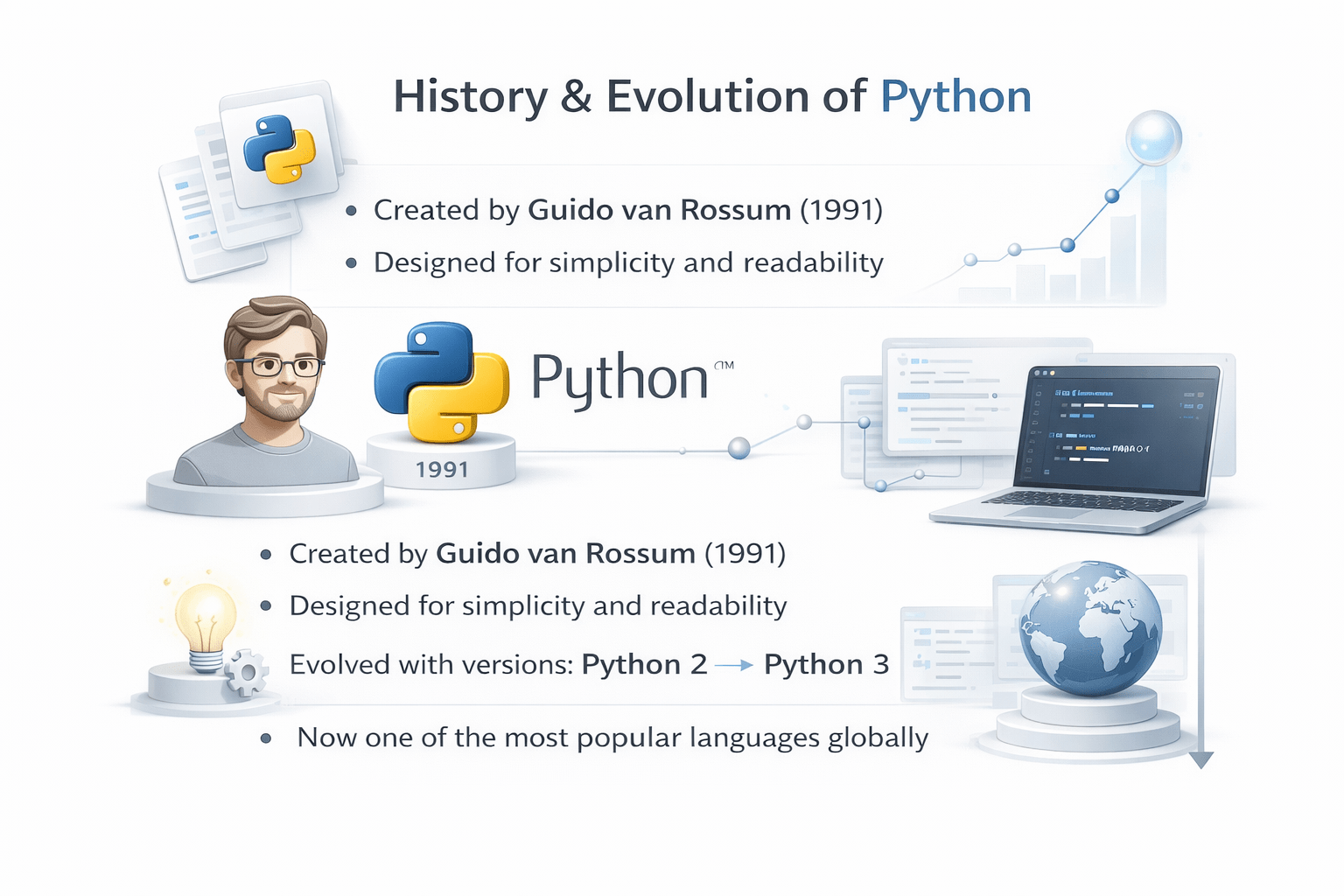
History & Evolution of Python
Created by Guido van Rossum (1991)
Designed for simplicity and readability
Evolved with versions: Python 2 → Python 3
Now one of the most popular languages globally
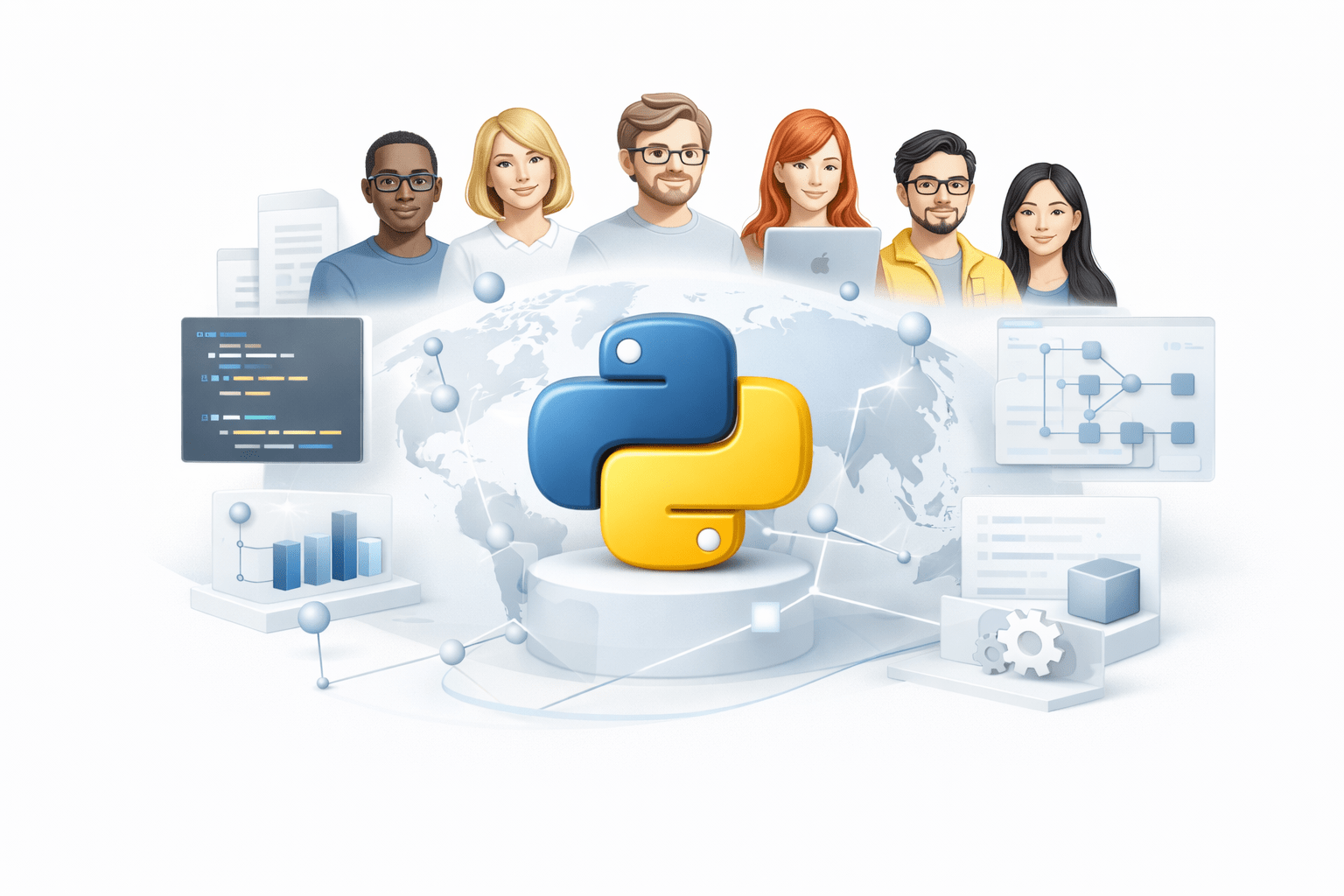
Python Community (2022)
Python has millions of developers worldwide (~8–10 million)
One of the fastest-growing programming communities
Strong support through forums, tutorials, and open-source projects
Insight:
A large community = better support + more opportunities
How to Interact with Python
You can run Python in different ways:
Command Line (Terminal)
IDLE (default Python editor)
Notebooks (interactive coding)
Installing Python & Tools
Install Python
Download from python.org
Install and check version
Default Editor
IDLE (comes with Python)
Other Tools
Colab Example:
Open browser
Write code
Run instantly (no installation)
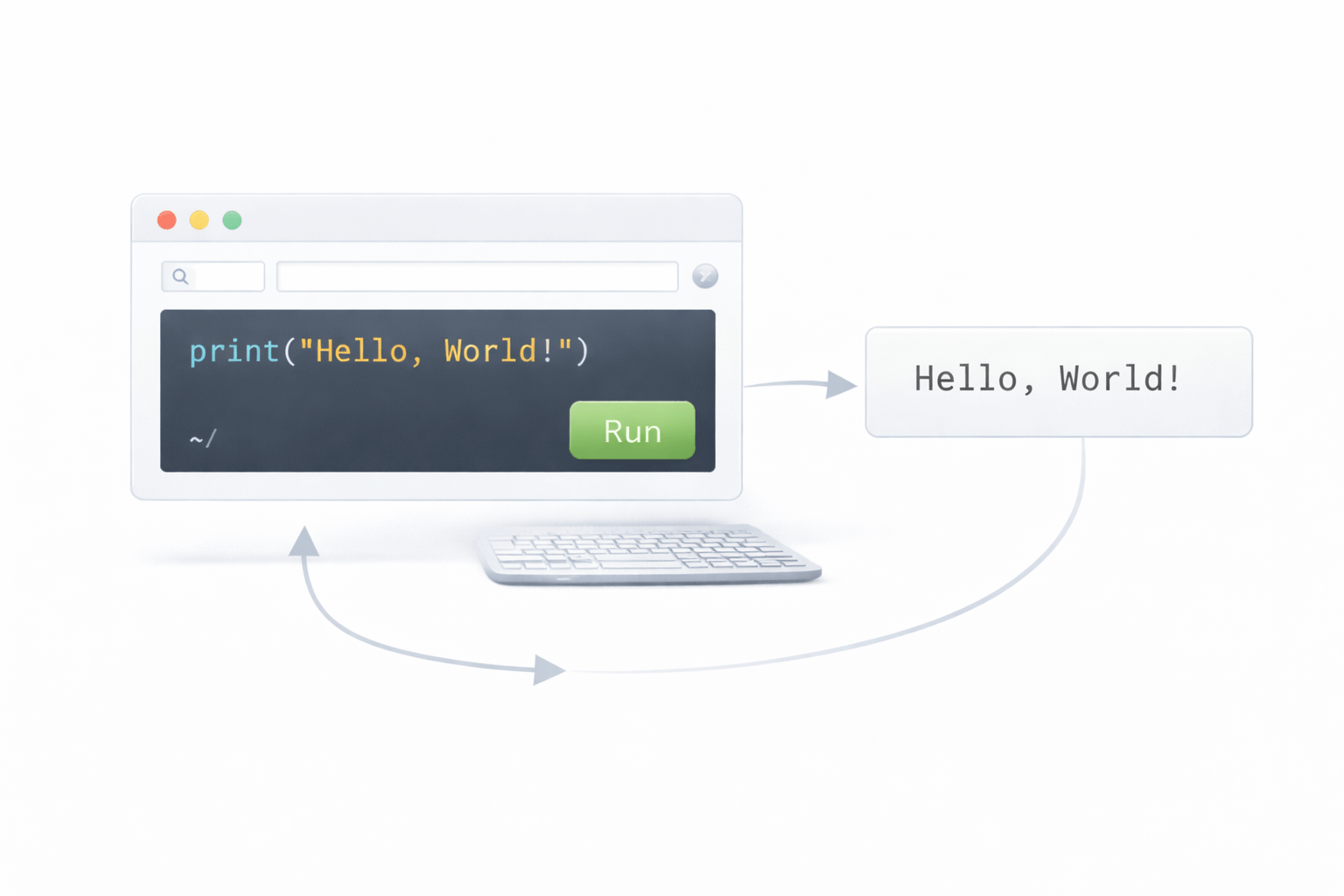
Hello World Program
The first program everyone writes:
print("Hello World")
Output:
Hello World
Steps:
Open Python/Colab
Type code
Run → see output
Insight:
This confirms your Python setup is working correctly
4
It is used in web development, AI, data science, and automation
3
Python is simple, powerful, and widely used across industries
2
Languages are categorized into low, medium, and high-level based on abstraction
1
Programming languages help humans communicate with computers effectively
Quiz
Who created Python?
A. Bill Gates
B. Elon Musk
C. Guido van Rossum
D. Mark Zuckerberg
Quiz-Answer
Who created Python?
A. Bill Gates
B. Elon Musk
C. Guido van Rossum
D. Mark Zuckerberg
By Content ITV