









Content ITV PRO
This is Itvedant Content department
Learning Outcome
5
Understand where they fit in SDLC
4
Identify advantages of each testing level
3
Differentiate between Integration and System Testing
2
Define System Testing
1
Define Integration Testing
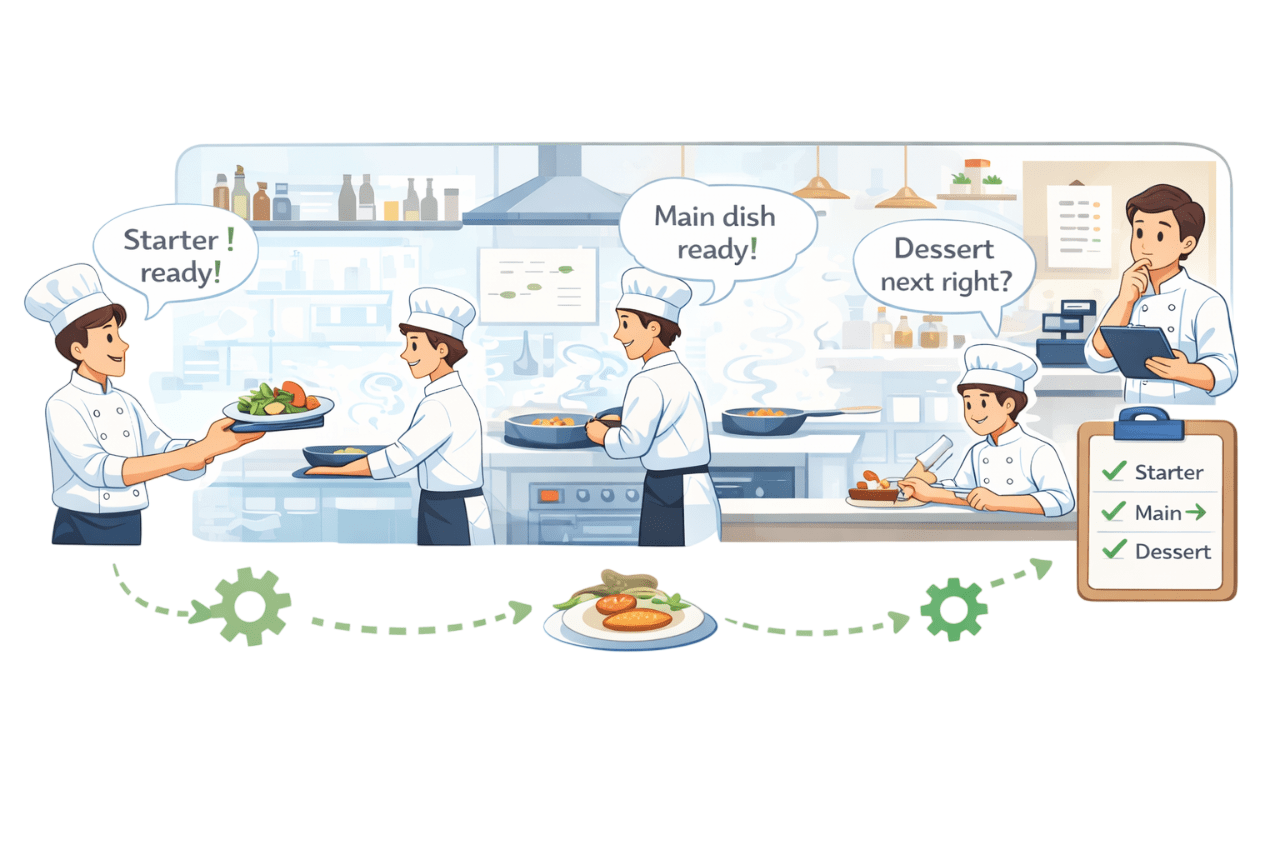
In this kitchen, every chef knows how to cook
Are they working together properly?
If the starter, main course, and dessert move smoothly in the correct order,
and chefs communicate clearly...
The kitchen runs successfully
Just like the kitchen,
Integration Testing checks whether different modules coordinate and interact correctly
It is not about individual performance
It is about smooth interaction between components
A family is dining in a restaurant
Food on the table → Food quality
Waiter serving → Service satisfaction
Comfortable ambience → Overall experience
Billing process → Final step
The customer is not judging just one dish
They evaluate the entire dining journey — from first bite to payment
Just like the restaurant
System Testing evaluates the complete system as a whole
It is not about checking only one module
It is about validating the entire end-to-end workflow
It ensures overall functionality and user expectations are satisfied
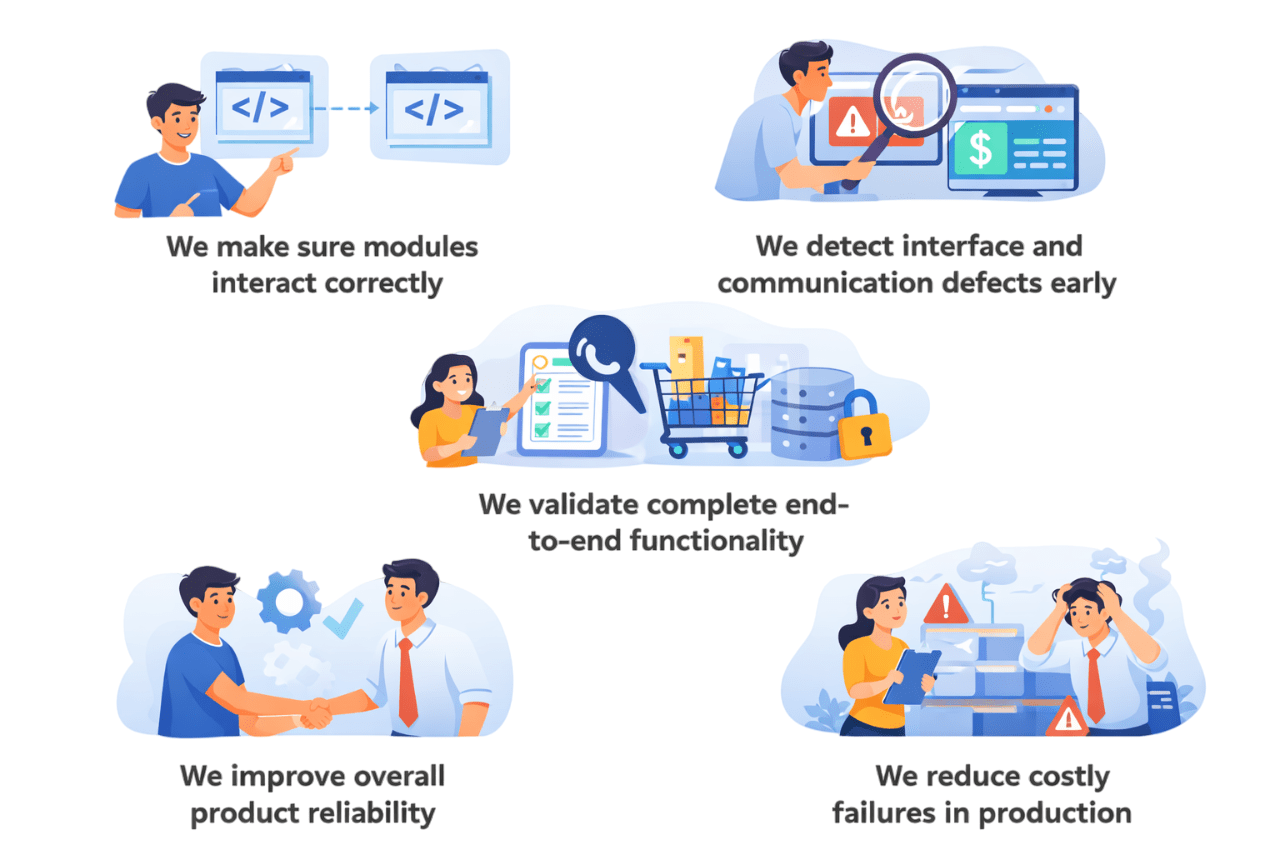
Modules work together correctly
Interface defects are detected early
Production failures are minimized
Production failures are minimized
Product reliability is improved
Complete workflow is validated
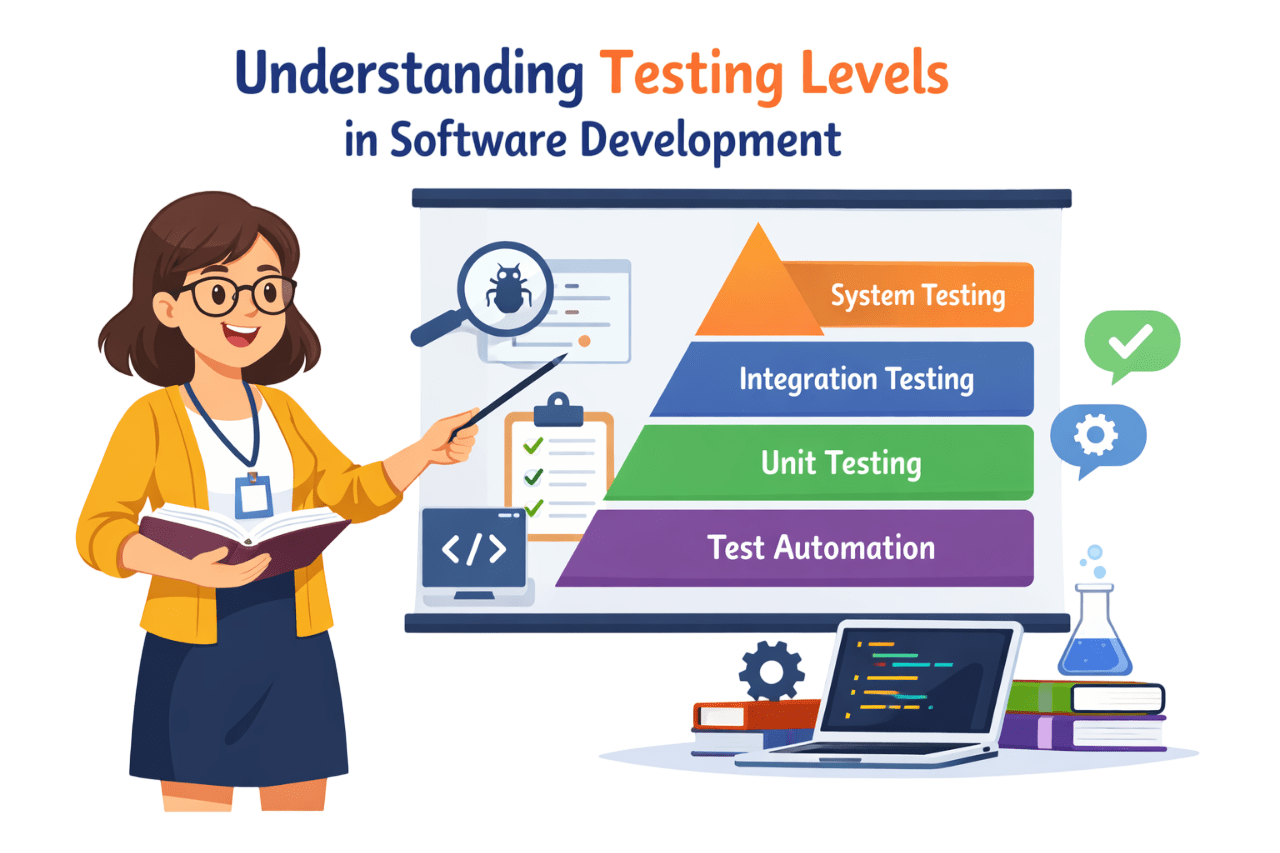
Unit Testing
Unit Testing
Testing program units separately to ensure they function correctly
Units can be:
Function
Method
Class
Small Modules
Verify each unit functions properly before integration
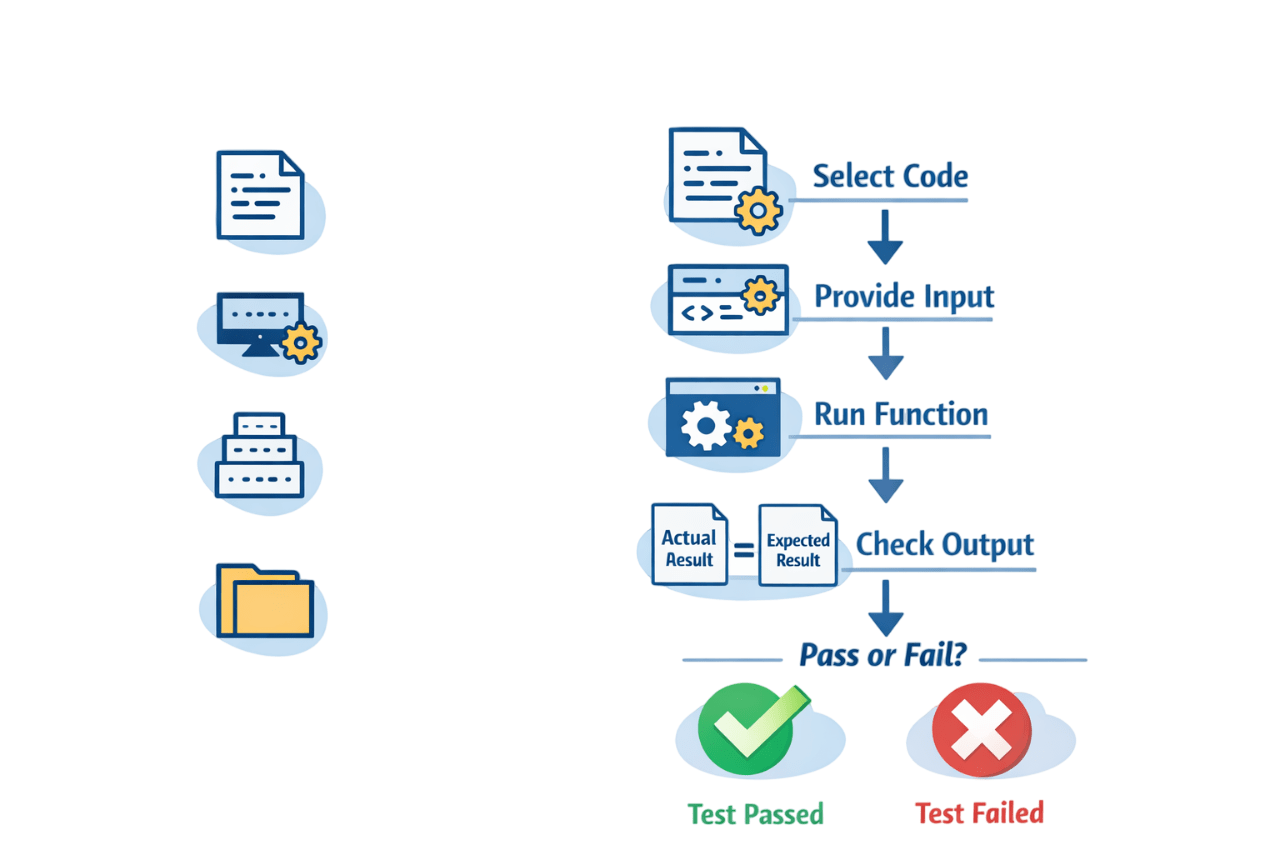
Unit Testing Process
Actual Result = Expected Result
Procedural Programming
Unit = function, procedure, or small program
Object Oriented (OOPs)
Unit = method
Methods can belongs to
superclass,abstract class
Procedural Programming
Procedural Programming
Isolated Tests
No dependency on database or network
Automated Tests
Written and executed in code
Logic Validation
Ensures requirements are correctly implemented
Fast Feedback
Detects errors early in development
Integration Testing
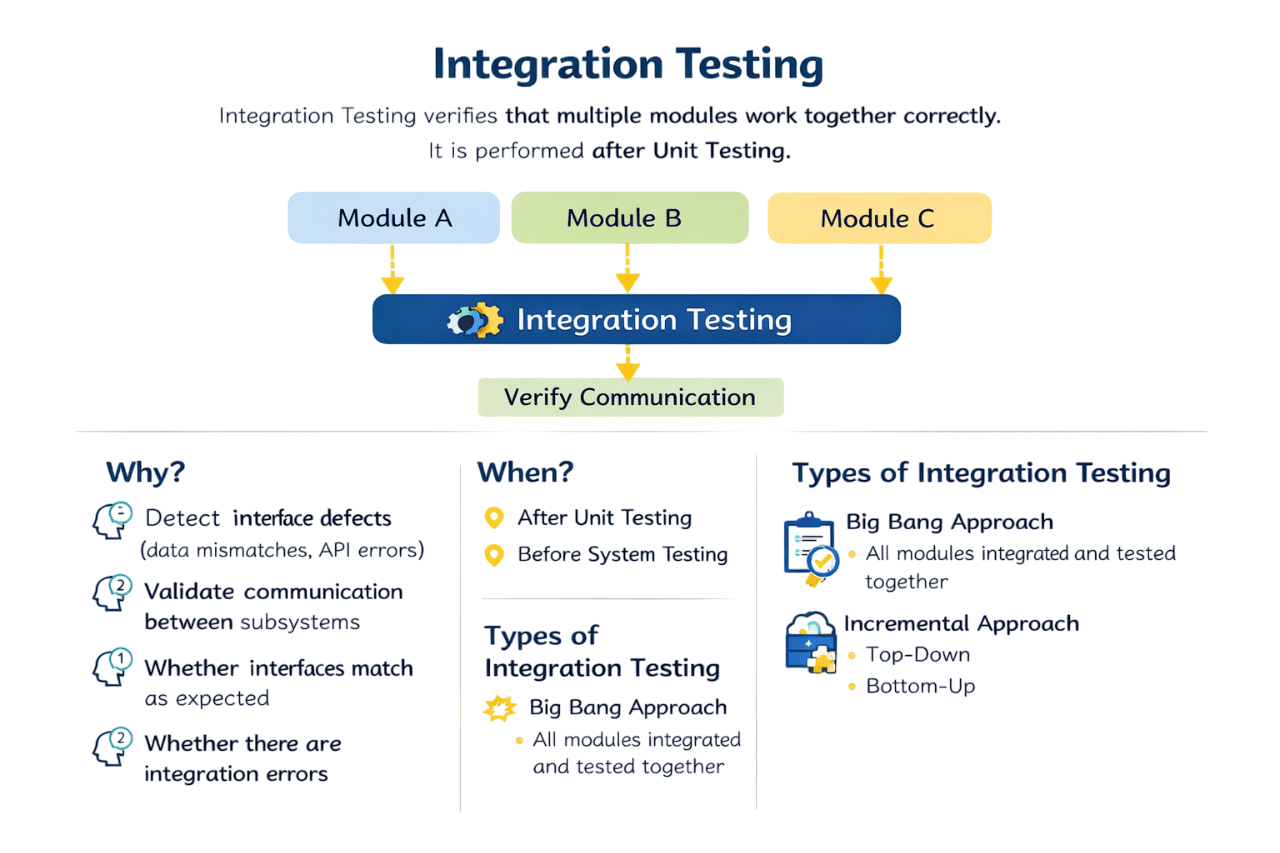
Integration Testing verifies that multiple modules work together correctly
Why?
Whether modules communicate correctly
Whether data flows properly between components
Whether interfaces match as expected
Whether there are any integration errors
When?
After Unit Testing
Before System Testing
Types of Integration Testing
Big Bang Appoarch
Incremental Appoarch
All modules integrated and tested at once
Modules added and tested sequentially
(Top-Down or Bottom-Up)
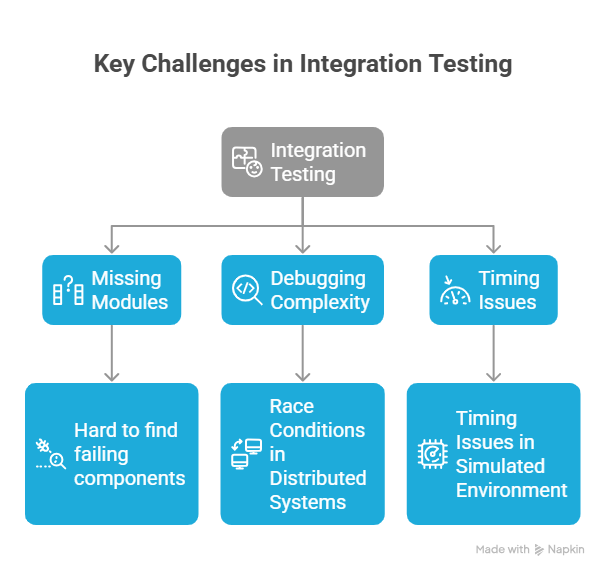
Key Challenges in Integration Testing
Integration Testing
Missing Modules
Debugging Complexity
Timing Issue
Hard to Find Failing components
Race conditions in Distributed System
Timing Issue in Simulated environment
System Testing
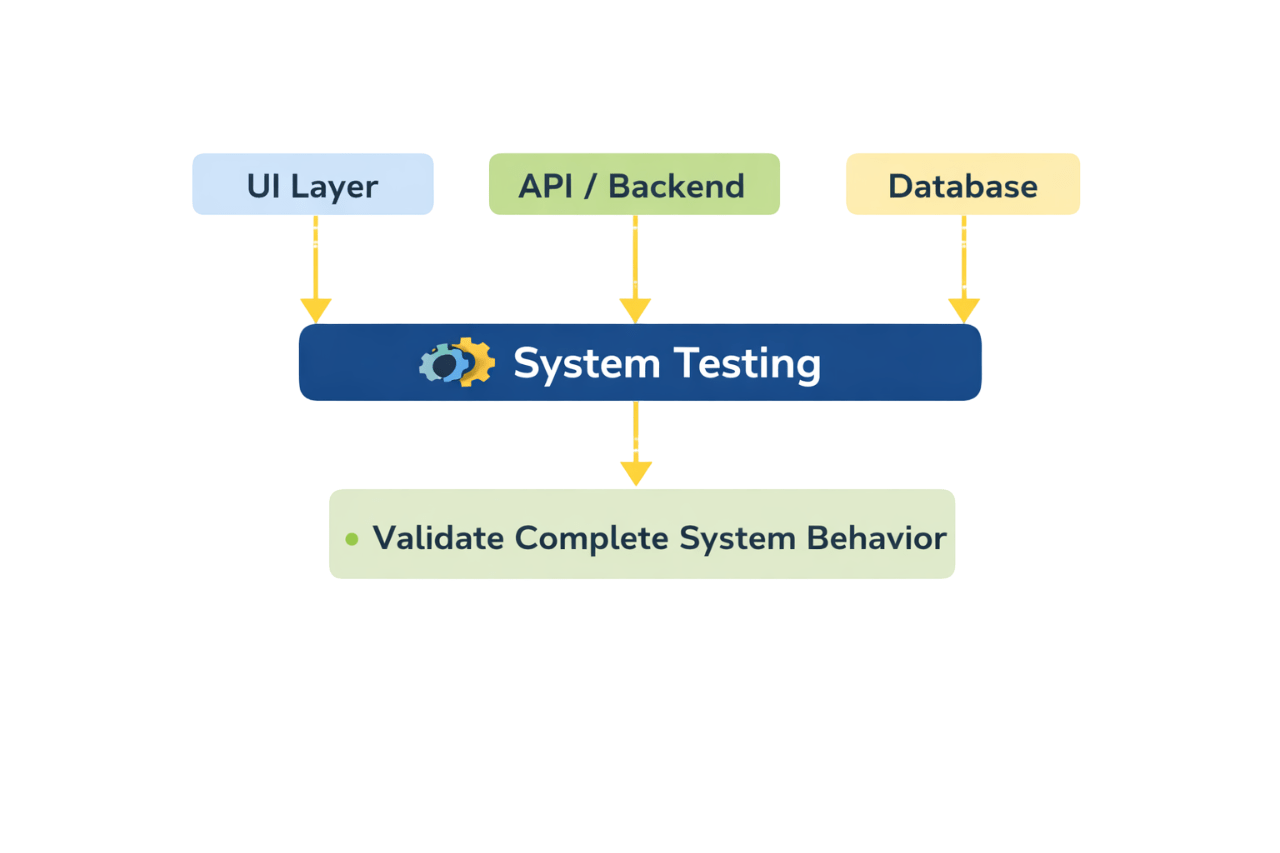
System Testing verifies that the complete integrated system works correctly as a whole
System Testing
Why?
Verify end-to-end system functionality
Ensure all requirements are satisfied
Validate performance, security and usability
Detect system-level defects
When?
After Integration Testing
Before User Acceptance Testing (UAT)
In a near-production environment
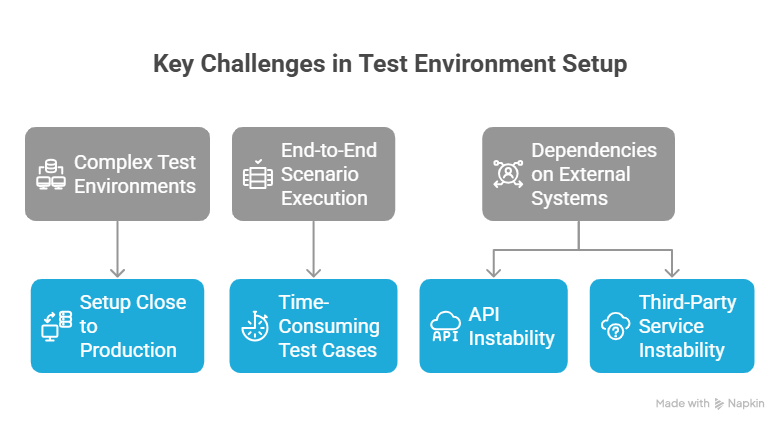
Complex Test Environments
End to End Scenerio Execution
Dependencies on External systems
Setup Close to production
Time consuming Testcases
API unReliability
Third party Service Unreliability
Key Challenges in System Testing
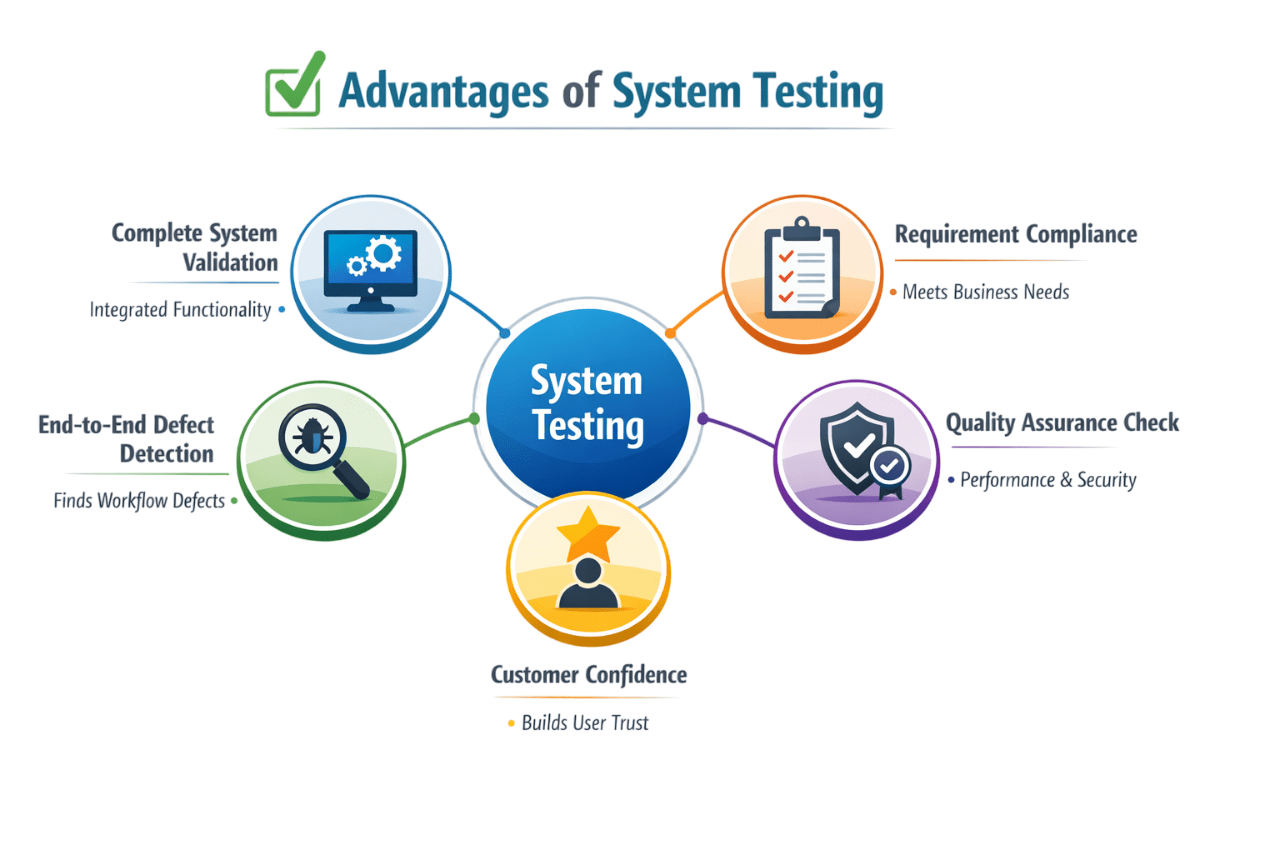
Advantages of System Testing
Customer Confidence
Complete System Validation
End-to-end Defect Detection
Quality Assurance check
Requirement Compliance
| Comparison Point | Integration Testing | System Testing |
|---|---|---|
| Testing Level | Mid-level testing (after Unit Testing) | High-level testing (final stage before UAT) |
| Focus Area | Interaction between modules & interfaces | Complete system functionality & requirements |
| Performed By | Developers or Testers | Independent QA / Testing Team |
| Scope | Limited to integrated modules | Entire fully integrated system |
| Objective | Verify module communication & data flow | Validate functional & non-functional requirements |
| Timing in SDLC | After Unit Testing | After Integration Testing (before UAT) |
Integration Testing Vs System Testing
Summary
5
Integration Testing precedes System Testing
4
Validates functional & non-functional requirements
3
System Testing evaluates the complete system
2
Focuses on interfaces and data flow
1
Integration Testing verifies module communication
6
Both ensure quality before release
Quiz
Which of the following best describes Integration Testing?
A. Testing individual functions or methods in isolation
B. Testing the complete system as a whole
C. Testing interaction between combined modules
D. Testing performed by end users
Quiz-Answer
A. Testing individual functions or methods in isolation
B. Testing the complete system as a whole
C. Testing interaction between combined modules
D. Testing performed by end users
Which of the following best describes Integration Testing?
By Content ITV